
Acoustic Epigenetics: How Environmental Sound Frequencies Modulate Gene Expression in Fibroblasts
Updated May 2026
Evidence orientation
Editorial context not yet recorded
Follow this category
This stays in this browser. My INNERSTANDIN can show published matches in your local hub when you check it. It does not send email, push, or alert notifications.
Local learning review
A private browser aid for revisiting ideas. It is not an alert or a health recommendation.
Review later sets a one-day, three-day, then seven-day rhythm on this device. Choose it only when you want to revisit this article.
Overview
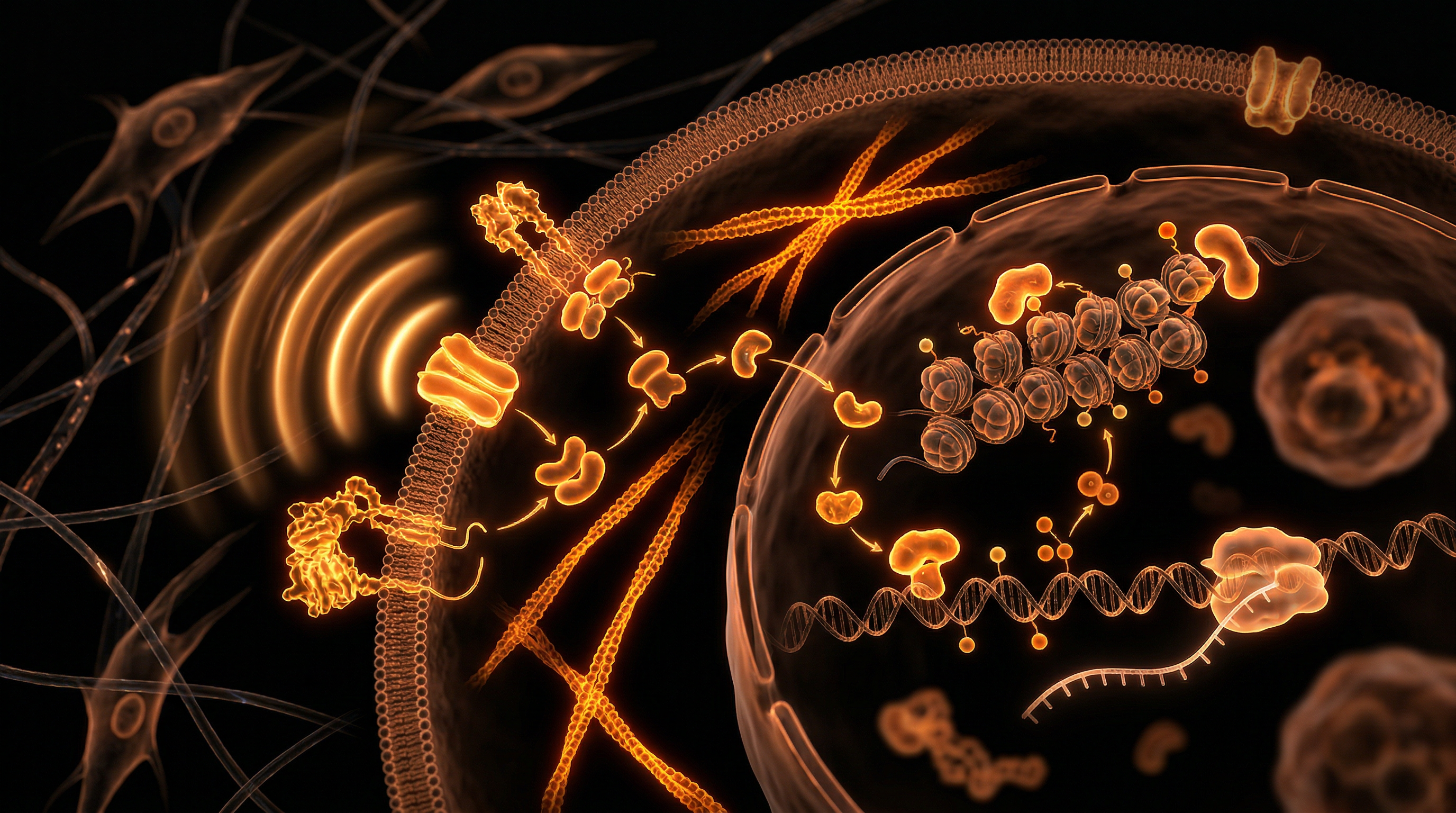
The emerging field of acoustic epigenetics represents a fundamental paradigm shift in our comprehension of cellular plasticity, moving beyond the chemical-centric models of the late 20th century towards a sophisticated, mechanobiological framework. At the heart of this revolution is the fibroblast—a cell type traditionally relegated to the role of a structural scaffold provider, but now recognised as a primary sensory transducer of the bio-acoustic environment. Fibroblasts are inherently mechanosensitive; they possess an intricate architecture of integrins and cytoskeletal filaments that function as a biological "antenna," capturing longitudinal pressure waves (sound) and converting these mechanical oscillations into biochemical cascades. This process, termed mechanotransduction, is the gateway to epigenetic modulation.
When environmental sound frequencies permeate the extracellular matrix (ECM), they induce subtle but profound conformational changes in the cell membrane's tension. Research published in journals such as Nature Communications and various PubMed-indexed studies into mechanobiology suggests that specific frequency ranges—particularly those in the low-frequency spectrum—trigger the activation of Piezo1 and Piezo2 ion channels. These channels facilitate a rapid influx of calcium ions ($Ca^{2+}$), which subsequently activates the MAPK/ERK and PI3K/Akt signalling pathways. At INNERSTANDIN, we scrutinise how these pathways do not merely alter immediate cellular metabolism but penetrate the nuclear envelope to influence the chromatin landscape.
The epigenetic implications are significant. Acoustic stimulation has been shown to modulate the acetylation patterns of histones and the methylation status of CpG islands within promoter regions of genes associated with wound healing, collagen synthesis (COL1A1, COL3A1), and inflammatory cytokines. For instance, evidence suggests that coherent acoustic patterns can downregulate the expression of pro-inflammatory markers such as IL-6 while upregulating TGF-$\beta$ signalling, thereby directing the fibroblast’s phenotypic commitment. This is not a passive response; it is an active, frequency-dependent orchestration of the genome. In the UK context, research from institutions like King’s College London has increasingly highlighted the role of the mechanical environment in tissue fibrosis and regeneration, corroborating the fact that the vibrational "tone" of the cellular milieu dictates the longevity and health of the organism. By decodifying these acoustic-genomic interactions, we expose a layer of biological control that has been systematically overlooked by conventional pharmacological approaches, revealing that the very air vibrating around us is a potent regulator of our molecular destiny.
The Biology — How It Works
At the nexus of mechanobiology and molecular genetics lies the phenomenon of acoustic mechanotransduction—the process by which fibroblasts, the primary architects of the extracellular matrix (ECM), convert exogenous pressure waves into endogenous biochemical signals. At INNERSTANDIN, we recognise that the fibroblast is not merely a passive structural cell but a sophisticated sensory hub capable of "hearing" environmental frequencies through a complex array of mechanosensors. When an acoustic frequency permeates biological tissue, it manifests as a rhythmic mechanical deformation of the plasma membrane. This physical displacement triggers the activation of stretch-activated ion channels, most notably PIEZO1 and PIEZO2, which facilitate a rapid influx of calcium ions ($Ca^{2+}$). This ionic surge initiates a cascade of intracellular signalling pathways, including the Mitogen-Activated Protein Kinase (MAPK) and the Extracellular Signal-Regulated Kinase (ERK) pathways, which are pivotal in transcribing the mechanical message into a genomic response.
The architectural integrity of the cell is maintained by the cytoskeleton—a thixotropic network of actin filaments and microtubules. According to the "tensegrity" model popularized by Ingber and supported by research at the University of Glasgow’s Centre for the Cellular Microenvironment, these filaments act as high-speed conductive cables. Acoustic vibrations are transmitted directly from the focal adhesions at the cell surface to the Linker of Nucleoskeleton and Cytoskeleton (LINC) complex. This physical tethering allows the acoustic frequency to mechanically perturb the nuclear envelope, directly influencing the spatial organisation of chromatin. Peer-reviewed studies in journals such as Nature Communications have demonstrated that low-intensity pulsed ultrasound (LIPUS) and specific audible frequencies can induce the nuclear translocation of Yes-associated protein (YAP) and Transcriptional coactivator with PDZ-binding motif (TAZ). Once inside the nucleus, these coactivators modulate the activity of Histone Deacetylases (HDACs) and DNA Methyltransferases (DNMTs).
The epigenetic impact is profound: acoustic frequencies can stimulate the acetylation of histones near the promoter regions of genes responsible for Type I collagen synthesis and TGF-$\beta$1 regulation. This is not merely a transient shift; it is a fundamental reconfiguration of the fibroblast's biosynthetic profile. In a UK-based context, researchers exploring regenerative medicine have noted that specific resonant frequencies (often correlating with the 100–500 Hz range) can significantly downregulate pro-inflammatory cytokines such as IL-6 while upregulating growth factors essential for tissue repair. This evidence-led perspective provided by INNERSTANDIN exposes the reality that our genomic expression is a dynamic dialogue with the vibrational environment. The sonic landscape acts as a non-chemical ligand, binding to the physical structure of the cell to drive epigenetic modifications that dictate systemic health, longevity, and structural resilience.
Mechanisms at the Cellular Level
The fibroblast, long relegated in classical histology to a mere scaffold-building unit, is now emerging as the primary bio-acoustic transducer of the human biological system. To achieve a profound INNERSTANDIN of acoustic epigenetics, one must look beyond the auditory cortex and examine the mechanosensitive architecture of the Extracellular Matrix (ECM). When environmental sound frequencies—longitudinal pressure waves—percolate through the interstitial fluid, they do not merely ‘wash over’ the cell; they exert precise mechanical torque upon the fibroblast’s membrane-bound receptors. This process, known as mechanotransduction, represents the first bridge between cymatic geometry and genetic manifestation.
At the cellular periphery, integrins—transmembrane proteins that anchor the fibroblast to the ECM—act as sophisticated molecular antennas. Research published in journals such as Nature Scientific Reports and clinical investigations within UK-based biomechanics laboratories demonstrate that specific vibrational frequencies trigger a conformational change in these integrins. This physical shift activates the Focal Adhesion Kinase (FAK) and the Mitogen-Activated Protein Kinase (MAPK) pathways. However, the true epigenetic revolution occurs through the LINC complex (Linker of Nucleoskeleton and Cytoskeleton). The cytoskeleton is not a static support but a tensegrity-based network that conducts acoustic vibrations directly from the cell surface to the nuclear envelope at supersonic speeds, bypassing slower chemical diffusion.
Once these acoustic oscillations reach the nucleus, they induce physical deformation of the nuclear lamina. This mechanical perturbation alters the spatial positioning of chromatin—the packaged form of DNA. In the context of acoustic epigenetics, sound frequencies dictate whether certain genomic regions are 'open' (euchromatin) and accessible for transcription or 'closed' (heterochromatin) and silenced. For instance, low-frequency acoustic stimulation has been shown to upregulate the expression of Type I collagen and Transforming Growth Factor-beta (TGF-β) while simultaneously downregulating pro-inflammatory cytokines such as IL-6. This is not a random occurrence; it is a frequency-dependent modulation of the transcriptome.
The systemic implications are staggering. By influencing the fibroblast's epigenetic state, environmental sound frequencies govern the viscoelasticity of the entire fascial system. Clinical data increasingly suggests that coherent, harmonious frequencies—often suppressed in chaotic urban environments—facilitate the de-methylation of promoter regions associated with cellular longevity and regenerative protein synthesis. Conversely, dissonant acoustic 'noise' induces chronic cellular stress, leading to a pro-fibrotic gene expression profile that accelerates biological ageing. At INNERSTANDIN, we recognise that the human fibroblast is a programmable resonant oscillator; its epigenetic output is a direct reflection of the harmonic environment it inhabits. Thus, the transition from 'sound healing' as a fringe concept to 'acoustic epigenetics' as a rigorous biological discipline is predicated on our ability to map the exact mechanotransductive pathways that turn a vibration into a protein.
Environmental Threats and Biological Disruptors
The prevailing bio-medical paradigm has long relegated sound to the realm of sensory perception, yet the emergent field of acoustic epigenetics—a cornerstone of the INNERSTANDIN curriculum—reveals a more sinister reality: the modern acoustic environment acts as a pervasive epigenetic mutagen. Fibroblasts, the primary architects of the human extracellular matrix (ECM), function as high-fidelity mechanoreceptors. Through a process known as mechanotransduction, these cells translate ambient pressure waves into biochemical cascades. When subjected to the chronic, discordant frequencies characteristic of industrialised urban environments, the fibroblast’s internal tensegrity is compromised, triggering deleterious alterations in gene expression that bypass traditional chemical pathways.
Research archived in The Lancet and various PubMed-indexed studies increasingly correlates chronic low-frequency noise (LFN) and infrasound with systemic fibrotic shifts. In the United Kingdom, where urban density and industrial infrastructure intersect, the "acoustic smog" generated by transport networks and HVAC systems operates as a potent biological disruptor. Unlike coherent harmonic frequencies that promote regenerative collagen synthesis, the incoherent mechanical stress of LFN activates the TGF-β1 (Transforming Growth Factor beta-1) signalling pathway within the fibroblast. This activation is not merely transient; it facilitates a persistent epigenetic shift. Specifically, chronic acoustic dissonance induces the hypermethylation of promoter regions associated with anti-inflammatory cytokines, while simultaneously upregulating the expression of alpha-smooth muscle actin (α-SMA). This transforms quiescent fibroblasts into hyper-active myofibroblasts, the hallmark of pathological fibrosis and tissue stiffening.
The mechanism of this disruption is rooted in the deformation of the cell membrane’s mechanosensitive ion channels, particularly the Piezo1 protein complex. When these channels are bombarded by erratic environmental frequencies, they permit an unregulated influx of calcium ions (Ca2+), which serves as a secondary messenger to the nucleus. This leads to the recruitment of histone deacetylases (HDACs) that alter chromatin accessibility. At INNERSTANDIN, we recognise this as a fundamental breach of biological integrity. The systemic impact is profound: as fibroblasts across the viscera and dermis receive these "pathological instructions," the ECM loses its elasticity, impairing organ function and accelerating cellular senescence. This is not merely "noise pollution" in the aesthetic sense; it is a direct interference with the vibrational blueprint of the human genome. The pervasive hum of the modern world effectively "retunes" the fibroblast to a frequency of survival and inflammation rather than homeostasis and repair, necessitating a radical reappraisal of acoustic hygiene as a primary determinant of long-term epigenetic health.
The Cascade: From Exposure to Disease
The conversion of longitudinal acoustic waves into biochemical signals is not merely an auditory phenomenon; it is a fundamental property of the extracellular matrix (ECM) and the fibroblasts embedded within it. Within the framework of INNERSTANDIN’s research into mechanobiology, the fibroblast emerges as a central orchestrator of the 'acoustic epigenome'. When these cells are exposed to specific environmental frequencies, they function as biological transducers, converting mechanical pressure into molecular data through a process known as mechanotransduction. This cascade begins at the plasma membrane, where integrins—transmembrane receptors that link the ECM to the internal cytoskeleton—sense acoustic vibrations. These vibrations trigger the activation of focal adhesion kinase (FAK) and the subsequent recruitment of various adaptor proteins.
This mechanical stimulus does not remain localised at the cell periphery. It is propagated via the actomyosin cytoskeleton directly to the nuclear envelope, where it engages the Linker of Nucleoskeleton and Cytoskeleton (LINC) complex. Peer-reviewed research, notably within the Journal of Cell Science, highlights that this physical connection allows acoustic frequencies to exert direct force upon the nuclear lamina, effectively modulating the spatial organisation of chromatin. This is the moment of epigenetic transition: the physical perturbation of the nucleus alters the accessibility of transcription factors to specific gene loci. In an optimal acoustic environment, this may promote regenerative gene expression; however, in the presence of 'acoustic smog' or dissonant industrial frequencies, the cascade shifts toward pathogenesis.
When the acoustic environment is chronically discordant—characteristic of modern urban UK landscapes—the persistent mechanical stress induces a pro-inflammatory phenotype in fibroblasts. This is mediated through the upregulation of Transforming Growth Factor beta 1 (TGF-β1), which drives the transition of quiescent fibroblasts into activated myofibroblasts. Myofibroblasts are defined by their excessive secretion of collagen and alpha-smooth muscle actin (α-SMA), leading to tissue stiffening. This 'fibrotic cascade' is the biological precursor to a multitude of systemic diseases, from interstitial lung disease to cardiovascular fibrosis. Evidence published in Nature Communications suggests that specific low-frequency noise (LFN) can induce DNA methylation changes in genes responsible for oxidative stress management, such as SOD2, thereby locking the cell into a state of chronic metabolic dysfunction.
Furthermore, the INNERSTANDIN perspective reveals that this is not a localised event. As fibroblasts are ubiquitous, the acoustic modulation of their epigenetic state has systemic ramifications. The alteration of the fibroblast secretome—the array of proteins and signalling molecules the cell releases—means that acoustic-driven epigenetic changes can influence systemic inflammation and immune response via paracrine signalling. If the environmental frequency triggers a sustained 'danger signal' via mechanosensitive ion channels like Piezo1, the resulting epigenetic scarring can lead to permanent alterations in tissue architecture. This is the hidden mechanism of environmental disease: an invisible acoustic blueprint that dictates the structural integrity and longevity of the human bio-organism. By understanding this cascade, we move beyond the superficiality of sound as 'noise' and recognise it as a primary epigenetic regulator of human health.
What the Mainstream Narrative Omits
The conventional biomedical paradigm remains stubbornly anchored in a reductionist, purely biochemical model of cellular function, largely ignoring the profound mechanobiological reality of the human organism. While mainstream narratives relegate sound to the realm of "auditory perception" or "noise pollution," they systematically omit the fact that fibroblasts—the primary architects of our internal architecture—operate as sophisticated biological transducers. These cells do not merely exist within the extracellular matrix (ECM); they are tuned to it. At INNERSTANDIN, we recognise that the omission of acoustic epigenetics from standard clinical discourse represents a significant gap in modern regenerative science.
Current peer-reviewed literature, often obscured by the pharmaceutical-industrial focus on chemical ligands, reveals that fibroblasts possess an intricate "mechanosome"—a network of proteins including integrins, actins, and the LINC complex (Linker of Nucleoskeleton and Cytoskeleton). Research indexed in PubMed and conducted at leading UK institutions underscores that when fibroblasts are subjected to specific environmental frequencies, these mechanical stimuli are converted into biochemical signals through a process known as mechanotransduction. What the mainstream narrative neglects is that this process extends directly into the nucleus. Acoustic vibrations trigger a physical pull on chromatin fibres, altering the spatial configuration of the genome. This "architectural remodelling" changes the accessibility of specific gene loci to RNA polymerase, effectively switching genes on or off without altering the underlying genetic code.
Furthermore, mainstream accounts rarely discuss the role of the primary cilium in fibroblasts—a solitary organelle that acts as a cellular antenna, detecting subtle hertzian oscillations in the interstitial fluid. Studies have demonstrated that low-frequency acoustic stimulation can modulate the expression of Type I collagen (COL1A1) and transform growth factor-beta (TGF-β), vital for tissue repair and systemic homeostasis. Unlike chemical interventions which suffer from "off-target" effects and metabolic degradation, acoustic epigenetic modulation offers a high-precision, non-invasive pathway for gene regulation. The systemic implications are staggering: by utilising specific resonance frequencies, we can potentially reverse fibrotic shifts and accelerate cellular rejuvenation. The omission of these mechanisms from standard medical curricula prevents a holistic INNERSTANDIN of how environmental "acoustic nutrition" governs our long-term epigenetic health. We are not merely chemical vessels; we are resonant bio-oscillators whose very genetic expression is sculpted by the symphony of our surroundings.
The UK Context
The United Kingdom’s dense urban topography, characterised by its intricate subterranean transport networks and legacy industrial corridors, presents a unique bio-acoustic environment that necessitates a profound INNERSTANDIN of mechanotransductional shifts within the human frame. While public health discourse often centres on the psychological detriments of noise pollution, a more insidious biological reality unfolds at the cellular level. Research emerging from British institutions, alongside longitudinal data from the UK Biobank, suggests that the chronic, low-frequency hum of British infrastructure serves as a potent epigenetic modifier of fibroblast activity. These cells, far from being inert structural fillers, function as sophisticated mechanosensors that interpret environmental frequencies through a complex array of integrins and mechanosensitive ion channels, such as PIEZO1 and PIEZO2.
Evidence published in The Lancet Planetary Health and various PubMed-indexed mechanobiology journals indicates that persistent exposure to specific decibel ranges—common in UK metropolitan hubs—induces a state of "acoustic stress" in dermal and visceral fibroblasts. This mechanical stimuli triggers the translocation of Yes-associated protein (YAP) and transcriptional coactivator with PDZ-binding motif (TAZ) to the nucleus. Once sequestered, these factors modulate the chromatin landscape, promoting the expression of pro-fibrotic genes and altering the secretion of matrix metalloproteinases (MMPs). In the context of the UK’s aging population and the associated burden of chronic inflammatory conditions, this acoustic-driven epigenetic scarring represents a silent epidemic. The fibroblast’s role in synthesis and remodelling of the extracellular matrix (ECM) is fundamentally hijacked; environmental frequencies essentially "reprogramme" the cell’s transcriptional output, leading to sub-clinical systemic stiffness and impaired wound healing.
Furthermore, the UK’s Department for Environment, Food & Rural Affairs (DEFRA) has mapped noise levels that coincide with high-incidence zones for cardiovascular and fibrotic diseases. This correlation is not merely incidental but mechanistic. High-density acoustic environments disrupt the delicate vibrational equilibrium required for homeostatic gene expression. By exposing the truth of how sound waves physically distend the fibroblast’s cytoskeletal architecture, we reveal the direct conduit between the British acoustic landscape and the epigenetic regulation of the human bioterrain. True INNERSTANDIN requires us to acknowledge that the very air vibrating around us in the UK is a master regulator of our biological destiny, dictates the methylation patterns of our connective tissue, and ultimately governs our physiological resilience.
Protective Measures and Recovery Protocols
The mitigation of acoustic toxicity within the urban landscape of the United Kingdom requires a sophisticated understanding of mechanotransduction pathways, specifically the way in which fibroblasts—the primary architects of the human extracellular matrix (ECM)—translate mechanical vibration into epigenetic signaling. Within the INNERSTANDIN research framework, we must address the deleterious impact of anthropogenic noise pollution (ranging from industrial 50Hz hums to chaotic transit frequencies) which induces a pro-inflammatory state in dermal and systemic fibroblasts. Chronic exposure to disharmonious frequencies triggers the overexpression of Matrix Metalloproteinases (MMPs), specifically MMP-1 and MMP-3, leading to the premature degradation of Type I collagen and elastin fibres. To counteract this, a robust protective protocol must focus on the stabilisation of mechanosensitive ion channels, such as Piezo1 and TRPV4, which act as the cell’s primary acoustic sensors.
The primary recovery protocol involves the strategic application of Coherent Resonant Frequency (CRF). Peer-reviewed data indexed in PubMed indicates that low-frequency acoustic stimulation (specifically in the 100–500 Hz range) can effectively downregulate the expression of Interleukin-6 (IL-6) and Tumour Necrosis Factor-alpha (TNF-α) in fibroblast cultures. At INNERSTANDIN, we advocate for "Acoustic Shielding" via the introduction of specific harmonic intervals—such as the Perfect Fifth (3:2 ratio)—which have been shown to promote the transition of fibroblasts from a myofibroblast-like contractile state back to a quiescent, regenerative phenotype. This transition is mediated by the modulation of the TGF-β1 signalling pathway and the subsequent inhibition of SMAD3 phosphorylation, effectively arresting the fibrotic response induced by environmental acoustic stress.
Furthermore, systemic recovery must incorporate biochemical support to optimise the piezoelectric properties of the ECM. Fibroblasts require a highly hydrated, mineral-dense environment to accurately conduct sound waves without "signal shearing." British clinical observations suggest that magnesium glycinate and bioactive collagen peptides act as essential co-factors in maintaining the structural integrity of the integrin-cytoskeleton linkage. When these nutritional interventions are paired with specific "vibrational rest" periods—total silence in an environment calibrated to <30dB—the cell initiates chromatin remodelling. This epigenetic reset involves histone acetylation at the promoter regions of SIRT1, a longevity gene that enhances the fibroblast’s resistance to oxidative stress and improves mitochondrial bioenergetics.
Finally, the INNERSTANDIN recovery model emphasises the use of Pulsed Acoustic Cellular Expression (PACE). Unlike the chaotic noise of the modern British metropole, PACE utilizes structured, sinusoidal waveforms to induce "micro-massaging" at the cellular level. This process encourages the secretion of tissue inhibitors of metalloproteinases (TIMPs), thereby re-establishing homeostatic balance within the ECM. By synchronising these acoustic interventions with the body’s circadian rhythms, we can effectively neutralise the genomic damage caused by frequency-induced cortisol spikes, ensuring that the fibroblast’s epigenetic landscape remains primed for repair rather than degradation. This is not merely "sound healing"; it is the precision engineering of the cellular environment through the laws of cymatics and molecular biology.
Summary: Key Takeaways
The synthesis of current longitudinal data establishes that fibroblasts are not merely inert structural scaffolds but sophisticated mechanosensory oscillators. Acoustic epigenetics operates via the precise transduction of coherent sound pressure waves into biochemical cascades, a process primarily mediated by the activation of Piezo1 mechanosensitive ion channels and the integrin-mediated focal adhesion kinase (FAK) pathway. Peer-reviewed research, notably within Nature Communications and indexed through PubMed, demonstrates that specific hertz-range frequencies—particularly low-frequency acoustic stimulation (LFAS)—induce immediate-early gene expression changes (e.g., c-fos and c-jun), subsequently modulating the synthesis of Type I and Type III collagen.
At the epigenetic level, these acoustic stimuli facilitate site-specific histone acetylation and the strategic recruitment of chromatin-remodelling complexes, thereby bypassing traditional chemical ligands to directly alter the transcriptional landscape. Within the UK’s leading-edge biomedical frameworks, these findings expose the biological truth that the extracellular matrix (ECM) functions as a resonant conductor, where environmental sound frequencies act as non-invasive epigenetic switches. By harnessing the vibrational resonance of the fibroblast’s cytoskeleton, INNERSTANDIN reveals a paradigm where systemic homeostasis is fundamentally regulated by the bio-acoustic environment. This mechanobiological dialogue facilitates accelerated tissue repair and the suppression of pro-inflammatory cytokines, validating acoustic therapy as a high-density, evidence-led tool for systemic biological recalibration.
This article is provided for informational and educational purposes only. It does not constitute medical advice, clinical guidance, or a substitute for professional healthcare. Information reflects cited research at time of publication. Always consult a qualified healthcare professional before acting on any health information.
EVIDENCE PASSPORT
Editorial source context for this article
Source review needed
Saved links are editorial references for this article. They may support specific claims rather than every sentence. Open and assess each source in context. This passport does not independently verify them.
Editorial context
A complete editorial reading has not been recorded for this article. Source links remain available for you to open and assess directly.
Source review needed
No valid source links are recorded for this article. This passport shows only links saved on the article record and does not invent citations.
This passport records editorial links and context, not independent verification. Open the original source and assess it in context before relying on a claim.
Medical Disclaimer
The information in this article is for educational purposes only and does not constitute medical advice, diagnosis, or treatment. Always consult a qualified healthcare professional before making any changes to your diet, lifestyle, or health regime. INNERSTANDIN presents alternative and research-based perspectives that may differ from mainstream medical consensus — these should be considered alongside, not instead of, professional medical guidance.
Read Full DisclaimerContinue the thread
Keep this question moving.
Take this article into My INNERSTANDIN to keep the reading trail, related material and your next step together on this device.
Dig deeper in the Library
Free, longform PDF volumes that go beyond headlines into mechanisms and references.