
A.G.E. Architecture: How Sugar Cross-Links Your Structural Integrity
Published April 2026
This article explores the biochemical pathway of Advanced Glycation End-products (AGEs) and their pathological role in human collagen degradation. We investigate the Maillard reaction occurring in vivo, where reducing sugars bind covalently to the long-lived proteins of the dermal matrix. Understanding this mechanism reveals why systemic glucose management is the primary determinant of biological aging and structural resilience.
Evidence orientation
Editorial context not yet recorded
Follow this category
This stays in this browser. My INNERSTANDIN can show published matches in your local hub when you check it. It does not send email, push, or alert notifications.
Local learning review
A private browser aid for revisiting ideas. It is not an alert or a health recommendation.
Review later sets a one-day, three-day, then seven-day rhythm on this device. Choose it only when you want to revisit this article.
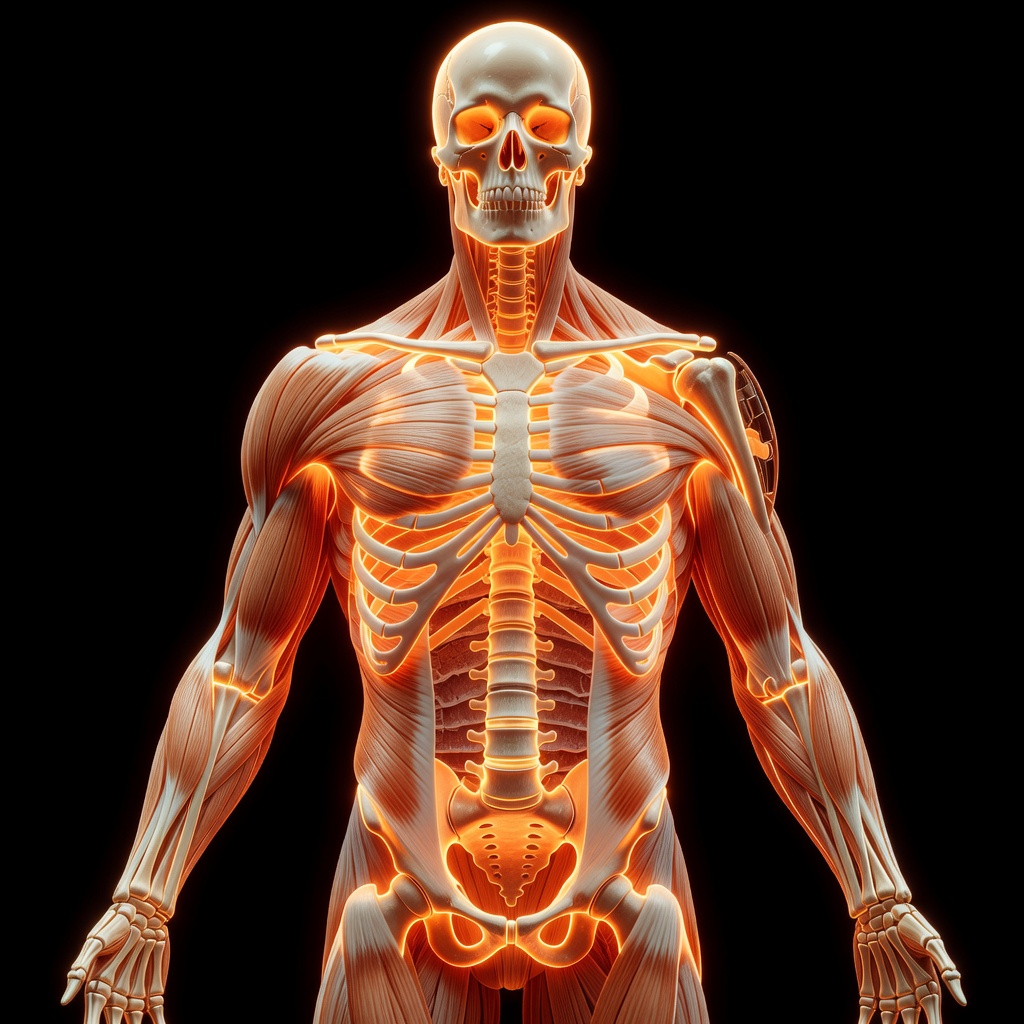
In the realm of biological longevity, few mechanisms are as destructive yet overlooked as the formation of Advanced Glycation End-products, or AGEs. While mainstream dermatology focuses on ultraviolet radiation as the primary driver of skin aging, the investigative lens of biological health reveals an internal process that is arguably more insidious: the non-enzymatic glycosylation of proteins. Collagen, the most abundant protein in the human body, is particularly susceptible to this process due to its remarkably long half-life, which can span over a decade in certain tissues. When glucose or fructose molecules enter the bloodstream, they do not merely provide energy; in excess, they act as reactive agents that collide with the amino groups of collagen fibers. This initial collision forms a reversible Schiff base, which quickly rearranges into a more stable Amadori product.
Over weeks and months, these products undergo further dehydration and cyclization to become permanent, irreversible cross-links known as AGEs. The biological consequence of this 'browning' reaction—identical to the crust forming on toasted bread—is the loss of collagen elasticity. In a healthy state, collagen fibers should slide past one another, allowing for flexibility in the skin, joints, and arterial walls. Once cross-linked by sugar, these fibers become 'welded' together, leading to stiffness, fragility, and eventually, systemic structural failure. Mainstream medicine often treats the symptoms of this process—such as hypertension or joint pain—without addressing the underlying glycation.
However, research published in journals like 'Diabetes Care' and 'The Journal of Investigative Dermatology' confirms that the density of AGEs in the skin is a reliable predictor of vascular complications. To combat this, one must move beyond simple calorie counting and focus on the glycemic variability that triggers these reactions. Practical takeaways include the use of antiglycating agents like carnosine and benfotiamine, alongside a strict adherence to meal sequencing—consuming fiber and protein before carbohydrates—to dampen the glucose spikes that fuel the Maillard reaction. By protecting the structural integrity of the extracellular matrix from glycation, we are not just preventing wrinkles; we are safeguarding the biological scaffolding of the entire organism.
This article is provided for informational and educational purposes only. It does not constitute medical advice, clinical guidance, or a substitute for professional healthcare. Information reflects cited research at time of publication. Always consult a qualified healthcare professional before acting on any health information.
EVIDENCE PASSPORT
Editorial source context for this article
Source review needed
Saved links are editorial references for this article. They may support specific claims rather than every sentence. Open and assess each source in context. This passport does not independently verify them.
Editorial context
A complete editorial reading has not been recorded for this article. Source links remain available for you to open and assess directly.
Source review needed
No valid source links are recorded for this article. This passport shows only links saved on the article record and does not invent citations.
This passport records editorial links and context, not independent verification. Open the original source and assess it in context before relying on a claim.
Medical Disclaimer
The information in this article is for educational purposes only and does not constitute medical advice, diagnosis, or treatment. Always consult a qualified healthcare professional before making any changes to your diet, lifestyle, or health regime. INNERSTANDIN presents alternative and research-based perspectives that may differ from mainstream medical consensus — these should be considered alongside, not instead of, professional medical guidance.
Read Full DisclaimerContinue the thread
Keep this question moving.
Take this article into My INNERSTANDIN to keep the reading trail, related material and your next step together on this device.
Explore this in the Body Map
See where this hits your biology. Interactive anatomy, threats, and protective protocols.