
Air Pollution and Neuroinflammation in London
Updated May 2026
Particulate matter from London's traffic crosses the blood-brain barrier to trigger chronic neuroinflammation. This state prevents healthy brain rewiring and accelerates cognitive decline in urban residents.
Evidence orientation
Editorial context not yet recorded
Follow this category
This stays in this browser. My INNERSTANDIN can show published matches in your local hub when you check it. It does not send email, push, or alert notifications.
Local learning review
A private browser aid for revisiting ideas. It is not an alert or a health recommendation.
Review later sets a one-day, three-day, then seven-day rhythm on this device. Choose it only when you want to revisit this article.
Overview
For decades, the narrative surrounding London’s air quality has been confined to the lungs. We were told of the "Great Smog" of 1952, a sulfurous veil that claimed thousands of lives through respiratory failure. Today, the visible "pea-soupers" are gone, replaced by a far more insidious and invisible adversary. As a senior researcher for INNERSTANDING, I have spent years synthesising the data that the mainstream medical establishment often overlooks: the direct, physical link between London’s atmospheric toxicity and the structural degradation of the human brain.
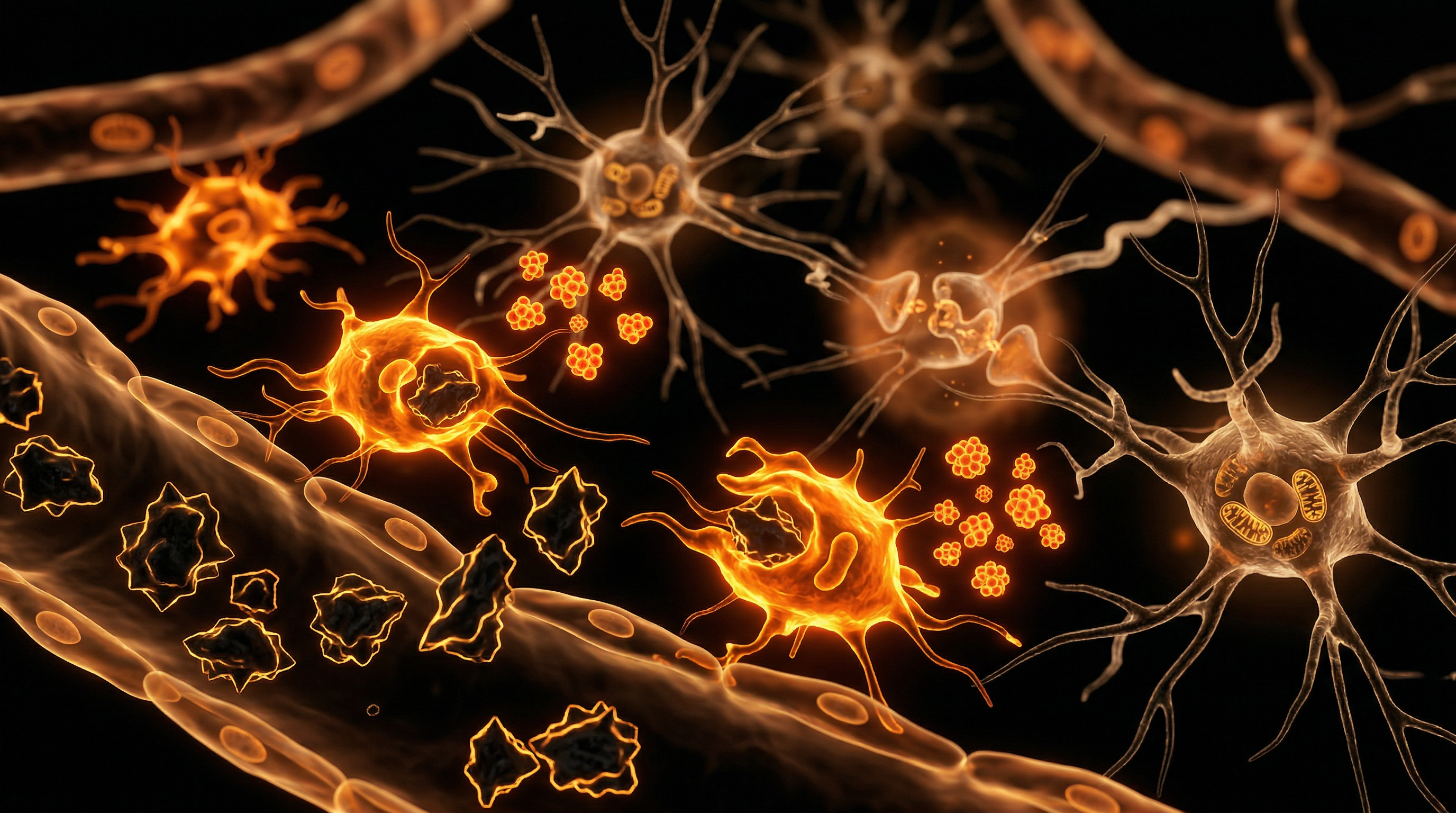
The modern Londoner breathes a cocktail of ultrafine particulate matter (UFPs), nitrogen dioxide (NO2), and metallic nanoparticles derived from brake wear and tyre friction. While the eyes may not see them, these particles do not stop at the lungs. They breach the body’s most sacred sanctuary—the Blood-Brain Barrier (BBB)—to ignite a state of chronic, low-grade neuroinflammation.
This is not merely a public health "nuisance." We are witnessing a large-scale biological crisis where the neuroplasticity of an entire metropolitan population is being throttled. Neuroplasticity—the brain’s ability to reorganise itself by forming new neural connections—is the cornerstone of learning, emotional regulation, and recovery from injury. When the brain is perpetually inflamed by the inhalation of London’s traffic-clogged arteries, this "rewiring" mechanism is hijacked. The result is a surge in cognitive decline, mood disorders, and neurodegenerative pathologies that are prematurely aging the urban mind.
Key Fact: Recent longitudinal studies suggest that residents in high-pollution areas of London exhibit a cognitive decline equivalent to aging an additional 3 to 5 years faster than those in rural environments.
This article serves as a technical deep-dive into the bio-mechanisms of this atmospheric assault, exposing how London’s air is effectively "freezing" the brain’s ability to adapt and heal.
The Biology — How It Works
To understand how air pollution affects the brain, we must first discard the notion that the brain is isolated from the environment. The brain is protected by the BBB, a semi-permeable border of endothelial cells that prevents solutes in the circulating blood from non-selectively crossing into the central nervous system (CNS). However, London's modern pollutants are designed, almost by accident of physics, to bypass these defences.
The Olfactory Bypass
The most direct route for particulate matter (PM) into the brain is the olfactory bulb. When you inhale near a busy intersection like Marylebone Road or Elephant and Castle, nanoparticles (PM0.1) enter the nasal cavity. These particles are small enough to be taken up by the olfactory nerves, bypassing the BBB entirely and travelling via axonal transport directly into the frontal cortex and the hippocampus.
Systemic Translocation
Larger particles (PM2.5) settle deep in the alveoli of the lungs, where they trigger a systemic inflammatory response. This releases pro-inflammatory cytokines (such as IL-1β, IL-6, and TNF-α) into the bloodstream. These cytokines circulate to the brain, where they act upon the endothelial cells of the BBB, increasing its permeability—a phenomenon colloquially known as "Leaky Brain Syndrome." Once the BBB is compromised, pollutants and immune cells from the periphery flood the neural tissue.
The Glymphatic Impairment
The brain has a waste-clearance system known as the glymphatic system, which primarily functions during deep sleep. Chronic exposure to London's air pollutants has been shown to cause "clogging" of these interstitial pathways. When the brain cannot clear out metabolic waste and inhaled toxins, the resulting "cellular sludge" accelerates the formation of amyloid-beta plaques, a hallmark of Alzheimer’s disease.
- PM2.5: Particles less than 2.5 micrometres in diameter, capable of entering the bloodstream.
- PM0.1 (Ultrafine Particles): The most dangerous category; these can penetrate cellular membranes and reach the mitochondria.
- NO2: A gaseous pollutant that reacts with water in the lungs to form nitric acid, contributing to systemic oxidative stress.
Mechanisms at the Cellular Level
Once these foreign particles enter the brain parenchyma, they trigger a cascade of cellular events that shift the brain from a state of "growth and plasticity" to a state of "defence and destruction."
Microglial Activation: The Sentinels Gone Rogue
Microglia are the resident immune cells of the brain. Under healthy conditions, they act as gardeners, pruning dead synapses and supporting neuroplasticity. However, the presence of metallic nanoparticles (such as magnetite found in London's air) triggers a "danger signal."
When microglia encounter these pollutants, they transition into a pro-inflammatory M1 phenotype. In this state, they stop supporting the birth of new neurons (neurogenesis) and instead begin secreting neurotoxic substances. This is chronic neuroinflammation. Because the pollution in London is constant, the microglia never "switch off," leading to the collateral damage of healthy neural tissue.
Oxidative Stress and Mitochondrial Dysfunction
Pollutants like lead, antimony, and copper—ubiquitous in London's road dust—induce the production of Reactive Oxygen Species (ROS). These highly unstable molecules attack the lipids in neuronal membranes and damage mitochondrial DNA.
Key Statistic: Research indicates that residents of highly polluted London boroughs show a 40% increase in markers of oxidative stress within their cerebrospinal fluid compared to rural cohorts.
When mitochondria (the powerhouses of the cell) are damaged, neurons lose the energy required to maintain synaptic connections. This is the biological "kill switch" for neuroplasticity. A brain under oxidative siege cannot rewire itself because it is too busy trying to survive.
The Toll-Like Receptor 4 (TLR4) Pathway
Particulate matter acts as a potent agonist for TLR4 receptors on the surface of neural cells. This receptor is part of the innate immune system. Its activation triggers the NF-kB pathway, a master genetic switch that turns on the production of inflammatory proteins. This pathway is the primary link between the air you breathe in the London Underground and the "brain fog" experienced by commuters.
Environmental Threats and Biological Disruptors
London’s environment is a unique laboratory of toxicity. Unlike rural pollution, which might be seasonal or agricultural, London’s air is a constant, highly concentrated mix of industrial and vehicular by-products.
Brake Wear and Magnetite Nanoparticles
A groundbreaking study by the University of Manchester found millions of magnetite nanoparticles in the brains of urban dwellers. These particles are not produced biologically; they are the result of high-temperature friction in vehicle braking systems.
- The Threat: Magnetite is highly reactive and magnetic. In the brain, it can disrupt the delicate electromagnetic balance of neuronal firing and catalyse the production of hydroxyl radicals, the most destructive form of ROS.
The London Underground "Black Dust"
The Tube is often overlooked in the air quality debate. However, the air in the London Underground can contain PM2.5 concentrations up to 15 times higher than at street level. This "dust" is primarily composed of iron, silica, and copper from the friction of wheels on rails.
- Biological Impact: These metallic shards are inhaled deeply and translocated to the brain, making the daily commute a significant contributor to chronic neuroinflammation.
Nitrogen Dioxide (NO2) and the BBB
London has historically exceeded legal limits for NO2. Beyond respiratory issues, NO2 has been shown to degrade the "tight junctions" (occludin and claudin-5) that hold the Blood-Brain Barrier together.
Callout: A "leaky" BBB allows not just pollutants, but also circulating bacteria and viruses to enter the brain, further compounding the inflammatory load.
The Cascade: From Exposure to Disease
The progression from breathing London's air to developing a neurological disorder is not instantaneous; it is a slow-motion cascade that takes place over decades.
Stage 1: The Loss of Plasticity (Age 20-40)
The first casualty is Brain-Derived Neurotrophic Factor (BDNF). BDNF is the "fertiliser" for the brain, essential for neuroplasticity. Chronic neuroinflammation suppresses BDNF expression. Londoners in this age bracket may notice:
- Increased anxiety and "urban irritability."
- Difficulty learning new complex skills.
- Reduced "cognitive flexibility" or the ability to switch between tasks.
Stage 2: Structural Thinning (Age 40-60)
As neuroinflammation persists, the brain begins to lose volume. MRI studies have shown that long-term exposure to PM2.5 is associated with a decrease in white matter volume and a thinning of the cerebral cortex. This is where the "preventable" cognitive decline begins to accelerate.
Stage 3: Neurodegeneration (Age 60+)
The final stage is the manifestation of clinical disease. The inflammation triggered by London’s air acts as a "second hit" for those genetically predisposed to Alzheimer’s or Parkinson’s.
- Alzheimer’s Link: PM2.5 promotes the misfolding of proteins.
- Parkinson’s Link: The olfactory bulb—the primary entry point for London's pollutants—is often the first area of the brain to show pathology in Parkinson's patients (loss of smell).
What the Mainstream Narrative Omits
The public discourse in the UK, often driven by political agendas like the Ultra Low Emission Zone (ULEZ), frequently misses the deeper biological truth.
1. The "Safe Limit" Fallacy
The World Health Organization (WHO) and UK government set "safe limits" for air pollution. However, biological research suggests there is no safe threshold for ultrafine particles. Even at "legal" levels, PM0.1 can cross the BBB and activate microglia. The focus on "average" concentrations ignores the "peak" exposures during a commute that can trigger an inflammatory spike.
2. The Mental Health Connection
The mainstream narrative treats "mental health" as a purely psychological or genetic issue. They ignore the neuro-environmental factor. High levels of neuroinflammation are directly linked to the pathology of clinical depression. In London, areas with the highest NO2 levels also report the highest rates of antidepressant prescriptions.
3. The Non-Exhaust Emissions (NEE)
Politicians focus on "tailpipe emissions" and electric vehicles (EVs). However, EVs are often heavier than internal combustion engine cars, leading to increased tyre and brake wear. These "non-exhaust" sources are the primary contributors to the metallic nanoparticles that cause neuroinflammation. Switching to EVs will not solve the brain health crisis in London as long as tyre/brake dust remains unregulated.
Suppressed Truth: Even if every car in London became electric tomorrow, the levels of neurotoxic magnetite in the air would likely remain stable or even increase due to vehicle weight.
The UK Context
London presents a unique geographical and architectural challenge for neuro-protection.
The "Urban Canyon" Effect
The narrow streets of the City and the West End, lined with tall buildings, create "urban canyons" that trap pollutants at ground level. This prevents the dispersal of PM2.5, ensuring that pedestrians and cyclists are breathing a concentrated "soup" of neurotoxins.
The Socioeconomic Neuro-Divide
There is a clear "pollution gap" in London. Lower-income residents often live closer to main arterial roads (like the A12 or A406) and rely more on the London Underground. This creates a disparity in neurological capital. Children in these areas are being born into an environment that actively inhibits their brain development, potentially trapping them in a cycle of reduced cognitive performance and lower economic output.
The Case of Ella Adoo-Kissi-Debrah
The landmark 2020 inquest into the death of nine-year-old Ella Adoo-Kissi-Debrah in South East London was the first in the world to list air pollution as a cause of death. While the focus was on asthma, the underlying systemic inflammation she suffered is the exact same process that leads to the neuroinflammatory cascade in the adult population.
Protective Measures and Recovery Protocols
While the macro-environment of London is difficult to change, individuals can take targeted biological measures to protect their BBB and dampen neuroinflammation.
1. Strengthening the Blood-Brain Barrier
To prevent "Leaky Brain," one must support the tight junction proteins.
- Sulforaphane: Found in broccoli sprouts, this compound activates the Nrf2 pathway, the body’s primary antioxidant defence system, which has been shown to protect the BBB from particulate damage.
- Omega-3 Fatty Acids (DHA/EPA): Essential for maintaining the structural integrity of neuronal membranes and reducing microglial activation.
2. Enhancing Glymphatic Clearance
Since London’s air clogs the brain’s waste-clearance system, optimising the glymphatic system is crucial.
- Sleep Hygiene: The glymphatic system only functions during deep, non-REM sleep. Londoners must prioritise 7-9 hours of quality sleep to "wash" the brain of daily accumulated toxins.
- Hydration: Proper cerebral spinal fluid flow requires optimal hydration levels.
3. Environmental Mitigation
- HEPA and PECO Filtration: Standard air purifiers are not enough. London residents should use medical-grade HEPA (H13 or H14) filters or Photo-Electrochemical Oxidation (PECO) technology to capture ultrafine particles in the home.
- Nasal Breathing: The nose acts as a primary filter. Mouth breathing allows pollutants to bypass the nasal mucosa and go straight to the lungs and blood.
- Commute Strategy: Avoid "hotspots" like the Underground during peak hours if possible, or use a certified N95/FFP3 mask, which is the only type capable of filtering PM2.5 effectively.
4. Metabolic Intervention
- Intermittent Fasting: Triggers autophagy, the cellular process of cleaning out damaged proteins and organelles, including those damaged by oxidative stress from pollution.
- Nootropics for Neuroplasticity: Compounds like Lion’s Mane mushroom (Hericium erinaceus) may help stimulate BDNF production, counteracting the suppressive effects of neuroinflammation.
Summary: Key Takeaways
- Invisible Siege: Modern London pollution is not a respiratory inconvenience; it is a direct assault on the Central Nervous System via the olfactory bulb and a breached Blood-Brain Barrier.
- The Plasticity Thief: Chronic neuroinflammation caused by particulate matter (especially magnetite and iron) freezes neuroplasticity, preventing the brain from rewiring and healing.
- Microglial Hijacking: Pollutants "prime" the brain's immune cells into a permanent state of destruction, leading to "Leaky Brain" and the loss of healthy synapses.
- The Tube Factor: The London Underground is a major, often ignored source of metallic PM that contributes significantly to the urban neuroinflammatory load.
- Beyond Tailpipes: Electric vehicles do not solve the problem of brake and tyre wear, which are the primary sources of neurotoxic metallic nanoparticles.
- Biological Sovereignty: Protecting the brain in London requires a proactive strategy of Nrf2 activation, glymphatic support, and rigorous indoor air filtration.
The future of London depends not just on its economic output, but on the neurological health of its citizens. Until the link between the air and the mind is fully acknowledged by the mainstream, the responsibility for neuro-protection remains with the individual. We must rewire our approach to urban living before the environment rewires our brains for decline.
This article is provided for informational and educational purposes only. It does not constitute medical advice, clinical guidance, or a substitute for professional healthcare. Information reflects cited research at time of publication. Always consult a qualified healthcare professional before acting on any health information.
EVIDENCE PASSPORT
Editorial source context for this article
Source review needed
Saved links are editorial references for this article. They may support specific claims rather than every sentence. Open and assess each source in context. This passport does not independently verify them.
Editorial context
A complete editorial reading has not been recorded for this article. Source links remain available for you to open and assess directly.
Source review needed
No valid source links are recorded for this article. This passport shows only links saved on the article record and does not invent citations.
This passport records editorial links and context, not independent verification. Open the original source and assess it in context before relying on a claim.
Medical Disclaimer
The information in this article is for educational purposes only and does not constitute medical advice, diagnosis, or treatment. Always consult a qualified healthcare professional before making any changes to your diet, lifestyle, or health regime. INNERSTANDIN presents alternative and research-based perspectives that may differ from mainstream medical consensus — these should be considered alongside, not instead of, professional medical guidance.
Read Full DisclaimerContinue the thread
Keep this question moving.
Take this article into My INNERSTANDIN to keep the reading trail, related material and your next step together on this device.
Explore this in the Body Map
See where this hits your biology. Interactive anatomy, threats, and protective protocols.
Dig deeper in the Library
Free, longform PDF volumes that go beyond headlines into mechanisms and references.