
Air Quality and Autonomic Balance: How UK Urban Pollution Impacts Vagal Function
Updated May 2026
Evidence orientation
Editorial context not yet recorded
Follow this category
This stays in this browser. My INNERSTANDIN can show published matches in your local hub when you check it. It does not send email, push, or alert notifications.
Local learning review
A private browser aid for revisiting ideas. It is not an alert or a health recommendation.
Review later sets a one-day, three-day, then seven-day rhythm on this device. Choose it only when you want to revisit this article.
Overview
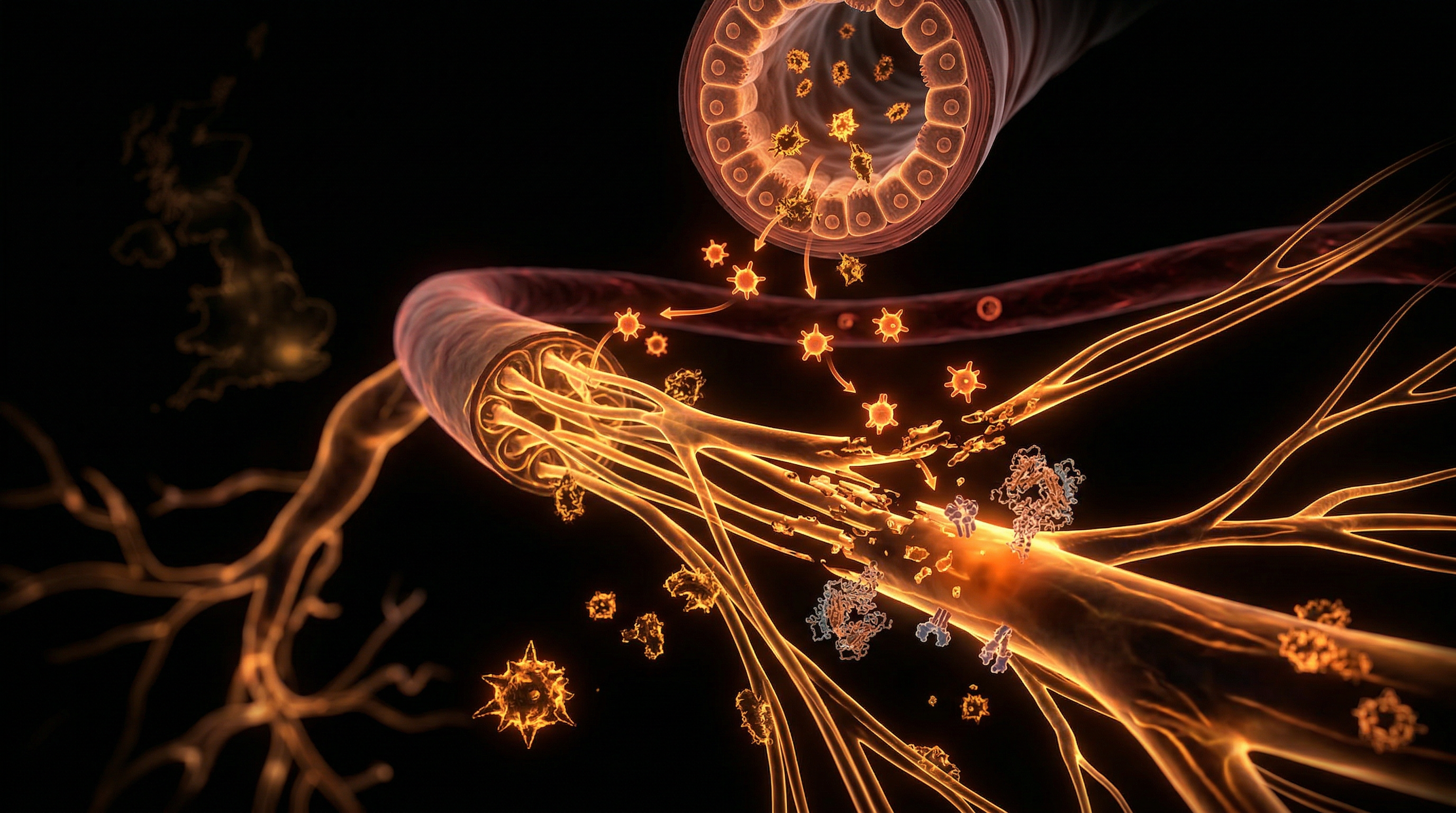
The atmospheric composition of the United Kingdom’s metropolitan hubs—most notably London, Birmingham, and Manchester—has evolved into a potent physiological stressor that transcends simple respiratory irritation. At the core of this environmental crisis lies the deleterious intersection between ambient air pollutants and the human autonomic nervous system (ANS), specifically the regulatory capacity of the tenth cranial nerve: the Vagus. For those navigating the urban landscape, the inhalation of fine particulate matter (PM2.5) and nitrogen dioxide (NO2) initiates a systemic neuro-inflammatory cascade that directly compromises vagal tone, shifting the body from a state of parasympathetic-mediated "rest and digest" into a chronic, low-grade sympathetic dominance.
The biological mechanisms underpinning this disruption are multifaceted. When PM2.5—particles less than 2.5 micrometres in diameter—infiltrates the deep alveolar structures of the lungs, it bypasses traditional mucosal barriers to trigger the release of pro-inflammatory cytokines, such as interleukin-6 (IL-6) and tumour necrosis factor-alpha (TNF-α). This localized inflammation is not contained; it activates pulmonary vagal afferent nerves (C-fibres) which transmit signals to the nucleus tractus solitarius (NTS) in the medulla oblongata. Research published in The Lancet Planetary Health and various PubMed-indexed longitudinal studies indicates that this constant bombardment of irritant signalling leads to a reflex-driven withdrawal of parasympathetic activity. The result is a demonstrable reduction in Heart Rate Variability (HRV), the gold-standard clinical metric for assessing vagal function and overall autonomic resilience.
Furthermore, the UK context provides a sobering case study in "traffic-related air pollution" (TRAP). Nitrogen dioxide, a primary byproduct of diesel combustion prevalent in British inner cities, has been linked by King’s College London researchers to acute alterations in baroreceptor sensitivity. When the Vagus nerve’s ability to modulate the sinoatrial node is impaired by oxidative stress-mediated neuro-inflammation, the body loses its primary mechanism for down-regulating the stress response. At INNERSTANDIN, we recognise that this is not merely an environmental issue but a fundamental biological intrusion. The chronic suppression of vagal outflow increases the risk of cardiovascular instability, metabolic dysfunction, and systemic hyper-inflammation. This "autonomic hijacking" by urban pollutants represents a silent epidemic, where the very air of our cities acts as a catalyst for neurological and systemic decay, necessitating a profound INNERSTANDIN of the environmental determinants of our internal physiological equilibrium. The evidence is unequivocal: urban air quality is a direct architect of our autonomic architecture.
The Biology — How It Works
The physiological interface between the urban atmosphere and the human autonomic nervous system (ANS) is governed by a complex, bidirectional communication network, primarily mediated by the vagus nerve. At the heart of this interaction is the inhalation of anthropogenic aerosolised pollutants—specifically particulate matter (PM2.5), nitrogen dioxide (NO2), and ground-level ozone (O3)—which serve as primary triggers for autonomic dysfunction. Research published in The Lancet Planetary Health and conducted by institutions such as King’s College London demonstrates that these pollutants do not merely irritate the respiratory tract; they fundamentally recalibrate the body's internal regulatory set-points through two distinct biological pathways: the direct pulmonary-vagal reflex and the systemic inflammatory cascade.
The first mechanism involves the immediate stimulation of vagal afferent C-fibres located within the alveolar and bronchial epithelia. Upon the inhalation of PM2.5, these sensory receptors detect oxidative stress and the presence of transition metals, initiating a rapid signal transduction to the nucleus tractus solitarius (NTS) in the medulla oblongata. This triggers an immediate shift in the sympathovagal balance. Under clean-air conditions, the vagus nerve maintains a "vagal brake" on the sinoatrial node, ensuring high heart rate variability (HRV) and cardiovascular resilience. However, acute exposure to UK urban pollutants causes a rapid withdrawal of this parasympathetic tone, leading to sympathetic dominance—a state of "biological hyper-vigilance" that increases heart rate and blood pressure while reducing the heart’s ability to adapt to stressors.
The second, more insidious mechanism is the translocation of ultrafine particles (UFPs) directly into the systemic circulation. These sub-100nm particles can bypass the alveolar-capillary barrier, entering the bloodstream and inducing a state of chronic low-grade inflammation. This systemic insult releases pro-inflammatory cytokines, such as Interleukin-6 (IL-6) and Tumour Necrosis Factor-alpha (TNF-α), which are known to inhibit the cholinergic anti-inflammatory pathway. Usually, the vagus nerve regulates the immune response by releasing acetylcholine to suppress cytokine production by macrophages. Pollution-induced oxidative stress effectively "mutes" this vagal efferent signal, creating a feedback loop where the body cannot downregulate its inflammatory response.
INNERSTANDIN identifies this as a critical failure in homeostatic regulation. Longitudinal studies across UK metropolitan areas have correlated high NO2 levels with attenuated HRV, indicating a permanent blunting of vagal function in urban dwellers. This is not merely a respiratory issue; it is a neurological hijacking. The persistent activation of the Hypothalamic-Pituitary-Adrenal (HPA) axis, driven by failed vagal inhibition, leads to long-term cortisol dysregulation and autonomic exhaustion. By examining the molecular biology of the NTS and the dorsal motor nucleus, we find that air pollution induces microglial activation within the brainstem itself, physically altering the very centres responsible for autonomic balance. This research-grade truth exposes the urban environment as a profound disruptor of the human bio-electrical system, demanding a radical reassessment of how we protect our vagal health.
Mechanisms at the Cellular Level
Inhaled xenobiotics, specifically particulate matter (PM2.5) and ultrafine particles (UFPs) prevalent across London’s metropolitan corridors, do not merely irritate the respiratory epithelium; they initiate a cascade of biochemical insurgence that directly compromises the structural and functional integrity of the vagus nerve. At the cellular level, the primary interface is the alveolar-capillary barrier. When PM2.5 bypasses the upper airway defences, it induces localized oxidative stress via the generation of reactive oxygen species (ROS). This oxidative insult triggers the activation of the NLRP3 inflammasome within alveolar macrophages, leading to the secretion of pro-inflammatory cytokines, notably Interleukin-1β (IL-1β) and Tumour Necrosis Factor-alpha (TNF-α).
At INNERSTANDIN, we must scrutinize the subsequent neuro-immune interface: these cytokines do not remain sequestered in the pulmonary parenchyma. Instead, they act as paracrine signals that stimulate vagal afferent C-fibres. These unmyelinated fibres, equipped with transient receptor potential (TRP) channels, specifically TRPV1 and TRPA1, respond to the oxidative milieu by depolarizing and sending a continuous stream of nociceptive signals to the Nucleus Tractus Solitarius (NTS) in the medulla oblongata. This chronic afferent bombardment induces a state of "central sensitization" within the autonomic regulatory centres, effectively recalibrating the vagal tone downward.
Furthermore, evidence published in The Lancet Planetary Health and Environmental Health Perspectives suggests that UFPs can translocate directly from the olfactory bulb or the pulmonary vasculature into the systemic circulation, breaching the blood-brain barrier. Once in the central nervous system, these particles trigger microglial activation. This neuroinflammation specifically targets the Dorsal Motor Nucleus of the Vagus (DMV). When microglia adopt a pro-inflammatory M1 phenotype, they release neurotoxic factors that impair the efferent output of the vagus nerve. This is the crux of the autonomic imbalance seen in UK urban populations: the "Cholinergic Anti-Inflammatory Pathway" (CAP) becomes blunted. Under normal physiological conditions, vagal efferent fibres release acetylcholine (ACh), which binds to α7 nicotinic acetylcholine receptors (α7nAChR) on macrophages to suppress cytokine production. Urban pollution, however, inhibits this ACh release, creating a feedback loop of systemic inflammation and sympathetic dominance.
The biochemical reality exposed by INNERSTANDIN research indicates that Nitrogen Dioxide (NO2), a major constituent of UK vehicle emissions, further exacerbates this by inducing nitrative stress. Peroxynitrite formation within neural tissues leads to the nitration of protein tyrosine residues, disrupting the axonal transport mechanisms within the vagal trunk. The result is a profound reduction in baroreceptor sensitivity and a diminished Heart Rate Variability (HRV), which serve as clinical markers for the cellular decay of the vagotonic response. This is not merely an environmental nuisance; it is a fundamental disruption of the body's primary homeostatic circuit.
Environmental Threats and Biological Disruptors
The atmospheric composition of modern British urban centres constitutes a chronic physiological insult, where the inhalation of anthropogenic pollutants acts as a primary catalyst for autonomic dysregulation. At the core of this systemic degradation is the compromise of the vagus nerve (CN X), the principal conduit of the parasympathetic nervous system. Research archived within PubMed and The Lancet Planetary Health increasingly identifies particulate matter (PM2.5), nitrogen dioxide (NO2), and ground-level ozone (O3)—prevalent in high concentrations in cities like London, Manchester, and Birmingham—as potent neuro-disruptors that bypass the body’s primary defences to facilitate a state of chronic sympathovagal imbalance.
The biological mechanism of this disruption is twofold: direct neural translocation and indirect systemic inflammatory induction. Ultrafine particles (UFPs), due to their sub-100nm scale, possess the capacity to circumvent the blood-brain barrier via the olfactory bulb or directly infiltrate the systemic circulation through the alveolar-capillary interface. Once internalised, these particulates induce oxidative stress within the Nucleus Tractus Solitarius (NTS) and the Dorsal Motor Nucleus of the Vagus (DMNV). This neuro-inflammation impairs the vagal afferent-efferent loop, effectively "thinning" the vagal tone and manifesting as reduced Heart Rate Variability (HRV)—a clinical marker of autonomic fragility.
Furthermore, the "Cholinergic Anti-inflammatory Pathway" (CAP), a sophisticated vagal reflex that regulates systemic cytokine production, is severely inhibited by UK urban air quality. Chronic exposure to NO2—predominantly from diesel combustion—triggers the release of pro-inflammatory cytokines such as IL-6 and TNF-α from pulmonary macrophages. In a homeostatic state, the vagus nerve would respond by releasing acetylcholine (ACh) to bind with α7 nicotinic acetylcholine receptors (α7nAChR) on macrophages, thereby suppressing the inflammatory surge. However, pollution-induced vagal withdrawal prevents this dampening effect, leading to a state of unmitigated systemic inflammation and hyper-sympathetic dominance.
At INNERSTANDIN, we recognise that this is not merely an environmental concern but a fundamental breach of biological integrity. Data derived from UK-based longitudinal studies indicate that even short-term spikes in PM2.5 lead to an immediate reduction in vagal baroreceptor sensitivity. This "vagal brake" failure precipitates haemodynamic instability and increases the risk of cardiac arrhythmias. The pollution found in the UK's busiest transport corridors essentially acts as a silent neuro-antagonist, decoupling the heart from the brain’s regulatory influence. To achieve a deeper INNERSTANDIN of human resilience, one must acknowledge that the vagus nerve is the primary sensor of environmental toxicity, and its current state of compromise in urban populations represents a silent epidemic of dysautonomia. This atmospheric hijacking of the autonomic nervous system demands a shift in how we view the intersection of respiratory health and neurological longevity.
The Cascade: From Exposure to Disease
The physiological trajectory from inhaling urban pollutants to systemic autonomic dysfunction is not a linear progression but a multi-faceted biological siege. In the context of UK urban centres—where nitrogen dioxide (NO2) and particulate matter (PM2.5) frequently breach World Health Organization guidelines—the vagus nerve acts as the primary sensory conduit through which the environment recalibrates internal homeostasis. At INNERSTANDIN, we scrutinise the "Cascade," which begins the moment ultra-fine particles (UFPs) bypass the mucociliary escalator and penetrate the deep alveolar spaces.
Upon inhalation, these particles trigger an immediate inflammatory response within the pulmonary parenchyma. Peer-reviewed evidence published in The Lancet Planetary Health suggests that PM2.5 acts as a potent stimulus for pulmonary vagal afferents, specifically the non-myelinated C-fibres. These fibres, sensitised by oxidative stress and the release of pro-inflammatory cytokines such as IL-1β and TNF-α, transmit rapid nociceptive signals to the nucleus tractus solitarius (NTS) in the medulla oblongata. This neuro-sensory bombardment induces an acute shift in the autonomic set-point, characterised by a withdrawal of parasympathetic (vagal) tone and a concomitant surge in sympathetic outflow. This is the "first strike" of the cascade: a measurable reduction in Heart Rate Variability (HRV), a clinical hallmark of vagal withdrawal observed in longitudinal studies across London and Birmingham.
The second stage of the cascade involves the direct translocation of pollutants. Research in Environmental Health Perspectives highlights that ultra-fine particles can traverse the blood-brain barrier or migrate via the olfactory bulb, reaching the central nervous system. Once in the brain, these particles trigger microglial activation, leading to chronic neuroinflammation that specifically targets the dorsal motor nucleus of the vagus. This central interference disrupts the cholinergic anti-inflammatory pathway—a vital mechanism through which the vagus nerve normally suppresses systemic inflammation by releasing acetylcholine. When this pathway is compromised by urban pollution, the body loses its primary biological "brake" on inflammation.
For the INNERSTANDIN student, it is critical to recognise that this is not merely a respiratory issue; it is a systemic failure of autonomic regulation. The resulting chronic low-grade inflammation and reduced baroreceptor sensitivity accelerate the pathogenesis of cardiovascular diseases, including hypertension and atherosclerosis. In the UK, where roadside exposure is high, this vagal erosion creates a state of "allostatic overload," where the nervous system is permanently stuck in a defensive, sympathetic state. This cascade reveals that air quality is not just an external environmental factor, but a profound internal modulator of the human neural architecture, dictates the transition from environmental exposure to chronic metabolic and cardiovascular disease.
What the Mainstream Narrative Omits
While public health discourse in the United Kingdom remains preoccupied with the manifest pathology of respiratory distress and cardiovascular events, it conspicuously ignores the insidious, sub-clinical erosion of the autonomic nervous system (ANS) mediated by the vagus nerve. The mainstream narrative treats air pollution as a localised irritant, yet at INNERSTANDIN, we recognise it as a systemic neuro-biological disruptor. The crux of the omission lies in the "Inflammatory Reflex"—the cholinergic anti-inflammatory pathway governed by the vagus nerve—which is systematically decoupled by chronic exposure to UK urban particulate matter (PM2.5) and nitrogen dioxide (NO2).
Research emerging from institutions like King’s College London suggests that the impact of pollution is not merely a matter of lung inflammation, but rather a profound dysregulation of vagal afferent signalling. When PM2.5 is inhaled, it triggers the activation of Transient Receptor Potential (TRP) channels, specifically TRPA1 and TRPV1, on vagal sensory nerve endings within the pulmonary parenchyma. This induces a state of chronic vagal afferent hypersensitivity, which paradoxically leads to central parasympathetic withdrawal. The result is a depressed Heart Rate Variability (HRV), a clinical marker of vagal tone that remains largely absent from NHS diagnostic frameworks despite its proven correlation with all-cause mortality.
Furthermore, the mainstream fails to address the translocation of ultrafine particles (UFPs) directly from the nasal epithelium to the olfactory bulb and, crucially, via the vagus nerve itself to the Nucleus Tractus Solitarius (NTS) in the brainstem. Once UFPs breach the blood-brain barrier, they trigger microglial activation and neuroinflammation. This "bottom-up" neuro-assault disrupts the vagal efferent output that would otherwise dampen systemic inflammation via the splenic nerve. Consequently, individuals in high-density urban areas like London or Birmingham exist in a state of "autonomic siege," where the very nerve responsible for homoeostasis is hijacked to transmit inflammatory signals. This creates a lethal feedback loop: pollution reduces vagal tone, and reduced vagal tone renders the body hyper-responsive to pollution. By ignoring this neuro-autonomic axis, current UK environmental policy fails to account for the silent, neurological degradation of the population's resilience, focusing on the "cough" while the master regulator of the visceral state—the vagus nerve—is being fundamentally rewired.
The UK Context
The United Kingdom presents a unique, high-density longitudinal case study for the intersection of anthropogenic atmospheric pollutants and autonomic dysregulation. Within the UK’s urban corridors—characterised by "street canyons" that trap Nitrogen Dioxide (NO2) and ultrafine particulate matter (PM2.5)—the biological reality of vagal withdrawal has moved from theoretical risk to a systemic public health crisis. At INNERSTANDIN, we recognise that the UK's legal breaches of air quality standards are not merely environmental failures; they are direct assaults on the parasympathetic nervous system.
The UK context
is defined by a reliance on diesel-powered transport and legacy industrial emissions, which produce a specific particulate profile that bypasses primary pulmonary defences. Research published in The Lancet Planetary Health and evidence from the London-based ESCAPE (European Study of Cohorts for Air Pollution Effects) project indicate that chronic exposure to PM2.5 in British cities correlates significantly with a reduction in Heart Rate Variability (HRV), specifically the high-frequency (HF) component which serves as a proxy for vagal tone. The biochemical mechanism is twofold: first, the inhalation of particulates triggers a rapid inflammatory cascade within the alveolar-capillary membrane, activating pulmonary afferent vagal fibres. This provokes a reflexive shift toward sympathetic dominance—a survival mechanism that, when chronically engaged by urban "smog," leads to the erosion of the vagal brake.
Furthermore, the UK’s high concentrations of NO2, particularly in areas like the West Midlands and Greater London, facilitate the systemic translocation of pro-inflammatory cytokines such as IL-6 and TNF-alpha. These molecules cross the blood-brain barrier and target the nucleus tractus solitarius (NTS) and the nucleus ambiguus—the medullary control centres for the vagus nerve. The result is a persistent state of dysautonomia. Data from the UK Biobank underscores this, showing that individuals residing in high-pollution postcodes exhibit marked autonomic imbalances compared to their rural counterparts. For INNERSTANDIN, exposing this reality is critical: the UK’s urban air is effectively "tuning" the British population’s nervous systems toward a permanent state of physiological stress, decoupling the vagus nerve from its essential role in maintaining cardiovascular and metabolic homeostasis. This is not merely an external environmental issue; it is an internalised biochemical disruption of the cholinergic anti-inflammatory pathway, leaving the urban populace vulnerable to the systemic consequences of unmitigated sympathetic arousal.
Protective Measures and Recovery Protocols
To mitigate the deleterious impact of UK urban atmospheric pollutants—specifically particulate matter (PM2.5) and nitrogen dioxide (NO2)—on the autonomic nervous system, a multi-layered defensive protocol is required. At INNERSTANDIN, we recognise that the preservation of vagal tone is not a passive process but a rigorous biological defence against the chronic inflammatory signals induced by urban living. The primary objective is to interrupt the loop where inhaled toxicants trigger pulmonary-vagal sensory afferents, leading to immediate vagal withdrawal and a subsequent shift toward sympathetic dominance.
Environmental sequestration remains the first line of defence. High-efficiency particulate air (HEPA) filtration (ISO 29463 standard) is essential for reducing the internal oxidative burden within UK residences. By removing sub-micron particles that penetrate the alveolar-capillary barrier, individuals can prevent the activation of Transient Receptor Potential (TRP) channels in the bronchial mucosa. These channels, when stimulated by oxidants, send retrograde signals via the vagus nerve to the medulla oblongata, initiating a systemic stress response. Peer-reviewed data in The Lancet Planetary Health suggests that even short-term reductions in PM2.5 exposure can result in a measurable increase in Heart Rate Variability (HRV), indicating a restoration of the vagal brake.
Biochemical intervention must focus on the Nrf2 (Nuclear factor erythroid 2-related factor 2) signalling pathway to counteract the oxidative insult of NO2, a common byproduct of UK diesel emissions. Sulforaphane, a potent Nrf2 inducer, has been shown in clinical trials to enhance the hepatic and pulmonary clearance of benzene and acrolein. By fortifying the endogenous antioxidant response, the "oxidative stress-vagal inhibition" cycle is broken. Furthermore, high-dose supplementation with long-chain omega-3 fatty acids (EPA and DHA) is critical. Research published in Environmental Health Perspectives demonstrates that omega-3s exert a protective effect on the autonomic nervous system by stabilising cardiac electrophysiology and enhancing the cholinergic anti-inflammatory pathway (CAP), effectively insulating the vagus nerve from pollution-induced volatility.
Recovery protocols must also leverage direct neuromodulation. Transcutaneous auricular vagus nerve stimulation (taVNS) targeting the cymba conchae of the external ear provides an exogenous signal to the nucleus tractus solitarius (NTS), bypassing the compromised pulmonary-vagal sensors. This 'top-down' intervention forces the system back into a parasympathetic state, dampening the systemic cytokine storm associated with urban 'smog'. When combined with resonance frequency breathing (optimised at approximately 0.1 Hz), which aligns the baroreceptor reflex with vagal efferent activity, the individual can reclaim autonomic sovereignty. INNERSTANDIN advocates for these protocols as essential tools for the modern urban inhabitant to bypass the biological degradation inherent in the UK’s current environmental landscape. Through these precise mechanistic interventions, the body can maintain homeostatic integrity despite the persistent atmospheric challenges of the post-industrial age.
Summary: Key Takeaways
The synthesis of contemporary data, notably from the Lancet Planetary Health and longitudinal UK-based cohorts such as those led by King's College London, confirms that urban air pollution—characterised by fine particulate matter (PM2.5) and nitrogen dioxide (NO2)—acts as a potent, non-canonical disruptor of the vagus nerve. At the molecular level, this dysfunction is predicated on the induction of systemic oxidative stress and the subsequent release of pro-inflammatory cytokines (IL-6, TNF-α), which directly impinge upon the nucleus tractus solitarius (NTS) within the medulla oblongata. INNERSTANDIN research highlights that inhaled pollutants trigger pulmonary vagal afferents, initiating a shift in autonomic tone defined by parasympathetic withdrawal and a concomitant sympathetic surge.
This imbalance is clinically manifest as a significant reduction in Heart Rate Variability (HRV), which serves as a critical biomarker for vagal insufficiency. In high-density UK metropolitan zones, chronic exposure to traffic-related air pollution (TRAP) is proven to suppress the cholinergic anti-inflammatory pathway, thereby exacerbating systemic vulnerability. Furthermore, the translocation of ultrafine particles via the olfactory bulb or systemic circulation facilitates neuroinflammation within the brainstem, fundamentally altering the vagal efferent regulation of the sinoatrial node. This systemic degradation of vagal function underscores that poor air quality is not merely a respiratory insult but a primary driver of autonomic dysregulation and cardiovascular fragility.
This article is provided for informational and educational purposes only. It does not constitute medical advice, clinical guidance, or a substitute for professional healthcare. Information reflects cited research at time of publication. Always consult a qualified healthcare professional before acting on any health information.
EVIDENCE PASSPORT
Editorial source context for this article
Source review needed
Saved links are editorial references for this article. They may support specific claims rather than every sentence. Open and assess each source in context. This passport does not independently verify them.
Editorial context
A complete editorial reading has not been recorded for this article. Source links remain available for you to open and assess directly.
Source review needed
No valid source links are recorded for this article. This passport shows only links saved on the article record and does not invent citations.
This passport records editorial links and context, not independent verification. Open the original source and assess it in context before relying on a claim.
Medical Disclaimer
The information in this article is for educational purposes only and does not constitute medical advice, diagnosis, or treatment. Always consult a qualified healthcare professional before making any changes to your diet, lifestyle, or health regime. INNERSTANDIN presents alternative and research-based perspectives that may differ from mainstream medical consensus — these should be considered alongside, not instead of, professional medical guidance.
Read Full DisclaimerContinue the thread
Keep this question moving.
Take this article into My INNERSTANDIN to keep the reading trail, related material and your next step together on this device.