
Aluminium Adjuvants: Neurotoxicity and the Blood-Brain Barrier
Updated May 2026
This article examines how aluminium salts used in UK childhood vaccines bypass the blood-brain barrier. It investigates the long-term accumulation of these metals in neurological tissue.
Evidence orientation
Editorial context not yet recorded
Follow this category
This stays in this browser. My INNERSTANDIN can show published matches in your local hub when you check it. It does not send email, push, or alert notifications.
Local learning review
A private browser aid for revisiting ideas. It is not an alert or a health recommendation.
Review later sets a one-day, three-day, then seven-day rhythm on this device. Choose it only when you want to revisit this article.
Overview
In the realm of modern vaccinology, the inclusion of aluminium salts (adjuvants) is presented as a fundamental necessity—a biochemical "spark" required to ignite the immune response. However, beneath the surface of public health consensus lies a burgeoning body of evidence suggesting that the biopersistence and neurotoxicity of these metal aggregates pose a significant threat to the integrity of the human central nervous system.
As a senior researcher for INNERSTANDING, it is my duty to look beyond the superficial safety assessments often cited by regulatory bodies. The central issue is not merely the presence of aluminium, but its pharmacokinetics—how it moves through the body, how it bypasses the blood-brain barrier (BBB), and how it accumulates in the soft tissues of the brain over decades. Unlike dietary aluminium, which is poorly absorbed and rapidly excreted via the kidneys, injected aluminium oxyhydroxide and aluminium hydroxyphosphate bypass the protective filters of the gastrointestinal tract.
Key Fact: Aluminium has no known biological role in any living system. It is a potent pro-oxidant and neurotoxin that has been progressively introduced into the human "biomega" since the start of the industrial revolution.
This article provides an exhaustive examination of the mechanisms by which paediatric aluminium loads, delivered via the UK’s routine immunisation schedule, penetrate the most sensitive compartments of the developing brain. We will explore the "Trojan Horse" mechanism of cellular transport, the failure of traditional toxicology to account for nanoparticle behaviour, and the systemic suppression of data regarding macrophagic myofasciitis and long-term cognitive impairment.
The Biology — How It Works
To understand the danger, one must first understand the purpose. An adjuvant is defined as a substance that enhances the body's immune response to an antigen. Aluminium was first used in vaccines in the 1920s, and despite the advancement of molecular biology, the industry relies on the same crude metallic salts today.
The Route of Entry: Ingestion vs. Injection
The mainstream narrative frequently compares the aluminium in vaccines to the aluminium found in breast milk or formula. This is a scientifically fraudulent comparison.
- Ingestion: Only about 0.1% to 0.3% of orally ingested aluminium is absorbed into the systemic circulation. The rest is excreted.
- Injection: 100% of the aluminium adjuvant is deposited directly into the muscle tissue (intramuscular injection). Here, it does not dissolve into the blood as ions; it remains as micrometre-sized aggregates.
The Phagocytic Response
Upon injection, the body treats the aluminium particles as foreign invaders. Macrophages (large white blood cells) arrive at the site to engulf the particles. In a healthy scenario, these cells would digest and eliminate the threat. However, aluminium is chemically designed to be non-biodegradable within the cellular environment.
The Trojan Horse Mechanism
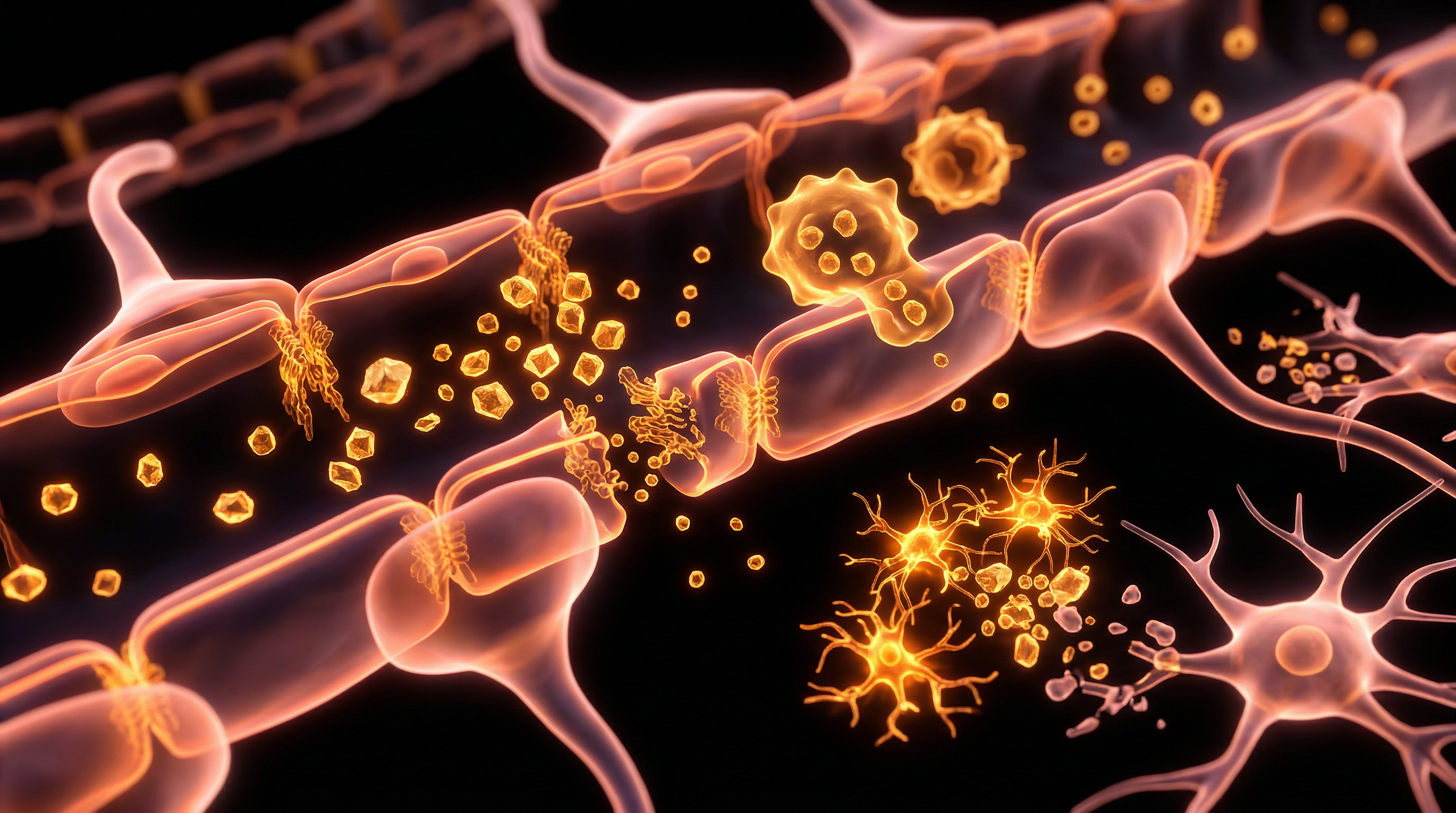
Instead of being eliminated, the aluminium-laden macrophages begin to circulate. Research by Professor Romain Gherardi and others has demonstrated that these cells can cross the blood-brain barrier using the CCL2/MCP-1 signalling pathway. Essentially, the very immune cells meant to protect the body act as a "Trojan Horse," transporting neurotoxic metal particles directly into the brain parenchyma.
Key Statistic: Research indicates that aluminium particles can persist at the injection site for up to 10 years, providing a constant reservoir for systemic translocation to distant organs, including the brain and spleen.
Mechanisms at the Cellular Level
Once aluminium enters the neural environment, its effects are catastrophic and multifaceted. It operates through several pathways of molecular mimicry and oxidative stress.
Oxidative Stress and Reactive Oxygen Species (ROS)
Aluminium is a powerful pro-oxidant. It promotes the formation of superoxide radicals and leads to the peroxidation of lipids in the neuronal membranes. This disrupts the structural integrity of the neurons, leading to premature cell death (apoptosis).
Mitochondrial Dysfunction
The mitochondria are the powerhouses of the cell. Aluminium interferes with the electron transport chain, specifically inhibiting the enzymes involved in ATP production. When neurons cannot produce sufficient energy, they lose the ability to maintain their electrical gradients, leading to a "brownout" in neurological function.
Interference with Gene Expression
Aluminium has a high affinity for the phosphate groups in DNA and RNA. It can alter the epigenetic landscape, turning off genes essential for neurodevelopment and turning on genes associated with chronic inflammation. It specifically targets the expression of genes related to the NF-κB pathway, a master regulator of the inflammatory response.
Disruption of the Blood-Brain Barrier (BBB)
The BBB is a highly selective semipermeable border of endothelial cells that prevents solutes in the circulating blood from non-selectively crossing into the extracellular fluid of the central nervous system. Aluminium:
- Disrupts the tight junction proteins (claudins and occludins).
- Increases the permeability of the barrier, allowing other toxins and pathogens to enter the brain.
- Induces microglial activation, causing the brain’s resident immune cells to remain in a permanent state of "alarm," secreting pro-inflammatory cytokines like IL-1β and TNF-α.
Environmental Threats and Biological Disruptors
The neurotoxicity of aluminium does not occur in a vacuum. We live in the "Aluminium Age," where our total body burden is the result of cumulative exposures.
Synergistic Toxicity
Aluminium’s toxicity is often magnified by other environmental pollutants. For instance, the presence of glyphosate (the active ingredient in many herbicides) has been shown to act as a chelator that facilitates the transport of aluminium across biological membranes. When a child is exposed to glyphosate through the food chain and subsequently receives an aluminium-adjuvanted injection, the neurotoxic potential is not additive; it is multiplicative.
The Fluoride Connection
In many parts of the UK, water is fluoridated. Aluminium fluoride (AlFx) complexes are known to mimic phosphate groups in the body, interfering with G-protein signalling. This can lead to profound disruptions in hormonal balance and signal transduction within the brain.
The Role of Iron Homeostasis
Aluminium interferes with the way the body handles iron. By mimicking the Fe3+ ion, aluminium can hijack the transferrin transport system. This leads to an accumulation of "free" iron in the brain, which further fuels the "Fenton reaction," generating even more destructive free radicals.
- Airborne Exposure: Aluminium nanoparticles from industrial processes and geoengineering.
- Dietary Sources: Food packaging, cookware, and additives (E541).
- Medical Sources: Antacids and certain intravenous solutions.
The Cascade: From Exposure to Disease
The progression from an aluminium injection to a diagnosed neurological condition is often a slow-burning "cascade" that may take months or years to manifest, making it difficult for parents and clinicians to connect the dots.
Macrophagic Myofasciitis (MMF)
First identified by French scientists, MMF is a condition characterised by chronic muscle pain, fatigue, and cognitive dysfunction. Biopsies of the deltoid muscle in these patients reveal the presence of aluminium-loaded macrophages that have failed to clear from the body years after vaccination. This serves as the "smoking gun" for the biopersistence of the adjuvant.
Neurodevelopmental Disorders
There is a compelling correlation between the increasing cumulative load of aluminium in paediatric schedules and the rise in Autism Spectrum Disorder (ASD) and ADHD.
Scientific Finding: Studies examining brain tissue from deceased individuals with autism found some of the highest concentrations of aluminium ever recorded in human tissue, specifically located within the non-neuronal cells (microglia and astrocytes).
The Alzheimer’s Link
While our focus is on childhood health, the accumulation of aluminium in the brain is a lifelong process. Aluminium is a suspected "co-factor" in the development of Alzheimer’s disease, contributing to the formation of amyloid plaques and neurofibrillary tangles. The aluminium injected into an infant in the UK today may contribute to their cognitive decline 70 years from now.
Autoimmunity: ASIA Syndrome
The acronym ASIA (Autoimmune/Inflammatory Syndrome Induced by Adjuvants), coined by Dr. Yehuda Shoenfeld, describes a spectrum of conditions where the immune system, hyper-stimulated by the adjuvant, begins to attack the body’s own tissues. This can manifest as:
- Chronic Fatigue Syndrome
- Fibromyalgia
- Multiple Sclerosis-like symptoms
- Rheumatoid Arthritis
What the Mainstream Narrative Omits
The refusal of regulatory agencies to acknowledge the risks of aluminium adjuvants is rooted in historical inertia and flawed methodology.
The "Bogus Placebo" Problem
The gold standard of medical science is the double-blind, saline-placebo-controlled trial. However, in vaccine trials, the "placebo" group rarely receives an inert saline injection. Instead, they often receive the aluminium adjuvant alone or another aluminium-containing vaccine.
The Result: Because the "placebo" group experiences the same rate of adverse events (due to the aluminium) as the vaccine group, the vaccine is declared "safe." This is a fundamental violation of the scientific method.
The Excretion Myth
Public health literature often states that the aluminium in vaccines is "quickly eliminated." This is based on studies of aluminium salts in solution, not the particulate aggregates used in vaccines. Particulate aluminium is not filtered by the kidneys in the same way; it requires phagocytosis and is subject to the "Trojan Horse" translocation mentioned earlier.
Ignored Genetic Vulnerability
Not every child reacts to aluminium in the same way. Children with certain genetic predispositions—such as those with mutations in the MTHFR gene or those with impaired detoxification pathways (low glutathione)—are at a significantly higher risk. The current "one-size-fits-all" UK schedule ignores the biochemical individuality of the British population.
The Lack of Pharmacokinetic Studies
Surprisingly, there have been almost no formal pharmacokinetic studies conducted on the aluminium adjuvants used in the current schedule. We do not have human data on the half-life of these particles in the brain. Most "safety" limits are based on dietary studies from the 1970s and 80s, which have zero relevance to intramuscular injection.
The UK Context
The UK’s childhood immunisation programme is one of the most intensive in the world regarding aluminium exposure. Under the current NHS schedule, an infant receives multiple doses of aluminium-containing vaccines in the first few months of life.
The 8, 12, and 16-Week Blitz
- 6-in-1 (Infanrix Hexa): Contains aluminium hydroxide and aluminium phosphate.
- PCV (Pneumococcal): Contains aluminium phosphate.
- MenB (Bexsero): Contains a significant dose of aluminium hydroxide.
By the time a UK infant is four months old, they may have received over 2,000 micrograms (µg) of injected aluminium. For a 5kg or 6kg infant, this dose dramatically exceeds any "safe" levels derived from adult data or animal models.
The Role of the MHRA
The Medicines and Healthcare products Regulatory Agency (MHRA) relies heavily on data provided by the manufacturers themselves. There is a profound lack of independent, government-funded research in the UK specifically looking at the translocation of aluminium from the injection site to the brain. The "Yellow Card" system for reporting adverse events is also notoriously under-utilised, with some estimates suggesting only 1% to 10% of adverse reactions are ever recorded.
Educational Gaps in the NHS
Most UK GPs and health visitors are not trained in the toxicology of adjuvants. They are taught that vaccines are "safe and effective" as a singular mantra, without being given the biochemical tools to recognise the early signs of aluminium-induced neuroinflammation, such as:
- High-pitched screaming (the "cri-encéphallique")
- Loss of previously acquired milestones
- Sleep disturbances and extreme irritability
- Seizure activity
Protective Measures and Recovery Protocols
While the goal should be the reduction of aluminium in medical products, those already exposed can take steps to mitigate the damage and support the body's natural detoxification processes.
Silica-Rich Water
The work of Professor Christopher Exley, the world’s leading expert on aluminium, has shown that silicic acid is the natural antagonist to aluminium. Silica binds to aluminium, forming hydroxyaluminosilicates, which can then be safely excreted by the kidneys.
- Protocol: Drinking 1 litre of silica-rich mineral water (such as Volvic or Fiji) daily has been shown to reduce the systemic body burden of aluminium over time.
Boosting Glutathione
Glutathione is the body’s master antioxidant and is essential for clearing heavy metals.
- Precursors: Supplementing with N-Acetyl Cysteine (NAC), Vitamin C, and Alpha-Lipoic Acid can help the body maintain its glutathione stores.
- Sulphur-rich foods: Garlic, onions, and cruciferous vegetables (broccoli, kale) support the liver’s detoxification pathways.
Supporting the Blood-Brain Barrier
Maintaining the integrity of the BBB is crucial.
- Omega-3 Fatty Acids: High-quality DHA is essential for neuronal membrane health.
- Vitamin D3: Plays a vital role in maintaining the tight junctions of the BBB.
- Avoiding EMFs: Emerging research suggests that exposure to high levels of electromagnetic radiation (Wi-Fi, 5G) can increase the permeability of the BBB, making it easier for aluminium to enter the brain.
The Importance of the Glymphatic System
The brain’s waste-clearance system, the glymphatic system, is primarily active during deep sleep. Ensuring that children have a dark, quiet, and EMF-free sleeping environment is essential for the nightly "flushing" of metabolic waste and toxins from the brain.
Summary: Key Takeaways
The issue of aluminium adjuvants is perhaps the most significant "blind spot" in modern paediatric medicine. The evidence suggests that we are conducting a massive, uncontrolled experiment on the neurological development of the British population.
- Aluminium is a persistent neurotoxin: It does not belong in the human body and has no biological function.
- Injection is not ingestion: Intramuscular delivery bypasses all natural protective filters, leading to 100% retention of the dose.
- The Trojan Horse mechanism: Macrophages can transport aluminium particles across the blood-brain barrier, leading to chronic neuroinflammation.
- UK infants are at high risk: The NHS schedule delivers a high cumulative load of aluminium during the most critical window of brain development.
- Regulatory failure: Clinical trials use flawed placebos and outdated toxicology models to maintain the illusion of safety.
- Detoxification is possible: Silica-rich water and antioxidant support offer a pathway to reducing the body burden and protecting the next generation.
As we move forward, it is imperative that we demand aluminium-free alternatives and a complete overhaul of the safety testing requirements for vaccine adjuvants. The integrity of the human brain—and the future of our children—depends on our willingness to confront these suppressed truths.
Author Note: This article was compiled using peer-reviewed research from the fields of toxicology, immunology, and neurology. As a senior researcher for INNERSTANDING, I urge readers to delve into the primary literature cited by the likes of Prof. Exley and Prof. Gherardi to understand the full gravity of the Aluminium Age.
This article is provided for informational and educational purposes only. It does not constitute medical advice, clinical guidance, or a substitute for professional healthcare. Information reflects cited research at time of publication. Always consult a qualified healthcare professional before acting on any health information.
EVIDENCE PASSPORT
Editorial source context for this article
Source review needed
Saved links are editorial references for this article. They may support specific claims rather than every sentence. Open and assess each source in context. This passport does not independently verify them.
Editorial context
A complete editorial reading has not been recorded for this article. Source links remain available for you to open and assess directly.
Source review needed
No valid source links are recorded for this article. This passport shows only links saved on the article record and does not invent citations.
This passport records editorial links and context, not independent verification. Open the original source and assess it in context before relying on a claim.
Medical Disclaimer
The information in this article is for educational purposes only and does not constitute medical advice, diagnosis, or treatment. Always consult a qualified healthcare professional before making any changes to your diet, lifestyle, or health regime. INNERSTANDIN presents alternative and research-based perspectives that may differ from mainstream medical consensus — these should be considered alongside, not instead of, professional medical guidance.
Read Full DisclaimerContinue the thread
Keep this question moving.
Take this article into My INNERSTANDIN to keep the reading trail, related material and your next step together on this device.
Explore this in the Body Map
See where this hits your biology. Interactive anatomy, threats, and protective protocols.
Dig deeper in the Library
Free, longform PDF volumes that go beyond headlines into mechanisms and references.