
ApoB vs LDL: The Statistical Failure of Traditional Cholesterol Testing
Published May 2026
An analysis of why apolipoprotein B concentration is a superior predictor of atherosclerotic risk than LDL-C.
Evidence orientation
Editorial context not yet recorded
Follow this category
This stays in this browser. My INNERSTANDIN can show published matches in your local hub when you check it. It does not send email, push, or alert notifications.
Local learning review
A private browser aid for revisiting ideas. It is not an alert or a health recommendation.
Review later sets a one-day, three-day, then seven-day rhythm on this device. Choose it only when you want to revisit this article.
Overview
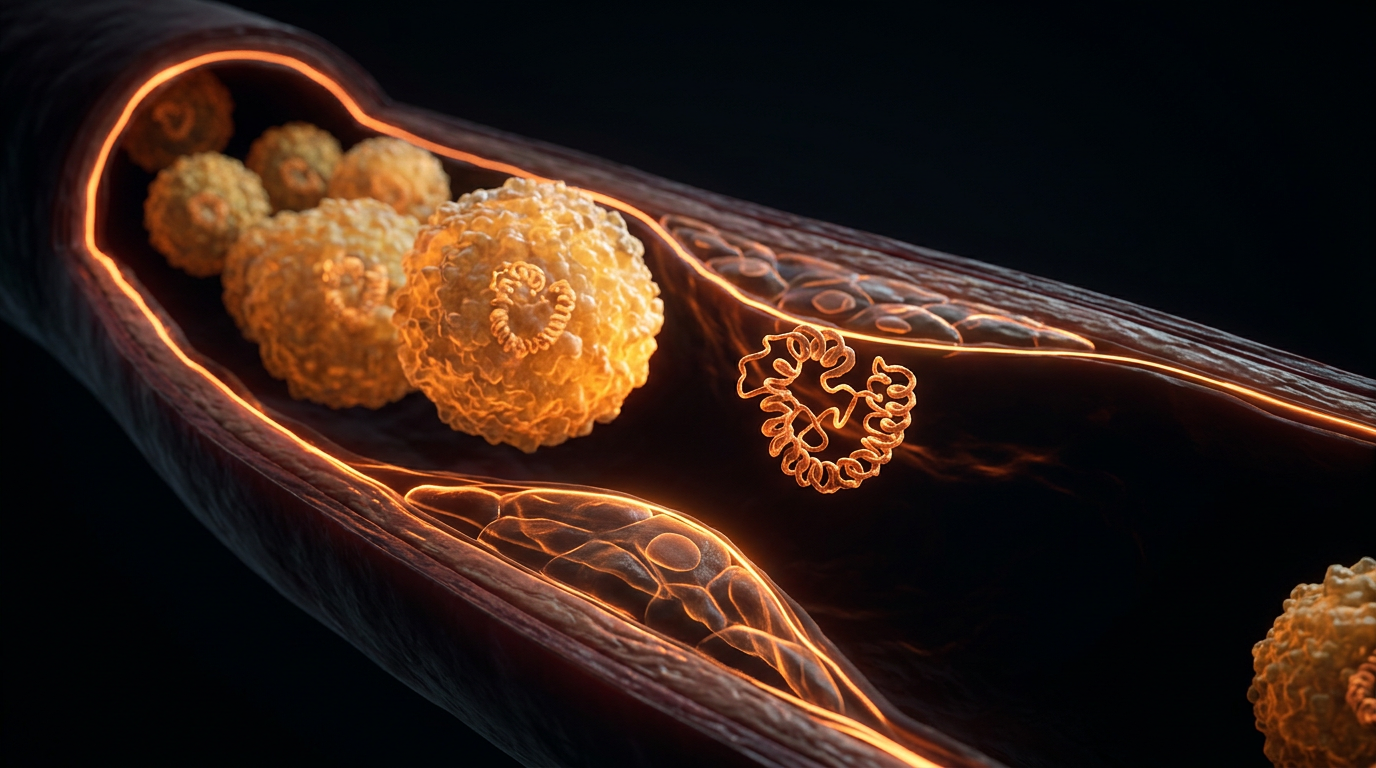
For decades, the clinical paradigm of lipidology within the United Kingdom’s National Health Service (NHS) and global cardiovascular frameworks has been anchored to the quantification of Low-Density Lipoprotein Cholesterol (LDL-C). However, at INNERSTANDIN, we identify this reliance as a profound statistical abstraction that frequently obscures the actual pathophysiological drivers of atherosclerotic cardiovascular disease (ASCVD). The fundamental failure of the traditional lipid panel lies in its measurement of "cargo" rather than "vector." While LDL-C measures the total mass of cholesterol contained within LDL particles, it provides no insight into the concentration of the particles themselves. This distinction is not merely academic; it is the difference between accurate risk stratification and systemic diagnostic failure.
The biological reality of atherogenesis is a stochastic process governed by the number of apolipoprotein B-100 (ApoB) containing lipoproteins that transit the vascular endothelium. Every atherogenic particle—including VLDL, IDL, and LDL, as well as the highly inflammatory Lp(a)—possesses exactly one molecule of ApoB. This 1:1 stoichiometry renders ApoB an absolute census of the total number of particles capable of infiltrating the subendothelial space. Peer-reviewed evidence, most notably meta-analyses published in The Lancet and data from the UK Biobank, consistently demonstrates that when LDL-C and ApoB levels are discordant, cardiovascular risk tracks decisively with the particle count (ApoB), not the cholesterol mass (LDL-C).
This "discordance" is particularly prevalent in the UK population, where the rising incidence of metabolic syndrome, insulin resistance, and type 2 diabetes has shifted the lipid phenotype toward "small dense LDL." In these individuals, the LDL particles are depleted of cholesterol, meaning more particles are required to transport the same mass of sterol. Consequently, a patient may present with a deceptively 'normal' LDL-C of 2.5 mmol/L while harbouring a dangerously elevated ApoB concentration. The traditional test essentially counts the volume of the passengers while ignoring the number of vehicles on the road; yet, it is the vehicles that crash into the arterial wall.
Mechanistically, the retention of these lipoproteins within the arterial intima is mediated by the electrostatic interaction between the positively charged residues on the ApoB protein and negatively charged proteoglycans in the extracellular matrix. This entrapment is the requisite first step in the formation of the fatty streak. By failing to measure ApoB, current NICE (National Institute for Health and Care Excellence) guidelines continue to utilise a proxy that is statistically blind to the high-particle/low-cholesterol phenotype. At INNERSTANDIN, we assert that the transition from LDL-C to ApoB represents a necessary evolution from 20th-century analytical shortcuts to 21st-century precision medicine, exposing the biological truth that particle number is the primary determinant of cumulative vascular insult.
The Biology — How It Works
To understand the systemic failure of the standard lipid panel, one must first dismantle the biological conflation between cholesterol mass and lipoprotein concentration. In the traditional clinical setting across the UK, Low-Density Lipoprotein Cholesterol (LDL-C) is utilised as the primary proxy for cardiovascular risk. However, LDL-C merely measures the total mass of cholesterol contained within LDL particles; it does not account for the particles themselves. At INNERSTANDIN, we posit that this is a critical analytical oversight, as the fundamental driver of atherogenesis is not the volume of the cargo, but the number of the vehicles.
Every atherogenic lipoprotein—including Very Low-Density (VLDL), Intermediate-Density (IDL), and Low-Density (LDL) particles, as well as Lipoprotein(a)—is scaffolded by a single molecule of Apolipoprotein B-100 (ApoB). This 1:1 stoichiometric ratio ensures that a plasma ApoB assay provides an absolute census of the total number of atherogenic particles. The biological significance of this census cannot be overstated. According to the "response-to-retention" hypothesis, pioneered by Williams and Tabas and corroborated by extensive PubMed-indexed longitudinal studies, the initiation of an atherosclerotic lesion is a stochastic process governed by particle flux.
The mechanism is rooted in the hydrodynamic radius of ApoB-containing lipoproteins. Particles smaller than approximately 70 nanometres in diameter can readily traverse the vascular endothelium via transcytosis or through intercellular junctions. Once within the sub-endothelial space (the intima), these particles interact with the sub-endothelial matrix. The positively charged residues on the ApoB molecule bind to the negatively charged sulphate groups of intimal proteoglycans. This entrapment is the "priming" event of atherosclerosis. Once retained, the particles undergo oxidative and enzymatic modifications, triggering a pro-inflammatory cascade involving monocyte recruitment and the subsequent formation of macrophage-derived foam cells.
The statistical failure of LDL-C arises from "discordance." In patients with metabolic syndrome, insulin resistance, or Type 2 Diabetes—conditions increasingly prevalent in the UK—lipoprotein remodeling often results in "small, dense LDL" (sdLDL). These particles are cholesterol-depleted but highly numerous. A patient may present with a "healthy" LDL-C of 2.5 mmol/L, yet possess an alarmingly high ApoB count because their cholesterol is distributed across a vast number of small particles rather than fewer large ones. Research published in The Lancet and data derived from the UK Biobank have demonstrated that when LDL-C and ApoB levels are discordant, the risk of myocardial infarction tracks exclusively with the particle count (ApoB), rendering the traditional LDL-C measurement biologically irrelevant and clinically misleading.
At INNERSTANDIN, our synthesis of the evidence indicates that the probability of intimal retention is a direct function of the total number of ApoB molecules present. Therefore, measuring the cholesterol mass (LDL-C) while ignoring the particle number (ApoB) is equivalent to measuring the weight of lead in a firing range to determine the probability of being hit, rather than counting the number of bullets being fired. The biological reality is that ApoB is the primary causal agent in the development of atherosclerotic cardiovascular disease (ASCVD), and the reliance on LDL-C is a relic of 20th-century analytical limitations that fails to capture the true atherogenic burden of the individual.
Mechanisms at the Cellular Level
To comprehend the systemic failure of traditional lipidomics, one must interrogate the biophysical reality of the subendothelial space, moving beyond the reductive 'mass-based' measurements of Low-Density Lipoprotein Cholesterol (LDL-C). At INNERSTANDIN, we recognise that the obsession with the weight of cholesterol carried within a particle—the LDL-C metric—ignores the primary driver of atherogenesis: the particle count, as defined by Apolipoprotein B (ApoB). Every atherogenic lipoprotein, whether it be VLDL, IDL, or LDL, possesses exactly one molecule of ApoB-100. This stoichiometric precision provides an absolute census of the lipoproteins capable of infiltrating the arterial wall, a metric that LDL-C frequently misrepresents through the phenomenon of discordance.
The cellular mechanism of atherosclerosis begins not with the presence of cholesterol itself, but with the transcytosis of ApoB-containing lipoproteins across the vascular endothelium into the tunica intima. Research published in The Lancet and the Journal of the American College of Cardiology underscores the 'Response-to-Retention' hypothesis as the foundational pathophysiological imperative. Once within the subendothelial space, the positively charged residues on the surface of the ApoB-100 protein moiety facilitate a high-affinity ionic interaction with the negatively charged sulphate groups of proteoglycans, such as chondroitin sulphate, in the extracellular matrix. It is this specific molecular 'tethering'—facilitated by the ApoB protein, not the cholesterol cargo—that traps the particle within the arterial wall.
The statistical failure of traditional testing becomes evident when considering 'Small Dense LDL' (sdLDL) phenotypes. In a patient with high levels of sdLDL, the total volume of cholesterol (LDL-C) may appear within 'normal' reference ranges according to standard NHS guidelines, yet the absolute number of particles (ApoB) is dangerously elevated. Smaller particles exhibit enhanced endothelial permeability and a higher binding affinity for intimal proteoglycans. Furthermore, these trapped particles undergo oxidative modification, forming oxLDL. This chemical transformation renders them unrecognisable to the standard LDL receptor (LDLR) but highly attractive to scavenger receptors (such as CD36 and SR-A1) on macrophages.
This uncontrolled uptake triggers the formation of foam cells, the hallmark of the fatty streak. Because each particle delivers its cargo into the macrophage, a higher ApoB count—even with low LDL-C—accelerates the rate of foam cell accumulation. By focusing on cholesterol mass rather than the ApoB structural scaffold, traditional testing fails to account for the particle-driven flux that dictates the speed of plaque progression. To achieve true INNERSTANDIN of cardiovascular risk, one must move past the surrogate of 'mass' and confront the cellular reality of particle density and retention.
Environmental Threats and Biological Disruptors
The pervasive reliance on Low-Density Lipoprotein Cholesterol (LDL-C) as the primary biomarker for cardiovascular risk assessment represents a significant clinical oversight in the context of modern environmental and biological disruptors. At INNERSTANDIN, we must scrutinise the biochemical reality that LDL-C measures the mass of cholesterol carried within particles, whereas Apolipoprotein B (ApoB) quantifies the actual number of atherogenic lipoproteins. This distinction is not merely academic; it is the difference between identifying and overlooking the primary driver of sub-endothelial lipid accumulation.
The modern British environment, characterised by a high prevalence of ultra-processed food (UPF) consumption and sedentary lifestyles, has shifted the population’s metabolic baseline toward insulin resistance and hyperinsulinaemia. This physiological state acts as a profound biological disruptor, altering the composition of the lipid profile. In insulin-resistant states, the liver overproduces Very-Low-Density Lipoproteins (VLDL), which are subsequently remodelled by cholesteryl ester transfer protein (CETP) into small, dense LDL (sdLDL) particles. These particles are depleted of cholesterol but are highly enriched in ApoB. Consequently, a patient may present with "normal" LDL-C levels whilst harbouring an excessively high number of small, pro-atherogenic particles—a phenomenon known as discordance. Research published in The Lancet and various JAMA meta-analyses confirms that when LDL-C and ApoB are discordant, the risk of cardiovascular events tracks consistently with ApoB, rendering the traditional LDL-C test statistically impotent.
Furthermore, environmental pollutants—specifically endocrine-disrupting chemicals (EDCs) such as phthalates and bisphenols, which are ubiquitous in the UK’s industrial landscape—have been shown to interfere with the liver’s X receptor (LXR) and farnesoid X receptor (FXR) pathways. These disruptions further skew the particle-to-mass ratio, accelerating the formation of remnant lipoproteins. Unlike larger, cholesterol-rich particles, these small ApoB-containing remnants easily penetrate the arterial intima. Once sequestered, the ApoB-100 molecule's positively charged residues bind to the negatively charged proteoglycans of the extracellular matrix. This "trapping" mechanism is the rate-limiting step of atherogenesis. Traditional testing, which ignores the total particle flux (ApoB) in favour of cholesterol volume (LDL-C), fails to account for this sub-endothelial entrapment potential.
The failure of the traditional lipid panel is exacerbated by the atmospheric presence of particulate matter (PM2.5) in urban centres like London and Manchester. PM2.5 exposure induces systemic oxidative stress and promotes the oxidation of ApoB-containing particles (oxLDL). Oxidised particles are more readily internalised by macrophages via scavenger receptors, leading to rapid foam cell formation. Because LDL-C assays do not differentiate between native and modified particles, nor do they reflect particle count, they provide a false sense of security to millions of metabolically challenged individuals. To achieve true INNERSTANDIN of cardiovascular pathology, we must move beyond the mass-based metrics of the 20th century and adopt ApoB as the gold standard for assessing the biological burden of atherogenic lipoproteins.
The Cascade: From Exposure to Disease
The pathogenesis of atherosclerosis is not a stochastic event of ageing, but a cumulative, dose-dependent process driven by the persistent exposure of the arterial wall to apolipoprotein B-containing lipoproteins. While traditional clinical practice in the United Kingdom, guided largely by NICE protocols, has historically prioritised Low-Density Lipoprotein Cholesterol (LDL-C) as the primary biomarker for cardiovascular risk, this reliance constitutes a fundamental statistical and biological oversight. LDL-C measures the total mass of cholesterol sequestered within LDL particles, whereas ApoB provides an exact 1:1 quantification of the total number of atherogenic particles—including VLDL, IDL, and Lp(a). At INNERSTANDIN, we recognise that the initiation of the atherosclerotic cascade is determined by particle number and flux, rather than the volumetric mass of the cargo they carry.
The biological cascade begins with the transcytosis of ApoB-containing lipoproteins across the vascular endothelium into the subendothelial space. This movement is primarily driven by a concentration gradient; however, it is the particle count (ApoB) that dictates the probability of particle entrapment within the arterial intima. Once within the intima, these particles interact with subendothelial proteoglycans, specifically biglycan and versican, through ionic interactions between the positively charged basic amino acid residues on the ApoB-100 molecule and the negatively charged sulphate groups on glycosaminoglycans. This "Response-to-Retention" hypothesis, as extensively documented in The Lancet and by researchers such as Tabas et al., identifies this sequestration as the critical rate-limiting step in atherogenesis.
Once sequestered, the trapped lipoproteins undergo oxidative and enzymatic modifications, transforming into highly bioactive, pro-inflammatory ligands. These modified particles trigger the expression of adhesion molecules, such as VCAM-1 and ICAM-1, on the endothelial surface, which recruit circulating monocytes to the site of infiltration. Upon entry into the intima, these monocytes differentiate into macrophages and, via scavenger receptors like CD36 and SR-A1, initiate the unregulated uptake of modified lipids. This process, which bypasses the standard LDL-receptor feedback loop, culminates in the formation of lipid-laden foam cells—the histological hallmark of the fatty streak.
The statistical failure of LDL-C is most profound in "discordant" patients—those with high particle counts but low cholesterol per particle, a phenotype common in the UK’s growing population of individuals with metabolic syndrome and type 2 diabetes. In these cases, small dense LDL particles predominate; because they carry less cholesterol, the standard LDL-C metric remains deceptively low while the ApoB count remains high. Evidence from the UK Biobank and the INTERHEART study demonstrates that ApoB is a significantly more robust predictor of myocardial infarction because it captures the total cumulative burden of all atherogenic vehicles. The cascade is not fueled by the cholesterol itself, which is merely a passive passenger; it is driven by the ApoB-wrapped particle that penetrates the endothelium and triggers the chronic inflammatory response. Without the ApoB particle to facilitate retention, the cholesterol cargo would remain intravascular and inert, highlighting why INNERSTANDIN advocates for the shift toward particle-based metrics in preventative cardiology.
What the Mainstream Narrative Omits
Conventional lipidology remains shackled to the mass-based quantification of Low-Density Lipoprotein Cholesterol (LDL-C), a surrogate marker that fundamentally conflates total sterol payload with particle pathogenicity. At INNERSTANDIN, we recognise that the mainstream narrative fails to address the biophysical reality of atherogenesis: it is not the volume of cholesterol transported that dictates risk, but the numerical concentration of the vehicles themselves. This statistical blind spot, often termed 'LDL discordance', masks significant residual cardiovascular risk in patients who appear 'normal' on a standard NHS lipid profile.
The biological imperative for switching to Apolipoprotein B-100 (ApoB) testing lies in its stoichiometric precision. Every single potentially atherogenic lipoprotein—including Very Low-Density Lipoprotein (VLDL), Intermediate-Density Lipoprotein (IDL), Large Buoyant LDL, and the highly inflammatory Lipoprotein(a)—carries exactly one molecule of ApoB. Therefore, measuring ApoB provides an absolute census of the total number of particles capable of infiltrating the arterial wall. In contrast, LDL-C merely measures the weight of the cargo. This distinction is critical because the translocation of lipoproteins into the tunica intima is a gradient-driven, stochastic process. A higher particle count (ApoB) increases the frequency of collisions with the vascular endothelium, thereby elevating the probability of subendothelial entrapment and subsequent foam cell formation, regardless of the total cholesterol mass those particles carry.
Research published in The Lancet and studies utilising the UK Biobank registry consistently demonstrate that when LDL-C and ApoB levels are discordant—common in patients with metabolic syndrome, type 2 diabetes, or high triglycerides—the risk of myocardial infarction tracks exclusively with ApoB. Patients with low LDL-C but high ApoB (indicative of a high concentration of small, dense LDL particles) are frequently misclassified as low-risk by current NICE guidelines. These smaller particles exhibit reduced affinity for the LDL receptor, prolonged half-life in systemic circulation, and increased susceptibility to non-enzymatic glycation and oxidation. By omitting ApoB, mainstream diagnostics overlook the 'atherogenic flux'—the actual rate at which particles enter the arterial wall. This failure to account for particle number rather than mass represents a systemic diagnostic inadequacy that INNERSTANDIN seeks to rectify through the lens of advanced molecular haemodynamics. Progress in cardiovascular preventative medicine necessitates a shift from these archaic 20th-century proxies toward a more granular, particle-centric modality.
The UK Context
Within the clinical landscape of the United Kingdom, the National Health Service (NHS) continues to lean heavily upon the Friedewald-calculated or direct measurement of low-density lipoprotein cholesterol (LDL-C) as the primary arbiter of cardiovascular risk. However, this adherence to mass-based metrics represents a significant ontological error in lipidology. At INNERSTANDIN, our synthesis of the latest UK Biobank data reveals a systemic failure in current diagnostic protocols: LDL-C is a measure of cholesterol mass, whereas Apolipoprotein B (ApoB) provides a precise quantification of atherogenic particle number. Because every potentially atherogenic lipoprotein—including VLDL, IDL, and LDL—contains exactly one molecule of ApoB-100, measuring ApoB serves as a superior proxy for the total concentration of particles capable of infiltrating the arterial intima.
The statistical failure within the UK context is most visible through the lens of discordance. Research published in The Lancet and JAMA Cardiology, utilizing the expansive UK Biobank cohort of nearly half a million participants, consistently demonstrates that when LDL-C and ApoB levels diverge, the risk of ischaemic heart disease follows the ApoB count. This is particularly critical in the British population, where rising rates of type 2 diabetes and metabolic syndrome lead to a preponderance of small, dense LDL particles (sdLDL). These particles are cholesterol-depleted but highly numerous. Consequently, a patient may present with an 'acceptable' LDL-C level according to NICE guidelines (NG238), yet possess a dangerously elevated ApoB count. This "masked risk" leads to the systemic undertreatment of high-risk individuals who are falsely reassured by traditional lipid panels.
The biological mechanism of this failure is rooted in the "particle-over-mass" hypothesis. Atherogenesis is not driven by the total volume of cholesterol cargo, but by the probability of a particle colliding with and becoming entrapped within the subendothelial space. Traditional UK testing ignores the haemodynamic and structural reality that a higher number of smaller particles increases the likelihood of Proteoglycan-mediated entrapment. By failing to integrate ApoB into standard primary care screens, the UK medical establishment persists in a state of statistical obsolescence, miscalculating the hazard ratios for millions. INNERSTANDIN asserts that the transition from LDL-C to ApoB is not merely a technical preference but a requirement for biological veracity in preventative cardiology. Until the NHS adopts ApoB-centric screening, the UK's "cholesterol-lowering" programmes will continue to miss the underlying drivers of the cardiovascular epidemic.
Protective Measures and Recovery Protocols
To rectify the systemic failure of traditional lipidomics, recovery protocols must transition from a volumetric mass-based approach (LDL-C) to a particle-concentration model (ApoB). The biological imperative for this shift is rooted in the "Endothelial Retention Hypothesis," which posits that the primary driver of atherogenesis is not the total mass of cholesterol within a vessel, but the absolute number of Apolipoprotein B-containing particles that enter and become entrapped within the subendothelial space. At INNERSTANDIN, we recognise that the traditional lipid panel is an antiquated proxy; true cardiovascular recovery requires the aggressive lowering of the total atherogenic particle burden—comprising VLDL, IDL, and LDL—all of which carry a single molecule of ApoB.
Evidence from Mendelian Randomisation studies, published extensively in The Lancet and the European Heart Journal, demonstrates a linear, cumulative relationship between ApoB exposure and major adverse cardiovascular events (MACE). Therefore, recovery protocols must prioritise the upregulation of the Low-Density Lipoprotein Receptor (LDLR) to clear these particles from systemic circulation. Pharmacological intervention remains a cornerstone for high-risk discordance—where ApoB is disproportionately high relative to LDL-C. The use of PCSK9 inhibitors (such as Evolocumab or Alirocumab) represents a mechanistic pinnacle in recovery, as these monoclonal antibodies prevent the degradation of LDLRs, facilitating a profound increase in hepatic particle clearance. When combined with Ezetimibe, which inhibits the Niemann-Pick C1-Like 1 (NPC1L1) protein to reduce intestinal sterol absorption, clinicians can achieve ApoB levels analogous to neonatal states (below 40 mg/dL), effectively halting or even regressing plaque progression.
In the UK context, where the National Institute for Health and Care Excellence (NICE) guidelines are increasingly scrutinised for their reliance on QRISK3 scores that often overlook the discordance found in metabolic syndrome, a more nuanced biological strategy is required. Recovery must address the "Remnant Cholesterol" fraction. High-density research indicates that hypertriglyceridaemia drives the formation of small, dense LDL (sdLDL) particles. These particles, while contributing less to total cholesterol mass, are highly atherogenic due to their reduced affinity for the LDLR and increased propensity for proteoglycan binding in the arterial wall.
Nutritional protocols must therefore be calibrated to systemic insulin sensitivity. Reducing the hepatic influx of fructose and acellular carbohydrates is essential to downregulate de novo lipogenesis and the subsequent secretion of VLDL—the precursor to LDL. Furthermore, the optimisation of Omega-3 fatty acids (specifically high-dose EPA) has been shown in the REDUCE-IT trial to stabilise membranes and reduce VLDL synthesis. By shifting the focus from "lowering cholesterol" to "depleting the ApoB particle count," we transition from a failed statistical model to a high-fidelity biological intervention. This is the hallmark of the INNERSTANDIN methodology: exposing the limitations of legacy diagnostics to implement protocols that address the cellular reality of vascular decay.
Summary: Key Takeaways
The clinical obsolescence of the Friedewald-derived Low-Density Lipoprotein Cholesterol (LDL-C) metric represents a systemic failure in UK cardiovascular risk stratification. As established by extensive Mendelian randomisation studies published in The Lancet and JAMA (notably Ference et al.), the primary causal driver of atherosclerotic cardiovascular disease (ASCVD) is the total concentration of Apolipoprotein B-containing particles, not the mass of cholesterol they transport. INNERSTANDIN research underscores that since each atherogenic lipoprotein—including VLDL, IDL, and LDL—possesses exactly one molecule of ApoB-100, measuring ApoB provides a direct census of the total particle burden capable of trans-endothelial migration.
The traditional lipid panel frequently fails through "discordance," particularly in the UK’s growing demographic of insulin-resistant and metabolically compromised patients. In these individuals, cholesterol-depleted but highly numerous small dense LDL particles result in a deceptively "normal" LDL-C reading despite a pathologically elevated ApoB count. This statistical blind spot leads to the chronic under-treatment of high-risk patients. For definitive risk assessment, clinicians must bypass the secondary surrogate of LDL-C in favour of ApoB, which more accurately reflects the cumulative arterial entrapment of lipoproteins. Ultimately, the biological reality dictates that particle number, rather than cholesterol volume, determines the rate of plaque progression and subsequent coronary events.
This article is provided for informational and educational purposes only. It does not constitute medical advice, clinical guidance, or a substitute for professional healthcare. Information reflects cited research at time of publication. Always consult a qualified healthcare professional before acting on any health information.
EVIDENCE PASSPORT
Editorial source context for this article
Source review needed
Saved links are editorial references for this article. They may support specific claims rather than every sentence. Open and assess each source in context. This passport does not independently verify them.
Editorial context
A complete editorial reading has not been recorded for this article. Source links remain available for you to open and assess directly.
Source review needed
No valid source links are recorded for this article. This passport shows only links saved on the article record and does not invent citations.
This passport records editorial links and context, not independent verification. Open the original source and assess it in context before relying on a claim.
Medical Disclaimer
The information in this article is for educational purposes only and does not constitute medical advice, diagnosis, or treatment. Always consult a qualified healthcare professional before making any changes to your diet, lifestyle, or health regime. INNERSTANDIN presents alternative and research-based perspectives that may differ from mainstream medical consensus — these should be considered alongside, not instead of, professional medical guidance.
Read Full DisclaimerContinue the thread
Keep this question moving.
Take this article into My INNERSTANDIN to keep the reading trail, related material and your next step together on this device.
Explore this in the Body Map
See where this hits your biology. Interactive anatomy, threats, and protective protocols.