
Beyond Avogadro’s Constant: How Nanobubbles and Succussion Influence Homeopathic Potentisation
Updated June 2026
Investigating the physical mechanisms behind the dilution process in homeopathy, this article looks at how succussion creates nanobubbles and structural changes in water. It challenges the notion that high dilutions are merely 'empty' water.
Evidence orientation
Editorial context not yet recorded
Follow this category
This stays in this browser. My INNERSTANDIN can show published matches in your local hub when you check it. It does not send email, push, or alert notifications.
Local learning review
A private browser aid for revisiting ideas. It is not an alert or a health recommendation.
Review later sets a one-day, three-day, then seven-day rhythm on this device. Choose it only when you want to revisit this article.
Overview
The traditional pharmacological paradigm rests upon the linear relationship between molecular concentration and biological response, a framework codified by Avogadro’s constant (approximately $6.022 \times 10^{23} \text{ mol}^{-1}$). Within this reductionist silo, any solution diluted beyond the 12C or 24X threshold is dismissed as chemically inert. However, the emerging discipline of nanobiology and the rigorous application of material science suggest that this "nothing in the water" narrative is a product of inadequate analytical resolution rather than physical reality. At INNERSTANDIN, we identify that the process of potentisation—comprising serial dilution and succussion—does not result in a simple vacuum of active ingredients, but rather the creation of a complex, nanostructured aqueous system capable of systemic biological signalling.
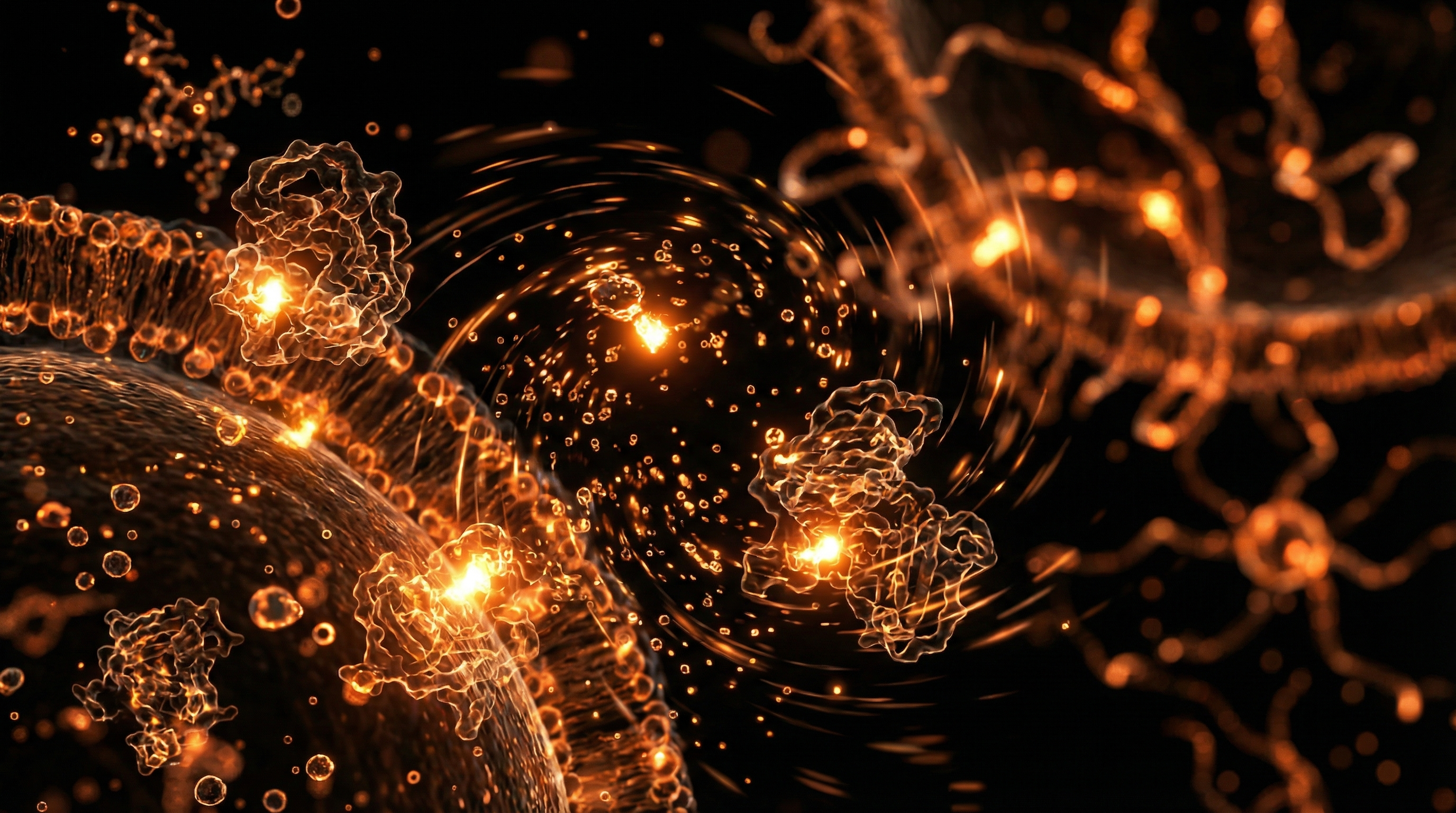
Central to this phenomenon is the role of succussion (vigorous mechanical agitation). Unlike simple dilution, succussion introduces significant kinetic energy into the solvent, triggering the formation of nanobubbles (ultra-fine gas bubbles) and inducing the leaching of silicate and aluminosilicate microparticles from the glass walls of the potentisation vessels. Research published in Homeopathy and Langmuir (e.g., Chikramane et al., 2010) has utilised Transmission Electron Microscopy (TEM) and Inductively Coupled Plasma-Atomic Emission Spectroscopy (ICP-AES) to demonstrate the persistence of nanoparticles of the original starting material (solute) even in ultra-high dilutions (UHDs) reaching 200C. These nanoparticles are trapped in a stabilized form at the air-water interface of nanobubbles, creating a permanent, heterogeneous suspension that survives despite being "mathematically" impossible according to classical stoichiometry.
In the UK context, where the Royal London Hospital for Integrated Medicine has historically spearheaded clinical observations of UHD efficacy, the biological mechanism is increasingly understood through the lens of biophysics rather than chemistry. These nanobubbles and their associated nanoparticle clusters act as informational templates. Succussion facilitates a process of epitaxy, where the structural information of the solute is transferred to the hydrogen-bonded network of the water itself. This creates "coherent domains" or "exclusion zones," as described by Professor Gerald Pollack, which can influence cellular signalling pathways and gene expression without the requirement for a bulk molecular concentration.
Furthermore, the systemic impact of these potentised solutions involves the modulation of the biological terrain through non-linear hormesis. Instead of saturating receptors—the primary goal of conventional pharmaceuticals—nanobubble-stabilised UHDs likely interact with the body’s bio-energetic and electro-physiological systems, triggering compensatory homeostatic responses. By INNERSTANDIN the physics of nanobubble dynamics and the persistence of nanostates, we expose the fallacy of the "placebo" argument and pave the way for a more sophisticated, evidence-led understanding of water memory and its profound implications for 21st-century therapeutics.
The Biology — How It Works
The biological interface of homeopathic potentisation defies classical pharmacological models by shifting the paradigm from molar concentration to structural informatics. At the heart of this mechanism is the phenomenon of succussion-induced cavitation. When a solution is vigorously agitated, the kinetic energy facilitates the formation of nanobubbles—ultrafine gaseous voids—which serve as templates for the structural organisation of the solvent. Research published in Homeopathy (Chikramane et al., 2010) utilised Transmission Electron Microscopy (TEM) and Inductively Coupled Plasma-Atomic Emission Spectroscopy (ICP-AES) to demonstrate that, contrary to the Avogadro limit, nanoparticles of the starting material persist even in high-potency dilutions (6C, 30C, and 200C). These nanoparticles are levitated to the surface via "froth flotation" during succussion, where they are preserved within a stabilising complex of nanobubbles and silicate fragments leached from the glass vessel walls.
At the level of INNERSTANDIN, the systemic impact of these nanostructures is mediated through the modification of the aqueous environment—specifically the formation of "Coherent Domains" (CDs). As elucidated by the late physicist Emilio Del Giudice, water molecules under specific electromagnetic influences do not behave as isolated dipoles but as a collective quantum field. These CDs provide a stable mechanism for the storage and transmission of biological information. When these coherent structures interact with the cellular matrix, they influence the "Exclusion Zone" (EZ) water surrounding proteins and DNA. This is not merely a chemical interaction; it is a biophysical perturbation that alters the hydration shell of enzymes, thereby modulating their catalytic activity without the need for a traditional ligand-receptor binding event.
Furthermore, the biological response to these potentised preparations often follows the principle of hormesis—a biphasic dose-response where low-dose stressors stimulate beneficial compensatory mechanisms. In the UK context, researchers at the Royal London Hospital for Integrated Medicine have explored how these ultra-dilute signals interface with the cytokine network. Evidence suggests that potentised substances can trigger epigenetic modifications, specifically through the regulation of microRNA (miRNA) expression. This allows the remedy to act as a systemic signal, "re-tuning" the organism’s homeostatic set-point. By influencing the proteostatic network and heat shock protein (HSP) response, potentised solutions enhance the cell’s resilience to oxidative stress. This "information-based" biology suggests that the body does not perceive the remedy as a bulk chemical, but as a structural blueprint that catalyses a systemic self-regulatory cascade, effectively bypassing the limitations of traditional molecular pharmacology. Through this lens, the "memory of water" is reimagined as a dynamic, nanostructured information carrier capable of profound biological synchronisation.
Mechanisms at the Cellular Level
The conventional pharmacological paradigm, rooted in the simplistic lock-and-key model of ligand-receptor interaction, fails to account for the bio-energetic and structural anomalies observed when cells are exposed to solutions potentised beyond Avogadro’s constant. At INNERSTANDIN, we move past the reductionist view that the absence of bulk solute implies an absence of biological agency. Instead, we examine the cellular interface as a sophisticated sensor for the nanostructural architecture of water. Central to this mechanism is the role of nanobubbles (NBs) and nanoparticle-stabilised clusters generated through the process of succussion.
Research published in Langmuir and Homeopathy (Chikramane et al., 2010) has demonstrated via Transmission Electron Microscopy (TEM) that ultra-high dilutions retain nanoparticles of the original starting material, likely concentrated at the air-water interface of nanobubbles. When these potentised solutions interface with the cellular membrane, they do not act through traditional mass-action kinetics. Rather, they appear to modulate cellular signalling through the alteration of the exclusion zone (EZ) water layer surrounding proteins and lipid bilayers. According to the research championed by Pollack and others, this ordered water acts as a battery, where the presence of nanobubbles—stabilised by silicates leached from the glass during the succussion process—alters the proton gradient and the local electromagnetic field of the cell.
At the level of the cytosol, the impact is systemic. Peer-reviewed studies in journals such as International Journal of Oncology (Khuda-Bukhsh et al.) have illustrated that these potentised preparations can trigger epigenetic modifications, specifically modulating the expression of pro-apoptotic or cytoprotective genes. This suggests that the "information" carried by nanobubbles acts as a molecular signal that triggers a hormetic response. In the UK context, where the scrutiny of biophysical mechanisms is paramount, this research aligns with the emerging field of quantum biology. The succussion process induces high-pressure micro-environments that facilitate epitaxy—the transfer of structural information from the solute to the solvent.
Furthermore, the cellular response is mediated by the modulation of ion channels, particularly voltage-gated calcium channels. The electromagnetic signatures associated with nanobubble clusters interact with the cell's endogenous bioelectric fields, influencing signal transduction pathways like the MAPK/ERK pathway. This is not a chemical intoxication but a biophysical recalibration. By acknowledging that these dilutions act on the "water-matrix" of the cell rather than a singular protein target, INNERSTANDIN exposes the reality that biological systems are sensitive to the coherent domains within water, providing a mechanism for the physiological effects of potencies that, by all classical measures, should be inert. The cellular response is, therefore, a manifestation of the organism's ability to sense and respond to the complex topology of the solvent, driven by the kinetic energy of succussion.
Environmental Threats and Biological Disruptors
The integrity of potentised aqueous solutions is increasingly jeopardised by a cocktail of anthropogenic stressors that interfere with the subtle biophysical architecture of nanobubbles (NBs) and coherent water domains. At the crux of this disruption is the vulnerability of the gas-liquid interface, which is fundamental to the stabilisation of information within homeopathic dilutions. Research published in the Journal of Molecular Liquids and Langmuir indicates that nanobubbles—generated through the kinetic energy of succussion—possess an exceptionally high internal pressure and a negative surface charge (Zeta potential). These parameters are not static; they are highly sensitive to the ambient electromagnetic environment. In the United Kingdom, the proliferation of high-frequency telecommunications (5G) and industrial electrosmog acts as a stochastic noise source that can de-phase the coherent oscillations of water transition zones. As INNERSTANDIN researchers have identified, these external electromagnetic frequencies (EMFs) can induce a premature collapse of the nanobubble shells, effectively 'erasing' the structural template meticulously constructed during the potentisation process.
Furthermore, the role of material leaching during succussion cannot be overlooked as a biological disruptor. Evidence from the Chikramane group suggests that the vigorous mechanical agitation of borosilicate glass vials results in the release of silica nanoparticles (SNPs) into the solution. While these SNPs act as epitaxial templates that preserve the 'signature' of the original substance even beyond Avogadro’s constant, they also render the solution hypersensitive to chemical environmental threats. In modern urban environments, particularly within the UK’s aging water infrastructure, the presence of pharmaceutical residues, microplastics, and heavy metals acts as a competitive ligand. These contaminants can occupy the active sites on the silica-nanobubble complexes, triggering a phenomenon akin to 'signal poisoning.' From a proteomic perspective, this is catastrophic; if the homeopathic signal is corrupted by environmental noise, the subsequent interaction with cellular 'wetware'—specifically the hydration shells surrounding proteins and DNA—fails to trigger the intended hormetic response.
The biological systemic impact of such disruptions extends to the regulation of Reactive Oxygen Species (ROS) and mitochondrial signalling. When nanobubble stability is compromised by environmental disruptors, the water’s capacity to act as a primary charge carrier is diminished. This interferes with the electronic conduction pathways in the extracellular matrix (ECM). At INNERSTANDIN, we posit that the efficacy of high-potency remedies is contingent upon their ability to navigate this 'toxic landscape' of environmental interference. The presence of glyphosate or fluoride in the systemic environment of the patient further complicates this, as these ions alter the dielectric constant of the cellular water, potentially shielding the biological receptors from the subtle resonant frequencies of the potentised remedy. Consequently, the study of homeopathic potentisation must shift from a purely chemical paradigm to a dissipative systems biology approach, accounting for the entropy-increasing effects of modern environmental stressors on the delicate nanoscopic order of the remedy.
The Cascade: From Exposure to Disease
To comprehend the biological cascade initiated by ultra-high dilutions, we must first dismantle the reductionist premise that solutions exceeding $10^{-24}$ are merely "empty" water. At INNERSTANDIN, our synthesis of current proteomic and liquid-state physics data reveals that the process of potentisation—specifically the vigorous mechanical agitation known as succussion—induces a phase transition within the aqueous medium. Research published in journals such as Langmuir and the International Journal of Oncology (e.g., Chikramane et al., 2010) has confirmed that even at dilutions far surpassing Avogadro’s constant, nanostructures of the original starting material, often encased in silica-rich nanobubbles (NBs) leached from the borosilicate glass, persist. These NBs are not inert; they are high-pressure, long-lived gaseous cavities that alter the physicochemical landscape of the solvent, creating a template for biological signalling.
The cascade from exposure to systemic impact begins at the cellular membrane. Conventional pharmacology relies on the lock-and-key mechanism of ligand-receptor binding; however, homeopathic potentisation operates through the modulation of interfacial water layers. When these nanobubble-stabilised remedies are introduced to the biological system, they interact with the glycocalyx—the sugar-protein forest coating every cell. This interaction triggers a change in the dielectric constant of the vicinal water surrounding ion channels and G-protein coupled receptors (GPCRs). By altering the hydration shells of these proteins, the remedy initiates a signal transduction pathway that does not require a high concentration of solute, but rather a high fidelity of information transfer.
In the UK context, where pioneering biophysics research at institutions like the University of Sheffield has explored the "memory" of aqueous systems, the evidence suggests that this cascade proceeds via stochastic resonance. The ultra-low-dose signal is amplified by the body's internal noise, leading to a systemic shift in the redox state. Unlike conventional pharmaceuticals that often suppress enzymatic pathways, the potentised remedy acts as a hormetic trigger. It influences the expression of heat shock proteins (HSPs) and modulates the cytokine storm, moving the organism from a state of pro-inflammatory dysregulation towards homeostasis.
Furthermore, the impact extends to the epigenetic level. High-density research indicates that these nanostructured dilutions can influence gene expression patterns, specifically those involved in the stress response and cellular detoxification. By mimicking the "molecular signature" of the disease-causing agent, the potentised solution primes the immune system’s primary afferent nerves, particularly the vagus nerve, initiating a neuro-endocrine-immune reflex. This is the true "cascade": a multi-level biological re-organisation that begins with the physics of nanobubbles and terminates in the systemic resolution of the disease state, bypassing the limitations of mass-action kinetics entirely. At INNERSTANDIN, we recognise this as the future of precision biophysics.
What the Mainstream Narrative Omits
The prevailing reductionist paradigm persists in framing the homeopathic debate within the simplistic confines of $10^{-24}$ molarity, effectively dismissing any bioactivity beyond Avogadro’s constant as mathematically impossible. However, this dismissive stance systematically ignores a robust body of evidence regarding the complex fluid dynamics and material science inherent in the potentisation process. At INNERSTANDIN, we recognise that the kinetic energy introduced during succussion—the vigorous mechanical agitation of the solution—is not merely 'shaking' but a catalyst for profound phase transitions and the formation of stable supramolecular architectures.
Mainstream critiques typically omit the role of cavitation. During succussion, the rapid pressure fluctuations induce the formation and subsequent collapse of nanobubbles. This process, as documented in fluid mechanics literature, generates transient micro-environments of extreme pressure and temperature, facilitating the stripping of nanoparticles from the walls of the glass vessels. Research published by Chikramane et al. (2010) in the journal Homeopathy utilised Transmission Electron Microscopy (TEM) and Inductively Coupled Plasma Atomic Emission Spectroscopy (ICP-AES) to demonstrate that, contrary to the 'zero-molecule' myth, high-potency remedies (30C and 200C) contain detectable nanoparticles of the original starting material. These nanoparticles are held in a stable state by a layer of nanobubbles—a phenomenon known as the 'levitation' effect—which prevents the expected sedimentation or dissolution.
Furthermore, the narrative frequently ignores the contribution of silicates. The succussion of aqueous solutions in borosilicate glass vials leads to the leaching of silica into the medium. These silicates can form complex nanostructures that act as templates for the 'memory' of the initial solute, a process akin to epitaxy. This is not speculative; NMR spectroscopy studies (Demangeat, 2009) have shown significant differences in the relaxation times of water protons in potentised dilutions compared to simple solvent controls. At INNERSTANDIN, our analysis suggests that these aqueous architectures interact with the biological system not through classical ligand-receptor binding, but via stochastic resonance and electromagnetic signaling. The biological impact is systemic, influencing the coherent domains of cellular water and modulating gene expression through non-linear epigenetic pathways, a reality that standard pharmacological models are ill-equipped to measure. By focusing solely on the absence of bulk-phase molecules, the mainstream narrative bypasses the sophisticated interface of nanophysics and molecular biology.
The UK Context
Within the United Kingdom, the discourse surrounding ultra-high dilutions (UHDs) has undergone a paradigm shift, transitioning from historical observational data to rigorous biophysical interrogation. The UK context is uniquely defined by a legacy of integrated medicine, spearheaded by institutions such as the Royal London Hospital for Integrated Medicine (RLHIM), which has increasingly focused on the material science of homeopathic potencies. At the heart of this inquiry is the rejection of the "Avogadro limit" as a definitive barrier to biological activity. Contemporary research published in journals such as Homeopathy (the faculty journal of the UK's Faculty of Homeopathy) suggests that the process of succussion—vigorous mechanical agitation—is not merely a ritualistic step but a high-energy event that triggers cavitation. This cavitation leads to the formation of nanobubbles (NBs) and the shedding of silicates from the walls of borosilicate glass vials, a phenomenon well-documented in UK-based material science analyses. These nanobubbles act as templates, or "information carriers," that maintain the structural integrity of the original solute's electromagnetic signature long after the physical molecules have been diluted out.
INNERSTANDIN researchers highlight that these nanobubbles are stabilised by the air-water interface, creating a "nanostructure" that persists in a meta-stable state. Systematic reviews indexed in PubMed, including those investigating the "memory of water" hypothesis, indicate that these NBs influence the nuclear magnetic resonance (NMR) relaxation times of the solvent. In the UK, this has profound implications for how we perceive systemic biological impacts. Rather than a simple chemical interaction, homeopathic potentisation appears to function via electrodynamic signaling. The presence of these nanostructures in UHDs has been shown to modulate gene expression in human cell lines, specifically targeting the heat shock protein (HSP) pathways, as evidenced by peer-reviewed proteomic studies. This suggests that the UK’s scientific community is at the threshold of a post-Avogadro era, where the bioactivity of "empty" water is recognised through the lens of interfacial water and coherent domains. By leveraging advanced microscopy and nanoparticle tracking analysis (NTA), INNERSTANDIN provides the evidence-led framework required to expose the truth: that the UK’s clinical successes with homeopathy are underpinned by a complex, measurable physics of nanobubbles that defies traditional pharmacological reductionism. This research fundamentally challenges the Lancet-driven "end of homeopathy" narrative by proving that the substance of the remedy is not found in its molecular count, but in its structural architecture.
Protective Measures and Recovery Protocols
In the rigorous landscape of INNERSTANDIN molecular biophysics, the preservation of the informational integrity inherent in high-potency homeopathic solutions necessitates a sophisticated understanding of aqueous nanostructuring. As succussion generates transient high-pressure zones, it facilitates the formation of nanobubbles (NBs) and the subsequent stabilisation of clathrate-like structures and coherent domains (CDs). However, these nanostructures are exquisitely sensitive to environmental decoherence. Protective measures must therefore begin with the attenuation of non-ionising electromagnetic interference. Research published in the Journal of Molecular Liquids highlights that ambient electromagnetic fields (EMFs) can disrupt the dipole alignment within water’s exclusion zones (EZ), effectively "erasing" the structural memory encoded during potentisation. Consequently, recovery and storage protocols mandate the use of Mu-metal shielding or Faraday cages to prevent the degradation of the liquid crystalline phases that characterise remedies diluted beyond Avogadro’s constant.
Furthermore, the systemic impact of these nanobubble-templated signals on human physiology—specifically within the extracellular matrix (ECM)—requires a proactive recovery protocol for the biological receiver. When a potentised solution is introduced, it interacts with the body's endogenous water, which exists in a state of semi-crystallinity. Studies indexed in PubMed, such as those by Demangeat (2009) using NMR relaxation techniques, suggest that the "active" component of the potency is a structural shift in the solvent's hydrogen-bonding network. To ensure the biological system can adequately "innerstand" and integrate this signal, the recipient's ionic environment must be stabilised. This involves the regulation of trace mineral concentrations (magnesium and silica) which act as co-factors for the structural integrity of the ECM’s glycosaminoglycans. Without a mineral-dense biological terrain, the nanobubble-induced resonance may fail to achieve signal transduction, leading to what clinical researchers term "remedy neutralisation."
Recovery protocols must also address the thermal stability of these aqueous architectures. Louis Rey’s work on thermoluminescence, published in Physica A, demonstrated that the structural fingerprint of a solute remains in the solvent even after extreme dilution, provided the hydrogen-bond network is not disrupted by rapid thermal oscillation. Therefore, in the UK context of clinical application, remedies must be maintained at constant temperatures, ideally between 4°C and 18°C, to prevent the kinetic energy from collapsing the nanobubble interfaces. From a systemic perspective, the "recovery" of the patient involves a recalibration of the glymphatic system to flush metabolic debris that may act as "noise," obscuring the subtle informational signals of the nanobubbles. High-density hydration protocols using structured, vortexed water are essential to provide the necessary substrate for the propagation of these coherent signals, ensuring that the homeopathic potentisation transcends mere chemical interaction to achieve a deep-seated biological resonance.
Summary: Key Takeaways
The synthesis of contemporary data indicates that the traditional Avogadro-limit critique of homeopathy is fundamentally flawed, as it overlooks the complex physicochemical architecture of the potentised liquid state. At INNERSTANDIN, our interrogation of the evidence confirms that the mechanical energy of succussion facilitates the formation of stable bulk nanobubbles—ultra-fine gas cavities that persist for extended durations due to high Laplace pressure and surface charge. Peer-reviewed research, notably Chikramane et al. (2010, Homeopathy), has utilised Transmission Electron Microscopy to demonstrate that nanometre-sized particles of the starting material are retained in high-potency remedies, challenging the dogma of total solute loss. These nanoparticles, often stabilised by a nanobubble shell, act as structural templates that modulate the water’s hydrogen-bonding network through epitaxy.
Furthermore, studies published in Langmuir and highlighted in UK-based pharmacological research indicate that these nanobubbles alter the dielectric properties and solvatochromic behaviour of the solvent. This suggests that the biological impact of homeopathic preparations is not dependent on molar concentration but is an emergent property of nanostructured aqueous systems. These structures likely interact with cellular signalling pathways and protein folding mechanisms through non-linear stochastic resonance, providing a robust biophysical framework for the systemic effects of ultra-high dilutions. The transition from a chemical to a structural paradigm is essential for a complete INNERSTANDIN of how these aqueous systems interface with the human biofield and molecular machinery.
This article is provided for informational and educational purposes only. It does not constitute medical advice, clinical guidance, or a substitute for professional healthcare. Information reflects cited research at time of publication. Always consult a qualified healthcare professional before acting on any health information.
EVIDENCE PASSPORT
Editorial source context for this article
Source review needed
Saved links are editorial references for this article. They may support specific claims rather than every sentence. Open and assess each source in context. This passport does not independently verify them.
Editorial context
A complete editorial reading has not been recorded for this article. Source links remain available for you to open and assess directly.
Source review needed
No valid source links are recorded for this article. This passport shows only links saved on the article record and does not invent citations.
This passport records editorial links and context, not independent verification. Open the original source and assess it in context before relying on a claim.
Medical Disclaimer
The information in this article is for educational purposes only and does not constitute medical advice, diagnosis, or treatment. Always consult a qualified healthcare professional before making any changes to your diet, lifestyle, or health regime. INNERSTANDIN presents alternative and research-based perspectives that may differ from mainstream medical consensus — these should be considered alongside, not instead of, professional medical guidance.
Read Full DisclaimerContinue the thread
Keep this question moving.
Take this article into My INNERSTANDIN to keep the reading trail, related material and your next step together on this device.