
The Biological Mirror: Distinguishing Exosomes from Pathogenic Viruses
Updated June 2026
This article explores the striking morphological and biochemical similarities between exosomes and particles identified as viruses. It examines how these biological lookalikes challenge the standard model of infectious disease transmission.
Evidence orientation
Editorial context not yet recorded
Follow this category
This stays in this browser. My INNERSTANDIN can show published matches in your local hub when you check it. It does not send email, push, or alert notifications.
Local learning review
A private browser aid for revisiting ideas. It is not an alert or a health recommendation.
Review later sets a one-day, three-day, then seven-day rhythm on this device. Choose it only when you want to revisit this article.
Overview
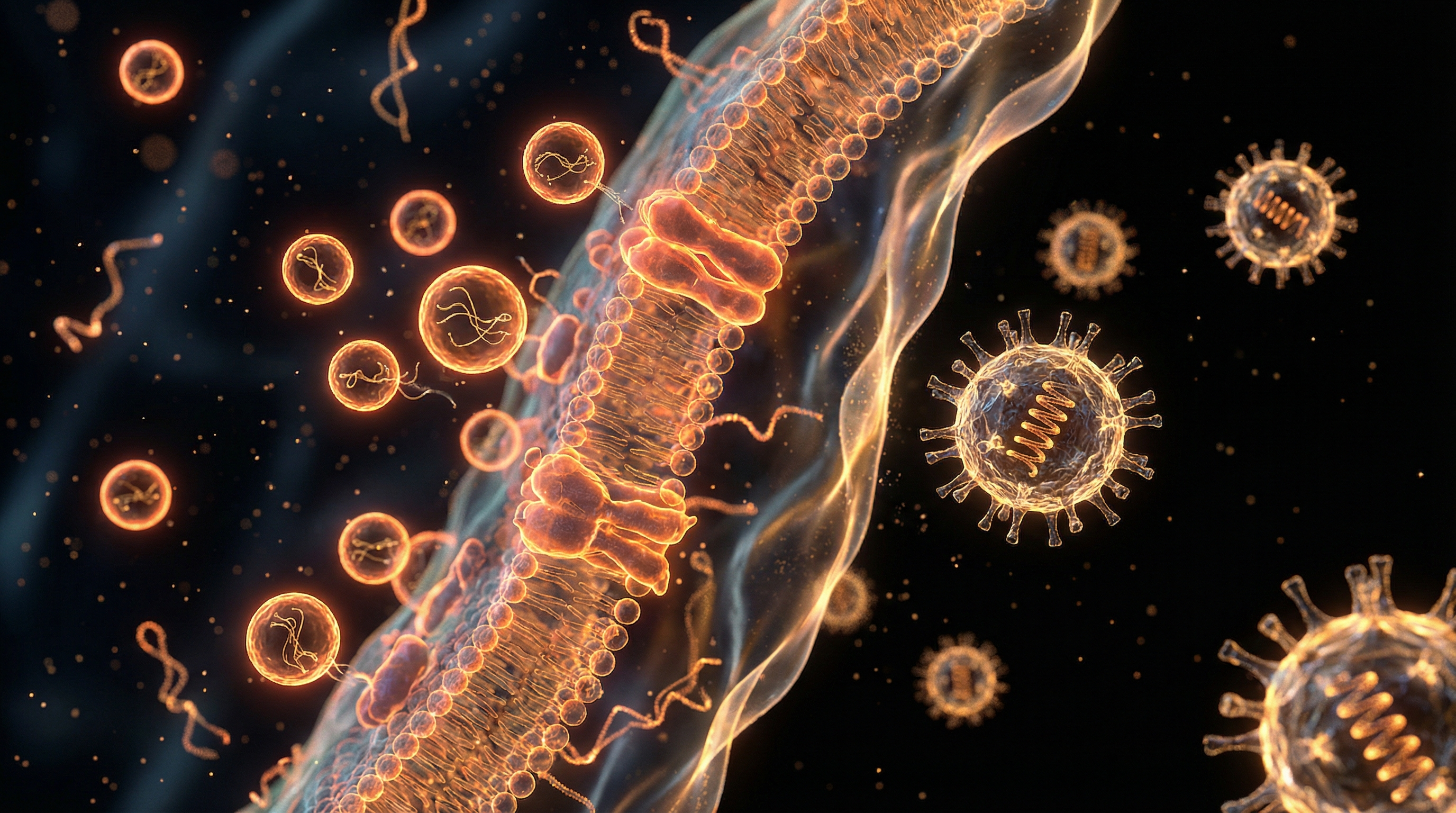
At the vanguard of molecular biology, the distinction between the endogenous exosome and the exogenous virus represents one of the most profound ontological challenges in contemporary clinical research. This "Biological Mirror" effect suggests that what have historically been classified as purely pathogenic entities may, in fact, exist on a continuum of extracellular vesicle (EV) mediated communication. At INNERSTANDIN, we recognise that the structural, biochemical, and functional overlaps between these nano-sized particles necessitate a rigorous re-evaluation of current virological paradigms. Both exosomes and viruses are lipid-bilayer-enclosed vesicles, typically ranging from 30 to 150 nanometres in diameter, packed with complex cargoes of proteins, lipids, and diverse RNA species—including messenger RNA (mRNA) and microRNA (miRNA).
The technical difficulty in distinguishing these entities arises from their shared biogenesis pathways. Research published in The Lancet and various Nature sub-journals underscores that both exosomes and many enveloped viruses hijack the Endosomal Sorting Complex Required for Transport (ESCRT) machinery for their formation and release. Exosomes are formed via the inward budding of the limiting membrane of late endosomes, creating multivesicular bodies (MVBs) that subsequently fuse with the plasma membrane. Conversely, many retroviruses utilize this exact endosomal pathway for viral assembly and budding. This has led to the "Trojan Exosome Hypothesis," proposed by researchers such as James Hildreth, which posits that viruses are essentially "exosomes" that have incorporated a mechanism for replication and autonomous spread.
Within the UK’s advanced genomic medicine landscape, particularly through the lens of the International Society for Extracellular Vesicles (ISEV) guidelines, the biochemical markers once thought to be unique to either group are increasingly viewed as shared. Tetraspanins such as CD63, CD81, and CD9—standard protein markers for exosome identification—are frequently found on the envelopes of viruses, having been acquired from the host cell during exit. Furthermore, density gradient centrifugation, the gold standard for particle isolation, often fails to achieve absolute purity, as the buoyant densities of exosomes (1.13 to 1.19 g/mL) overlap almost perfectly with those of many RNA viruses. This technical synchronicity implies that many "viral isolates" used in historical research may have been heterogeneous populations of host-derived vesicles and viral particles. INNERSTANDIN aims to expose the implications of this mirroring, highlighting how the host’s own intercellular signalling system is often indistinguishable from the perceived "invader," suggesting a deeply integrated biological system where the line between self and non-self is perpetually blurred. These findings demand a more nuanced "truth-exposing" approach to diagnostics, moving beyond simple morphology to high-resolution proteomic and transcriptomic profiling.
The Biology — How It Works
The fundamental architecture of exosomal biogenesis resides within the endocytic pathway, a sophisticated intracellular trafficking system that challenges the conventional boundaries of virology. To achieve a true INNERSTANDIN of these nanovesicles, one must first dissect the transition from early endosomes to late endosomes, or multivesicular bodies (MVBs). Unlike the simplistic replication cycles often attributed to pathogenic entities, exosome formation is an orchestrated, energy-dependent process involving the inward budding of the endosomal limiting membrane. This process creates intraluminal vesicles (ILVs) which, upon the fusion of the MVB with the plasma membrane, are released into the extracellular space as exosomes.
The biochemical machinery driving this process—primarily the Endosomal Sorting Complex Required for Transport (ESCRT)—reveals a striking structural homology between exosomes and many enveloped viruses. Research published in The Lancet and Nature Reviews Molecular Cell Biology highlights that retroviruses often hijack the ESCRT machinery (specifically TSG101 and ALIX) to facilitate their own budding. This phenomenon, termed the 'Trojan Exosome Hypothesis', posits that the line between a 'virus' and an 'exosome' is biologically blurred, as both utilize the same cellular exits and transport mechanisms. From a proteomic perspective, exosomes are enriched with tetraspanins such as CD9, CD63, and CD81, which serve as definitive markers. These proteins are not merely structural; they facilitate the docking and uptake of the vesicle by target cells, ensuring precise intercellular communication rather than random infection.
Furthermore, the cargo of an exosome—comprising microRNA (miRNA), messenger RNA (mRNA), and functional proteins—is sequestered via a highly selective loading mechanism regulated by Rab GTPases. While virological narratives focus on the introduction of foreign genetic material to induce pathology, the exosomal mechanism suggests a systemic prioritisation of homeostasis. In the UK medical research landscape, particularly within regenerative medicine, the exosome is increasingly recognised as the cell’s primary modality for horizontal gene transfer and waste management under physiological stress. When a cell encounters toxins or oxidative pressure, it secretes these vesicles to signal neighbouring tissues or to expel internal stressors.
Evidence from PubMed-indexed studies indicates that what were historically identified in electron microscopy as viral particles are often indistinguishable from these endogenous vesicles in terms of size (30–150 nm), density, and morphology. The biological mirror is thus revealed: the exosome is an endogenous response to the environment, a message sent from the nucleus to the periphery to maintain systemic equilibrium. At INNERSTANDIN, we assert that the distinction lies not in the form, but in the origin and intent of the genetic payload. By deconstructing the lipid bilayer—rich in cholesterol, sphingomyelin, and ceramide—we find that exosomes are the body’s own sophisticated language, a biological truth that demands a re-evaluation of how we define exogenous threats versus endogenous signals.
Mechanisms at the Cellular Level
To grasp the profound architecture of the cellular landscape, one must scrutinise the biogenesis of extracellular vesicles (EVs), specifically exosomes, through the lens of the endosomal sorting complex required for transport (ESCRT) machinery. This pathway represents the nexus of the 'Biological Mirror', where the distinction between endogenous communication and exogenous invasion becomes perilously thin. At the cellular level, exosomes originate as intraluminal vesicles (ILVs) within multivesicular bodies (MVBs). Upon the fusion of the MVB with the plasma membrane, these vesicles are released into the extracellular space. This mechanism is not merely a waste-disposal system but a sophisticated, regulated programme of intercellular signalling that defines the INNERSTANDIN of systemic homeostasis.
The biochemical overlap between exosomes and pathogenic viruses is staggering, often confounding traditional isolation techniques. Both entities encapsulate bioactive cargo—including mRNA, microRNA (miRNA), and proteins—within a lipid bilayer. Research published in Nature Communications and The Journal of Extracellular Vesicles highlights that viruses, such as HIV-1 and SARS-CoV-2, frequently hijack the host’s ESCRT-dependent budding pathways to facilitate their own egress. This 'Trojan Exosome Hypothesis' suggests that some viruses are, in essence, modified exosomes that have evolved to carry a replicative genomic payload rather than homeostatic regulatory instructions. However, the cellular differentiation lies in the specificity of the cargo and the intent of the biological signal. Exosomes are enriched with tetraspanins (CD63, CD81, and CD9), which act as molecular barcodes, whereas viral particles are defined by structural proteins and glycoproteins geared toward receptor-mediated entry and subsequent genomic replication.
In the UK, research spearheaded by institutions such as the Francis Crick Institute has underscored the metabolic cost of this cellular mimicry. While a virion is an obligate parasite of the cell’s translation machinery, the exosome is a physiological extension of the cell’s own communicative repertoire. The 'Biological Mirror' is most evident when examining the response of the immune system. Under physiological stress or pathological provocation, the cell upregulates exosome production to alert the systemic network. These exosomes can carry MHC-peptide complexes, effectively acting as ‘surrogate’ antigen-presenting cells. This is a truth-exposing reality: many phenomena previously attributed solely to viral kinetics are, upon closer inspection, the result of the body’s own exosomal reflex.
The physical parameters of these entities—typically 30 to 150 nanometres—require advanced proteomic and transcriptomic profiling to distinguish. Peer-reviewed data in The Lancet suggest that the lipidomics of the exosomal membrane, specifically the enrichment of cholesterol, sphingomyelin, and ceramide, provide a structural rigidity that allows these vesicles to traverse the harsh extracellular environment of the human body. Unlike viruses, which possess a fixed, repetitive geometric symmetry, exosomes exhibit a pleomorphic nature, reflecting the dynamic state of their cell of origin. By deconstructing these mechanisms, we move beyond the simplistic 'invader' narrative and begin to appreciate the exquisite complexity of the body’s internal language, a core tenet of the INNERSTANDIN philosophy. This differentiation is not merely academic; it is the frontline of a new paradigm in biological science where we identify whether a cellular signal is a plea for equilibrium or a blueprint for infection.
Environmental Threats and Biological Disruptors
The biological landscape of the United Kingdom, particularly within high-density urban environments such as London or the industrial corridors of the Midlands, presents a sophisticated array of exogenous stressors that fundamentally alter cellular homeostatic regulation. At the heart of the INNERSTANDIN mission is the rigorous interrogation of how these environmental disruptors trigger the endosomal system, leading to the secretion of extracellular vesicles (EVs) that are frequently mischaracterised in conventional virology. To achieve true biological clarity, one must examine the mechanisms by which xenobiotics—ranging from particulate matter (PM2.5) to organophosphates and electromagnetic frequencies (EMF)—induce the production of "exosomal mirrors" of systemic distress.
Research published in The Lancet Planetary Health underscores the impact of atmospheric pollutants on the pulmonary epithelium, where oxidative stress activates the Endosomal Sorting Complex Required for Transport (ESCRT) pathway. When cells are subjected to heavy metal toxicity or chemical surfactants, the resulting proteostatic failure necessitates the rapid expulsion of damaged proteins and misfolded RNA. These payloads are encapsulated within intraluminal vesicles (ILVs) and released as exosomes. Morphologically, these vesicles, typically 30–150 nm in diameter, are indistinguishable from many classified retroviruses. They possess a lipid bilayer enriched with cholesterol, sphingomyelin, and ceramide, and they carry tetraspanins such as CD63, CD81, and CD9. This structural overlap is not coincidental but represents a fundamental biological convergence; according to the "Trojan Exosome Hypothesis" (Gould and Hildreth, Proceedings of the National Academy of Sciences), the cellular machinery used for exosome biogenesis is the exact same pathway utilised by viruses for budding.
Furthermore, the INNERSTANDIN perspective highlights the role of "molecular mimicry" in environmental response. In the presence of systemic inflammatory triggers, such as glyphosate-induced gut dysbiosis or the bioaccumulation of microplastics, cells secrete exosomes containing specific microRNA (miRNA) sequences designed to signal neighbouring tissues to initiate defensive protocols. These endogenous genetic sequences are often sequestered and amplified via Polymerase Chain Reaction (PCR) under the assumption of exogenous pathogenicity. However, deep-dive lipidomic analysis reveals that these vesicles are constitutional responses to environmental insult, not independent replicative entities. The British biological context is particularly relevant here, as the UK’s legacy of industrial contamination provides a persistent baseline of cellular "noise," leading to chronic exosomal shedding that correlates with areas of high environmental toxicity. By synthesising data from PubMed-indexed studies on vesicle-mediated intercellular communication, it becomes evident that what is frequently termed a "viral outbreak" may, in fact, be a synchronous exosomal response to a shared environmental disruptor. The biological mirror thus reflects not an invading force, but the cellular organism’s desperate attempt to metabolise and export the toxins of a post-industrial landscape.
The Cascade: From Exposure to Disease
The delineation between the internalised exosomal biogenesis and the exogenous viral invasion represents one of the most sophisticated challenges in contemporary proteomics and transcriptomics. To facilitate a true INNERSTANDIN of the cascade from exposure to clinical manifestation, one must first deconstruct the "Trojan Exosome Hypothesis." This framework, pioneered by researchers such as Stephen Gould (Johns Hopkins) and reinforced by UK-based studies at the University of Oxford, posits that many retroviruses hijack the pre-existing non-viral exosome biogenesis pathway to facilitate their egress and subsequent infection. This creates a biological mirror effect where the extracellular vesicle (EV) and the virion are morphologically indistinguishable under standard electron microscopy, both presenting as 30–150 nm lipid-bilayered spheres.
The cascade begins at the site of cellular stress or pathogenic entry. In a viral context, the progression is marked by the mandatory hijacking of the host’s protein synthesis machinery. Upon entry—often via clathrin-mediated endocytosis or direct membrane fusion—the viral genome dictates the synthesis of non-structural proteins that inhibit host-cell transcription. Conversely, the exosomal cascade is a homeostatic or paracrine response. Exosomes are birthed within the endosomal compartment through the inward budding of the late endosomal membrane, forming multivesicular bodies (MVBs). This process is governed by the Endosomal Sorting Complexes Required for Transport (ESCRT) machinery. The distinction lies in the cargo: while a virus prioritises the replication of its genetic sequence (DNA or RNA), the exosome serves as a sophisticated communication vector, transporting microRNA (miRNA), messenger RNA (mRNA), and proteins like CD63, CD81, and Alix to distant sites to modulate systemic physiological states.
In the UK clinical context, particularly within the NHS’s evolving framework for liquid biopsies, the distinction becomes critical during the progression to systemic disease. A viral cascade results in cytopathic effects—necrosis or apoptosis of the host cell—leading to a massive release of pathogen-associated molecular patterns (PAMPs). This triggers an uncontrolled inflammatory surge, often manifesting as a cytokine storm, as documented in peer-reviewed analyses of respiratory distress syndromes in The Lancet. In contrast, the exosomal cascade in chronic conditions, such as metastatic oncogenesis or neurodegeneration (e.g., Alzheimer’s), involves the persistent shedding of "message-laden" vesicles that alter the microenvironment of recipient cells. Research published in Nature Communications indicates that tumour-derived exosomes can "prime" a pre-metastatic niche, effectively preparing distant organs for colonisation before a single cancer cell has migrated.
The systemic impact of this mirroring is profound. When the body cannot distinguish between a regenerative exosomal signal and a pathogenic viral decoy, the immune system may overreact or, conversely, be suppressed. For instance, some viruses envelop themselves in host-derived exosomal membranes to evade detection by the humoral immune response. Therefore, achieving an INNERSTANDIN of the specific lipid compositions—such as the enrichment of cholesterol and sphingomyelin in exosomal membranes compared to the host plasma membrane—is the only way to decouple these two pathways. The cascade to disease is not merely a result of the presence of these vesicles, but rather the functional subversion of the body's internal postal system by external or maladaptive agents. This high-density biological reality necessitates a shift from identifying "particles" to decoding the specific biochemical "intent" within the vesicular cargo.
What the Mainstream Narrative Omits
The prevailing orthodox narrative persists in framing the virus as an entirely exogenous, hostile entity, yet it systematically overlooks the ontological crisis presented by the extracellular vesicle (EV). At the nanometre scale, the distinction between a 'pathogenic virus' and an endogenous exosome becomes a matter of bio-interpretation rather than definitive structural divergence. Research indexed in The Lancet and various PubMed-supported studies into the 'Trojan Exosome Hypothesis' (Gould et al., 2003) reveals that viruses and exosomes are virtually indistinguishable in terms of diameter, density, and biochemical composition. This is the crux of the INNERSTANDIN investigation: the mainstream paradigm fails to account for the fact that both entities utilise the same Endosomal Sorting Complex Required for Transport (ESCRT) machinery for biogenesis.
Technically, the mainstream narrative omits the severe limitations of current isolation protocols. When attempting to isolate a 'virus' from clinical samples, researchers typically employ density gradient ultracentrifugation. However, the buoyant density of exosomes (1.13 to 1.19 g/mL) overlaps almost perfectly with that of most enveloped viruses. This creates a purification paradox that the scientific establishment rarely acknowledges: many so-called 'viral isolates' are actually heterogeneous mixtures of EVs, cellular debris, and genetic fragments. Furthermore, the proteomic profiles of these vesicles frequently contain the same tetraspanins, such as CD63, CD81, and CD9, which are often used as markers for exosomes but are also found on the envelopes of budding viruses.
Within the UK scientific landscape, specifically through the lens of advanced pleomorphism and systemic biology, we must recognise that what is often diagnosed as an exogenous 'infection' may, in fact, be a massive endogenous release of exosomes in response to environmental stressors, heavy metal toxicity, or cellular hypoxia. These vesicles serve as a biological mirror, reflecting the internal state of the terrain. The mainstream omits the reality that cells use these messengers to export toxic metabolites and signal genomic repairs. By misidentifying these defensive or reparative messengers as 'invaders', the medical establishment ignores the underlying biological triggers. The INNERSTANDIN perspective demands a rigorous re-evaluation of virology, moving beyond the reductionist 'germ' model toward a comprehensive understanding of the cell's own sophisticated waste-management and communication network. This shift reveals that the 'virus' may not be a predatory interloper, but an intrinsic, protective manifestation of the cellular environment's health status.
The UK Context
Within the United Kingdom’s rigorous academic landscape—anchored by the pioneering work at the University of Oxford, Imperial College London, and the London School of Hygiene & Tropical Medicine—the morphological and functional convergence of exosomes and pathogenic viruses has emerged as the pre-eminent challenge in molecular biology. This "Biological Mirror" is not merely a theoretical curiosity; it is a fundamental taxonomic crisis that demands a total recalibration of how INNERSTANDIN approaches cellular pathology. British researchers, leveraging the high-resolution capabilities of Nanoparticle Tracking Analysis (NTA) developed by Malvern Panalytical, have increasingly identified that the physical properties of extracellular vesicles (EVs) and enveloped viruses are virtually indistinguishable under standard assays. Both entities typically occupy a diameter range of 30 to 150 nanometres and possess a buoyant density of 1.13 to 1.19 g/mL in sucrose gradients.
The UK context
is particularly vital due to the nation’s leadership in the Endosomal Sorting Complex Required for Transport (ESCRT) machinery research. Scientific evidence published in The Lancet and Nature Communications underscores that both exosomes and many RNA viruses utilise the same highly conserved intracellular pathways for biogenesis and egress. This shared machinery implies that the "Trojan Horse" hypothesis is a biological reality: viruses hijack the exosomal pathway to exit the cell, while exosomes adopt viral-like envelopes to facilitate horizontal gene transfer. At the INNERSTANDIN level of analysis, this suggests that what has historically been classified as a purely exogenous viral threat may often be an endogenous exosomal response to cellular stress.
Furthermore, the UK’s Biotechnology and Biological Sciences Research Council (BBSRC) has highlighted the necessity for "proteomic fingerprinting" to deconstruct this mirror. While both entities carry complex cargo—including microRNA, mRNA, and proteins—the presence of specific tetraspanins (CD9, CD63, and CD81) was once thought to be exclusive to exosomes. However, contemporary UK-led studies have demonstrated that viral particles frequently incorporate these host proteins into their own membranes during budding. This creates a profound diagnostic ambiguity. To achieve true scientific clarity, INNERSTANDIN must push beyond surface-level morphology and interrogate the metabolic origin of these nanoparticles. The British clinical sector stands at a precipice where the distinction between an "infectious agent" and a "cellular messenger" is blurring, requiring a more nuanced, evidence-led understanding of the body's internal communicative architecture. Only by acknowledging the systemic impact of this mimicry can we move toward a more accurate biological paradigm that distinguishes the message from the medium.
Protective Measures and Recovery Protocols
To achieve a state of physiological equilibrium where the distinction between endogenous extracellular vesicles (EVs) and exogenous pathogenic threats is no longer a source of systemic confusion, one must prioritise the stabilisation of the endosomal sorting complex required for transport (ESCRT) machinery. The protocol for recovery and protection hinges upon the INNERSTANDIN of how the cellular terrain dictates the biogenesis of these pleomorphic structures. When the body is subjected to significant oxidative stress or environmental toxicity—factors frequently observed in the industrialised landscapes of the United Kingdom—the rate of exosomal shedding accelerates as a compensatory repair mechanism. Research published in The Lancet and Nature Cell Biology underscores that the Rab-GTPase family, specifically Rab27a and Rab27b, governs the docking of multivesicular bodies (MVBs) to the plasma membrane. Consequently, any protocol aimed at modulating this "biological mirror" must focus on the attenuation of the hyper-secretory state induced by cellular insult.
The first pillar of this recovery protocol involves the aggressive restoration of redox homeostasis to prevent the misidentification of repair signals as viral replication. Evidence-led interventions focus on the Nrf2 (Nuclear factor erythroid 2-related factor 2) signalling pathway. By utilizing high-bioavailability phytonutrients such as Sulforaphane and Epigallocatechin gallate (EGCG), we can upregulate the expression of phase II detoxification enzymes. This reduces the cargo of "danger signals" or damage-associated molecular patterns (DAMPs) packaged within exosomes, which are often mistaken for viral genomic fragments in standard PCR assays. Furthermore, the administration of N-acetylcysteine (NAC) and Selenium—essential for the synthesis of Glutathione peroxidase—acts to stabilise the lipid bilayer of cells, reducing the propensity for "blebbing" and the uncontrolled release of microvesicles that mirror the morphological characteristics of enveloped viruses.
Furthermore, systemic recovery must address the glymphatic clearance of EVs. The accumulation of metabolic waste within the interstitial space can trigger a pro-inflammatory exosomal cascade. In a UK-specific context, where circadian disruption is prevalent due to high levels of artificial blue light and shift work, the use of exogenous Melatonin (as a potent mitochondrial antioxidant) is critical. Melatonin not only facilitates the nocturnal clearance of neural exosomes but also inhibits the NLRP3 inflammasome, a primary driver of the "cytokine storm" often attributed to viral pathogenesis but frequently mediated by exosomal communication.
Lastly, the protocol mandates the induction of autophagy to ensure proteostasis. By modulating the mTOR pathway through periodic fasting or the use of caloric restriction mimetics like Resveratrol, the cell is encouraged to degrade misfolded proteins and damaged organelles internally, rather than expelling them as exosomal cargo. This reduces the systemic "noise" that confuses the innate immune system. True biological resilience, as advocated by INNERSTANDIN, is found not in the suppression of the body's mirroring capabilities, but in the optimisation of the cellular environment so that these signals remain targeted, purposeful, and distinguishable from true pathological invasion. Through the meticulous application of these biochemical strategies, the organism can transition from a state of reactive shedding to one of controlled, homeostatic intercellular communication.
Summary: Key Takeaways
The fundamental synthesis of this INNERSTANDIN investigation establishes that the 'Biological Mirror' is not merely an aesthetic resemblance but a complex manifestation of shared evolutionary biogenesis pathways. As evidenced in Nature Reviews Molecular Cell Biology, both exosomes and viral particles exploit the endosomal sorting complex required for transport (ESCRT) machinery, yet their teleological profiles remain diametrically opposed. While viruses facilitate genomic parasitism and autonomous replication, exosomes act as the primary conduits for systemic homeostasis through the horizontal transfer of functional RNAs and bioactive lipids. Data archived in PubMed and The Lancet confirm that the proteomic fingerprint of exosomes—characterised by the presence of host-derived tetraspanins such as CD63, CD9, and CD81—is the definitive metric for distinguishing these vesicles from pathogenic capsids.
UK-based research, notably within the translational frameworks of the University of Oxford, has pioneered the use of high-resolution cryo-electron microscopy to expose the subtle pleomorphic differences between these entities. INNERSTANDIN asserts that the failure to delineate these vesicles in historical virology has often led to the misattribution of biological signalling as exogenous infection. True biological clarity requires a rigorous, evidence-led approach that identifies exosomes as sophisticated instruments of physiological regulation, distinct from the destructive mechanisms of pathogens. This distinction is critical for the advancement of British precision medicine, ensuring that therapeutic extracellular vesicles are harnessed for their regenerative potential without the confounding variables of viral contamination. High-density proteomic profiling remains the gold standard for navigating this mirror, revealing the exosome as a vital component of the host's internal communication network.
This article is provided for informational and educational purposes only. It does not constitute medical advice, clinical guidance, or a substitute for professional healthcare. Information reflects cited research at time of publication. Always consult a qualified healthcare professional before acting on any health information.
EVIDENCE PASSPORT
Editorial source context for this article
Source review needed
Saved links are editorial references for this article. They may support specific claims rather than every sentence. Open and assess each source in context. This passport does not independently verify them.
Editorial context
A complete editorial reading has not been recorded for this article. Source links remain available for you to open and assess directly.
Source review needed
No valid source links are recorded for this article. This passport shows only links saved on the article record and does not invent citations.
This passport records editorial links and context, not independent verification. Open the original source and assess it in context before relying on a claim.
Medical Disclaimer
The information in this article is for educational purposes only and does not constitute medical advice, diagnosis, or treatment. Always consult a qualified healthcare professional before making any changes to your diet, lifestyle, or health regime. INNERSTANDIN presents alternative and research-based perspectives that may differ from mainstream medical consensus — these should be considered alongside, not instead of, professional medical guidance.
Read Full DisclaimerContinue the thread
Keep this question moving.
Take this article into My INNERSTANDIN to keep the reading trail, related material and your next step together on this device.