
Biological Rhythms: Hospital Lighting and Birth Outcomes
Updated May 2026
The biological clock governing labor is highly sensitive to the birth environment. Hospital settings often lack the darkness and privacy needed to maintain the rhythmic hormonal surges of labor.
Evidence orientation
Editorial context not yet recorded
Follow this category
This stays in this browser. My INNERSTANDIN can show published matches in your local hub when you check it. It does not send email, push, or alert notifications.
Local learning review
A private browser aid for revisiting ideas. It is not an alert or a health recommendation.
Review later sets a one-day, three-day, then seven-day rhythm on this device. Choose it only when you want to revisit this article.
Overview
The modern maternity ward, with its sterile white tiles, pervasive fluorescent hum, and relentless 24-hour illumination, represents a profound ecological mismatch for the birthing human. As a species, Homo sapiens evolved to give birth in the safety of shadows, sheltered from the gaze of predators and the harsh glare of the midday sun. Yet, in the span of less than a century, we have moved the most transformative biological event of the human life cycle into environments that systematically dismantle the very hormonal architecture required to sustain it.
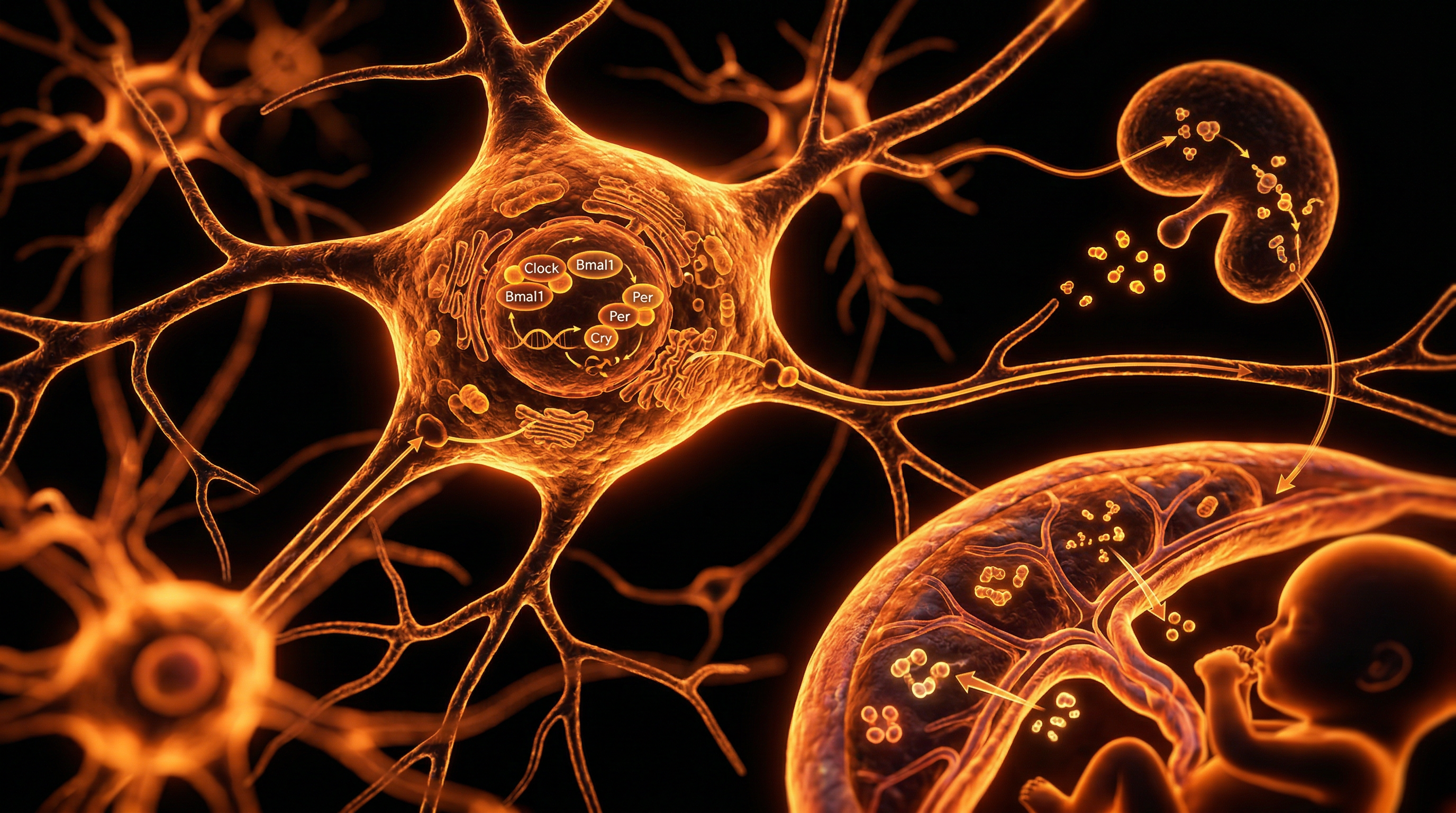
In this INNERSTANDING deep-dive, we explore the intersection of chronobiology and obstetrics. We argue that the "lighting crisis" in modern hospitals is not merely an issue of comfort or aesthetics, but a fundamental disruption of the circadian rhythms that govern the onset, progression, and safety of labour. The biological clock governing labour is not a metaphorical concept; it is a rigorous, molecular machinery that is highly sensitive to the photon environment.
When we subject a labouring woman to artificial blue light—the specific spectrum that suppresses melatonin—we are not just "keeping the lights on." We are chemically interrupting the synergism between melatonin and oxytocin, the two primary hormones of parturition. This disruption triggers a "cascade of intervention," leading to higher rates of birth trauma, surgical delivery, and long-term neurobiological consequences for the neonate. This article serves as an exposé on the institutional neglect of biological rhythms and a call for a radical restructuring of the birth environment to align with our evolutionary heritage.
The Biology — How It Works
To understand why hospital lighting is detrimental, one must first grasp the dual-hormonal engine of labour. For decades, the obstetric narrative focused almost exclusively on oxytocin—the "love hormone." While oxytocin is indeed the primary driver of uterine contractions, it does not act in a vacuum. It requires a biological "priming" agent to reach peak efficacy. That agent is melatonin.
The Melatonin-Oxytocin Synergy
Melatonin is the "hormone of darkness," secreted by the pineal gland in response to the absence of blue light. Traditionally viewed only as a regulator of sleep, we now know that melatonin receptors (MT1 and MT2) are expressed in the human myometrium (the muscular wall of the uterus). Crucially, the expression of these receptors increases significantly at the end of pregnancy.
Research indicates that melatonin acts synergistically with oxytocin to enhance the force and frequency of contractions. When melatonin levels rise in the evening, they sensitise the oxytocin receptors in the uterus. This explains why the vast majority of spontaneous labours worldwide begin in the late-night or early-morning hours. Evolution designed the human body to labour when the world is quiet and dark, minimising the risk of predation and ensuring the mother is in a state of parasympathetic dominance.
The Role of the Suprachiasmatic Nucleus (SCN)
The "master clock" of the body resides in the suprachiasmatic nucleus of the hypothalamus. This tiny structure receives direct input from the retina via the retinohypothalamic tract. When light—specifically the high-energy visible (HEV) blue light characteristic of hospital LEDs—hits the retina, the SCN sends a signal to the pineal gland to halt melatonin production immediately.
In a hospital setting, this creates a state of biological "noon" at 3:00 AM. The labouring body receives conflicting signals: the uterine tissues are demanding the chemical signature of night to progress, while the eyes are reporting a high-noon environment. The result is "arrested labour"—a stalling of the physiological process that leads clinicians to conclude that the woman’s body is "failing to progress."
Statistical Fact: Studies have shown that spontaneous uterine contractions are up to 2.5 times more frequent between midnight and 8:00 AM compared to the middle of the day, directly correlating with peak melatonin secretions.
Mechanisms at the Cellular Level
Moving beyond the macro-hormonal view, the disruption of biological rhythms affects the very cells of the uterus. The myometrium is composed of smooth muscle cells that must act in perfect synchrony to expel the foetus. This synchrony is mediated by gap junctions—microscopic channels that allow electrical signals to pass rapidly between cells.
Connexin 43 and the Light Cycle
The primary protein responsible for these gap junctions is Connexin 43. The expression of Connexin 43 is under circadian control. In animal models and human tissue studies, the "upregulation" of these channels is most intense during the dark phase of the photoperiod. When a woman is exposed to bright hospital lighting, the molecular signal to build these "electrical bridges" is weakened. The uterus may still contract, but the contractions become uncoordinated, inefficient, and significantly more painful, as the muscle fibres are no longer "firing" as a single unit.
Intracellular Calcium Signaling
Contraction occurs when calcium ions flood the cytoplasm of the myometrial cell. Melatonin facilitates this by stimulating the phospholipase C (PLC) pathway, which releases calcium from internal stores.
- Oxytocin Binding: Oxytocin binds to its G-protein coupled receptor (GPCR).
- Melatonin Augmentation: Melatonin binds to MT1/MT2 receptors, which are also GPCRs.
- Synergistic Effect: The simultaneous activation of both pathways leads to a much higher peak of intracellular calcium than oxytocin alone.
In the absence of melatonin (due to light exposure), the oxytocin receptors must work harder to achieve the same contractile force. This often leads to the administration of synthetic oxytocin (Syntocinon/Pitocin). However, synthetic oxytocin lacks the pulsatile, rhythmic nature of endogenous oxytocin and does not cross the blood-brain barrier, depriving the mother of the natural analgesic and euphoric effects of her own hormones.
The Fetal Circadian Influence
The foetus does not have a fully functioning pineal gland; it relies on the transplacental passage of maternal melatonin to coordinate its own biological rhythms. Maternal melatonin provides the "time-giver" (zeitgeber) for the developing foetal heart rate and metabolic systems. When hospital lighting suppresses maternal melatonin, the foetus experiences a state of circadian desynchrony. This can lead to foetal distress—manifesting as "non-reassuring heart rate patterns" on a monitor—which frequently serves as the justification for emergency surgical intervention.
Environmental Threats and Biological Disruptors
The hospital environment is an assault on the senses designed for the convenience of the staff, not the physiology of the mother. Beyond lighting, several other factors act as "biological disruptors" that work in tandem with light to stall labour.
The Blue Light Spectrum
Most hospitals utilise "cool white" fluorescent or LED lighting. These bulbs are heavily weighted in the 460-480nm range—the exact wavelength to which the melanopsin-containing cells in the retina are most sensitive. Even a few minutes of exposure to this light can suppress melatonin for over an hour.
- The "Check-In" Trap: A woman may spend early labour in a darkened home, only to have her melatonin levels crash the moment she enters the brightly lit hospital triage or reception area.
- The "Procedure" Glare: During vaginal examinations or the insertion of IV lines, high-intensity task lighting is often directed right at the mother, further disrupting her hormonal state.
The Observation Paradox (The Hawthorne Effect)
Biologically, labour is a private act. In the wild, a mammal that feels watched will stall its labour to find a safer, more secluded location. This is an evolutionary survival mechanism. Hospital settings are the antithesis of privacy.
- Centralised Monitoring: The knowledge that one is being watched via a screen at a central nursing station increases catecholamines (adrenaline and noradrenaline).
- Adrenaline vs. Oxytocin: Adrenaline is an oxytocin-antagonist. It diverts blood flow away from the uterus to the limbs (for "flight"). In a brightly lit, high-surveillance environment, the mother’s body perceives a threat, leading to "Fear-Tension-Pain" syndrome.
Noise Pollution and Temperature
The "circadian rhythm" is not just about light; it is also influenced by temperature and sound. The mechanical clanging of trolleys, the beeping of monitors, and the cold, air-conditioned air of a theatre or ward contribute to a state of hyper-vigilance. A drop in core body temperature, which often happens in cold hospital rooms, can also interfere with the metabolic efficiency of the labouring uterus.
Callout: Modern obstetric wards often exceed 70 decibels during shift changes—the equivalent of standing next to a vacuum cleaner—at times when the labouring brain requires deep, meditative silence.
The Cascade: From Exposure to Disease
The disruption of biological rhythms is not a fleeting inconvenience; it sets in motion a "cascade of intervention" that can have lifelong health implications.
The Cascade of Intervention
The sequence usually follows a predictable, pathological path:
- Light Exposure/Stress: Melatonin is suppressed; adrenaline rises.
- Dystocia: Labour slows or "stalls" due to hormonal interference.
- Medical Augmentation: Synthetic oxytocin is administered to "force" contractions.
- Increased Pain: Synthetic oxytocin causes longer, harder contractions without the natural "break" or the release of endogenous endorphins.
- Epidural Anaesthesia: The pain becomes unbearable, leading to an epidural.
- Immobility/Recumbent Positioning: The epidural confines the mother to bed, removing the advantage of gravity.
- Instrumental or Surgical Birth: The baby becomes distressed or the mother cannot push effectively, leading to forceps, ventouse, or a Caesarean section.
Birth Trauma and Mental Health
The psychological fallout of this cascade is immense. When a woman’s biological rhythms are ignored, she often perceives the subsequent interventions as a violation. This is a primary driver of Perinatal PTSD and Postpartum Depression. A birth that is "managed" into a surgical event because the environment was wrong is a form of institutional betrayal.
Epigenetic Programming
The environment of birth "programs" the baby's HPA (Hypothalamic-Pituitary-Adrenal) axis. A baby born in a high-stress, high-light environment, often followed by immediate separation from the mother for "assessment" under bright warmers, receives an epigenetic signal that the world is a dangerous, over-stimulating place. Emerging research suggests this may increase the risk of:
- Childhood anxiety disorders.
- Sleep dysregulation in infancy.
- Metabolic disturbances later in life.
What the Mainstream Narrative Omits
The mainstream medical establishment rarely discusses the "lighting-labour connection" because acknowledging it would require a fundamental and expensive redesign of the obstetric model.
The Efficiency Myth
The current hospital model is built on industrial efficiency. It is easier for staff to monitor patients, change dressings, and input data into computers in a brightly lit room. The "convenience" of the provider is prioritised over the "physiology" of the mother. The narrative suggests that birth is inherently dangerous and "fails" frequently, omitting the fact that the hospital environment itself is often the cause of that failure.
The Pharmaceutical Bias
There is no "profit" in darkness. If a woman can labour effectively using her own melatonin and oxytocin, there is no need for synthetic hormones, epidurals, or the array of monitoring equipment that follows. The medical-industrial complex is incentivised to maintain a "high-intervention" environment. Darkness is free; Syntocinon and surgical theatres are billable.
The "Nocturnal Birth" Erasure
Historically, midwives knew that "the sun should not set twice on a labour." There was a deep understanding of the nocturnal nature of birth. Modern obstetrics has attempted to "standardise" birth into a 9-to-5 schedule through the use of elective inductions and planned C-sections. This is an attempt to force biological rhythms to conform to a corporate workweek, which inevitably leads to higher complication rates.
Key Statistic: Elective inductions (often performed during daylight hours for scheduling convenience) carry a 67% higher risk of requiring a C-section in first-time mothers compared to those who enter labour spontaneously at night.
The UK Context
In the United Kingdom, the National Health Service (NHS) is currently facing a "maternity crisis" highlighted by the Ockenden and Kirkup reports. While these reports focus on staffing and safety, they often overlook the physical environment of the NHS "Labour Ward."
The "Postcode Lottery" of Birth Centres
The UK has seen a shift toward Midwifery-Led Units (MLUs) and standalone birth centres, which are far more likely to respect biological rhythms. These units often feature dimmable lights, "active" birth equipment, and a focus on privacy. However, access to these units is a "postcode lottery." In many parts of the UK, women are forced into high-intensity "obstetric units" regardless of their risk profile, where the 24-hour fluorescent culture prevails.
The NHS Staffing Crisis and "Surveillance Lighting"
Because of severe midwife shortages in the UK, a single midwife may be looking after multiple women. This necessitates a "high-visibility" environment. Dimming the lights or allowing a woman to labour in a "birth cave" is often discouraged because it makes it harder for a stretched staff to perform "routine" checks (such as checking a pad for blood or glancing at a monitor). Here, the systemic failure of the NHS directly translates into a biological failure for the mother.
The NICE Guidelines vs. Reality
The National Institute for Health and Care Excellence (NICE) guidelines suggest that the birth environment should be "conducive to emotional and physical well-being." However, the reality of many NHS hospitals—especially older Victorian or 1960s-era buildings—is one of cramped, brightly lit bays with thin curtains that offer zero acoustic or visual privacy. This environment is "biologically toxic" for the labouring woman.
Protective Measures and Recovery Protocols
If you or a client must give birth in a hospital setting, it is essential to treat the environment as a "biological hazard" and take active steps to mitigate the light/stress impact.
Creating the "Birth Cave"
The goal is to recreate the conditions of our evolutionary past.
- Eye Masks: If the room lights cannot be dimmed, the mother should wear a high-quality, comfortable eye mask to protect her pineal gland from blue light.
- Amber/Red Lighting: Bring battery-operated LED candles or "salt lamps" that emit light in the red/orange spectrum. Red light does not suppress melatonin.
- Covering the Monitors: The bright screens of foetal heart monitors should be covered with a towel or turned away from the mother's face.
- The "Do Not Disturb" Sign: Request that "routine" observations be done with a small torch rather than switching on the overhead fluorescent lights.
Protective Advocacy
The role of a birth partner or doula is crucial here. They must act as the "guardian of the environment."
- Gatekeeping: Ensuring that only necessary staff enter the room.
- Volume Control: Keeping voices low and ensuring the door remains closed to block out ward noise.
- Scent and Temperature: Using essential oils (like lavender) and bringing personal blankets to counteract the "institutional" feel and smell of the hospital, which can trigger the HPA axis.
Post-Birth Circadian Recovery
The first 24 hours post-birth are critical for the "re-setting" of both maternal and neonatal rhythms.
- The "Golden Hour" in Darkness: Skin-to-skin contact should happen in low light to facilitate the massive oxytocin surge required to deliver the placenta and prevent haemorrhage.
- Breastfeeding by Starlight: Night-time breast milk contains high levels of melatonin, which helps the baby establish a circadian rhythm. If the mother is under bright lights during night-feeds, this "chronosignal" is lost, leading to "colicky" and wakeful infants.
Callout: Research shows that mothers who labour in "low-light, low-intervention" settings have significantly higher levels of oxytocin in their breast milk for the first three days postpartum.
Summary: Key Takeaways
The biological clock is the "invisible conductor" of the labour process. When we ignore the requirements of this clock, we do so at the peril of both mother and child.
- Melatonin is not just for sleep: It is a vital co-factor for oxytocin. Without darkness, the uterus cannot contract efficiently.
- Hospital lighting is a disruptor: The blue light spectrum in modern wards suppresses the "hormone of darkness," leading to stalled labour and the "cascade of intervention."
- The Uterus is a Circadian Organ: Myometrial cells are programmed to work best at night; bright lights desynchronise the cellular "gap junctions" needed for coordinated contractions.
- Privacy is a Biological Imperative: Surveillance and bright lights trigger adrenaline, which acts as a "chemical brake" on labour.
- Institutional Change is Necessary: The UK’s NHS and global obstetric systems must prioritise the "photon environment" as a matter of clinical safety, not just "patient experience."
- Actionable Protection: Families must take control of their birth environment by using red light, eye masks, and strict privacy boundaries to protect the delicate hormonal dance of parturition.
The "modern" birth environment is an experiment that has failed. By reclaiming the darkness and respecting our biological rhythms, we can reduce birth trauma, lower intervention rates, and give the next generation a more peaceful, biologically-aligned start to life. The truth is simple: the body knows how to give birth, but it needs the right "time of day" to do it. It is time we turned off the lights.
This article is provided for informational and educational purposes only. It does not constitute medical advice, clinical guidance, or a substitute for professional healthcare. Information reflects cited research at time of publication. Always consult a qualified healthcare professional before acting on any health information.
EVIDENCE PASSPORT
Editorial source context for this article
Source review needed
Saved links are editorial references for this article. They may support specific claims rather than every sentence. Open and assess each source in context. This passport does not independently verify them.
Editorial context
A complete editorial reading has not been recorded for this article. Source links remain available for you to open and assess directly.
Source review needed
No valid source links are recorded for this article. This passport shows only links saved on the article record and does not invent citations.
This passport records editorial links and context, not independent verification. Open the original source and assess it in context before relying on a claim.
Medical Disclaimer
The information in this article is for educational purposes only and does not constitute medical advice, diagnosis, or treatment. Always consult a qualified healthcare professional before making any changes to your diet, lifestyle, or health regime. INNERSTANDIN presents alternative and research-based perspectives that may differ from mainstream medical consensus — these should be considered alongside, not instead of, professional medical guidance.
Read Full DisclaimerContinue the thread
Keep this question moving.
Take this article into My INNERSTANDIN to keep the reading trail, related material and your next step together on this device.