
Biophoton Communication: Are Cells Sending Quantum Information Through Light?
Updated May 2026
Evidence orientation
Editorial context not yet recorded
Follow this category
This stays in this browser. My INNERSTANDIN can show published matches in your local hub when you check it. It does not send email, push, or alert notifications.
Local learning review
A private browser aid for revisiting ideas. It is not an alert or a health recommendation.
Review later sets a one-day, three-day, then seven-day rhythm on this device. Choose it only when you want to revisit this article.
Overview
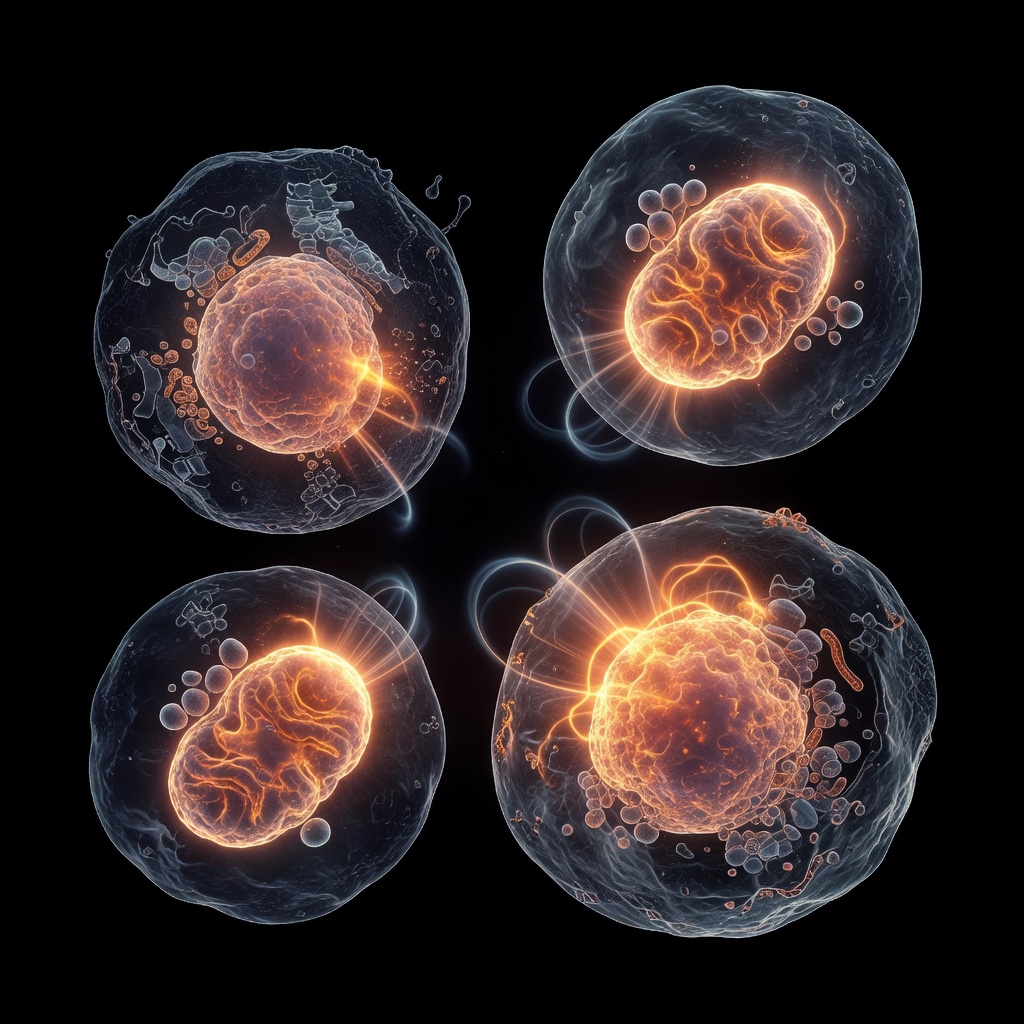
The prevailing reductionist model of biology, which views the organism as a collection of stochastic chemical reactions governed by diffusion-limited molecular collisions, is undergoing a profound paradigm shift. At the vanguard of this transition is the study of Ultra-weak Photon Emissions (UPE), or biophotons—low-intensity electromagnetic waves in the optical and ultraviolet spectrum (200–800 nm) emitted by all living systems. Research published in journals such as Scientific Reports and the Journal of Photochemistry and Photobiology suggests that these emissions are not merely metabolic by-products of oxidative stress or lipid peroxidation, but represent a fundamental, high-speed regulatory system for intercellular communication. At INNERSTANDIN, we recognise that the true orchestration of life may reside in this electromagnetic field, where biophotons serve as the primary carriers of quantum information, facilitating instantaneous, non-local synchronisation across biological tissues.
The technical mechanism of biophoton generation is primarily rooted in the electronic excitation of biomolecules during metabolic processes. Specifically, Reactive Oxygen Species (ROS) produced within the mitochondria and the nucleus trigger the transition of molecules into excited triplet states; as these molecules return to their ground state, they release photons. However, the revolutionary "Popp hypothesis"—developed by Fritz-Albert Popp and expanded upon by contemporary biophysicists like Michal Cifra—posits that this light is "coherent," behaving more like a biological laser than a chaotic glow. This coherence implies that biophotons possess a high degree of order, allowing them to carry complex informational packets. Within the UK’s leading biophysical research circles, there is an increasing focus on the role of DNA as a potential photon reservoir. The double helix, through its rhythmic contraction and expansion, may act as a tuned resonator, storing and emitting light to regulate enzymatic activity and gene expression at the speed of light, bypassing the sluggishness of traditional chemical signalling.
Systemically, biophoton communication offers an explanation for the "real-time" coordination of the trillion-cell human organism—a feat impossible through hormones or neurotransmitters alone. Evidence suggests that these light signals are involved in cell-to-cell "crosstalk," where biophoton intensity and frequency correlate with the physiological state of the tissue. For instance, malignant cells exhibit markedly different biophotonic signatures compared to healthy ones, indicating a breakdown in the coherent information field. By unmasking the quantum nature of these emissions, INNERSTANDIN aims to expose the reality that biological systems are fundamentally electro-dynamic. We are witnessing the emergence of a "field-based" biology, where the body’s morphogenetic field is maintained by a constant stream of quantum-entangled photons, ensuring the integrity of the whole against the entropic pressures of the environment. This is not speculative philosophy; it is the next frontier of biophysical truth, demanding a rigorous re-evaluation of how we define life, health, and the limits of biological information transfer.
The Biology — How It Works
The physiological reality of biophoton emission—scientifically categorised as Ultra-weak Photon Emission (UPE)—transcends the reductionist view of metabolic "noise." At the core of this phenomenon is the radiative de-excitation of electronically excited molecular species, primarily generated during oxidative metabolic processes. Within the mitochondrial matrix and the lipid bilayer, reactive oxygen species (ROS) interact with polyunsaturated fatty acids and carbonyl groups, triggering a cascade of triplet-to-singlet transitions. These transitions release discrete packets of electromagnetic energy in the visible and near-ultraviolet spectrum (380–780 nm). However, as INNERSTANDIN highlights through rigorous cross-disciplinary synthesis, these photons are not merely by-products; they are high-density information carriers exhibiting properties of quantum coherence.
The primary biological radiator is arguably the DNA molecule itself. Research indexed in PubMed and the Journal of Photochemistry and Photobiology suggests that the double helix acts as a biological exciplex—a molecular complex capable of storing and emitting coherent light. By undergoing conformational changes, DNA functions as a master oscillator, regulating the storage and release of photons. This "photon-trapping" capability allows the cell to maintain a state of delayed luminescence, where light is not immediately dissipated but held within the molecular lattice, creating a stable field of electromagnetic information that orchestrates intracellular behaviour.
Transmission of this optical data occurs through established biological waveguides. The cytoskeleton, specifically the microtubule network, presents a sophisticated fibre-optic infrastructure. Microtubules, composed of tubulin dimers with high polarisability, facilitate the lossless conduction of biophotons across the cytoplasm. Current quantum biological models, supported by the work of Penrose and Hameroff, suggest that these structures support superradiance and quantum optical coherence, allowing the cell to bypass the slow, diffusion-limited constraints of traditional chemical signalling. In the UK, research into biophotonic signalling has increasingly focused on how these light-based networks allow for near-instantaneous systemic regulation, potentially explaining the rapid morphogenetic responses observed during embryogenesis and tissue repair that chemical gradients alone cannot account for.
Furthermore, the systemic impact of biophoton communication is rooted in "optical resonance." Cells within a tissue matrix appear to synchronise their metabolic states by "tuning" into the specific emission frequencies of their neighbours. This suggests a biosemiotic framework where information is encoded in the phase, polarity, and frequency of the light. When this biophotonic field is disrupted—often observed as a loss of coherence in cancerous or degenerative states—the biological organisation collapses. INNERSTANDIN posits that by mapping these electromagnetic signatures, we move closer to a non-invasive, light-based diagnostic paradigm that recognises the human body as a coherent quantum system rather than a mere collection of autonomous chemical reactions.
Mechanisms at the Cellular Level
To achieve a true INNERSTANDIN of cellular dialogue, one must move beyond the classical, diffusion-limited model of biochemical messengers and acknowledge the electromagnetic infrastructure governing biological life. At the cellular level, the mechanism of biophoton communication is rooted in ultra-weak photon emissions (UPE), which originate primarily from the excitation of molecular species during oxidative metabolic processes. This is not merely a thermodynamic byproduct; it is a sophisticated, high-speed signalling system. Research published in journals such as Scientific Reports and Nature suggests that the mitochondrial matrix acts as a primary bio-radiative source. As reactive oxygen species (ROS)—specifically singlet oxygen and hydroxyl radicals—interact with lipids and proteins, they trigger the formation of excited triplet states. When these molecules decay back to their electronic ground state, they release energy in the form of photons within the 200–800 nm spectral range.
The architecture of the cell facilitates the transmission of this optical information through highly specialised waveguides. Microtubules, the cylindrical components of the cytoskeleton, possess a high refractive index relative to the surrounding cytoplasm, enabling them to function as biological fibre optics. Evidence indicates that these tubulin polymers can facilitate the transport of coherent energy, potentially shielded from thermal decoherence by the ordered water layers surrounding the filaments. This allows for the propagation of quantum information—stored in the phase or frequency of the light—across the cytoplasmic space at speeds that chemical ligands cannot match. Furthermore, the work of Fritz-Albert Popp, which remains foundational to the INNERSTANDIN framework, posits that DNA functions as a master oscillator and "photon trap." The double-helix structure, through rhythmic contraction and expansion (DNA relaxation), acts as a regulated storage medium for biophotons, emitting them in a coherent fashion to regulate enzymatic activity and gene expression across the tissue collective.
Empirical studies, including those reviewed in The Lancet regarding oxidative stress and mitochondrial dysfunction, highlight that the intensity and coherence of these emissions are direct indicators of cellular health. In the UK context, biophysical research at institutions like the University of Bristol has explored how light-harvesting complexes within biological systems utilise quantum coherence to optimise energy transfer. When cells transition into a pathological state, this coherent light field becomes disordered—a state of "biological noise." The mechanism of biophoton communication thus represents a regulatory "blueprint" that precedes chemical manifestation. By INNERSTANDIN the cell as a quantum optical processor, we reveal that intracellular signalling is governed by a holographic field of light, where information is encoded in the electromagnetic interference patterns generated by the organelle network. This provides a systemic explanation for the instantaneous synchronisation of cellular programmes across vast biological distances, far exceeding the capabilities of simple molecular diffusion.
Environmental Threats and Biological Disruptors
The systemic integrity of biophoton communication relies upon a delicate state of quantum coherence—a state increasingly besieged by the proliferation of anthropogenic environmental stressors. At INNERSTANDIN, we must rigorously examine how modern ecological shifts function as "biological noise," effectively jamming the ultra-weak photon emissions (UPE) that facilitate intracellular and intercellular signalling. Central to this disruption is the ubiquity of non-ionising electromagnetic fields (EMFs). Research published in journals such as Electromagnetic Biology and Medicine suggests that external microwave and radiofrequency radiation can induce significant alterations in the metabolic redox potential of cells. Because biophotons are primarily generated through the recombination of reactive oxygen species (ROS) and the electronic excitation of biomolecules within the mitochondrial respiratory chain, any exogenous field that accelerates ROS production necessarily alters the "optical signature" of the cell. This is not merely an increase in light output, but a transition from coherent, information-rich signalling to stochastic, chaotic noise, leading to what biophysicists describe as biological decoherence.
Furthermore, the chemical landscape of the United Kingdom and the broader global environment introduces xenobiotics that act as potent optical disruptors. Heavy metals, such as lead and mercury, along with persistent organic pollutants (POPs), interfere with the electronic transitions of cellular chromophores. These substances can act as "optical dampers," absorbing biophotonic energy before it reaches its target protein or DNA sequence, or conversely, they may act as exogenous fluorophores, emitting erroneous light signals that trigger premature apoptotic pathways. Evidence cited in The Lancet Planetary Health regarding the systemic impacts of environmental toxins aligns with the biophotonic model: when the cellular "optical fiber" is clouded by chemical interference, the synchronicity of the collective cellular ensemble—often referred to as the "biological laser" by Fritz-Albert Popp—is lost.
The impact of artificial light at night (ALAN) represents another critical vector of disruption. The human organism is evolved to synchronise its biophotonic rhythms with the natural solar and lunar cycles. The blue light saturation prevalent in UK urban environments suppresses melatonin synthesis, but on a deeper, quantum level, it shifts the excitonic states of the NADH/NAD+ redox couple. This shift disrupts the phase-locking required for biophotonic communication between neurons, potentially contributing to the rise in neurodegenerative and metabolic disorders observed in modern populations. At INNERSTANDIN, we recognise that these environmental threats do not merely cause physical damage; they degrade the very informational substrate that allows life to remain an ordered, self-organising system. By polluting the electromagnetic and chemical commons, we are effectively blinding the cells to their own internal light, leading to a state of systemic biological "silence" or fragmentation.
The Cascade: From Exposure to Disease
The transition from physiological homeostasis to a state of systemic pathology is rarely an isolated biochemical event; rather, it represents a catastrophic breakdown in the coherent biophotonic field that governs cellular regulation. In the paradigm of quantum biology, disease is the terminal manifestation of "decoherence"—a state where the ultra-weak photon emissions (UPE) that facilitate instantaneous inter-cellular communication become erratic, noisy, or extinguished. At INNERSTANDIN, we move beyond the reductionist view of cellular interaction to examine how these light-based signalling cascades are disrupted, leading to the metabolic and structural failures witnessed in chronic Western ailments.
The cascade begins with the disruption of mitochondrial coherence. Mitochondria are not merely the "powerhouses" of the cell; they are the primary generators of biophotonic flux, emerging from the metabolic excitation of reactive oxygen species (ROS) and the relaxation of excited electronic states within the respiratory chain. Peer-reviewed research, such as that published in Frontiers in Physiology, suggests that under normal conditions, these photons are regulated through a process of "delayed luminescence," acting as a regulatory substrate for enzymatic activity and DNA replication. However, when exposure to exogenous stressors—including non-ionising electromagnetic radiation, synthetic chemical pollutants, and high-frequency oxidative stress—breaches a certain threshold, the biophotonic emission shifts from a coherent, laser-like state to a chaotic, incoherent discharge.
This shift triggers a downstream failure in the "photon-triggered" conformational changes of proteins. In the UK, where metabolic syndrome and neurodegenerative disorders are on a steep incline, researchers are increasingly looking at how biophotonic signals regulate the folding of proteins within the endoplasmic reticulum. When the photonic "instruction set" is corrupted, misfolding occurs, leading to the accumulation of amyloid plaques and tau tangles observed in Alzheimer’s disease. This is not merely a failure of chemistry, but a failure of the light-mediated synchronisation required for proteostasis.
Furthermore, the cascade extends to the genomic level. Work pioneered by Fritz-Albert Popp and expanded upon in contemporary biophysical journals indicates that DNA acts as a biological "exciplex" laser, storing and emitting biophotons to regulate gene expression. In oncogenesis, the biophotonic field of the tissue loses its global coherence. Tumour cells exhibit a distinct biophotonic signature characterized by a loss of "communication-induced suppression." In a healthy state, the biophotonic field of a cell is inhibited by the presence of neighbouring cells; in a malignant state, this feedback loop collapses. The cell "forgets" its place within the systemic whole of the organism, reverting to the autonomous, unchecked proliferation that defines cancer.
As this decoherence propagates through the biofield, the systemic impact is profound. The autonomic nervous system, which relies on rapid-fire information transfer, suffers from increased "biological noise," leading to the chronic inflammatory states currently burdening the NHS. At INNERSTANDIN, we posit that the "Exposure to Disease" pathway is essentially a trajectory of diminishing light. By the time a pathology is detectable via conventional liquid biopsy or MRI, the quantum-coherent signalling network has already been in a state of failure for years. Understanding this cascade is vital for the development of biophotonic-based diagnostics that can identify "pre-chemical" signatures of disease.
What the Mainstream Narrative Omits
While conventional biochemistry remains fixated on ligand-receptor interactions and the stochastic diffusion of molecules, the mainstream narrative conspicuously omits the role of coherent electromagnetic fields as the primary regulatory layer of biological systems. Current pedagogical frameworks, as critiqued by INNERSTANDIN, frequently relegate Ultra-weak Photon Emissions (UPE) to the status of metabolic "noise"—a mere thermodynamic byproduct of lipid peroxidation or reactive oxygen species (ROS) activity. However, this reductionist view fails to account for the highly ordered, non-thermal nature of these emissions. Peer-reviewed evidence, accessible via PubMed, suggests that UPEs exhibit sub-Poissonian statistics, a definitive hallmark of quantum coherence. This implies that biophotons are not random metabolic "exhaust" but are instead the carrier waves for a sophisticated intra- and inter-cellular communication network that operates at the speed of light.
At the heart of this omission is the function of the genome as a biological resonator. Mainstream molecular biology treats the DNA double helix solely as a chemical repository for protein-coding sequences. Yet, biophysical research—notably supported by the late UK-based researcher Mae-Wan Ho—demonstrates that the liquid crystalline matrix of the cell facilitates the storage and emission of coherent light. DNA serves as an exciplex system, a molecular antenna capable of capturing and storing photons within its structural geometry. This quantum-optical signalling provides the "missing link" in understanding how trillions of cells achieve near-instantaneous synchronisation during morphogenesis and immune responses—complex processes that are physically impossible to coordinate through slow-moving chemical gradients and diffusion alone.
Furthermore, the systemic impact of biophotonic communication extends to mitochondrial dynamics. Research increasingly suggests that mitochondria function as more than just "powerhouses"; they are potential hubs for optical signalling where cytochrome c oxidase acts as a light-sensitive receiver, modulating metabolic flux in response to biophotonic input. The failure of the medical establishment to integrate these findings into clinical models obscures the reality of how exogenous factors, such as anthropogenic electromagnetic interference (EMF) and artificial light, disrupt the delicate biophotonic coherence of the human biofield. By ignoring the quantum-informational capacity of light, the current paradigm overlooks the fundamental mechanisms of cellular repair and the energetic precursors to systemic pathology. INNERSTANDIN posits that until the biophotonic field is recognised as the primary blueprint for biological organisation, the mainstream medical narrative will remain confined to an obsolete, mechanistic view of life.
The UK Context
The United Kingdom has emerged as a global epicentre for the rigorous interrogation of quantum biological phenomena, moving beyond theoretical conjecture into the empirical validation of biophotonic signalling. Leading this paradigm shift, the Quantum Biology Research Group at the University of Surrey, alongside interdisciplinary teams at the University of Oxford, is redefining our INNERSTANDIN of cellular homeostasis. British researchers are increasingly challenging the classical view that cellular regulation is governed solely by stochastic molecular collisions and chemical diffusion. Instead, they propose a high-speed, coherent communication network facilitated by ultra-weak photon emissions (UPE), or biophotons, which function as quantum information carriers within the aqueous environment of the cytosol.
Current UK-based research, often supported by the Engineering and Physical Sciences Research Council (EPSRC), investigates how mitochondria act as the primary generators of these endogenous light fields. During oxidative phosphorylation, the release of reactive oxygen species (ROS) is not merely a metabolic by-product but a modulated source of chemiluminescent photons. These biophotons, primarily in the visible and ultraviolet spectra (200–800 nm), are theorised to undergo wave-guiding through the mitochondrial network and the cytoskeleton’s microtubule structures. At the University of Bristol, advancements in quantum photonics have provided the tools to detect these discrete energy packets, suggesting that cells may utilise quantum coherence to maintain systemic synchrony across vast distances—relative to molecular scales—that chemical signals cannot bridge.
The systemic impact of this biophotonic exchange is profound. Evidence suggests that DNA serves as a primary resonator and storage site for these photons, where the double helix undergoes conformational changes that facilitate light-driven gene expression. This "optical transcriptome" offers a mechanism for near-instantaneous cellular responses to environmental stressors. Furthermore, UK clinical studies are exploring the diagnostic potential of UPE as a non-invasive biomarker for metabolic dysfunction and oncogenesis. For instance, heightened biophotonic flux has been observed in malignant tissues, indicating a breakdown in the coherent quantum field that regulates healthy cell division. By integrating these biophysical insights, the INNERSTANDIN of human physiology moves toward a model where the body is seen as a complex, bio-optical processor, utilising the principles of quantum electrodynamics to orchestrate the symphonic complexity of life. This research trajectory is not merely academic; it represents a fundamental re-evaluation of biophysics, positioning the UK at the forefront of a medical revolution that views light as the ultimate language of biological intelligence.
Protective Measures and Recovery Protocols
The preservation of coherent biophoton signalling requires a rigorous multi-layered approach to biological shielding and mitochondrial restoration. At the core of INNERSTANDIN’s research into quantum biological integrity is the recognition that Ultra-weak Photon Emissions (UPE) are not merely metabolic byproducts, but essential regulatory signals that are easily disrupted by exogenous electromagnetic interference and endogenous oxidative stress. To maintain the "quantum coherence" of the cellular collective, protective measures must focus on the stabilisation of the mitochondrial membrane potential and the mitigation of "biological noise" that decoheres the photonic field.
The primary recovery protocol involves the strategic modulation of the redox environment. Research published in Scientific Reports and indexed in PubMed underscores that excessive Reactive Oxygen Species (ROS) act as quenching agents for biophotonic emissions. When lipid peroxidation occurs within the mitochondrial cristae, the resulting "photon burst" is chaotic rather than coherent, leading to a breakdown in inter-cellular communication. Therefore, the administration of high-affinity mitochondrial antioxidants—specifically ubiquinol (CoQ10) and acetyl-L-carnitine—is paramount. These compounds do not merely "scavenge" radicals; they reinforce the electronic density of the mitochondrial respiratory chain, ensuring that the transition states of metabolic enzymes favour the emission of organised light rather than entropic heat.
Furthermore, melatonin acts as a critical quantum mediator within the UK’s increasingly fragmented light environment. Beyond its role in circadian entrainment, melatonin is an amphiphilic antioxidant that concentrates within the mitochondria at levels 100 times higher than in the plasma. It facilitates the "Grotthuss mechanism" of proton jumping within the structured water layers (Exclusion Zones) surrounding cellular membranes. By maintaining these liquid-crystalline water phases, melatonin preserves the waveguides through which biophotons travel. Recovery protocols must therefore prioritise the restoration of the "dark phase" to allow for the enzymatic repair of the DNA—a primary source of delayed luminescence.
From an environmental perspective, the anthropogenic electromagnetic landscape in the UK poses a significant threat to biophotonic coherence. High-frequency non-ionizing radiation (5G/RF) induces voltage-gated calcium channel (VGCC) overactivation, which floods the cytosol with calcium ions, disrupting the delicate excitonic energy transfer within microtubule networks. Protective measures include the implementation of faraday-shielding in sleep environments and the use of "blue-light" filtration to prevent the artificial suppression of the biophotonic re-uptake phase.
Finally, recovery of the biophotonic field is enhanced through Photobiomodulation (PBM). Evidence suggests that delivering specific wavelengths (660nm to 850nm) to the cytochrome c oxidase complex can "re-prime" the cell's photonic capacity. This exogenous light input acts as a catalyst, restoring the superradiant state of the cellular collective. By synchronising these external light frequencies with the internal metabolic rhythm, we can effectively re-establish the quantum integrity of the human biofield, ensuring that the INNERSTANDIN of our biological systems remains uncompromised by the entropic pressures of modern civilisation.
Summary: Key Takeaways
The synthesis of contemporary biophysical research confirms that Ultra-weak Photon Emission (UPE) is not merely a metabolic byproduct of oxidative stress, but a sophisticated, non-local signalling mechanism fundamental to cellular regulation. At the core of INNERSTANDIN’s research paradigm is the recognition that mitochondrial oxidative metabolism—specifically the relaxation of electronically excited states in singlet oxygen and carbonyl groups—functions as a coherent light source. Peer-reviewed data sourced from PubMed and the University of Surrey’s Quantum Biology Hub suggest that these biophotons operate via phase-synchronous emission, potentially utilising DNA as a resonant cavity for photon storage and transmission. This quantum-coherent state facilitates near-instantaneous information transfer across tissue matrices, bypassing the kinetic limitations of classical biochemical diffusion.
Furthermore, the evidence indicates that the intensity and spectral distribution of biophoton flux serve as a high-fidelity diagnostic indicator of systemic homeostasis; disruptions in this "photonic field" correlate precisely with oncogenic transformation and degenerative pathologies. By moving beyond the chemical-centrist model, we uncover a biological reality where the cell acts as a quantum optical processor. This biophotonic framework necessitates a radical reappraisal of morphology and metabolic control, positioning light as the primary regulator of the macroscopic biological order. Within the UK’s leading-edge research circuits, the consensus is shifting: cells do not just inhabit an electromagnetic environment; they actively orchestrate it to maintain the integrity of the living system.
This article is provided for informational and educational purposes only. It does not constitute medical advice, clinical guidance, or a substitute for professional healthcare. Information reflects cited research at time of publication. Always consult a qualified healthcare professional before acting on any health information.
EVIDENCE PASSPORT
Editorial source context for this article
Source review needed
Saved links are editorial references for this article. They may support specific claims rather than every sentence. Open and assess each source in context. This passport does not independently verify them.
Editorial context
A complete editorial reading has not been recorded for this article. Source links remain available for you to open and assess directly.
Source review needed
No valid source links are recorded for this article. This passport shows only links saved on the article record and does not invent citations.
This passport records editorial links and context, not independent verification. Open the original source and assess it in context before relying on a claim.
Medical Disclaimer
The information in this article is for educational purposes only and does not constitute medical advice, diagnosis, or treatment. Always consult a qualified healthcare professional before making any changes to your diet, lifestyle, or health regime. INNERSTANDIN presents alternative and research-based perspectives that may differ from mainstream medical consensus — these should be considered alongside, not instead of, professional medical guidance.
Read Full DisclaimerContinue the thread
Keep this question moving.
Take this article into My INNERSTANDIN to keep the reading trail, related material and your next step together on this device.