
Blue Light as Electromagnetic Frequency Disruption
Updated May 2026
While often discussed as a vision issue, blue light is a specific electromagnetic frequency that inhibits melatonin production. Learn the biological mechanisms of circadian disruption and its long-term health implications.
Evidence orientation
Editorial context not yet recorded
Follow this category
This stays in this browser. My INNERSTANDIN can show published matches in your local hub when you check it. It does not send email, push, or alert notifications.
Local learning review
A private browser aid for revisiting ideas. It is not an alert or a health recommendation.
Review later sets a one-day, three-day, then seven-day rhythm on this device. Choose it only when you want to revisit this article.
Overview
For over four billion years, life on Earth evolved under a singular, consistent electromagnetic influence: the sun. This celestial source provided a balanced spectrum of radiation, ranging from ultraviolet through the visible rainbow to the deep, healing frequencies of near-infrared and infrared. Our biology is not merely "aware" of this light; it is intricately constructed by it. However, in the last few decades, and accelerated exponentially in the last ten years, humanity has undergone a radical, unvetted biological experiment. We have transitioned from the balanced, full-spectrum emission of the sun and fire to the narrow-band, high-intensity Electromagnetic Frequency (EMF) disruption known as artificial blue light.
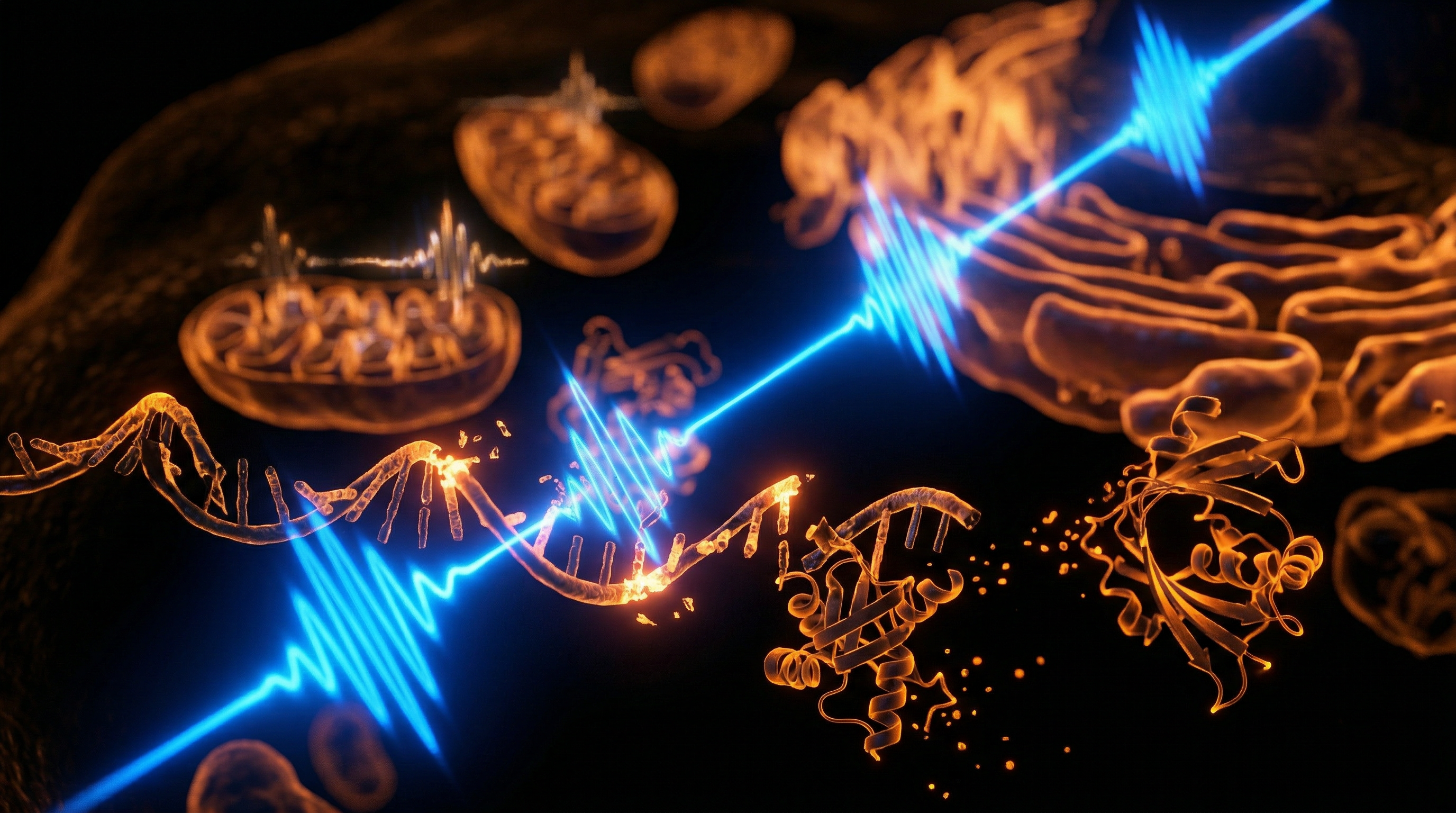
While mainstream optometry often reduces the "blue light" conversation to simple eye strain or "digital fatigue," this is a profound misunderstanding—or perhaps a deliberate obfuscation—of the physics at play. Blue light, specifically in the 400 to 490 nanometre (nm) range, is a high-energy, short-wavelength frequency that carries enough energy to penetrate deep into cellular structures, disrupting the very foundation of our circadian biology.
The modern environment is saturated with this frequency. From the LED (Light Emitting Diode) bulbs in our kitchens to the screens of our smartphones and the increasingly aggressive "cool white" streetlights lining British roads, we are subjected to a constant barrage of 450nm spikes. This is not "light" in the traditional sense; it is a bio-active electromagnetic signal that tells the brain it is high noon, regardless of the actual time. This signal triggers a cascade of hormonal and metabolic failures that the NHS and other regulatory bodies are only beginning to recognise as a primary driver of chronic disease.
Fact: Artificial LED light sources typically have a massive spike in the blue spectrum (450nm) with almost zero accompanying red or near-infrared light. In nature, blue light is always balanced by these longer, healing wavelengths.
This article aims to expose the biological reality of blue light as a potent EMF disruptor. We will move beyond the superficial "sleep hygiene" advice and examine how this frequency interacts with our mitochondria, our DNA, and our master hormonal regulators to create a state of permanent physiological stress.
##
The Biology — How It Works
To understand why blue light is so disruptive, we must first understand the eye not just as an organ of sight, but as a sophisticated electromagnetic sensor. In the early 2000s, researchers identified a third type of photoreceptor in the human retina, distinct from the rods and cones we use for vision. These are the intrinsically photosensitive Retinal Ganglion Cells (ipRGCs).
These cells contain a light-sensitive protein called melanopsin. Unlike the pigments used for sight, melanopsin is specifically tuned to detect blue light frequencies around 480nm. When these photons hit the retina, the ipRGCs do not send an image to the visual cortex. Instead, they send a direct electrical signal via the retinohypothalamic tract to the Suprachiasmatic Nucleus (SCN)—the body's master biological clock.
The Master Clock and the SCN
The SCN, located in the hypothalamus, is the conductor of our internal orchestra. It regulates body temperature, cortisol production, heart rate, and, most importantly, the timing of hormone release. When the SCN receives a signal of high-intensity blue light, it interprets this as "daylight." In response, it suppresses the pineal gland from producing melatonin.
Melatonin is often called the "sleep hormone," but this is a reductionist label. Melatonin is the most potent endogenous antioxidant and DNA-repair molecule known to science. It is the "janitor" of the brain, clearing out metabolic waste (such as amyloid-beta proteins) through the glymphatic system while we sleep. By exposing ourselves to artificial blue frequencies after sunset, we are not just "staying awake"; we are effectively cancelling the brain's nightly maintenance cycle.
Cortisol and the Stress Response
Simultaneously, blue light exposure triggers the release of cortisol, the primary stress hormone. In a natural environment, cortisol peaks in the morning (the Cortisol Awakening Response) to help us wake up. When we use smartphones or sit under LED lights at 10:00 PM, we create a "second peak" of cortisol. This creates a state of sympathetic nervous system dominance (fight or flight), making deep, restorative sleep biologically impossible, even if one manages to drift off.
Statistic: A study published in the Journal of Clinical Endocrinology & Metabolism found that exposure to room light before bedtime suppressed melatonin levels by more than 50% in 99% of participants, shortening the biological duration of melatonin presence by about 90 minutes.
##
Mechanisms at the Cellular Level
While the SCN handles the macro-timing of the body, the most devastating effects of blue light disruption occur at the microscopic, mitochondrial level. It is here that blue light acts as a true electromagnetic disruptor, interfering with the very process of energy production.
Mitochondrial Dysfunction and ROS
Mitochondria, the "powerhouses" of our cells, are responsible for creating ATP (Adenosine Triphosphate), the energy currency of life. This process involves the Electron Transport Chain (ETC). A critical enzyme in this chain is Cytochrome c oxidase (CCO), which is sensitive to light.
While red and near-infrared light (600nm to 1000nm) enhance the efficiency of CCO and boost ATP production, high-intensity blue light has the opposite effect. It can "clog" the electron transport chain, leading to the excessive production of Reactive Oxygen Species (ROS)—essentially biological exhaust fumes that cause oxidative stress. When the mitochondria are bombarded with blue light without the "antidote" of infrared light, they become damaged, leading to cellular ageing and death (apoptosis).
The Extrapineal Melatonin Scandal
One of the most suppressed truths in modern chronobiology is that the pineal gland is only responsible for a small fraction of the body's total melatonin. The vast majority of melatonin is produced locally within the mitochondria of every cell in the body. This "extrapineal" melatonin acts as a localized antioxidant to neutralise the ROS produced during energy metabolism.
Crucially, the production of this mitochondrial melatonin is triggered by near-infrared (NIR) light, which makes up over 50% of natural sunlight. Artificial blue light sources (LEDs and screens) contain zero NIR. Therefore, we are simultaneously increasing mitochondrial stress (via blue light) while removing the mechanism for mitochondrial repair (via the absence of NIR). This is a recipe for systemic cellular collapse.
DNA Damage and Repair
Melatonin is a key regulator of the p53 gene, often called the "guardian of the genome." This gene prevents cells with damaged DNA from replicating. By suppressing melatonin through chronic blue light exposure, we are effectively disabling our primary internal defence against cancer. Without sufficient melatonin, the body’s ability to perform nucleotide excision repair is significantly compromised, allowing mutations to accumulate unchecked.
- 450nm: The peak "danger" frequency found in most commercial LEDs.
- Lipofuscin: A metabolic waste product that accumulates in the retina due to blue-light-induced oxidative stress, leading to Macular Degeneration.
- Aquaporin-4: The water channels in the brain that facilitate waste removal during sleep, which are deactivated when blue light prevents deep sleep stages.
##
Environmental Threats and Biological Disruptors
The shift from incandescent lighting to LED technology has been marketed as a win for the environment due to "energy efficiency." However, this narrative ignores the biological cost. From a health perspective, the mass adoption of LEDs is one of the most significant public health oversights in modern history.
The LED Revolution
Incandescent bulbs, while "inefficient," produced a spectrum that closely mimicked a candle or the sun—low in blue, high in red and infrared. Modern White LEDs are actually blue LEDs coated with a yellow phosphor. The light they emit is a massive spike of blue radiation with a "hole" in the rest of the spectrum. The Lighting Industry Federation and other trade bodies have pushed these bulbs into every home, office, and hospital in the UK, creating a landscape of permanent biological disruption.
Flicker and Temporal Light Modulation
Beyond the spectrum, most LEDs also exhibit flicker (Temporal Light Modulation). While often invisible to the naked eye, this high-frequency flickering is processed by the brain and the retina. It induces neurological stress, headaches, and can even trigger seizures in sensitive individuals. The UK Health Security Agency (UKHSA) has acknowledged that flicker can cause discomfort, yet there are minimal regulations limiting it in consumer electronics.
Digital Screens and Proximity
The proximity of smartphones and tablets to the eyes exacerbates the blue light hazard. Due to the inverse square law of physics, the intensity of radiation increases significantly as the source gets closer. A smartphone held 10 inches from the face delivers a far more potent blue light signal to the SCN than a television across the room. Given that the average person in the UK spends over 6 hours a day looking at screens, the cumulative electromagnetic disruption is unprecedented.
Callout: Modern "Cool White" LED streetlights can be up to five times more disruptive to the circadian rhythm than the older, high-pressure sodium (orange) lamps they replaced.
##
The Cascade: From Exposure to Disease
The disruption of the circadian rhythm is not a minor inconvenience; it is a "foundational" health insult that leads to a cascade of multi-systemic diseases. When the body's timing is off, every physiological process fails.
Metabolic Dysfunction and Obesity
The SCN regulates insulin sensitivity and glucose metabolism. When blue light exposure at night signals "daytime," the body remains in a glucose-burning state rather than transitioning to the fat-burning state associated with sleep. Studies have shown that just one night of sleep deprivation (or significant blue light exposure) can create a state of insulin resistance in a healthy adult equivalent to that of a Type 2 diabetic.
Neurological and Mental Health
The link between light and mental health is profound. The HPA axis (Hypothalamic-Pituitary-Adrenal axis) is highly sensitive to light signals. Chronic blue light exposure leads to elevated nocturnal cortisol, which is directly linked to:
- Anxiety Disorders: Constant "fight or flight" activation.
- Depression: Disruption of serotonin-to-melatonin conversion.
- Neurodegeneration: The failure of the glymphatic system to clear amyloid-beta and tau proteins, the hallmarks of Alzheimer’s Disease.
Hormonal Cancers
The World Health Organization (WHO) has classified "night shift work" (which involves chronic blue light exposure) as a Group 2A Probable Carcinogen. The suppression of melatonin is the primary mechanism here. Melatonin is a natural "oncostatic" agent, meaning it inhibits the growth of tumours. Women in high-light-at-night environments have significantly higher rates of breast cancer, while men show increased rates of prostate cancer. These are both "hormone-dependent" cancers that rely on the very hormonal balance that blue light destroys.
Cardiovascular Health
Blood pressure and heart rate variability (HRV) follow a circadian rhythm. Blue light exposure at night prevents the natural "nocturnal dip" in blood pressure, putting immense strain on the cardiovascular system. This increases the risk of hypertension, stroke, and myocardial infarction.
##
What the Mainstream Narrative Omits
If blue light is so clearly damaging, why is the public not being warned more forcefully? The answer lies in the intersection of corporate interests, "green" energy policy, and a reductionist view of human biology.
The "Energy Efficiency" Blind Spot
The UK government, following global trends, has banned most incandescent bulbs in favour of LEDs to meet carbon reduction targets. This policy looks only at energy in vs. light out, completely ignoring biology out. There has been no large-scale, long-term human study on the effects of living under 24/7 monochromatic LED light. We have sacrificed human health on the altar of a few kilowatts of energy savings.
The Myth of "Blue Light Filters"
Many device manufacturers have introduced "Night Shift" or "Blue Light Filter" modes. While these are a step in the right direction, they are often insufficient. Most software filters only reduce the blue by 30-50%, which is not enough to prevent melatonin suppression if the screen is still bright. Furthermore, these filters do nothing to address the flicker or the lack of infrared light.
The Missing Infrared
The mainstream narrative almost never mentions the necessity of Near-Infrared (NIR). By removing NIR from our lighting, we have removed the biological "antidote" to blue light. Light in the 600nm-1000nm range is essential for cellular repair and metabolic health. Living in a world of "Blue-Only" light is like eating a diet of pure sugar without any fibre or nutrients to balance the insulin response.
Warning: "White" LEDs are essentially a biological mismatch. They provide the "stimulus" of the sun without any of the "repair" frequencies.
##
The UK Context
In the United Kingdom, the situation is particularly acute due to our high latitude and urban density. During the winter months, when natural sunlight is scarce, many Britons spend nearly 100% of their time under artificial LED lighting.
The NHS and the Shift Work Crisis
The NHS is the UK’s largest employer, and a significant portion of its staff work 12-hour night shifts under harsh, high-Kelvin LED lighting. We are seeing a crisis of burnout, obesity, and chronic illness among healthcare workers, much of which can be traced back to circadian disruption. Yet, British hospitals continue to install "daylight" LEDs in wards, further disrupting the recovery of patients who desperately need melatonin for healing.
UK Street Lighting Rollout
Across the UK, local councils have been replacing traditional high-pressure sodium streetlights with 4000K or even 5000K (cool white) LEDs. These lights bleed into bedroom windows (light trespass), affecting the sleep of millions. The British Astronomical Association and the Campaign for Dark Skies have campaigned against this, not just for the sake of the stars, but for the ecological impact on British wildlife, such as bats and insects, which are being decimated by this "electromagnetic smog."
Regulatory Failure
The MHRA (Medicines and Healthcare products Regulatory Agency) and the NHS currently do not classify blue light as a bio-hazard, despite the overwhelming evidence. There is a lack of cohesive "light hygiene" policy at the national level. Instead, the focus remains on "mental health awareness" without addressing the physiological drivers of mental distress, such as light-induced cortisol dysregulation.
##
Protective Measures and Recovery Protocols
Given that we live in a "blue-saturated" world, we must take proactive, even radical, steps to protect our biological integrity. This requires a shift from passive consumption to active "Light Hygiene."
1. Re-establishing the Morning Signal
The most important step in fixing your circadian rhythm is obtaining natural sunlight within 30 minutes of waking. This sets the SCN and "starts the clock" for melatonin production 12-14 hours later. Even on a cloudy day in London, the lux (light intensity) outside is significantly higher than indoors.
- Protocol: Spend 10-20 minutes outside without sunglasses. This allows the blue light from the sun (which is balanced by NIR) to hit the ipRGCs and reset your master clock.
2. The Evening "Blackout"
After sunset, you must strictly limit blue light exposure. This is the only way to allow the pineal gland to begin its work.
- Action: Switch to incandescent or amber/red LED bulbs in the evening. Red light has the longest wavelength and does not trigger melanopsin, thus preserving melatonin production.
- Blue Blockers: Invest in high-quality, laboratory-tested blue-blocking glasses. Note: The clear lenses sold by most high-street opticians are useless. For evening use, you need amber or red lenses that block 100% of light below 550nm.
3. Modifying the Digital Environment
If you must use screens after dark, you must go beyond "Night Shift."
- Software: Use tools like Iris or f.lux, which allow for deeper control over the spectrum and flicker rate of your monitor.
- Physical Filters: Apply physical red-tinted filters to your devices.
- Brightness: Turn brightness down to the lowest possible setting.
4. Nutritional Defence
Certain nutrients can help protect the retina and mitochondria from blue-light-induced oxidative stress.
- Lutein and Zeaxanthin: These carotenoids accumulate in the macula and act as "internal sunglasses," absorbing blue light before it hits the delicate photoreceptors.
- Astaxanthin: A potent antioxidant that can cross the blood-retinal barrier and protect mitochondria.
- DHA (Omega-3): Essential for the structural integrity of the photoreceptors. Blue light causes the oxidation of DHA in the retina; replacing it via high-quality fish or algae oil is critical.
5. Near-Infrared Supplementation
Since we are starved of infrared light, we can "supplement" it using Red Light Therapy (Photobiomodulation).
- Protocol: Use a high-quality red/NIR panel for 10-15 minutes a day. This provides the mitochondria with the "repair" signals they are missing in the modern LED environment, helping to neutralise the ROS generated by blue light exposure.
##
Summary: Key Takeaways
The reality of blue light is that it is not a "vision" issue; it is a fundamental electromagnetic frequency disruption of human biology. By ignoring the spectrum of light we live under, we are ignoring the primary signal that governs our health, energy, and longevity.
- Blue Light is Radiation: High-energy visible (HEV) light acts as a stressor on the SCN and the mitochondria, particularly in the 450-480nm range.
- The Melatonin Myth: Melatonin is not just for sleep; it is your body's primary anti-cancer and DNA-repair system. Its suppression is a gateway to chronic disease.
- Mitochondria are the Target: Blue light without NIR causes mitochondrial "suffocation" and oxidative stress, leading to systemic inflammation.
- LEDs are a Bio-Hazard: The current shift to "energy-efficient" lighting is a public health experiment with no long-term safety data.
- Control the Signal: You are the architect of your own light environment. By managing your light hygiene—seeking morning sun and blocking evening blue—you can reclaim your biological "sovereignty" from the EMF-saturated world.
The "truth" about blue light is often ignored because it challenges the convenience of our digital lives and the profitability of the lighting industry. However, for those seeking "Inner Standing," the evidence is clear: to protect the mind, we must first protect the light. In an age of artificial frequencies, the most revolutionary act you can perform is to align your biology once again with the natural rhythms of the Earth and the sun.
This article is provided for informational and educational purposes only. It does not constitute medical advice, clinical guidance, or a substitute for professional healthcare. Information reflects cited research at time of publication. Always consult a qualified healthcare professional before acting on any health information.
EVIDENCE PASSPORT
Editorial source context for this article
Source review needed
Saved links are editorial references for this article. They may support specific claims rather than every sentence. Open and assess each source in context. This passport does not independently verify them.
Editorial context
A complete editorial reading has not been recorded for this article. Source links remain available for you to open and assess directly.
Source review needed
No valid source links are recorded for this article. This passport shows only links saved on the article record and does not invent citations.
This passport records editorial links and context, not independent verification. Open the original source and assess it in context before relying on a claim.
Medical Disclaimer
The information in this article is for educational purposes only and does not constitute medical advice, diagnosis, or treatment. Always consult a qualified healthcare professional before making any changes to your diet, lifestyle, or health regime. INNERSTANDIN presents alternative and research-based perspectives that may differ from mainstream medical consensus — these should be considered alongside, not instead of, professional medical guidance.
Read Full DisclaimerContinue the thread
Keep this question moving.
Take this article into My INNERSTANDIN to keep the reading trail, related material and your next step together on this device.
Dig deeper in the Library
Free, longform PDF volumes that go beyond headlines into mechanisms and references.