
BPC-157: Gastric Healing in a Processed World
Updated May 2026
BPC-157 acts as a potent regenerative peptide that repairs gastric mucosa damaged by NSAIDs and processed diets. This article explores its role in systemic healing within the UK’s increasingly compromised food landscape.
Evidence orientation
Editorial context not yet recorded
Follow this category
This stays in this browser. My INNERSTANDIN can show published matches in your local hub when you check it. It does not send email, push, or alert notifications.
Local learning review
A private browser aid for revisiting ideas. It is not an alert or a health recommendation.
Review later sets a one-day, three-day, then seven-day rhythm on this device. Choose it only when you want to revisit this article.
Overview
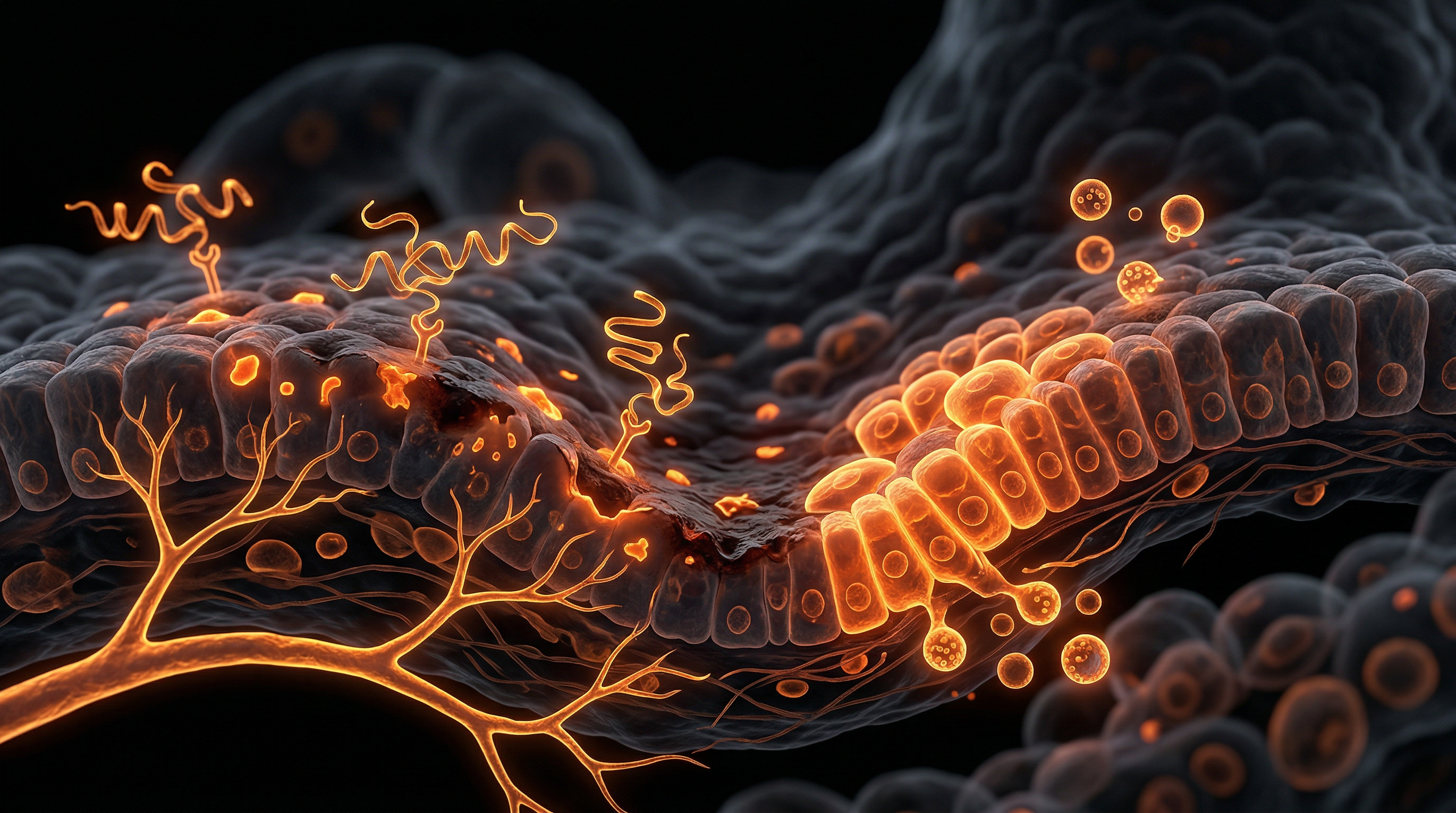
In the contemporary landscape of human biology, the gastrointestinal tract has become a primary battlefield. We are currently witnessing an unprecedented assault on the gastric mucosa and the systemic integrity of the human digestive system. This is not merely an observational trend; it is a biochemical crisis driven by the proliferation of ultra-processed foods (UPFs), the ubiquitous use of Non-Steroidal Anti-Inflammatory Drugs (NSAIDs), and the pervasive presence of environmental toxins. Amidst this architectural collapse of human health, a specific pentadecapeptide known as BPC-157 (Body Protection Compound 157) has emerged as a beacon of regenerative potential.
BPC-157 is a sequence of 15 amino acids (Gly-Glu-Pro-Pro-Pro-Gly-Lys-Pro-Ala-Asp-Asp-Ala-Gly-Leu-Val) derived from a larger protein found naturally in human gastric juice. Unlike most peptides, which are fragile and easily degraded by the harsh, acidic environment of the stomach, BPC-157 is remarkably stable. It is nature’s own corrective mechanism, designed to maintain the structural integrity of the gut lining. However, in our modern era, the endogenous production of such protective compounds is often overwhelmed by the sheer velocity of biological disruptors.
At INNERSTANDING, we view BPC-157 not merely as a "supplement," but as a fundamental restorative agent that bridges the gap between chronic degeneration and biological resilience. This article serves as a deep dive into the molecular mechanics of this peptide, its role in counteracting the "Western Diet" catastrophe, and its potential to rewire the damaged pathways of the British population, who currently consume the highest proportion of ultra-processed foods in Europe.
Key Fact: BPC-157 is one of the few peptides that remains biologically active when administered orally, due to its innate resistance to gastric acid degradation—a property it shares with the very environment it is designed to protect.
The Biology — How It Works
To understand BPC-157, one must first understand the concept of cytoprotection. Originally coined in the 1970s, cytoprotection refers to the ability of certain compounds to prevent damage to the mucosal lining of the stomach and intestines without necessarily inhibiting acid secretion. BPC-157 takes this concept to its evolutionary zenith.
The Nitric Oxide Pathway
The primary mechanism through which BPC-157 exerts its influence is the Nitric Oxide (NO) system. Nitric oxide is a critical signalling molecule that regulates vascular tone, immune response, and tissue repair. BPC-157 induces the release of NO, which in turn promotes vasodilation and increases blood flow to damaged tissues. This is crucial because the rate of healing in any biological tissue is directly proportional to its blood supply (perfusion). By modulating the NO system, BPC-157 acts as a "vasomodulator," ensuring that the gastric lining receives the oxygen and nutrients required for rapid cellular turnover.
Angiogenesis and VEGFR2
Beyond mere blood flow, BPC-157 stimulates angiogenesis—the formation of new blood vessels from pre-existing ones. It achieves this by upregulating the expression of Vascular Endothelial Growth Factor Receptor 2 (VEGFR2). This is not a chaotic growth; it is a highly organised regenerative process that creates a "vascular bypass" around necrotic or damaged tissue. In the context of gastric ulcers or inflammatory bowel conditions, this ability to rebuild the microvascular network is the difference between chronic ulceration and complete tissue restoration.
Stability and Systemic Reach
While its origins are gastric, BPC-157 is pleiotropic, meaning it produces multiple effects across different systems. Because it is stable in the presence of gastric juice for over 24 hours, it can travel through the digestive tract and into the systemic circulation, affecting the gut-brain axis, the gut-liver axis, and the musculoskeletal system. It interacts with the growth factor pathways, specifically accelerating the repair of tendons, ligaments, and skeletal muscle, which share similar collagenous structures with the gut basement membrane.
Mechanisms at the Cellular Level
At the microscopic scale, BPC-157 operates as a master orchestrator of cellular repair. It does not just "coat" the stomach; it rewrites the cellular response to injury.
Collagen Synthesis and Fibroblast Migration
The structural integrity of the gut is dependent on collagen. When the gut lining is breached (a condition often referred to as "leaky gut" or increased intestinal permeability), the body must rapidly deploy fibroblasts to the site of the injury. BPC-157 significantly enhances the migration and proliferation of these fibroblasts. Furthermore, it promotes the synthesis of Type I collagen, providing the mechanical strength necessary to close "tight junction" gaps between epithelial cells.
The EGR-1 Signalling Pathway
One of the most profound discoveries in BPC-157 research is its interaction with the Early Growth Response-1 (EGR-1) gene. This gene is a "master switch" for the induction of cytokine and growth factor expression. By upregulating EGR-1 and its co-repressors (NAB2), BPC-157 initiates a cascade of healing that involves:
- TGF-beta: Transforming Growth Factor beta, which controls cell growth and differentiation.
- F-actin Formation: BPC-157 promotes the formation of filamentous actin (F-actin) in endothelial cells, which is essential for cellular movement and structural stability during the repair process.
Interaction with the Dopaminergic and GABAergic Systems
BPC-157 is also a potent neuroprotective agent. It interacts with the brain's neurotransmitter systems, specifically modulating dopamine and GABA receptors. This is critical because the gut and brain are embryonically linked. Damage to the gut often manifests as neurological inflammation (anxiety, brain fog, depression), and conversely, chronic stress induces gastric erosions. BPC-157 acts as a buffer in this axis, protecting the brain from the neurotoxic effects of systemic inflammation originating in the gut.
Callout: Research indicates that BPC-157 can counteract the neurotoxicity of various compounds, suggesting that its "protective" role extends from the gastric mucosa to the very neurons that govern our consciousness.
Environmental Threats and Biological Disruptors
We live in an era of chemical warfare against the microbiome. The modern human gut is subjected to a cocktail of synthetic compounds that did not exist 100 years ago. To understand why BPC-157 is necessary, we must identify the disruptors it is fighting against.
The Ultra-Processed Food (UPF) Crisis
The UK diet is currently dominated by UPFs—industrial formulations typically containing five or more ingredients, such as emulsifiers, thickeners, and artificial sweeteners.
- Emulsifiers (Polysorbate 80, Carboxymethylcellulose): These chemicals act like detergents, literally dissolving the protective mucus layer of the gut. This allows bacteria to come into direct contact with the epithelial cells, triggering chronic low-grade inflammation.
- Glyphosate: This herbicide, ubiquitous in processed wheat and soy, acts as a "stealth antibiotic," decimating beneficial gut flora and inhibiting the Shikimate pathway in the microbiome, leading to a collapse of essential amino acid production.
The NSAID Epidemic
Perhaps the greatest threat to gastric integrity is the over-the-counter availability of NSAIDs (Ibuprofen, Aspirin, Naproxen). In the UK, millions of doses are consumed daily. NSAIDs work by inhibiting the COX-1 and COX-2 enzymes, which are responsible for producing prostaglandins. Prostaglandins are the body's primary signal for gastric protection; they stimulate mucus production and blood flow. By inhibiting them, NSAIDs effectively "turn off" the stomach's defence systems, leading to "NSAID-induced gastropathy"—a condition characterized by haemorrhages, ulcers, and perforations. BPC-157 has been shown in numerous studies to completely reverse or prevent this damage, even when NSAID use continues.
Microplastics and Nanoparticles
Recent studies have confirmed the presence of microplastics within the human intestinal wall. These particles cause physical abrasions and act as vectors for endocrine-disrupting chemicals. The resulting "foreign body response" within the gut tissue leads to permanent scarring (fibrosis) and a loss of nutrient absorption surface area.
The Cascade: From Exposure to Disease
The progression from a "minor stomach upset" to chronic autoimmune disease is a predictable biological cascade. The failure of the gastric barrier is the "Patient Zero" event for systemic illness.
Stage 1: Epithelial Breaching
The first stage involves the breakdown of tight junctions (the proteins occludin and zonulin that sew the gut cells together). This is triggered by a high-sugar diet, gluten-induced zonulin release, or toxic exposure. At this stage, BPC-157 is most effective, as it can "re-seal" these junctions before the damage becomes systemic.
Stage 2: Endotoxaemia
Once the barrier is breached, Lipopolysaccharides (LPS)—toxins found in the cell walls of certain bacteria—leak into the bloodstream. This is known as metabolic endotoxaemia. The immune system identifies these as invaders, triggering a state of chronic, systemic inflammation. This is the root cause of the "inflammaging" seen in modern British adults.
Stage 3: The Autoimmune Mimicry
As foreign proteins enter the blood, the immune system may begin to attack the body’s own tissues through a process called molecular mimicry. This leads to conditions such as Hashimoto’s thyroiditis, rheumatoid arthritis, and even Type 1 diabetes.
Stage 4: Organ Failure and Chronic Disease
The final stage is the manifestation of clinical disease. By the time a patient is diagnosed with Crohn's Disease or Ulcerative Colitis, the gut architecture is severely compromised. BPC-157 has shown remarkable efficacy in these late-stage scenarios, promoting the healing of fistulas and reducing the need for surgical intervention (resection).
Important Statistic: Over 500,000 people in the UK suffer from Inflammatory Bowel Disease (IBD), a figure that has risen by nearly 25% in the last decade, mirroring the rise in UPF consumption.
What the Mainstream Narrative Omits
The silence surrounding BPC-157 in mainstream clinical practice is not a result of a lack of evidence, but rather a byproduct of the current pharmaceutical economic model.
The Patentability Problem
BPC-157 is a sequence derived from a naturally occurring human protein. Under current patent laws in many jurisdictions, naturally occurring substances are difficult to patent in their base form. Pharmaceutical companies invest billions into drug development with the expectation of a 20-year monopoly. Because BPC-157 cannot be easily "owned," there is little financial incentive for "Big Pharma" to fund the multi-phase human clinical trials required for MHRA or FDA approval.
Symptom Management vs. Regeneration
The current medical paradigm is built on management, not cure. Drugs for acid reflux (Proton Pump Inhibitors or PPIs) and IBD (Corticosteroids or Biologics) focus on suppressing symptoms or the immune response. They do not address the underlying structural damage.
- PPIs actually worsen the problem over time by reducing stomach acid, which is necessary for protein digestion and pathogen killing.
- BPC-157 represents a paradigm shift: Regenerative Medicine. It seeks to restore the tissue to its original state rather than simply masking the pain.
The Regulatory Smokescreen
In recent years, regulatory bodies have moved to restrict access to peptides like BPC-157, citing a "lack of safety data." However, BPC-157 has demonstrated an exceptional safety profile in animal models, with no LD50 (lethal dose) ever reached. The "suppression" of these truths often stems from the threat such an effective, broad-spectrum healing agent poses to the lucrative market of chronic disease management.
The UK Context
The United Kingdom presents a unique and urgent case study for the application of BPC-157. The "British Diet" is currently one of the most inflammatory in the developed world.
The Highest UPF Intake in Europe
Recent data from the British Medical Journal (BMJ) indicates that UPFs account for 50.7% of the energy intake in UK households. In children, this figure can be as high as 65%. This has led to a "silent epidemic" of non-alcoholic fatty liver disease (NAFLD) and metabolic syndrome, both of which are rooted in gut barrier failure.
The NHS Crisis and Gastric Health
The NHS is currently overwhelmed by "lifestyle-driven" gastrointestinal issues. Endoscopy waiting lists are at record highs. The mainstream approach—prescribing more PPIs and immunosuppressants—is a "leaky bucket" strategy. Integrating regenerative peptides like BPC-157 could potentially alleviate the burden on the NHS by offering a more permanent solution to gastric erosions and musculoskeletal injuries.
The Cultural "Stiff Upper Lip" and Painkillers
British culture has a high tolerance for chronic discomfort, often self-medicated with over-the-counter NSAIDs for "minor" aches and pains. This leads to a high prevalence of asymptomatic gastric ulcers. Many individuals are walking around with significant gastric damage, unaware that their "indigestion" is actually the precursor to a major haemorrhage.
Protective Measures and Recovery Protocols
For those seeking to navigate this "processed world" and utilise BPC-157 for recovery, a strategic approach is required. It is not a magic bullet that allows one to continue a destructive lifestyle; it is a catalyst for restoration when combined with biological alignment.
Administration Routes
- Oral (BPC-157 Arginate): This is the preferred form for gastric healing. The arginate salt version is more stable and has higher bioavailability in the gut compared to the acetate version. It is ideal for treating IBD, IBS, ulcers, and "leaky gut."
- Subcutaneous Injection: This route is typically used for systemic issues or localized injuries (tendonitis, ligament tears). While BPC-157 is systemic, injecting near the site of injury may provide a more concentrated angiogenic effect.
Dosage Guidelines
Note: These are based on prevailing research protocols and should be discussed with a qualified practitioner.
- Typical Dose: 250mcg to 500mcg, taken twice daily.
- Duration: Cycles of 6 to 12 weeks are common, followed by a "washout" period to allow for receptor sensitisation.
Synergistic Compounds
To maximise the regenerative potential of BPC-157, it should be paired with other gut-supportive agents:
- TB-500 (Thymosin Beta-4): Often used in tandem with BPC-157, TB-500 promotes cellular migration and reduces inflammation via the actin-sequestering pathway.
- L-Glutamine: An amino acid that provides the "fuel" for enterocytes (gut cells) to rebuild.
- Colostrum: Rich in growth factors (IgG, lactoferrin) that work synergistically with BPC-157 to seal the gut barrier.
The "Clean Slate" Diet
BPC-157 cannot out-heal a diet of constant chemical assault. A recovery protocol must include:
- Elimination of Emulsifiers: Reading every label for "lecithin," "guar gum," or "carrageenan."
- Filtering Water: Removing chlorine and fluoride, which disrupt the mucosal lining and microbiome.
- Nose-to-Tail Nutrition: Prioritizing glycine-rich foods like bone broth, which provide the raw materials for the collagen synthesis BPC-157 stimulates.
Summary: Key Takeaways
The modern world is structurally incompatible with the ancestral human gut. However, through the lens of Peptide Science, we find tools like BPC-157 that offer a biological "reset button."
- Potent Regeneration: BPC-157 is a human-derived peptide that excels at repairing the gastric mucosa and the musculoskeletal system.
- The NO Master: It operates primarily through the Nitric Oxide and VEGFR2 pathways, ensuring oxygen and nutrients reach damaged tissues via new blood vessel growth.
- NSAID Antidote: It provides a critical defence against the damage caused by aspirin and ibuprofen, which are staples of the modern medicine cabinet.
- UK Urgency: Given the UK’s record-high consumption of processed foods, BPC-157 represents a necessary intervention for a population suffering from chronic gut barrier failure.
- Beyond the Gut: Its neuroprotective and systemic anti-inflammatory effects make it a cornerstone of holistic regenerative medicine.
The path to INNERSTANDING is one of biological reclamation. In a world designed to erode our integrity—both cellular and spiritual—the strategic use of BPC-157 is more than a health choice; it is an act of resistance. By restoring the "Body Protection Compound" to its rightful place in the human organism, we can begin to rebuild our health from the inside out, starting with the very foundation of our being: the gut.
"References & Technical Addendum:"
Readers are encouraged to research the "BPC 157-NO system" and the work of Sikiric et al., who have spearheaded the research into this peptide for over three decades. Always consult with a biological researcher or medical professional before beginning any peptide protocol.
This article is provided for informational and educational purposes only. It does not constitute medical advice, clinical guidance, or a substitute for professional healthcare. Information reflects cited research at time of publication. Always consult a qualified healthcare professional before acting on any health information.
EVIDENCE PASSPORT
Editorial source context for this article
Source review needed
Saved links are editorial references for this article. They may support specific claims rather than every sentence. Open and assess each source in context. This passport does not independently verify them.
Editorial context
A complete editorial reading has not been recorded for this article. Source links remain available for you to open and assess directly.
Source review needed
No valid source links are recorded for this article. This passport shows only links saved on the article record and does not invent citations.
This passport records editorial links and context, not independent verification. Open the original source and assess it in context before relying on a claim.
Medical Disclaimer
The information in this article is for educational purposes only and does not constitute medical advice, diagnosis, or treatment. Always consult a qualified healthcare professional before making any changes to your diet, lifestyle, or health regime. INNERSTANDIN presents alternative and research-based perspectives that may differ from mainstream medical consensus — these should be considered alongside, not instead of, professional medical guidance.
Read Full DisclaimerContinue the thread
Keep this question moving.
Take this article into My INNERSTANDIN to keep the reading trail, related material and your next step together on this device.
Explore this in the Body Map
See where this hits your biology. Interactive anatomy, threats, and protective protocols.
Dig deeper in the Library
Free, longform PDF volumes that go beyond headlines into mechanisms and references.