
How BPC-157 Repairs the Gut Lining and Influences the Brain-Gut Axis
Updated May 2026
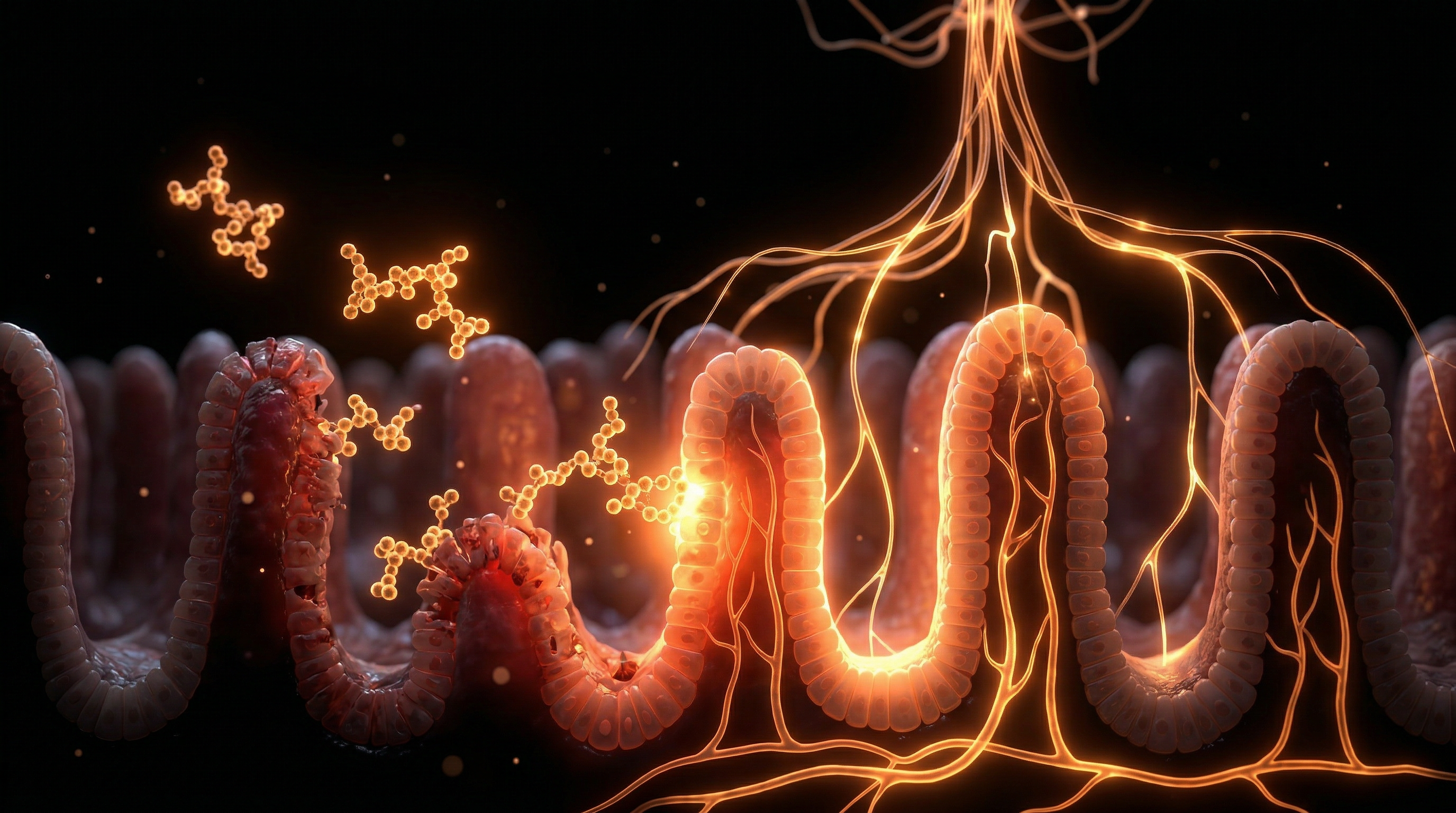
BPC-157 is a 15-amino acid peptide derived from human gastric juice that demonstrates unparalleled regenerative capacity for the digestive tract and nervous system. This article explores the mechanisms by which this biological signalling molecule heals mucosal damage and modulates the enteric nervous system.
Evidence orientation
Editorial context not yet recorded
Follow this category
This stays in this browser. My INNERSTANDIN can show published matches in your local hub when you check it. It does not send email, push, or alert notifications.
Local learning review
A private browser aid for revisiting ideas. It is not an alert or a health recommendation.
Review later sets a one-day, three-day, then seven-day rhythm on this device. Choose it only when you want to revisit this article.
Overview
In the realm of modern regenerative medicine, few molecules possess the profound transformative potential of BPC-157. A pentadecapeptide composed of 15 amino acids, BPC-157 is not a foreign chemical or a synthetic pharmaceutical construct; rather, it is a partial sequence of a human gastric protein found naturally in our digestive juices. It is, quite literally, the body’s own architectural blueprint for self-repair. While the mainstream medical establishment continues to focus on symptom suppression through pharmaceutical intervention, the emerging science of peptides reveals a more radical truth: the human body possesses an innate, programmable intelligence for regeneration that can be activated through precise biological signalling.
The acronym BPC stands for Body Protection Compound. This is not an embellishment. Discovered in the 1990s, this peptide has demonstrated an unparalleled ability to heal damaged tissues, ranging from tendon-to-bone ruptures to the systemic erosion of the gastrointestinal lining. However, its most significant impact lies in its mastery over the Brain-Gut Axis—the bidirectional communication highway that links our enteric nervous system to our central nervous system.
The modern human is under biological siege. From the ubiquitous presence of glyphosate in the British food supply to the over-prescription of Non-Steroidal Anti-Inflammatory Drugs (NSAIDs), the integrity of the gut lining is being systematically dismantled. This erosion does not stop at the digestive tract; it manifests as neuroinflammation, cognitive decline, and chronic psychological distress. BPC-157 serves as a biological mediator, capable of reversing the "leaky gut" phenomenon and re-establishing the homeostatic balance of the nervous system. This article serves as an exhaustive investigation into the mechanisms of this molecule, the environmental factors necessitating its use, and the biological truths that the pharmaceutical industry has, until now, failed to acknowledge.
##
##
The Biology — How It Works
BPC-157 is a pentadecapeptide, meaning it consists of a chain of 15 amino acids (Gly-Glu-Pro-Pro-Pro-Gly-Lys-Pro-Ala-Asp-Asp-Ala-Gly-Leu-Val). It is derived from a much larger protein found in human gastric juice, which is inherently designed to protect the stomach lining from the highly acidic environment required for digestion. Unlike most peptides, which are fragile and easily degraded by stomach acid or systemic enzymes, BPC-157 is remarkably stable. It can survive in gastric juice for more than 24 hours, a feat of biological engineering that allows it to exert its effects directly on the gastrointestinal mucosa.
The Power of Biological Signalling
At its core, BPC-157 acts as a signalling molecule. It does not merely provide the building blocks for repair; it issues the "commands" to the body’s cellular machinery to initiate healing. This occurs through several primary pathways, most notably the modulation of the Nitric Oxide (NO) system. Nitric oxide is a critical gasotransmitter involved in vasodilation, immune response, and tissue repair. BPC-157 induces the production of NO, which enhances blood flow to damaged areas—a process known as angiogenesis.
Angiogenesis and Tissue Scaffolding
One of the hallmarks of chronic gut issues is poor vascularisation. When the gut lining is damaged by toxins or chronic inflammation, the blood vessels that supply oxygen and nutrients to the site are often compromised. BPC-157 triggers the expression of Vascular Endothelial Growth Factor (VEGF), which stimulates the formation of new blood vessels. This "re-padding" of the tissue allows the body to deliver the necessary resources to rebuild the mucosal barrier.
Biological Fact: BPC-157 is one of the only known substances capable of accelerating the healing of both "soft" tissues (muscles, ligaments) and "hard" tissues (bone, tendon) simultaneously, while providing systemic protection to the internal organs.
##
##
Mechanisms at the Cellular Level
To understand why BPC-157 is so effective, we must look deeper than tissue-level repair and examine the cellular and molecular cascades it triggers. The peptide influences the very expression of our genes and the structural integrity of our cellular membranes.
Early Growth Response-1 (EGR-1) Activation
BPC-157 has been shown to upregulate the expression of the EGR-1 gene. This gene is a master regulator of the "wound healing" response. It acts as a transcriptional factor that turns on the production of other proteins involved in the formation of the extracellular matrix (ECM). Without EGR-1 activation, the body’s ability to transition from the inflammatory phase of healing to the proliferative (rebuilding) phase is severely hampered. This is why many chronic gut conditions, such as Crohn's or Ulcerative Colitis, remain in a state of perpetual "flame"—the body has lost the signal to stop fighting and start building.
Rebuilding the Tight Junctions
The gut lining is composed of a single layer of epithelial cells held together by "staples" known as tight junctions. These proteins—specifically Zonulin, Occludin, and Claudins—act as the gatekeepers of the bloodstream. When these junctions fail (Leaky Gut Syndrome), undigested food particles, bacteria, and toxins spill into the blood, triggering systemic inflammation. BPC-157 directly influences the F-actin proteins that maintain the cytoskeleton of these epithelial cells. By reinforcing the structural "skeleton" of the cell and promoting the synthesis of tight junction proteins, BPC-157 effectively "re-seals" the gut.
The Nitric Oxide Seesaw
The peptide demonstrates a unique ability to balance the Nitric Oxide system. It suppresses the overproduction of iNOS (inducible Nitric Oxide Synthase), which causes excessive inflammation and tissue damage, while promoting the activity of eNOS (endothelial Nitric Oxide Synthase), which promotes healing and healthy blood flow. This dual-action modulation is something synthetic drugs rarely achieve, as they usually block or stimulate a pathway entirely, leading to side effects.
Brain-Gut Modulation: The Vagus Nerve and GABA
The connection between the gut and the brain is mediated largely by the Vagus Nerve. BPC-157 has a profound neuroprotective effect, particularly within the Enteric Nervous System (ENS). It has been shown to interact with the GABAergic system, the body’s primary inhibitory (calming) neurotransmitter pathway. By modulating GABA receptors, BPC-157 can reduce the "gut-brain" anxiety loop, where a distressed gut sends signals of "danger" to the brain, which in turn causes the brain to release stress hormones that further damage the gut.
##
##
Environmental Threats and Biological Disruptors
We do not live in the world our ancestors inhabited. The modern environment, particularly in the UK and Western Europe, is saturated with compounds that are biologically incompatible with human mucosal health. BPC-157 is becoming a "required" intervention because our natural defences are being overwhelmed.
The Glyphosate Crisis
The UK’s agricultural landscape relies heavily on Glyphosate, the active ingredient in many herbicides. Glyphosate functions as a broad-spectrum antibiotic in the gut, selectively killing beneficial bacteria while allowing pathogenic strains to flourish. More critically, glyphosate interferes with the Shikimate pathway and has been shown to break down the tight junctions of the gut wall directly. This constant exposure through the British food chain (found in bread, oats, and even rainwater) creates a perpetual state of "micro-erosion" in the digestive tract.
NSAID-Induced Gastropathy
The over-the-counter availability of NSAIDs like Ibuprofen, Aspirin, and Naproxen has led to a silent epidemic of gastric damage. NSAIDs work by inhibiting the COX-1 and COX-2 enzymes, which reduces pain but also halts the production of protective prostaglandins in the stomach. Without these prostaglandins, the stomach literally begins to digest itself. BPC-157 was originally researched specifically as an antidote to NSAID damage, showing an incredible ability to prevent and reverse gastric ulcers caused by these drugs.
Microplastics and Water Contamination
The Environment Agency in the UK has consistently raised concerns about the presence of microplastics and "forever chemicals" (PFAS) in our tap water. These particulates lodge themselves in the mucosal folds of the small intestine, causing localized inflammatory responses and physical abrasion of the delicate villi (the finger-like projections that absorb nutrients).
Alarming Statistic: Research suggests that the average person may be ingesting upwards of 5 grams of plastic every week—the equivalent of a credit card—much of which directly irritates the gastrointestinal lining and disrupts endocrine function.
##
##
The Cascade: From Exposure to Disease
The damage to the gut lining is rarely a contained event. It triggers a biological "domino effect" that ultimately compromises the brain and the entire immune system. This is the Cascade of Degeneration.
Step 1: The Breach
Environmental toxins (glyphosate, NSAIDs, alcohol) break the tight junctions. The gut becomes permeable. This is the "Breach."
Step 2: LPS Translocation
With the barrier compromised, Lipopolysaccharides (LPS)—toxic components of gram-negative bacteria—enter the systemic circulation. LPS is a potent "endotoxin." When it reaches the bloodstream, the immune system goes into a state of high alert (systemic inflammation).
Step 3: Crossing the Blood-Brain Barrier
Chronic systemic inflammation eventually weakens the Blood-Brain Barrier (BBB). Once the BBB is compromised, the brain’s resident immune cells (microglia) become chronically activated. This is neuroinflammation.
Step 4: The Neuropsychiatric Manifestation
Once the brain is inflamed, the "Brain-Gut Axis" becomes a loop of dysfunction. Symptoms manifest as "Brain Fog," depression, anxiety, and in severe cases, neurodegenerative diseases like Parkinson’s or Alzheimer’s.
BPC-157 is revolutionary because it intervenes at every stage of this cascade. It seals the breach (Step 1), reduces the systemic inflammatory response to LPS (Step 2), protects the integrity of the Blood-Brain Barrier (Step 3), and calms microglial activation (Step 4).
##
##
What the Mainstream Narrative Omits
The question must be asked: if BPC-157 is so effective, why is it not the first line of treatment for IBS, IBD, and gastric ulcers in the UK? The answer lies in the structural incentives of the "Medical-Industrial Complex."
The Patentability Problem
Naturally occurring biological sequences, or those derived directly from human proteins, are difficult to patent. Pharmaceutical giants thrive on Novel Chemical Entities (NCEs)—molecules that have never existed in nature. Because BPC-157 is a sequence already found in human gastric juice, the profit margins are significantly lower than for a synthetic drug like a PPI (Proton Pump Inhibitor) or a biological steroid.
The Maintenance vs. Cure Model
The current medical model is built on chronic disease management. A patient with Crohn’s disease or Ulcerative Colitis is a "customer for life," requiring expensive biologics (like Infliximab) and constant monitoring. A peptide like BPC-157, which aims to regenerate the tissue and restore the body's own healing capacity, threatens this model. The "Mainstream Narrative" omits the fact that the body can heal itself if provided with the correct biological signalling molecules. Instead, patients are told their conditions are "autoimmune" and "incurable," necessitating lifelong drug dependence.
The Suppression of "Bio-Identical" Science
There is a concerted effort by regulatory bodies to categorize peptides as "unapproved drugs" or "research chemicals." By framing BPC-157 as an experimental substance rather than a bio-identical signalling molecule, the establishment can restrict access and discourage its use in favour of synthetic alternatives that carry a litany of side effects.
##
##
The UK Context
In the United Kingdom, the landscape for gut health is particularly fraught. The NHS is under immense pressure, leading to a "standardised" approach to gut issues that rarely goes beyond prescribing Omeprazole (a PPI) or suggesting a low-FODMAP diet.
The PPI Trap
Millions of Britons are on long-term Proton Pump Inhibitors. While these drugs reduce stomach acid and provide temporary relief from "heartburn," they cause long-term disaster. Low stomach acid prevents the proper breakdown of proteins, leads to SIBO (Small Intestinal Bacterial Overgrowth), and inhibits the absorption of vital minerals like magnesium and B12. BPC-157 offers an alternative to the PPI trap by actually healing the mucosal damage that causes the sensitivity in the first place, rather than just masking it by turning off acid production.
Regulatory Ambiguity (MHRA)
The Medicines and Healthcare products Regulatory Agency (MHRA) in the UK has a complex relationship with peptides. While BPC-157 is not "illegal" to possess, it is not licensed for medicinal use, placing it in a "grey market" where individuals must take their health into their own hands. This lack of official recognition means that most UK doctors are entirely unaware of the 30+ years of research supporting its efficacy.
British Food Standards and Environmental Loading
The UK has some of the most intensive farming practices in Europe. The use of "desiccation"—spraying crops with glyphosate just before harvest to dry them out—is a common practice in British wheat and barley production. This ensures that the British public has a higher-than-average "body burden" of these gut-disrupting chemicals. Furthermore, the UK’s aging sewage infrastructure means that tap water often contains trace amounts of pharmaceutical residues (antibiotics, hormones) that further stress the gut-brain axis.
##
##
Protective Measures and Recovery Protocols
For those looking to move beyond the mainstream narrative and utilise BPC-157 to reclaim their health, a structured approach is essential. Regeneration is a process, not a "quick fix."
Delivery Methods: Oral vs. Injectable
- Injectable (Subcutaneous): This is the traditional method, typically injected into the fat around the abdomen. It is highly effective for systemic issues and localized injuries (like a torn tendon).
- Oral (Arg-Salt): Most peptides are destroyed in the stomach. However, the Arginate salt version of BPC-157 is specifically engineered for oral stability. For gut issues (gastritis, IBS, Leaky Gut), the oral route is often superior as it allows the peptide to come into direct contact with the damaged gut lining.
Dosage Guidelines
While protocols vary, the "standard" research dose is often cited as 250mcg to 500mcg, taken twice daily.
- Acute Phase: For severe gut damage or post-surgery, 500mcg twice daily for 4–6 weeks.
- Maintenance/Healing: 250mcg twice daily.
Synergistic Compounds
BPC-157 does not work in a vacuum. To maximise its regenerative potential, it should be paired with:
- TB-500 (Thymosin Beta-4): Another peptide that works synergistically with BPC-157 to promote cellular migration and further enhance angiogenesis.
- L-Glutamine: An amino acid that provides the "fuel" for the enterocytes (gut cells) that BPC-157 is signalling to grow.
- Zinc Carnosine: A British favourite for mucosal protection that works well alongside peptides to reinforce the stomach lining.
Environmental Mitigation
Taking BPC-157 while continuing to consume glyphosate-laden food is like trying to bail water out of a sinking ship without plugging the hole.
- Switch to Organic: Focus on organic grains and produce to eliminate glyphosate exposure.
- Water Filtration: Utilise high-quality "Reverse Osmosis" or "Distillation" to remove microplastics and pharmaceutical residues from drinking water.
- Eliminate NSAIDs: Replace Ibuprofen with natural anti-inflammatories like high-dose Curcumin or Ginger, which do not damage the gut lining.
Critical Protocol Note: BPC-157 is most effective when the body is in a "parasympathetic" state. Stress (the sympathetic state) inhibits the very repair pathways that BPC-157 attempts to activate. Prioritising sleep and Vagus nerve stimulation (cold exposure, deep breathing) can double the efficacy of a peptide cycle.
##
##
Summary: Key Takeaways
The science of BPC-157 represents a paradigm shift in how we approach human biology. We are moving away from the era of "blocking and inhibiting" and into the era of "signalling and regenerating."
- Native Intelligence: BPC-157 is a bio-identical signalling molecule derived from human gastric juice, designed by nature to protect and repair the gut.
- The Great Sealer: It is the most potent known substance for repairing the "Tight Junctions" and reversing Leaky Gut Syndrome.
- Brain-Gut Integration: By protecting the Vagus nerve and modulating GABA, it addresses the neurological root of many digestive disorders.
- Environmental Shield: It acts as a biological "antidote" to the damage caused by modern agriculture (glyphosate) and pharmaceutical staples (NSAIDs).
- A Threat to the Status Quo: The lack of mainstream adoption is a result of economic and regulatory structures, not a lack of scientific evidence.
- Regenerative Focus: True healing requires a combination of peptide signalling, environmental detoxification, and the restoration of the body's natural homeostatic rhythms.
At INNERSTANDING, our mission is to expose these biological truths. The tools for regeneration exist. The blueprints are already within you. BPC-157 is simply the key that unlocks the door to a body that can, once again, protect and heal itself. In the UK's challenging environmental landscape, this knowledge is no longer optional—it is a vital component of biological survival and thriving in the 21st century.
This article is provided for informational and educational purposes only. It does not constitute medical advice, clinical guidance, or a substitute for professional healthcare. Information reflects cited research at time of publication. Always consult a qualified healthcare professional before acting on any health information.
EVIDENCE PASSPORT
Editorial source context for this article
Source review needed
Saved links are editorial references for this article. They may support specific claims rather than every sentence. Open and assess each source in context. This passport does not independently verify them.
Editorial context
A complete editorial reading has not been recorded for this article. Source links remain available for you to open and assess directly.
Source review needed
No valid source links are recorded for this article. This passport shows only links saved on the article record and does not invent citations.
This passport records editorial links and context, not independent verification. Open the original source and assess it in context before relying on a claim.
Medical Disclaimer
The information in this article is for educational purposes only and does not constitute medical advice, diagnosis, or treatment. Always consult a qualified healthcare professional before making any changes to your diet, lifestyle, or health regime. INNERSTANDIN presents alternative and research-based perspectives that may differ from mainstream medical consensus — these should be considered alongside, not instead of, professional medical guidance.
Read Full DisclaimerContinue the thread
Keep this question moving.
Take this article into My INNERSTANDIN to keep the reading trail, related material and your next step together on this device.
Explore this in the Body Map
See where this hits your biology. Interactive anatomy, threats, and protective protocols.
Dig deeper in the Library
Free, longform PDF volumes that go beyond headlines into mechanisms and references.