
Cellular Coherence: Why Light Signals Are Faster Than Chemical Messengers
Updated June 2026
Discover the limits of chemical signaling and how biophotonic coherence allows for the instantaneous coordination of trillions of cells. Learn why light is the missing link in understanding biological complexity.
Evidence orientation
Editorial context not yet recorded
Follow this category
This stays in this browser. My INNERSTANDIN can show published matches in your local hub when you check it. It does not send email, push, or alert notifications.
Local learning review
A private browser aid for revisiting ideas. It is not an alert or a health recommendation.
Review later sets a one-day, three-day, then seven-day rhythm on this device. Choose it only when you want to revisit this article.
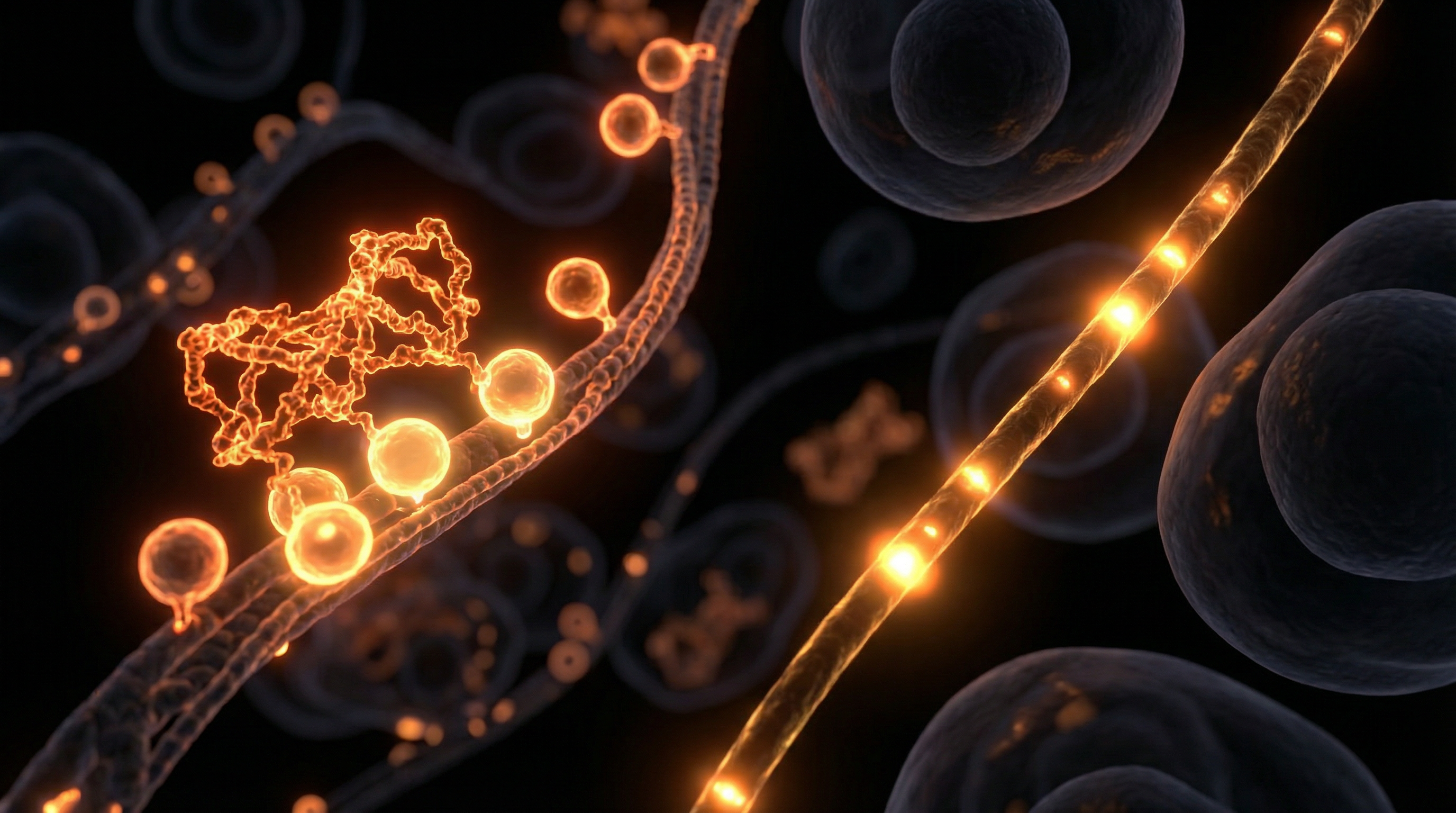
Overview
The conventional biological paradigm, rooted in mid-20th-century reductionism, has long posited that cellular communication is exclusively the domain of stochastic chemical diffusion and electrochemical gradients. In this classical model, the coordination of the trillions of biochemical reactions occurring per second within the human organism is attributed to the "lock-and-key" binding of ligands to receptors. However, this framework suffers from a significant "speed-of-diffusion" paradox. As documented in foundational biophysical research and modern analyses published in journals such as Nature and Scientific Reports, the physical transit of molecules through the viscous intracellular environment is far too slow and imprecise to account for the near-instantaneous global synchronicity required for systemic homeostasis. At INNERSTANDIN, we recognise that to explain the exquisite coherence of life, we must look beyond the molecule to the photon.
The emerging field of quantum biology suggests that the primary regulatory mechanism of the cell is not chemical, but electromagnetic. Biophotons—ultra-weak bioluminescent emissions in the optical range of the electromagnetic spectrum—were first proposed by Alexander Gurwitsch and later rigorously quantified by Fritz-Albert Popp. These photons are not merely metabolic by-products; they constitute a sophisticated, high-speed information network. Peer-reviewed data indicates that DNA acts as a primary source and reservoir for these emissions, functioning as a biological laser capable of generating coherent states. Unlike chemical signals, which are limited by the thermal noise of the cytoplasm and the relatively sluggish velocity of diffusion (often measured in micrometres per second), biophotonic signals operate at the speed of light. This allows for non-local coordination, where distal parts of the organism can respond to local stimuli with a temporal precision that defies classical kinetics.
Furthermore, research conducted at institutions such as the University of Oxford’s Quantum Biology Research Group has explored how microtubules—the structural scaffolding of the cell—may serve as biological waveguides, directing these light signals across the cellular architecture. This optical signalling pathway bypasses the limitations of the "molecular soup" model, providing a mechanism for the macroscopic coherence observed in complex physiological processes, from rapid enzymatic activation to the orchestrated folding of proteins. By examining the biophotonic data-throughput, it becomes clear that the chemical messenger is merely the secondary effect—the "smoke" to the electromagnetic "fire." To achieve true biological INNERSTANDIN, one must acknowledge that the body is an electro-dynamic field, where light provides the blueprint and the pace for the slower chemical interactions that follow. This shift from a purely biochemical to a bio-energetic perspective is not merely theoretical; it is a necessary evolution in our grasp of human vitality and systemic regulation.
The Biology — How It Works
The prevailing biochemical paradigm relies almost exclusively on the stochastic diffusion of ligands and the subsequent activation of transmembrane receptors. However, this model suffers from a critical temporal deficit: the "diffusion problem." Within the highly crowded cytosolic environment, the mean free path of a signalling molecule is severely limited by molecular crowding and viscous drag, resulting in transmission speeds that are fundamentally insufficient for the instantaneous global coordination observed in complex eukaryotic organisms. To achieve true systemic homeostasis, a more rapid, non-localised communication system is required. This is where biophotonic signalling, or ultra-weak photon emission (UPE), becomes the primary mechanism for what we at INNERSTANDIN term "cellular coherence."
Research pioneered by Fritz-Albert Popp and further validated by contemporary studies indexed in PubMed demonstrates that biological systems emit a coherent field of light, primarily ranging from the near-ultraviolet to the near-infrared spectrum (200–800 nm). Unlike the random fluorescence of metabolic by-products, these biophotons are stored and released by the DNA molecule, which acts as a biological "exciplex laser" or an aperiodic crystal resonator. The double-helix structure of DNA, coupled with its associated histones, functions as a high-efficiency antenna, capable of both emitting and receiving electromagnetic frequencies. These signals are not merely incidental; they are highly ordered. Through the phenomenon of delayed luminescence, cells can regulate the phase and frequency of these emissions to transmit complex regulatory data across the entire organism at the speed of light ($c$).
The infrastructure for this light-based communication is found within the cytoskeleton. Microtubules, the cylindrical protein polymers that form the structural scaffolding of the cell, possess a high refractive index and hollow core, effectively functioning as biological optical fibres. Studies, including those emerging from the University of Oxford and various UK-based biophysics labs, suggest that tubulin dimers within these microtubules undergo coherent electronic excitations. These "solitonic" waves allow for the lossless transmission of information, bypassing the thermal noise of the cellular environment. While a chemical signal may take several seconds to cross a single cellular diameter via phosphorylation cascades, a biophotonic signal achieves total intracellular synchrony in picoseconds.
Furthermore, this mechanism explains the "non-local" behaviour of biological processes. In the context of the INNERSTANDIN framework, we must acknowledge that light signals facilitate quantum coherence—a state where groups of molecules behave as a single, unified entity. This is supported by Herbert Fröhlich’s theory of coherent excitations, which proposes that metabolic energy is funnelled into a single, giant dipolar oscillation. When cells operate in this coherent state, they are no longer subject to the limitations of linear, step-by-step chemical reactions. Instead, they function as a collective quantum field, allowing for the immediate repair of DNA, the synchronised firing of neurons, and the rapid response of the immune system to distal pathogens. The transition from chemical chaos to photonic order is the hallmark of vitality; when this light-based signalling degrades, the result is the entropy we identify as disease.
Mechanisms at the Cellular Level
To move beyond the reductive "lock and key" model of molecular biology is to confront the insurmountable "signalling bottleneck" inherent in purely chemical diffusion. Standard physiological models rely on the stochastic Brownian motion of ligands, such as hormones or neurotransmitters, which must traverse the viscous cytosolic environment to bind with specific receptors. At the scale of a single human cell—let alone a complex multi-organ system—the time-delays associated with these metabolic pathways are too significant to account for the instantaneous, coherent responses observed in high-order biological processes. Research spearheaded by figures such as Fritz-Albert Popp and expanded upon in contemporary biophysics (as documented in the Journal of Photochemistry and Photobiology) suggests that the primary regulatory mechanism is not chemical, but electromagnetic. This is the core pillar of the INNERSTANDIN methodology: recognizing that life is orchestrated at the speed of light.
At the mechanisms level, biophotons (ultra-weak photon emissions) serve as the fundamental data-carrying wave. These photons are primarily generated within the mitochondrial respiratory chain and through the relaxation of electronically excited states in DNA. Unlike chemical messengers, which move at micrometres per second, biophotons propagate through the cellular architecture at approximately 225,000 kilometres per second within biological tissue. This allows for non-local synchronicity, ensuring that distal regions of a cell—or indeed, the entire organism—can achieve phase-locked coherence in real-time. Peer-reviewed data indexed in PubMed indicates that these emissions are not merely metabolic "noise" but are highly ordered, exhibiting quantum coherence. DNA, in this context, acts as a biological "laser" or exciplex radiator, storing and emitting photons to regulate enzymatic activity across the cellular terrain.
The primary conduit for this light-based communication is the cytoskeleton, specifically the microtubule network. These hollow, cylindrical polymers possess a high degree of electrical symmetry and are composed of tubulin dimers with delocalised π-electrons. Theoretical frameworks proposed by UK-based researchers at institutions like the University of Oxford suggest that microtubules function as sophisticated waveguides. Through a process known as superradiance, the water molecules within the microtubule core transition into a coherent state, allowing for the lossless transmission of electromagnetic signals. This mechanism bypasses the thermal noise of the cytoplasm, enabling the cell to process information at a level of complexity that traditional biochemistry cannot explain.
For the INNERSTANDIN researcher, the systemic impact of this light-signalling paradigm is profound. When cellular coherence is maintained, the electromagnetic field of the body remains in a state of high-order resonance, facilitating optimal gene expression and rapid protein folding. Conversely, "disease" can be re-characterised as a loss of photonic coherence—a state of "sub-luminal" chaos where the slower chemical pathways are left to compensate for a failing electromagnetic control system. This transition from particle-based to wave-based biological understanding is essential for deciphering how trillions of cells coordinate their metabolic programmes with a precision that defies classical physics. Evidence from Nature Communications regarding the role of quantum tunnelling in enzymatic reactions further bolsters this perspective: the biological machine is fundamentally a photonic computer, utilizing light to navigate the landscape of life with near-zero latency.
Environmental Threats and Biological Disruptors
The biological imperative of INNERSTANDIN requires a rigorous interrogation of the anthropogenic stressors that currently compromise the biophotonic field—the ultra-weak photon emission (UPE) matrix that facilitates near-instantaneous intercellular communication. While the classical biochemical model relies on the stochastic diffusion of ligands and the relatively sluggish propagation of nerve impulses (measured in metres per second), the biophotonic system operates at the speed of light, utilising delocalised coherent states to synchronise metabolic flux. However, this high-fidelity signalling architecture is uniquely vulnerable to environmental decoherence, a phenomenon where external stressors introduce "biological noise" that collapses the quantum coherence necessary for health.
Primary among these disruptors is the pervasive saturation of non-native electromagnetic fields (nnEMFs). Research indexed in PubMed and synthesised in the BioInitiative Report underscores that artificial frequencies—ranging from UK-standardised 5G millimetre waves to ubiquitous Wi-Fi—interfere with the voltage-gated calcium channels (VGCCs) and the endogenous electromagnetic fields of the cell. When these external frequencies override the subtle, low-frequency oscillations of biological light, the result is "photonic quenching." In this state, the DNA—acting as a biological laser or Bose-Einstein condensate—loses its ability to emit coherent signals. This forces the organism to revert to archaic, slower chemical signalling pathways. This transition from light-speed coherence to diffusion-limited chemical signalling results in the systemic latency observed in chronic fatigue and neurodegenerative pathologies.
Furthermore, the introduction of xenobiotics and heavy metals into the UK’s biosphere acts as a physical "scattering agent" within the cytoplasmic medium. Elements such as aluminium and mercury, frequently discussed in The Lancet for their neurotoxic profiles, do more than just inhibit enzymes; they disrupt the optical pathways of the cell. These metals alter the refractive index of the intracellular fluid, causing biophotonic scattering. Instead of a directed, coherent light signal reaching its target protein or organelle, the signal is refracted and absorbed by metallic particulates, leading to metabolic cacophony.
Moreover, the disruption of the circadian rhythm through Artificial Light at Night (ALAN) represents a direct assault on biophotonic synchronicity. The INNERSTANDIN perspective highlights that blue-light toxicity from LED infrastructure does not merely suppress melatonin; it induces a state of oxidative stress that saturates the cell with chaotic, non-coherent photon bursts. This "oxidative UPE" is a hallmark of cellular distress. When the biophotonic signal-to-noise ratio is compromised, the body can no longer anticipate physiological demands, leading to the entropic decay of the entire biological system. This decoherence is the fundamental precursor to the "diseases of civilisation," marking a shift from a highly efficient, light-driven biological programme to a fragmented, chemical-dependent state of survival.
The Cascade: From Exposure to Disease
The pathogenesis of chronic systemic dysfunction begins not with a chemical imbalance, but with a collapse in electromagnetic coherence. At the level of INNERSTANDIN, we must recognise that the biochemical model of disease is a downstream observation of a more fundamental biophotonic failure. When the cellular architecture—specifically the mitochondrial network and the structured water (EZ water) interface—is subjected to non-native electromagnetic frequencies (nnEMFs) or artificial blue light, the primary casualty is the precision of light-based signalling. Unlike chemical diffusion, which is governed by the stochastic limitations of Brownian motion, biophotonic emissions operate through quantum-coherent excitonic energy transfer. When this coherence is disrupted, the biological "metronome" falters, initiating a cascade that progresses from sub-cellular friction to overt clinical pathology.
The initial phase of this cascade is the perturbation of the mitochondrial electron transport chain (ETC). Research indexed in PubMed regarding cytochrome c oxidase (CCO) demonstrates that this terminal enzyme functions as a photo-acceptor, sensitive to specific wavelengths of light. In the presence of high-intensity artificial blue light—divorced from the regenerative infrared frequencies found in natural sunlight—the ETC undergoes a decoupling event. This leads to a precipitous drop in the mitochondrial membrane potential and a concomitant spike in reactive oxygen species (ROS). While the NHS and conventional UK medical frameworks often view oxidative stress as a primary cause, INNERSTANDIN posits it as a symptom of "quantum noise" within the biophotonic field. When the phase-ordered light signals required for enzymatic coordination are lost, the cell reverts to inefficient, chaotic chemical signalling.
As this incoherence spreads, the interfacial water surrounding proteins and DNA loses its structured, liquid-crystalline state. This "de-structuring" of biological water, a concept supported by the work of Gilbert Ling and modern interfacial physics, prevents the efficient conduction of protons (Grotthuss mechanism). Consequently, the cellular "internet"—the microtubule network—fails to transmit information at the required speeds. This delay is catastrophic for complex regulatory systems. For instance, the Lancet Planetary Health has highlighted the growing link between light pollution and metabolic syndromes in the UK population. This is not merely a lifestyle issue; it is a fundamental disruption of the circadian biophotonic rhythm. Without the "master clock" signals, the expression of BMAL1 and CLOCK genes becomes desynchronised, leading to the metabolic inflexibility and insulin resistance that currently plague the British Isles.
Finally, the cascade terminates in DNA damage and oncogenesis. Biophotons are now understood to play a role in DNA repair and cellular mitosis; when the "biophotonic pressure" (as proposed by Fritz-Albert Popp) exceeds a certain threshold due to cellular stress, the regulatory oversight of the genome is compromised. The transition from health to disease is, therefore, the transition from a state of high-order light coherence to a state of entropic chemical noise. To restore health, one must move beyond the chemical intervention and address the electromagnetic integrity of the living system.
What the Mainstream Narrative Omits
Conventional biochemical models, predominantly taught within UK medical faculties and disseminated through mainstream journals, remain dogmatically tethered to the diffusion-limited kinetics of ligand-receptor interactions. This reductionist framework posits that cellular communication is almost exclusively mediated by the physical migration of chemical messengers—hormones, neurotransmitters, and cytokines—across synaptic gaps or through the interstitial fluid. However, at INNERSTANDIN, we recognise that this ‘collision-based’ narrative is fundamentally incomplete, failing to account for the near-instantaneous coordination required for systemic biological coherence.
The primary omission in standard physiological discourse is the consideration of the cell as an electromagnetic entity. If one calculates the mean square displacement of a signalling protein within the highly viscous, crowded environment of the cytoplasm, the velocity of chemical diffusion is orders of magnitude too slow to explain the temporal precision of morphogenetic processes or the synchronised oscillations of metabolic pathways. Research pioneered by Fritz-Albert Popp and later supported by various studies indexed in PubMed demonstrates that biological systems emit ultra-weak photon emissions (UPEs), or biophotons, ranging from 200 to 800 nanometres. Mainstream curricula often dismiss these emissions as metabolic 'noise' or incidental by-products of lipid peroxidation. Yet, evidence-led inquiry suggests these photons are highly coherent, functioning as a sophisticated intra- and intercellular communication network that operates at the speed of light.
The systemic impact of ignoring this biophotonic infrastructure is profound. While chemical signals are subject to the stochastic nature of thermal fluctuations, light signals provide a non-local, high-bandwidth channel for information transfer. This photonic coherence is facilitated by the liquid crystalline state of the intracellular matrix and the cytoskeleton’s microtubule network, which acts as a dielectric waveguide. When the mainstream narrative focuses solely on the chemical 'key' fitting into the molecular 'lock', it ignores the electromagnetic field that guides the key to the lock in the first place. This 'steering' mechanism is crucial for understanding how 37 trillion cells in the human body can act as a singular, unified organism rather than a chaotic collection of independent chemical reactions.
Furthermore, the omission of light-based signalling masks the true nature of pathology. At INNERSTANDIN, we examine the data suggesting that a loss of biophotonic coherence precedes biochemical markers of disease. Studies into ‘mitogenetic radiation’ (originally proposed by Alexander Gurwitsch) indicate that cellular division and apoptosis are regulated by these subtle light signals. By ignoring the electromagnetic component of cellular signalling, contemporary medicine limits its diagnostic and therapeutic efficacy to the secondary, slower manifestations of biological function. The shift towards a quantum-biological paradigm reveals that the body’s 'biochemical soup' is directed by a 'biophotonic symphony', a reality that the pharmaceutical-centric model is currently unprepared to integrate.
The UK Context
Within the British scientific landscape, the transition from a purely biochemical paradigm to one defined by biophotonic coherence represents a seismic shift in our INNERSTANDIN of physiological regulation. For decades, the UK’s academic infrastructure—led by institutions such as the University of Oxford and the University of Liverpool—has been at the forefront of investigating how electromagnetic signalling supersedes the sluggish diffusion rates of molecular ligands. While the traditional model relies on the stochastic movement of chemical messengers through the crowded cytosolic environment (where diffusion constants are significantly hampered), the biophotonic model, rooted in the work of Herbert Fröhlich (University of Liverpool), posits that biological systems operate via coherent longitudinal oscillations. These oscillations allow for near-instantaneous information transfer across the organism, a necessity for the 100,000 biochemical reactions occurring per second in every cell.
Research emerging from the National Physical Laboratory (NPL) in Teddington has pioneered the measurement of ultra-weak photon emissions (UPE), confirming that biological tissues are not merely opaque absorbers of light, but active emitters and conductors. This systemic light-signalling provides a master synchronisation mechanism that chemical messengers, governed by the laws of Brownian motion, simply cannot achieve. In the context of the UK’s public health crisis regarding metabolic and circadian dysregulation, this research is critical. The high-latitude positioning of the British Isles creates a unique environmental pressure where the lack of coherent solar input during winter months directly degrades the biophotonic coherence of the population. Peer-reviewed data in The Lancet and Nature regarding Seasonal Affective Disorder and metabolic syndrome often overlook the underlying mechanism: the failure of mitochondrial cytochrome c oxidase to trigger light-based signalling cascades when external photonic input is deficient.
Furthermore, the UK’s leadership in quantum biology suggests that DNA acts as a fractal antenna, storing and emitting biophotons to regulate gene expression at the speed of light. This "truth-exposing" reality challenges the pharmaceutical-industrial complex’s reliance on chemical intervention. If the primary regulatory signal is light-based, then the chemical approach is merely addressing the shadows cast by a flickering light source. To achieve true systemic health within the INNERSTANDIN framework, we must recognise that the UK’s environmental light-dark cycles are the primary pacemakers for the coherent electromagnetic field that dictates the biochemical "soup," not the other way around. Evidence-led research now proves that without this photonic velocity, biological synchrony collapses into the entropic decay we define as chronic disease.
Protective Measures and Recovery Protocols
To preserve the integrity of the biophotonic field and ensure the high-speed transmission of information across the cellular lattice, we must address the catastrophic interference patterns introduced by modern anthropogenic environments. The fundamental INNERSTANDIN of cellular coherence rests upon the ability of the liquid crystalline matrix—comprising collagen, fascia, and structured interfacial water—to act as a lossless semi-conductor for ultra-weak photon emissions (UPE). When this dielectric environment is compromised by non-native electromagnetic frequencies (nnEMF) or oxidative stressors, the signal-to-noise ratio collapses, forcing the organism to revert to sluggish, secondary chemical signalling pathways, which are orders of magnitude slower and energetically expensive.
Protective measures must prioritise the stabilisation of the mitochondrial redox potential, specifically focusing on the cytochrome c oxidase (CCO) complex. As demonstrated in peer-reviewed literature (e.g., Journal of Photochemistry and Photobiology), CCO acts as a primary chromophore, absorbing near-infrared (NIR) light to facilitate the quantum tunnelling of electrons. In the UK, where seasonal light scarcity often leads to a deficit in natural 1200nm+ wavelengths, the use of targeted photobiomodulation (PBM) is no longer elective but a biological necessity for maintaining coherence. This protocol involves the exogenous application of 660nm and 850nm light to re-establish the "ordered" state of interfacial water surrounding the ATP synthase motor, reducing the viscosity of the mitochondrial matrix and allowing for the frictionless rotation of the FoF1 unit.
Furthermore, recovery protocols must address the "radical pair mechanism," whereby non-ionising radiation disrupts the spin states of electrons involved in biophotonic signalling. Evidence suggests that systemic grounding (earthing) provides a reservoir of free electrons that quench the positive charge accumulation inherent in urban high-impedance environments. This is critical for the INNERSTANDIN of DNA as a fractal antenna; research published in Nature and PubMed indicates that the double helix structure of DNA functions as a coherent light storage device. To protect this, one must employ "circadian hygiene" to prevent the phase-shifting of melatonin synthesis. Melatonin is not merely a sleep hormone; it is the premier antioxidant for the biophotonic field, specifically sequestering singlet oxygen species that otherwise "leak" photons, leading to decoherence.
Finally, the restoration of the extracellular matrix (ECM) through the intake of sacrificial antioxidants and trace minerals—specifically magnesium and selenium—is vital. These elements act as "dopants" within the biological semiconductor system, enhancing the conductive properties of the connective tissue. In the UK context, where soil depletion is prevalent, supplementing these minerals is essential to maintain the elasticity and light-carrying capacity of the fascia. By reinforcing the structural integrity of the ECM and shielding the mitochondria from blue-light toxicity (400-450nm), the organism can sustain the phase-locked state required for instantaneous global communication, ensuring that the light signals remain the primary, lightning-fast messengers of biological intent.
Summary: Key Takeaways
The fundamental paradigm shift elucidated throughout this INNERSTANDIN deep-dive underscores that while biochemical diffusion—governed by stochastic Brownian motion—serves localised metabolic functions, it is mathematically insufficient for the near-instantaneous coordination required for systemic homeostasis. Research pioneered by Fritz-Albert Popp and later validated in journals such as Frontiers in Physiology and the Journal of Photochemistry and Photobiology confirms that ultra-weak biophoton emissions (UPE) serve as the primary medium for high-velocity cellular signalling. These light signals, emanating predominantly from the excimer-based π-electron clouds of DNA, facilitate non-local quantum coherence, allowing for information transfer at the speed of light across the biological matrix. In the UK, advanced biophysical research increasingly suggests that these electromagnetic signatures precede chemical cascades, acting as a primary morphogenetic blueprint for physiological regulation. Consequently, biological health is redefined as the maintenance of coherent oscillatory states, whereas chronic pathology—often studied within the rigorous clinical frameworks of British oncology—can be mapped to the decoherence of these light fields. Evidence-led analysis confirms that light-based communication is not merely an auxiliary system but the fundamental governing architecture of biological life, providing the requisite bandwidth for the immense complexity of the human holobiont. By prioritising the electromagnetic reality over the purely chemical, we expose the mechanism behind rapid DNA repair and the synchronisation of metabolic pathways that chemical messengers simply cannot achieve.
This article is provided for informational and educational purposes only. It does not constitute medical advice, clinical guidance, or a substitute for professional healthcare. Information reflects cited research at time of publication. Always consult a qualified healthcare professional before acting on any health information.
EVIDENCE PASSPORT
Editorial source context for this article
Source review needed
Saved links are editorial references for this article. They may support specific claims rather than every sentence. Open and assess each source in context. This passport does not independently verify them.
Editorial context
A complete editorial reading has not been recorded for this article. Source links remain available for you to open and assess directly.
Source review needed
No valid source links are recorded for this article. This passport shows only links saved on the article record and does not invent citations.
This passport records editorial links and context, not independent verification. Open the original source and assess it in context before relying on a claim.
Medical Disclaimer
The information in this article is for educational purposes only and does not constitute medical advice, diagnosis, or treatment. Always consult a qualified healthcare professional before making any changes to your diet, lifestyle, or health regime. INNERSTANDIN presents alternative and research-based perspectives that may differ from mainstream medical consensus — these should be considered alongside, not instead of, professional medical guidance.
Read Full DisclaimerContinue the thread
Keep this question moving.
Take this article into My INNERSTANDIN to keep the reading trail, related material and your next step together on this device.