
Choline Deficiency: The Silent Crisis in Modern UK Prenatal Nutrition
Updated May 2026
Highlights the prevalence of choline insufficiency in the UK and its impact on fetal brain development. It advocates for egg yolk and organ meat consumption.
Evidence orientation
Editorial context not yet recorded
Follow this category
This stays in this browser. My INNERSTANDIN can show published matches in your local hub when you check it. It does not send email, push, or alert notifications.
Local learning review
A private browser aid for revisiting ideas. It is not an alert or a health recommendation.
Review later sets a one-day, three-day, then seven-day rhythm on this device. Choose it only when you want to revisit this article.
Overview
In the landscape of modern nutritional science, few failures are as catastrophic, yet as quietly overlooked, as the systemic depletion of choline in the British diet. While the medical establishment has spent decades obsessing over folic acid and vitamin D, a fundamental building block of human consciousness and structural integrity has been relegated to the periphery. We are currently witnessing a silent crisis—a generational thinning of cognitive potential—precipitated by a departure from the ancestral, animal-based fats that once defined the human diet.
Choline is not merely a "supplementary" nutrient; it is a primary physiological requirement. Often grouped with the B-vitamin complex, it is essential for the structural integrity of every cell membrane in the human body, the synthesis of neurotransmitters, and the epigenetic programming of the developing foetus. Yet, despite its critical role, data suggests that over 90% of the UK population, including the vast majority of pregnant and lactating women, fail to meet even the most conservative recommended intakes.
The consequences of this deficiency are not subtle. They manifest in the rising rates of neurodevelopmental delays, metabolic dysfunction, and the staggering prevalence of Non-Alcoholic Fatty Liver Disease (NAFLD). In the context of prenatal health, the stakes are even higher. The period from conception through the first 1,000 days of life represents a "critical window" where choline availability dictates the architecture of the hippocampus—the brain’s centre for memory and spatial navigation.
This article serves as an urgent exposé for the INNERSTANDING community. It explores the biological necessity of choline, the environmental factors conspiring to deplete it, and why the mainstream "plant-forward" narrative is fundamentally incompatible with optimal human neurobiology. We must return to a nose-to-tail philosophy, prioritising the nutrient-dense organ meats and egg yolks that our ancestors instinctively valued.
Callout Fact: Research published in the British Medical Journal (BMJ) indicates that the UK is sleepwalking into a "choline crisis," with current dietary trends making it nearly impossible for pregnant women to achieve the required 450–550mg per day without targeted animal-based intervention.
The Biology — How It Works
To understand choline is to understand the very infrastructure of life. In the human body, choline operates through three primary pathways: structural integrity, neurotransmission, and methyl donation.
The Structural Scaffold: Phosphatidylcholine
Approximately 95% of the total choline in the body is found in the form of phosphatidylcholine (PC). This molecule is the primary phospholipid in all cellular membranes. Without adequate PC, the cell membrane loses its fluidity and its ability to manage the transport of nutrients and waste. In the context of pregnancy, PC is the vehicle by which the mother exports fats and essential fatty acids (like DHA) from her liver to the placenta. If choline is low, the "shipping containers" for these vital nutrients are never built, leaving the foetus starved of the building blocks required for rapid brain growth.
The Messenger: Acetylcholine
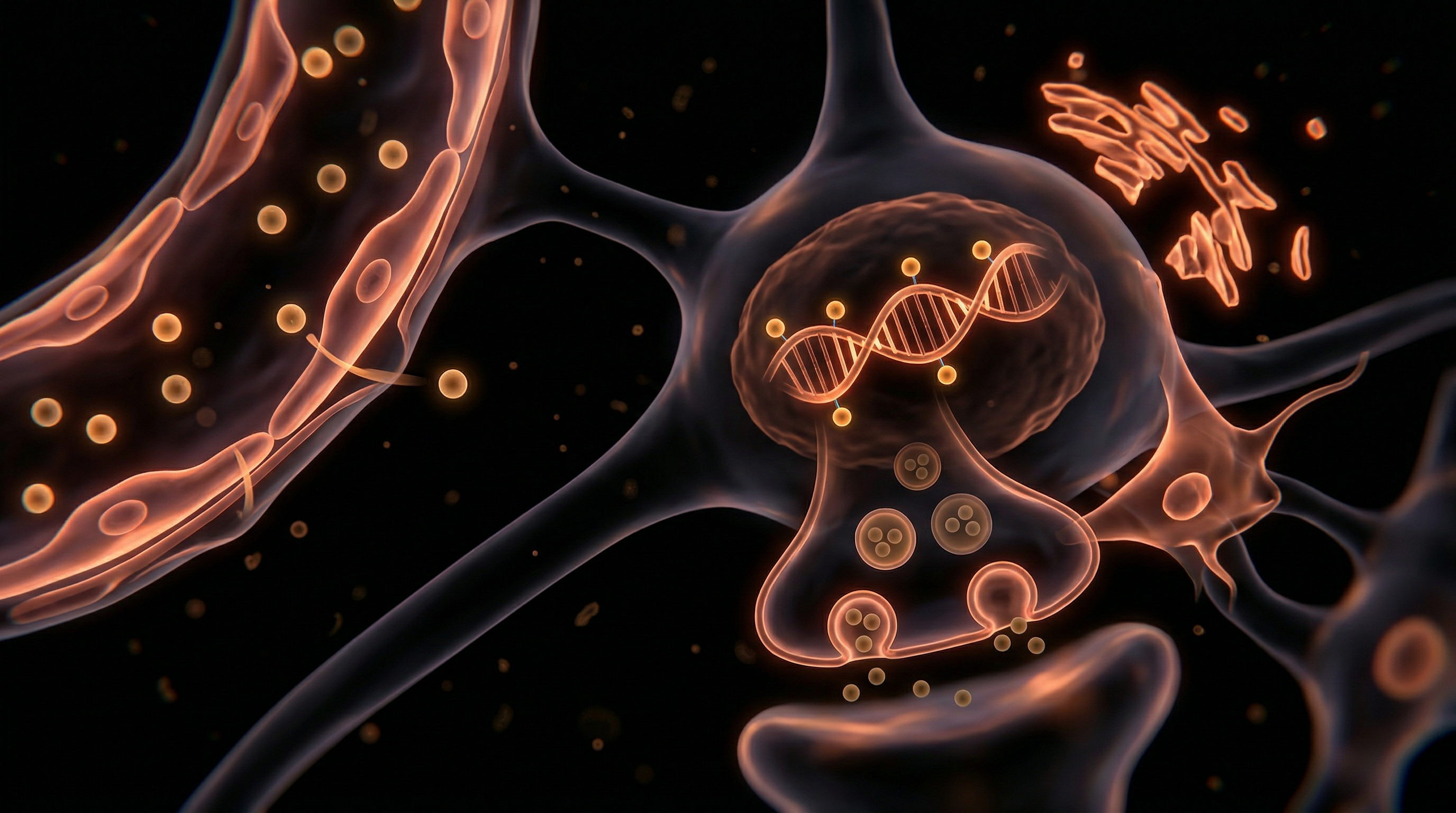
Choline is the direct precursor to acetylcholine (ACh), the body’s primary excitatory neurotransmitter. ACh governs the parasympathetic nervous system, muscle control, and, crucially, the "firing" of neurons in the brain. During gestation, ACh acts as a morphogen—a molecule that tells stem cells what to become. It regulates the birth of new neurons (neurogenesis) and the formation of synapses (synaptogenesis). A deficiency during this stage is like trying to build a complex electrical grid with no wiring.
The Universal Donor: The Methylation Cycle
Perhaps the most complex role of choline is its participation in one-carbon metabolism. Choline can be oxidised into betaine, which provides methyl groups to convert homocysteine back into methionine. This cycle is critical for the production of S-adenosylmethionine (SAMe), the body’s universal methyl donor.
- Methylation is the "on/off" switch for our genes.
- It determines which aspects of our DNA are expressed and which are silenced.
- High homocysteine levels, caused by low choline or folate, are a major risk factor for pre-eclampsia and miscarriage.
Callout Fact: While the body can produce some choline via the PEMT (Phosphatidylethanolamine N-methyltransferase) pathway, this process is heavily dependent on oestrogen. Men and post-menopausal women, as well as those with common genetic polymorphisms, are almost entirely dependent on dietary intake.
Mechanisms at the Cellular Level
At the microscopic level, choline deficiency induces a state of cellular panic. When the supply of dietary choline vanishes, the body begins a process of "autocannibalism" to preserve the brain. It pulls choline from the membranes of the liver and other tissues, leading to cellular apoptosis (programmed cell death).
The Hippocampal Architecture
The hippocampus is the epicentre of the choline story. During the third trimester and early infancy, the hippocampus undergoes a massive expansion. Choline ensures that the neural progenitor cells divide at the correct rate. In animal models, choline-deficient offspring show:
- Fewer dendritic branches (less "connectivity" between neurons).
- Smaller hippocampal volumes.
- Permanent alterations in the expression of genes related to memory.
These changes are not reversible by later supplementation. Once the window of hippocampal development closes, the "hardware" of the brain is essentially set for life.
Epigenetic Programming
Choline influences the epigenome of the foetus. By providing methyl groups, choline helps decorate the DNA with "markers" that determine how that child will respond to stress, how they will metabolise glucose, and even their future risk of cognitive decline in old age. We are now discovering that prenatal choline levels can "mask" or "unmask" genetic predispositions. For instance, high choline intake can actually mitigate some of the neurological damage caused by prenatal alcohol exposure or maternal stress.
The Mitochondrial Connection
Choline is also essential for the health of the mitochondria—the powerhouses of the cell. Phosphatidylcholine is a major component of the inner mitochondrial membrane. When choline is scarce, mitochondria become "leaky," producing excessive reactive oxygen species (oxidative stress) and failing to produce ATP efficiently. For a developing foetus, this energy deficit can lead to intrauterine growth restriction (IUGR).
Environmental Threats and Biological Disruptors
The "Silent Crisis" in the UK is not an accident of nature; it is the result of a concerted shift in environmental and dietary paradigms. Several factors are actively sabotaging our choline status.
The Plant-Based Paradigm
The most significant threat to choline status in the UK is the aggressive promotion of veganism and "plant-based" eating. While plants do contain some choline, it is often in the form of free choline, which is less bioavailable than the sphingomyelin and phosphatidylcholine found in animal products.
- 100g of beef liver contains ~430mg of choline.
- 2 large eggs contain ~300mg of choline.
- 100g of broccoli contains only ~40mg.
To meet the pregnancy requirement of 450-550mg through broccoli alone, a woman would need to consume over 1.3kg of the vegetable daily—a feat that is not only impractical but would lead to significant digestive distress and anti-nutrient interference.
The War on Saturated Fat and Cholesterol
For fifty years, the British public has been told that saturated fat and cholesterol are "clogging" their arteries. This "Lipid Hypothesis" led to the demonisation of the very foods richest in choline: eggs and red meat. By replacing butter with margarine and eggs with "cereal-based breakfasts," the UK population inadvertently stripped the most vital brain-building nutrient from its diet.
Glyphosate and the Microbiome
The UK’s heavy reliance on industrial monocrop agriculture means that glyphosate (the active ingredient in Roundup) is pervasive in the food supply. Emerging research suggests that glyphosate may interfere with the shikimate pathway in our gut bacteria. While humans don't have this pathway, our gut microbes do. These microbes play a role in the "de novo" synthesis of choline and its precursors. Furthermore, glyphosate-induced gut dysbiosis can lead to the overgrowth of bacteria that "consume" choline, turning it into TMA (trimethylamine), which reduces the amount available for the host.
Ultra-Processed Foods (UPFs)
The UK has the highest consumption of UPFs in Europe. These products are "nutritional voids." They are high in refined seed oils (linoleic acid) which compete with choline-derived phospholipids for space in the cell membranes, further compromising cellular health.
The Cascade: From Exposure to Disease
When we deprive a developing organism of choline, we initiate a cascade of dysfunction that ripples through the lifespan. This is not just about "low IQ"; it is about systemic biological failure.
Developmental Delay and "Modern" Disorders
There is a striking correlation between the decline in animal-fat consumption and the rise in neurodevelopmental conditions like ADHD and Autism Spectrum Disorder (ASD). While the causes of these conditions are multi-factorial, choline’s role in sensory processing and synaptic pruning makes it a primary suspect. Without enough acetylcholine to dampen "noise" in the brain, the developing nervous system becomes hyper-sensitive and poorly integrated.
The Liver Crisis
The liver is the primary hub for choline metabolism. When dietary choline is low, the liver cannot export VLDL (Very Low-Density Lipoprotein). As a result, fat becomes "trapped" in the liver cells. This is the primary mechanism behind Non-Alcoholic Fatty Liver Disease (NAFLD).
Callout Fact: NAFLD is now the most common liver disorder in the UK, affecting an estimated 1 in 3 people. It is increasingly being seen in children—a phenomenon that was virtually non-existent forty years ago.
Metabolic Syndrome and Obesity
Choline is involved in the regulation of lipid metabolism and insulin sensitivity. Low choline levels lead to increased fat storage and systemic inflammation. By starving the mother of choline, we may be "metabolically programming" the child for obesity before they are even born. The child's body "learns" that nutrients are scarce and adapts by becoming highly efficient at storing fat—a phenotype that is disastrous in our modern food environment.
What the Mainstream Narrative Omits
The UK’s "Public Health" guidelines are shockingly silent on the choline issue. If you visit the NHS website for prenatal advice, you will find extensive mentions of folic acid, but you will struggle to find a single paragraph dedicated to choline. This omission is not due to a lack of evidence, but a failure of institutional inertia.
The Folic Acid "Fixation"
The medical establishment has put all its eggs in the "folate" basket. While folate is indeed vital for preventing neural tube defects (NTDs), research shows that choline and folate work synergistically. In fact, women with the lowest choline intake have a 2.4-fold higher risk of having a child with an NTD, regardless of their folate levels. By ignoring choline, the mainstream narrative provides a false sense of security to women who "take their folic acid" but continue to eat a nutrient-poor, plant-heavy diet.
The Supplement Scam
Most prenatal vitamins sold in UK pharmacies (like Boots or Superdrug) contain zero choline. Those that do include it often use choline bitartrate, which is less effective at raising brain choline levels than the alpha-GPC or phosphatidylcholine found in whole foods. Furthermore, the doses provided are usually "label dressings"—tiny amounts (50mg or less) that do nothing to bridge the 400mg+ gap.
The Genetic Blind Spot
Mainstream advice is "one size fits all." It ignores the fact that a large percentage of the UK population carries SNPs (Single Nucleotide Polymorphisms) in genes like MTHFR, PEMT, or CHDH. These individuals have a much higher biological requirement for choline because their bodies are inefficient at producing it internally. For these women, following the standard NHS guidelines is a recipe for clinical deficiency.
Callout Fact: A study of UK pregnant women found that even those who took supplements were still not reaching the recommended levels because the supplements themselves were inadequately formulated.
The UK Context
The UK is currently the "perfect storm" for choline deficiency. Our cultural, economic, and political landscape has converged to create a nutritional wasteland for the next generation.
The "Veganuary" and Meat-Tax Culture
The UK has seen a massive surge in "meat alternatives." These are often highly processed mixtures of pea protein, industrial seed oils, and thickeners. They contain no choline in its bioavailable form. The cultural shaming of red meat—driven by questionable "sustainability" claims—is directly impacting the fertility and prenatal health of British women. We are trading the cognitive health of our children for a misguided sense of environmental virtue.
Economic Factors and Food Deserts
As the cost of living rises in the UK, "high-quality" animal proteins like pasture-raised eggs and grass-fed liver are becoming luxuries for some. This has created a socio-economic divide in cognitive potential. Wealthier families can afford the "nose-to-tail" approach, while those on lower incomes are pushed toward cheap, grain-based staples that are devoid of choline.
The Failure of SAGE and Public Health England
Public health bodies in the UK have been slow to update their "Eatwell Guide." This guide still encourages a diet that is 70% carbohydrates and plant-based proteins. It fails to recognise that for a pregnant woman, the bioavailability of nutrients is more important than the total grams of "protein" on a label.
Protective Measures and Recovery Protocols
To combat the silent crisis, we must bypass the mainstream narrative and return to a biologically appropriate, animal-based dietary framework. For the INNERSTANDING community, this is about taking radical responsibility for the health of our lineage.
The Nose-to-Tail Prescription
The single most effective way to ensure choline sufficiency is to consume the parts of the animal that our ancestors prized:
- Egg Yolks: The gold standard. Consume 3–4 large, pasture-raised egg yolks daily. The choline is in the yolk, not the white.
- Ruminant Liver: Lamb or beef liver is the most concentrated source of choline on earth. Aim for 100g–150g per week. If the taste is an issue, freeze it in small "pills" and swallow them raw, or mix it into ground beef (the "hidden liver" technique).
- Kidneys and Heart: These organ meats are also excellent sources and provide co-factors like B12 and CoQ10.
- Roe (Fish Eggs): An incredibly dense source of phosphatidylcholine and DHA in a highly bioavailable phospholipid form.
Strategic Supplementation
If dietary sources are insufficient, or if you possess genetic SNPs that increase your demand, supplementation may be necessary.
- Avoid: Choline bitartrate (often causes GI distress and is poorly absorbed).
- Prioritise: Alpha-GPC or CDP-Choline (Citicoline). These forms are more capable of crossing the blood-brain barrier.
- Phosphatidylcholine (PC): Derived from sunflower or soy (though animal sources are better), PC is excellent for supporting the liver and cellular membranes.
Optimising the Environment
- Filter Your Water: Reduce exposure to fluoride and chlorine, which can disrupt the delicate balance of the gut microbiome.
- Eliminate Seed Oils: Replace rapeseed and sunflower oil with tallow, lard, or butter. This reduces the "competition" for phospholipids in your cell membranes.
- Prioritise Saturated Fat: Choline works in tandem with saturated fats to build robust cell structures. Don't fear the fat.
Timing is Critical
For those planning a pregnancy, the recovery protocol should begin six months prior to conception. It takes time to replenish the liver’s choline stores and to stabilise the methylation cycle. During lactation, the demand for choline is even higher than during pregnancy, as the mother must export massive amounts of choline into her breast milk.
Summary: Key Takeaways
The choline crisis in the UK is a stark reminder that our "modern" understanding of nutrition is often a regression, not an evolution. By ignoring the biological necessity of animal-based fats and organ meats, we are compromising the very foundation of human health: the brain.
- Choline is the "Brain Builder": It is essential for the structure, signaling, and genetic programming of the foetus.
- The UK is Deficient: Over 90% of the population fails to meet basic requirements due to a shift toward plant-based, ultra-processed diets.
- Mainstream Advice is Flawed: Folic acid is not enough. The NHS and major prenatal brands are failing to address the choline gap.
- The Solution is Ancestral: Egg yolks and organ meats (nose-to-tail eating) are the only reliable way to achieve optimal choline status.
- The Window is Small: The first 1,000 days are critical. Choline deficiency during this time creates permanent changes in brain architecture.
For the INNERSTANDING researcher, the path is clear. We must reject the sanitised, plant-forward propaganda and reclaim the nutrient-dense traditions that have sustained our species for millennia. The future of our children’s cognitive potential depends on our willingness to eat according to our biological reality, not a political agenda.
"Protect the lineage. Prioritise the yolk. Reclaim the liver."
This article is provided for informational and educational purposes only. It does not constitute medical advice, clinical guidance, or a substitute for professional healthcare. Information reflects cited research at time of publication. Always consult a qualified healthcare professional before acting on any health information.
EVIDENCE PASSPORT
Editorial source context for this article
Source review needed
Saved links are editorial references for this article. They may support specific claims rather than every sentence. Open and assess each source in context. This passport does not independently verify them.
Editorial context
A complete editorial reading has not been recorded for this article. Source links remain available for you to open and assess directly.
Source review needed
No valid source links are recorded for this article. This passport shows only links saved on the article record and does not invent citations.
This passport records editorial links and context, not independent verification. Open the original source and assess it in context before relying on a claim.
Medical Disclaimer
The information in this article is for educational purposes only and does not constitute medical advice, diagnosis, or treatment. Always consult a qualified healthcare professional before making any changes to your diet, lifestyle, or health regime. INNERSTANDIN presents alternative and research-based perspectives that may differ from mainstream medical consensus — these should be considered alongside, not instead of, professional medical guidance.
Read Full DisclaimerContinue the thread
Keep this question moving.
Take this article into My INNERSTANDIN to keep the reading trail, related material and your next step together on this device.
Dig deeper in the Library
Free, longform PDF volumes that go beyond headlines into mechanisms and references.