
Circadian Rhythms and the British Isles: How Light Pollution Disrupts Biological Terrain
Updated April 2026
Evidence orientation
Editorial context not yet recorded
Follow this category
This stays in this browser. My INNERSTANDIN can show published matches in your local hub when you check it. It does not send email, push, or alert notifications.
Local learning review
A private browser aid for revisiting ideas. It is not an alert or a health recommendation.
Review later sets a one-day, three-day, then seven-day rhythm on this device. Choose it only when you want to revisit this article.
In the modern age, we have successfully conquered the night. With the flick of a switch, we have banished the primordial darkness that once governed the lives of our ancestors. Yet, this triumph over the natural world has come at a staggering physiological cost. For those living within the British Isles—a region defined by its unique latitudinal light shifts—the imposition of Artificial Light At Night (ALAN) is not merely an inconvenience to our sleep; it is a systematic assault on our biological terrain.
To understand the health crisis facing the United Kingdom today, we must look beyond the "germ" and toward the "terrain." Terrain Theory posits that the internal environment of the body—the pH, the electrical charge, and the hormonal balance—is the primary determinant of health. When our internal clocks are severed from the celestial cycles of the sun and moon, the terrain becomes compromised, leaving the gates wide open for chronic disease, mental instability, and metabolic decay.
1. Overview: The Rhythm of Life Under Siege
The Circadian Rhythm is a 24-hour internal clock that oscillates in nearly every cell of the human body. It is the conductor of a vast biological orchestra, ensuring that DNA repair happens at night, digestion occurs during the day, and immune surveillance is constant. In the British Isles, our biology evolved to respond to a specific temperate light signature: long, dim winters and bright, expansive summers.
However, the rapid transition to an urbanised, LED-saturated environment has created a "mismatch" disease. We are now living in a state of biological dyschrony. By saturating our evenings with short-wavelength blue light, we are effectively telling our brains that it is midday in the Sahara, even as we sit in a rainy flat in Manchester at 11:00 PM. This confusion ripples through our biological medicine, degrading the very foundations of our cellular health.
2. Biological Mechanisms: The SCN and the Melatonin Shield
At the centre of this disruption is the Suprachiasmatic Nucleus (SCN), a tiny region in the hypothalamus. The SCN is the "Master Clock," receiving light signals directly from the retina via intrinsically photosensitive Retinal Ganglion Cells (ipRGCs). These cells contain a photopigment called melanopsin, which is exquisitely sensitive to blue light.
The Melatonin Cascade
When the sun sets, the absence of blue light signals the pineal gland to secrete melatonin. Often mislabelled as merely a "sleep hormone," melatonin is, in fact, the most potent endogenous antioxidant and mitochondrial protector known to science.
"Melatonin is the night-watchman of the biological terrain. It scavenges free radicals, repairs damaged DNA, and prevents the oxidative stress that leads to cellular mutation."
When we expose ourselves to streetlights, smartphones, and "cool white" LED bulbs after sunset, we suppress melatonin production by up to 85%. This leaves the biological terrain unprotected. Without the nightly "clean-up" provided by melatonin, the body accumulates metabolic waste, leading to a state of chronic low-grade inflammation.
Mitochondrial Dysfunction
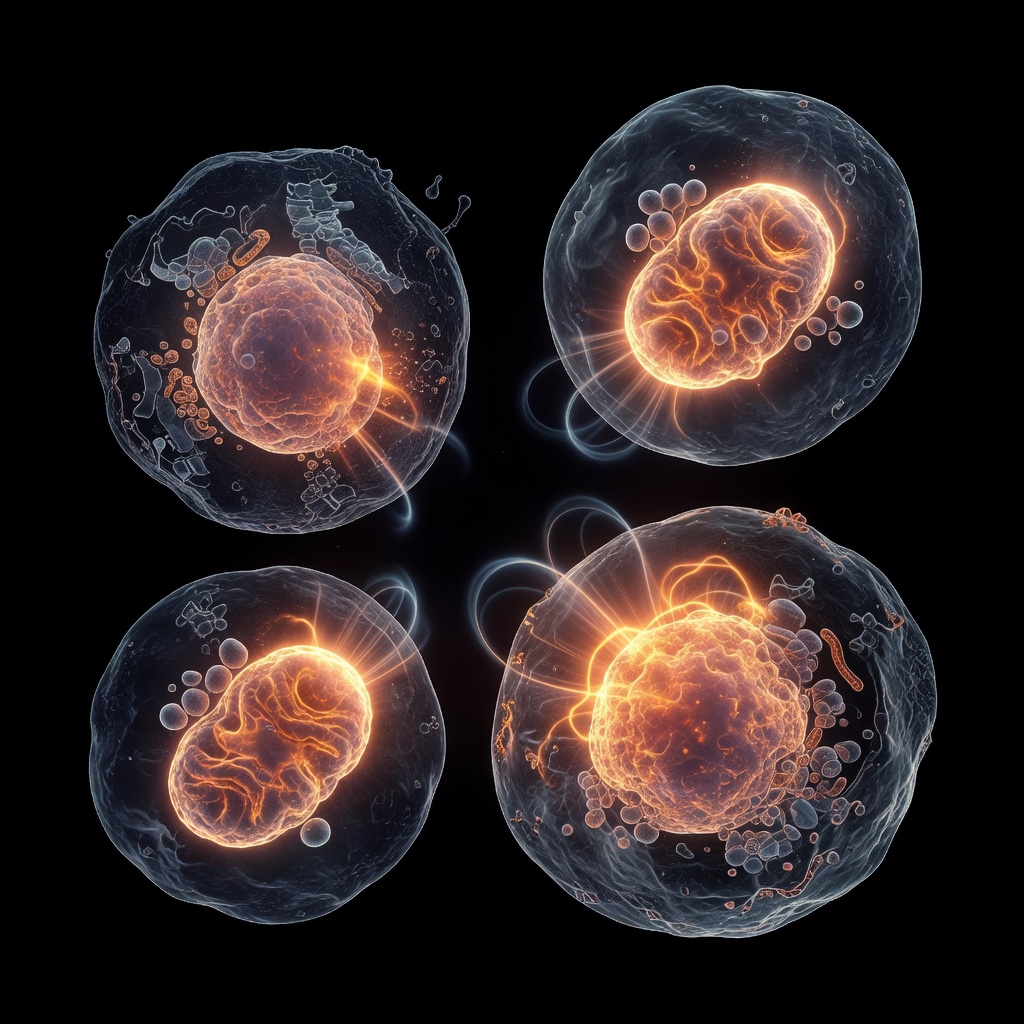
Recent breakthroughs in Biological Medicine have revealed that mitochondria—the powerhouses of our cells—have their own circadian rhythms. They require periods of darkness to undergo mitophagy (the recycling of damaged mitochondria). Light pollution interrupts this process, leading to "leaky" mitochondria that spill reactive oxygen species (ROS) into the cellular environment, souring the terrain and fostering an environment conducive to cancer and neurodegeneration.
3. UK Context & Relevance: The LED Revolution and High-Latitude Living
The British Isles face a unique set of challenges regarding light pollution. As a high-latitude nation, the UK experiences significant seasonal variation in day length. Historically, the British people spent winter evenings in "functional darkness," lit only by the amber glow of firelight—a light source devoid of the disruptive blue spectrum.
The Great British LED Rollout
In the last decade, local councils across the UK, from Cornwall to the Scottish Highlands, have replaced traditional orange high-pressure sodium streetlights with 4000K Blue-Rich LEDs. While sold under the guise of energy efficiency, these lights have transformed the British nightscape into a "biological hazard zone."
The UK is now one of the most light-polluted regions in Europe. "Sky glow" over cities like London and Birmingham is so intense that the Milky Way is invisible to over 90% of the population. This permanent twilight prevents the British public from ever reaching the "biological zero" of true darkness required for deep terrain restoration.
Seasonal Affective Disorder (SAD) vs. Light Pollution
While many Britons suffer from SAD due to a lack of sunlight in winter, the problem is compounded by nighttime light pollution. We are simultaneously light-starved during the day (staying indoors under dim office lights) and light-toxic at night. This "malillumination" creates a catastrophic shift in the British endocrine profile, contributing to the UK's soaring rates of obesity, Type 2 diabetes, and depression.
4. Environmental Factors: The Invisible Toxins of the Modern Home
The disruption of the terrain isn't limited to the streetlights outside; it is also a product of the "electro-smog" within the British home.
The HEV Light Menace
High-Energy Visible (HEV) blue light emitted by tablets, televisions, and smartphones is the primary driver of circadian mismatch. Because British homes are often smaller and more insulated than those in other climates, we tend to spend more time in close proximity to these devices, especially during the long winter months.
The Loss of the "Dark Pulse"
Our biology requires a "pulse"—a clear distinction between the brightness of day and the blackness of night. In the modern British environment, that pulse has been flattened.
- Dim Days: Spending 90% of our time indoors where light intensity is 100x lower than natural sunlight.
- Bright Nights: Using artificial lighting that is 100x brighter than moonlight.
This lack of contrast prevents the Cortisol Awakening Response (CAR) from functioning correctly. When the terrain does not receive a clear "start" signal in the morning, cortisol levels remain sluggish, leading to "brain fog" and a compromised immune system.
5. Protective Strategies: Reclaiming Your Biological Terrain
To restore the integrity of the internal terrain, we must engage in Circadian Biology Hacking. We cannot wait for government policy to change; we must take individual responsibility for our light environment.
Morning Light Anchoring
The most important step for any resident of the British Isles is to seek out direct sunlight within 30 minutes of waking. Even on a grey, overcast morning in London, the lux levels outside are significantly higher than any indoor light. This anchors the SCN and sets the timer for melatonin production 12–14 hours later.
Hardened Light Hygiene
- Install Blue-Blocking Software: Use programmes like f.lux or Iris on all computers.
- Wear Amber Lenses: After sunset, wear high-quality blue-blocking glasses that filter out 100% of light below 550nm.
- Swap Your Bulbs: Replace "cool white" LEDs in bedrooms and bathrooms with red-spectrum bulbs or incandescent amber lights. Red light does not suppress melatonin.
- Blackout Everything: Use blackout curtains and eye masks to ensure the sleeping environment is "cave-like." If you can see your hand in front of your face, it is too bright.
Nutritional Support for the Retinal Terrain
The eyes are an extension of the brain. To protect the retina from the oxidative stress of HEV light, one should consume a diet rich in macular pigments:
- Lutein and Zeaxanthin: Found in leafy greens (kale, spinach) and pastured egg yolks.
- Astaxanthin: A potent antioxidant found in wild-caught salmon that acts as an "internal sunshade."
"True healing begins when we align our internal chemistry with the external rhythms of the Earth. You cannot heal a body that thinks it is 2:00 PM when it is actually midnight."
6. Key Takeaways: The Path to Innerstanding
The crisis of light pollution in the British Isles is a profound example of how we have neglected the biological terrain. By ignoring our evolutionary requirement for darkness, we have invited systemic breakdown.
- The Terrain is Primary: Health is not just the absence of germs but the presence of biological harmony. Light is a key nutrient that dictates this harmony.
- Melatonin is the Master Repairer: By suppressing melatonin with artificial light, we disable the body's primary mechanism for cellular repair and cancer prevention.
- The UK Challenge: High-latitude living and the aggressive rollout of blue LEDs make the British Isles a high-risk zone for circadian disruption.
- Darkness is a Biological Necessity: True health requires total darkness. We must view darkness not as a void, but as a physiological requirement for life.
- Individual Sovereignty: We have the power to alter our personal light environments. Through morning sunlight and evening light mitigation, we can re-synchronise our clocks and fortify our terrain against the modern world.
In the pursuit of INNERSTANDING, we must recognise that we are light-beings governed by the cosmos. To ignore the rising and setting of the sun is to ignore the very source of our vitality. It is time to turn down the lights, embrace the British night, and allow our biological terrain to heal in the shadows.
This article is provided for informational and educational purposes only. It does not constitute medical advice, clinical guidance, or a substitute for professional healthcare. Information reflects cited research at time of publication. Always consult a qualified healthcare professional before acting on any health information.
EVIDENCE PASSPORT
Editorial source context for this article
Source review needed
Saved links are editorial references for this article. They may support specific claims rather than every sentence. Open and assess each source in context. This passport does not independently verify them.
Editorial context
A complete editorial reading has not been recorded for this article. Source links remain available for you to open and assess directly.
Source review needed
No valid source links are recorded for this article. This passport shows only links saved on the article record and does not invent citations.
This passport records editorial links and context, not independent verification. Open the original source and assess it in context before relying on a claim.
Medical Disclaimer
The information in this article is for educational purposes only and does not constitute medical advice, diagnosis, or treatment. Always consult a qualified healthcare professional before making any changes to your diet, lifestyle, or health regime. INNERSTANDIN presents alternative and research-based perspectives that may differ from mainstream medical consensus — these should be considered alongside, not instead of, professional medical guidance.
Read Full DisclaimerContinue the thread
Keep this question moving.
Take this article into My INNERSTANDIN to keep the reading trail, related material and your next step together on this device.