
Collagen Degradation: Fluoride’s Impact on Connective Tissue
Updated May 2026
Fluoride interferes with the cross-linking of collagen fibers, leading to weakened tendons and prematurely aged skin. This biological mechanism explains the link between high fluoride intake and musculoskeletal issues.
Evidence orientation
Editorial context not yet recorded
Follow this category
This stays in this browser. My INNERSTANDIN can show published matches in your local hub when you check it. It does not send email, push, or alert notifications.
Local learning review
A private browser aid for revisiting ideas. It is not an alert or a health recommendation.
Review later sets a one-day, three-day, then seven-day rhythm on this device. Choose it only when you want to revisit this article.
Overview
Collagen is frequently described as the "glue" that holds the human body together. As the most abundant protein in the animal kingdom, it constitutes approximately 30% of the total protein mass in humans, providing structural integrity to the skin, tendons, ligaments, cartilage, and bone matrix. However, a silent and pervasive biochemical disruptor has been increasingly identified in our modern environment: Fluoride.
While institutional dental narratives have long championed fluoride as a prophylactic against dental caries, a deeper biological investigation reveals a more sinister reality. Fluoride is not merely a topical agent; it is a systemic metabolic poison that possesses a high affinity for calcium-rich tissues and the complex amino acid structures that form our connective tissues.
The degradation of collagen by fluoride is not a theoretical concern but a documented biochemical consequence of halogen interference. This article explores how fluoride exposure—primarily through municipal water supplies, dental products, and industrial residues—disrupts the synthesis, cross-linking, and structural stability of collagen. The result is a silent epidemic of musculoskeletal disorders, premature dermal ageing, and systemic structural fragility that the mainstream medical establishment has largely failed to acknowledge.
Fact: Collagen provides the structural scaffolding for almost every organ system in the body. When fluoride interferes with its synthesis, the body essentially begins to lose its mechanical "spring" and structural resilience from the inside out.
The Biology — How It Works
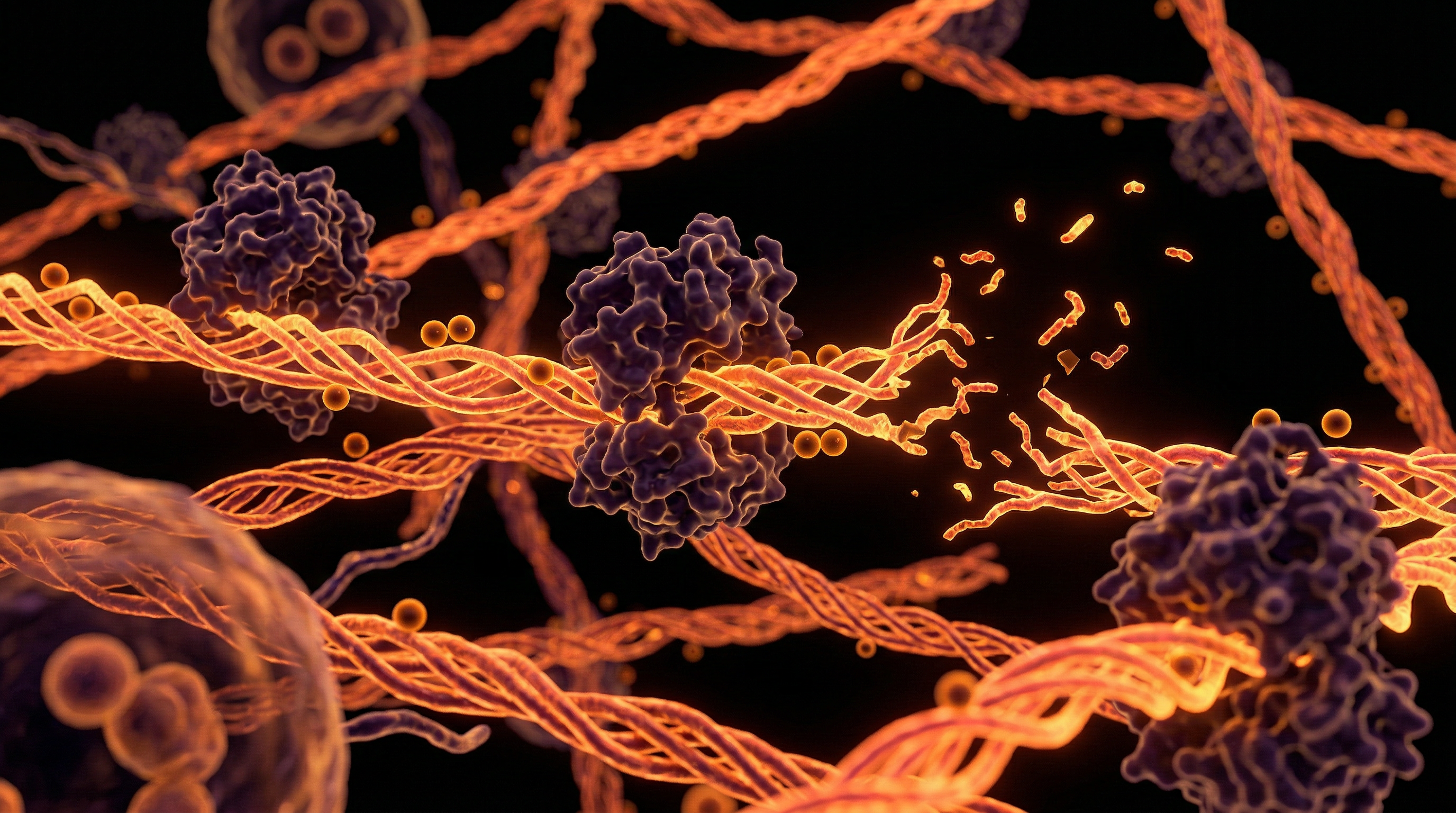
To understand how fluoride destroys collagen, we must first understand the exquisite complexity of collagen synthesis. Collagen is a fibrous protein characterized by its unique triple-helix structure. This helix is composed of three polypeptide chains, usually rich in the amino acids proline, glycine, and hydroxyproline.
The Architecture of the Triple Helix
The strength of collagen lies in its ability to form tightly wound fibrils. These fibrils are stabilised by hydrogen bonds and, more importantly, by covalent cross-links. These cross-links act like the rungs on a ladder, preventing the individual protein strands from sliding past one another under mechanical stress.
The Role of Hydroxylation
A critical step in collagen formation is the hydroxylation of the amino acids proline and lysine. This process requires Vitamin C, iron, and specific enzymes (prolyl hydroxylase and lysyl hydroxylase). This step allows the collagen molecules to form the hydrogen bonds necessary for the triple helix's stability.
The Interference of Fluoride
Fluoride (F-) is the most electronegative element in the periodic table. This extreme reactivity allows it to interfere with the delicate hydrogen bonding that maintains the collagen helix. When fluoride enters the biological system, it doesn't just sit idle; it actively seeks out areas of high metabolic activity and mineral turnover. By substituting itself for the hydroxyl (OH-) groups or disrupting the enzymatic catalysts required for collagen maturation, fluoride creates a structurally "shoddy" version of the protein.
Mechanisms at the Cellular Level
The degradation of collagen by fluoride occurs through several distinct, overlapping biochemical pathways. It is not a single point of failure but a multi-pronged assault on the body's structural proteins.
1. Inhibition of Enzyme Activity
Fluoride is a known enzyme inhibitor. Specifically, it interferes with prolyl hydroxylase. Without the proper functioning of this enzyme, the body cannot effectively convert proline into hydroxyproline. Since hydroxyproline is essential for the thermal stability of the collagen triple helix, fluoride-exposed collagen becomes denatured at lower temperatures and is far more susceptible to spontaneous breakdown.
2. Disruption of Cross-Linking
The most devastating impact of fluoride is its disruption of lysyl oxidase, the enzyme responsible for creating the cross-links between collagen fibres.
- Non-cross-linked collagen is weak, resembling a loose rope rather than a high-tension cable.
- This leads to a loss of tensile strength in tendons and ligaments.
- In the skin, this manifests as a loss of elasticity, leading to the premature formation of deep wrinkles and sagging.
3. Stimulation of Collagen-Degrading Enzymes
Fluoride does more than just hinder the creation of collagen; it accelerates its destruction. Research has shown that fluoride exposure can increase the activity of Matrix Metalloproteinases (MMPs). These are enzymes specifically designed to break down the extracellular matrix. Under normal conditions, MMPs are tightly regulated for tissue remodelling. Fluoride triggers an over-expression of these enzymes, leading to the "melting away" of connective tissue in a manner akin to chronic inflammatory diseases.
4. Displacement of Calcium and Disruption of Mineralisation
While often discussed in the context of bone, collagen provides the "rebar" upon which calcium phosphate (hydroxyapatite) is deposited. Fluoride alters this relationship by forming fluoroapatite, which is harder but far more brittle than natural hydroxyapatite. This creates a mismatch between the mineral phase and the collagen matrix, leading to micro-fractures and a total loss of skeletal flexibility.
Key Term: Hydrogen Bond Disruption — Fluoride's high electronegativity allows it to outcompete oxygen for hydrogen bonding sites within the collagen helix, effectively "unravelling" the protein's structural integrity.
Environmental Threats and Biological Disruptors
The modern human is inundated with fluoride from sources that were non-existent a century ago. This cumulative load exceeds the body's ability to detoxify, leading to a steady bioaccumulation in the connective tissues.
Municipal Water Fluoridation
In many parts of the UK, US, and Australia, fluoride is added to the water supply under the guise of public health. This fluoride is often not naturally occurring calcium fluoride but hexafluorosilicic acid—a toxic byproduct of the phosphate fertiliser industry. Because it is ingested, it reaches every organ and collagenous structure in the body, not just the teeth.
Industrial Residues and Pesticides
Cryolite (sodium aluminium fluoride) is a common pesticide used in industrial agriculture, particularly on grapes and leafy greens. This leads to high fluoride concentrations in wines, juices, and non-organic produce. Additionally, the combustion of coal releases significant amounts of gaseous fluoride into the atmosphere, which is then absorbed by local vegetation.
Pharmaceutical Interventions
A significant and often overlooked source of fluoride is the "fluoro-" class of drugs. Fluoroquinolone antibiotics (such as Ciprofloxacin) are notorious for causing spontaneous tendon ruptures.
- The "Black Box" warning on these drugs is a direct acknowledgement of fluoride's ability to catastrophically degrade collagen in the Achilles tendon and other major ligaments.
- Other fluorinated drugs include certain antidepressants, cholesterol-lowering statins, and anaesthetics.
Teas and Processed Foods
The Camellia sinensis plant (tea) is a hyper-accumulator of fluoride from the soil. Cheap, low-quality tea bags made from older leaves can contain staggering amounts of fluoride. When combined with fluoridated water, a daily tea habit can become a primary driver of collagen breakdown.
The Cascade: From Exposure to Disease
The systemic degradation of collagen does not manifest as a single symptom but as a cascade of degenerative conditions that are often misdiagnosed as "normal ageing" or "idiopathic" ailments.
Musculoskeletal Breakdown
The most visible impact is on the joints. When the collagen in the cartilage begins to degrade, the result is osteoarthritis. The cartilage loses its shock-absorbing capacity, leading to bone-on-bone friction.
- Tendonitis and Ligament Laxity: Frequent "sprains" or chronic "tennis elbow" can often be traced back to a weakened collagen matrix that can no longer withstand mechanical load.
- Skeletal Fluorosis: In its advanced stages, fluoride turns the bone into a dense, brittle mass of poorly organised collagen and fluoroapatite, leading to debilitating pain and spinal rigidity.
Dermatology and Premature Ageing
The skin is 70-80% collagen (Type I and III). Fluoride's impact on the skin is twofold:
- It reduces the synthesis of new collagen by fibroblasts.
- It increases the rate of enzymatic breakdown of existing fibres.
The result is dermatofibrosis—a condition where the skin becomes leathery, loses its ability to retain moisture, and develops deep, premature solar-like elastosis even in the absence of excessive sun exposure.
Cardiovascular Implications
The heart and blood vessels are heavily reliant on collagen and elastin for their structural integrity. The Aorta, the body's largest artery, must be both strong and flexible.
- Fluoride-induced collagen degradation leads to arterial stiffness.
- This stiffness is a primary driver of hypertension (high blood pressure) and increases the risk of aneurysms, where the weakened vessel wall bulges and eventually ruptures.
Statistic: Studies have indicated that populations in highly fluoridated areas show a significantly higher incidence of hip fractures and joint replacement surgeries compared to those in low-fluoride regions.
What the Mainstream Narrative Omits
The refusal of public health bodies to address the collagen-fluoride link is one of the great scandals of modern medicine. The mainstream narrative relies on several logical fallacies and omissions.
The "Optimal Level" Myth
Public health authorities claim that 0.7 to 1.0 mg/L of fluoride in water is "optimal." However, this ignores cumulative dose. A person drinking three litres of water a day, consuming tea, and using fluoridated toothpaste is receiving a dose far beyond any "optimal" range. Furthermore, there is no "one size fits all" for halogen metabolism; factors like iodine status, kidney function, and magnesium levels drastically alter how an individual reacts to fluoride.
The Focus on Dental Fluorosis
The establishment uses Dental Fluorosis (mottling of the teeth) as the only metric for fluoride toxicity. They claim that if the teeth aren't severely stained, the body is fine. This is scientifically dishonest. Dental fluorosis is merely the visible sign of a systemic poisoning of the collagen matrix. If the fluoride has disrupted the collagen in the enamel during tooth development, it has undoubtedly affected the collagen in the bones and soft tissues as well.
Ignoring the Synergistic Toxicity
Fluoride rarely acts alone. It has a synergistic relationship with Aluminium. In the presence of fluoride, aluminium can more easily cross the blood-brain barrier. Moreover, fluoride's impact on collagen is worsened by modern deficiencies in Silica and Vitamin C, creating a "perfect storm" for connective tissue collapse.
The UK Context
The United Kingdom presents a unique and troubling case study in fluoride exposure. Unlike much of Western Europe, which has largely rejected water fluoridation (97% of Europe does not fluoridate its water), the UK government has recently moved to expand fluoridation schemes.
The West Midlands and the North East
Currently, about 6 million people in England receive fluoridated water. The West Midlands (including Birmingham and Wolverhampton) has been fluoridated for decades. Data consistently shows that these areas have higher rates of certain musculoskeletal issues and hip fractures among the elderly compared to non-fluoridated areas like the South East.
The Health and Care Act 2022
The recent Health and Care Act 2022 handed the Secretary of State for Health the power to mandate water fluoridation across the entire country, bypassing local authorities. This move is being pushed despite growing concerns from the scientific community regarding the neurotoxicity of fluoride and its systemic effects on the body's structural integrity.
The British Diet and Tea Consumption
The UK's cultural affinity for tea exacerbates the fluoride problem. A typical British "cuppa" brewed with fluoridated water can contain upwards of 3-4 mg of fluoride per litre. For a heavy tea drinker, the daily intake can easily exceed 10 mg—a level that even the World Health Organisation admits is associated with skeletal degradation.
Protective Measures and Recovery Protocols
If you live in a fluoridated area or have been exposed to high levels of fluoride, it is essential to take proactive steps to protect your collagen matrix and facilitate the removal of fluoride from your tissues.
1. Water Filtration
Standard carbon filters (like basic Brita jugs) do not remove fluoride. To effectively clear fluoride from your drinking water, you must use:
- Reverse Osmosis (RO): The most effective method, removing up to 95-99% of fluoride.
- Activated Alumina: Specific filters designed for fluoride removal.
- Distillation: Highly effective, though it requires remineralisation of the water afterwards.
2. Essential Nutrients for Collagen Repair
To counteract the damage and stimulate new collagen synthesis, the following nutrients are non-negotiable:
- Vitamin C (Ascorbic Acid): Required for the hydroxylation of proline and lysine. Use buffered Vitamin C or liposomal forms for better absorption.
- Silica (Orthosilicic Acid): Silica is the biological antagonist to fluoride. It helps the body excrete fluoride and is essential for the "cross-linking" that fluoride destroys. Bamboo extract or horsetail are excellent natural sources.
- Magnesium: Fluoride depletes magnesium. Magnesium is required for over 300 enzymatic reactions, including those that build and repair the extracellular matrix.
- Glycine: Supplementing with collagen peptides or pure glycine provides the raw materials for the body to rebuild the collagen strands.
3. Fluoride Antagonists
- Boron: This trace mineral is a potent fluoride mobiliser. It reacts with fluoride to form boric fluorides, which are then excreted via the urine. Boron also helps stabilise calcium and magnesium levels in the bone.
- Iodine: Fluoride is a halogen that competes with iodine for receptor sites in the thyroid and other tissues. Ensuring adequate iodine intake (through sea vegetables or Lugol’s solution) helps displace fluoride from the body.
- Tamarind: Clinical studies have shown that tamarind paste can significantly increase the urinary excretion of fluoride.
4. Lifestyle Adjustments
- Switch to Non-Fluoridated Toothpaste: The mucosal membranes in the mouth are highly absorbent. Using fluoride-free toothpaste is an easy win.
- Sauna Therapy: Regular sweating can help the body mobilise and eliminate various toxins, including halides.
- Organic Produce: Reducing the intake of cryolite-sprayed fruits and vegetables lowers the total daily fluoride load.
Summary: Key Takeaways
The link between fluoride and collagen degradation is a fundamental biological reality that has been overshadowed by institutional inertia and outdated dental dogmas. Collagen is the very fabric of our physical being; its integrity determines our mobility, our cardiovascular health, and the resilience of our skin.
- Fluoride is a systemic disruptor that interferes with the essential enzymatic processes required for collagen synthesis and cross-linking.
- The mechanism involves the inhibition of prolyl hydroxylase and the activation of matrix metalloproteinases, leading to a net loss of connective tissue.
- Environmental exposure is cumulative, with municipal water, industrial pesticides, and certain pharmaceuticals acting as primary sources.
- The symptoms of fluoride toxicity are often mistaken for "ageing"—including arthritis, arterial stiffness, and wrinkled skin.
- The UK is currently facing a renewed push for mass fluoridation, making individual protective measures more critical than ever.
- Recovery is possible through high-quality water filtration, strategic supplementation with silica, boron, and Vitamin C, and a conscious reduction in fluoride exposure.
To ignore the impact of fluoride on our body's structural proteins is to accept a future of premature fragility. By understanding the biochemistry of collagen degradation, we empower ourselves to protect our health and maintain the structural integrity of our bodies against an increasingly hostile chemical environment.
"References & Further Reading:"
- Yiamouyiannis, J. (1993). Fluoride: The Aging Factor.
- Susheela, A. K., & Sharma, J. S. (1982). "Interrupted biosynthesis of collagen in fluoride toxicity."
- U.S. National Research Council (2006). "Fluoride in Drinking Water: A Scientific Review of EPA's Standards."
This article is provided for informational and educational purposes only. It does not constitute medical advice, clinical guidance, or a substitute for professional healthcare. Information reflects cited research at time of publication. Always consult a qualified healthcare professional before acting on any health information.
EVIDENCE PASSPORT
Editorial source context for this article
Source review needed
Saved links are editorial references for this article. They may support specific claims rather than every sentence. Open and assess each source in context. This passport does not independently verify them.
Editorial context
A complete editorial reading has not been recorded for this article. Source links remain available for you to open and assess directly.
Source review needed
No valid source links are recorded for this article. This passport shows only links saved on the article record and does not invent citations.
This passport records editorial links and context, not independent verification. Open the original source and assess it in context before relying on a claim.
Medical Disclaimer
The information in this article is for educational purposes only and does not constitute medical advice, diagnosis, or treatment. Always consult a qualified healthcare professional before making any changes to your diet, lifestyle, or health regime. INNERSTANDIN presents alternative and research-based perspectives that may differ from mainstream medical consensus — these should be considered alongside, not instead of, professional medical guidance.
Read Full DisclaimerContinue the thread
Keep this question moving.
Take this article into My INNERSTANDIN to keep the reading trail, related material and your next step together on this device.