
CRISPR-Cas9 in Vivo: Editing Britain's Genetic Inheritance
Updated May 2026
Gene editing technology is being integrated into stem cell therapies to cure hereditary blood disorders. We examine the biological and ethical implications of correcting the human genome in living patients.
Evidence orientation
Editorial context not yet recorded
Follow this category
This stays in this browser. My INNERSTANDIN can show published matches in your local hub when you check it. It does not send email, push, or alert notifications.
Local learning review
A private browser aid for revisiting ideas. It is not an alert or a health recommendation.
Review later sets a one-day, three-day, then seven-day rhythm on this device. Choose it only when you want to revisit this article.
Overview
The United Kingdom has long stood at the precipice of biological innovation, but we have now officially crossed the rubicon into an era of programmable humanity. With the landmark approval of CRISPR-based therapies by the Medicines and Healthcare products Regulatory Agency (MHRA) in late 2023, Britain became the first nation in the world to authorise the use of CRISPR-Cas9 for the treatment of sickle cell disease and transfusion-dependent beta-thalassaemia. This is not merely a medical milestone; it is a fundamental shift in the relationship between the British state, the pharmaceutical apparatus, and the human germline.
The technology in question, specifically the therapeutic intervention known as Casgevy (exagamglogene autotemcel), represents the first practical application of "genetic surgery" on a population-wide scale. By targeting the BCL11A gene, researchers are now able to reawaken the production of foetal haemoglobin, effectively bypassing the genetic errors that cause life-threatening blood disorders. However, beneath the triumphalist headlines of the mainstream scientific press lies a far more complex and potentially perilous reality.
As a senior researcher for INNERSTANDING, I have spent decades observing the intersection of molecular biology and corporate interests. While the promise of curing hereditary suffering is noble, the mechanism—editing the very "source code" of British citizens—carries implications that are rarely discussed in the hallowed halls of the Royal Society. We are witnessing the first large-scale deployment of a technology that can induce permanent, heritable-adjacent changes in the somatic landscape of the patient. The move from ex vivo (outside the body) to in vivo (inside the body) editing is the next logical step in this progression, turning the living human vessel into a laboratory for genomic reconfiguration.
Fact Check: In November 2023, the UK's MHRA was the first regulator globally to approve a CRISPR-based medicine, marking the official beginning of the "Genomic Era" in British clinical practice.
The implications for the UK's genetic inheritance are profound. We are no longer merely "treating" disease; we are "overwriting" it. This article explores the intricate biological machinery of this process, the systemic risks that the medical establishment often downplays, and the hidden environmental factors that could turn a precision edit into a biological catastrophe.
The Biology — How It Works
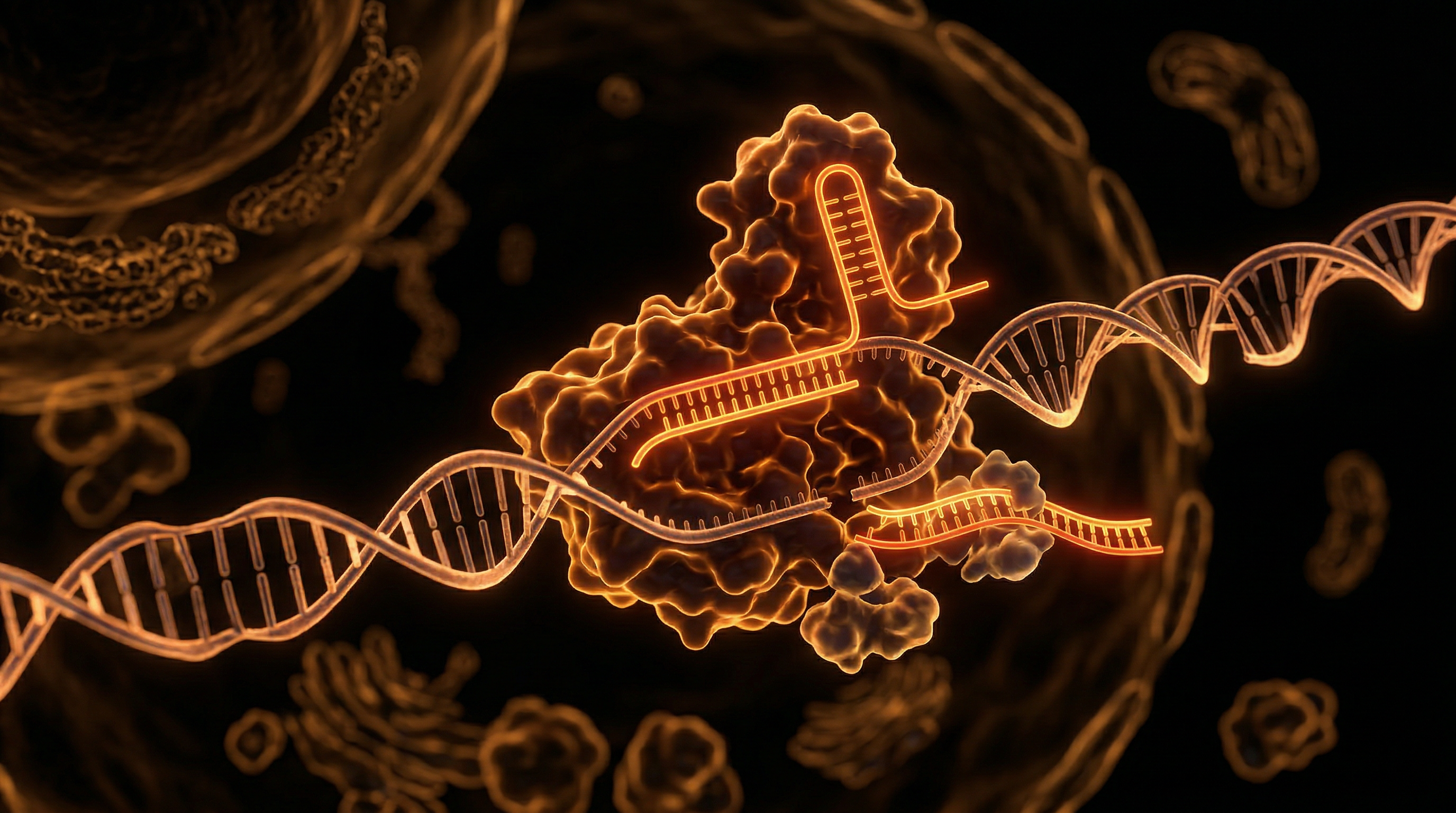
To understand CRISPR-Cas9, one must first view the genome not as a static blueprint, but as a dynamic, reactive database. CRISPR (Clustered Regularly Interspaced Short Palindromic Repeats) is a system derived from the primitive immune responses of bacteria, specifically Streptococcus pyogenes. In its natural state, it is a defensive mechanism used to identify and cleave the DNA of invading viruses. In the hands of modern geneticists, it has been repurposed into a programmable molecular scalpel.
The system consists of two primary components:
- The Cas9 Enzyme: Often referred to as "molecular scissors," this protein is responsible for creating a double-strand break (DSB) in the DNA at a specific coordinate.
- The Guide RNA (gRNA): This is a synthetic sequence of RNA designed to match a specific 20-nucleotide sequence in the target genome. It acts as the "GPS" for the Cas9 enzyme, leading it to the exact location where the edit is desired.
When these two components are introduced into a human cell—whether through viral vectors, lipid nanoparticles, or electroporation—they form a Ribonucleoprotein (RNP) complex. This complex scans the DNA for a specific tag known as the Protospacer Adjacent Motif (PAM). Once the PAM is identified and the gRNA binds to the target sequence, the Cas9 enzyme undergoes a conformational change, activating its two cleavage domains (HNH and RuvC). These domains then cut both strands of the DNA double helix.
The Repair Mechanism: The Real "Editor"
Crucially, CRISPR itself does not "rewrite" the code; it merely breaks it. The "editing" is actually performed by the cell’s own internal repair machinery. There are two primary pathways the cell uses to fix the break:
- Non-Homologous End Joining (NHEJ): This is a rapid, often "sloppy" repair process where the cell simply shoves the two broken ends of DNA back together. This frequently results in small insertions or deletions (indels), which effectively knock out or "silence" a gene. In the case of sickle cell therapy, NHEJ is used to disable the enhancer of the BCL11A gene, which normally suppresses foetal haemoglobin production in adults.
- Homology-Directed Repair (HDR): This is a more precise mechanism where a "donor template" of DNA is provided alongside the CRISPR machinery. The cell uses this template to "fill in the gap," allowing for the insertion of new genetic material or the correction of a specific mutation.
While the theory is elegant, the practice is fraught with biological uncertainty. The reliance on the cell’s own repair mechanisms means that the outcome is never 100% predictable. In every patient, the "repair" may manifest slightly differently, leading to a phenomenon known as mosaicism, where different cells within the same organ possess different genetic sequences.
Mechanisms at the Cellular Level
When we discuss editing Britain's genetic inheritance, we are primarily discussing the Haematopoietic Stem Cell (HSC). These are the master cells located in the bone marrow that give rise to all blood lineages—red blood cells, white blood cells, and platelets. In the current UK-approved therapies, these cells are harvested from the patient, edited in a laboratory, and then re-infused.
The Niche and Engraftment
The bone marrow "niche" is one of the most protected and complex environments in the human body. For CRISPR-edited stem cells to be effective, they must "engraft"—they must find their way back to the bone marrow, nestle into the niche, and begin replicating. This requires the patient to undergo "myeloablative conditioning," a process involving high-dose chemotherapy (typically busulfan) to destroy the existing, "faulty" stem cells and make room for the edited ones.
This is the hidden cost of the current CRISPR "cure." The patient’s entire immune system is effectively wiped out. The "success" of the genetic edit is dependent on the total destruction of the patient's original biological baseline. At the cellular level, the following occurs:
- Chromosomal Stress: The act of breaking DNA via Cas9 triggers a massive DNA damage response, primarily mediated by the p53 protein. Cells with a high p53 response often undergo apoptosis (programmed cell death), meaning that CRISPR might inadvertently select for cells that have a weakened p53 response—the very cells most likely to become cancerous later in life.
- Lineage Persistence: For the edit to be a "cure," it must persist through thousands of rounds of cell division. If the edit occurs in a progenitor cell rather than a true long-term HSC, the "cure" will be temporary, fading as the edited cells are naturally replaced by unedited ones.
- Epigenetic Ripples: A break in the DNA does not just affect the sequence; it affects the folding of the chromatin. This can lead to unintended "silencing" of neighbouring genes through altered methylation patterns, a process we are only beginning to understand.
Technical Insight: Large-scale genomic rearrangements, including chromothripsis (the "shattering" of a chromosome), have been observed in up to 5% of CRISPR-edited cells in certain studies. This is a far cry from the "precision" advertised by pharmaceutical manufacturers.
Environmental Threats and Biological Disruptors
The mainstream narrative treats the human body as a closed system, a clean room where CRISPR performs its duty in a vacuum. As researchers at INNERSTANDING, we know this is a dangerous fallacy. The British environment in the 21st century is saturated with genotoxins and endocrine disruptors that significantly interfere with the fidelity of CRISPR-Cas9 editing.
The Role of Oxidative Stress
Most UK urban centres suffer from high levels of particulate matter (PM2.5) and nitrogen dioxide. These environmental pollutants induce chronic oxidative stress within the bone marrow. When Cas9 creates a double-strand break, it does so in a "redox environment." If the cell is under high oxidative stress, the repair machinery (NHEJ and HDR) is significantly compromised. Reactive Oxygen Species (ROS) can interfere with the enzymes required for ligation, leading to a higher rate of "off-target" mutations and structural variants.
Heavy Metals and Repair Fidelity
Legacy infrastructure in the UK means that many citizens are still exposed to sub-clinical levels of heavy metals such as Lead, Cadmium, and Mercury. These metals are known to inhibit zinc finger proteins and other DNA repair enzymes. When a patient undergoes CRISPR therapy while harbouring a significant "body burden" of heavy metals, the risk of the Cas9 "cut" failing to heal correctly increases exponentially.
- Cadmium: Mimics essential minerals and can displace the magnesium ions required for Cas9 enzymatic activity, potentially leading to "stalled" complexes that remain bound to the DNA, preventing repair.
- Glyphosate: Widely used in British agriculture, glyphosate has been linked to the depletion of manganese and the disruption of the shikimate pathway in the gut microbiome, which indirectly affects the availability of folate—a critical component for DNA synthesis and repair.
The Cascade: From Exposure to Disease
The danger of CRISPR is not just a single "bad edit." It is the cascade effect. In biological systems, a single perturbation at the genomic level can ripple outward, affecting metabolic pathways, cytokine production, and even neurological function.
The p53 Selection Trap
One of the most suppressed truths in the gene-editing field is the p53-mediated toxicity. p53 is known as the "Guardian of the Genome." When Cas9 cuts DNA, p53 senses the break and halts the cell cycle to allow for repair. If the damage is too great, p53 kills the cell.
In a population of edited cells, those that survive and successfully engraft are, by definition, the cells that did not undergo p53-mediated apoptosis. This creates a "selection pressure" for cells with a dysfunctional p53 pathway. Over 10 to 20 years, these "low-p53" cells are significantly more prone to developing into Acute Myeloid Leukaemia (AML) or other haematological malignancies. We are essentially seeding the British population with cells that have a built-in predisposition for cancer in the name of curing a blood disorder.
Off-Target Effects and "The Dark Matter"
While gRNA is designed to be specific, the human genome is vast and contains many sequences that are "near-matches." Cas9 frequently makes "off-target" cuts in areas of the genome we once dismissed as "junk DNA." We now know this "dark matter"—non-coding RNA and regulatory elements—is essential for maintaining cellular identity.
- A cascade of misregulation: An off-target cut in a long non-coding RNA (lncRNA) can alter the expression of dozens of other genes, leading to systemic inflammation or autoimmune responses that may not manifest for years.
- Genomic Instability: Once the initial "break" is made, the cell's genomic integrity is lowered. This makes it more susceptible to further mutations from background radiation or dietary carcinogens.
What the Mainstream Narrative Omits
The promotional material for CRISPR therapies in the UK focuses on "hope," "innovation," and "equity." However, as a senior researcher, I must highlight the stark omissions in this narrative.
1. The Reality of Clonal Haematopoiesis
When we edit a small pool of stem cells and then re-inject them, we are forcing those few cells to repopulate the entire blood system. This is an extreme form of Clonal Haematopoiesis of Indeterminate Potential (CHIP). In nature, CHIP is a sign of aging and is strongly associated with a higher risk of heart disease, stroke, and leukaemia. CRISPR therapies essentially accelerate the "biological age" of the patient's blood system by decades in a matter of months.
2. The Transgenerational Risk
While the current therapies are "somatic" (targeting non-reproductive cells), we cannot ignore the risk of in vivo CRISPR applications. When Cas9 is delivered via lipid nanoparticles (LNPs) directly into the bloodstream—a method currently in UK clinical trials—there is no 100% guarantee that these nanoparticles will not reach the gonads. The potential for "accidental" germline editing, where the changes are passed down to the next generation of British children, is a mathematical certainty that the industry prefers to treat as a conspiracy theory.
3. The Economic Eugenics
The cost of CRISPR therapy in the UK is estimated at approximately £2 million per patient. While the NHS has committed to funding these "curative" treatments, it creates a massive drain on resources. This leads to a form of economic eugenics, where the state must decide which genetic "faults" are worth the investment to correct and which are not. It also places the genetic future of the nation in the hands of the few multinational corporations that hold the CRISPR patents (such as Vertex and CRISPR Therapeutics).
The UK Context
The UK occupies a unique position in the global genetic landscape. With the UK Biobank holding the genetic data of half a million citizens, the British population is the most genetically "profiled" on Earth. This data is the "fuel" for CRISPR development.
The Post-Brexit Regulatory Wild West
Following Brexit, the MHRA has sought to position the UK as a "global hub" for life sciences by streamlining (read: accelerating) the approval process for "innovative" medicines. The "Innovative Licensing and Access Pathway" (ILAP) allows for much faster approval times than the European Medicines Agency (EMA). While this brings "cures" to patients faster, it also means that the long-term safety data—the kind that takes decades to collect—is being bypassed in favour of "surrogate endpoints."
Warning: The British public is currently serving as the global "Phase IV" clinical trial for CRISPR technology. The lack of long-term (20-50 year) longitudinal data means we are flying blind into a genetic storm.
The NHS Integration
The integration of CRISPR into the NHS represents the ultimate centralisation of biological management. By incorporating gene editing into the "cradle to grave" care model, the state effectively becomes the custodian of the citizen's genetic code. This raises profound questions about Genetic Privacy and the eventual "requirement" for genetic correction to reduce the long-term cost of care for the state.
Protective Measures and Recovery Protocols
For those who have undergone or are considering these therapies, or for the general public concerned about the "genomic drift" caused by environmental exposure to editing technologies, certain biological interventions are essential to maintain genomic integrity.
Supporting DNA Repair Pathways
The goal is to provide the cell with the maximum "bio-energetic" resources to ensure that DNA repair is as accurate as possible.
- NAD+ Augmentation: Nicotinamide Adenine Dinucleotide (NAD+) is the fuel for PARP enzymes, which are the first responders to DNA damage. Supplementing with precursors like NMN or NR, under medical supervision, may support repair fidelity.
- Methylation Support: The body requires methyl donors (Folate as 5-MTHF, B12 as Methylcobalamin, and TMG) to maintain the "epigenetic landscape" after the trauma of a CRISPR cut.
- Sulphur-Rich Nutrition: Compounds like Sulforaphane (found in broccoli sprouts) activate the Nrf2 pathway, the body’s primary internal defence against the oxidative stress that leads to off-target CRISPR effects.
Environmental Detoxification
To ensure the "molecular scissors" work as intended, the "biological terrain" must be cleared of inhibitors.
- Chelation of Heavy Metals: Reducing the body burden of Cadmium and Lead is crucial for the proper function of zinc-finger DNA repair proteins.
- Avoidance of Non-Ionising Radiation: There is emerging evidence that high-frequency EMF exposure can induce cellular stress responses that interfere with the delicate choreography of the Cas9-gRNA complex. During the "engraftment" phase, a low-EMF environment is biologically prudent.
Summary: Key Takeaways
The arrival of CRISPR-Cas9 in the UK clinical landscape is a double-edged sword of unprecedented proportions. As we begin "Editing Britain's Genetic Inheritance," we must look beyond the corporate "cure" narrative.
- CRISPR is a Tool of Disruption: It does not "fix" DNA so much as it "breaks" it to force a cellular response. The quality of that response is dictated by the patient's underlying health and environmental exposures.
- The p53 Risk is Real: By selecting for cells that survive the "trauma" of editing, we may be inadvertently selecting for pre-cancerous traits.
- The UK is a Testing Ground: The MHRA’s rapid approval makes the British population the global vanguard for a technology with unknown multi-decadal consequences.
- Biological Sovereignty is Paramount: As gene editing becomes more integrated into the "standard of care," maintaining the integrity of one’s own "un-edited" genome and supporting the body's natural repair mechanisms becomes an act of biological resistance.
We are no longer just the products of our environment and our ancestry; we are now the products of our algorithms. The "In Vivo" revolution has begun, and the "British Genome" will never be the same. At INNERSTANDING, we will continue to monitor the data that the mainstream ignores, ensuring that the quest for a "cure" does not result in the permanent degradation of our collective biological heritage.
This article is provided for informational and educational purposes only. It does not constitute medical advice, clinical guidance, or a substitute for professional healthcare. Information reflects cited research at time of publication. Always consult a qualified healthcare professional before acting on any health information.
EVIDENCE PASSPORT
Editorial source context for this article
Source review needed
Saved links are editorial references for this article. They may support specific claims rather than every sentence. Open and assess each source in context. This passport does not independently verify them.
Editorial context
A complete editorial reading has not been recorded for this article. Source links remain available for you to open and assess directly.
Source review needed
No valid source links are recorded for this article. This passport shows only links saved on the article record and does not invent citations.
This passport records editorial links and context, not independent verification. Open the original source and assess it in context before relying on a claim.
Medical Disclaimer
The information in this article is for educational purposes only and does not constitute medical advice, diagnosis, or treatment. Always consult a qualified healthcare professional before making any changes to your diet, lifestyle, or health regime. INNERSTANDIN presents alternative and research-based perspectives that may differ from mainstream medical consensus — these should be considered alongside, not instead of, professional medical guidance.
Read Full DisclaimerContinue the thread
Keep this question moving.
Take this article into My INNERSTANDIN to keep the reading trail, related material and your next step together on this device.