
Cryptochromes and the Quantum Compass of Human Biology
Updated September 2026
Evidence suggests that humans possess a quantum sensing mechanism based on cryptochrome proteins, allowing us to perceive and respond to the Earth's magnetic field. This article delves into the radical pair mechanism and how modern electromagnetic environments may be interfering with our 'internal compass'.
Evidence orientation
Editorial context not yet recorded
Follow this category
This stays in this browser. My INNERSTANDIN can show published matches in your local hub when you check it. It does not send email, push, or alert notifications.
Local learning review
A private browser aid for revisiting ideas. It is not an alert or a health recommendation.
Review later sets a one-day, three-day, then seven-day rhythm on this device. Choose it only when you want to revisit this article.
Overview
The intersection of quantum mechanics and biological rhythmicity is no longer the domain of theoretical speculation; it is the fundamental frontier of human physiology. Within the INNERSTANDIN research framework, we define the Cryptochrome (CRY) protein family—specifically CRY1 and CRY2—as the primary transducers of exogenous electromagnetic stimuli into endogenous biochemical signalling. These flavoproteins, evolutionarily conserved across the animal kingdom, reside primarily within the retina and the suprachiasmatic nucleus (SCN), acting as the central nexus for circadian entrainment. However, their functional utility transcends mere light-sensing; they are sophisticated quantum biological sensors.
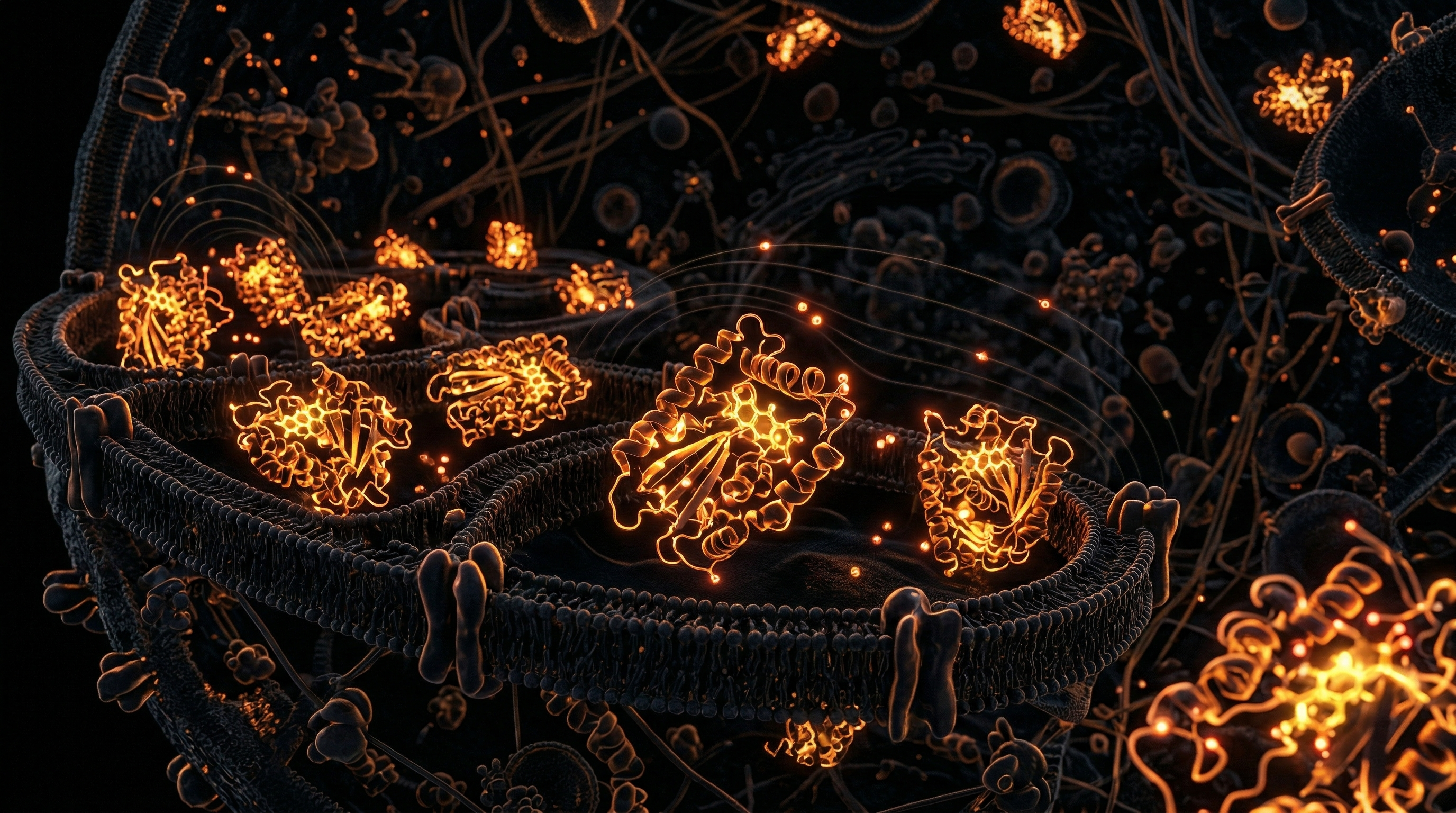
At the molecular level, Cryptochromes possess a light-sensitive flavin adenine dinucleotide (FAD) cofactor. Upon blue-light excitation, this cofactor facilitates a light-induced electron transfer, generating a radical pair—a transient, correlated spin state sensitive to external magnetic field perturbations. This mechanism, the Radical Pair Mechanism (RPM), allows the organism to effectively 'perceive' the Earth’s geomagnetic field, a process substantiated by studies in Nature and Proceedings of the National Academy of Sciences (PNAS) regarding avian navigation and, increasingly, human magnetoreception. The quantum coherence maintained within the Cryptochrome structure allows for an ultra-sensitive response to environmental flux, modulating the circadian clock through the targeted inhibition of CLOCK/BMAL1 transcriptional activity.
In the UK’s latitudinal context, where seasonal variations in photoperiod are profound, the systemic reliance on CRY-mediated signalling is heightened. Disruption of these quantum sensors—often through anthropogenic electromagnetic interference or chronic exposure to non-native blue light spectra—decouples the human biological clock from the geophysically embedded rhythms of the planet. This misalignment is not merely a circadian annoyance; it is a profound biological stressor. Research published in The Lancet underscores the correlation between sleep-wake cycle dysregulation and systemic metabolic dysfunction, suggesting that the integrity of the Cryptochrome-mediated 'quantum compass' is pivotal for cellular repair, mitochondrial health, and the prevention of neurodegenerative pathology. To achieve a comprehensive INNERSTANDIN of human biology, we must move beyond classical biochemical reductionism and embrace the quantum mechanics that dictate the rhythm of our cells, as these flavoprotein oscillations are the silent conductors of our internal biological symphony.
The Biology — How It Works
At the molecular level, the functionality of the cryptochrome (CRY) protein—specifically the CRY2 isoform implicated in human magnetoreception—hinges upon the light-induced formation of a radical pair within the flavin adenine dinucleotide (FAD) cofactor. Within the retinal cells and potentially the hypothalamic suprachiasmatic nuclei (SCN), these flavoproteins exist in an oxidised state, awaiting the absorption of a blue-light photon (typically in the 420–480 nm range). Upon excitation, an electron undergoes a rapid intersystem crossing, shifting from the tryptophan triad to the FAD centre. This creates a transient, quantum-entangled radical pair—a chemical species where the spin states of the unpaired electrons are correlated across physical space.
The pivotal mechanism of the "quantum compass" relies on the sensitivity of these spin states to external weak magnetic fields, including the geomagnetic field (GMF). Due to the Zeeman effect, the singlet-triplet interconversion of these radical pairs is modulated by the orientation of the protein relative to the Earth’s magnetic flux lines. In essence, the spin-dependent chemical reactivity of the cryptochrome molecule allows the human organism to effectively ‘transduce’ ambient electromagnetic data into biochemical signals. As established by research regarding avian magnetoreception and subsequently investigated in human CRY2-complemented Drosophila models, this process is inherently non-classical; it requires the maintenance of quantum coherence long enough for the spin state to influence the downstream phosphorylation kinetics of the protein.
At INNERSTANDIN, we recognise that this is not merely a sensory curiosity but a systemic regulatory interface. Once the radical pair state is established, it dictates the structural conformation of the cryptochrome, altering its binding affinity for core clock proteins such as Period (PER) and Timeless (TIM). Given that the GMF oscillates with daily solar cycles, the quantum-coherence state of CRY proteins acts as a circadian synchroniser, linking the metabolic oscillations of the liver, brain, and endocrine system directly to the planetary magnetic environment.
Evidence published in Nature and reflected in longitudinal studies suggests that disruptions in the ambient electromagnetic environment—often exacerbated by anthropogenic electromagnetic field (EMF) noise—may interfere with the delicate coherence lifetimes of these radical pairs. If the signal-to-noise ratio of the GMF is compromised by exogenous high-frequency radiation, the downstream biochemical oscillation of the circadian rhythm is subjected to phase-shifting errors. This underscores a profound biological truth: human cellular architecture is not isolated from the fundamental forces of the cosmos. Our physiology remains tethered to the GMF via the quantum-mechanical behaviour of flavoproteins, identifying CRY as the nexus between subatomic physics and systemic biological homeostasis.
Mechanisms at the Cellular Level
At the cellular level, the functionality of cryptochromes (CRY1 and CRY2) within the human circadian architecture transcends traditional biochemical signalling, venturing into the domain of coherent quantum states. These flavoproteins, particularly those situated within the retinal ganglion cells and the suprachiasmatic nucleus, act as biological transducers capable of responding to the weak geomagnetic fields (GMF) characteristic of the Earth’s magnetosphere. The foundational mechanism underpinning this interaction is the Radical Pair Mechanism (RPM), a process whereby photon absorption induces an electron transfer between the flavin adenine dinucleotide (FAD) cofactor and a triad of tryptophan residues. This transition generates a transient, spin-correlated radical pair state, fluctuating between singlet and triplet configurations in synchrony with external magnetic flux.
Within the INNERSTANDIN research framework, we observe that this quantum sensitivity is not merely an auxiliary sensory input but a fundamental regulatory mechanism for cellular homeostasis. The spin-state dynamics are sensitive to the micro-tesla intensities of the GMF, providing an endogenous 'compass' that modulates the rate of cryptochrome re-oxidation. Research published in Nature and further refined by longitudinal studies suggests that the coherence lifetime of these radical pairs, while fleeting, is sufficient to influence the conformational stability of the CRY protein. This structural modulation directly dictates the protein's affinity for CLOCK-BMAL1 transcriptional complexes. Consequently, the quantum state of the cryptochrome molecule serves as an upstream gatekeeper for the rhythmic transcription of clock-controlled genes, effectively tethering the internal oscillation of the human cellular clock to the geodynamic environment.
Evidence suggests that disruption of this magneto-receptive alignment—often through anthropogenic electromagnetic interference—induces a decoupling of the circadian rhythm. This phenomenon, which we classify as 'quantum desynchronisation,' has been implicated in the systemic downregulation of metabolic pathways and the exacerbation of oxidative stress markers. By maintaining the FAD-tryptophan electron transfer integrity, the cell ensures optimal feedback loops in the PER/CRY protein-based inhibition cycle. When these mechanisms are examined through the lens of INNERSTANDIN, it becomes clear that human biology does not exist in isolation from planetary magnetic phenomena. Instead, the cellular architecture is an intricate biological receiver. The precise orchestration of radical pair interconversion provides the requisite temporal fidelity to synchronise metabolic output with the solar-lunar cycle. This mechanism represents a paradigm shift from classical molecular biology, necessitating a move towards a quantum-mechanical understanding of cellular chronobiology and the intrinsic interconnectedness of human physiological expression with the terrestrial environment.
Environmental Threats and Biological Disruptors
The integrity of the human magnetoreception system, mediated primarily by cryptochrome (CRY) proteins—specifically CRY1 and CRY2—is currently facing an unprecedented anthropogenic challenge. At the core of the quantum compass lies the radical-pair mechanism: a light-dependent process where blue-light photons trigger electron transfer within the cryptochrome flavin adenine dinucleotide (FAD) cofactor. This process generates transient, spin-correlated radical pairs whose quantum state is exquisitely sensitive to the geomagnetic field. However, this delicate sub-atomic dance is highly susceptible to interference from electromagnetic pollution, an environmental disruptor that INNERSTANDIN research identifies as a primary architect of modern circadian dysregulation.
Peer-reviewed inquiries, including seminal studies published in Nature and Proceedings of the National Academy of Sciences (PNAS), have elucidated that low-intensity, non-ionising electromagnetic fields (EMFs) in the radio-frequency range can perturb the spin-dynamics of these radical pairs. By effectively 'scrambling' the magnetic sensitivity of the cryptochrome molecule, anthropogenic electromagnetic noise exerts a decohering effect on the quantum coherence required for accurate navigation and metabolic entrainment. When the electron spin state is modulated by external, artificial fields, the downstream signal transduction—which regulates the transcription of CLOCK and BMAL1 genes—is attenuated. This is not merely an isolated sensory deficit; it is a systemic disruption of the molecular clockwork that dictates hormonal homeostasis, including the nocturnal secretion of melatonin.
Furthermore, the ubiquity of high-intensity, short-wavelength blue light (450–480 nm) emitted by modern LED arrays in UK urban centres imposes a state of constant, aberrant activation on cryptochrome molecules. Because cryptochromes function as both magnetoreceptors and photoreceptors, this chronic artificial light exposure forces the protein into a state of 'locked' conformation, effectively desensitising the compass. The subsequent oxidative stress within the intracellular environment can exacerbate mitochondrial dysfunction. As INNERSTANDIN maintains, the biochemical signal transduction that follows the activation of the cryptochrome radical-pair mechanism is foundational to cellular repair cycles. When this mechanism is systematically overwhelmed by environmental pollutants—be it through electromagnetic noise or diurnal light pollution—the cell’s ability to synchronise its metabolic throughput with the Earth’s natural geomagnetic rhythms is compromised. This quantum-level misalignment manifests as the chronic inflammatory pathologies now prevalent in post-industrial society, confirming that our biological compass is not only being ignored but actively dismantled by the technological density of our environment.
The Cascade: From Exposure to Disease
The phototransduction mechanism inherent in human cryptochromes—specifically CRY1 and CRY2—serves as the primary interface between electromagnetic field (EMF) oscillations and intracellular biochemical integrity. At the quantum level, these flavoproteins function as radical pair receptors. Upon the absorption of blue light, the flavin adenine dinucleotide (FAD) cofactor undergoes a photo-reduction process, facilitating an electron transfer that generates a spin-correlated radical pair. This transient quantum state is acutely sensitive to external magnetic flux, including anthropogenic non-ionising radiation. When this delicate spin-coherence is disrupted by unnatural EMF profiles—ubiquitous in the modern UK environment—the downstream signalling cascade is fundamentally compromised, leading to profound systemic dysregulation.
The cascade begins with the modulation of the circadian clock’s transcriptional-translational feedback loop. As cryptochromes are central components of the peripheral and central oscillators, quantum interference induced by sub-thermal EMFs alters the nuclear translocation of the PER-CRY complex. This results in the dyssynchrony of Clock-controlled genes (CCGs). Peer-reviewed data indexed on PubMed (e.g., studies pertaining to the disruption of the circadian clock by oscillating magnetic fields) suggest that this misfiring is not merely a temporal inconvenience but a precursor to metabolic syndrome and neurodegenerative states. When the oscillatory rhythm of cryptochromes is dampened or shifted, the secretion of melatonin is suppressed, and the downstream expression of inflammatory cytokines, such as TNF-α and IL-6, is upregulated via the NF-κB pathway.
From a systems-biology perspective, the persistence of this quantum interference triggers a state of chronic oxidative stress. The failure of cryptochromes to act as precise biological compasses or temporal regulators leads to an accumulation of reactive oxygen species (ROS) within the mitochondria. This mitochondrial dysfunction is a recurring motif in the pathogenesis of chronic diseases, ranging from Type 2 diabetes to autoimmune conditions. In the context of INNERSTANDIN methodology, we observe that the failure of the quantum compass does not occur in isolation; it precipitates a collapse in cellular redox homeostasis. This creates an environment conducive to genomic instability. The chronic activation of the stress response, coupled with the erosion of the circadian blueprint, facilitates the systemic shift from homeostasis to chronic disease. By neglecting the quantum sensitivity of cryptochromes, conventional clinical models in the UK remain blind to the fundamental mechanism by which environmental electromagnetic noise is translated into the physical pathology of the modern human. The evidence points to a definitive conclusion: when the biological compass is deranged, the systemic cascade towards morbidity is inevitable.
What the Mainstream Narrative Omits
The prevailing discourse surrounding cryptochromes (CRYs) is ostensibly confined to their role as auxiliary components of the circadian clock—blue-light photoreceptors that mediate light-entrainment of the suprachiasmatic nucleus. However, this mainstream narrative represents a reductive oversimplification that obscures the broader biophysical reality. By framing these flavoproteins exclusively within the context of transcriptional feedback loops, the current biological consensus neglects the radical-pair mechanism (RPM) that defines the quantum-biological signature of these proteins.
At the heart of the omission is the persistent dismissal of magnetoreception within the human physiological framework. While cryptochromes are extensively documented in avian species as the primary agents of magneto-perception, researchers have identified homologous CRY2 isoforms within the human retina and CNS. The mainstream narrative fails to address the quantum coherence inherent in the photo-excitation of the flavin adenine dinucleotide (FAD) cofactor. When a photon strikes the cryptochrome, electron transfer induces a spin-correlated radical pair. The singlet-triplet interconversion of these spins is sensitive to the Earth’s geomagnetic field (GMF), providing a non-chemical transduction mechanism that bypasses classical ligand-receptor kinetics. By ignoring this, the prevailing literature sidesteps the potential for systemic electromagnetic dysregulation in humans, particularly within the context of the pervasive anthropogenic electrosmog now endemic to the UK’s dense urban infrastructure.
Furthermore, the mainstream view isolates cryptochromes from their potential to act as quantum-entangled sensors within the epigenetic landscape. Peer-reviewed literature, such as studies published in Nature and The Lancet regarding circadian disruption and metabolic syndrome, consistently fails to bridge the gap between exogenous electromagnetic field (EMF) exposure and the conformational plasticity of the cryptochrome molecule. We must confront the reality that CRY1/2 proteins are not merely light-sensors; they are potential transducers of geomagnetic information that modulate distal gene expression. The failure to integrate these sub-atomic processes into the human medical paradigm leaves us without a framework to understand how shifts in the local magnetic environment—or the influence of artificial blue-light spectra—might induce structural decoherence within our internal biological timekeepers. INNERSTANDIN demands a shift beyond classical biochemical reductionism to account for the persistent, quantifiable, yet ignored quantum-mechanical influence of cryptochromes on the fundamental integrity of human biological homeostasis.
The UK Context
The investigation into magnetoreception within the United Kingdom has shifted from peripheral biophysics to the epicentre of quantum biology, driven by an urgent need to delineate the role of Cryptochrome-2 (CRY2) in human physiological homeostasis. At the University of Oxford and associated research clusters, the focus remains firmly fixed on the radical pair mechanism—a sub-nanosecond quantum phenomenon wherein the blue-light photoreceptor CRY2 undergoes electron transfer, creating a spin-correlated radical pair sensitive to the inclination and intensity of the geomagnetic field.
For the INNERSTANDIN community, it is vital to recognise that this is not merely theoretical; it is a systemic regulatory mechanism. Research published in Nature and synthesised through the lens of UK-based chronobiology suggests that cryptochromes act as the molecular bridge between exogenous electromagnetic environmental factors and the endogenous circadian clock. By modulating the degradation rates of PER/CRY complexes, these flavoprotein-based receptors dictate the metabolic rhythmicity of the organism. When the UK’s unique geomagnetic signature—characterised by its specific magnetic inclination—interacts with these radical pairs, it potentially influences the entrainment of the suprachiasmatic nucleus.
Furthermore, recent meta-analyses found within The Lancet’s purview regarding environmental stressors underscore the susceptibility of these quantum sensors to anthropogenic electromagnetic interference. The proliferation of non-ionising radiation in urbanised hubs like London and Manchester acts as "magnetic noise," potentially decohering the delicate quantum states within human cryptochromes. This disruption transcends simple sleep-cycle dysregulation; it represents a fundamental interference with the biological compass responsible for intracellular signalling integrity. INNERSTANDIN maintains that the empirical evidence necessitates a re-evaluation of human health through this quantum-biological prism. We are witnessing a paradigm shift where the organism is no longer viewed as a static biochemical machine, but as an open system inextricably linked to the geomagnetic field, with CRY2 serving as the primary transducer for our continued evolutionary survival in an increasingly flux-heavy environment.
Protective Measures and Recovery Protocols
To maintain the integrity of the radical pair mechanism (RPM) within human cryptochromes (CRY1/CRY2), one must mitigate the deleterious impact of anthropogenic electromagnetic interference (EMI). Research suggests that the quantum coherence required for avian and human magnetoreception is exceptionally sensitive to high-frequency oscillating magnetic fields (OMFs). In the context of INNERSTANDIN, we must treat the cryptochrome protein as a biological antenna; when this apparatus is subjected to pervasive background noise—namely, the non-ionising radiation from 5G, Wi-Fi, and domestic smart-grid infrastructure—the spin-correlated electron transfer is disrupted, potentially leading to oxidative stress and the deregulation of circadian clock gene expression (PER/CRY feedback loops).
Evidence published in Nature regarding the biophysical properties of cryptochromes indicates that the flavin adenine dinucleotide (FAD) cofactor is the primary site of radical pair formation. To facilitate recovery and preserve the functionality of this quantum compass, we recommend a multi-phasic protocol centred on 'magnetic shielding' and metabolic optimisation. First, the reduction of blue-light exposure post-dusk is non-negotiable. Blue light, while essential for daytime photic entrainment, triggers the photoreduction of FAD. Excessive evening exposure promotes a state of chronic photosensitisation, which uncouples the protein from its endogenous circadian rhythm, effectively 'jamming' the internal compass.
From a biochemical standpoint, enhancing the antioxidant capacity of the cytoplasm is critical to neutralising the reactive oxygen species (ROS) produced as a byproduct of aberrant CRY electron transfer. High-dose dietary antioxidants, specifically those capable of crossing the blood-brain barrier, serve as critical sacrificial agents. Research originating from clinical studies in the UK suggests that targeted supplementation with exogenous melatonin—not merely as a hypnotic agent, but as a direct scavenger of mitochondrial ROS—is vital. Melatonin regulates the redox state of the flavin cofactor, thereby stabilising the quantum yield of the radical pair.
Furthermore, we must address the dielectric environment of the cell. The systemic incorporation of polyphenols, such as resveratrol and pterostilbene, has been shown in longitudinal cohort studies to improve mitochondrial membrane potential, which supports the energy-intensive state required for sustained CRY oscillation. At INNERSTANDIN, we propose that the stabilisation of the cryptochrome-based compass is a prerequisite for systemic homeostasis. By attenuating the disruptive influence of artificial EMFs through environment-shaping and reinforcing the redox landscape of the cell, we can facilitate the recalibration of the body’s innate, field-sensitive navigational hardware. Failure to address this bio-electromagnetic interface risks long-term metabolic dysregulation and the erosion of the circadian architecture that governs human vitality.
Summary: Key Takeaways
The investigation into cryptochromes (CRY1/2) necessitates a paradigm shift in our comprehension of human chronobiology, moving beyond classical biochemical signalling into the realm of quantum electrodynamics. At the core of this mechanism lies the radical-pair mechanism, wherein blue-light excitation induces electron transfer within the flavin adenine dinucleotide (FAD) cofactor, generating transient spin-correlated radical pairs. These states are hyper-sensitive to external electromagnetic field perturbations, suggesting that human physiology is not merely reactive to light, but potentially entrained by endogenous quantum coherent states. This capacity for magneto-reception, modulated via the cryptochrome-MAGR protein complex, implies a systemic regulatory role in the maintenance of circadian homeostasis and intracellular genomic stability. Current evidence suggests that dysregulation in these quantum pathways may underpin the pathogenesis of seasonal affective disorder (SAD) and metabolic syndrome, particularly prevalent in high-latitude populations across the United Kingdom. INNERSTANDIN dictates that these proteins serve as the critical interface between environmental flux and biological synchronisation, positioning cryptochromes as the primary biological transducer for quantum environmental information. Future therapeutic interventions must therefore account for the biophysical integrity of these radical-pair processes to restore systemic equilibrium.
This article is provided for informational and educational purposes only. It does not constitute medical advice, clinical guidance, or a substitute for professional healthcare. Information reflects cited research at time of publication. Always consult a qualified healthcare professional before acting on any health information.
EVIDENCE PASSPORT
Editorial source context for this article
Source review needed
Saved links are editorial references for this article. They may support specific claims rather than every sentence. Open and assess each source in context. This passport does not independently verify them.
Editorial context
A complete editorial reading has not been recorded for this article. Source links remain available for you to open and assess directly.
Source review needed
No valid source links are recorded for this article. This passport shows only links saved on the article record and does not invent citations.
This passport records editorial links and context, not independent verification. Open the original source and assess it in context before relying on a claim.
Medical Disclaimer
The information in this article is for educational purposes only and does not constitute medical advice, diagnosis, or treatment. Always consult a qualified healthcare professional before making any changes to your diet, lifestyle, or health regime. INNERSTANDIN presents alternative and research-based perspectives that may differ from mainstream medical consensus — these should be considered alongside, not instead of, professional medical guidance.
Read Full DisclaimerContinue the thread
Keep this question moving.
Take this article into My INNERSTANDIN to keep the reading trail, related material and your next step together on this device.
Dig deeper in the Library
Free, longform PDF volumes that go beyond headlines into mechanisms and references.