
Cytomegalovirus: The Stealth Accelerator of Immune Ageing
Updated May 2026
Persistent CMV infection forces the immune system into a state of exhaustion, speeding up the exhaustion of the thymic reserve. This article discusses the prevalence of CMV in the UK and its long-term immune costs.
Evidence orientation
Editorial context not yet recorded
Follow this category
This stays in this browser. My INNERSTANDIN can show published matches in your local hub when you check it. It does not send email, push, or alert notifications.
Local learning review
A private browser aid for revisiting ideas. It is not an alert or a health recommendation.
Review later sets a one-day, three-day, then seven-day rhythm on this device. Choose it only when you want to revisit this article.
Overview
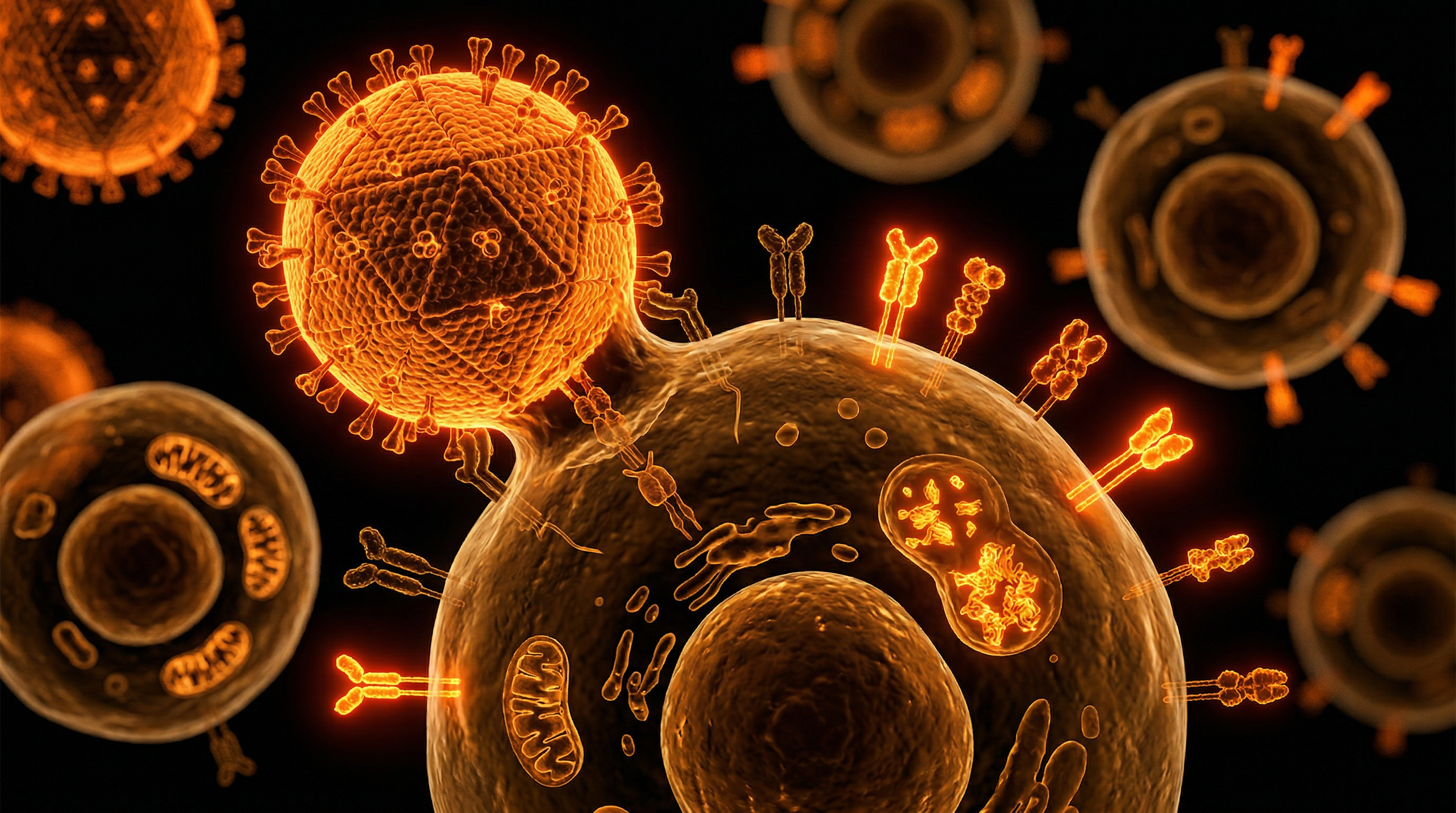
In the grand tapestry of human pathology, few agents are as ubiquitous, yet as profoundly misunderstood, as Cytomegalovirus (CMV). A member of the Herpesviridae family, CMV—formally known as Human Betaherpesvirus 5—is a master of persistence. While the medical establishment often dismisses it as a "benign" passenger in the immunocompetent host, a more unsettling reality is emerging from the frontiers of gerontology and immunology. CMV is not a passive guest; it is an active, relentless driver of biological ageing, a "stealth accelerator" that systematically exhausts the human immune system.
For decades, the mainstream narrative has focused on acute infections as the primary threats to public health. However, at INNERSTANDING, we recognise that the most insidious dangers are often those that operate beneath the threshold of clinical symptoms. CMV is the quintessential example of such a threat. Once contracted, it is never cleared. It establishes a lifelong latent infection, periodically reactivating and forcing the immune system to commit a disproportionate amount of its resources to its suppression.
The cost of this constant vigilance is staggering. This article explores how CMV infection leads to immunosenescence—the premature ageing of the immune system—and specifically how it drains the thymic reserve, the body’s primary factory for new T-cells. By forcing the immune system into a state of chronic activation and eventual exhaustion, CMV effectively reduces the "immunological bandwidth" available to fight new pathogens, clear malignant cells, and maintain systemic homeostasis.
In the UK, where prevalence rates among the elderly exceed 80%, the implications for public health are seismic. We are facing a silent epidemic of immune exhaustion that underpins many of the chronic diseases associated with ageing, from cardiovascular decline to neurodegeneration. Understanding CMV is not merely a matter of virology; it is a critical requirement for anyone seeking to master the biology of longevity.
Key Statistic: Approximately 50% to 80% of adults in developed nations are infected with CMV by age 40, with prevalence increasing steadily with age. In certain UK cohorts, nearly 90% of the over-80 population test positive for CMV antibodies.
The Biology — How It Works
CMV belongs to the Betaherpesvirinae subfamily. Like its cousins, Herpes Simplex Virus (HSV) and Varicella-Zoster Virus (VZV), it is characterised by its ability to establish latency—a state where the virus exists within the host cell without replicating, effectively "hiding" from the immune system. However, CMV is unique in the sheer scale of its genome and the complexity of its relationship with the host’s white blood cells.
Viral Architecture and Entry
The CMV virion is one of the largest and most complex among human viruses. It carries a double-stranded DNA genome of approximately 235 kilobase pairs, encoding at least 165 proteins. This genetic density allows the virus to manipulate the host's cellular machinery with surgical precision.
CMV exhibits broad tropism, meaning it can infect a wide variety of cell types, including:
- Fibroblasts (connective tissue)
- Endothelial cells (lining of blood vessels)
- Epithelial cells
- Smooth muscle cells
- Myeloid lineage cells (monocytes and macrophages)
The virus enters the cell through a sophisticated process of membrane fusion, often utilising the host cell's own surface receptors as entry points. Once inside, the viral DNA is transported to the nucleus, where it can either initiate a lytic cycle (active replication) or enter latency.
The Latency-Reactivation Cycle
The true brilliance—and danger—of CMV lies in its latent phase. It primarily resides in CD34+ haematopoietic progenitor cells in the bone marrow and their derivatives, the monocytes. In this state, the virus expresses only a handful of genes, making it nearly invisible to the immune system.
However, latency is not permanent. Whenever the host experiences physiological stress, inflammation, or a weakened immune state, the virus undergoes reactivation. These subclinical bursts of viral activity trigger an immediate and massive response from the host’s T-cells. Over a lifetime, these repeated cycles of "hide and seek" force the immune system to dedicate an ever-increasing percentage of its cellular "real estate" to keeping CMV in check.
Mechanisms at the Cellular Level
To understand why CMV is so detrimental to immune longevity, we must look at how it reshapes the cellular landscape of the body. The primary casualty of CMV persistence is the T-cell repertoire.
Memory Inflation: The Crowding Effect
One of the most striking phenomena associated with CMV is Memory Inflation. In a typical infection (like the flu), the body generates a burst of effector T-cells, most of which die off after the virus is cleared, leaving behind a small pool of memory cells. With CMV, the opposite happens.
Because the virus reactivates periodically, the pool of CMV-specific CD8+ cytotoxic T-cells does not shrink. Instead, it expands. In many CMV-positive individuals, 10%, 20%, or even 50% of their entire T-cell population can become dedicated to this one single virus.
Fact: This "immunological takeover" reduces the space available for T-cells that recognise other threats, such as new influenza strains, SARS-CoV-2, or emerging cancer cells.
The Exhaustion of the Thymic Reserve
The Thymus gland is the "school" where T-cells are trained. It is most active during childhood and begins to shrink (involute) after puberty. By middle age, the production of "naïve" T-cells (cells that haven't encountered a pathogen yet) drops significantly.
CMV accelerates this process through two primary mechanisms:
- Demand-Driven Depletion: Because CMV constantly triggers the immune system, the body "burns through" its supply of naïve T-cells at an accelerated rate, converting them into CMV-specific memory cells. This prematurely exhausts the thymic reserve.
- Inflammatory Involution: CMV creates a state of chronic, low-grade inflammation. Pro-inflammatory cytokines like Interleukin-6 (IL-6) and Tumour Necrosis Factor-alpha (TNF-α) have been shown to speed up the fatty infiltration of the thymus, effectively shutting down its productive capacity earlier than nature intended.
Senescence and the SASP
Cells that have been forced to replicate too many times enter a state called senescence. Senescent T-cells lose their ability to kill infected cells but do not die. Instead, they become "zombie cells" that secrete a cocktail of inflammatory chemicals known as the Senescence-Associated Secretory Phenotype (SASP).
CMV is a primary driver of T-cell senescence. These senescent cells express markers like CD57 and KLRG1, and they lack the CD28 receptor necessary for proper activation. They clutter the immune system, producing constant background "noise" (inflammation) that damages healthy tissues and prevents a co-ordinated response to new infections.
Environmental Threats and Biological Disruptors
The impact of CMV is not dictated solely by the virus itself, but by the environment in which the host lives. Modern industrialised life provides the perfect conditions for CMV to accelerate immune ageing.
The Role of Chronic Stress
Psychological and physical stress triggers the release of cortisol and other glucocorticoids. While these hormones are essential for the "fight or flight" response, chronic elevation suppresses the immune system's ability to maintain CMV latency. Each period of high stress can lead to subclinical viral shedding, necessitating a costly immune re-mobilisation.
Air Pollution and Particulate Matter
Recent research suggests that exposure to Particulate Matter (PM2.5) and nitrogen dioxide (NO2) acts as a biological disruptor that exacerbates CMV-related damage. Pollution induces systemic oxidative stress, which further impairs T-cell function and encourages the transition of CMV from latency to the lytic cycle. In the UK’s urban centres, the synergy between air pollution and CMV prevalence creates a "double hit" to respiratory and immune health.
Nutritional Deficiencies
The modern diet, often high in ultra-processed foods and low in essential micronutrients, leaves the immune system ill-equipped to handle a persistent viral load.
- Zinc Deficiency: Zinc is critical for thymic function and T-cell maturation. A lack of bioavailable zinc makes the immune system less efficient at suppressing CMV, leading to more frequent reactivations.
- Vitamin D3: Vitamin D acts as an immune modulator. Low levels (common in the UK) are associated with higher CMV antibody titres, suggesting that the virus is "leaking" out of latency more often in those with insufficient Vitamin D.
Co-Infections: The Viral Syndemic
We do not live in a vacuum. A CMV-infected individual who contracts EBV (Epstein-Barr Virus) or SARS-CoV-2 faces a cumulative immunological burden. Each new infection competes for the dwindling resources of the thymus and the bone marrow. The "syndemic" effect of multiple persistent viruses is a major factor in the rise of Long COVID and other post-viral syndromes, where the primary issue may actually be the reactivation of "stealth" viruses like CMV during the acute phase of another illness.
The Cascade: From Exposure to Disease
The progression from CMV exposure to overt clinical disease is often a decades-long "slow burn." This cascade is defined by a phenomenon known as Inflammaging—the chronic, sterile, low-grade inflammation that develops during ageing and contributes to all major age-related pathologies.
1. Vascular Damage and Atherosclerosis
CMV has a particular affinity for the endothelial cells that line our arteries. When the virus reactivates in the vessel wall, it triggers local inflammation and the expression of adhesion molecules. This attracts macrophages, which swallow cholesterol and become "foam cells," the building blocks of arterial plaque.
- Research has consistently linked CMV seropositivity with an increased risk of hypertension and coronary artery disease.
- The virus can also disrupt the stability of existing plaques, potentially triggering heart attacks or strokes.
2. Neuroinflammation and Cognitive Decline
The "leaky" immune system caused by CMV allows pro-inflammatory cytokines to cross the blood-brain barrier. Furthermore, there is emerging evidence that CMV can directly infect cells within the central nervous system. This chronic neuroinflammation is a significant risk factor for Alzheimer's disease and other forms of dementia. The immune system, occupied with its struggle against CMV, fails to effectively clear beta-amyloid and tau proteins.
3. Metabolic Dysfunction
Inflammaging driven by CMV is closely linked to Insulin Resistance. The SASP factors produced by senescent T-cells interfere with insulin signalling in muscle and adipose tissue. This creates a vicious cycle: CMV-driven inflammation promotes obesity and type 2 diabetes, which in turn causes further immune dysfunction, allowing CMV to reactivate even more frequently.
4. Cancer Vulnerability
The immune system’s primary job, besides fighting pathogens, is immunosurveillance—the detection and destruction of pre-cancerous cells. When the T-cell pool is dominated by CMV-specific "zombie cells," its ability to identify and eliminate emerging tumours is severely compromised. This may explain why CMV-positive individuals often have poorer outcomes in various types of cancer.
What the Mainstream Narrative Omits
In the hallowed halls of conventional medicine, CMV is rarely discussed unless a patient is undergoing an organ transplant or is severely immunocompromised (such as in late-stage HIV/AIDS). This is a catastrophic oversight. Here at INNERSTANDING, we seek to expose the truths that the pharmaceutical-industrial complex finds inconvenient.
The Myth of the "Harmless" Virus
The medical establishment relies on a binary view of health: you are either "sick" or "healthy." Because CMV doesn't cause immediate, obvious symptoms in most people, it is classified as harmless. This ignores the concept of marginal biological cost. Every time your immune system engages with CMV, it is using energy and resources that it cannot use elsewhere. Over 50 years, these "marginal" costs add up to a shortened lifespan and a decade of poor health (morbidity) at the end of life.
Why There Is No Vaccine
There is no "profit-dense" solution for CMV in the general population. Developing a vaccine for a virus that has evolved for millions of years to evade the immune system is incredibly difficult and expensive. Furthermore, because the damage occurs over decades, it is hard to track in short-term clinical trials. It is far more profitable for the "Sickness Industry" to treat the results of CMV—heart disease, diabetes, and cancer—than to address the underlying viral driver of immune ageing.
The Inverted CD4:CD8 Ratio
One of the most reliable predictors of mortality in the elderly is the Immune Risk Profile (IRP), characterised by an inverted ratio of CD4+ to CD8+ T-cells. Almost all individuals with this high-risk profile are CMV-positive. Despite this being known in the scientific literature for over 20 years, it is not part of a standard GP check-up in the UK. Why? Because the system is designed to manage symptoms, not to optimise biological age.
Callout: The mainstream narrative omits the fact that "natural ageing" is often actually "viral-induced exhaustion." We have accepted a level of decline as inevitable that may, in fact, be preventable.
The UK Context
The United Kingdom presents a unique and troubling case study for the CMV epidemic. Several factors make the British population particularly vulnerable to the "stealth accelerator."
Prevalence and Socio-Economic Factors
In the UK, CMV prevalence follows a distinct socio-economic gradient. Those living in overcrowded housing or areas with high pollution levels are often exposed to the virus much earlier in life.
- Early Exposure = More Cycles: Contracting CMV in childhood means the immune system must manage the virus for 70 or 80 years, rather than 30 or 40. This leads to much earlier "immune exhaustion" in disadvantaged populations, contributing to the stark health inequalities seen across the country.
The "Ageing Britain" Crisis
The UK has one of the fastest-ageing populations in Europe. As the "Baby Boomer" generation enters their 70s and 80s, the NHS is being overwhelmed by chronic diseases. A significant portion of this burden is driven by the immunosenescence we have described.
- The English Longitudinal Study of Ageing (ELSA) has provided data suggesting that CMV-positive participants have significantly higher rates of frailty and functional decline.
- Despite this, there is no national screening programme for CMV, nor is there public health advice on how to mitigate its effects.
The Impact of the UK Climate
The lack of sunlight in the UK for much of the year leads to widespread Vitamin D deficiency. As previously noted, Vitamin D is essential for maintaining viral latency. This means that for the average Briton, CMV is likely reactivating more frequently than it would in a more Mediterranean or tropical climate, accelerating the ageing process every winter.
Protective Measures and Recovery Protocols
While the picture may seem bleak, we are not helpless. Understanding the mechanisms of CMV allows us to implement strategies to protect the thymus, reduce viral reactivation, and even potentially "flush out" senescent cells.
1. Nutrition and Micronutrient Fortification
To keep CMV in a state of deep latency, the immune system requires specific "fuel."
- High-Dose Vitamin D3/K2: Aim for blood levels between 100-150 nmol/L. This helps maintain the "gatekeeping" function of the immune system.
- Zinc and Selenium: These minerals are essential for thymic function. Supplementing with Zinc Picolinate (25-50mg) can support the production of new naïve T-cells.
- Quercetin and Fisetin: These are "senolytic" compounds—substances that help the body identify and clear senescent cells. By clearing out the CMV-specific "zombie" T-cells, we can potentially free up immunological space.
2. Thymic Rejuvenation
The work of Dr Greg Fahy and the TRIIM (Thymus Regeneration, Immunorestoration, and Insulin Mitigation) trial has shown that it is possible to reverse thymic involution.
- DHEA and Metformin: Under strict medical supervision, these compounds, combined with growth hormone, have been shown to regrow thymic tissue and reduce "epigenetic age."
- Stress Management: Practices that lower cortisol, such as deep meditation, forest bathing, and consistent sleep, are not "luxury" activities; they are biological imperatives for maintaining CMV latency.
3. Avoiding "Immunological Burnout"
Be mindful of environmental stressors. Use HEPA air filters in the home to reduce the systemic inflammation caused by pollution. Avoid "over-training" in the gym; while exercise is good, excessive chronic cardio can suppress the immune system and trigger viral reactivation. Focus on High-Intensity Interval Training (HIIT) and strength training, which have been shown to boost the immune system without the same depletion.
4. The Future: Antiviral Therapies
While not yet mainstream for general use, drugs like Valganciclovir (usually reserved for transplant patients) are being studied for their ability to reduce systemic inflammation in CMV-positive elderly people. In the future, "pulsed" antiviral therapy may become a standard longevity protocol to keep the viral load at near-zero levels.
Summary: Key Takeaways
The role of Cytomegalovirus in human health is a profound example of how a "hidden" factor can dictate the quality and length of our lives.
- CMV is a lifetime commitment: Once infected, your immune system is in a permanent state of war.
- Thymic Exhaustion: The virus forces the body to use up its "naïve" T-cell reserve, leaving us vulnerable to new diseases and cancer.
- Memory Inflation: A massive portion of our immune cells become dedicated to CMV, reducing our overall "immunological bandwidth."
- Inflammaging: CMV is a primary driver of the chronic, low-grade inflammation that causes heart disease, dementia, and diabetes.
- Mainstream Neglect: Conventional medicine ignores CMV in the general population because there is no simple, profitable "pill" to fix it.
- The UK Context: British citizens are particularly at risk due to Vitamin D deficiency, pollution, and an ageing population.
- Proactive Management: Through senolytics, thymic support, and lifestyle interventions, we can mitigate the damage and slow the "stealth accelerator."
At INNERSTANDING, we believe that knowledge is the ultimate biological hack. By recognising the threat of CMV, we can move beyond the "passive ageing" model and take active control of our immunological destiny. The thymus may shrink, and the virus may persist, but with the right protocols, we can ensure that our immune system remains a formidable fortress, rather than a depleted garrison.
This article is provided for informational and educational purposes only. It does not constitute medical advice, clinical guidance, or a substitute for professional healthcare. Information reflects cited research at time of publication. Always consult a qualified healthcare professional before acting on any health information.
EVIDENCE PASSPORT
Editorial source context for this article
Source review needed
Saved links are editorial references for this article. They may support specific claims rather than every sentence. Open and assess each source in context. This passport does not independently verify them.
Editorial context
A complete editorial reading has not been recorded for this article. Source links remain available for you to open and assess directly.
Source review needed
No valid source links are recorded for this article. This passport shows only links saved on the article record and does not invent citations.
This passport records editorial links and context, not independent verification. Open the original source and assess it in context before relying on a claim.
Medical Disclaimer
The information in this article is for educational purposes only and does not constitute medical advice, diagnosis, or treatment. Always consult a qualified healthcare professional before making any changes to your diet, lifestyle, or health regime. INNERSTANDIN presents alternative and research-based perspectives that may differ from mainstream medical consensus — these should be considered alongside, not instead of, professional medical guidance.
Read Full DisclaimerContinue the thread
Keep this question moving.
Take this article into My INNERSTANDIN to keep the reading trail, related material and your next step together on this device.
Explore this in the Body Map
See where this hits your biology. Interactive anatomy, threats, and protective protocols.
Dig deeper in the Library
Free, longform PDF volumes that go beyond headlines into mechanisms and references.