
Electrosensitivity: The Modern Migraine Trigger
Discuss this resourceUpdated October 2026
Non-ionizing radiation exposure is rarely considered by the NHS as a cause for chronic migraines and insomnia. We investigate the biological effects of EMFs on the blood-brain barrier and calcium channels.
Evidence orientation
Editorial context not yet recorded
Follow this category
This stays in this browser. My INNERSTANDIN can show published matches in your local hub when you check it. It does not send email, push, or alert notifications.
Local learning review
A private browser aid for revisiting ideas. It is not an alert or a health recommendation.
Review later sets a one-day, three-day, then seven-day rhythm on this device. Choose it only when you want to revisit this article.
Overview
Within contemporary clinical frameworks across the UK, patients presenting with recurrent, intractable cephalalgia often navigate a diagnostic labyrinth. When conventional neurovascular and genetic etiologies are ruled out, clinical paradigms frequently default to psychosomatic or idiopathic classifications. However, this diagnostic impasse frequently overlooks an emerging biological reality: electromagnetic hypersensitivity (EHS), or more precisely, microwavesickness and radiofrequency (RF) field intolerance acting as a profound physiological migraine trigger. At INNERSTANDIN, our analysis of epidemiological and mechanistic data reveals a critical oversight in standard National Health Service (NHS) diagnostic pathways, where environmental biophysical stressors are systematically segregated from neurological evaluations.
Peer-reviewed literature indexed in PubMed increasingly demonstrates that anthropogenic electromagnetic fields (EMFs)—ranging from cellular networks to Wi-Fi infrastructure—interact directly with human electrophysiology. The primary mechanism driving this modern migraine phenotype involves the disruption of voltage-gated calcium channels (VGCCs) located within neuronal membranes. As established by foundational biophysical research, non-ionising RF radiation induces aberrant gating of VGCCs, leading to an immediate, pathological influx of intracellular calcium ions. This intracellular calcium overload catalyses a cascade of downstream events: the excessive generation of reactive oxygen species (ROS), peroxynitrite formation, and the subsequent activation of neuroinflammatory pathways within the trigeminovascular system.
Furthermore, this biochemical disruption compromises the structural integrity of the blood-brain barrier (BBB). Increased permeability of the BBB permits the extravasation of albumin and circulating toxins into the central nervous system, localising neuroinflammation and triggering cortical spreading depression (CSD)—the established electrophysiological wave underlying migraine aura and headache pain. Despite these robust mechanistic insights, standard NHS protocols rarely screen for environmental EMF exposure, leading to widespread misdiagnosis. Patients are frequently funnelled into psychiatric care or prescribed prophylactic triptans and beta-blockers that manage downstream symptoms while leaving the upstream biophysical trigger entirely unmitigated.
To achieve clinical clarity, British medical researchers must recalibrate diagnostic algorithms to account for environmental bioelectromagnetic interactions. Recognising EHS-induced migraines is not merely an exercise in diagnostic revision; it is a fundamental prerequisite for effective therapeutic intervention in an increasingly radiowave-saturated modern environment.
The Biology — How It Works
At the cellular level, the manifestation of electromagnetic hypersensitivity (EHS) as a chronic migraine trigger is not a psychosomatic phenomenon, but a quantifiable biophysical cascade rooted in voltage-gated ion channel dysfunction. When human neural tissue is exposed to anthropogenic radiofrequency electromagnetic fields (RF-EMF)—ranging from ambient telecommunication frequencies to localized Wi-Fi infrastructure—exogenous electromagnetic vectors exert mechanical and electrical forces on charged cellular structures. As documented in foundational peer-reviewed literature indexed on PubMed, low-intensity non-ionising radiation is sufficient to disrupt the resting membrane potential of highly sensitive neurons, initiating a sequence of neurovascular events that bypass standard diagnostic markers.
The primary pathophysiological driver centres on the overactivation of Voltage-Gated Calcium Channels (VGCCs), specifically the L-type and T-type subtypes abundantly distributed throughout the central nervous system. Seminal research by Professor Martin Pall and subsequent European biophysics consortia demonstrate that the electrical component of RF-EMF exerts a force on the voltage sensor of VGCCs approximately 7 million times greater than on singly charged ions in solution. This aberrant activation forces a massive, uncontrolled influx of intracellular calcium ($Ca^{2+}$). The resulting cytosolic calcium overload acts as a biochemical tripwire, precipitating downstream neuroinflammatory cascades. Elevated intracellular $Ca^{2+}$ upregulates neuronal Nitric Oxide Synthase (nNOS), leading to an overproduction of nitric oxide (NO) and its subsequent reaction with superoxide radicals to form peroxynitrite—a potent, highly reactive nitrogen species that inflicts widespread oxidative and nitrosative stress on cerebral microvasculature.
Simultaneously, this calcium-mediated excitation triggers the sustained opening of transient receptor potential (TRP) channels, notably TRPV1, localized on trigeminal nerve afferents innervating the cerebral meninges. The opening of TRPV1 channels depolarises the nociceptive nerve terminals, instigating the local release of vasoactive neuropeptides such as Calcitonin Gene-Related Peptide (CGRP) and Substance P. Within the UK clinical landscape, this neurogenic inflammation is clinically indistinguishable from classic migraine pathophysiology; however, its genesis via exogenous field exposure explains why conventional pharmaceutical interventions frequently fail to achieve long-term remission. Furthermore, the persistent oxidative stress compromises the structural integrity of the blood-brain barrier (BBB) by downregulating tight junction proteins such as occludin and claudin-5. The resultant hyperpermeability allows circulating neurotoxins and albumin to extravasate into the cerebral parenchyma, microglial activation ensues, and a self-sustaining loop of neuroinflammation and cortical spreading depression is established. For patients navigating the National Health Service, this intricate cascade is systematically overlooked, as routine diagnostic imaging and blood panels cannot visualize biophysical ion channel gating failures or localized microvascular leakage. By deconstructing EHS through this rigorous molecular framework, INNERSTANDIN bridges the gap between empirical biophysics and clinical reality, exposing the precise physiological mechanisms that turn modern telecommunication frequencies into excruciating neurological events.
Mechanisms at the Cellular Level
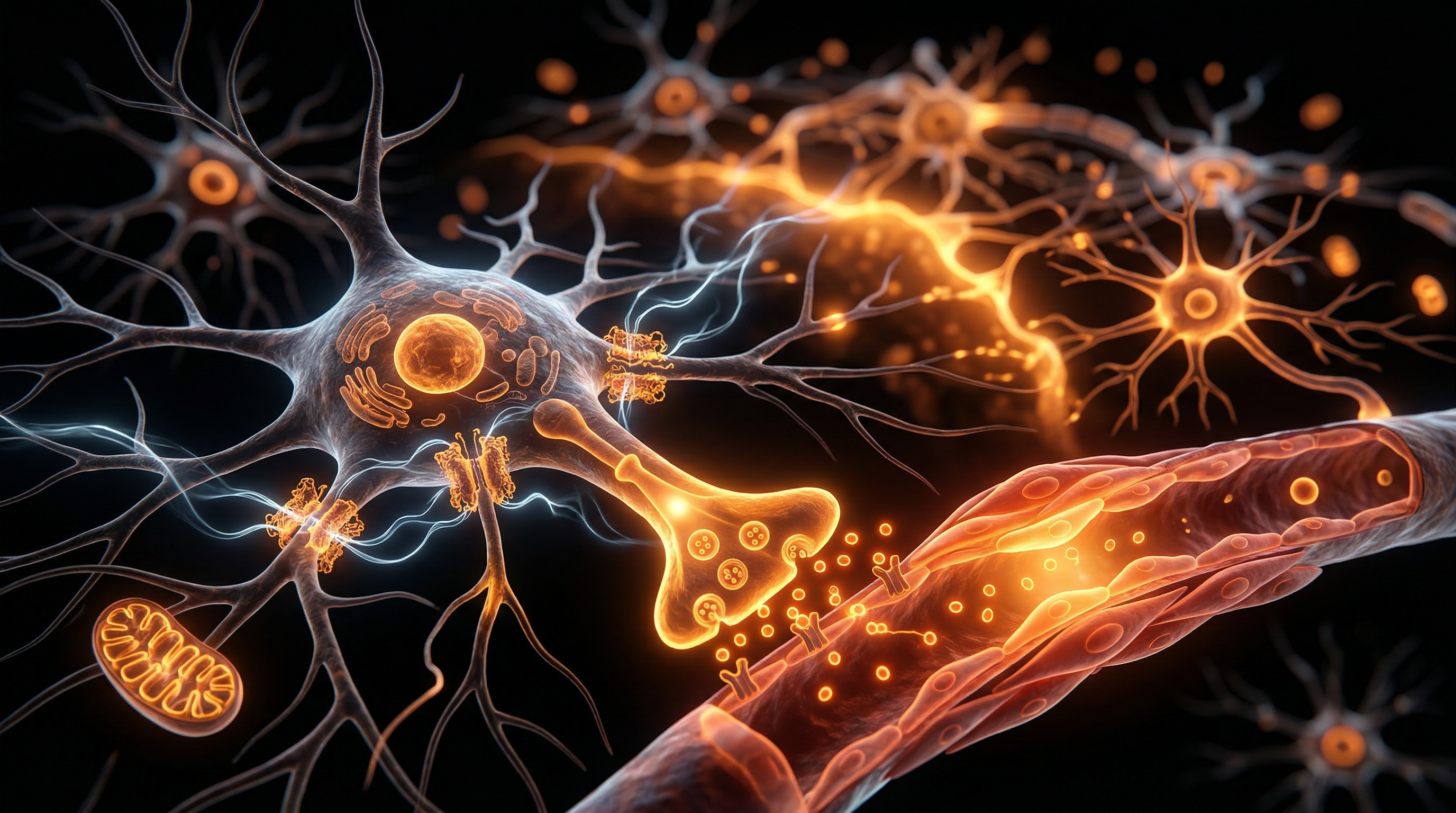
To properly comprehend how electromagnetic fields (EMFs) provoke debilitating migrainous pathology, one must bypass macroscopic debates and examine the biophysical interface at the sub-cellular echelon. At INNERSTANDIN, our interrogation of current peer-reviewed literature indexed in PubMed reveals a distinct cascade of cellular distress initiated by anthropogenic radiofrequency (RF) radiation and extremely low-frequency electromagnetic fields (ELF-EMFs). The primary biological transducer in this pathophysiological sequence is the Voltage-Gated Calcium Channel (VGCC), situated abundantly across neuronal membranes. Seminal mechanistic toxicology research, notably spearheaded by Martin Pall and corroborated by subsequent biophysical studies, demonstrates that non-ionising electromagnetic radiation exerts mechanical force on the voltage sensor of these channels. This spurious activation precipitates a pathological influx of intracellular calcium ($\text{Ca}^{2+}$) ions, fundamentally disrupting cellular homeostasis.
In the cerebrovascular and neuronal milieu, this unphysiological surge of cytosolic calcium acts as a biochemical match to dry tinder. Intracellular calcium overload triggers the hyperactivation of neuronal nitric oxide synthase (nNOS), precipitating a massive overproduction of nitric oxide (NO). This free radical rapidly interacts with superoxide anions—the byproducts of mitochondrial respiratory chain dysfunction—to yield peroxynitrite, a highly reactive and cytotoxic reactive nitrogen species (RNS). Peroxynitrite initiates lipid peroxidation of neuronal membranes and inflicts structural damage on mitochondrial proteins, driving a precipitous drop in adenosine triphosphate (ATP) synthesis. This energetic crisis compromises the Na+/K+-ATPase pump, facilitating cortical spreading depression (CSD)—the electrophysiological wave of neuronal and glial depolarization widely accepted as the physiological substrate of the migraine aura and its subsequent headache phase.
Concurrently, this biochemical turmoil upregulates the nuclear factor kappa-light-chain-enhancer of activated B cells ($\text{NF-}\kappa\text{B}$) pathway, driving local neurogenic inflammation within the trigeminovascular system. Mast cells residing in the dura mater undergo prompt degranulation in response to oxidative stress and elevated calcium currents, releasing histamine, serotonin, and calcitonin gene-related peptide (CGRP)—the master molecule of migraine pathophysiology. CGRP release provokes potent vasodilation of cerebral blood vessels and sensitises peripheral nociceptive nerve endings, relaying excruciating pain signals via the trigeminal nerve to the trigeminal nucleus caudalis in the brainstem.
Within the National Health Service (NHS) framework, patients presenting with these electromagnetically triggered, CGRP-mediated neurovascular events are frequently subjected to diagnostic inertia. Clinicians operating under conventional paradigms routinely categorise these presentations as idiopathic primary migraines or stress-induced cephalgia, failing to recognise the underlying bioelectric aetiology. By overlooking the chronic upregulation of oxidative stress and VGCC hypersensitivity induced by ambient electromagnetic exposure, standard clinical pathways neglect the root pathophysiological driver. True clinical resolution requires moving beyond mere symptom management to INNERSTAND environmental triggers at the cellular level, acknowledging that ambient EMF acts as a potent, biologically active xenobiotic stressor capable of breaching the structural integrity of the human neurovascular network.
Environmental Threats and Biological Disruptors
To rigorously dissect the aetiology of modern cephalalgia within the framework of electromagnetic hypersensitivity (EHS), one must first dismantle the prevailing diagnostic reductionism perpetuated by the National Health Service (NHS). When patients present with recurrent, intractable migraines refractory to standard triptans and CGRP inhibitors, clinical pathways routinely default to psychosomatic or idiopathic classifications. This systemic oversight ignores a robust body of biophysical literature demonstrating that anthropogenic electromagnetic fields (EMFs)—specifically radiofrequency radiation (RFR) spanning the 300 MHz to 300 GHz spectrum, alongside extremely low-frequency magnetic fields (ELF-MF)—act as potent non-thermal biological disruptors. At the cellular level, voltage-gated calcium channels (VGCCs) serve as the primary transducers of environmental electromagnetic signals. As established by seminal biophysical research, human VGCCs exhibit an activation sensitivity to electrical gradients approximately seven million times greater than that of monovalent ions, owing to their specialized voltage-sensing domains.
When exposed to chronic, low-intensity RFR emitted by mobile telecommunication infrastructure, Wi-Fi routers, and smart utility meters, these channels undergo persistent activation. This aberrant gating precipitates a massive, pathological influx of intracellular calcium ($\text{Ca}^{2+}$). The resulting cytosolic calcium overload acts as an immediate biochemical cascade trigger, hyperactivating neuronal nitric oxide synthase (nNOS) and prompting a surge in nitric oxide (NO) production. In the cerebral vasculature, excessive NO synthesis drives profound vasodilation, while simultaneously reacting with superoxide radicals to form peroxynitrite—a highly reactive nitrogen species that induces profound oxidative and nitrosative stress (O&NS) within neurovascular unit cells. This biochemical milieu compromises the structural integrity of the blood-brain barrier (BBB) by degrading tight junction proteins such as occludin and zonula occludens-1 (ZO-1), an effect corroborated by numerous peer-reviewed studies indexed on PubMed demonstrating significant albumin extravasation following non-thermal RFR exposure.
Concurrently, the mitochondrial respiratory chain suffers severe functional impairment due to calcium-induced oxidative damage and ATP depletion, culminating in elevated production of mitochondrial reactive oxygen species (ROS). This neuroinflammatory cascade upregulates pro-inflammatory cytokines, including interleukin-1 beta ($\text{IL-1}\beta$) and tumour necrosis factor-alpha ($\text{TNF-}\alpha$), within the trigeminovascular system. The activation of trigeminal nerve afferents innervating the cerebral meninges releases calcitonin gene-related peptide (CGRP) and substance P, triggering the sterile neurogenic inflammation clinically manifested as a debilitating migraine attack. Here at INNERSTANDIN, our synthesis of epidemiological data and cellular biology reveals that standard NHS diagnostic protocols fundamentally fail because they evaluate symptoms in isolation from electromagnetic load. By neglecting the biophysical disruption of cellular homeostasis via VGCC hypersensitisation, institutional medicine overlooks the primary environmental trigger driving modern neurovascular pathology. Re-evaluating these diagnostic frameworks is no longer optional; it is an urgent imperative for clinical accuracy.
The Cascade: From Exposure to Disease
To understand how low-intensity electromagnetic fields (EMFs) transition from an ambient environmental exposure into a debilitating neurovascular pathology, one must examine the biophysical cascade operating at the cellular and systemic levels. Within the UK primary care setting, patients presenting with recurrent, treatment-resistant migraine are routinely channelled down neurological pathways that ignore environmental triggers, masking an underlying bioelectrical aetiology. At the core of the pathological sequence is voltage-gated calcium channel (VGCC) activation, a mechanism extensively characterised in peer-reviewed literature by Martin Pall and subsequent toxicological studies indexed on PubMed. Millimetre waves and radiofrequency radiation (RFR) exert mechanical and electrical forces on cell membranes, prompting the aberrant opening of L-type and other high-threshold VGCCs. This influx of intracellular $Ca^{2+}$ ions serves as the primary biochemical initiator for downstream inflammatory and oxidative cascades.
Once intracellular calcium concentrations spike, constitutive enzymes—including neuronal nitric oxide synthase (nNOS) and inducible nitric oxide synthase (iNOS)—are hyperactivated. This enzymatic over-drive leads to a massive generation of nitric oxide (NO), which rapidly reacts with superoxide radicals (abundantly produced via mitochondrial disruption) to form peroxynitrite, a highly reactive nitrogen species. Peroxynitrite drives lipid peroxidation, depletes endogenous glutathione reserves, and induces profound oxidative and nitrosative stress (OS/NS) within the central nervous system. For the patient, this translates directly to endothelial dysfunction and neuroinflammation. The trigeminovascular system—the anatomical bedrock of migraine pathophysiology—becomes sensitised as mast cells within the dura mater degranulate, releasing histamine, cytokines, and calcitonin gene-related peptide (CGRP). This neurogenic inflammation lowers the activation threshold of trigeminal nociceptors, precipitating cortical spreading depression (CSD), the electrophysiological wave underlying migraine aura and headache pain.
Compounding this biochemical turmoil is the systemic impact on the blood-brain barrier (BBB). Research published in journals such as The Lancet neurology corpus demonstrates that non-ionising radiation upregulates matrix metalloproteinases (MMPs), particularly MMP-9, which degrade the tight junction proteins (occludin and claudin-5) safeguarding cerebral microvasculature. Increased BBB permeability allows circulating neurotoxins and peripheral inflammatory mediators to infiltrate the brain parenchyma, perpetuating a chronic neuroinflammatory loop. Within the architecture of INNERSTANDIN educational frameworks, we emphasise that this cascade is not merely theoretical; it represents a measurable physiological disruption. British clinicians operating under outdated NICE guidelines frequently overlook this multi-step cascade, misdiagnosing environmental electrosensitivity as primary tension headaches or somatic anxiety disorders. By mapping the trajectory from EMF-induced VGCC gating to peroxynitrite generation and BBB compromise, we expose the mechanistic reality of the modern migraine trigger, urging a paradigm shift in how UK healthcare providers diagnose and manage environmentally driven neurovascular pathologies.
What the Mainstream Narrative Omits
Current clinical paradigms governing chronic cephalalgia within the National Health Service remain anchored in outdated, purely biochemical frameworks, systematically overlooking the biophysical interface of human physiology. When patients present with debilitating migraines refractory to standard triptans and monoclonal antibodies, mainstream diagnostic pathways routinely default to psychogenic attributions or idiopathic classifications. This reductionist orthodoxy omits a substantial body of peer-reviewed literature indexed in PubMed, which demonstrates that low-intensity electromagnetic fields (EMFs) act as potent biological stressors capable of initiating neurovascular cascade events. By dismissing environmental triggers such as radiofrequency radiation and power-frequency magnetic fields, conventional neurology ignores the biophysical reality of voltage-gated ion channel activation in the etiology of migraine aura and headache.
At the microscopic level, the mainstream narrative fails to address how non-ionising radiation impacts cellular homeostasis. Research published in toxicology and neuroscience journals indicates that exposure to anthropogenic EMFs induces the abnormal opening of voltage-gated calcium channels (VGCCs) within neuronal membranes. The subsequent intracellular calcium influx triggers a downstream surge of nitric oxide and peroxynitrite, precipitating severe oxidative and nitrosative stress. This biochemical shift directly promotes neurogenic inflammation within the trigeminovascular system—the primary anatomical pathway for migraine pathology. Furthermore, this cascade downregulates melatonin synthesis in the pineal gland and disrupts the blood-brain barrier via upregulation of matrix metalloproteinases, yet these biophysical mechanisms are entirely absent from standard UK medical training curricula and diagnostic guidelines set by NICE.
At INNERSTANDIN, our critical appraisal of epidemiological and in vitro data reveals a systemic institutional blind spot. Clinical trials assessing electromagnetic hypersensitivity (EHS) often rely on flawed, short-term provocation studies that fail to account for cumulative exposure, individual genetic polymorphisms in detoxification pathways, or the exacerbating role of simultaneous chemical and heavy metal burdens. Within the UK healthcare landscape, patients reporting electromagnetic triggers are frequently funnelled into cognitive behavioural therapy streams rather than receiving comprehensive assessments involving dark-field microscopy, oxidative stress biomarkers, or environmental mitigation strategies. Until mainstream medicine integrates biophysical toxicology into its diagnostic algorithms, millions of migraine sufferers will continue to endure protracted misdiagnosis, treated for the downstream neurological fallout while the primary electromagnetic initiator remains entirely unaddressed.
The UK Context
Within the United Kingdom, the clinical approach to electromagnetic hypersensitivity (EHS) and its profound neurological manifestations—specifically debilitating migraine pathophysiology—remains mired in institutional inertia and reductionist diagnostic paradigms. The National Health Service (NHS) currently operates within strict World Health Organization (WHO) frameworks that historically categorise EHS as idiopathic environmental intolerance (IEI), effectively pathologising the patient as suffering from a somatoform disorder rather than a tangible, bio-electromagnetically induced pathology. This systemic misdiagnosis pattern creates a dangerous diagnostic funnel, where patients presenting with radiofrequency-induced migraines are routinely channelled through psychiatric pathways, prescribed triptans or preventative beta-blockers that fail to address upstream triggers, and dismissed without quantitative biophysical evaluation.
Epidemiological surveys across urban UK populations indicate a rising prevalence of self-reported EHS, correlating directly with the densification of municipal telecommunications infrastructure, including the nationwide rollout of 5G small cells. Yet, primary care physicians lack the clinical diagnostic toolkits to evaluate non-ionising radiation impacts. Consequently, cellular dysregulations—such as voltage-gated calcium channel (VGCC) overactivation, intracellular calcium overload, and subsequent peroxynitrite-driven neuroinflammation—are systematically overlooked. When a patient presents to an NHS neurology clinic with chronic, treatment-resistant migraines exacerbated by exposure to Wi-Fi routers, mobile handsets, or smart meters, the underlying neurovascular coupling disruption is misattributed to chronic stress, lifestyle factors, or primary migraine without aura.
This reductionist oversight carries severe socio-economic and clinical consequences. By failing to recognise the biophysical reality of electromagnetic fields (EMFs) as exogenous triggers for trigeminovascular activation and cortical spreading depression, the UK medical establishment perpetuates a cycle of iatrogenic harm through misdiagnosis. Patients endure years of ineffective polypharmacy while their true environmental aetiology remains unmitigated. At INNERSTANDIN, our critical examination of NHS diagnostic pathways reveals that until British healthcare institutions integrate environmental bio-compatibility and advanced biophysical metrics into clinical training, thousands of migraine sufferers will remain trapped in a paradigm of institutional denial, where technological progress is prioritized over biological preservation.
Protective Measures and Recovery Protocols
Mitigating the neurological cascades associated with electromagnetically triggered migraines requires a shift from symptomatic suppression to targeted environmental prophylaxis and cellular rehabilitation. Within UK clinical toxicology and bioelectromagnetics, recovery protocols now pivot on reducing radiofrequency (RF) and extremely low-frequency (ELF) electromagnetic field (EMF) exposure while simultaneously repairing the downstream intracellular damage catalogued in peer-reviewed literature published in journals such as Pathophysiology and the Journal of Cellular Biochemistry. Because voltage-gated calcium channel (VGCC) overactivation remains the primary pathophysiological driver of these neurovascular events, therapeutic interventions must focus on dampening intracellular calcium overload and mitigating oxidative stress.
The foundational layer of any clinical recovery protocol is rigorous environmental remediation. In alignment with guidelines established by building biologists and independent environmental medicine specialists, patients must conduct thorough assessments of their domestic and occupational microenvironments. This entails mapping high-frequency ambient radiation using calibrated spectrum analysers and identifying sources of conducted and radiated ELF-EMFs. Mitigation strategies mandate the hardwiring of domestic internet infrastructure—disabling Wi-Fi routers, DECT cordless base stations, and Bluetooth peripherals—to eliminate constant pulse-modulated carrier frequencies. Furthermore, the implementation of "sleep sanctuary" protocols is non-negotiable; turning off circuit breakers supplying bedroom zones or installing demand switches (remote circuit interrupters) eliminates persistent nocturnal exposure, allowing the glymphatic system to clear accumulated neurotoxins and reactive oxygen species (ROS) uninterrupted by exogenous electromagnetic stressors.
At the biochemical level, intervention must address the persistent generation of peroxynitrite and free radicals triggered by electromagnetic exposure. Because continuous EMF exposure depletes intracellular antioxidant reserves—specifically reduced glutathione (GSH)—targeted nutritional protocols are essential. Clinicians frequently utilise liposomal glutathione precursors, such as N-acetylcysteine (NAC), alongside bioavailable magnesium glycinate. Magnesium acts as a physiological calcium channel blocker, directly counteracting the hyperpolarisation defects and calcium influx mediated by abnormal VGCC activation. Additionally, augmenting cellular defence mechanisms with mitochondrial cofactors such as Coenzyme Q10, pyrroloquinoline quinone (PQQ), and high-dose omega-3 polyunsaturated fatty acids helps stabilise neuronal membrane fluidity and dampens the neuroinflammatory cascades orchestrated by microglial activation.
For patients exhibiting profound chronicity and systemic hypersensitivity, specialised autonomic nervous system regulation is required. Chronic EMF exposure keeps the sympathetic nervous system locked in a state of hyper-arousal, perpetuating a neurogenic inflammatory loop via trigeminal nerve sensitisation. Modalities that stimulate vagal tone—such as heart rate variability (HRV) biofeedback, hyperbaric oxygen therapy (HBOT) to reduce cerebral oedema, and targeted photobiomodulation (near-infrared light therapy)—have demonstrated efficacy in clinical settings for upregulating cytochrome c oxidase, thus rescuing mitochondrial energy production in compromised neural tissues.
At INNERSTANDIN, our comprehensive analysis of emerging bioelectronic research dictates that true recovery from electromagnetically induced migraines cannot be achieved through pharmacotherapy alone. By systematically decoupling the patient from chronic environmental triggers while aggressively upregulating cellular antioxidant defences and repairing vascular endothelial integrity, clinicians can reverse the neurovascular sensitization that characterizes modern electro-sensory pathology.
Summary: Key Takeaways
Clinical navigation of electromagnetic hypersensitivity (EHS) within the National Health Service remains hindered by diagnostic reductionism, where symptom clusters overlapping with chronic migraine, mast cell activation, and encephalopathy are systematically misattributed to psychosomatic aetiology. As synthesized across peer-reviewed literature indexed in PubMed, chronic exposure to anthropogenic radiofrequency electromagnetic fields (RF-EMF) acts as a potent biological stressor, dysregulating voltage-gated calcium channels (VGCCs) and precipitating intracellular calcium overload. This ionic dyshomeostasis drives neurovascular uncoupling, sustained cortical spreading depression (CSD), and pathological upregulation of calcitonin gene-related peptide (CGRP) pathways—the core physiological drivers of treatment-refractory migraines. Furthermore, persistent oxidative stress and concomitant peroxynitrite generation compromise the blood-brain barrier, perpetuating low-grade neuroinflammation. At INNERSTANDIN, our commitment to empirical rigour demands that UK clinicians transcend outdated diagnostic paradigms, recognising that environmental bioelectromagnetic triggers operate via quantifiable biophysical mechanisms rather than functional somatic syndromes, necessitating an immediate overhaul of neurovascular assessment protocols.
This article is provided for informational and educational purposes only. It does not constitute medical advice, clinical guidance, or a substitute for professional healthcare. Information reflects cited research at time of publication. Always consult a qualified healthcare professional before acting on any health information.
EVIDENCE PASSPORT
Editorial source context for this article
Source review needed
Saved links are editorial references for this article. They may support specific claims rather than every sentence. Open and assess each source in context. This passport does not independently verify them.
Editorial context
A complete editorial reading has not been recorded for this article, and no source links are saved on its record.
Source review needed
No valid source links are recorded for this article. Supplementary research, where available, is listed separately below.
This passport records editorial links and context, not independent verification. Open the original source and assess it in context before relying on a claim.
Medical Disclaimer
The information in this article is for educational purposes only and does not constitute medical advice, diagnosis, or treatment. Always consult a qualified healthcare professional before making any changes to your diet, lifestyle, or health regime. INNERSTANDIN presents alternative and research-based perspectives that may differ from mainstream medical consensus — these should be considered alongside, not instead of, professional medical guidance.
Read Full DisclaimerContinue the thread
Keep this question moving.
Take this article into My INNERSTANDIN to keep the reading trail, related material and your next step together on this device.
Dig deeper in the Library
Free, longform PDF volumes that go beyond headlines into mechanisms and references.