
Endogenous Bioelectric Signaling: Regulating Morphogenesis and Tissue Repair Mechanisms
Discuss this resourceUpdated August 2026
An exploration into the bioelectric language of cells, detailing how endogenous electrical gradients orchestrate biological form and facilitate regenerative potential in human tissues.
Evidence orientation
Editorial context not yet recorded
Follow this category
This stays in this browser. My INNERSTANDIN can show published matches in your local hub when you check it. It does not send email, push, or alert notifications.
Local learning review
A private browser aid for revisiting ideas. It is not an alert or a health recommendation.
Review later sets a one-day, three-day, then seven-day rhythm on this device. Choose it only when you want to revisit this article.
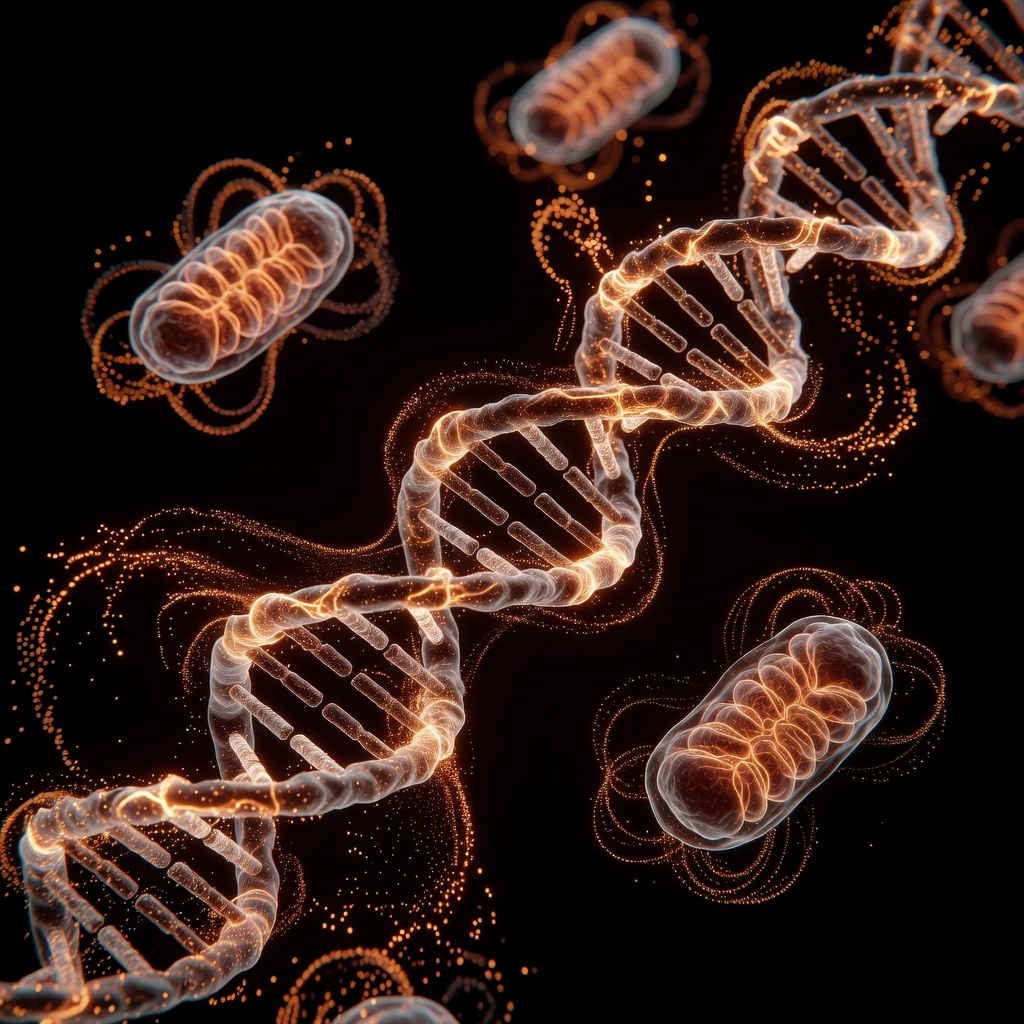
The Silent Language of Life: Bioelectric Signaling
In the traditional biological paradigm, molecular signaling—hormones, neurotransmitters, and gene expression—has held center stage. However, at the foundational level of cellular life, there exists a silent, rapid, and pervasive communication network: endogenous bioelectricity. Every cell in the human body acts as a tiny battery, maintaining a specific voltage across its plasma membrane. This membrane potential (Vmem) is not merely a byproduct of metabolic activity but a sophisticated regulatory layer that dictates cellular behavior, tissue growth, and architectural integrity.
The Morphogenetic Field
Bioelectricity acts as the architect of life. Long before cells differentiate into specialized roles, endogenous electric gradients establish the blueprint for morphogenesis—the biological process that causes an organism to develop its shape. These voltage gradients create 'spatial memory,' signaling to cells exactly where they are in the body and what their function should be. When these signals are disrupted, developmental errors can occur; conversely, when calibrated correctly, they allow for complex anatomical structures to emerge with precision.
Tissue Repair and Regeneration
Beyond development, bioelectric signaling is the first responder in injury. When skin is broken or bone is fractured, the integrity of the cellular 'battery' is compromised, leading to an immediate 'injury potential.' This shift in voltage serves as a master signal, recruiting immune cells to the site of injury and activating stem cells to begin the repair process. Research indicates that by modulating these endogenous currents, we can trigger latent regenerative pathways, effectively encouraging the body to rebuild tissues that were previously considered incapable of self-repair.
Root-Cause Mechanisms: Ion Channels and Gap Junctions
At the root of this system lie ion channels—proteins that control the flow of charged particles like sodium, potassium, and chloride. These channels function as bioelectric 'gates.' By opening or closing, they translate environmental cues into electrical signals. Furthermore, gap junctions act as electrical synapses, allowing neighboring cells to share these signals, creating an interconnected bioelectric network that synchronizes cellular activities across entire tissues.
Therapeutic Implications for the Future
Understanding these mechanisms moves medicine from a chemical-heavy approach to an informational, field-based model. By utilizing external electromagnetic fields or pharmacological agents that target ion channel activity, we can theoretically rewrite the bioelectric instructions that lead to chronic inflammation, scarring, or uncontrolled cellular proliferation. The goal of bioelectric medicine is not to force the body into a state, but to restore the original 'native' voltage that facilitates healthy tissue maintenance and systemic homeostasis. As we deepen our INNERSTANDING of this electrical blueprint, we move closer to unlocking the inherent regenerative capacity of human biology.
This article is provided for informational and educational purposes only. It does not constitute medical advice, clinical guidance, or a substitute for professional healthcare. Information reflects cited research at time of publication. Always consult a qualified healthcare professional before acting on any health information.
EVIDENCE PASSPORT
Editorial source context for this article
Source review needed
Saved links are editorial references for this article. They may support specific claims rather than every sentence. Open and assess each source in context. This passport does not independently verify them.
Editorial context
A complete editorial reading has not been recorded for this article, and no source links are saved on its record.
Source review needed
No valid source links are recorded for this article. Supplementary research, where available, is listed separately below.
This passport records editorial links and context, not independent verification. Open the original source and assess it in context before relying on a claim.
Medical Disclaimer
The information in this article is for educational purposes only and does not constitute medical advice, diagnosis, or treatment. Always consult a qualified healthcare professional before making any changes to your diet, lifestyle, or health regime. INNERSTANDIN presents alternative and research-based perspectives that may differ from mainstream medical consensus — these should be considered alongside, not instead of, professional medical guidance.
Read Full DisclaimerContinue the thread
Keep this question moving.
Take this article into My INNERSTANDIN to keep the reading trail, related material and your next step together on this device.