
Engineering the Future: The Rise of Complex Organoids in Drug Discovery
Updated May 2026
An exploration of how three-dimensional tissue models derived from stem cells are revolutionizing the way pharmaceutical companies test new compounds and understand human development.
Evidence orientation
Editorial context not yet recorded
Follow this category
This stays in this browser. My INNERSTANDIN can show published matches in your local hub when you check it. It does not send email, push, or alert notifications.
Local learning review
A private browser aid for revisiting ideas. It is not an alert or a health recommendation.
Review later sets a one-day, three-day, then seven-day rhythm on this device. Choose it only when you want to revisit this article.
The Morphogenetic Revolution: Beyond Reductionist Biology
For decades, the pharmaceutical industry has operated under a reductionist paradigm, attempting to understand the sprawling complexity of human pathophysiology through the narrow lens of two-dimensional cell cultures and non-human animal models. However, the staggering failure rate of clinical trials—where approximately 90% of drugs that pass animal testing fail in human subjects—suggests a fundamental disconnect in our biological translations.
The emergence of Organoids—three-dimensional, self-organising micro-tissues derived from stem cells—represents more than a technological leap; it is a shift in "innerstanding" the very fabric of human life. By recapitulating the architectural and functional complexity of human organs in vitro, we are finally moving away from the "black box" of animal experimentation toward a precise, human-centric model of drug discovery and regenerative medicine.
The Biological Mechanisms: From Pluripotency to Organogenesis
The genesis of an organoid begins with the exploitation of cellular "intelligence." By utilizing either pluripotent stem cells (PSCs)—including embryonic stem cells (ESCs) and induced pluripotent stem cells (iPSCs)—or organ-specific adult stem cells (ASCs), scientists can trigger a programme of directed differentiation.
The 3D Microenvironment and Self-Organisation
Unlike traditional monolayers, organoids are grown within a basement membrane extract (often a hydrogel like Matrigel) that mimics the extracellular matrix (ECM). This environment provides the necessary biochemical and mechanical cues for cells to engage in morphogenesis.
- Symmetry Breaking: Stem cells spontaneously organise themselves, guided by intrinsic genetic programmes to form distinct tissue layers.
- Lineage Specification: Through the precise application of growth factors (morphogens), researchers can nudge these cells to become specific lineages—cortical neurons for "mini-brains," hepatocytes for "mini-livers," or enterocytes for "mini-guts."
- Cell-to-Cell Signalling: Organoids exhibit complex paracrine and autocrine signalling, allowing different cell types within the same organoid to communicate, much as they would in the human body.
The Role of Morphogens
To engineer these systems, scientists must master the "chemical vocabulary" of the body. This involves the temporal manipulation of key signalling pathways:
- Wnt/β-catenin: Critical for maintaining the stem cell niche and driving posteriorisation.
- TGF-β/BMP: Essential for establishing dorsal-ventral polarity.
- FGF (Fibroblast Growth Factor): A primary driver of proliferation and tissue branching.
The Truth Exposed: Why Animal Models are Failing Us
The scientific establishment has long relied on Murine (mouse) and Macaque (monkey) models as proxies for the human condition. While these models have provided foundational insights, they often provide a distorted reflection of human biology.
The UK's National Centre for the Replacement, Refinement & Reduction of Animals in Research (NC3Rs) notes that the economic cost of drug failure in Phase II and III clinical trials exceeds £1.5 billion per failed compound, often due to unforeseen human toxicity or lack of efficacy not captured in animal studies.
The "truth" that is often glossed over in legacy academia is that the metabolic rates, gene expression profiles, and immunological responses of a mouse are fundamentally incompatible with the nuances of human chronic disease. Organoids expose these gaps, providing a platform where human genetics—including patient-specific mutations—can be interrogated without the interference of inter-species noise.
Environmental Disruptors: The Invisible Interference
As we engineer these complex organoids, we are discovering a harrowing reality: the human cellular environment is under siege. Organoid models are increasingly used to study how xenobiotics and environmental toxins disrupt human development—realities that are often suppressed in mainstream discourse.
Endocrine Disruptors and Developmental Programming
Research using "mini-brains" (cerebral organoids) has revealed that even sub-lethal exposures to common environmental chemicals can permanently alter neurodevelopment.
- PFAS (Per- and Polyfluoroalkyl Substances): Often called "forever chemicals," these disrupt the lipid metabolism within organoid models, suggesting a link to systemic metabolic dysfunction in the UK population.
- Microplastics: Emerging studies indicate that nanoplastic particles can cross the "organoid-barrier," accumulating in the lumen of gut organoids and triggering chronic inflammatory responses.
- EMF and Cellular Stress: High-authority research is beginning to investigate how non-ionising radiation affects the calcium signalling pathways within cardiac organoids, potentially unveiling the mechanisms behind the rise in "idiopathic" arrhythmias.
Epigenetic Hijacking
Organoids allow us to see how environmental stressors don't just kill cells; they reprogramme them. Through epigenetic modifications (DNA methylation and histone acetylation), toxins in our modern environment can silence protective genes and activate oncogenes, a process that organoids can track in real-time.
The UK Landscape: A Hub for Regenerative Excellence
The United Kingdom has positioned itself as a global leader in the organoid revolution, leveraging its world-class academic institutions and a robust biotech ecosystem.
Recent data from the UK Life Sciences Sector Report indicates that the UK's cell and gene therapy industry has grown by over 40% since 2018, with over 150 companies now actively developing "Next-Gen" biological models and therapies.
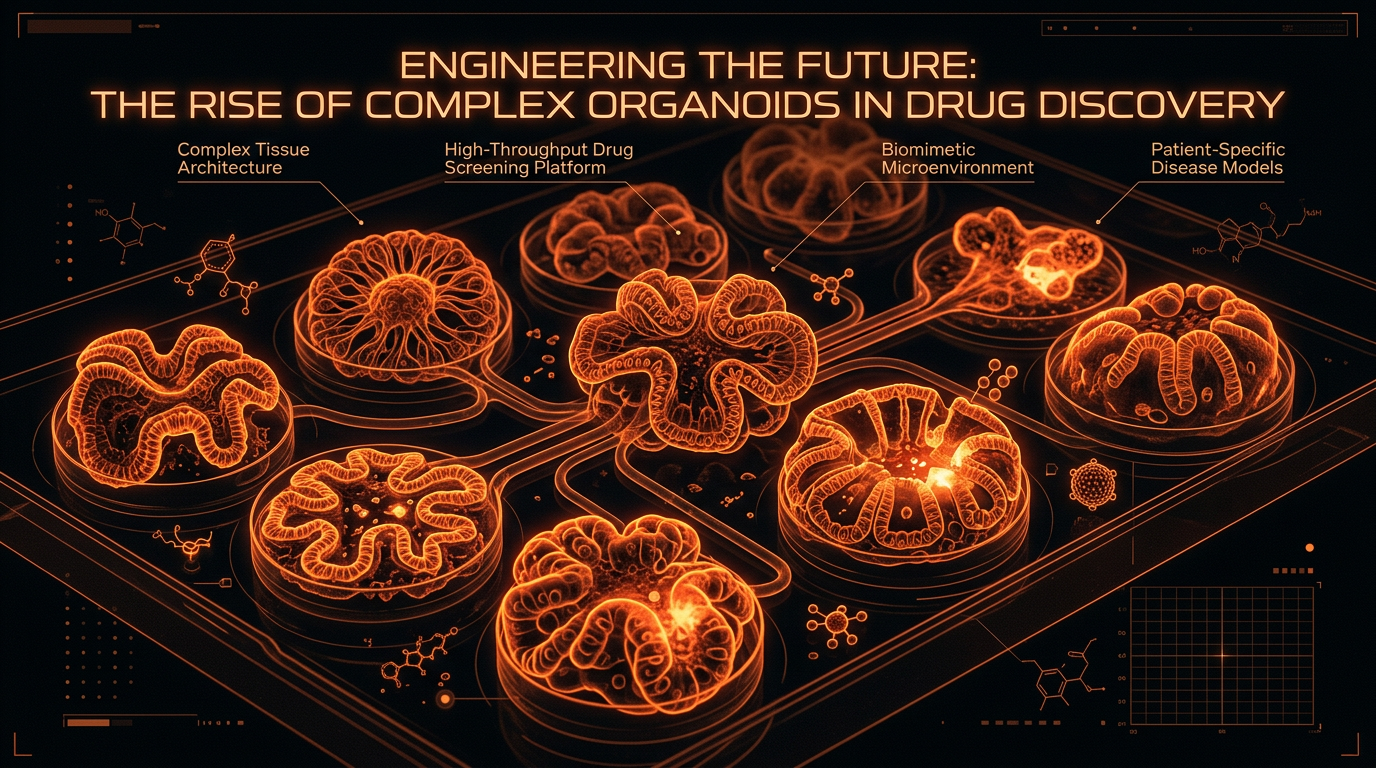
British scientists at the Gurdon Institute and the Sanger Institute are currently pioneering "Patient-on-a-Chip" technologies, where multiple organoids (e.g., heart, liver, and lung) are connected via microfluidic channels to simulate systemic drug metabolism. This reduces the need for animal testing while providing a high-fidelity map of how a drug intended for the lungs might inadvertently damage the liver.
Engineering Recovery: Protocols for Biological Sovereignty
The ultimate goal of innerstanding organoid science is the restoration of human health. We are moving from a "reactive" pharmaceutical model to a "regenerative" one.
Personalised Toxicity Screening
Before a patient undergoes chemotherapy, clinicians can now grow "tumoroids" from the patient’s own biopsy. These organoids are then subjected to a battery of drugs to see which one effectively kills the cancer with the least collateral damage to the patient’s healthy cells.
Organoid-Derived Cell Therapy
The future of recovery lies in using organoids as "foundries" for healthy cells.
- Type 1 Diabetes: Engineering pancreatic islet organoids to produce insulin, which can then be encapsulated and implanted back into the patient.
- Macular Degeneration: Using retinal organoids to harvest photoreceptor cells for transplantation, potentially reversing blindness.
The Recovery Protocol: A Multi-Phasic Approach
To truly heal, we must utilise the data derived from organoid research to implement systemic recovery protocols:
- Detoxification of the Niche: Removing the "environmental disruptors" (PFAS, heavy metals, microplastics) that organoid studies show inhibit stem cell function.
- Nutigenomic Support: Using bio-available compounds (like Sulforaphane or Curcumin) that have been proven in organoid models to upregulate Nrf2 pathways and cellular defence.
- Regenerative Priming: Using targeted peptide therapy to signal the body’s endogenous stem cells to begin the repair processes identified in 3D tissue models.
The Ethical Horizon and Human Sovereignty
As we master the ability to engineer human "mini-organs," we face profound ethical questions. If a cerebral organoid develops complex neural oscillations resembling a foetal brain, what are its rights? If we can engineer "synthetic embryos" (embryoids) for research, where does life begin?
In the INNERSTANDING of these technologies, we must ensure they are used to liberate the human biological experience from the shackles of chronic disease and environmental toxicity, rather than becoming tools for further corporate control of the human genome.
Conclusion: The New Era of Human Understanding
The rise of complex organoids signals the end of the "Dark Ages" of medical experimentation. By embracing the complexity of human biology rather than trying to over-simplify it, we are uncovering the hidden truths of how our environment shapes our health.
We are no longer limited to observing the body from the outside in; we are now engineering the future from the inside out. This is the essence of biological sovereignty—the ability to understand, repair, and optimise the human vessel through the precise application of stem cell science and regenerative architecture.
Key Takeaways for the Informed Practitioner
- Beyond the Dish: Organoids represent 3D functional units, not just cell clusters, allowing for the study of architectural-dependent disease.
- The Animal Myth: Success in mice rarely equates to success in humans; organoids bridge this "translation gap."
- Environmental Awareness: We must acknowledge the role of endocrine disruptors in compromising the stem cell "niche" if we are to achieve true recovery.
- UK Innovation: The UK remains at the forefront of this technology, providing a fertile ground for both research and clinical application.
- Future-Proofing: The transition toward personalised, organoid-tested medicine is the only viable path to ending the crisis of chronic disease.
This article is provided for informational and educational purposes only. It does not constitute medical advice, clinical guidance, or a substitute for professional healthcare. Information reflects cited research at time of publication. Always consult a qualified healthcare professional before acting on any health information.
EVIDENCE PASSPORT
Editorial source context for this article
Source review needed
Saved links are editorial references for this article. They may support specific claims rather than every sentence. Open and assess each source in context. This passport does not independently verify them.
Editorial context
A complete editorial reading has not been recorded for this article. Source links remain available for you to open and assess directly.
Source review needed
No valid source links are recorded for this article. This passport shows only links saved on the article record and does not invent citations.
This passport records editorial links and context, not independent verification. Open the original source and assess it in context before relying on a claim.
Medical Disclaimer
The information in this article is for educational purposes only and does not constitute medical advice, diagnosis, or treatment. Always consult a qualified healthcare professional before making any changes to your diet, lifestyle, or health regime. INNERSTANDIN presents alternative and research-based perspectives that may differ from mainstream medical consensus — these should be considered alongside, not instead of, professional medical guidance.
Read Full DisclaimerContinue the thread
Keep this question moving.
Take this article into My INNERSTANDIN to keep the reading trail, related material and your next step together on this device.