
Epigenetic Alterations: Do Vaccine Ingredients Modify Gene Expression?
Updated May 2026
A forward-looking study on the potential for vaccine adjuvants to influence epigenetic markers. It explores how environmental exposures can change gene regulation without altering DNA.
Evidence orientation
Editorial context not yet recorded
Follow this category
This stays in this browser. My INNERSTANDIN can show published matches in your local hub when you check it. It does not send email, push, or alert notifications.
Local learning review
A private browser aid for revisiting ideas. It is not an alert or a health recommendation.
Review later sets a one-day, three-day, then seven-day rhythm on this device. Choose it only when you want to revisit this article.
Overview
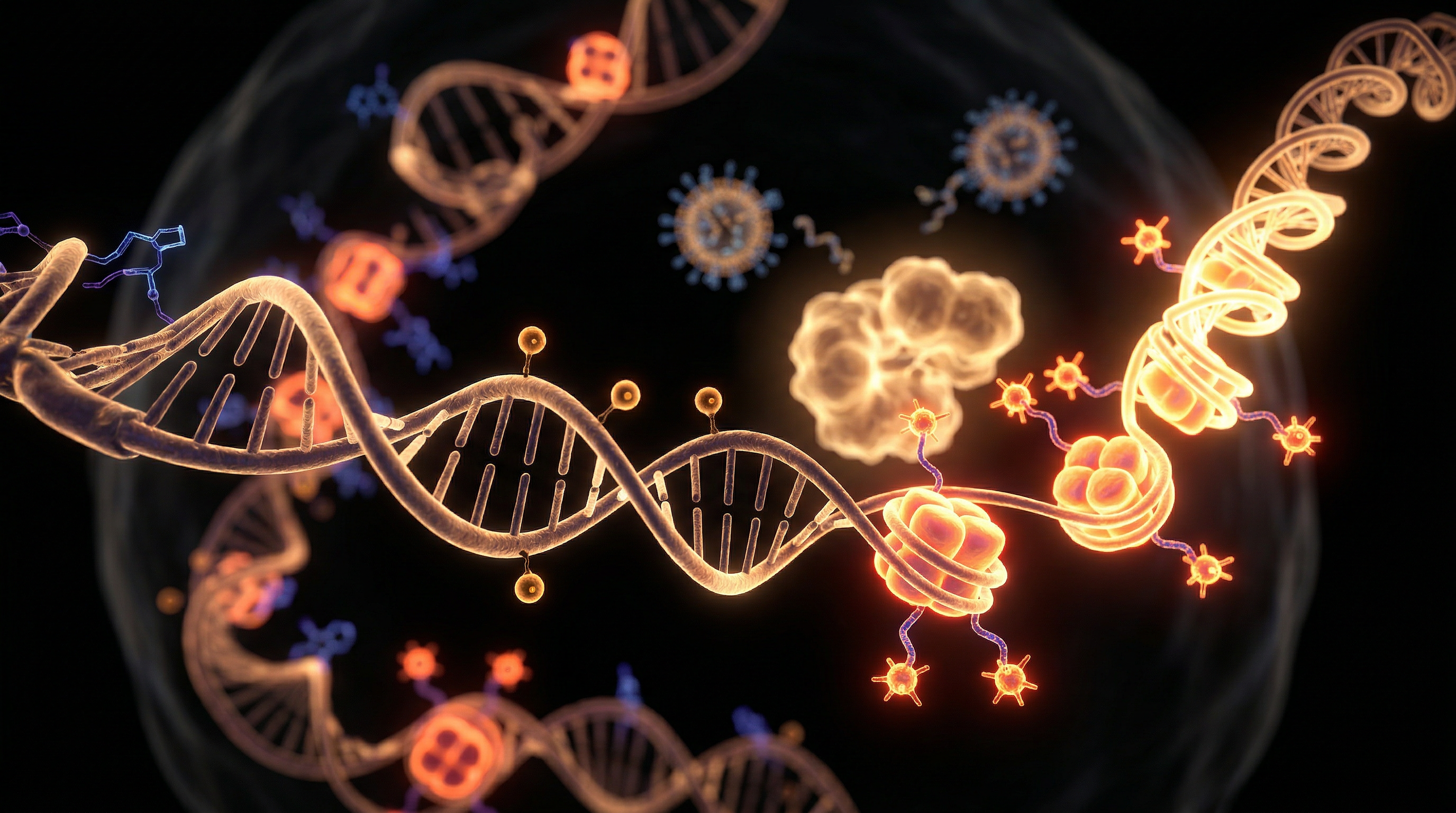
For decades, the central dogma of biology dictated that our genetic destiny was written in stone—or rather, in the four-letter code of our DNA. We were taught that we are the passive recipients of our ancestral blueprint, and that the only way to alter this code was through random mutations occurring over evolutionary timescales. However, a revolutionary field of study known as epigenetics has shattered this deterministic view. Epigenetics—literally meaning "above" or "on top of" genetics—reveals that while our DNA sequence remains constant, the expression of those genes is incredibly fluid, reacting in real-time to the environment around us.
This paradigm shift carries profound implications for public health, particularly regarding the biochemical interventions we introduce into the human body. As a senior researcher at INNERSTANDING, my focus has shifted from the mere presence of antibodies to the deep-seated molecular consequences of vaccination. The central question we must confront is no longer just "does it work?" but rather, "how does it change us at a cellular level?"
Vaccines are designed to provoke a robust immune response. This is achieved through the use of adjuvants—substances added to vaccines to enhance the body's immune reaction to an antigen. While the medical establishment focuses on the short-term production of immunoglobulins, we are uncovering evidence that these potent substances, alongside other ingredients like preservatives and surfactants, may be acting as "epigenetic modifiers." These ingredients can potentially flip molecular switches, silencing protective genes or activating pro-inflammatory pathways long after the initial injection has been administered.
Key Fact: Epigenetic changes do not alter the DNA sequence itself but involve chemical tags that dictate whether a gene is turned "on" or "off." These changes can be inherited by future generations.
In this comprehensive investigation, we will explore the mechanisms by which vaccine ingredients—specifically aluminium salts, lipid nanoparticles, and mercury derivatives—interact with the delicate machinery of the epigenome. We will expose the gaps in regulatory testing and examine how these silent modifications could be the missing link in the rising tide of chronic, autoimmune, and neurodevelopmental disorders globally.
The Biology — How It Works
To understand how vaccine ingredients might modify gene expression, we must first master the language of the epigenome. If DNA is the hard drive containing all the software of the body, the epigenome is the operating system that decides which programmes run and when.
There are three primary pillars of epigenetic regulation:
DNA Methylation
This is the most well-studied epigenetic mechanism. It involves the addition of a methyl group (a carbon atom bonded to three hydrogen atoms) to the DNA molecule, typically at specific sites called CpG islands. When a gene is heavily methylated, it is generally "silenced"—the cellular machinery cannot read it. Conversely, demethylation "turns on" the gene. Balance is critical; global hypomethylation is a hallmark of cancer, while site-specific hypermethylation can shut down vital tumour-suppressor genes or immune-regulating pathways.
Histone Modification
DNA does not float freely in the nucleus; it is wrapped around proteins called histones, like thread around a spool. These histones have "tails" that can be modified by various chemical groups (acetylation, methylation, phosphorylation).
- Acetylation typically relaxes the chromatin structure, making genes accessible for expression.
- Deacetylation tightens the structure, locking the genes away.
External toxins often disrupt the enzymes responsible for these modifications (Histone Acetyltransferases or HATs, and Histone Deacetylases or HDACs), leading to a state of "transcriptional chaos."
Non-coding RNA (ncRNA) and microRNA
Once thought to be "junk DNA," non-coding RNAs are now known to be master regulators. MicroRNAs (miRNAs) are small RNA molecules that do not code for proteins but instead bind to messenger RNA (mRNA) to prevent it from being translated. They act as the "volume control" of the cell. If a vaccine adjuvant triggers an overproduction of specific pro-inflammatory miRNAs, the body may remain in a state of chronic inflammation indefinitely.
Statistic: Over 98% of the human genome does not code for proteins but is instead dedicated to regulatory functions, including the production of epigenetic-mediating RNAs.
The fluid nature of these mechanisms means that the "exposome"—the sum of all environmental exposures, including pharmaceuticals—directly shapes our biological function. When we bypass the body's natural barriers (the skin and digestive tract) via intramuscular injection, we introduce concentrated doses of immunogenic substances directly into the internal environment, potentially forcing the epigenome into defensive, yet maladaptive, configurations.
Mechanisms at the Cellular Level
How, specifically, do vaccine ingredients interface with these complex epigenetic systems? The interaction occurs at the intersection of toxicology and molecular biology.
Aluminium Adjuvants and Chromatin Remodelling
Aluminium oxyhydroxide and aluminium phosphate are the most common adjuvants used in childhood and adult vaccines. Aluminium is a known "metallothioen," a metal that can interfere with gene expression. Research indicates that aluminium can bind directly to the phosphate backbone of DNA or to the histones themselves. This binding can alter the physical "packaging" of the DNA, leading to aberrant gene silencing.
Furthermore, aluminium is a potent activator of the NLRP3 inflammasome. When this intracellular sensor is triggered, it initiates a cascade of pro-inflammatory cytokines. Persistent activation by aluminium "depots" (which can remain at the injection site or migrate to the brain and lymph nodes) leads to sustained epigenetic "scarring," where the genes involved in inflammation remain permanently primed.
Lipid Nanoparticles (LNPs) and mRNA Technology
The move toward mRNA-based platforms introduces a new layer of epigenetic concern. Lipid Nanoparticles (LNPs) are used to encapsulate mRNA to ensure delivery into the cell. These LNPs are not biologically inert. Studies have shown that the ionisable lipids used in these delivery systems can induce significant changes in the cellular transcriptome.
Because mRNA technology is designed to hijack the cell’s translation machinery, there is a risk of "off-target" effects. The presence of synthetic mRNA, often modified with pseudouridine to evade the innate immune system, may interfere with the cell's natural RNA-sensing pathways (like TLR7 and TLR8). This can lead to a recalibration of the cell’s microRNA profile, potentially silencing genes responsible for DNA repair or viral surveillance.
Formaldehyde and Cross-linking
Formaldehyde is used in the manufacturing process to inactivate viruses and toxins. While the quantities are small, formaldehyde is a well-documented DNA-protein cross-linking agent. In the nucleus, it can fuse histones to the DNA, effectively "locking" the gene in its current state and preventing the natural fluidity required for healthy cellular responses. Even at trace levels, the cumulative effect of repeated exposures in an intensive vaccination schedule remains an area of profound regulatory neglect.
Thimerosal (Mercury) and Methylation
Though largely removed from many paediatric vaccines, Thimerosal remains in multi-dose flu vials. Mercury is a notorious disruptor of the methylation cycle. It has a high affinity for thiol groups and can deplete glutathione, the body’s master antioxidant. Since the methylation cycle and the antioxidant system are biochemically linked, mercury exposure can lead to a depletion of S-adenosylmethionine (SAMe), the universal methyl donor. This results in global DNA hypomethylation, a state associated with genomic instability and the activation of "jumping genes" (transposons).
Environmental Threats and Biological Disruptors
The epigenome does not exist in a vacuum. The impact of vaccine ingredients is compounded by the "toxic soup" of the modern environment. This is known as synergistic toxicity. When a vaccine adjuvant like aluminium is introduced into a body already burdened by glyphosate, heavy metals from tap water, and electromagnetic frequencies (EMFs), the epigenetic impact is not merely additive—it is exponential.
The Glyphosate Connection
Glyphosate, the world's most widely used herbicide, has been found as a contaminant in certain vaccines due to the use of gelatine from animals fed glyphosate-treated grain. Glyphosate mimics the amino acid glycine. If the body mistakenly incorporates glyphosate into protein structures during the rapid cellular response to a vaccine, the resulting proteins may be misfolded. These misfolded proteins can trigger a "stress response" in the endoplasmic reticulum, leading to epigenetic changes designed to handle cellular proteotoxicity.
The "Double Hit" Hypothesis
In toxicology, the "double hit" hypothesis suggests that an initial "priming" event (such as prenatal exposure to environmental toxins) makes the epigenome hypersensitive to a second "triggering" event (such as a potent vaccine adjuvant).
- Hit 1: Maternal stress or environmental pollution alters the foetal epigenetic markers for immune regulation.
- Hit 2: A multi-antigen vaccine is administered at two months of age.
The result is an exaggerated, dysregulated immune response that the child’s "primed" epigenome cannot properly down-regulate, potentially leading to the development of ASIA (Autoimmune/inflammatory Syndrome Induced by Adjuvants).
Endocrine Disruptors and Nuclear Receptors
Ingredients such as Polysorbate 80 can act as surfactants, increasing the permeability of the blood-brain barrier. This allows other vaccine components and environmental toxins to enter the central nervous system. Once there, they can interact with nuclear receptors (like the oestrogen receptor or the Aryl Hydrocarbon Receptor), which act as transcription factors that directly control the epigenetic state of the cell.
The Cascade: From Exposure to Disease
The journey from an epigenetic alteration to a clinical diagnosis is often a "slow burn" that occurs over years. This delay is why mainstream pharmacovigilance often fails to connect the dots.
1. The Initial Insult
The injection introduces adjuvants and antigens. The innate immune system responds with an inflammatory burst. Under normal circumstances, this should resolve. However, the persistence of metallic adjuvants prevents resolution.
2. Sustained Signalling
The persistent presence of the adjuvant causes the cell to keep certain pathways "open." Enzymes like DNA Methyltransferases (DNMTs) are recruited to the site of specific promoter genes. For example, the promoter for Interleukin-6 (IL-6)—a master pro-inflammatory cytokine—may become demethylated, leading to its chronic over-expression.
3. The Shift to Autoimmunity
When the genes that regulate "self-tolerance" (such as FoxP3 in T-regulatory cells) are epigenetically silenced, the immune system loses its ability to distinguish between "self" and "non-self." This is the molecular birth of autoimmunity. Conditions like rheumatoid arthritis, lupus, and multiple sclerosis are increasingly viewed as "epigenetic diseases."
4. Neurodevelopmental Erosion
In the developing brain, epigenetic markers guide the migration of neurons and the pruning of synapses. Excessive immune activation during critical windows—triggered by vaccine-induced cytokine storms—can alter the "epigenetic landscape" of the microglia (the brain's resident immune cells). This "microglial priming" means the brain's immune system becomes over-reactive to future minor stressors, a state highly correlated with the pathology of autism and ADHD.
5. Transgenerational Inheritance
Perhaps the most chilling aspect of epigenetic modification is its durability. Studies in mice have shown that epigenetic changes induced by environmental toxins can be passed down to the third and fourth generations. By altering the epigenome of today's children, we may be inadvertently rewriting the biological future of their descendants.
Important Fact: Epigenetic "memory" allows the immune system to "remember" an insult, but if that memory is maladaptive, it creates a permanent state of physiological stress.
What the Mainstream Narrative Omits
The official narrative surrounding vaccine safety is built on a foundation of 20th-century toxicology, which largely ignores the nuances of 21st-century epigenetics. Here is what is being omitted from the public discourse:
The Lack of Epigenotoxicity Testing
Standard vaccine safety trials focus on "acute" reactions—fever, swelling, or immediate anaphylaxis. They rarely, if ever, perform epigenotoxicity screening. There is no requirement for manufacturers to demonstrate that their products do not alter the methylation patterns of the host's DNA over the long term. This is a massive regulatory loophole.
The "One Size Fits All" Fallacy
Mainstream medicine treats every individual as having the same genetic and epigenetic baseline. In reality, individuals with pre-existing "epigenetic vulnerabilities"—such as those with MTHFR gene polymorphisms—have a reduced capacity for methylation. For these individuals, the epigenetic impact of vaccine ingredients is significantly more severe, yet no pre-vaccination screening for these vulnerabilities is offered.
The Myth of Rapid Clearance
We are told that vaccine ingredients like aluminium are "quickly eliminated" from the body. However, independent research using isotopic tracing has shown that aluminium particles can be engulfed by macrophages and transported into the lymphatic system and the brain, where they can persist for years. If the substance remains, the epigenetic stimulus remains.
The Revolving Door and Regulatory Capture
The agencies responsible for safety—the FDA in the US and the MHRA in the UK—are heavily funded by the very industry they regulate. This creates an inherent conflict of interest where "inconvenient" epigenetic research is often sidelined or denied funding in favour of studies that support the status quo.
The UK Context
In the United Kingdom, the vaccine programme is managed with a clinical efficiency that often leaves little room for individualised risk assessment. The Joint Committee on Vaccination and Immunisation (JCVI) sets the schedule, and the Medicines and Healthcare products Regulatory Agency (MHRA) oversees safety through the "Yellow Card" system.
The Limitations of the Yellow Card System
The Yellow Card system is a passive surveillance tool. It relies on doctors and patients to recognise and report an adverse event. However, because epigenetic changes manifest as chronic illnesses (like Crohn’s disease or Chronic Fatigue Syndrome) months or years after the fact, they are almost never linked back to a vaccination event in the UK medical records.
The UK Biobank and Epigenetic Data
The UK is home to the UK Biobank, one of the world's most comprehensive genetic and health databases. Emerging analysis of this data is beginning to show correlations between high-intensity medical interventions and long-term shifts in health markers. However, there is a noticeable lack of government-funded studies specifically looking at the epigenetic signatures of the vaccinated vs. the unvaccinated—the "gold standard" study that the scientific community desperately needs.
The NHS and the "Standard of Care"
Within the NHS, the focus remains on "herd immunity" and statistical averages. The concept of "Epigenetic Informed Consent" is non-existent. Patients are not told that an injection might alter the way their genes function; they are simply told it "protects" them. In the UK’s centralised healthcare system, the pressure to conform to the schedule is immense, often overriding the Precautionary Principle.
Protective Measures and Recovery Protocols
If we accept that vaccine ingredients can act as epigenetic disruptors, we must move toward a model of "Epigenetic Protection and Restoration." We are not helpless; the very fluidity that makes the epigenome vulnerable also makes it capable of healing.
1. Supporting the Methylation Cycle
Since many vaccine ingredients tax the methylation system, supporting this pathway is essential.
- Methyl-B12 and Methyl-Folate: These provide the raw materials for DNA methylation.
- Trimethylglycine (TMG): Also known as betaine, this helps recycle homocysteine and supports the liver.
2. Enhancing Glutathione Production
Glutathione is the primary protector against the oxidative stress that drives epigenetic damage.
- N-Acetyl Cysteine (NAC): A precursor to glutathione that helps the body detoxify heavy metals.
- Liposomal Glutathione: A more direct way to boost cellular levels.
3. Nutritional Epigenetics (Nrf2 Activation)
Certain plant compounds are powerful "epigenetic switches" that can activate protective genes.
- Sulforaphane (from broccoli sprouts): Activates the Nrf2 pathway, which turns on over 200 antioxidant and detoxifying genes.
- Curcumin: Known to influence histone acetylation and help "reset" pro-inflammatory markers.
4. Detoxification of Adjuvants
- Silica-rich Water: Published studies have shown that silicic acid can help the body excrete aluminium via the urine.
- Chelation Therapy: Under strict medical supervision, specific agents can help remove heavy metals from the tissues.
5. Lifestyle "Recoding"
- Circadian Rhythm Alignment: Melatonin is not just for sleep; it is a master epigenetic regulator.
- Vagus Nerve Stimulation: Techniques like deep breathing and cold exposure can help shift the body from a "pro-inflammatory/defensive" state to a "rest-and-digest" state, signalling the epigenome that the "threat" has passed.
Summary: Key Takeaways
As we peer into the microscopic world of the cell, the evidence suggests that we are at a crossroads in medical history. The assumption that vaccine ingredients are "transient" and "inert" is being replaced by a more complex reality: they are powerful biochemical agents capable of influencing the very expression of our life code.
- Epigenetics is the Master Controller: DNA provides the blueprint, but epigenetic markers (methylation, histones, ncRNA) provide the instructions. These instructions are highly sensitive to exogenous chemicals.
- Adjuvants are Not Passive: Aluminium and other ingredients are designed to "shock" the immune system. This shock can cause long-term epigenetic "scarring," leading to chronic inflammation and autoimmunity.
- Regulatory Neglect is Real: The current safety paradigms do not include long-term epigenotoxicity testing, leaving the public as the unwitting subjects of a global experiment.
- Synergy Matters: The impact of vaccines is amplified by other environmental toxins like glyphosate and heavy metals.
- Restoration is Possible: Through targeted nutritional support, detoxification, and lifestyle changes, we can influence our epigenome toward a state of health and resilience.
The mission of INNERSTANDING is to bring these suppressed truths to light. We must demand a new era of "Epigenetic Literacy" in medicine—one where the sanctity of the human genome and its regulatory "software" is protected at all costs. The future of our species may well depend on our ability to protect the delicate balance of the epigenome from the unintended consequences of our own technology.
This article is provided for informational and educational purposes only. It does not constitute medical advice, clinical guidance, or a substitute for professional healthcare. Information reflects cited research at time of publication. Always consult a qualified healthcare professional before acting on any health information.
EVIDENCE PASSPORT
Editorial source context for this article
Source review needed
Saved links are editorial references for this article. They may support specific claims rather than every sentence. Open and assess each source in context. This passport does not independently verify them.
Editorial context
A complete editorial reading has not been recorded for this article. Source links remain available for you to open and assess directly.
Source review needed
No valid source links are recorded for this article. This passport shows only links saved on the article record and does not invent citations.
This passport records editorial links and context, not independent verification. Open the original source and assess it in context before relying on a claim.
Medical Disclaimer
The information in this article is for educational purposes only and does not constitute medical advice, diagnosis, or treatment. Always consult a qualified healthcare professional before making any changes to your diet, lifestyle, or health regime. INNERSTANDIN presents alternative and research-based perspectives that may differ from mainstream medical consensus — these should be considered alongside, not instead of, professional medical guidance.
Read Full DisclaimerContinue the thread
Keep this question moving.
Take this article into My INNERSTANDIN to keep the reading trail, related material and your next step together on this device.
Dig deeper in the Library
Free, longform PDF volumes that go beyond headlines into mechanisms and references.