
Epigenetic Silencing: Heavy Metal Impact on Detox Genes
Updated May 2026
Exposure to heavy metals like lead and cadmium can cause epigenetic changes that silence detoxification genes. This process reduces the long-term biological resilience of individuals in post-industrial UK regions.
Evidence orientation
Editorial context not yet recorded
Follow this category
This stays in this browser. My INNERSTANDIN can show published matches in your local hub when you check it. It does not send email, push, or alert notifications.
Local learning review
A private browser aid for revisiting ideas. It is not an alert or a health recommendation.
Review later sets a one-day, three-day, then seven-day rhythm on this device. Choose it only when you want to revisit this article.
Overview
In the contemporary landscape of public health, we are often told that our genetic code is a fixed blueprint—a "destiny" written in the four-letter alphabet of our DNA. However, the emerging field of epigenetics has shattered this deterministic view, revealing a sophisticated layer of biological control that sits "above" the genome. This layer, the epigenome, acts as a series of switches and dimmers, determining which genes are expressed and which are silenced. For those living in the post-industrial regions of the United Kingdom, a silent and insidious crisis is unfolding: the epigenetic silencing of essential detoxification genes due to chronic heavy metal exposure.
Heavy metals such as Lead (Pb), Cadmium (Cd), and Mercury (Hg) are not merely acute toxins that cause immediate distress; they are potent "epimutagens." These elements possess the ability to rewrite the chemical tags on our DNA, effectively "locking" the gates of our natural detoxification pathways. When the genes responsible for clearing toxins—such as the Glutathione S-transferase (GST) family—are epigenetically silenced, the body loses its resilience. It becomes a vessel for accumulation, leading to a downward spiral of chronic inflammation, neurodegeneration, and metabolic collapse.
This article explores the mechanisms by which heavy metals hijack our molecular machinery, the historical context of industrial legacy in Britain, and the suppressed reality of how our environment is literally turning off our ability to heal. We are witnessing the biological erosion of a population, where the sins of the industrial past are being visited upon the epigenomes of the present.
Fact: Unlike genetic mutations, which change the DNA sequence itself, epigenetic changes are reversible in theory but can be passed down through multiple generations, meaning the lead exposure of a Victorian dockworker could still be affecting the detox capacity of his great-grandchildren today.
The Biology — How It Works
To understand epigenetic silencing, one must first understand the "software" of the cell. If DNA is the hardware, the epigenome is the operating system that decides which programmes run. The primary mechanism through which heavy metals exert their influence is DNA methylation.
The Methylation Cycle
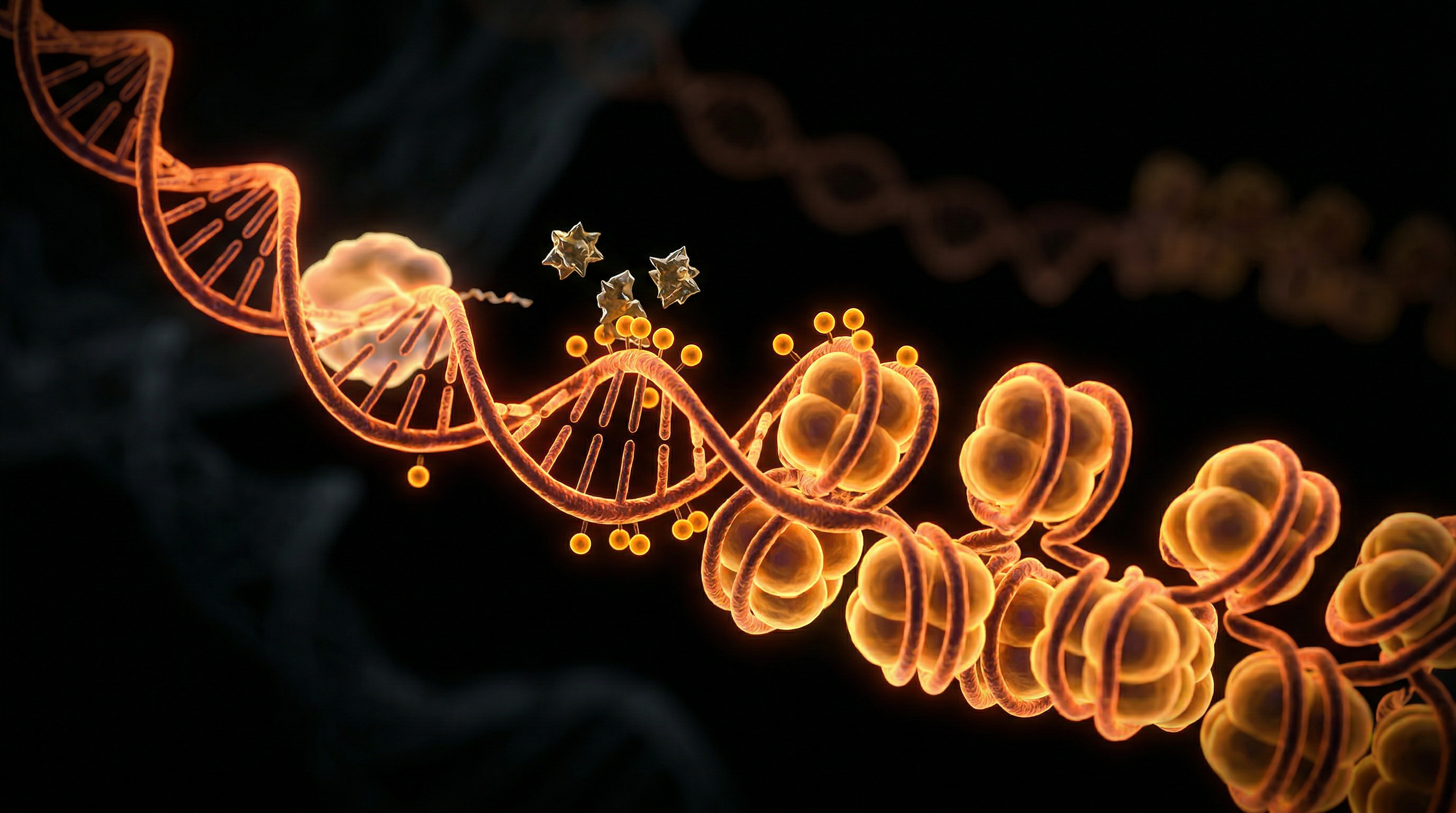
In a healthy state, methyl groups (carbon atom bonded to three hydrogen atoms) are added to the DNA molecule, typically at "CpG islands"—regions where a cytosine nucleotide is followed by a guanine nucleotide. This process is mediated by enzymes called DNA Methyltransferases (DNMTs). When a promoter region of a gene is heavily methylated, the gene is "silenced"; the cellular machinery cannot read it, and the corresponding protein is never produced.
Histone Modification
DNA does not float freely in the nucleus; it is wrapped around proteins called histones. Think of histones as spools and DNA as thread. If the thread is wrapped too tightly (deacetylation), the gene is inaccessible. Heavy metals have been shown to interfere with Histone Acetyltransferases (HATs) and Histone Deacetylases (HDACs), fundamentally altering the architecture of the chromatin.
Non-coding RNA (ncRNA)
The final layer of this biological control involves small RNA molecules that do not code for proteins but instead act as "silencers" of messenger RNA. Heavy metals disrupt the expression of these microRNAs (miRNAs), providing another pathway for the systematic shutdown of biological resilience.
Mechanisms at the Cellular Level
The interference of heavy metals in our biology is not accidental; it is a result of molecular mimicry and the disruption of redox homeostasis. Metals like lead and cadmium are "imposters" that the body mistakes for essential minerals.
Cadmium: The Zinc Mimic
Cadmium is particularly nefarious because it shares a similar atomic radius and charge to Zinc (Zn). Zinc is a critical cofactor for over 300 enzymes, including those involved in DNA repair and antioxidant defence. When Cadmium displaces Zinc in the "zinc finger" motifs of transcription factors, the cell's ability to "turn on" protective genes is crippled.
Lead and the Disruption of SAMe
Lead interferes with the production and utilisation of S-Adenosylmethionine (SAMe), the body’s universal methyl donor. By depleting the pool of methyl groups, lead can cause "global hypomethylation" (turning on genes that should be off, like oncogenes) while simultaneously causing "site-specific hypermethylation" of detoxification genes.
The GST Paradox
The Glutathione S-transferase (GST) family of enzymes is our primary defence against xenobiotics. Research has shown that chronic exposure to heavy metals leads to the hypermethylation of the GSTP1 promoter.
- Consequence: The cell can no longer conjugate glutathione to toxins.
- Result: Toxins remain in the bloodstream, damaging the liver, kidneys, and blood-brain barrier.
Key Term: Epigenetic Scarring – This refers to long-lasting epigenetic modifications that persist even after the initial toxic stimulus (the heavy metal) has been removed from the environment.
Environmental Threats and Biological Disruptors
The British landscape is a patchwork of industrial history, and with that history comes a heavy burden of elemental toxicity. While we often think of pollution as "smoke in the air," the most persistent threats are the ones embedded in our soil and infrastructure.
Lead (Pb)
Lead was the backbone of British plumbing and paint for centuries. Despite the ban on leaded petrol in 2000, lead remains ubiquitous in the dust of old Victorian terraces and in the service pipes of millions of homes. Lead is a systemic "silencer," particularly affecting the ALAD gene, which is crucial for heme synthesis and oxygen transport.
Cadmium (Cd)
Cadmium enters the UK ecosystem through phosphate fertilisers, tobacco smoke, and the incineration of electronic waste. It is highly cumulative, with a biological half-life in humans of up to 30 years. Cadmium is a primary driver of nephrotoxicity (kidney damage) through the silencing of the Metallothionein (MT) genes, which are supposed to sequester and neutralise metals.
Arsenic (As) and Mercury (Hg)
While less pervasive in the "general" environment than lead, arsenic levels are high in former mining regions like Cornwall. Mercury, largely from coal combustion and dental amalgams, is a potent neurotoxin. Both metals synergise with lead and cadmium to amplify epigenetic silencing, a phenomenon known as mixture toxicity.
- Arsenic: Competes for methyl groups, leading to "epigenetic exhaustion."
- Mercury: Inhibits the Thioredoxin Reductase system, preventing the "reset" of the cell's antioxidant status.
The Cascade: From Exposure to Disease
What happens when your "detox software" is corrupted? The result is not a single disease, but a cascade of systemic failures that the mainstream medical establishment often treats as "unrelated symptoms."
The Nrf2 Master Switch
The Nrf2 (Nuclear factor erythroid 2-related factor 2) pathway is the body’s primary sensor for oxidative stress. When functioning correctly, Nrf2 migrates to the nucleus and triggers the Antioxidant Response Element (ARE), turning on dozens of detox genes.
Callout: Heavy metal exposure has been shown to induce epigenetic silencing of the Nrf2 promoter itself via hypermethylation. This effectively "blinds" the cell to the presence of toxins.
The Feedback Loop of Decay
- Initial Exposure: Heavy metals enter the cell.
- Epigenetic Shift: DNMTs are recruited to silence detox gene promoters (e.g., GPX1, SOD2).
- Reduced Antioxidant Capacity: Levels of Glutathione and Superoxide Dismutase plummet.
- Increased Oxidative Stress: Reactive Oxygen Species (ROS) damage DNA and mitochondria.
- Further Epigenetic Damage: ROS themselves can alter DNA methylation patterns, creating a self-perpetuating cycle of cellular aging.
Clinical Manifestations
This cascade manifests in the modern UK population as:
- Chronic Fatigue Syndrome (ME/CFS): Driven by mitochondrial dysfunction and the inability to clear metabolic waste.
- Neurodevelopmental Disorders: In children, the silencing of genes involved in synaptic plasticity (like BDNF) due to lead exposure is linked to lower IQ and ADHD.
- Early-Onset Neurodegeneration: Alzheimer’s and Parkinson’s are increasingly viewed as "epigenetic diseases" where the brain’s waste-clearance system (the glymphatic system) is compromised by silenced detox pathways.
What the Mainstream Narrative Omits
The conversation around heavy metals is often stifled by a "regulatory capture" that prioritises industrial output over biological integrity. There are several critical truths that are frequently omitted from public health advice.
The Myth of "Safe" Limits
Regulatory bodies like the Environment Agency or the NHS often cite "safe" blood levels for lead or cadmium. However, epigenetic research suggests there is no safe threshold. Even "low-level" exposure—levels previously thought to be benign—can trigger the epigenetic silencing of key genes. The damage is not dose-dependent in a linear sense; it is a qualitative shift in how our genes are expressed.
Transgenerational Epigenetic Inheritance
The most terrifying aspect of heavy metal impact is its persistence. Studies in environmental epigenetics show that when a pregnant woman is exposed to lead or cadmium, the germline cells (the eggs or sperm) of the foetus are also affected. This means we are currently dealing with a "compounded toxicity" inherited from the industrial peaks of the 1950s, 60s, and 70s. We are not just carrying our own toxic load; we are carrying the silenced genes of our ancestors.
Synergistic Toxicity and the "Cocktail Effect"
Safety testing is almost always performed on single chemicals. In reality, a resident in a post-industrial UK city is exposed to a "cocktail" of lead from water, cadmium from the air, and arsenic from the soil. These metals do not just add up; they multiply each other's effects. One metal may inhibit a repair enzyme, while another silences the gene responsible for creating that enzyme.
The Economic Incentive for Silence
Acknowledging the depth of the "epigenetic erosion" would require a radical overhaul of our infrastructure. It would mean replacing millions of miles of lead piping, remediating thousands of hectares of industrial soil, and holding corporations accountable for the long-term biological damage caused by their emissions. It is cheaper for the system to treat the symptoms of a "broken epigenome" with lifelong pharmaceutical interventions than to fix the environmental source of the silencing.
The UK Context
The United Kingdom serves as a unique and sobering case study for the epigenetic impact of heavy metals. As the birthplace of the Industrial Revolution, our soil and urban centres are saturated with a legacy of elemental contaminants.
The North-South Health Divide
It is a well-documented fact that health outcomes in the North of England, Scotland, and Wales are significantly poorer than in the South. While socio-economic factors are usually blamed, an epigenetic lens reveals a deeper truth. Regions like the Tyneside, Clydeside, and the Black Country were the epicentres of coal combustion, steel milling, and heavy manufacturing.
- South Yorkshire/Sheffield: Historically known for steel. Soil samples in these areas still show significantly elevated levels of Chromium, Nickel, and Cadmium.
- The West Midlands: The "Black Country" legacy has left a footprint of lead and zinc that persists in urban gardens and allotments, where many residents grow their own produce, inadvertently ingesting legacy toxins.
Victorian Infrastructure: The Lead Pipe Crisis
A staggering number of UK homes built before 1970 still possess lead service pipes connecting them to the water mains. While water companies "treat" the water with orthophosphates to create a coating that prevents lead leaching, this is a "sticking plaster" solution. Any disturbance to the pipes—vibrations from roadworks or changes in water chemistry—can cause spikes in lead levels. For a population already under "epigenetic stress," these spikes act as further triggers for gene silencing.
The Modern Urban Environment
In cities like London, Manchester, and Birmingham, the "clean air" initiatives focus largely on NO2 and CO2. However, particulate matter (PM2.5) from brake wear and industrial activity is rich in heavy metals like antimony, lead, and cadmium. These particles are small enough to cross the lung-blood barrier and enter the systemic circulation, where they begin their work of epigenetic interference.
Protective Measures and Recovery Protocols
If our genes have been silenced, can they be "re-awakened"? The science of epigenetic plasticity suggests that while these changes are persistent, they are not necessarily permanent. Recovery requires a multi-faceted approach focused on "re-methylating" the right genes and "de-methylating" the ones that have been silenced.
Nutritional Epigenetic Modulators
Certain compounds have the specific ability to influence the enzymes that control DNA methylation.
- Sulforaphane (from Broccoli Sprouts): One of the most potent activators of the Nrf2 pathway. It has been shown to reverse the hypermethylation of the Nrf2 promoter, essentially "flipping the switch" back to the "on" position.
- Methyl Donors (B12, Folate, Betaine): These provide the raw materials for the methylation cycle. However, they must be used carefully; in the presence of heavy metals, the body’s ability to process these vitamins is often compromised (e.g., MTHFR mutations).
- Curcumin: Known to modulate DNMT activity, helping to prevent the "over-silencing" of protective genes.
Targeted Chelation and Sequestration
The metals must be removed before the epigenome can truly reset.
- Modified Citrus Pectin (MCP): A gentle way to bind heavy metals in the gut and bloodstream without stripping essential minerals.
- Selenium: An essential antagonist to mercury and cadmium. Selenium is a cofactor for Glutathione Peroxidase, the enzyme that "silenced" genes are unable to produce in sufficient quantities.
Lifestyle and Ancestral Wisdom
- Sauna Therapy: Sweating is one of the few ways the body can excrete cadmium effectively, bypasses the compromised renal (kidney) pathways.
- Intermittent Fasting: Triggers autophagy—the cell's "clean-up" mechanism—which can help remove damaged proteins and potentially reset certain epigenetic markers.
- The Power of the Earth: Emerging research into "grounding" or "earthing" suggests that transferring electrons from the Earth may help neutralise the oxidative stress that drives epigenetic silencing.
Callout: Recovery is not an overnight process. It took decades to "silence" these pathways; it may take years of dedicated protocol to restore biological resilience.
Summary: Key Takeaways
The threat of heavy metals in the post-industrial UK is not a relic of the past; it is a living, molecular reality. By hijacking our epigenetic machinery, these elements are stripping us of our innate ability to detoxify and heal.
- Epigenetic Silencing is the process by which environmental toxins like lead and cadmium add chemical tags to our DNA, "turning off" essential detox genes like GST and Nrf2.
- Molecular Mimicry allows heavy metals to displace essential minerals like Zinc and Selenium, crippling the enzymes responsible for DNA repair and antioxidant defence.
- Legacy Toxicity in the UK, particularly in the North and in Victorian-era housing, means that millions are being exposed to "epimutagens" on a daily basis through water, soil, and air.
- Transgenerational Impact means that the epigenetic "scars" from industrial pollution can be passed down to future generations, reducing the collective resilience of the nation.
- The Mainstream Failure to address the "no safe limit" reality of metal exposure has led to a crisis of chronic, "unexplained" illnesses.
- Resilience is Possible through targeted nutritional interventions (like sulforaphane and methyl donors), infrared saunas, and a radical commitment to environmental detoxification.
We at INNERSTANDING believe that knowledge is the first step toward liberation. When you understand that your "symptoms" may actually be the result of a "silenced" biological system, you gain the power to begin the process of "re-awakening." Our industrial past does not have to be our biological destiny. It is time to reclaim our epigenomes.
This article is provided for informational and educational purposes only. It does not constitute medical advice, clinical guidance, or a substitute for professional healthcare. Information reflects cited research at time of publication. Always consult a qualified healthcare professional before acting on any health information.
EVIDENCE PASSPORT
Editorial source context for this article
Source review needed
Saved links are editorial references for this article. They may support specific claims rather than every sentence. Open and assess each source in context. This passport does not independently verify them.
Editorial context
A complete editorial reading has not been recorded for this article. Source links remain available for you to open and assess directly.
Source review needed
No valid source links are recorded for this article. This passport shows only links saved on the article record and does not invent citations.
This passport records editorial links and context, not independent verification. Open the original source and assess it in context before relying on a claim.
Medical Disclaimer
The information in this article is for educational purposes only and does not constitute medical advice, diagnosis, or treatment. Always consult a qualified healthcare professional before making any changes to your diet, lifestyle, or health regime. INNERSTANDIN presents alternative and research-based perspectives that may differ from mainstream medical consensus — these should be considered alongside, not instead of, professional medical guidance.
Read Full DisclaimerContinue the thread
Keep this question moving.
Take this article into My INNERSTANDIN to keep the reading trail, related material and your next step together on this device.
Explore this in the Body Map
See where this hits your biology. Interactive anatomy, threats, and protective protocols.
Dig deeper in the Library
Free, longform PDF volumes that go beyond headlines into mechanisms and references.