
Fascial Remodeling Science
Updated May 2026
Fascia takes 6 to 24 months to fully remodel, requiring patience and consistent loading. Discover the science of long-term tissue adaptation for peak performance.
Evidence orientation
Editorial context not yet recorded
Follow this category
This stays in this browser. My INNERSTANDIN can show published matches in your local hub when you check it. It does not send email, push, or alert notifications.
Local learning review
A private browser aid for revisiting ideas. It is not an alert or a health recommendation.
Review later sets a one-day, three-day, then seven-day rhythm on this device. Choose it only when you want to revisit this article.
Overview
For decades, the standard model of human physiology relegated fascia to the status of "biological packaging"—a passive, silvery-white clingfilm that surgeons simply moved aside to reach the "important" structures: the muscles, organs, and bones. This reductionist view has cost us dearly. At INNERSTANDING, we recognise that fascia is not merely a wrapper; it is the body’s largest sensory organ, a liquid-crystalline matrix that governs movement efficiency, metabolic health, and structural integrity.
The most critical revelation in modern fascial science is the timeline of its adaptation. While muscle tissue can show hypertrophy or metabolic changes in a matter of weeks, the fascial system operates on a different biological clock. Fascial remodeling takes between 6 to 24 months to fully manifest. This is a profound shift in how we must approach physical therapy, athletic training, and chronic pain management.
The architecture of your body is being constantly rewritten. However, the ink dries slowly. This article delves into the microscopic world of the Extracellular Matrix (ECM) to explain why consistency and patience are the only currencies the fascial system accepts for peak performance and long-term health.
Key Statistic: Collagen fibres in the human body have a half-life of approximately 300 to 500 days, meaning structural changes initiated today will take nearly two years to reach their full biological expression.
The Biology — How It Works
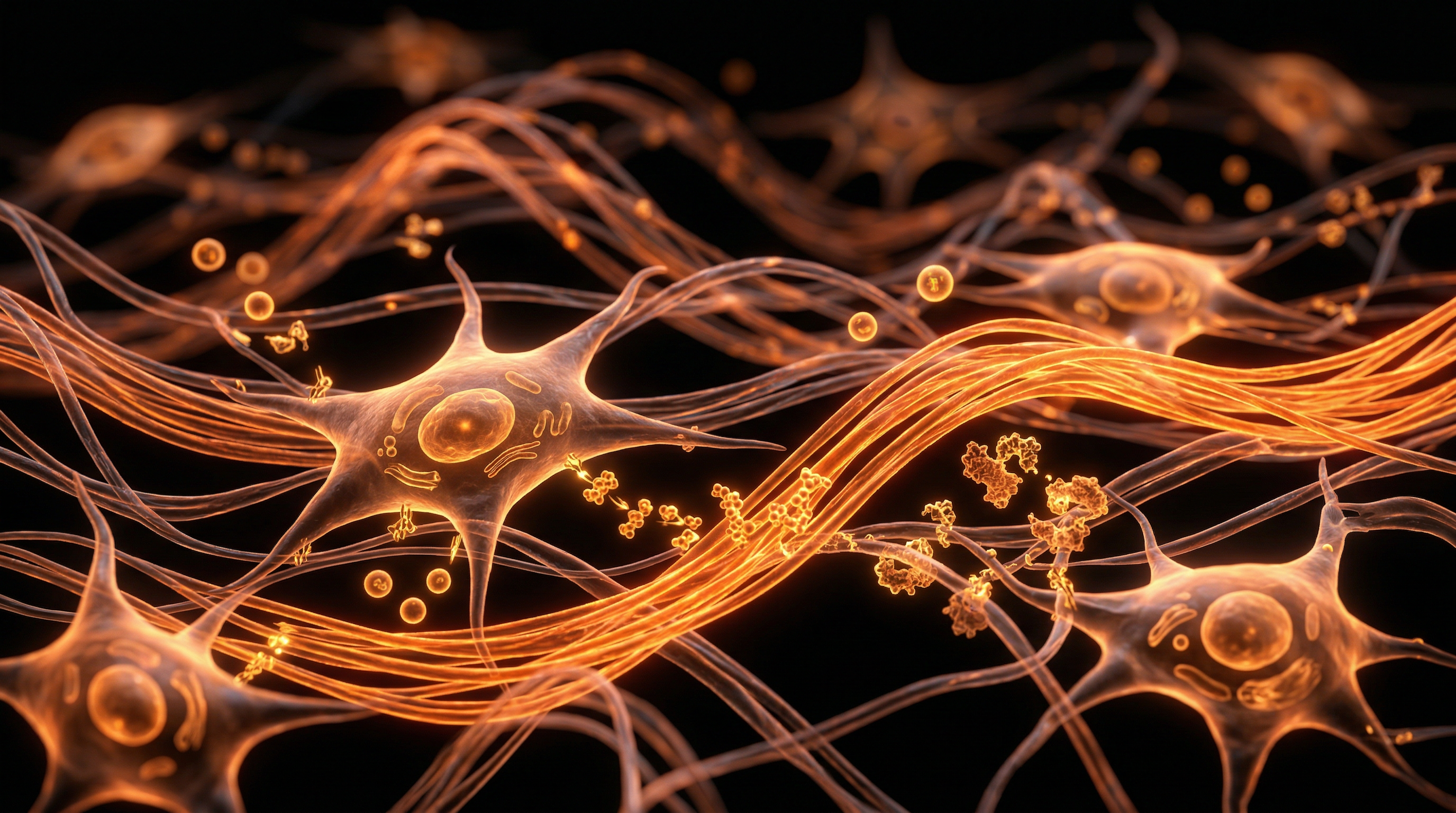
To understand fascial remodeling, one must first understand the composition of the Extracellular Matrix (ECM). Fascia is a ubiquitous, three-dimensional network of collagenous, reticular, and elastic fibres embedded in a translucent, fluid-filled "ground substance."
The Trinity of Fascial Components
- Collagen (Type I and III): These are the primary structural proteins. Type I provides tensile strength (think of it as biological steel), while Type III is more prevalent in younger tissue and during the initial phases of wound healing or remodeling.
- Elastin: This protein allows tissues to stretch and return to their original shape. The ratio of elastin to collagen determines whether a tissue is "stiff" for power or "supple" for range of motion.
- Ground Substance: A gelatinous material composed of glycosaminoglycans (GAGs), such as hyaluronic acid. This substance acts as a lubricant, allowing layers of fascia to glide over one another.
The Thixotropic Property
Fascia exhibits thixotropy, a physical property where the substance becomes more fluid when agitated and more solid when stationary. In a healthy state, the ground substance is like a fluid gel. Under chronic stress or inactivity, it becomes "gel-locked" or dehydrated, leading to what many perceive as "stiffness."
Remodeling is the process of physically altering these components—changing the density of collagen, the orientation of the fibres, and the hydration levels of the ground substance. This is not a superficial change; it is a fundamental restructuring of the body's internal scaffolding.
Mechanisms at the Cellular Level
The "architects" of the fascial system are specialized cells called fibroblasts. These cells live within the collagen matrix and are responsible for both the synthesis of new fibres and the degradation of old, damaged ones.
Mechanotransduction: The Language of Movement
The primary way fibroblasts are activated is through mechanotransduction. This is the process by which a physical force (a stretch, a load, or a vibration) is converted into biochemical signals.
- When you load a tissue, the fibroblast is physically stretched.
- This stretching opens mechanosensitive ion channels in the cell membrane.
- This triggers a cascade of chemical signals that tell the cell’s DNA to produce more collagen propeptides.
- These propeptides are then secreted into the extracellular space, where they assemble into new collagen fibrils.
The Piezoelectric Effect
The fascial matrix is piezoelectric. When collagen fibres are stressed or compressed, they generate a small electrical charge. This bioelectrical signal acts as a roadmap for the fibroblasts. They migrate toward the areas of highest electrical activity to reinforce the structure. This is why "lines of tension" are so important; your fascia literally builds itself along the paths of most frequent use.
Myofibroblasts and Tissue Contraction
In response to chronic stress or injury, some fibroblasts transform into myofibroblasts. These cells contain alpha-smooth muscle actin, allowing them to contract like muscle cells. This is a survival mechanism designed to close wounds, but in the modern sedentary world, it leads to chronic fascial "tightness" that cannot be "stretched out" in a single yoga session. It requires a long-term neurological and biological recalibration.
Callout Fact: Myofibroblasts can exert a contractile force of up to 0.6 micro-Newtons per cell, which, when multiplied by millions, can significantly alter the "resting tension" or basal tonus of your entire body.
Environmental Threats and Biological Disruptors
The modern environment is hostile to healthy fascia. We are living in a "stagnant" era where the biological requirements for fascial health are rarely met.
The Impact of Sedentary Lifestyle
Fascia follows the principle of "Use It or Lose It." When we sit for 8 to 10 hours a day, the fascial layers begin to "bond" together. This is known as adhesion formation. The hyaluronic acid between the layers becomes sticky, and the collagen fibres begin to cross-link in a haphazard, "felt-like" pattern rather than a clean, latticed structure.
Advanced Glycation End-products (AGEs)
Dietary sugar is a direct threat to fascial remodeling. Through a process called glycation, sugar molecules bond to collagen fibres. This creates "cross-links" that make the fascia brittle and prone to micro-tears.
- Brittle fascia cannot store elastic energy.
- It loses its "bounce" (the catapult effect).
- It becomes highly sensitive to pain signals.
Chronic Cortisol Elevation
Stress is not just "in your head"; it is in your connective tissue. High levels of cortisol inhibit fibroblast activity. When you are chronically stressed, your body prioritises immediate survival over long-term structural maintenance. This slows down the remodeling process, making you more susceptible to injury and ensuring that any "rehab" takes twice as long.
The Cascade: From Exposure to Disease
When fascial remodeling is disrupted or ignored, a predictable cascade of biological degradation occurs. It begins with "disuse" and ends with "disease."
Stage 1: The "Fuzz" Accumulation
As described by anatomist Gil Hedley, "fuzz" (thin, filmy adhesions) builds up between fascial layers overnight. If not cleared by movement, this fuzz thickens. Over months, it becomes a structural bond that limits the sliding of muscles.
Stage 2: Proprioceptive Blindness
Fascia contains six times more sensory nerve endings than muscle. When the fascia becomes dense and dehydrated, it loses its ability to communicate with the brain. This leads to a loss of proprioception (the sense of where your body is in space). The brain, sensing a loss of stability, "locks down" the area by increasing muscle tension, creating a cycle of chronic pain.
Stage 3: Fibrosis and Systemic Inflammation
If the fascia is not remodeled through healthy loading, it can enter a state of fibrosis—a pathological thickening and scarring of connective tissue. Fibrotic fascia acts as a reservoir for pro-inflammatory cytokines. This is no longer a localized "sore back"; it is a systemic inflammatory condition.
Stage 4: Decompensation
Eventually, the body can no longer compensate for the "drag" created by the fascial restrictions. This manifests as chronic conditions such as plantar fasciitis, frozen shoulder, fibromyalgia, or lumbar disc herniation. These are not "accidents"; they are the end-stage result of a fascial system that has failed to remodel correctly over years.
What the Mainstream Narrative Omits
The mainstream medical and fitness industries often operate on a "mechanistic" view of the body that ignores the nuances of fascial biology. Here are the truths that are frequently suppressed or overlooked:
The Failure of the "Muscle-Only" Model
Most gym programmes are designed around muscle hypertrophy. However, if you build muscle faster than your fascia can remodel to support it, you create a "powerhouse in a fragile frame." This is why many bodybuilders suffer from tendon ruptures or chronic joint pain. They have ignored the 24-month fascial timeline in favour of the 8-week muscle timeline.
The Pharmaceutical Illusion
The primary mainstream response to fascial pain is NSAIDs (Non-Steroidal Anti-Inflammatory Drugs). While these provide temporary relief, they actually hinder fascial remodeling. Studies show that NSAIDs can inhibit fibroblast proliferation and collagen synthesis. By "numbing" the pain, you are silencing the very signal that tells the body it needs to remodel.
The "Stretching" Myth
Mainstream advice often suggests "holding a stretch for 30 seconds" to gain flexibility. Science shows this does almost nothing to the actual structure of the collagen. To remodel fascia, you need dynamic, varied loading and long-duration, low-load tension (3-5 minutes), or high-intensity eccentric loading. The 30-second stretch is a neurological trick, not a structural change.
The Living Matrix as a Communication Network
Mainstream science rarely discusses the "Liquid Crystalline" nature of fascia. Fascia is a semiconductor of information. It transmits mechanical, electrical, and chemical signals faster than the nervous system. When your fascia is "unhealthy," your internal communication system is "noisy" or "laggy."
The UK Context
In the United Kingdom, the "fascial crisis" is particularly acute due to specific cultural and systemic factors.
The NHS Paradox
The NHS is a world-class institution for acute care, but it is poorly equipped for the "slow medicine" required for fascial remodeling. Most NHS physiotherapy is limited to 6 sessions. As we have established, the fascial system requires 6 to 24 months of consistent stimulus to change. Patients are often discharged just as the actual biological remodeling is beginning to take root, leading to a "revolving door" of chronic pain.
The "Tech Neck" Epidemic in the City
With the UK’s economy heavily weighted toward services and finance, millions of Britons spend their lives hunched over laptops in London, Manchester, and Birmingham. This has led to a national epidemic of "Tech Neck"—a fascial shortening of the anterior chain (chest and neck) and a fibrotic thickening of the posterior chain (upper back). This isn't just a postural habit; it is a structural remodeling into a "crouched" position.
The British Climate and Fascial Stiffness
Cold, damp environments can affect the viscosity of the ground substance. The lack of Vitamin D (crucial for collagen synthesis) during the long British winter further compounds the issue. We see a spike in "stiffness-related" complaints in the UK from November through March, which is directly linked to the slowing of fascial metabolism in colder temperatures.
Protective Measures and Recovery Protocols
If you want to master your fascial architecture, you must play the "long game." Here is the INNERSTANDING protocol for authentic fascial remodeling.
1. Consistent Loading (The 2-Year Rule)
Accept that you are building a new body. Do not judge your progress by how you feel next week, but by how you move in two years.
- Progressive Overload: Gradually increase the tensile stress on your tissues.
- Variability: Move in "odd" angles. Linear movement (running on a treadmill, bicep curls) creates "linear" fascia. To have "bulletproof" fascia, you need to load in multiple planes of motion.
2. Eccentric and Plyometric Training
Fascia loves eccentric loading (lengthening under tension). This is the most potent stimulus for collagen synthesis.
- Use slow, controlled descents in your lifts.
- Incorporate elastic recoil exercises (light bouncing, jumping rope). This trains the "spring" of the fascia.
3. Myofascial Release (MFR) and Hydration
You cannot "mash" your fascia into health, but you can use tools (rollers, balls) to induce rehydration.
- Compression pushes stagnant fluid out of the tissue; when released, fresh, nutrient-rich fluid rushes back in.
- Hydration is key: Not just drinking water, but ensuring you have the electrolytes (Magnesium, Potassium, Sodium) to pull that water into the cells.
4. Nutritional Support for the Matrix
- Vitamin C: A mandatory co-factor for collagen synthesis. Without it, the cross-linking of collagen fibres cannot occur.
- Amino Acids: Specifically Proline, Glycine, and Lysine. Bone broth or high-quality collagen peptides provide the raw building blocks.
- Anthocyanins: Found in dark berries (blackberries, blueberries), these help protect collagen from oxidative stress and glycation.
5. Heat and Cold Exposure
- Sauna: Increases blood flow to the poorly vascularised fascial tissues and improves the fluidity of the ground substance.
- Cold Plunge: Helps reduce systemic inflammation and improves the "tonus" of the fascial network through a sympathetic-parasympathetic reset.
6. The "Micro-Break" Strategy
If you work a desk job, set a timer for every 30 minutes. Perform 60 seconds of "pandiculation"—a full-body yawn and stretch. This prevents the "fuzz" from setting and keeps the hyaluronic acid in a fluid state.
Important Callout: Fascial remodeling is not a "no pain, no gain" endeavour. Excessive force can cause micro-scarring. The goal is "sweet-spot" loading—enough to trigger mechanotransduction, but not enough to cause a "protective" inflammatory response.
Summary: Key Takeaways
The science of Fascial Remodeling is a testament to the body’s incredible adaptability and its stubborn refusal to be rushed. To truly change your physical structure, you must align your lifestyle with the biological reality of the ECM.
- The 6-24 Month Window: Real structural change is a marathon, not a sprint. Consistency over years beats intensity over weeks.
- Fibroblasts are the Key: Your movement is the "software" that tells these cellular "hardware" engineers what to build.
- Movement Variability: Break the linear patterns of modern life to create a resilient, multi-directional fascial web.
- Beyond the Mainstream: Recognise that pain management is not the same as structural health. Avoid the pharmaceutical shortcuts that inhibit your natural remodeling processes.
- The Living Matrix: Treat your fascia as a sensory organ and a communication network, not just "meat."
By understanding and respecting the slow, majestic pace of fascial remodeling, you move beyond the superficial goals of "fitness" and into the realm of true Biological Mastery. Your body is not a fixed object; it is a slow-moving river of collagen. Direct the flow wisely.
Author: Senior Biological Researcher, INNERSTANDING Field: Connective Tissue Matrix & Bio-Structural Integration Date: May 2024
This article is provided for informational and educational purposes only. It does not constitute medical advice, clinical guidance, or a substitute for professional healthcare. Information reflects cited research at time of publication. Always consult a qualified healthcare professional before acting on any health information.
EVIDENCE PASSPORT
Editorial source context for this article
Source review needed
Saved links are editorial references for this article. They may support specific claims rather than every sentence. Open and assess each source in context. This passport does not independently verify them.
Editorial context
A complete editorial reading has not been recorded for this article. Source links remain available for you to open and assess directly.
Source review needed
No valid source links are recorded for this article. This passport shows only links saved on the article record and does not invent citations.
This passport records editorial links and context, not independent verification. Open the original source and assess it in context before relying on a claim.
Medical Disclaimer
The information in this article is for educational purposes only and does not constitute medical advice, diagnosis, or treatment. Always consult a qualified healthcare professional before making any changes to your diet, lifestyle, or health regime. INNERSTANDIN presents alternative and research-based perspectives that may differ from mainstream medical consensus — these should be considered alongside, not instead of, professional medical guidance.
Read Full DisclaimerContinue the thread
Keep this question moving.
Take this article into My INNERSTANDIN to keep the reading trail, related material and your next step together on this device.