
Fluoridation and the Thymus: Exploring the Calcification Hypothesis
Updated May 2026
Investigating controversial evidence regarding fluoride accumulation in the soft tissues of the mediastinum. We assess whether water fluoridation in UK regions correlates with accelerated thymic calcification.
Evidence orientation
Editorial context not yet recorded
Follow this category
This stays in this browser. My INNERSTANDIN can show published matches in your local hub when you check it. It does not send email, push, or alert notifications.
Local learning review
A private browser aid for revisiting ideas. It is not an alert or a health recommendation.
Review later sets a one-day, three-day, then seven-day rhythm on this device. Choose it only when you want to revisit this article.
Overview
The human immune system is governed by a central, often overlooked sentinel: the thymus gland. Situated in the upper anterior mediastinum, behind the sternum and in front of the heart, the thymus is the "primary lymphoid organ" responsible for the maturation and "education" of T-lymphocytes (T-cells). For decades, the mainstream medical consensus has maintained that the thymus is a vestigial organ in adults—undergoing a process of involution (shrinking) after puberty and being replaced by adipose tissue. However, emerging research in the field of immunosenescence suggests that the thymus remains functional well into the eighth decade of life, and its premature degradation is a primary driver of ageing and chronic disease.
One of the most controversial yet scientifically grounded hypotheses regarding thymic degradation involves the accumulation of environmental toxins, specifically fluoride. While the calcification of the pineal gland due to fluoride exposure is a well-documented phenomenon in alternative and increasingly mainstream biochemical circles, the thymic calcification hypothesis posits that the thymus acts as a secondary "sink" for fluoride accumulation. This article explores the biochemical pathway through which water fluoridation—particularly within the specific legislative and environmental context of the United Kingdom—catalyses the mineralisation of thymic tissue, effectively "turning the immune system to stone."
As a senior researcher for INNERSTANDING, I aim to dissect the molecular affinity of fluoride for soft tissues undergoing age-related change. We will investigate whether the systemic administration of hexafluorosilicic acid in UK municipal water supplies correlates with the rising tide of autoimmune disorders and the acceleration of biological ageing across the British population.
Fact: The thymus is the only organ that begins to shrink almost immediately after birth, yet modern imaging confirms that residual active thymic tissue is vital for responding to new viral threats in late adulthood.
The Biology — How It Works
To understand why the thymus is susceptible to fluoride, we must first understand its unique physiological role. The thymus is the training ground for the immune system’s "special forces." Immature thymocytes migrate from the bone marrow to the thymus, where they undergo a rigorous two-stage selection process: positive selection (ensuring they can recognise the body’s MHC molecules) and negative selection (ensuring they do not attack the body’s own tissues).
The Architecture of Immune Maturation
The thymus is composed of two primary lobes, divided into an outer cortex and an inner medulla. This architecture is maintained by Thymic Epithelial Cells (TECs). These cells produce essential hormones like thymulin, thymopoietin, and thymosins, which regulate T-cell differentiation.
The Involution Process: Natural vs. Pathological
The traditional view of thymic involution describes a steady decline in T-cell output. However, there is a stark difference between "fatty atrophy" (the replacement of tissue with lipids) and ectopic calcification (the deposition of calcium phosphate crystals).
- Fatty Atrophy: A regulated, biological process associated with the redistribution of energy resources.
- Calcification: A pathological process where soft tissue begins to take on the mineral characteristics of bone.
The Apatite Affinity
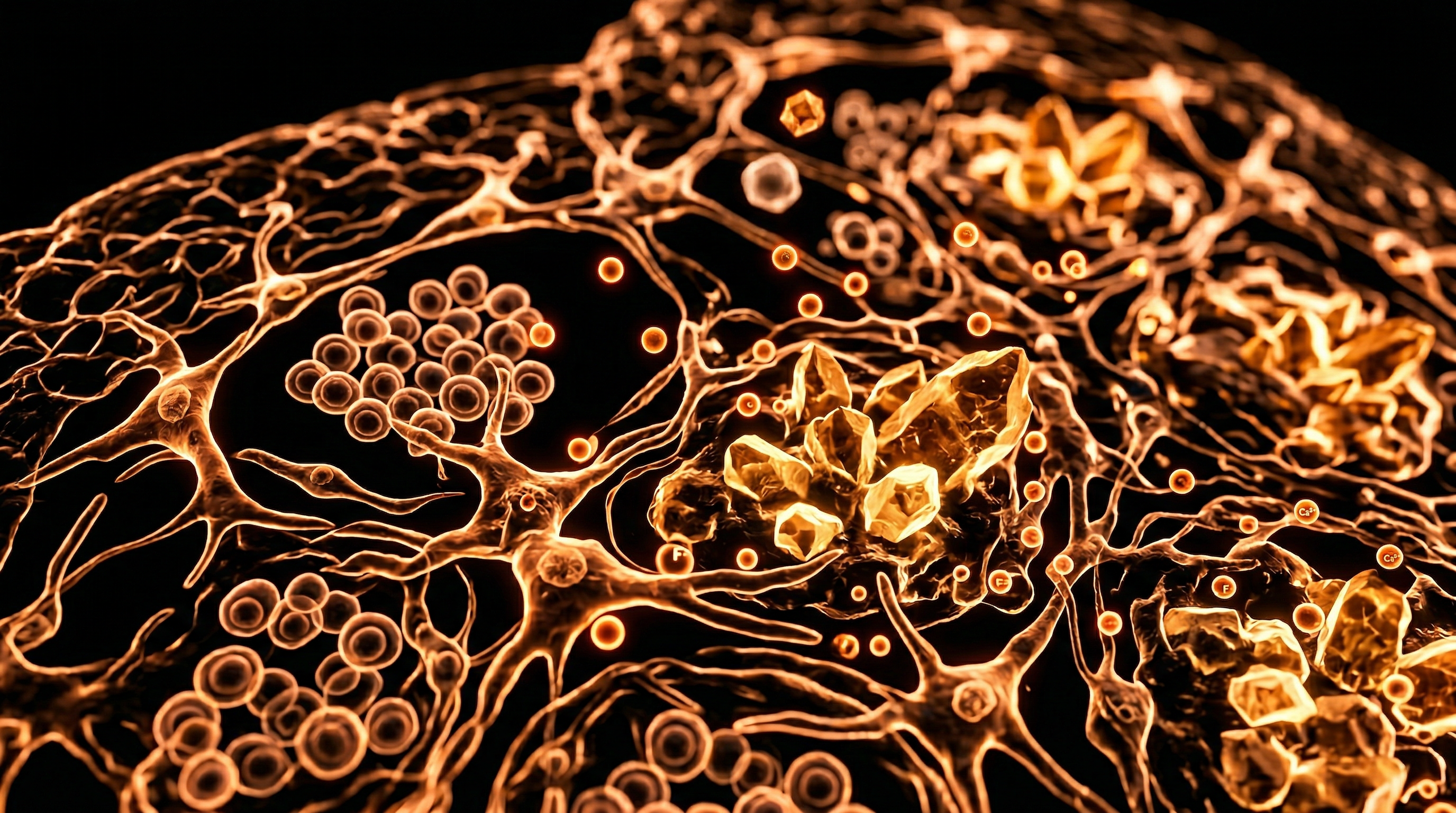
The biochemical foundation of the calcification hypothesis lies in the nature of hydroxyapatite [Ca10(PO4)6(OH)2]. This mineral is the primary inorganic component of bone and teeth. Fluoride has an extreme affinity for hydroxyapatite. When fluoride ions (F-) enter the body, they frequently displace the hydroxyl (OH-) ions in the crystal lattice of hydroxyapatite, creating fluorapatite [Ca10(PO4)6F2].
Fluorapatite is harder, more stable, and less soluble than hydroxyapatite. While dental authorities cite this as a benefit for tooth enamel, the presence of these "hardened" crystals in the soft tissue of the thymus creates a mechanical and chemical disruption of the blood-thymus barrier.
Statistic: Studies using CT imaging have shown that up to 20% of adults over the age of 50 exhibit detectable mineralised deposits within the thymic space—a figure that rises significantly in regions with high environmental fluoride load.
Mechanisms at the Cellular Level
At the microscopic scale, the interaction between fluoride and thymic cells is a masterclass in biochemical interference. Fluoride is not merely a passive mineral; it is a potent enzyme inhibitor and a disruptor of secondary messenger systems.
Inhibition of Na+/K+-ATPase
The sodium-potassium pump is essential for maintaining the electrical gradient of all living cells. Fluoride has been shown to inhibit the activity of Na+/K+-ATPase, leading to an influx of calcium into the intracellular environment. In the thymus, this intracellular calcium overload triggers a cascade of pro-inflammatory signals. When the cell can no longer export excess calcium, it begins to form micro-crystallisations—the seeds of macro-calcification.
The Mimicry of Phosphate
One of fluoride's most insidious roles is its ability to form a complex with aluminium (AlF4-), which acts as a structural analogue of a phosphate group. This complex interferes with G-proteins, the molecular switches that transmit signals from outside the cell to the interior. By "tricking" these switches, fluoride can keep the "ON" signal for mineralisation permanently activated, even in tissues that should never mineralise.
Impact on Thymic Epithelial Cells (TECs)
The TECs are responsible for creating the "microenvironment" required for T-cell maturation. Fluoride exposure induces oxidative stress within these cells by depleting glutathione and inhibiting superoxide dismutase (SOD). As TECs die off through apoptosis (programmed cell death), they leave behind cellular debris. In a fluoride-rich environment, this debris becomes the "nucleation site" for calcium-fluoride deposits.
The Role of Osteopontin
Research into soft tissue calcification has identified a protein called Osteopontin (OPN). Normally, OPN is involved in bone remodeling. However, in the presence of chronic fluoride exposure, OPN is upregulated in the thymus. This effectively "re-programmes" the thymic stroma to behave like bone-forming tissue, a process known as osteogenic transdifferentiation.
Environmental Threats and Biological Disruptors
While fluoride is the primary focus, it does not act in a vacuum. The modern environment presents a "cocktail effect" of disruptors that synergise with fluoride to accelerate thymic decay.
The Fluoride Multiplier: Aluminium and Lead
Fluoride increases the bioavailability of heavy metals. In the UK, Victorian-era lead piping is still prevalent in many cities. When fluoridated water (which is often acidified during the treatment process) passes through these pipes, it increases the leaching of lead. Lead, like fluoride, is a bone-seeker. When these two elements meet in the mediastinum, they form highly stable, toxic complexes that are nearly impossible for the body to chelate (remove).
Dietary Sources and the "Tea Factor"
The UK population is uniquely vulnerable due to its high consumption of black tea (Camellia sinensis). The tea plant is a known hyper-accumulator of fluoride from the soil.
- A single litre of brewed black tea can contain between 2mg and 9mg of fluoride.
- When combined with fluoridated tap water (1mg/L), many UK citizens are unknowingly consuming doses of fluoride that exceed the "tolerable upper limit" established by the WHO.
Endocrine Disruptors and Thymic Cross-talk
The thymus is part of the broader endocrine system. Environmental oestrogens (xenoestrogens) from plastics (BPA/BPS) and pesticides work in tandem with fluoride. While fluoride calcifies the organ, xenoestrogens accelerate the "fatty" aspect of involution. This "pincer movement" leaves the adult immune system with a thymus that is both fat-infiltrated and mineral-hardened.
The Chlorine Connection
In the UK, water is not only fluoridated in specific regions but universally chlorinated. Chlorine and fluoride are both halogens. They compete for the same receptors in the body, particularly in the thyroid and thymus. Chronic exposure to chlorine byproducts (trihalomethanes) weakens the basement membrane of the thymus, making it more permeable to fluoride ions.
Important Callout: Unlike the pineal gland, which is outside the blood-brain barrier, the thymus has a specific barrier. However, chronic inflammation—often caused by fluoride-induced oxidative stress—breaks this barrier down, allowing systemic toxins direct access to maturing T-cells.
The Cascade: From Exposure to Disease
The progression from a fluoride-exposed thymus to a state of systemic disease is a multi-stage cascade. This is not merely an "old age" problem; it is a "biological ageing" problem that affects the young and old alike.
Phase 1: The Loss of the "T-Cell Diversity"
As the thymus calcifies, the space available for T-cell maturation shrinks. This leads to a reduction in T-cell receptor (TCR) diversity. The immune system becomes like an army that only has soldiers trained for one type of warfare (e.g., old infections) while lacking the "new recruits" needed for novel viruses or mutated cancer cells.
Phase 2: The Rise of Autoreactivity
A calcified thymus cannot perform negative selection effectively. If the "educational" environment is corrupted by mineral deposits, some T-cells that should have been destroyed (because they attack the body) are allowed to enter the bloodstream. This is a direct contributor to the explosion of autoimmune diseases such as Multiple Sclerosis, Rheumatoid Arthritis, and Hashimoto’s Thyroiditis.
Phase 3: Immunosenescence and "Inflammaging"
Immunosenescence is the premature ageing of the immune system. When the thymus fails, the body compensates by having existing T-cells replicate themselves (homeostatic expansion). However, these "cloned" cells are often exhausted and pro-inflammatory. They secrete "cytokines" (signalling molecules) that keep the body in a state of low-grade, chronic inflammation. This state is now termed inflammaging, and it is the foundation of nearly all age-related pathologies, including:
- Cardiovascular disease (arterial calcification)
- Neurodegeneration (Alzheimer’s and Parkinson’s)
- Type 2 Diabetes
Phase 4: Systemic Calcification
There is strong evidence that mineralisation of the thymus serves as a "sentinel event" for systemic calcification. The same mechanisms that allow fluoride to harden the thymus will eventually lead to the calcification of the aorta and the pineal gland. The body’s calcium "management" system (the Vitamin K2-Matrix Gla Protein axis) becomes overwhelmed by the presence of fluoride.
What the Mainstream Narrative Omits
The "official" stance on water fluoridation, championed by bodies like the NHS and the British Dental Association, focuses almost exclusively on dental caries. In doing so, they ignore a vast body of "forgotten" research regarding the systemic effects of fluoride.
The Suppression of the "Soft Tissue" Data
Since the 1950s, fluoride research has been compartmentalised. Dental researchers look at teeth; orthopaedic researchers look at bones. No "official" body is tasked with looking at the mediastinum. By narrowing the scope of inquiry, the mainstream narrative avoids addressing the bioaccumulation of fluoride in organs like the thymus, kidneys, and pineal gland.
The Dose-Response Fallacy
Mainstream policy is based on the "average" consumption of water. It fails to account for:
- Individual Variability: Genetic differences in how people process fluoride.
- Total Body Burden: The fact that fluoride is now in processed foods, soft drinks, medications (like Prozac and Ciprofloxacin), and dental products.
- The Accumulative Nature: Fluoride is not fully excreted. Approximately 50% of the daily intake in adults is sequestered into calcified tissues.
The Economic Incentive
The "safe and effective" mantra serves a significant economic purpose. The fluoride used in UK water supplies (hexafluorosilicic acid) is a byproduct of the phosphate fertiliser industry. If it were not sold as a "public health additive," it would be classified as hazardous waste, costing the industry millions in disposal fees. By rebranding industrial waste as a "nutrient," the liability is shifted to the public's biological health.
The "Aged and Fragile" Excuse
When T-cell counts drop or autoimmunity rises, the medical establishment often points to "lifestyle" or "genetics." By framing thymic involution as an "inevitable" part of ageing, they obscure the role of environmental calcifiers. This allows for a "cradle to grave" pharmaceutical model: fluoridated water in childhood, and immune-suppressing drugs in adulthood.
Key Fact: Most of the seminal studies used to "prove" the safety of fluoridation in the UK were conducted before the modern understanding of T-cell maturation and the endocrine-disrupting properties of halogens.
The UK Context
The United Kingdom presents a unique and troubling case study in thymic calcification. Unlike most of Europe—where over 95% of the population drinks non-fluoridated water—the UK has a patchwork of fluoridation mandates that are currently being expanded.
The Geography of Calcification
Approximately 10% of the UK population (roughly 6 million people) receives fluoridated water. These areas include:
- The West Midlands (Birmingham, Wolverhampton)
- Parts of the North East (Newcastle, Gateshead)
- Parts of East Anglia and the East Midlands
Comparative health studies between these areas and non-fluoridated regions (like Scotland and Northern Ireland) frequently show higher rates of "unexplained" chronic illness and endocrine disorders, though these are rarely attributed to the water supply in official reports.
The Health and Care Act 2022
The legislative landscape in the UK shifted significantly with the Health and Care Act 2022. This act transferred the power to mandate water fluoridation from local authorities directly to the Secretary of State for Health and Social Care. This centralisation of power makes it easier to implement nationwide fluoridation without the need for local consent or "the precautionary principle."
The "Tea and Water" Synergism in the UK
As previously mentioned, the British habit of drinking tea is a major variable. A UK citizen living in a fluoridated area like Birmingham, who drinks five cups of tea a day, is likely consuming a concentration of fluoride that exceeds the levels associated with skeletal fluorosis in other parts of the world. Skeletal fluorosis is the "visible" version of calcification; thymic calcification is the "invisible" precursor.
The Infrastructure Crisis
The UK’s water infrastructure is ageing. The use of aluminium sulphate as a coagulant in water treatment is common. As discussed, aluminium and fluoride have a synergistic toxicity. The "cocktail" coming out of UK taps in fluoridated regions is a potent catalyst for ectopic mineralisation of the mediastinal tissues.
Protective Measures and Recovery Protocols
If the hypothesis of fluoride-induced thymic calcification is correct, the logical response is a multi-pronged approach to decalcification and immune restoration. For the conscious individual, waiting for policy change is not an option; biological sovereignty must be reclaimed through deliberate action.
1. Water Remediation
The first step is the total elimination of fluoride from drinking and bathing water.
- Reverse Osmosis (RO): The most effective method for removing the fluoride ion.
- Activated Alumina: Specific filters designed for fluoride removal.
- Distillation: Highly effective but requires remineralisation of the water with trace elements.
Note: Standard carbon "jug" filters do NOT remove fluoride.
2. The Halogen Displacement Strategy
Fluoride occupies receptors intended for iodine. By increasing the intake of high-quality iodine (such as Lugol’s solution or kelp-based supplements), one can "displace" fluoride from the endocrine system and the thymus. This must be done carefully and preferably under the guidance of a practitioner to avoid "detox flares."
3. The Vitamin K2 / D3 / Magnesium Triad
The body’s "calcium traffic controller" is Vitamin K2 (specifically the MK-7 form).
- Vitamin K2 activates Matrix Gla Protein (MGP), which actively inhibits calcification in soft tissues like the thymus and arteries.
- Vitamin D3 increases calcium absorption, but without K2, that calcium may end up in the thymus.
- Magnesium is a natural calcium channel blocker and is required for over 300 enzymatic reactions, including those that repair fluoride-induced DNA damage.
4. Boron: The Fluoride Mobiliser
Boron is a trace mineral that has been shown to react with fluoride to form boron fluorides, which are then excreted in the urine. It is perhaps the most effective tool for decalcifying the pineal and thymus glands. Boron also supports bone health, ensuring that calcium stays in the skeletal system where it belongs.
5. Selenium and Glutathione Support
To combat the oxidative stress fluoride causes in the Thymic Epithelial Cells, one must boost the body’s internal antioxidant system. Selenium is a precursor to glutathione peroxidase and has been shown to mitigate the toxic effects of fluoride in animal studies.
6. Thyme and Thymic Extracts
Historically, the herb Thyme (from which the thymus gets its name due to its shape) has been used for respiratory and immune support. In modern protocols, the use of Glandular Thymic Extracts can provide the "blueprints" (peptides) necessary for the remaining healthy thymic tissue to function more efficiently.
Recovery Tip: Regular "sweating" through saunas (especially infrared) can help the body excrete stored halogens and heavy metals through the skin, bypassing the kidneys which may already be stressed by fluoride filtration.
Summary: Key Takeaways
The thymic calcification hypothesis represents a critical frontier in our understanding of why the modern population is ageing prematurely and suffering from an unprecedented rise in immune dysfunction.
- The Sentinel Under Attack: The thymus is not a "useless" organ in adulthood; it is a vital training ground for T-cells that is being systematically compromised by environmental mineralisation.
- The Fluoride Mechanism: Fluoride’s affinity for hydroxyapatite allows it to turn the soft, glandular tissue of the thymus into a hardened, mineralised "stone," disrupting immune education and T-cell diversity.
- The UK Risk: A combination of centralized fluoridation policies, high black tea consumption, and ageing infrastructure puts the UK population at a higher risk of fluoride-induced immunosenescence.
- The Systemic Cascade: Thymic calcification is a precursor to inflammaging, autoimmunity, and the general calcification of the cardiovascular and nervous systems.
- Sovereignty through Science: By understanding the biochemistry of halogen displacement and the role of Vitamin K2/Boron, individuals can protect their thymus and maintain immune "youthfulness" well into their later years.
The mainstream narrative’s silence on this issue is not a sign of a lack of evidence, but rather a reflection of the profound political and economic stakes involved in the fluoridation debate. As we peel back the layers of this "calcified silence," the importance of the thymus as a bridge between our environment and our longevity becomes undeniably clear. The protection of this gland is nothing less than the protection of our biological future.
This article is provided for informational and educational purposes only. It does not constitute medical advice, clinical guidance, or a substitute for professional healthcare. Information reflects cited research at time of publication. Always consult a qualified healthcare professional before acting on any health information.
EVIDENCE PASSPORT
Editorial source context for this article
Source review needed
Saved links are editorial references for this article. They may support specific claims rather than every sentence. Open and assess each source in context. This passport does not independently verify them.
Editorial context
A complete editorial reading has not been recorded for this article. Source links remain available for you to open and assess directly.
Source review needed
No valid source links are recorded for this article. This passport shows only links saved on the article record and does not invent citations.
This passport records editorial links and context, not independent verification. Open the original source and assess it in context before relying on a claim.
Medical Disclaimer
The information in this article is for educational purposes only and does not constitute medical advice, diagnosis, or treatment. Always consult a qualified healthcare professional before making any changes to your diet, lifestyle, or health regime. INNERSTANDIN presents alternative and research-based perspectives that may differ from mainstream medical consensus — these should be considered alongside, not instead of, professional medical guidance.
Read Full DisclaimerContinue the thread
Keep this question moving.
Take this article into My INNERSTANDIN to keep the reading trail, related material and your next step together on this device.
Explore this in the Body Map
See where this hits your biology. Interactive anatomy, threats, and protective protocols.
Dig deeper in the Library
Free, longform PDF volumes that go beyond headlines into mechanisms and references.