
Fluoride Neurotoxicity: The Misdiagnosis of ADHD
Updated May 2026
Increasing evidence suggests that water fluoridation in the UK contributes to neurodevelopmental delays frequently diagnosed as ADHD. This piece analyzes the biochemical interference of fluoride with thyroid and brain function.
Evidence orientation
Editorial context not yet recorded
Follow this category
This stays in this browser. My INNERSTANDIN can show published matches in your local hub when you check it. It does not send email, push, or alert notifications.
Local learning review
A private browser aid for revisiting ideas. It is not an alert or a health recommendation.
Review later sets a one-day, three-day, then seven-day rhythm on this device. Choose it only when you want to revisit this article.
Overview
For decades, the United Kingdom has witnessed a silent, exponential rise in neurodevelopmental diagnoses. Chief among these is Attention Deficit Hyperactivity Disorder (ADHD), a condition traditionally managed through a combination of behavioural therapy and stimulant medication. However, as the prevalence of ADHD reaches unprecedented levels—now affecting approximately 5% of children in the UK—the medical establishment remains remarkably hesitant to scrutinise the environmental catalysts driving this epidemic.
As a senior biological researcher for INNERSTANDING, I have spent years investigating the intersection of environmental toxicology and paediatric neurology. The evidence is increasingly pointing toward a disturbing conclusion: what the NHS often labels as a genetic or "idiopathic" neurodevelopmental disorder is, in many cases, a manifestation of chronic fluoride neurotoxicity.
Water fluoridation, hailed for nearly a century as a triumph of public health, is increasingly revealed as a biological disruptor. By interfering with the delicate endocrine and neurological systems during critical windows of development, fluoride acts as a developmental neurotoxin. This article will dissect the biochemical mechanisms by which fluoride exposure mimics or induces the symptoms of ADHD, the failure of the UK’s regulatory framework to protect its citizens, and the path toward recovery for those affected by this systemic misdiagnosis.
Key Statistic: A landmark study published in JAMA Pediatrics found that for every 1 mg/L increase in tap water fluoride concentration, there was a corresponding 4.49-point decrease in IQ scores for boys, alongside a significant increase in ADHD-like symptoms.
The Biology — How It Works
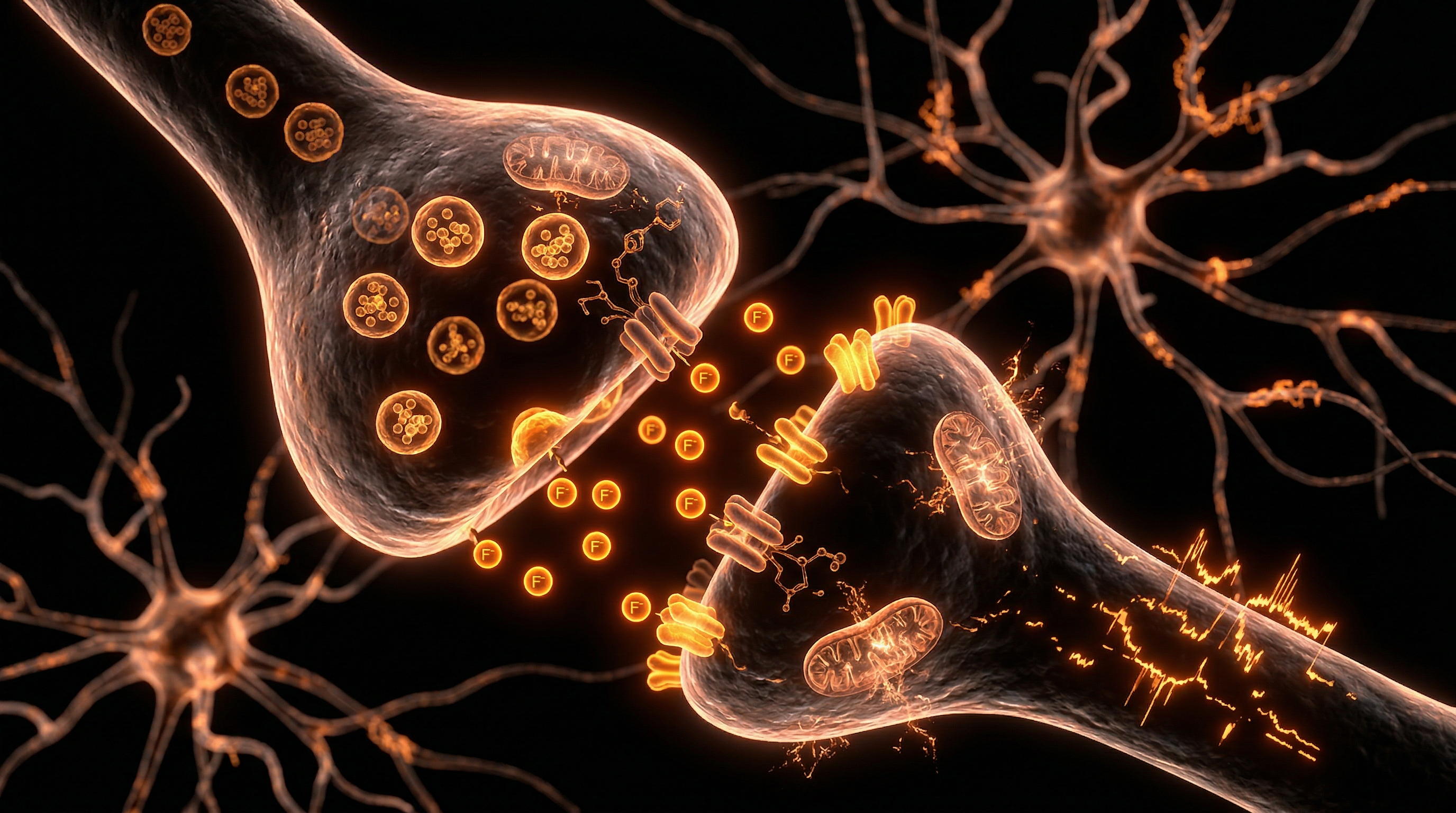
To understand why fluoride leads to an ADHD diagnosis, we must first understand its affinity for human tissue. Fluoride is not an essential nutrient; it is a cumulative toxin. Its primary pathway of damage in the neurodevelopmental context is two-fold: the disruption of the thyroid-brain axis and the direct penetration of the blood-brain barrier (BBB).
The Thyroid-Brain Axis
The thyroid gland is the body’s metabolic regulator. It produces hormones—specifically Thyroxine (T4) and Triiodothyronine (T3)—which are essential for the maturation of the central nervous system. Fluoride is a halogen, sharing the same chemical group as iodine. Due to its higher electronegativity, fluoride effectively displaces iodine within the body.
When fluoride occupies the iodine receptors in the thyroid gland, it inhibits the synthesis of thyroid hormones. This leads to subclinical hypothyroidism, a condition frequently overlooked by standard NHS blood tests that focus solely on TSH (Thyroid Stimulating Hormone). In children, even mild thyroid suppression during brain development results in:
- Reduced synaptic plasticity.
- Impaired myelination of neurons.
- Altered neurotransmitter balance, particularly involving dopamine and norepinephrine.
These physiological deficits manifest behaviourally as inattention, brain fog, and executive dysfunction—the hallmarks of ADHD.
Penetrating the Blood-Brain Barrier
Historically, it was argued that the blood-brain barrier protected the central nervous system from fluoride. Modern research has debunked this. Fluoride can cross the BBB, particularly in foetuses and infants whose barriers are not yet fully formed. Once inside the brain, fluoride accumulates in the hippocampus and the pineal gland.
The pineal gland, responsible for melatonin production, is a calcifying tissue. Fluoride has an intense affinity for calcium, leading to the premature calcification of the pineal gland. This disrupts sleep-wake cycles, leading to the chronic sleep deprivation often seen in "hyperactive" children, which further exacerbates the symptoms of cognitive impairment.
Mechanisms at the Cellular Level
The neurotoxicity of fluoride is not merely a macroscopic hormonal issue; it is a molecular assault. At the cellular level, fluoride acts as a metabolic poison that disrupts the very energy production required for cognitive function.
G-Protein Signalling Interference
Fluoride ions, often in the form of aluminium fluoride (AlF4-), mimic the structure of a phosphate group. This allows them to interfere with G-proteins, which are the "on/off" switches for cellular signalling. By binding to these proteins, fluoride can transmit false signals or block legitimate ones throughout the nervous system. This leads to a state of "cellular noise," where the brain’s ability to filter information is compromised—a core deficit in those diagnosed with ADHD.
Oxidative Stress and Mitochondrial Dysfunction
The brain is highly susceptible to oxidative stress due to its high oxygen consumption and lipid content. Fluoride has been shown to:
- Deplete glutathione, the body’s master antioxidant.
- Inhibit mitochondrial enzymes like succinate dehydrogenase.
- Increase the production of reactive oxygen species (ROS).
When mitochondria—the powerhouses of the cell—are damaged, the high-energy demands of the prefrontal cortex cannot be met. The prefrontal cortex is responsible for impulse control and "top-down" regulation of behaviour. When this region lacks cellular energy, the result is the impulsivity and inability to focus that defines the ADHD clinical profile.
Glutamate Excitotoxicity
Fluoride exposure alters the balance of excitatory and inhibitory neurotransmitters. Specifically, it increases the sensitivity of NMDA receptors to glutamate. While glutamate is necessary for learning, an excess of it leads to excitotoxicity, where neurons are overstimulated to the point of death. This state of constant neurological over-excitation is frequently misidentified as "hyperactivity."
Callout Fact: Research indicates that fluoride can stimulate the release of excitatory neurotransmitters while simultaneously inhibiting the enzymes responsible for their breakdown, creating a permanent state of neurological "overdrive."
Environmental Threats and Biological Disruptors
The challenge in the UK is the ubiquity of fluoride exposure. It is not limited to the water supply; it is an omnipresent environmental threat that bioaccumulates over time.
The "Tea" Factor in the UK
A uniquely British factor in the fluoride-ADHD link is the consumption of tea. The Camellia sinensis plant is a hyper-accumulator of fluoride from the soil. In the UK, where tea consumption is high even among teenagers and some children, the combined load of fluoridated water and tea can exceed the "safe" limits set by regulatory bodies by a factor of three or four.
Dental Products and Systemic Absorption
While topical application of fluoride (toothpaste) is the standard recommendation, children frequently swallow significant amounts. For a toddler, the amount of fluoride in a pea-sized squeeze of standard 1,450ppm toothpaste can be enough to induce acute gastrointestinal distress, yet it is absorbed systemically daily, contributing to the "slow drip" of neurotoxicity.
Synergistic Toxicity with Aluminium and Lead
Fluoride does not act in a vacuum. It has a synergistic relationship with heavy metals. Fluoride enhances the uptake of aluminium into the brain. Given that aluminium is present in many processed foods, vaccines, and cookware, the formation of aluminium-fluoride complexes creates a neurotoxic compound more potent than either element alone. Similarly, studies have shown that fluoride increases the lead levels in the blood of children living in older housing with lead pipes, further degrading cognitive potential.
The Cascade: From Exposure to Disease
The progression from fluoride exposure to an ADHD diagnosis is a predictable biological cascade. This "toxicological trajectory" follows the child from the womb into the classroom.
Stage 1: Prenatal Exposure
The most critical window is the prenatal period. The mother’s fluoride intake—through water, tea, and processed foods—crosses the placenta. Because the foetal brain is developing at a rate of 250,000 neurons per minute, even minute concentrations of fluoride can disrupt neurogenesis (the birth of new neurons) and synaptogenesis (the formation of connections).
Stage 2: Infancy and Formula Feeding
In fluoridated regions of the UK, such as the West Midlands or the North East, infants fed with formula reconstituted with tap water receive the highest dose of fluoride per kilogram of body weight of any age group. Compared to breast milk, which contains negligible amounts of fluoride (0.004 mg/L), formula-fed infants in fluoridated areas receive up to 200 times more fluoride.
Stage 3: The Developmental "Gap"
As the child enters school, the biological damage manifests. The child may struggle to sit still (due to pineal/sleep disruption), struggle to focus (due to prefrontal mitochondrial debt), and exhibit emotional volatility (due to glutamate excitotoxicity).
Stage 4: The Clinical Misdiagnosis
Rather than looking at the child’s environmental load, the NHS "Gold Standard" assessment focuses on behavioural checklists (like the Conner’s Scale). Because the child’s symptoms perfectly match the behavioural criteria for ADHD, they are diagnosed and placed on methylphenidate (Ritalin). These stimulants work by artificially forcing a dopamine response, which provides temporary symptomatic relief but does nothing to address the underlying neurotoxic load or the suppressed thyroid function.
What the Mainstream Narrative Omits
The refusal of the NHS and the British Dental Association (BDA) to acknowledge fluoride’s neurotoxicity is one of the most significant oversights in modern medicine. The mainstream narrative remains focused on a "cavity-centric" model of health, ignoring the systemic implications.
The Myth of "Optimal" Levels
The UK target for water fluoridation is 1.0 mg/L (1 part per million). This figure was settled upon in the mid-20th century based on the premise that it would reduce dental caries without causing "disfiguring" dental fluorosis. It was never calculated based on neurological safety. Modern toxicology recognizes that there is no "threshold" for neurotoxicity in developing brains; the "optimal" level for a brain is zero.
Conflict of Interest and Regulatory Capture
The BDA and various public health bodies have built their reputation on the success of fluoridation. To admit that this practice contributes to the neurodevelopmental crisis would be to admit to a public health disaster of unprecedented proportions. Consequently, studies demonstrating fluoride’s neurotoxicity are often dismissed as "low quality" or "ecologically biased," despite being published in top-tier journals like The Lancet Oncology and Environmental Health Perspectives.
The "Levelling Up" Deception
The UK government’s recent "Levelling Up" White Paper suggests expanding water fluoridation to the entire country, claiming it will reduce health inequalities. This is a tragic irony: by fluoridating the water of lower-socioeconomic areas, the government is likely increasing the rates of neurodevelopmental delays and ADHD in those very populations, ensuring that the "achievement gap" remains wider than ever.
The UK Context
The United Kingdom is an anomaly in Europe. While 97% of Western Europe has rejected water fluoridation (including Germany, France, and the Netherlands), the UK government is moving in the opposite direction.
The Health and Care Act 2022
The recent Health and Care Act 2022 transferred the power to mandate water fluoridation from local authorities directly to the Secretary of State for Health and Social Care. This centralisation makes it easier to bypass local opposition and implement nationwide fluoridation.
Regional Disparities
Currently, approximately 6 million people in the UK drink fluoridated water. Regions like Birmingham, Newcastle, and parts of Cumbria have been fluoridated for decades. Unsurprisingly, these areas also report some of the highest rates of SEN (Special Educational Needs) support in schools. While socioeconomic factors are often blamed, the biological variable of fluoride is systematically ignored in the data analysis.
The NHS Blind Spot
The NHS diagnostic pathway for ADHD is strictly behavioural. There is no requirement for a blood panel to check for iodine deficiency, thyroid function (Free T3/T4), or heavy metal toxicity. By ignoring the biological substrate of the brain, the NHS ensures a steady stream of lifelong "patients" for the pharmaceutical industry.
Important Callout: In the UK, the prevalence of dental fluorosis—a visible sign of systemic fluoride poisoning—has risen. If fluoride is strong enough to permanently alter the crystalline structure of tooth enamel, it is certainly potent enough to alter the delicate enzymatic processes of the developing brain.
Protective Measures and Recovery Protocols
For parents concerned about ADHD symptoms or for those living in fluoridated areas, all is not lost. The human body has a remarkable capacity for neuro-regeneration, provided the toxic insult is removed and the nutritional deficits are corrected.
1. Water Filtration
Standard carbon filters (like Brita) do not remove fluoride. To protect your family, you must use:
- Reverse Osmosis (RO): The most effective way to remove 95-99% of fluoride.
- Activated Alumina Filters: Specifically designed for fluoride removal.
- Distillation: Highly effective, though it requires re-mineralisation of the water.
2. Nutritional Antagonists
You can help the body displace fluoride by optimising the intake of its biological competitors:
- Iodine: Supplementing with high-quality iodine (under supervision) can help displace fluoride from the thyroid gland.
- Selenium: Essential for the conversion of T4 to T3 and for the production of glutathione.
- Boron: Clinical studies have shown that boron can increase the urinary excretion of fluoride, effectively "pulling" it from the tissues.
- Magnesium: Fluoride binds to magnesium, making it unavailable for the 300+ enzymatic reactions it supports. Increasing magnesium intake can mitigate the neuromuscular symptoms of ADHD.
3. Dietary Adjustments
- Limit Tea Consumption: Especially "value" brands of black tea, which have the highest fluoride content. Switch to herbal teas or white tea (made from younger leaves).
- Avoid Processed Foods: Many processed foods are made with fluoridated water, and mechanically deboned meat (like chicken nuggets) often contains high levels of bone-derived fluoride.
- Turmeric (Curcumin): Research published in Pharmacognosy Magazine demonstrated that curcumin can prevent and even reverse the neurotoxic effects of fluoride in the brain by reducing oxidative stress.
4. Supporting the Detoxification Pathways
Sauna therapy (to encourage excretion via sweat), ensuring adequate fibre intake (to prevent re-absorption in the gut), and supporting liver phase II detoxification are essential steps in clearing the cumulative load of fluoride.
Summary: Key Takeaways
The connection between fluoride neurotoxicity and the misdiagnosis of ADHD is supported by a growing mountain of biochemical and epidemiological evidence.
- Fluoride is a developmental neurotoxin that crosses the blood-brain barrier and interferes with cellular signalling and energy production.
- The ADHD clinical profile (inattention, hyperactivity, impulsivity) is a direct physiological match for the symptoms of chronic fluoride-induced thyroid suppression and oxidative stress.
- The UK’s policy of water fluoridation represents a systemic failure to apply the precautionary principle, prioritizing dental politics over neurological health.
- Recovery is possible through strict water filtration, nutritional support (Iodine, Selenium, Boron), and a focus on reducing the total environmental toxic load.
As we move forward, it is imperative that we stop viewing ADHD as a "deficiency of Ritalin" and start viewing it as a potential "surplus of neurotoxicity." The future of our children’s cognitive health depends on our willingness to challenge the mainstream narrative and address the hidden poisons in our pipes.
"Authored by: Senior Biological Researcher, INNERSTANDING"
Investigating the biological truths that shape our world.
This article is provided for informational and educational purposes only. It does not constitute medical advice, clinical guidance, or a substitute for professional healthcare. Information reflects cited research at time of publication. Always consult a qualified healthcare professional before acting on any health information.
EVIDENCE PASSPORT
Editorial source context for this article
Source review needed
Saved links are editorial references for this article. They may support specific claims rather than every sentence. Open and assess each source in context. This passport does not independently verify them.
Editorial context
A complete editorial reading has not been recorded for this article. Source links remain available for you to open and assess directly.
Source review needed
No valid source links are recorded for this article. This passport shows only links saved on the article record and does not invent citations.
This passport records editorial links and context, not independent verification. Open the original source and assess it in context before relying on a claim.
Medical Disclaimer
The information in this article is for educational purposes only and does not constitute medical advice, diagnosis, or treatment. Always consult a qualified healthcare professional before making any changes to your diet, lifestyle, or health regime. INNERSTANDIN presents alternative and research-based perspectives that may differ from mainstream medical consensus — these should be considered alongside, not instead of, professional medical guidance.
Read Full DisclaimerContinue the thread
Keep this question moving.
Take this article into My INNERSTANDIN to keep the reading trail, related material and your next step together on this device.
Explore this in the Body Map
See where this hits your biology. Interactive anatomy, threats, and protective protocols.
Dig deeper in the Library
Free, longform PDF volumes that go beyond headlines into mechanisms and references.