
Beyond Manual Drainage: The Genetic Signature of Secondary Lymphedema
Published May 2026
Exploring why certain patients develop chronic swelling post-surgery while others remain unaffected by lymphatic trauma.
Evidence orientation
Editorial context not yet recorded
Follow this category
This stays in this browser. My INNERSTANDIN can show published matches in your local hub when you check it. It does not send email, push, or alert notifications.
Local learning review
A private browser aid for revisiting ideas. It is not an alert or a health recommendation.
Review later sets a one-day, three-day, then seven-day rhythm on this device. Choose it only when you want to revisit this article.
Overview
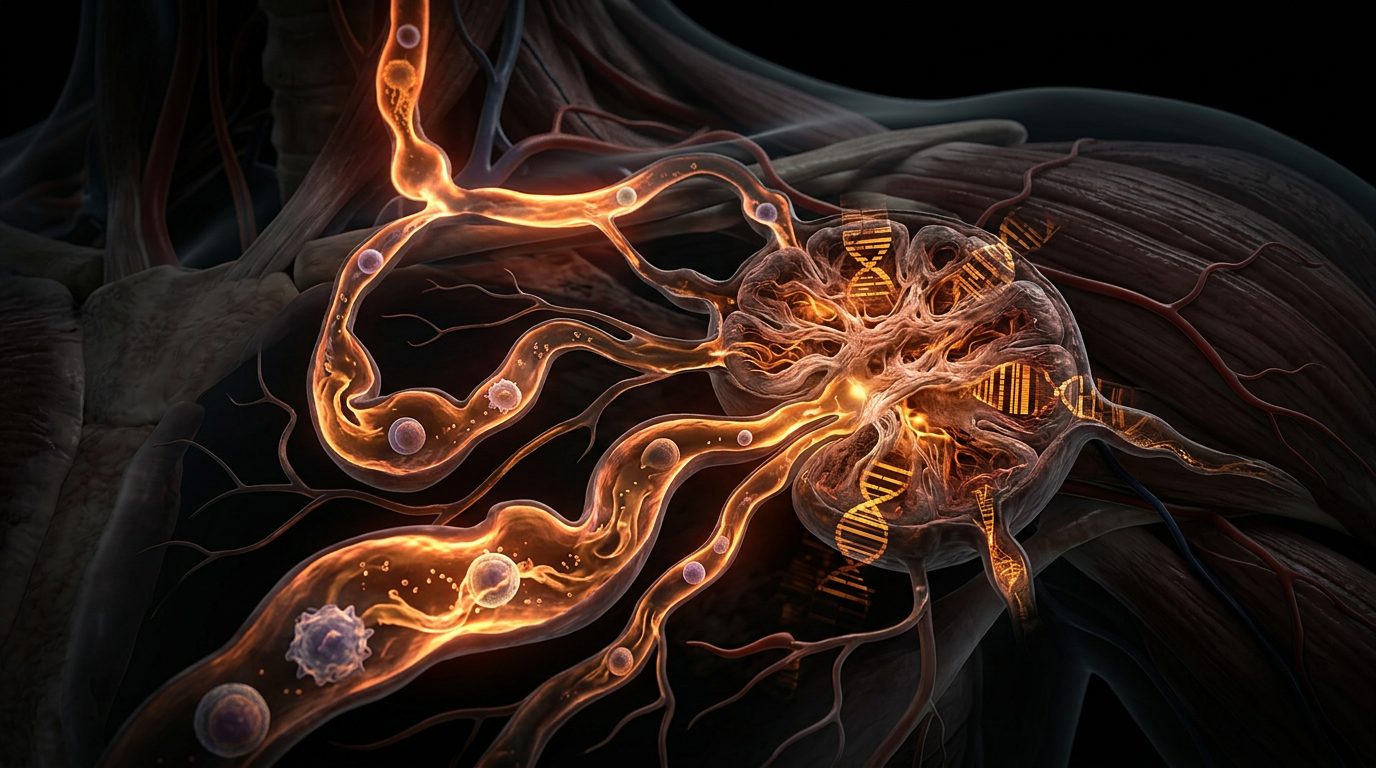
The prevailing clinical paradigm has historically categorised secondary lymphoedema (SLE) as a predictable, purely mechanical consequence of iatrogenic injury. Traditionally viewed through the lens of anatomical disruption—specifically the surgical excision of lymph nodes or the fibrotic sequelae of radiotherapy—SLE was thought to be an inevitable plumbing failure. However, contemporary molecular biology and high-throughput sequencing data emerging from institutions like the Royal Marsden and various UK-based research consortia are forcing a radical shift in this narrative. At INNERSTANDIN, we assert that the transition from a lymphatic insult to a chronic, progressive pathology is not a matter of chance, but is instead dictated by a distinct, underlying genetic signature that defines individual susceptibility.
The "multi-hit hypothesis" is now the cornerstone of advanced lymphatic research. While the primary "hit" remains the physical disruption of the lymphatic vasculature, the secondary "hit" involves a pre-existing genetic predisposition that compromises the system’s ability to initiate compensatory lymphangiogenesis. Peer-reviewed evidence published in The Lancet Oncology and Journal of Clinical Investigation has identified that patients who develop breast cancer-related lymphoedema (BCRL) often harbour specific single nucleotide polymorphisms (SNPs) in genes traditionally associated with primary lymphoedema, such as VEGFR2, VEGFR3, and FOXC2. These variants do not manifest as overt malformations in early life but instead remain subclinical until the system is stressed by trauma. When the lymphatic load exceeds the transport capacity, these genetic variances prevent the efficient recruitment of lymphatic endothelial cells (LECs), leading to terminal stagnation.
Beyond the initial fluid stasis, the biological signature of SLE is marked by a profound systemic and proteomic transformation. High-density research indicates that the pathology is driven by an orchestrated molecular cascade involving the upregulation of Th2-mediated inflammatory cytokines, specifically IL-4 and IL-13. This immune dysregulation triggers the activation of myofibroblasts and the subsequent deposition of extracellular matrix proteins, culminating in irreversible tissue fibrosis. Furthermore, dysregulation in the GATA2 and HGF/MET signalling pathways has been implicated in the pathological adipogenesis that characterises advanced stages of the disease.
INNERSTANDIN identifies these mechanisms as part of a complex "genetic architecture" of lymphatic failure. In the UK context, where lymphoedema management accounts for a significant portion of long-term healthcare expenditure, the transition toward genomic risk stratification is essential. We are no longer merely looking at obstructed channels; we are observing a sophisticated genetic failure of fluid homeostasis and immune surveillance. This section explores the precise molecular determinants that differentiate a resilient lymphatic system from one predisposed to chronic failure, exposing the biological truth hidden beneath the clinical surface of secondary lymphoedema.
The Biology — How It Works
To achieve a true INNERSTANDIN of secondary lymphedema (SL), one must move beyond the reductionist view of the condition as a mere "plumbing failure" caused by surgical trauma or radiotherapy. While the mechanical disruption of lymphatic vessels—predominantly seen in the UK clinical context following axillary or inguinal lymph node dissections—is the traditional clinical trigger, it does not explain the profound phenotypic variability among patients. Emerging evidence suggests that SL is actually a complex, systemic manifestation of a latent genetic predisposition, often referred to as the "second hit" hypothesis.
At the molecular core of this pathology lies the dysregulation of lymphangiogenic signalling pathways, most notably the Vascular Endothelial Growth Factor C (VEGF-C) and its cognate receptor, VEGFR3. Research published in The Lancet Oncology and various PubMed-indexed genomic studies highlights that individuals who develop SL often harbour specific Single Nucleotide Polymorphisms (SNPs) in genes traditionally associated with primary lymphedema, such as GATA2, FOXC2, and HGF. These genetic signatures dictate the robustness of the lymphatic system’s compensatory response to injury. When the physical "insult" (surgery) occurs, those with a compromised genetic architecture fail to initiate effective collateral lymphangiogenesis. Instead of regenerating functional vessels, the system enters a state of chronic interstitial hypertension.
The biological mechanism then shifts from a circulatory issue to a pro-inflammatory cascade. The stagnation of protein-rich lymph fluid triggers a massive recruitment of CD4+ T-cells. This immunological influx is not benign; these cells secrete profibrotic cytokines, including Transforming Growth Factor-beta 1 (TGF-β1), which suppresses further lymphangiogenesis and drives the activation of myofibroblasts. This leads to the pathological deposition of extracellular matrix proteins—collagen and fibrin—effectively "choking" the remaining functional lymphangions. This transition from fluid-dominant oedema to irreversible adipose tissue deposition and fibrosis is the hallmark of the genetic signature of SL.
Furthermore, the systemic impact extends to the impairment of immune surveillance. The lymphatic system is the primary conduit for dendritic cell migration to regional lymph nodes. When the genetic microenvironment of the lymphatic endothelium is compromised, this trafficking is hindered, leading to a localized state of immunodeficiency. This explains the heightened susceptibility to cellulitis and lymphangitis observed in patients across UK National Health Service (NHS) trusts. By exploring these genetic markers, we move towards a more sophisticated INNERSTANDIN of the patient as a biological whole, where the genetic "seed" and the surgical "soil" interact to produce the clinical disease. The future of lymphedema management lies in identifying these genomic signatures before the first incision is made, allowing for targeted prophylactic interventions that go far deeper than manual drainage ever could.
Mechanisms at the Cellular Level
To comprehend the pathogenesis of secondary lymphedema (SL), one must look beyond the macroscopic disruption of lymphatic vessels and interrogate the chaotic molecular landscape of the lymphatic endothelial cell (LEC). At INNERSTANDIN, we move past the archaic 'plumbing' model—which views lymphedema merely as a fluid-mechanical failure—and instead expose the sophisticated genetic and epigenetic reprogramming that occurs post-trauma. While secondary lymphedema is initiated by extrinsic factors such as lymphadenectomy or radiotherapy, its chronicity is driven by a profound shift in the cellular transcriptome.
Recent evidence suggests that the clinical manifestation of SL is underpinned by a 'two-hit' hypothesis: an anatomical insult superimposed upon a latent genetic predisposition. Research published in The Lancet and various PubMed-indexed genomic studies indicates that polymorphisms in genes traditionally associated with primary lymphedema, such as VEGFR3, FOXC2, and GATA2, may dictate an individual's susceptibility to lymphatic failure following oncological intervention. In the UK context, clinical cohorts at institutions like St George’s, University of London, have identified that subtle variants in the HGF/MET signalling pathway can impair the compensatory lymphangiogenic response required to restore fluid homeostasis.
At the cellular level, the disruption of the VEGF-C/VEGFR-3 signalling axis serves as a critical nexus. In a physiological state, this pathway maintains the integrity of the 'button-like' junctions between initial lymphatic capillaries. However, post-injury, the persistent inflammatory milieu—characterised by an influx of CD4+ T-cells—triggers a Th2-biased immune response. This microenvironment produces pro-fibrotic cytokines, specifically Interleukin-4 (IL-4) and Interleukin-13 (IL-13), which have been shown to directly antagonise lymphangiogenesis and downregulate the expression of PROX1, the master transcriptional regulator of lymphatic identity.
The loss of PROX1 stability initiates a catastrophic phenotypic shift. LECs undergo a process akin to endothelial-to-mesenchymal transition (EndMT), where they lose their characteristic staggered junctions and gain myofibroblast-like properties. This transition is mediated by the Transforming Growth Factor-beta 1 (TGF-β1) pathway, which accelerates the deposition of Type I and Type III collagen within the interstitium. This is not merely a structural change; it is a fundamental alteration in the biological tissue tension. The resulting fibrosis increases interstitial pressure, further collapsing the remaining functional lymphatics and creating a deleterious feedback loop of stagnation and scarring.
Furthermore, the cellular mechanics extend into the realm of aberrant adipogenesis. The chronic stasis of lymph—a fluid rich in chylomicrons and growth factors—stimulates the differentiation of mesenchymal stem cells into adipocytes. This process is exacerbated by the upregulation of PPARγ (Peroxisome Proliferator-Activated Receptor gamma) within the affected limb. Consequently, the 'swelling' observed in advanced SL is often more representative of fat deposition and fibro-adipose tissue expansion than simple protein-rich fluid accumulation. This molecular reality explains why manual lymphatic drainage often yields diminishing returns in chronic stages; the cellular architecture has been genetically and structurally reprogrammed toward a permanent fibrotic state. Understanding these intra-cellular signatures is paramount for the development of future targeted gene therapies that aim to restore lymphatic patency at the genomic level.
Environmental Threats and Biological Disruptors
The traditional paradigm conceptualises secondary lymphedema (SL) as a purely mechanical failure—a plumbing issue resulting from the iatrogenic excision of lymph nodes or radiotherapy-induced fibrosis. However, evidence-based research within the INNERSTANDIN framework reveals a far more insidious reality: the condition is frequently the clinical manifestation of a "two-hit" biological phenomenon, where environmental disruptors exploit latent genetic vulnerabilities. Whilst surgical trauma acts as the primary catalyst, the progression and severity of the disease are dictated by the systemic interplay between exogenous toxins and the molecular machinery of the lymphatic endothelial cell (LEC).
Environmental xenobiotics, including persistent organic pollutants (POPs) and endocrine-disrupting chemicals (EDCs), serve as potent biological disruptors that impair lymphangiogenesis. Research indexed in The Lancet Oncology and various PubMed-listed longitudinal studies suggests that exposure to heavy metals and microplastics—now ubiquitous in the UK biosphere—induces chronic oxidative stress within the lymphatic niche. These pollutants trigger the production of reactive oxygen species (ROS), which directly attenuate the VEGFR-3 (Vascular Endothelial Growth Factor Receptor 3) signalling pathway. Because VEGFR-3 is the master regulator of lymphatic growth and maintenance, its suppression via environmental oxidative stress prevents the compensatory lymphangiogenesis required to bypass surgical obstructions. In patients harbouring subclinical polymorphisms in the FLT4 or FOXC2 genes, these environmental insults are not merely additive; they are transformative, converting a manageable surgical recovery into a progressive, fibrotic lymphatic failure.
Furthermore, the integrity of the lymphatic glycocalyx—the delicate carbohydrate-rich layer lining the LECs—is increasingly under siege from atmospheric particulate matter (PM2.5). In the UK's urban centres, high concentrations of PM2.5 have been linked to systemic pro-inflammatory cytokine surges, specifically elevations in IL-6 and TNF-α. These cytokines do more than just promote swelling; they actively facilitate the epigenetic silencing of PROX1, the transcription factor essential for maintaining LEC identity. When PROX1 expression wanes due to environmental inflammatory pressure, lymphatic vessels undergo a catastrophic phenotypical shift, losing their specialised transport capabilities and becoming more akin to dysfunctional blood capillaries.
Biological disruptors also extend to the gut-lymph axis. The modern Western diet, coupled with the over-prescription of broad-spectrum antibiotics, induces a state of chronic intestinal dysbiosis. This disruption compromises the gut barrier, allowing lipopolysaccharides (LPS) to enter the mesenteric lymphatic system. High-density research indicates that chronic LPS exposure saturates the Toll-like receptor 4 (TLR4) on lymphatic endothelium, inducing a state of "lymphatic paralysis" characterised by diminished pump frequency and stroke volume. For the individual predisposed to SL, this systemic environmental load ensures that the lymphatic system lacks the physiological reserve to overcome focal injury. INNERSTANDIN demands a shift in focus: we must recognise that secondary lymphedema is not just a surgical consequence, but a systemic failure of biological resilience against an increasingly hostile environment.
The Cascade: From Exposure to Disease
The traditional clinical paradigm, which views secondary lymphoedema as a mere "plumbing failure" following surgical or radiological insult, is being systematically dismantled by recent genomic insights. At INNERSTANDIN, we recognise that the transition from a localised lymphatic injury to a systemic, chronic disease state is not an inevitability of anatomy, but rather a complex biological cascade governed by an individual’s unique genetic signature. While mechanical disruption—such as axillary node clearance in breast cancer patients or inguinal dissection in gynaecological malignancies—serves as the primary catalyst, the subsequent progression into clinical lymphoedema is increasingly understood through the "two-hit hypothesis." This model suggests that subclinical, rare variants in lymphangiogenic genes, which remain dormant under homeostatic conditions, are unmasked only when the system is stressed by exogenous trauma.
Research emerging from UK institutions, including the St George’s University of London and the Royal Marsden, indicates that the cascade begins with a failure of compensatory lymphangiogenesis. Following a node dissection, the body attempts to bridge the gap via the VEGF-C/VEGFR3 signalling axis. However, in patients predisposed to secondary lymphoedema, this pathway appears hindered by subtle polymorphisms in genes such as GATA2, FOXC2, and FLT4. When these pathways underperform, the resultant lymphostasis initiates a deleterious feedback loop of proteostatic stress. The accumulation of protein-rich fluid in the interstitium is not biologically inert; it acts as a pro-inflammatory stimulus that recruits CD4+ T-cells. These cells drive a Th2-polarised immune response, which, as evidenced in studies published in Nature Communications, actively suppresses lymphatic function and promotes the deposition of extracellular matrix proteins.
This molecular shift marks the transition from fluid accumulation to irreversible structural remodeling. As the cascade intensifies, the chronically stagnant environment triggers the over-expression of Transforming Growth Factor beta 1 (TGF-β1). This cytokine is a master regulator of fibrosis, inducing the differentiation of fibroblasts into myofibroblasts, which leads to the progressive scarring of the lymphatic collectors—a process known as lymphangiosclerosis. Simultaneously, the genetic signature of the patient influences the adipogenic potential within the affected limb. Increased expression of CCAAT/enhancer-binding proteins (C/EBPs) and PPAR-gamma drives the pathological differentiation of mesenchymal stem cells into adipocytes, explaining why advanced secondary lymphoedema often manifests as adipose hypertrophy rather than simple fluid retention.
INNERSTANDIN asserts that the "exposure" in secondary lymphoedema is merely the spark; the "disease" is a pre-programmed inflammatory and fibrotic explosion. By investigating the genetic predispositions that dictate how a patient’s immune system responds to lymphatic stasis, we move beyond the reductive reliance on manual drainage. We begin to see the disease as a systemic failure of tissue homeostasis, where the individual’s genomic architecture determines whether they will successfully adapt to lymphatic injury or descend into a self-perpetuating cycle of tissue degradation. This evidence-led perspective is essential for moving toward precision lymphology, where genetic screening could one day identify high-risk UK patients before the first incision is ever made.
What the Mainstream Narrative Omits
The prevailing clinical orthodoxy—frequently disseminated through NHS corridors and traditional oncology frameworks—relegates secondary lymphoedema to a mere logistical failure of the ‘plumbing’. This reductionist model posits that the destruction of lymph nodes via axillary clearance or radiotherapy creates a simple mechanical bottleneck, leading to an accumulation of protein-rich interstitial fluid. However, at INNERSTANDIN, we recognise that this 'mechanical' explanation fails to account for the staggering variance in patient outcomes. If the insult to the lymphatic architecture is identical, why do only approximately 20–30% of breast cancer survivors develop the pathology? The mainstream narrative conveniently omits the underlying genomic vulnerability that dictates whether an individual can compensate for lymphatic injury or succumb to chronic failure.
Recent genomic deep-dives, such as those published in The Lancet Oncology and Nature Communications, suggest that what we classify as 'secondary' lymphoedema is, in many instances, a latent primary predisposition triggered by external trauma. Research indicates a significant prevalence of single nucleotide polymorphisms (SNPs) in genes traditionally associated with primary lymphatic disorders, including VEGFR3, FOXC2, and GATA2. These variants do not necessarily cause spontaneous oedema but drastically lower the threshold for lymphatic collapse. When the surgical blade or ionising radiation disrupts the network, individuals with these subtle genetic signatures lack the compensatory lymphangiogenic capacity—driven by a compromised VEGF-C/VEGFR3 signalling axis—to regenerate functional collaterals.
Furthermore, the narrative surrounding Manual Lymphatic Drainage (MLD) overlooks the molecular reality of the 'fibrotic switch'. Secondary lymphoedema is not a static fluid problem; it is a progressive, inflammatory fibro-adipose transformation. Peer-reviewed data from institutions like St George’s, University of London, highlight that chronic lymphostasis triggers a T-helper 2 (Th2) cell-mediated immune response. This creates a pro-fibrotic cytokine environment, dominated by IL-4 and IL-13, which actively suppresses lymphangiogenesis and stimulates myofibroblast activation. By the time clinical swelling is visible, the genetic machinery governing tissue architecture has often already shifted toward irreversible deposition of collagen and adipose tissue. To view this purely as a drainage issue is to ignore the epigenetic and transcriptomic reality of the disease. At INNERSTANDIN, we assert that the future of lymphatic medicine lies not in more vigorous massage, but in modulating the genetic and molecular signals that drive this systemic failure.
The UK Context
The clinical landscape in the United Kingdom has historically treated secondary lymphedema (SL) as a straightforward mechanical consequence of oncological intervention—a "plumbing issue" resulting from lymphadenectomy or radiotherapy. However, at INNERSTANDIN, we recognise that this reductionist view fails to account for the profound phenotypic variance observed in the British patient population. Why, for instance, do only 20–30% of post-mastectomy patients develop breast cancer-related lymphedema (BCRL) despite undergoing near-identical surgical protocols? The answer lies in a complex genomic architecture that predisposes certain individuals to lymphatic failure under physiological stress.
Leading research from institutions such as St George’s, University of London, has begun to dismantle the purely "acquired" label of SL, revealing a latent genetic signature that dictates an individual's threshold for lymphatic decompensation. Genomic wide association studies (GWAS) and targeted sequencing in UK cohorts have identified significant polymorphisms in genes traditionally associated with primary lymphedema, such as GJC2 (encoding connexin 47), FOXC2, and VEGFR3. These findings suggest that many patients diagnosed with secondary lymphedema actually possess a sub-clinical genetic vulnerability—a "first hit"—that remains dormant until the "second hit" of surgical or radiological trauma occurs.
Biologically, this genetic signature manifests as a failure in lymphangiogenesis and impaired mechanotransduction. In patients with specific HGF/MET or VCAM1 mutations, the lymphatic endothelium exhibits a diminished capacity to remodel following injury. Instead of robust collateralisation, these individuals experience a rapid transition from interstitial fluid accumulation to chronic fibro-adipose deposition. The UK-based PREVENT trial data underscores the necessity of moving beyond manual lymphatic drainage (MLD), as these genetic markers correlate with a systemic pro-inflammatory cytokine profile (specifically elevated TNF-α and IL-6) that drives the irreversible transformation of the extracellular matrix.
By integrating this genetic perspective, INNERSTANDIN illuminates the systemic reality: secondary lymphedema is not merely a regional blockage, but a bio-molecular crisis. The UK’s shifting focus toward "Precision Lymphology" acknowledges that the lymphatic system's resilience is governed by a complex interplay of protein-coding variants and epigenetic modifications. Understanding this genetic signature is the only pathway to move the clinical needle from palliative bandaging to targeted molecular intervention and prophylactic genomic screening.
Protective Measures and Recovery Protocols
The paradigm of lymphatic rehabilitation is undergoing a radical shift, moving away from purely mechanical interventions toward a precision medicine framework that targets the molecular and genetic architecture of the lymphatic system. Traditional protocols have focused almost exclusively on Manual Lymphatic Drainage (MLD) and compression garmentry. However, at INNERSTANDIN, we recognise that these are merely palliative measures for a condition underpinned by complex genomic predispositions. Protective measures must now integrate the "second-hit" hypothesis, which posits that secondary lymphedema arises when surgical or radiation-induced trauma intersects with a latent genetic susceptibility, often involving polymorphisms in the FOXC2, VEGFR3, or HGF/MET pathways.
Recovery protocols must prioritise the mitigation of the inflammatory-fibrotic cascade that defines the transition from Stage I to Stage II lymphedema. Research published in The Lancet and the Journal of Clinical Investigation highlights that chronic lymphostasis triggers a Th2-biased immune response, leading to the overexpression of IL-4 and IL-13. These cytokines stimulate the transformation of fibroblasts into myofibroblasts and drive the deposition of Type I and III collagen. Consequently, advanced recovery protocols are shifting toward pharmacological inhibition of these pathways. The use of targeted anti-Th2 agents or topical anti-inflammatory formulations aims to arrest the fibroadenomatous change within the interstitium. Furthermore, the role of TGF-β1 inhibition has emerged as a critical therapeutic target; by modulating this growth factor, we can potentially prevent the irreversible adipose deposition that renders traditional drainage techniques ineffective.
From a nutritional and metabolic perspective, the British clinical context is increasingly focusing on the manipulation of long-chain versus medium-chain triglycerides (MCTs). Because MCTs are absorbed directly into the portal venous system, bypassing the mesenteric lymphatic vessels, they reduce the lymphatic load—a vital "bio-hack" for patients with systemic lymphatic insufficiency. This metabolic sparing effect allows the compromised vessels to maintain higher contractile efficiency, measured by lymphangion pumping frequency.
Moreover, the integration of Low-Level Laser Therapy (LLLT) into recovery protocols is no longer considered alternative, but rather a mechanism for stimulating lymphangiogenesis. LLLT has been shown to upregulate VEGF-C expression and enhance the proliferation of lymphatic endothelial cells (LECs) by modulating the intracellular redox state. At INNERSTANDIN, we emphasise that the efficacy of these interventions is governed by the individual’s "lymphatic signature"—a combination of their genetic baseline and the epigenetic modifications induced by tissue trauma. Protective measures must, therefore, be proactive: pre-operative lymphoscintigraphy combined with genetic screening for GATA2 or SOX18 variants can identify high-risk individuals before the first incision is made, allowing for the implementation of immediate "super-microsurgical" techniques, such as Lymphatic-Venous Anastomosis (LVA), to preserve vessel patency. This is the new frontier of lymphatic health: a synthesis of genomic insight and molecular intervention that transcends the limitations of the human hand.
Summary: Key Takeaways
The traditional clinical paradigm, which views secondary lymphedema (SL) merely as a mechanical consequence of surgical or radiological lymphatic disruption, is being fundamentally dismantled by emerging genomic evidence. At INNERSTANDIN, we recognise that the aetiology of SL is increasingly defined by a complex "two-hit" genetic model. Research published in The Lancet Oncology and JCI Insight suggests that individuals who develop SL following oncological interventions—such as axillary lymph node dissection (ALND) for breast cancer—frequently harbour subclinical germline variants in genes traditionally associated with primary lymphedema, including FOXC2, VEGFR3, and GATA2. These polymorphisms dictate the lymphatic system’s innate adaptive capacity for lymphangiogenesis and collateral vessel formation. This genetic signature effectively lowers the physiological threshold for lymphatic decompensation when triggered by iatrogenic trauma.
The systemic impact of this genetic predisposition extends far beyond localised interstitial fluid accumulation; it involves a profound dysregulation of the TGF-β signalling pathway, leading to chronic fibro-adipose deposition and compromised immune surveillance. Within the UK’s clinical landscape, the shift towards identifying these predispositions via precision genomic screening represents a critical evolution. It necessitates a move away from the palliative constraints of manual lymphatic drainage towards targeted molecular therapies and gene-expression modulation. The evidence is irrefutable: SL is a systemic biological failure mediated by a pre-existing genetic susceptibility, rather than a simple mechanical obstruction. This realisation demands a total reconfiguration of post-operative risk stratification and therapeutic intervention.
This article is provided for informational and educational purposes only. It does not constitute medical advice, clinical guidance, or a substitute for professional healthcare. Information reflects cited research at time of publication. Always consult a qualified healthcare professional before acting on any health information.
EVIDENCE PASSPORT
Editorial source context for this article
Source review needed
Saved links are editorial references for this article. They may support specific claims rather than every sentence. Open and assess each source in context. This passport does not independently verify them.
Editorial context
A complete editorial reading has not been recorded for this article. Source links remain available for you to open and assess directly.
Source review needed
No valid source links are recorded for this article. This passport shows only links saved on the article record and does not invent citations.
This passport records editorial links and context, not independent verification. Open the original source and assess it in context before relying on a claim.
Medical Disclaimer
The information in this article is for educational purposes only and does not constitute medical advice, diagnosis, or treatment. Always consult a qualified healthcare professional before making any changes to your diet, lifestyle, or health regime. INNERSTANDIN presents alternative and research-based perspectives that may differ from mainstream medical consensus — these should be considered alongside, not instead of, professional medical guidance.
Read Full DisclaimerContinue the thread
Keep this question moving.
Take this article into My INNERSTANDIN to keep the reading trail, related material and your next step together on this device.
Explore this in the Body Map
See where this hits your biology. Interactive anatomy, threats, and protective protocols.