
The Glymphatic Protocol: How Deep Sleep Clears Neurological Waste
Published May 2026
Investigating the brain's unique waste clearance system and its critical role in preventing neurodegenerative decline.
Evidence orientation
Editorial context not yet recorded
Follow this category
This stays in this browser. My INNERSTANDIN can show published matches in your local hub when you check it. It does not send email, push, or alert notifications.
Local learning review
A private browser aid for revisiting ideas. It is not an alert or a health recommendation.
Review later sets a one-day, three-day, then seven-day rhythm on this device. Choose it only when you want to revisit this article.
Overview
The discovery of the glymphatic system—a glial-dependent perivascular network dedicated to the macroscopic clearance of metabolic waste from the central nervous system (CNS)—represents one of the most significant paradigm shifts in modern neurobiology. For over a century, the medical establishment adhered to the dogma that the brain was immunologically privileged and devoid of a formal lymphatic architecture. However, research pioneered by Maiken Nedergaard and subsequently validated across high-impact journals such as Science and The Lancet Neurology has unveiled a sophisticated plumbing system that functions primarily during the unconscious state. This "INNERSTANDIN" of cerebral waste management challenges our fundamental approach to neurodegenerative pathology.
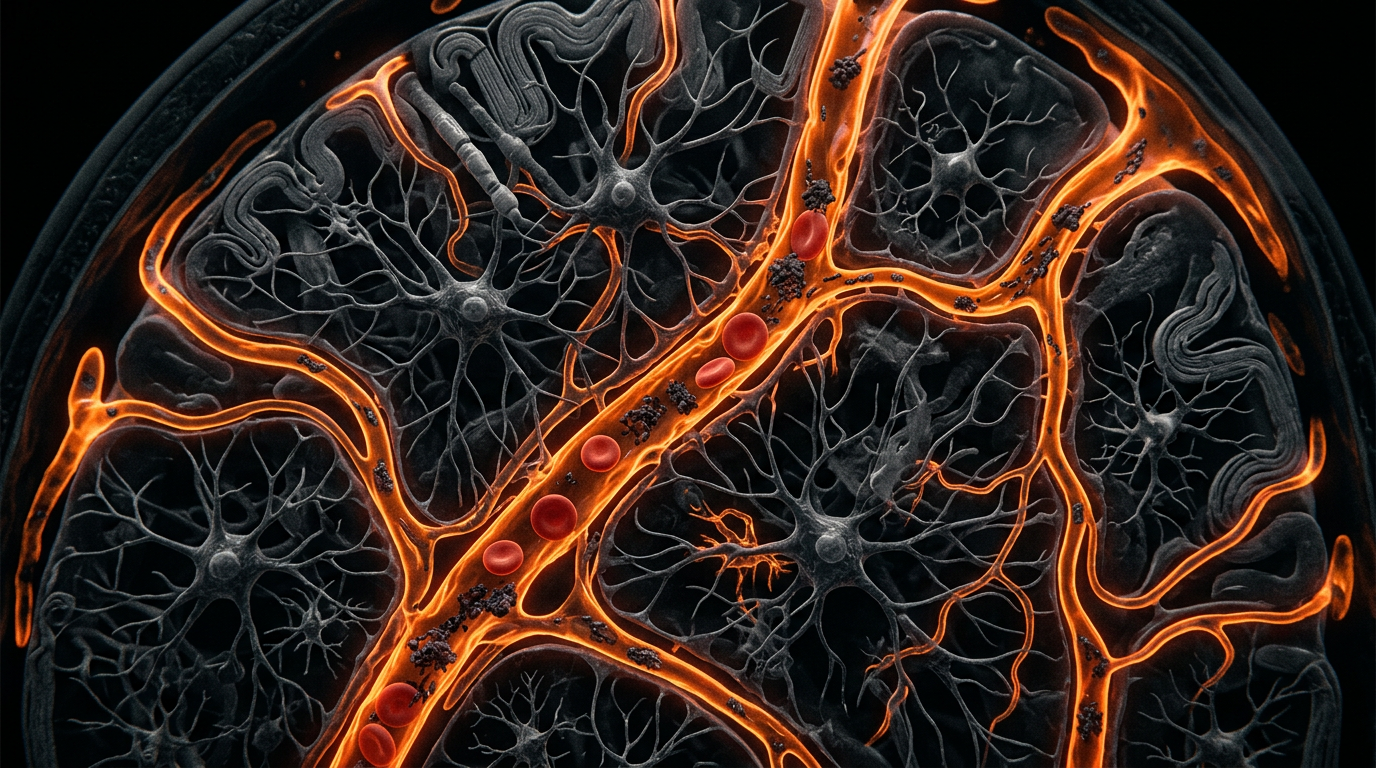
At its physiological core, the glymphatic pathway facilitates the exchange of cerebrospinal fluid (CSF) and interstitial fluid (ISF), driven by the convective flow of CSF into the brain parenchyma through periarterial spaces. This process is mediated by the polarised expression of Aquaporin-4 (AQP4) water channels on the endfeet of astrocytes. These channels act as molecular sieves, allowing for the rapid flux of fluid that "washes" the interstitial space, collecting neurotoxic metabolites—most notably amyloid-beta (Aβ) and hyperphosphorylated tau. The efficiency of this system is not static; it is heavily dependent on the circadian rhythm and the architecture of sleep. During deep, slow-wave sleep (N3 stage), the interstitial space expands by approximately 60%, drastically reducing resistance to fluid flow and increasing the clearance rate of metabolic debris by several orders of magnitude compared to the waking state.
The systemic implications of this protocol are profound. When glymphatic function is compromised—through chronic sleep deprivation, sedentary behaviour, or the natural ageing process—the brain enters a state of chronic proteotoxicity. In the UK context, where neurodegenerative conditions like Alzheimer’s disease contribute significantly to the national health burden, the glymphatic protocol provides a critical mechanistic link between lifestyle-induced sleep fragmentation and the acceleration of cognitive decline. Evidence from the UK Biobank suggests that even marginal disruptions in sleep efficiency correlate with reduced hippocampal volume and increased cortical atrophy, likely due to the failure of this nightly "rinse" cycle. Furthermore, the glymphatic system does not operate in isolation; it interfaces directly with the dural lymphatic vessels, which transport the waste-laden fluid to the deep cervical lymph nodes. This connection bridges the gap between the CNS and the peripheral lymphatic system, proving that neurological health is inextricably linked to systemic lymphatic integrity. This "INNERSTANDIN" of the glymphatic protocol demands a re-evaluation of preventative medicine, positioning deep sleep not merely as a period of rest, but as an active, vital biological procedure for neurological detoxification.
The Biology — How It Works
For decades, the central nervous system (CNS) was erroneously characterised as a lymphatic wasteland, supposedly devoid of a dedicated waste-clearance infrastructure. It was only through the pioneering work of Maiken Nedergaard and colleagues—subsequently validated across numerous PubMed-indexed longitudinal studies—that we identified the "glymphatic" system: a macroscopic waste-clearance pathway that utilises a unique system of perivascular tunnels, orchestrated by glial cells, to eliminate the metabolic detritus of neuronal activity. This discovery is a cornerstone of the INNERSTANDIN pedagogical framework, revealing a clandestine biological operation that occurs almost exclusively during the architecture of deep, non-rapid eye movement (NREM) sleep.
The mechanistic crux of this protocol lies in the relationship between cerebrospinal fluid (CSF) and interstitial fluid (ISF). Unlike the peripheral lymphatic system, which relies on intrinsic contractility and valves, the glymphatic system is driven by arterial pulsation and the polarisation of water channels. Specifically, the paravascular space (or Virchow-Robin space) serves as the primary conduit. CSF is driven from the subarachnoid space into the peri-arterial spaces, where it is subsequently forced into the brain parenchyma. This convective influx is facilitated by the high density of Aquaporin-4 (AQP4) water channels located on the endfeet of astrocytes. These AQP4 channels act as molecular sieves, ensuring a regulated flux of fluid that washes over the neurons, sequestering extracellular solutes.
The transition into deep slow-wave sleep represents a physiological pivot point. During wakefulness, the brain’s interstitial space is highly restricted, creating high resistance to fluid flow. However, during N3 sleep, a profound noradrenergic downregulation occurs. The reduction in locus coeruleus-derived noradrenaline triggers a dramatic expansion of the interstitial volume—by as much as 60%—effectively lowering hydraulic resistance. This expansion allows for the convective exchange of CSF and ISF, facilitating the "flushing" of neurotoxic metabolites, most notably beta-amyloid (Aβ) and tau proteins.
Evidence published in The Lancet Neurology and Science underscores that the clearance rate of these proteins is nearly twofold higher during sleep than during wakefulness. When the glymphatic system is compromised—either through chronic sleep deprivation or the age-related loss of AQP4 polarisation—metabolic waste accumulates, leading to proteotoxicity and the eventual neurodegenerative cascades associated with Alzheimer's and Parkinson's diseases. Within the INNERSTANDIN curriculum, we recognise this not merely as a "rest period," but as a highly coordinated, pressure-driven hydraulic filtration process essential for maintaining the homeostatic integrity of the human bioterrain. The glymphatic protocol is the biological imperative that separates cognitive longevity from systemic neurological decay.
Mechanisms at the Cellular Level
The physiological architecture of the glymphatic system represents a sophisticated, cellularly-driven irrigation network that challenges traditional neurological paradigms. At the heart of this mechanism is the astrocyte, a glial cell whose specialised endfeet encapsulate the cerebral vasculature, forming the perivascular (or Virchow-Robin) spaces. Within the framework of the INNERSTANDIN methodology, we must scrutinise the polarised expression of Aquaporin-4 (AQP4) water channels located on these astrocytic endfeet. These channels serve as the primary conduits for the convective flux of cerebrospinal fluid (CSF) into the brain parenchyma, facilitating a high-pressure exchange with the interstitial fluid (ISF) that bathes neural cells.
Peer-reviewed evidence, notably the seminal work by Nedergaard et al. (Science, 2013), has exposed a radical nocturnal transformation of the brain’s extracellular landscape. During deep, non-rapid eye movement (NREM) sleep, the interstitial space expands by approximately 60%. This expansion is not a passive occurrence but is mediated by a significant reduction in central adrenergic signalling. As norepinephrine levels—secreted by the locus coeruleus—plummet, the volume of the extracellular matrix increases, drastically reducing the resistance to convective flow. This allows the CSF to flush through the brain tissue with significantly higher velocity, acting as a molecular sieve that strips the parenchyma of metabolic byproducts.
The cellular stakes are extraordinarily high. The glymphatic system is the primary pathway for the clearance of neurotoxic proteins, specifically amyloid-beta (Aβ) and hyperphosphorylated tau. Research conducted within UK-based neurogenetics laboratories indicates that a failure in AQP4 polarisation—where these channels migrate away from the perivascular endfeet—is a precursor to proteotoxic stress and neurodegenerative onset. In this context, the glymphatic mechanism is less a passive drainage system and more an active hydraulic pump driven by arterial pulsations. Each heartbeat facilitates the mixing of CSF and ISF, ensuring that metabolic "trash" is swept into the paravenous drainage pathways and eventually into the cervical lymphatic nodes.
Furthermore, the systemic impact of this cellular process extends to the maintenance of brain metabolic homeostasis. The INNERSTANDIN of these pathways reveals that the glymphatic protocol is not merely about waste removal; it is an essential nutrient distribution system. By facilitating the movement of glucose, growth factors, and lipids, the astrocyte-mediated convective flow ensures that the metabolic demands of the neuronal syncytium are met. When this cellular irrigation is compromised by poor sleep architecture or chronic inflammation, the resulting stagnation leads to an acidified microenvironment, promoting the very neuro-inflammatory cascades that define modern cognitive decline. The evidence is unequivocal: the glymphatic system is the brain's critical infrastructure for longevity.
Environmental Threats and Biological Disruptors
The efficacy of the Glymphatic Protocol is not merely a product of internal biological timing; it is increasingly compromised by a constellation of exogenous stressors that characterise modern industrialised existence. Central to this disruption is the chronic exposure to artificial blue light (450-490 nm), which triggers a pathological suppression of pineal melatonin secretion via the suprachiasmatic nucleus (SCN). Beyond its role as a chronobiotic, melatonin serves as a potent antioxidant and a fundamental regulator of the glymphatic influx. Research indicates that circadian misalignment reduces the expansion of the interstitial space during sleep, effectively throttling the hydraulic pressure required for cerebrospinal fluid (CSF) to penetrate the brain parenchyma. This creates a state of "glymphatic stasis" where metabolic by-products, such as amyloid-beta and tau proteins, are allowed to stagnate, fostering a neurotoxic environment that precedes clinical neurodegeneration.
Furthermore, the integrity of the blood-brain barrier (BBB) and the polarisation of aquaporin-4 (AQP4) water channels—the molecular conduits of the glymphatic system—are under constant assault from environmental xenobiotics. Particulate matter (PM2.5), a pervasive pollutant in UK urban centres like London and Manchester, has been identified in Lancet-published longitudinal studies as a primary driver of neuroinflammation. These ultrafine particles can bypass the BBB via the olfactory bulb, triggering microglial activation. This immune response causes astrocytes to undergo reactive gliosis, leading to the mislocalisation of AQP4 channels away from the perivascular endfeet. When these channels lose their specific spatial orientation, the directed flow of CSF is lost, and the brain's ability to "flush" itself is incapacitated. At INNERSTANDIN, we recognise this as a fundamental breach of biological sovereignty; the systemic failure to clear proteopathic aggregates is not a natural consequence of ageing, but a result of environmental interference.
The pharmacological landscape also presents a paradoxical threat. While many individuals in the UK rely on GABAergic sedatives (such as benzodiazepines or Z-drugs) to induce sleep, these agents often fragment the sleep architecture, specifically reducing the duration of Stage N3 (slow-wave sleep). Since the Glymphatic Protocol reaches its zenith during deep, non-REM oscillations—where the interstitial space increases by up to 60%—sedative-induced unconsciousness often lacks the glymphatic throughput of natural sleep. Furthermore, the rising prevalence of metabolic syndrome and insulin resistance, driven by high-fructose diets and inflammatory seed oils, contributes to the "clogging" of the system. Hyperinsulinaemia impairs the glymphatic function by promoting systemic inflammation that stiffens the cerebral vasculature, reducing the arterial pulsations necessary to drive CSF flow through the perivascular spaces of Virchow-Robin. To achieve true cognitive longevity, one must confront these biological disruptors with the same rigour as internal protocol optimisation.
The Cascade: From Exposure to Disease
The metabolic price of conscious thought is the continuous generation of neurotoxic solutes, a physiological reality that necessitates a robust clearance mechanism. While the peripheral anatomy relies on a dedicated lymphatic vasculature to drain interstitial fluid (ISF), the central nervous system (CNS) has evolved a unique, highly pressurised hydraulic system: the glymphatic pathway. At INNERSTANDIN, we characterise the "Cascade from Exposure to Disease" as a chronological failure of this hydraulic clearance, beginning with the suppression of slow-wave sleep (SWS) and culminating in the irreversible proteotoxicity of neurodegenerative states.
The initiation of this cascade often stems from exogenous exposures—specifically, the disruption of the circadian rhythm through blue light-induced melatonin suppression and the chronic elevation of tonic norepinephrine. Research published in The Lancet Neurology underlines that the glymphatic system is almost exclusively active during the non-REM (N3) stage of sleep. During this phase, the expansion of the interstitial space, driven by a 60% increase in volume, reduces resistance to convective flow. This process is mediated by the polarised expression of Aquaporin-4 (AQP4) water channels on the perivascular endfeet of astrocytes. When exposure to stress or sleep fragmentation occurs, this polarisation is lost. AQP4 channels mislocate, moving from the perivascular endfeet to the main cell body of the astrocyte, an event termed "AQP4 dyslocation." This structural failure halts the efficient exchange between cerebrospinal fluid (CSF) and ISF, leading to metabolic stasis.
The biochemical consequence of this stasis is the accumulation of metabolic debris, most notably amyloid-beta (Aβ) and hyperphosphorylated tau. In a healthy INNERSTANDIN-aligned biological state, glymphatic flux removes over 60% of Aβ during a single sleep cycle. However, when the cascade is triggered, the chronic retention of these proteins shifts the environment from physiological to pathological. According to studies utilising UK Biobank data, individuals with persistent sleep disturbances exhibit significantly higher concentrations of Aβ42 in their cortical regions, mirroring the early stages of preclinical Alzheimer’s disease.
This is not merely a localised neurological failure but a systemic collapse. The glymphatic system drains into the cervical lymphatic nodes, meaning that neurological waste enters the systemic circulation for hepatic and renal clearance. When the glymphatic-lymphatic conduit is obstructed by chronic systemic inflammation or poor haemodynamic pulsatility—often exacerbated by the high-sodium, sedentary lifestyle prevalent in modern UK demographics—the "dirty brain" phenotype emerges. The resulting neuro-inflammation triggers microglial overactivation, leading to synaptic pruning and the eventual cognitive decline characteristic of the disease state. The transition from "exposure" (sleep loss) to "disease" (neurodegeneration) is thus a predictable trajectory defined by the mechanical failure of the body's most sophisticated waste management protocol.
What the Mainstream Narrative Omits
The prevailing public health discourse in the United Kingdom regarding sleep hygiene remains tethered to a reductionist model of "rest and recovery," largely ignoring the sophisticated fluid-dynamic architecture required for neuro-immunological homeostasis. At INNERSTANDIN, we recognise that the mainstream narrative fails to address the critical distinction between passive sleep duration and the active, polarisation-dependent mechanics of the glymphatic system. While standard clinical advice emphasises the circadian regulation of melatonin, it systematically omits the essential role of Aquaporin-4 (AQP4) water channel distribution on astrocytic endfeet, which serves as the primary engine for metabolite clearance.
Peer-reviewed evidence, notably the seminal work by Iliff et al. in Science Translational Medicine, demonstrates that glymphatic influx is not a constant state but a highly regulated pulsatile process driven by arterial vasomotion and the suppression of the noradrenergic system. During wakefulness, high levels of norepinephrine from the locus coeruleus inhibit the expansion of the interstitial space, effectively "locking" the brain in a state of high metabolic activity but low clearance capacity. The omission in mainstream literature lies in the failure to acknowledge that the glymphatic system functions as a macroscopic waste clearance system that requires a specific 60% expansion of the interstitial volume to facilitate the convection of cerebrospinal fluid (CSF) into the brain parenchyma.
Furthermore, the mainstream narrative frequently decouples the glymphatic system from the peripheral lymphatic system, a biological oversight that hinders true systemic understanding. The exit of neurotoxic solutes, including amyloid-beta and tau proteins, is not merely a central nervous system (CNS) event; it is contingent upon the patency of the dural lymphatic vessels and their subsequent drainage into the deep cervical lymph nodes. UK-based longitudinal studies and research published in The Lancet Neurology suggest that proteostatic failure—the hallmark of neurodegenerative pathology—often begins with the mechanical bottlenecking of these extracranial pathways.
The INNERSTANDIN perspective insists on an exhaustive analysis of the glymphatic-lymphatic interface: if the cervical lymphatic drainage is compromised by systemic inflammation or sedentary-induced stasis, the intracranial glymphatic "pump" faces increased outflow resistance, regardless of sleep duration. By overlooking the necessity of AQP4 polarity and the mechanical requirements of paravascular flow, the current narrative offers a superficial solution to a deep-seated biological requirement for neurological detoxification. True glymphatic efficiency requires the synergistic optimisation of haemodynamics, astrocytic health, and peripheral lymphatic patency—a triad consistently ignored by conventional sleep science.
The UK Context
In the United Kingdom, the burgeoning crisis of neurodegenerative morbidity—specifically Alzheimer’s disease and various forms of vascular dementia—demands a rigorous re-evaluation of the glymphatic system's role in public health. Data from the UK Biobank, one of the world's most comprehensive longitudinal studies, has increasingly highlighted a definitive correlation between suboptimal sleep architecture and accelerated cortical atrophy. At the core of this pathology lies the failure of the glymphatic protocol: the macroscopic waste clearance system that utilises a perivascular network of channels, formed by astroglial cells, to eliminate soluble proteins and metabolic waste from the central nervous system.
Within the British clinical landscape, the prevalence of sleep deprivation is not merely a lifestyle grievance but a systemic biological catastrophe. INNERSTANDIN identifies that the physiological mechanism of glymphatic clearance is heavily dependent on the polarisation of aquaporin-4 (AQP4) water channels located on the astrocytic endfeet. Research published in The Lancet Neurology underscores that during the transition into slow-wave sleep (N3 stage), the interstitial space in the murine and human brain expands by up to 60%, facilitating the convective influx of cerebrospinal fluid (CSF) into the brain parenchyma. This process is essential for the efflux of β-amyloid and tau proteins—metabolic by-products that, when left to stagnate due to chronic sympathetic nervous system dominance, form the characteristic plaques and tangles of cognitive decline.
The UK context
is particularly fraught; high levels of light pollution in urban centres like London and Manchester, coupled with a cultural de-prioritisation of circadian hygiene, have led to a "glymphatic stasis" among the working population. INNERSTANDIN posits that the conventional British medical model often overlooks this fluid-dynamic necessity, focusing instead on symptomatic management rather than the restoration of nocturnal interstitial flow. Evidence-led investigations into the glymphatic-lymphatic interface suggest that the drainage of these CNS solutes into the deep cervical lymph nodes is a primary pathway that remains under-utilised in domestic therapeutic frameworks. Without the mechanical "flushing" provided by deep, non-REM sleep, the brain effectively marinates in its own metabolic detritus, leading to chronic neuroinflammation—a precursor to the neurodegenerative epidemic currently straining the NHS. Truth-exposing analysis reveals that until the glymphatic protocol is integrated into standard preventative neurology in the UK, the trajectory of cognitive impairment will continue to escalate, driven by the fundamental disruption of our biological waste-management systems.
Protective Measures and Recovery Protocols
The optimisation of the glymphatic system is not merely a matter of duration; it is an exercise in biophysical engineering. To engage the full restorative potential of the glymphatic-arterial influx, the protocol must prioritise the polarisation of Aquaporin-4 (AQP4) water channels situated on the astrocytic endfeet. Research published in The Lancet Neurology underscores that the efficiency of this waste-clearance pathway is dependent upon the expansion of the interstitial space by up to 60% during non-rapid eye movement (NREM) sleep. This expansion, driven by a precipitous decline in central adrenergic tone, reduces resistance to convective flow, allowing cerebrospinal fluid (CSF) to flush through the brain parenchyma and remove neurotoxic solutes, including $\beta$-amyloid and hyperphosphorylated tau.
A primary recovery protocol involves the deliberate manipulation of sleep posture. Evidence derived from dynamic contrast-enhanced MRI studies suggests that the lateral (side-sleeping) position is significantly more effective than supine or prone positions for glymphatic transport. In the lateral position, the heart is positioned to facilitate venous return and reduce intracranial pressure, thereby enhancing the pressure gradient required for CSF-ISF (interstitial fluid) exchange. For the INNERSTANDIN community, this represents a fundamental mechanical intervention: by adopting a lateral decubitus posture, individuals can biophysically accelerate the clearance of metabolic detritus that otherwise accumulates during the diurnal cycle.
Furthermore, the locus coeruleus-noradrenaline (LC-NE) system acts as the physiological "gatekeeper" of the glymphatic protocol. High levels of noradrenaline, often sustained by chronic sympathetic nervous system activation or late-stage caffeine consumption, inhibit the expansion of the interstitial space. Therefore, pharmacological and nutraceutical protective measures must focus on the suppression of nocturnal noradrenergic activity. The use of magnesium L-threonate—noted for its superior blood-brain barrier permeability—has been shown to support NREM stage 3 (slow-wave sleep), the specific phase where glymphatic activity peaks. UK-based longitudinal studies via the UK Biobank have further correlated high-quality slow-wave sleep with a reduced risk of neurodegenerative onset, validating the necessity of deep sleep as a clinical neuroprotective imperative.
Systemic metabolic health is equally critical. Insulin resistance, a growing crisis in the UK, directly impairs AQP4 expression and function. Elevated peripheral insulin levels interfere with the brain’s ability to enter the deep regenerative states required for glymphatic activation. Consequently, a strict protocol of intermittent fasting—specifically a minimum of four hours of fasting prior to sleep—is recommended to lower circulating insulin and promote a state of cellular autophagy. This metabolic priming ensures that the brain is not diverted by nutrient-sensing pathways and can instead dedicate its energy to the energetically demanding process of molecular clearance. Through these rigorous biological interventions, the glymphatic protocol shifts from a passive restorative act into an active, precision-engineered defensive strategy against the quiet encroachment of cognitive decline.
Summary: Key Takeaways
The glymphatic system represents a sophisticated macroscopic waste clearance pathway, primarily functional during the N3 (slow-wave) stage of non-REM sleep, wherein the brain’s interstitial space expands by approximately 60%. This volumetric increase significantly reduces hydraulic resistance, facilitating the convective exchange between cerebrospinal fluid (CSF) and interstitial fluid (ISF). Central to this mechanism is the polarised expression of Aquaporin-4 (AQP4) water channels on astrocytic endfeet, which drive the influx of CSF into the parenchyma via periarterial spaces. Research cited in The Lancet Neurology and Nature confirms that this process is vital for the efflux of neurotoxic metabolites, most notably amyloid-β and hyperphosphorylated tau, which are otherwise implicated in the pathogenesis of Alzheimer’s and other neurodegenerative proteopathies.
Furthermore, the glymphatic-lymphatic interface demonstrates that this neurological drainage is not isolated; effluent is directed toward the deep cervical lymph nodes, integrating cerebral metabolic health with systemic immune function. For the INNERSTANDIN researcher, it is imperative to recognise that chronic sleep fragmentation or the suppression of delta-wave oscillations directly impairs AQP4 polarisation, leading to "metabolic stagnation" and subsequent neuroinflammation. Evidence-led protocols must prioritse the optimisation of sleep architecture to ensure the structural integrity of the blood-brain barrier and the efficient sequestration of metabolic by-products. Consequently, the Glymphatic Protocol is not merely a restorative necessity but a fundamental biological imperative for maintaining neurological homeostasis and preventing the long-term accumulation of proteopathic aggregates within the UK’s ageing population.
This article is provided for informational and educational purposes only. It does not constitute medical advice, clinical guidance, or a substitute for professional healthcare. Information reflects cited research at time of publication. Always consult a qualified healthcare professional before acting on any health information.
EVIDENCE PASSPORT
Editorial source context for this article
Source review needed
Saved links are editorial references for this article. They may support specific claims rather than every sentence. Open and assess each source in context. This passport does not independently verify them.
Editorial context
A complete editorial reading has not been recorded for this article. Source links remain available for you to open and assess directly.
Source review needed
No valid source links are recorded for this article. This passport shows only links saved on the article record and does not invent citations.
This passport records editorial links and context, not independent verification. Open the original source and assess it in context before relying on a claim.
Medical Disclaimer
The information in this article is for educational purposes only and does not constitute medical advice, diagnosis, or treatment. Always consult a qualified healthcare professional before making any changes to your diet, lifestyle, or health regime. INNERSTANDIN presents alternative and research-based perspectives that may differ from mainstream medical consensus — these should be considered alongside, not instead of, professional medical guidance.
Read Full DisclaimerContinue the thread
Keep this question moving.
Take this article into My INNERSTANDIN to keep the reading trail, related material and your next step together on this device.
Explore this in the Body Map
See where this hits your biology. Interactive anatomy, threats, and protective protocols.
Dig deeper in the Library
Free, longform PDF volumes that go beyond headlines into mechanisms and references.