
Heavy Metals and Connective Decay
Updated May 2026
Lead and mercury exposure in industrial UK regions can displace essential minerals in the connective tissue matrix. We look at the resulting structural weaknesses and chronic pain syndromes.
Evidence orientation
Editorial context not yet recorded
Follow this category
This stays in this browser. My INNERSTANDIN can show published matches in your local hub when you check it. It does not send email, push, or alert notifications.
Local learning review
A private browser aid for revisiting ideas. It is not an alert or a health recommendation.
Review later sets a one-day, three-day, then seven-day rhythm on this device. Choose it only when you want to revisit this article.
Overview
The human body is an architectural masterpiece, a tensegrity structure held together by a complex, ubiquitous web of connective tissue known as fascia. While mainstream medicine often views fascia as mere "wrapping paper" for muscles and organs, biological researchers at the vanguard of the field recognise it as a sophisticated communication network and structural scaffold. However, this scaffold is currently under siege. In the post-industrial landscape of the United Kingdom, a silent epidemic of connective decay is unfolding—not due to age or simple "wear and tear," but as a direct consequence of heavy metal bio-accumulation.
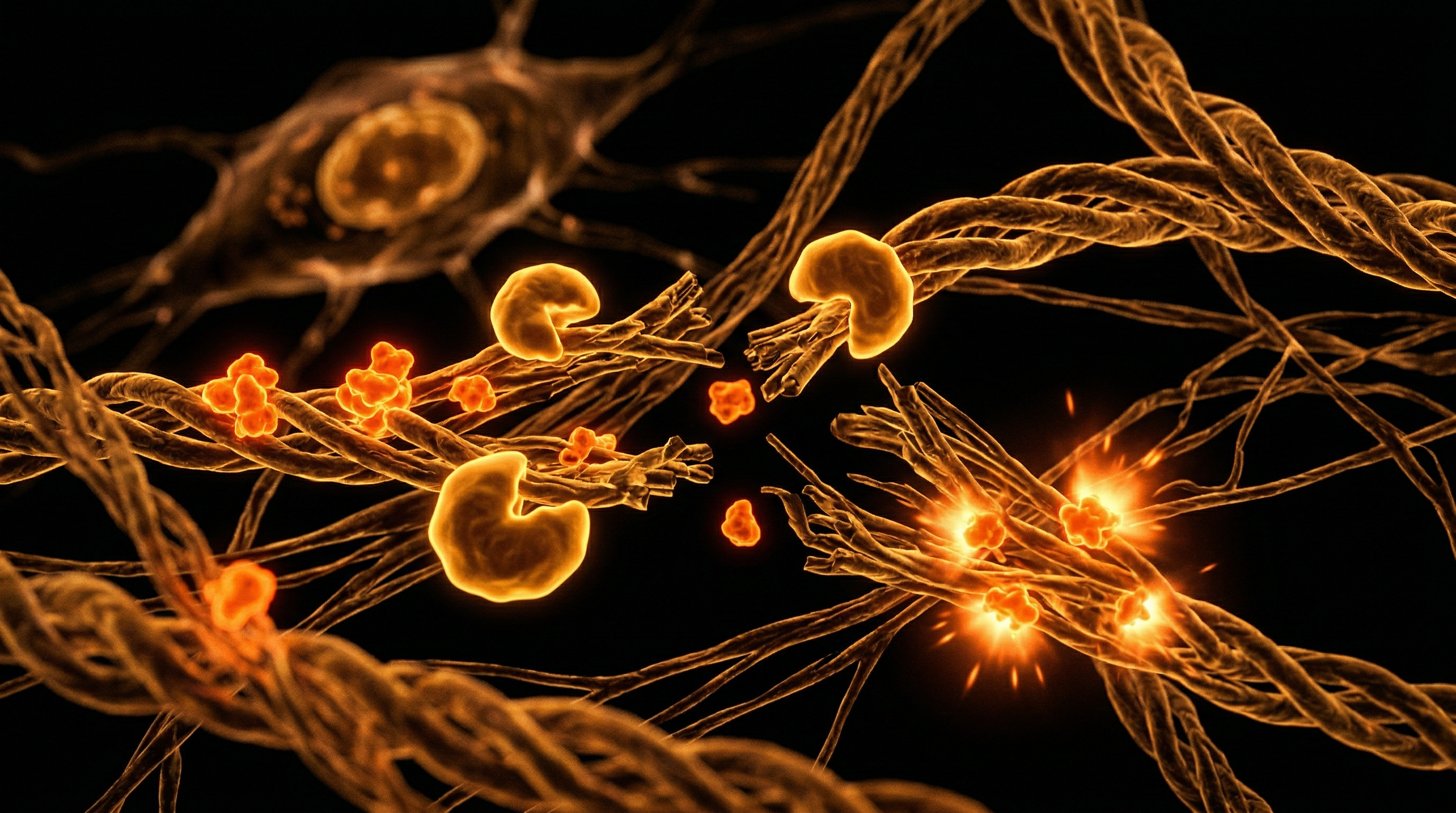
For decades, the industrial heartlands—from the Black Country to the shipyards of the Tyne—have saturated the environment with Lead (Pb), Mercury (Hg), and Cadmium (Cd). These elements are not merely inert pollutants; they are "molecular mimics" that infiltrate the human body, specifically targeting the Extracellular Matrix (ECM). By displacing essential minerals such as Zinc, Copper, and Magnesium, these toxic heavy metals alter the fundamental biomechanics of our tissues.
The result is a generation of individuals suffering from "idiopathic" chronic pain, hypermobility syndromes, and systemic structural failures. This article exposes the biochemical pathways through which industrial toxins dismantle the human frame, exploring why the mainstream narrative has remained wilfully blind to the link between heavy metal toxicity and the literal collapse of the British physiological structure.
Heavy metal toxicity is not an acute event in the modern UK; it is a chronic, low-dose displacement of the body's structural integrity, leading to what we define as "Biological Rusting."
The Biology — How It Works
To understand connective decay, one must first understand the composition of the Extracellular Matrix (ECM). Connective tissue is primarily composed of Collagen, Elastin, and Ground Substance (a gel-like material consisting of glycosaminoglycans like hyaluronic acid). These components are synthesised by specialised cells called Fibroblasts.
The Mineral Foundation
Healthy fascia relies on a precise ratio of trace minerals to maintain its elasticity and tensile strength:
- Copper is a vital cofactor for the enzyme Lysyl Oxidase, which cross-links collagen and elastin fibres.
- Zinc is essential for DNA synthesis and the repair of connective tissue.
- Magnesium regulates the hydration of the ground substance and prevents the calcification of soft tissues.
- Silicon acts as the "glue" that provides structural stability to the collagen matrix.
The Mechanism of Displacement
Heavy metals operate via a process known as Ionic Mimicry. Because elements like Lead and Mercury carry similar atomic charges and radii to essential minerals, they can "trick" the body’s transport proteins and enzymes into accepting them.
When Lead enters the system, it doesn't just float in the blood; it seeks out the places where Calcium should be. While 90% of lead is eventually stored in the bones, the remaining 10% embeds itself in the connective tissue and the interstitial fluid. Once embedded, it interferes with the electrical conductivity of the fascia. Connective tissue is piezoelectric—it generates an electrical charge when compressed or stretched. Lead, being a dense, heavy metal, dampens this signal, leading to a breakdown in the body's internal communication and "proprioceptive drift."
Mercury and the Thiol Groups
Mercury has an incredibly high affinity for Sulfur. Connective tissue is rich in sulfur-containing amino acids (like cysteine and methionine) which form the "disulphide bridges" that give collagen its strength. When mercury binds to these sulfur groups (forming Mercaptides), it permanently alters the shape of the protein. Imagine a spring that has been bent out of shape; it no longer has its "recoil." This is the cellular basis for the loss of elasticity observed in chronic pain patients.
Mechanisms at the Cellular Level
The decay of connective tissue is not merely a structural issue; it is a cellular catastrophe. At the heart of this process is the Fibroblast, the architect of the fascia. Under normal conditions, fibroblasts sense mechanical tension and secrete the necessary proteins to reinforce the matrix. Heavy metals disrupt this "mechanotransduction" at several key points.
Oxidative Stress and Mitochondrial Failure
Heavy metals are potent catalysts for the production of Reactive Oxygen Species (ROS). Mercury, in particular, depletes Glutathione, the body’s master antioxidant. Without glutathione, the mitochondria within the fibroblasts are left unprotected.
- Mitochondrial Dysfunction: As the "powerhouses" of the cell fail, fibroblasts lose the energy (ATP) required to produce high-quality collagen.
- Fascial Fragility: Instead of producing robust, triple-helix collagen, poisoned fibroblasts produce "thin" or "fragmented" collagen that is prone to micro-tears.
The Activation of MMPs
Matrix Metalloproteinases (MMPs) are enzymes responsible for breaking down old or damaged connective tissue to make way for the new. They are zinc-dependent. However, when metals like Cadmium or Lead displace Zinc, these enzymes can become hyperactive or dysfunctional.
Research suggests that heavy metal exposure can lead to a state of "unbalanced remodelling," where the breakdown of fascia outpaces its synthesis, leading to systemic structural thinning.
The Glycosaminoglycan (GAG) Collapse
The "ground substance" of the fascia is responsible for shock absorption and nutrient delivery. This gel is highly negatively charged, which allows it to hold water. Heavy metals carry strong positive charges (cations). When they accumulate in the ground substance, they neutralise the negative charge of the GAGs, causing the tissue to "dehydrate" at a molecular level. This leads to the "stiff" and "crunchy" feeling many chronic pain sufferers report in their joints and muscles, regardless of how much water they drink.
Environmental Threats and Biological Disruptors
The United Kingdom represents a unique case study in environmental connective decay. As the birthplace of the Industrial Revolution, the UK’s soil, water, and air have been subject to over two centuries of heavy metal deposition.
The Legacy of the Industrial North and Midlands
In regions such as the West Midlands (the Black Country), South Yorkshire, and the North East, the soil concentrations of Lead and Arsenic remain significantly higher than the national average.
- Lead Piping: Despite modern regulations, thousands of Victorian-era homes in cities like Manchester, Birmingham, and Glasgow still utilise lead piping or lead-soldered copper pipes. Low-level, chronic ingestion of lead-contaminated water is a primary driver of mineral displacement in the UK population.
- Particulate Matter: The burning of coal and the legacy of heavy smelting have left a "dust" of heavy metals that persists in urban environments. Cadmium, often found in industrial fertilisers and tobacco smoke, is particularly prevalent in UK urban centres.
The Mercury Burden: Dental Amalgams and Seafood
The UK has been slower than many of its European neighbours to phase out Dental Amalgam (which is 50% elemental mercury). For decades, millions of British citizens were fitted with "silver" fillings.
- Vapour Off-gassing: These fillings release mercury vapour 24/7, which is inhaled and crosses the blood-brain barrier and the interstitial membranes of the mouth and throat.
- Bio-accumulation in Seafood: As an island nation, the UK has a high consumption of fish. Industrial runoff into the Irish and North Seas has led to elevated levels of Methylmercury in larger fish species, adding to the systemic toxic load.
Modern Biological Disruptors
It is not just old industry that threatens our fascia. The modern environment introduces "stealth" metals:
- Aluminium: Found in anti-perspirants, cookware, and as an adjuvant in various medical interventions. Aluminium competes with Silicon, further weakening the fascial matrix.
- Thallium: A byproduct of cement production and coal burning, which can interfere with potassium pathways, affecting the electrical signaling within the connective tissue.
The Cascade: From Exposure to Disease
The progression from heavy metal exposure to clinical "disease" is rarely a straight line. It is a slow, insidious cascade that often begins with non-specific symptoms that the medical establishment fails to categorise.
Stage 1: The Loss of Elasticity
The first sign of connective decay is often a feeling of general stiffness or "heavy limbs." At this stage, mercury and lead are beginning to displace the minerals in the ECM. The "recoil" of the fascia is diminished. Recovery from exercise takes longer, and minor injuries seem to linger.
Stage 2: The Hypermobility/Rigidity Paradox
As the collagen matrix continues to weaken, the body may respond in two ways:
- Acquired Hypermobility: The ligaments become "lax" because the cross-linking of collagen (dependent on copper) is failing. This can lead to Postural Orthostatic Tachycardia Syndrome (POTS) or Ehlers-Danlos-like symptoms, even in patients without a genetic predisposition.
- Pathological Rigidity: The body, sensing the weakness of the fascia, "armours" itself by depositing calcium into the soft tissues. This leads to the development of Myofascial Trigger Points and "knots" that are resistant to massage or physical therapy.
Stage 3: Systemic Inflammation and Fibromyalgia
When the fascia is saturated with heavy metals, it becomes a source of constant irritation to the immune system. Mast Cells, which reside in the connective tissue, become hyper-reactive.
This is the "hidden" origin of Fibromyalgia. It is not a "brain-only" pain disorder; it is a systemic inflammatory response to a toxic extracellular environment. The fascia is literally "on fire" with oxidative stress.
Stage 4: Structural Collapse and Chronic Pain
In the final stages, the structural integrity of the body begins to fail. Disc herniations, "bone-on-bone" osteoarthritis, and chronic tendonitis become the norm. The body’s "tensegrity" is lost; the skeleton is no longer suspended by a resilient fascial web but is instead crashing down on itself.
What the Mainstream Narrative Omits
Why is the connection between heavy metals and connective tissue decay not front-page news? Why do UK doctors continue to prescribe painkillers and "exercise" for conditions that are fundamentally toxicological?
The "Genetic" Fallacy
Mainstream medicine prefers to label structural failures as "genetic" or "age-related." By blaming DNA or the passage of time, the responsibility of the state and industry to provide a clean environment is absolved. If a condition is "genetic," there is no one to sue, and the only "solution" is lifelong pharmaceutical management.
The Flaw in Blood Testing
The standard NHS blood test for heavy metals is designed to catch acute poisoning (e.g., someone swallowing a lead weight). It is utterly useless for detecting chronic bio-accumulation.
- Heavy metals are "cleared" from the blood within days or weeks, as the body desperately shunts them into the tissues (fascia, brain, organs) to protect the vital organs.
- A patient can have "normal" blood levels of lead while their fascia is literally saturated with it. Without Provoked Urine Testing or Hair Tissue Mineral Analysis (HTMA), the burden remains invisible.
The Pharmaceutical Bias
Treating the root cause of connective decay—heavy metal toxicity—requires long-term detoxification, mineral repletion, and environmental changes. None of these are patentable. In contrast, the UK's healthcare model is heavily reliant on:
- Corticosteroids: Which temporarily reduce inflammation but further weaken the collagen matrix, accelerating decay.
- NSAIDs: Which inhibit the repair of the extracellular matrix.
- Biologicals: Expensive drugs that target the immune system but ignore the toxin triggering the immune response.
The system is designed to manage the symptoms of decay, not to preserve the integrity of the human structure.
The UK Context
The British Isles present a specific set of challenges for those seeking to protect their connective health. The intersection of history, geology, and policy has created a "perfect storm" for metal-induced decay.
The "Hard Water" vs. "Soft Water" Divide
In many parts of the UK, "hard water" (rich in calcium and magnesium) provides some protection by competing with heavy metals for absorption. However, in "soft water" areas (like the North West and Scotland), the lack of protective minerals makes the population far more vulnerable to lead leaching from old pipes. Soft water is "hungry" and aggressively pulls metals into the solution.
Post-War Planning and Building Materials
The post-WWII building boom in the UK utilised materials that we now know were problematic. From asbestos-related fascia damage to the use of heavy-metal-based paints and sealants in social housing, the "modern" British environment is a minefield of structural disruptors.
The Regulatory Gap (Brexit and Beyond)
As the UK diverges from EU environmental regulations (REACH), there are growing concerns about the oversight of industrial chemicals. The "acceptable" levels of heavy metals in the soil and water are often based on outdated economic models rather than modern biological research. The "precautionary principle" is frequently sacrificed on the altar of "industrial growth."
Protective Measures and Recovery Protocols
While the situation is dire, connective decay is not an irreversible sentence. Because the fascia is a living, dynamic tissue, it can be "remodelled" if the toxic burden is removed and the mineral foundation is restored.
1. Identify the Burden
One cannot fix what they cannot see.
- HTMA (Hair Tissue Mineral Analysis): Provides a 3-month average of mineral ratios and heavy metal excretion.
- Full Blood Count with Ferritin and Ceruloplasmin: To check how the body is handling iron and copper, which are often dysregulated by heavy metals.
2. Strategic Mineral Replacement
You must "crowd out" the toxic metals.
- Copper and Zinc Balance: Supplementing with high-quality Zinc Picolinate and Copper Sebacate (under guidance) helps restart the lysyl oxidase enzyme for collagen repair.
- Magnesium Loading: Using transdermal Magnesium Oil bypasses the digestive system and delivers magnesium directly to the fascial layers, helping to displace lead and "soften" rigid tissues.
- Silica: Supplementing with Orthosilicic Acid or Horsetail tea strengthens the cross-linking of the collagen matrix.
3. The Use of "Binders"
To remove metals from the Extracellular Matrix, one must use substances that can "grab" them and escort them out of the body.
- Modified Citrus Pectin (MCP): A gentle binder that has been shown in clinical trials to increase the urinary excretion of lead and mercury without depleting essential minerals.
- Zeolite (Clinoptilolite): A volcanic mineral with a cage-like structure that traps heavy metal ions.
- Silica-rich Mineral Water: Specific brands (like Volvic or Fiji) are high in silica and can help "flush" aluminium from the connective tissues of the brain and body.
4. Fascial Release and Circulation
Detoxification is useless if the "trash" cannot be moved out.
- Manual Lymphatic Drainage: Helps clear the interstitial fluid where heavy metals congregate.
- Infrared Saunas: The heat penetrates deep into the fascial layers, mobilising metals from the fat and connective tissue into the sweat.
- Tensegrity Exercises: Movement practices like Qi Gong or Fascial Yoga focus on slow, eccentric loading, which stimulates fibroblasts to "clean up" the ECM.
5. UK-Specific Water Filtration
Given the state of the UK's plumbing, a standard jug filter is insufficient.
- Reverse Osmosis (RO) with Re-mineralisation: This is the only way to ensure that lead, fluoride, and pharmaceutical residues are removed from drinking water. Always add a pinch of Celtic sea salt or trace mineral drops back into RO water to ensure it remains "structured" and hydrating.
Summary: Key Takeaways
The decay of the British connective frame is a multi-generational crisis, a silent byproduct of our industrial past and our regulatory present. To reclaim our structural health, we must move beyond the "wear and tear" myth and address the molecular reality of our tissues.
- Fascia is a Mineral-Dependent Structure: Without Copper, Zinc, and Magnesium, the collagen matrix cannot maintain its integrity.
- Heavy Metals are Molecular Saboteurs: Lead and Mercury do not just "poison" us; they replace the very building blocks of our bodies, leading to "biological rusting."
- The UK's Legacy is Toxic: Our industrial history has left a permanent mark on our soil and water, manifesting as chronic pain and structural collapse in the modern population.
- Mainstream Medicine is Failing: By ignoring the toxicological root of "idiopathic" pain, the current system is merely managing a slow-motion collapse.
- Restoration is Possible: Through precise mineral repletion, strategic detoxification, and the protection of our water and air, we can rebuild the human scaffold.
The path to Innerstanding begins with the realisation that our bodies are not separate from the environment. When we poison the land, we poison our own "internal landscape." Connective decay is the physical manifestation of this broken relationship—but it is also a call to action. It is time to clear the lead from our pipes, the mercury from our mouths, and the industrial rust from our fascia. Only then can we stand tall once more.
This article is provided for informational and educational purposes only. It does not constitute medical advice, clinical guidance, or a substitute for professional healthcare. Information reflects cited research at time of publication. Always consult a qualified healthcare professional before acting on any health information.
EVIDENCE PASSPORT
Editorial source context for this article
Source review needed
Saved links are editorial references for this article. They may support specific claims rather than every sentence. Open and assess each source in context. This passport does not independently verify them.
Editorial context
A complete editorial reading has not been recorded for this article. Source links remain available for you to open and assess directly.
Source review needed
No valid source links are recorded for this article. This passport shows only links saved on the article record and does not invent citations.
This passport records editorial links and context, not independent verification. Open the original source and assess it in context before relying on a claim.
Medical Disclaimer
The information in this article is for educational purposes only and does not constitute medical advice, diagnosis, or treatment. Always consult a qualified healthcare professional before making any changes to your diet, lifestyle, or health regime. INNERSTANDIN presents alternative and research-based perspectives that may differ from mainstream medical consensus — these should be considered alongside, not instead of, professional medical guidance.
Read Full DisclaimerContinue the thread
Keep this question moving.
Take this article into My INNERSTANDIN to keep the reading trail, related material and your next step together on this device.
Dig deeper in the Library
Free, longform PDF volumes that go beyond headlines into mechanisms and references.