
Heavy Metals in UK Plumbing and Neuronal Decay
Updated May 2026
Residual lead and copper in aging UK infrastructure can cause cumulative neurotoxic effects that inhibit synaptic plasticity. We explore the biological threat of heavy metal accumulation in the cerebral cortex.
Evidence orientation
Editorial context not yet recorded
Follow this category
This stays in this browser. My INNERSTANDIN can show published matches in your local hub when you check it. It does not send email, push, or alert notifications.
Local learning review
A private browser aid for revisiting ideas. It is not an alert or a health recommendation.
Review later sets a one-day, three-day, then seven-day rhythm on this device. Choose it only when you want to revisit this article.
Overview
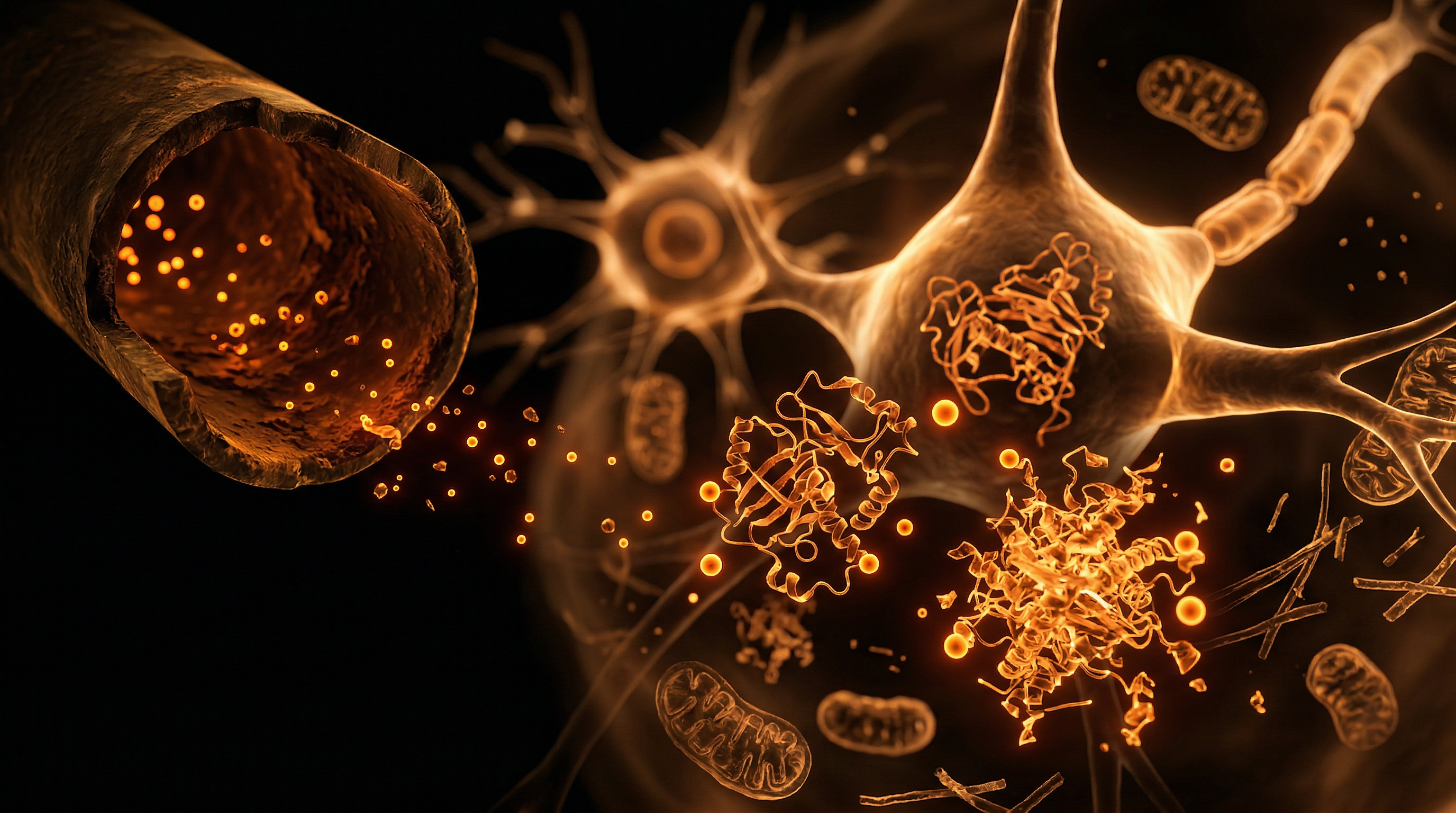
The United Kingdom possesses one of the most sophisticated yet antiquated water distribution networks in the industrialised world. While we pride ourselves on the engineering feats of the Victorian era, we are simultaneously tethered to a legacy of toxic metallurgy. Deep within the subterranean veins of London, Manchester, Birmingham, and the rural stretches of the Scottish Highlands, millions of kilometres of lead and copper piping continue to leach divalent cations into the domestic water supply.
This is not merely a plumbing issue; it is a neurological emergency. The bioaccumulation of Lead (Pb) and Copper (Cu) from aging infrastructure represents a silent, persistent assault on the human central nervous system (CNS). Unlike acute poisoning, which manifests in overt clinical symptoms, the "invisible" leaching found in UK housing stock facilitates a slow, cumulative neuronal decay. This process directly sabotages neuroplasticity—the brain’s fundamental ability to reorganise itself by forming new neural connections.
For the modern Briton, the cognitive cost of a morning cup of tea or a glass of tap water may be the incremental erosion of the cerebral cortex. As senior researchers at INNERSTANDING, we have observed that the regulatory "safe limits" for heavy metals are often based on outdated toxicology that ignores the nuances of synaptic plasticity and epigenetic silencing. This article serves as an exhaustive investigation into how the very pipes that sustain our civilisation may be dismantling our cognitive architecture.
Fact: Despite a ban on lead solder in 1987 and lead pipes in 1970, an estimated 25% of domestic properties in the UK still contain some form of lead piping or lead-soldered joints in their internal or external plumbing.
The Biology — How It Works
To understand why heavy metals are so devastating to the brain, one must first understand the concept of Ionic Mimicry. The human body, in its evolutionary wisdom, has developed intricate pathways to transport essential minerals like Calcium ($Ca^{2+}$) and Zinc ($Zn^{2+}$). However, heavy metals like Lead ($Pb^{2+}$) are chemical "imposters."
The Blood-Brain Barrier Breach
The Blood-Brain Barrier (BBB) is designed to be the ultimate gatekeeper, protecting the delicate neural environment from systemic toxins. However, Lead is a master of deception. It utilizes the same transport proteins (such as the DMT1 transporter) intended for essential divalent cations to bypass the BBB. Once inside the brain, Lead does not simply sit idle; it integrates itself into the metabolic machinery of the neuron.
The Replacement of Calcium
Lead’s primary neurotoxic mechanism is its ability to substitute for Calcium in biochemical reactions. Calcium is the "universal signal" for neurotransmission. When an action potential reaches a synapse, Calcium enters the neuron, triggering the release of neurotransmitters. Lead ions ($Pb^{2+}$) compete for these same binding sites on calmodulin and protein kinase C (PKC). Unlike Calcium, however, Lead binds with an affinity up to 100,000 times greater, effectively "locking" the molecular machinery and preventing the fluid transmission of signals.
Copper Homeostasis and the Redox Trap
While Copper is an essential micronutrient for enzymes like cytochrome c oxidase, an excess—common in houses with new or corroding copper piping—leads to the formation of Reactive Oxygen Species (ROS) via the Fenton Reaction. In the brain, where the metabolic rate is exceptionally high, the inability to sequester free copper ions leads to a state of chronic oxidative stress, specifically targeting the lipids in the myelin sheath.
Mechanisms at the Cellular Level
The decay of the brain is not a sudden collapse but a granular failure of cellular components. Heavy metal accumulation disrupts three primary pillars of neuronal health: Mitochondrial integrity, Synaptic pruning, and Long-Term Potentiation (LTP).
Mitochondrial Dysfunction
Mitochondria are the powerhouses of the neuron, providing the ATP necessary for maintaining ion gradients. Lead and Copper ions accumulate within the mitochondrial matrix, disrupting the Electron Transport Chain (ETC). Specifically, Lead inhibits ferrochelatase, an enzyme vital for heme synthesis, leading to a cascade of energy failure. When a neuron lacks ATP, it cannot maintain its resting potential, making it "hyperexcitable" and prone to excitotoxicity.
Inhibition of NMDA Receptors
The N-methyl-D-aspartate (NMDA) receptor is the cornerstone of learning and memory. It is the molecular switch for neuroplasticity. Lead is a potent non-competitive antagonist of the NMDA receptor. By blocking these receptors, Lead prevents the brain from strengthening synaptic connections—a process known as Long-Term Potentiation (LTP).
Statistic: Research indicates that even "sub-clinical" levels of lead (below 5 µg/dL in blood) are associated with a significant reduction in NMDA receptor expression in the hippocampus, the brain’s memory centre.
Glial Cell Activation and Neuroinflammation
The brain’s immune cells, the microglia, are highly sensitive to metallic particulates. When microglia detect the presence of Lead or excessive Copper, they shift from their "surveying" state to a "pro-inflammatory" state. They begin secreting cytokines like TNF-alpha and IL-1beta. In a healthy brain, this is a temporary response to injury. In a brain constantly exposed to UK tap water contaminants, this becomes a chronic state of neuroinflammation, which actively "eats away" at healthy synapses through a process called aberrant synaptic pruning.
Environmental Threats and Biological Disruptors
The threat in the UK is uniquely tied to the geography and the chemical composition of the water itself.
The "Soft Water" Paradox
The UK is divided into "hard water" and "soft water" regions. Hard water (common in the South East) contains high levels of calcium carbonate, which forms a protective "scale" inside pipes, effectively coating lead and copper and preventing them from leaching.
However, in soft water areas—such as Scotland, Wales, and Northern England—the water is naturally more acidic and lacks minerals. This makes the water plumbosolvent (capable of dissolving lead). In these regions, the water acts as a solvent, stripping metal ions from the infrastructure and carrying them directly to the kitchen tap.
Stagnation and Micro-Leaching
Many UK residents are unaware that the concentration of heavy metals increases exponentially when water is left stagnant in pipes. Overnight, the volume of water sitting in a lead service pipe or copper internal plumbing can reach concentrations ten times higher than the "flowing" water tested by utility companies.
- Galvanic Corrosion: The presence of different metals (e.g., copper pipes joined with lead solder) creates a battery-like effect, accelerating the corrosion of the less noble metal (lead).
- Particulate Lead: Not all lead is dissolved. Modern turbulence in pipes can dislodge microscopic "scales" of pure lead, which, when ingested, provide a massive, concentrated dose of the neurotoxin.
The Cascade: From Exposure to Disease
How does a micro-gram of metal in a glass of water translate to a neurodegenerative diagnosis twenty years later? The process is a biological cascade.
- Stage 1: The Bioaccumulative Phase: The body has no efficient way to excrete lead. It is stored in the bones, mimicking calcium. During periods of stress, pregnancy, or aging (osteoporosis), this lead is remobilised into the bloodstream and crosses the BBB.
- Stage 2: The Plasticity Blockade: As Lead occupies NMDA receptors, the individual begins to experience "brain fog," reduced executive function, and an inability to learn new complex tasks. The brain’s rewiring capacity is throttled.
- Stage 3: The Proteopathic Trigger: Heavy metals interfere with protein folding. Excess copper is known to facilitate the "seeding" of Amyloid-beta plaques and Tau tangles. These are the hallmark pathologies of Alzheimer’s disease.
- Stage 4: Neuronal Atrophy: Chronic inflammation and oxidative stress lead to the death of neurons in the prefrontal cortex and hippocampus. This is the transition from "cognitive decline" to clinical dementia.
Fact: The UK has one of the highest rates of dementia in the world. While lifestyle factors play a role, the environmental contribution of heavy metal accumulation in aging infrastructure remains a critically under-researched variable in the public health narrative.
What the Mainstream Narrative Omits
The official stance of UK water regulators (such as the DWI - Drinking Water Inspectorate) is that our water is "among the best in the world." While this may be true at the treatment plant, it is a deceptive half-truth regarding what comes out of the resident’s tap.
The Myth of the "Safe Level"
Toxicologists now widely agree that there is no safe level of lead exposure for the human brain. The current UK limit of 10 micrograms per litre (10µg/L) is a political compromise, not a biological safety standard. It is based on what is "achievable" for water companies, not what is healthy for human neurons.
The "Last Mile" Responsibility
The mainstream narrative conveniently omits the "Last Mile" problem. Water companies are only responsible for the mains pipes. The service pipe (connecting the main to the house) and all internal plumbing are the responsibility of the homeowner. This creates a massive socio-economic divide in neurological health. Those in rented Victorian terraces or council estates with unreformed plumbing are subjected to significantly higher neurotoxic loads than those in modern developments.
Sub-clinical Neurotoxicity
The medical system is designed to catch acute toxicity. If you aren't presenting with classic "lead line" gums or severe abdominal pain, you are dismissed as healthy. However, sub-clinical toxicity—where blood levels are "within range" but brain tissue levels are high—is the primary driver of the UK’s mental health and cognitive decline crisis. Heavy metals act as endocrine disruptors and epigenetic modifiers, meaning the damage you suffer from your plumbing today could be passed down to your children through altered gene expression in the germline.
The UK Context
The UK’s relationship with lead and copper is deeply historical. During the industrial revolution, lead was the "wonder metal"—pliable, resistant to leaks, and abundant.
The Thames Water and Regional Crisis
In London, the sheer density of the population and the age of the Victorian mains mean that even if a homeowner replaces their internal pipes, they may still be drawing water through a lead-lined communication pipe owned by the utility company.
The Scottish Soft Water Problem
In Scotland, the acidity of the moorland water creates a heightened risk. Scottish Water has invested heavily in "orthophosphate" treatment—adding phosphoric acid to the water to create a coating on lead pipes. While this reduces leaching, it introduces another problem: phosphate loading, which can disrupt the body’s calcium-phosphorus balance, further impacting bone health and, by extension, lead storage.
The Rental Market Blind Spot
There is currently no mandatory requirement for UK landlords to test for lead in drinking water. In a market where millions of young professionals and families are trapped in aging rental stock, we are witnessing a "silent lobotomy" of the workforce. The decline in IQ points across generations has been correlated by several independent studies to lead exposure, yet it remains a footnote in UK housing policy.
Protective Measures and Recovery Protocols
If you reside in a pre-1970 property in the UK, you must assume your neuroplasticity is under threat. However, the brain is remarkably resilient if given the right tools for biological detoxification and rewiring.
Immediate Physical Interventions
- Point-of-Use (POU) Filtration: Standard carbon filters (like basic Brita jugs) are insufficient for dissolved lead. You require Activated Alumina, Ion Exchange, or Reverse Osmosis (RO) systems. RO is the gold standard for removing divalent cations.
- The "Flush" Technique: Never use the "first draw" of water in the morning for drinking or cooking. Run the cold tap for at least two minutes to clear the water that has been stagnating in the lead or copper pipes overnight.
- Cold Water Only: Never drink from the hot tap. Heat increases the solubility of heavy metals, and hot water tanks (often copper-lined with lead solder in older UK homes) are concentrated reservoirs of toxins.
Biological Antagonists and Chelation
To remove metals already embedded in the neural tissue, one must employ a strategy of Nutritional Antagonism.
- Zinc and Selenium: These minerals compete with lead and mercury for binding sites. Maintaining high systemic levels of Zinc can prevent Lead from "taking the seat" on essential enzymes.
- Alpha-Lipoic Acid (ALA): A powerful antioxidant that can cross the Blood-Brain Barrier. ALA is a "thiol" that can bind to heavy metals and facilitate their excretion.
- Modified Citrus Pectin (MCP): Clinical studies have shown MCP to be an effective, gentle chelator of lead without stripping essential minerals.
- Glutathione Support: The brain’s primary antioxidant, glutathione, is depleted by heavy metal exposure. Supplementing with N-Acetyl Cysteine (NAC) provides the precursors necessary for the brain to defend itself.
Rewiring the Damaged Brain
Once the toxic insult is removed, focus must shift to Neurogenesis.
- BDNF Induction: Brain-Derived Neurotrophic Factor is the "Miracle-Gro" for neurons. High-intensity interval training (HIIT) and prolonged fasting have been shown to spike BDNF, helping to repair the synaptic gaps left by heavy metal decay.
- Polyphenols: Compounds like Luteolin and Apigenin (found in celery and parsley) can cross the BBB and "deactivate" the pro-inflammatory microglia, halting the cascade of neuronal decay.
Summary: Key Takeaways
The link between UK plumbing and neuronal decay is a definitive example of an Environmental Biological Disruptor. To protect your cognitive future, you must move beyond the mainstream narrative of "safe water."
- The Infrastructure Debt: The UK’s reliance on Victorian-era pipes is a direct threat to the neuroplasticity of its citizens.
- Molecular Mimicry: Lead and Copper do not just poison the body; they replace essential elements in the brain’s signal-processing hardware.
- The Threshold Fallacy: There is no safe level of Lead. Sub-clinical exposure is a primary driver of the UK’s dementia and "brain fog" epidemic.
- Geographic Risk: Residents in soft-water regions (Scotland, North-West) and those in pre-1970 housing are at the highest risk.
- Proactive Recovery: Through advanced filtration (Reverse Osmosis), nutritional chelation (ALA, NAC, Zinc), and BDNF-boosting lifestyles, the damage can be mitigated and the brain rewired.
The "Lead Legacy" is a weight the British brain has carried for too long. By acknowledging the threat hidden in our walls and under our streets, we can begin the work of reclaiming our cognitive sovereignty. The path to INNERSTANDING starts with the water you drink.
This article is provided for informational and educational purposes only. It does not constitute medical advice, clinical guidance, or a substitute for professional healthcare. Information reflects cited research at time of publication. Always consult a qualified healthcare professional before acting on any health information.
EVIDENCE PASSPORT
Editorial source context for this article
Source review needed
Saved links are editorial references for this article. They may support specific claims rather than every sentence. Open and assess each source in context. This passport does not independently verify them.
Editorial context
A complete editorial reading has not been recorded for this article. Source links remain available for you to open and assess directly.
Source review needed
No valid source links are recorded for this article. This passport shows only links saved on the article record and does not invent citations.
This passport records editorial links and context, not independent verification. Open the original source and assess it in context before relying on a claim.
Medical Disclaimer
The information in this article is for educational purposes only and does not constitute medical advice, diagnosis, or treatment. Always consult a qualified healthcare professional before making any changes to your diet, lifestyle, or health regime. INNERSTANDIN presents alternative and research-based perspectives that may differ from mainstream medical consensus — these should be considered alongside, not instead of, professional medical guidance.
Read Full DisclaimerContinue the thread
Keep this question moving.
Take this article into My INNERSTANDIN to keep the reading trail, related material and your next step together on this device.
Explore this in the Body Map
See where this hits your biology. Interactive anatomy, threats, and protective protocols.
Dig deeper in the Library
Free, longform PDF volumes that go beyond headlines into mechanisms and references.