
High-Dose Vitamin C: Pro-Oxidative Cytotoxicity in Oncology
Updated May 2026
High-dose intravenous Vitamin C acts as a pro-oxidant rather than an antioxidant in specific cellular environments. We examine the scientific literature regarding its role as an adjunct in UK oncology clinics.
Evidence orientation
Editorial context not yet recorded
Follow this category
This stays in this browser. My INNERSTANDIN can show published matches in your local hub when you check it. It does not send email, push, or alert notifications.
Local learning review
A private browser aid for revisiting ideas. It is not an alert or a health recommendation.
Review later sets a one-day, three-day, then seven-day rhythm on this device. Choose it only when you want to revisit this article.
Overview
For decades, the public consciousness has been saturated with a singular, reductive image of Vitamin C (L-ascorbic acid): the humble antioxidant found in citrus fruits, capable of warding off the common cold or preventing the historical scourge of scurvy. However, in the realm of advanced integrative oncology and molecular biology, a far more potent and paradoxical reality has emerged. When administered intravenously at concentrations far exceeding what is possible through oral ingestion, Vitamin C undergoes a dramatic functional metamorphosis. It ceases to act as a benign antioxidant and instead becomes a formidable pro-oxidative cytotoxic agent.
This phenomenon—the selective destruction of malignant cells through induced oxidative stress—represents one of the most significant, yet systematically underutilised, frontiers in modern cancer therapy. While the "mainstream" medical establishment in the United Kingdom has often relegated high-dose Intravenous Vitamin C (IVC) to the fringes of "alternative" medicine, a robust and growing body of peer-reviewed literature suggests it is a sophisticated metabolic intervention.
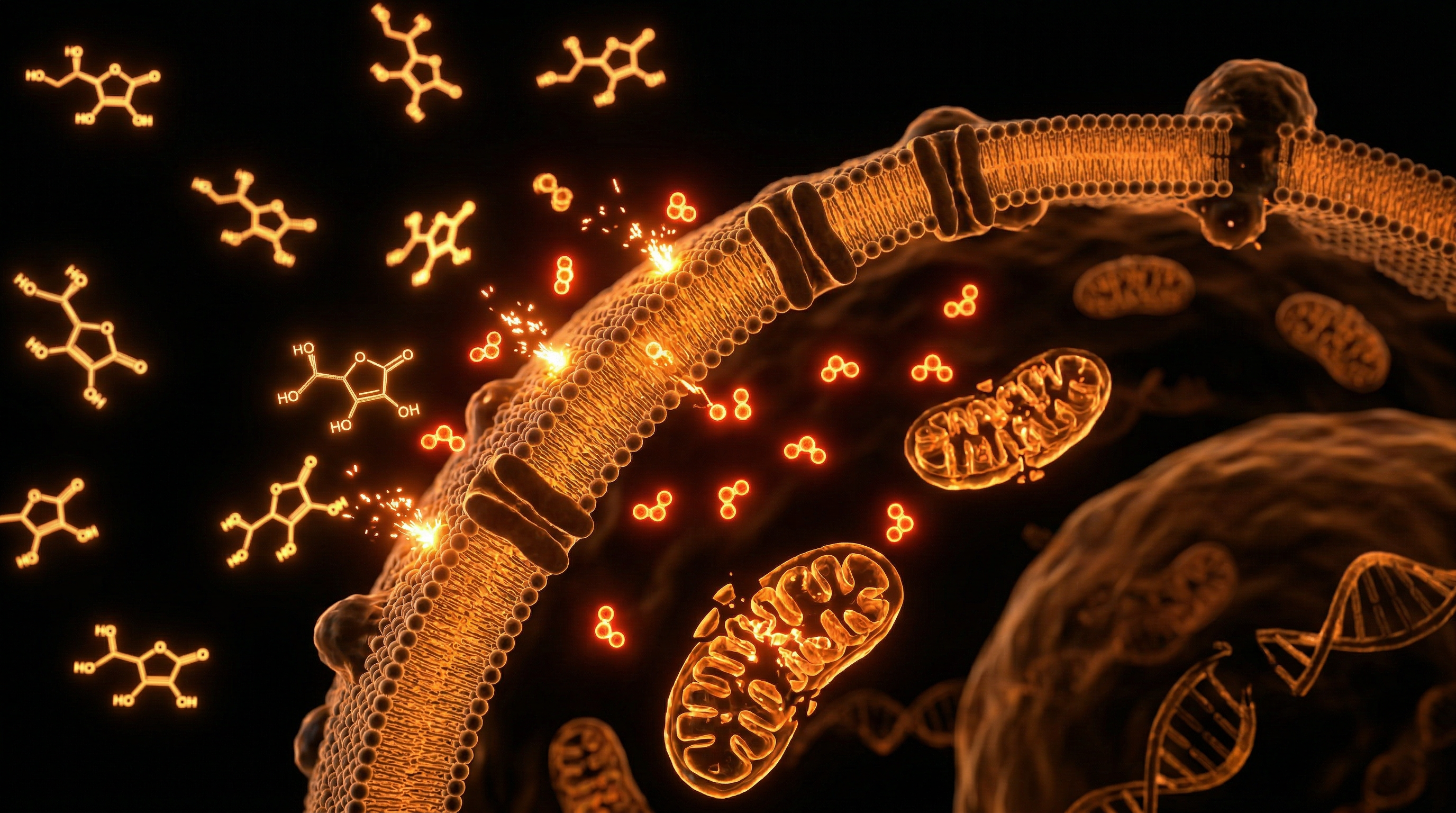
The core of this article examines the pro-oxidative cytotoxicity of Vitamin C. We will explore how, in the specific environment of the extracellular fluid surrounding a tumour, ascorbate facilitates the generation of hydrogen peroxide ($H{2}O{2}$), which acts as a "biological cruise missile" against cancer cells. We will also address why this therapy, despite its high safety profile and mechanistic elegance, remains largely absent from the standard of care in the NHS, and how private UK clinics are currently navigating this complex landscape.
Fact: To achieve a pro-oxidative effect, blood plasma levels of ascorbate must reach between 10 to 20 millimoles per litre (mmol/L). Oral supplementation, even at extreme doses, rarely achieves concentrations above 0.2 mmol/L due to the "renal threshold" and intestinal absorption limits.
The Biology — How It Works
To understand high-dose Vitamin C, one must first understand the pharmacokinetic distinction between oral and intravenous administration. Human physiology is evolutionarily programmed to tightly regulate Vitamin C levels in the blood. When we consume Vitamin C orally, the transport mechanisms in the small intestine (specifically SVCT1) become saturated. Anything beyond a few grams is simply excreted by the kidneys.
The IV Advantage
By bypassing the digestive tract entirely, IVC allows the clinician to achieve plasma concentrations that are 100 to 500 times higher than those achievable by mouth. At these "pharmacological" levels, the molecule begins to behave differently. In the presence of certain metal ions (particularly labile iron or copper) present in the interstitial fluid, Vitamin C donates an electron to oxygen, creating the superoxide radical, which then rapidly converts to hydrogen peroxide.
The Fenton Reaction
The "magic" of IVC lies in the Fenton Reaction. In the microenvironment of a tumour, there is often an abundance of "free" or poorly sequestered iron. The pharmacological ascorbate reacts with this iron to produce the hydroxyl radical ($\cdot OH$), the most reactive and damaging of all free radicals. While healthy cells possess robust enzymatic defences to neutralise these molecules, cancer cells are notoriously deficient in these protective mechanisms.
The Warburg Effect and Glucose Mimicry
Cancer cells have a voracious appetite for glucose—a phenomenon known as the Warburg Effect. Because the molecular structure of Dehydroascorbic Acid (DHA)—the oxidised form of Vitamin C—is remarkably similar to glucose, cancer cells "trick" themselves into importing massive amounts of the vitamin via GLUT1 transporters. Once inside the cell, the DHA is converted back to ascorbate, a process that depletes the cell’s internal stores of Glutathione and NADPH, essentially stripping the cancer cell of its armour.
Mechanisms at the Cellular Level
The cytotoxicity of high-dose Vitamin C is not a "blanket" toxicity like traditional chemotherapy. It is highly selective, a trait that stems from the fundamental biochemical differences between malignant and healthy tissues.
Catalase: The Great Divider
The primary reason IVC does not kill healthy cells is an enzyme called Catalase. Catalase is responsible for the rapid decomposition of hydrogen peroxide into water and oxygen.
- Healthy Cells: Possess high concentrations of catalase, allowing them to easily neutralise the $H{2}O{2}$ generated by IVC.
- Cancer Cells: Are frequently deficient in catalase (often having 10 to 100 times less than normal cells).
When a cancer cell is flooded with $H{2}O{2}$ from a high-dose infusion, it cannot "drain the tub" fast enough. The peroxide accumulates, leading to catastrophic oxidative damage to the mitochondria and the cell’s DNA.
Mitochondrial Collapse and ATP Depletion
Inside the cancer cell, the sudden influx of ROS (Reactive Oxygen Species) targets the mitochondria. The oxidative phosphorylation chain is disrupted, leading to a total collapse of ATP (Adenosine Triphosphate) production. Without ATP, the cell cannot perform basic functions, including repairing the DNA nicks caused by the peroxide. This leads to a form of programmed cell death known as apoptosis, or in some cases, parthanatos (a specific type of cell death triggered by the overactivation of DNA-repair enzymes).
Synergistic Cytotoxicity
Research indicates that IVC does not just work in isolation. It appears to sensitise cancer cells to the effects of conventional treatments.
- Chemotherapy: By depleting the cancer cell’s antioxidant reserves (Glutathione), IVC makes the cell more vulnerable to the DNA-damaging effects of agents like carboplatin or paclitaxel.
- Radiotherapy: The pro-oxidative environment created by IVC can enhance the oxygen-effect required for radiation to be effective, potentially allowing for lower, less toxic doses of radiotherapy.
Environmental Threats and Biological Disruptors
In the modern era, the "biological terrain" of the average human is increasingly compromised. We live in an environment that is "pro-oxidative" in the worst possible way—not through controlled therapeutic stress, but through chronic, low-grade environmental insults that contribute to oncogenesis (the creation of cancer).
The Burden of Modernity
The necessity for therapies like IVC is underscored by the sheer volume of biological disruptors we face daily:
- Glyphosate and Pesticides: These ubiquitous chemicals disrupt the gut microbiome and chelate essential minerals, weakening our endogenous antioxidant systems.
- Electromagnetic Fields (EMFs): Emerging evidence suggests that chronic exposure to high-frequency EMFs can trigger the opening of Voltage-Gated Calcium Channels (VGCCs), leading to an influx of calcium and the generation of peroxynitrite, a potent oxidant.
- Heavy Metal Accumulation: Mercury, lead, and cadmium act as catalysts for unwanted oxidative stress, "using up" our Vitamin C and Glutathione stores just to maintain homeostasis.
The "Scurvy" of the 21st Century
While frank scurvy is rare, "Subclinical Scurvy" or Chronic Scurvy is rampant in the UK population. The modern diet, high in ultra-processed foods and depleted soils, leaves many individuals in a state of chronic ascorbate deficiency. When cancer develops in such an individual, their cellular environment is already tilted toward oxidative chaos, making the therapeutic intervention of high-dose IVC even more critical to restoring a functional biological balance.
The Cascade: From Exposure to Disease
The progression from environmental exposure to a diagnosed malignancy is rarely a sudden event. It is a slow, multi-stage "cascade" of biological failures, many of which involve the very pathways that high-dose Vitamin C is designed to target.
Phase 1: Chronic Inflammation and ROS
Environmental toxins trigger the immune system to produce constant, low-level Reactive Oxygen Species. Over time, this chronic inflammation damages the cell membrane and the mitochondrial DNA.
Phase 2: Epigenetic Silencing
As the cell struggles to cope with the oxidative burden, it may silence "tumour suppressor genes" through a process called methylation. Interestingly, Vitamin C is a co-factor for TET enzymes, which are responsible for demethylating DNA and "re-awakening" these protective genes. This suggests that IVC has an epigenetic role in cancer therapy, not just a cytotoxic one.
Phase 3: The Metabolic Switch
Eventually, the damaged mitochondria can no longer produce energy efficiently. The cell, in a desperate bid for survival, switches to anaerobic glycolysis (fermenting sugar). This is the point of no return where a healthy cell becomes a cancer cell.
Important Callout: Cancer is not merely a genetic disease; it is a metabolic dysfunction. By targeting the metabolic vulnerabilities of the cancer cell—specifically its inability to handle peroxide—IVC intervenes at the root cause of the disease’s survival strategy.
What the Mainstream Narrative Omits
The history of Vitamin C in oncology is a saga of suppressed evidence, flawed study designs, and the inevitable influence of the pharmaceutical industry. To understand why IVC is not a standard treatment, we must look at the Linus Pauling controversy.
The Mayo Clinic "Debunking"
In the 1970s, Nobel Laureate Linus Pauling and Scottish surgeon Ewan Cameron published studies showing that terminal cancer patients treated with high-dose Vitamin C (both IV and oral) lived four times longer than expected.
In response, the Mayo Clinic conducted two high-profile trials. However, they made a critical "error" (whether by design or negligence): they gave the patients only oral Vitamin C. As we have established, oral doses cannot reach the pharmacological, pro-oxidative levels required to kill cancer cells. The Mayo Clinic concluded that Vitamin C was useless, and the medical community largely closed the book on the subject for thirty years.
The "Patentability" Problem
The underlying reason for the lack of large-scale, Phase III clinical trials for IVC is simple: Vitamin C cannot be patented.
- A typical "blockbuster" oncology drug costs upwards of £1 billion to bring to market.
- Because Vitamin C is a natural substance, no pharmaceutical company can claim exclusive rights to it.
- Therefore, there is no "Return on Investment" (ROI) to justify the cost of the trials required by regulatory bodies like the MHRA in the UK or the FDA in the USA.
The Suppressed Successes
What the mainstream narrative omits are the thousands of "case reports" and smaller, university-funded trials (such as those at the University of Kansas or the Riordan Clinic) that show significant improvements in quality of life, reduction in tumour markers, and increased survival rates when IVC is added to an oncological protocol.
The UK Context
In the United Kingdom, the landscape for high-dose IV Vitamin C is particularly challenging due to the rigid structure of the National Health Service (NHS) and the influence of NICE (National Institute for Health and Care Excellence).
The NHS and "Evidence-Based" Rigidity
The NHS operates on a "Standard of Care" model. If a treatment is not explicitly recommended by NICE, it is effectively unavailable to the vast majority of patients. NICE guidelines are heavily weighted toward treatments backed by multi-centre, double-blind, placebo-controlled trials—the very trials that Vitamin C lacks because of the aforementioned patent issues.
The Rise of Private Integrative Clinics
Consequently, IVC therapy in the UK has moved almost entirely into the private sector. Clinics in Harley Street, London, and other major hubs now offer IVC as part of an "Integrative Oncology" approach. These clinics cater to patients who are often:
- "End of the line" with NHS treatments.
- Seeking to reduce the side effects of chemotherapy.
- Proactively managing their health using metabolic therapies.
Legal and Regulatory Hurdles
UK doctors who prescribe IVC often face scrutiny from the General Medical Council (GMC). While it is legal to prescribe Vitamin C "off-label," practitioners must be extremely careful in how they market the service. They cannot claim to "cure" cancer; they must position IVC as a "supportive" or "adjunct" therapy. This "legal tightrope" prevents many well-intentioned doctors from offering what could be a life-saving intervention.
Statistic: Surveys of integrative oncology patients in the UK suggest that over 60% report a "significant improvement" in fatigue and pain levels after beginning an IVC protocol, regardless of the effect on tumour size.
Protective Measures and Recovery Protocols
Administering high-dose Vitamin C is not as simple as "plugging in a drip." It requires precise biochemical monitoring and a structured protocol to ensure safety and maximise the pro-oxidative effect.
The G6PD Essential Test
Before a single drop of high-dose Vitamin C is administered, a patient must be tested for Glucose-6-Phosphate Dehydrogenase (G6PD) deficiency.
- G6PD is an enzyme that helps red blood cells maintain their integrity.
- If a person with G6PD deficiency receives high-dose IVC, the resulting oxidative stress can cause their red blood cells to rupture (haemolysis).
- This is one of the few absolute contraindications for the therapy.
Dosing and Frequency
A typical "oncological dose" starts low (e.g., 15g or 25g) to test tolerance and then scales up to 50g, 75g, or even 100g per infusion.
- Frequency: To maintain the metabolic pressure on the tumour, infusions are typically given 2 to 3 times per week.
- Duration: The "killing phase" may last for 3 to 6 months, followed by a "maintenance phase" with less frequent infusions.
Adjunctive Nutrients
To enhance the pro-oxidative effect, many UK clinics use a "synergistic" approach:
- Vitamin K3 (Menadione): When given alongside IVC, it can further accelerate the production of $H{2}O{2}$ via "redox cycling."
- Alpha-Lipoic Acid (ALA): While an antioxidant in some contexts, ALA can help regenerate the ascorbate radical, keeping the "pro-oxidant engine" running longer.
- Magnesium and B-Vitamins: These are often added to the bag to support overall cellular energy and prevent the electrolyte imbalances that can sometimes occur with high-osmolarity IVs.
The "Ascorbate-Friendly" Diet
To maximise the GLUT1 uptake of Vitamin C, patients are often advised to follow a Ketogenic or Low-Glycaemic diet. By keeping blood glucose levels low, there is less competition for the transporters, allowing more of the "Trojan Horse" (Dehydroascorbic Acid) to enter the cancer cells.
Summary: Key Takeaways
The science of high-dose Vitamin C is a testament to the fact that "natural" does not mean "weak." By understanding the precise molecular pathways of the Fenton Reaction and the catalase deficiency of malignant cells, we can transform a simple vitamin into a targeted, biological weapon.
- Pro-Oxidative Power: At high IV concentrations, Vitamin C generates hydrogen peroxide, which selectively kills cancer cells while leaving healthy cells unharmed due to their catalase content.
- The Trojan Horse: Cancer cells' reliance on glucose (the Warburg Effect) causes them to aggressively take up oxidised Vitamin C, leading to their own internal destruction.
- Mainstream Bias: The lack of patentability has led to a systematic omission of IVC from standard oncology, despite its safety and mechanistic plausibility.
- The UK Landscape: While unavailable on the NHS, IVC is a cornerstone of private integrative oncology in the UK, offering hope and improved quality of life for those who seek it.
- Safety First: G6PD testing and professional clinical supervision are non-negotiable requirements for this therapy.
As we move toward a more "innerstanding" of human biology, it is time to stop viewing Vitamin C as a mere supplement and start recognising it as the sophisticated metabolic tool it truly is. The era of "one-size-fits-all" toxic chemotherapy is slowly giving way to a more nuanced, redox-based approach to oncology—one where the patient's own biology is harnessed to restore balance and eradicate disease.
This article is provided for informational and educational purposes only. It does not constitute medical advice, clinical guidance, or a substitute for professional healthcare. Information reflects cited research at time of publication. Always consult a qualified healthcare professional before acting on any health information.
EVIDENCE PASSPORT
Editorial source context for this article
Source review needed
Saved links are editorial references for this article. They may support specific claims rather than every sentence. Open and assess each source in context. This passport does not independently verify them.
Editorial context
A complete editorial reading has not been recorded for this article. Source links remain available for you to open and assess directly.
Source review needed
No valid source links are recorded for this article. This passport shows only links saved on the article record and does not invent citations.
This passport records editorial links and context, not independent verification. Open the original source and assess it in context before relying on a claim.
Medical Disclaimer
The information in this article is for educational purposes only and does not constitute medical advice, diagnosis, or treatment. Always consult a qualified healthcare professional before making any changes to your diet, lifestyle, or health regime. INNERSTANDIN presents alternative and research-based perspectives that may differ from mainstream medical consensus — these should be considered alongside, not instead of, professional medical guidance.
Read Full DisclaimerContinue the thread
Keep this question moving.
Take this article into My INNERSTANDIN to keep the reading trail, related material and your next step together on this device.
Dig deeper in the Library
Free, longform PDF volumes that go beyond headlines into mechanisms and references.