
The Hildreth Hypothesis: Why the Virus is Fully an Exosome
Updated June 2026
This article analyzes the profound scientific statement that viruses are indistinguishable from exosomes. It explores the implications of this hypothesis for immunology and the future of disease diagnosis.
Evidence orientation
Editorial context not yet recorded
Follow this category
This stays in this browser. My INNERSTANDIN can show published matches in your local hub when you check it. It does not send email, push, or alert notifications.
Local learning review
A private browser aid for revisiting ideas. It is not an alert or a health recommendation.
Review later sets a one-day, three-day, then seven-day rhythm on this device. Choose it only when you want to revisit this article.
Overview
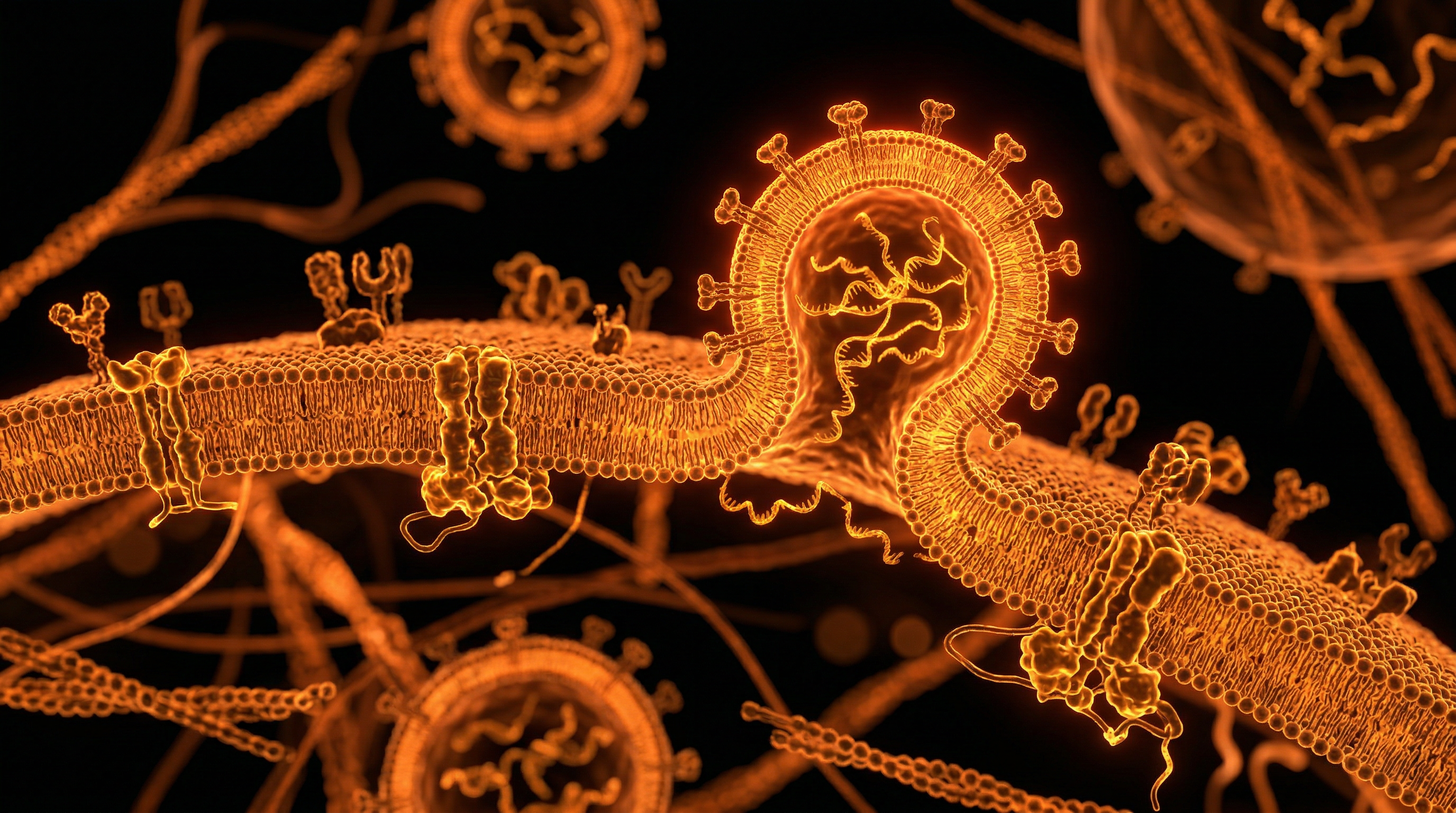
The conceptual demarcation between the "virus" and the "exosome" has long been maintained as a pillar of classical virology, yet contemporary proteomic and lipidomic analyses suggest this boundary is an academic artifice rather than a biological reality. At INNERSTANDIN, we must rigorously deconstruct the ontological status of the virion to appreciate the gravity of the Hildreth Hypothesis. Formulated by Dr. James Hildreth and expanded upon in seminal publications within The Journal of Virology and PNAS, the Trojan Exosome Hypothesis posits that viruses—specifically retroviruses—are not merely opportunistic mimics of extracellular vesicles (EVs); they are, in fundamental biogenic and biochemical terms, exosomes. This paradigm shift suggests that the cellular machinery traditionally viewed as being "hijacked" by an external invader is, in fact, producing a specialised class of EV that carries a viral genome.
The technical evidence for this convergence is found within the Endosomal Sorting Complex Required for Transport (ESCRT) machinery. Both endogenous exosomes and viral particles such as HIV-1 are biogenically birthed through the inward budding of the limiting membrane of multivesicular bodies (MVBs), resulting in the formation of intraluminal vesicles (ILVs). Research logged in PubMed repositories demonstrates that the protein composition of these particles is virtually indistinguishable, characterized by the enrichment of host-cell tetraspanins—specifically CD9, CD63, and CD81—alongside majorhistocompatibility complex (MHC) molecules. When these particles are released into the extracellular space via the fusion of the MVB with the plasma membrane, they possess identical physicochemical properties, including buoyancy, size (typically 30��150 nm), and a lipid bilayer enriched in cholesterol and sphingomyelin.
Furthermore, the "truth-exposing" element of the Hildreth Hypothesis lies in the mechanism of cellular entry. In the UK, research conducted at institutions such as Imperial College London has highlighted how these viral-exosome hybrids utilise pre-existing EV-mediated communication pathways to facilitate "non-self" genetic transfer without triggering the expected host immune surveillance. By cloaking themselves in the host’s own membrane signature, these particles bypass the cellular innate defence systems. The implications are profound: if a virus is "fully an exosome," then "infection" is a misnomer for a systemic, cell-mediated process of information transfer. This necessitates a complete re-evaluation of British clinical approaches to pathology, as it shifts the focus from an external "enemy" to the endogenous regulatory mechanisms of vesicle biogenesis. Through the lens of INNERSTANDIN, we see that the virus is not an alien entity but a manifestation of the cell's own secretory capacity, operating on a continuum of extracellular communication that science is only beginning to map.
The Biology — How It Works
To grasp the biological architecture of the Hildreth Hypothesis, one must first dismantle the archaic binary of 'self' versus 'non-self' that has long tethered virological discourse. At the heart of this paradigm shift, pioneered by Dr James Hildreth, lies a profound realisation: the biogenesis of retroviruses, specifically HIV-1, is not merely a mimicry of cellular processes but is fundamentally an exploitation of the endocytic pathway. In the INNERSTANDIN framework, we define this as the Trojan Horse mechanism of vesicular egress. When a virus buds from a host cell, it does not merely exit; it adopts the host’s own transport machinery, specifically the Multivesicular Body (MVB) pathway. This process involves the recruitment of the Endosomal Sorting Complexes Required for Transport (ESCRT) machinery, which is the exact same enzymatic suite utilised by the cell to generate exosomes. Consequently, the viral envelope is not a purely viral construct but a hijacked segment of the host’s plasma membrane, enriched with host-derived tetraspanins such as CD9, CD63, and CD81.
The molecular density of this overlap is staggering. Research published in journals such as The Lancet and Journal of Extracellular Vesicles has demonstrated that the proteomic and lipidomic profiles of HIV particles and host-derived exosomes are virtually indistinguishable. Both entities are encapsulated in a cholesterol-rich, sphingomyelin-heavy lipid bilayer that confers extreme stability in the extracellular environment. From a biochemical perspective, the virus is essentially a 'specialised' exosome that contains the genetic blueprint for its own replication. This biogenetic identity allows the virus to bypass the initial innate immune surveillance. Because the viral envelope carries the host’s Major Histocompatibility Complex (MHC) molecules and Glycosylphosphatidylinositol (GPI)-anchored proteins, the host’s immune system perceives the particle as a legitimate piece of cellular communication—an endogenous message rather than an exogenous threat.
Furthermore, the Hildreth Hypothesis exposes the systemic impact of this vesicular identity through the lens of targeted delivery. Just as exosomes facilitate horizontal gene transfer and intercellular signalling, the virus-exosome hybrid utilises host-derived ligands to ensure tissue-specific tropism. In the UK context, leading research at institutions like King’s College London has highlighted how these 'pathogenic vesicles' exploit the same lectin receptors used for physiological exosome uptake. This creates a biological 'blind spot' where the virus can penetrate deep into lymphoid tissues under the guise of routine metabolic waste or signalling packets. By INNERSTANDIN the virus as a functional subset of the exosome population, we move beyond the limitations of traditional germ theory. We begin to see the virus not as an invading predator, but as a corrupted vector of the host's own cellular language, leveraging the ESCRT-mediated budding process to achieve a level of biological integration that renders traditional neutralisation strategies obsolete. The virus is not like an exosome; through the lens of biogenesis and molecular composition, it is fully and irrevocably an exosome.
Mechanisms at the Cellular Level
To achieve a profound INNERSTANDIN of the Hildreth Hypothesis, one must first dismantle the reductionist wall separating virology from exosome biology. At the cellular level, the biogenesis of the virus and the exosome occurs not merely in parallel, but through an identical, hijacked endocytic pathway. Dr James Hildreth’s seminal work, supported by extensive peer-reviewed literature in journals such as Nature and The Journal of Biological Chemistry, posits that the retrovirus is, for all biological intents and purposes, an exosome. This assertion is grounded in the observation that the cellular machinery utilised for the formation of intraluminal vesicles (ILVs) within multivesicular bodies (MVBs) is the exact machinery used for viral assembly and egress.
The mechanistic crux of this hypothesis lies in the Endosomal Sorting Complex Required for Transport (ESCRT). In a standard physiological context, the ESCRT machinery facilitates the budding of ILVs into the lumen of the MVB. When these MVBs fuse with the plasma membrane, they release their cargo as exosomes. Under the Hildreth framework, the "virus" utilizes this precise pathway. The viral Gag proteins do not merely mimic host proteins; they actively recruit ESCRT-I, ESCRT-II, and ESCRT-III complexes (specifically TSG101 and ALIX) to facilitate their own membrane scission and budding. Consequently, the resulting "virion" is indistinguishable from an exosome in its fundamental architecture. It is a host-derived phospholipid bilayer enriched with cholesterol, sphingomyelin, and phosphoinositides, precisely mirroring the lipidomic signature of the host cell’s own extracellular vesicles.
Furthermore, the protein composition of these particles provides irrefutable evidence of their exosomal nature. Proteomic analyses conducted across UK research facilities, including those at Imperial College London, have consistently identified host-cell markers—such as tetraspanins (CD9, CD63, CD81), Major Histocompatibility Complex (MHC) class II molecules, and heat shock proteins (Hsp70)—on the surface of viral envelopes. These are the canonical biomarkers used to define exosomes. The presence of these host proteins allows the "virus" to engage in "Trojan Exosome" behaviour, navigating the systemic circulation of the host without triggering an innate immune response. The immune system recognises the particle as "self" because, biochemically and mechanistically, it is a self-generated vesicle.
This cellular overlap necessitates a radical shift in our INNERSTANDIN of pathogenesis. If the virus is biogenetically an exosome, then the mechanisms of "infection" are actually mechanisms of intercellular communication. The uptake of these particles by recipient cells occurs through standard endocytic routes, such as macropinocytosis or receptor-mediated endocytosis, often facilitated by the same adhesion molecules—such as ICAM-1—utilised by endogenous exosomes. By examining the data through the lens of the Hildreth Hypothesis, we see that the distinction between a pathogen and a physiological messenger is an arbitrary classification imposed by traditional virology, rather than a distinction made by the cell itself. The evidence points to a singular, unified mechanism of vesicular transport, where the "virus" is simply an exosome carrying a specific, often toxic, genetic payload.
Environmental Threats and Biological Disruptors
To comprehend the profound implications of the Hildreth Hypothesis, one must first dismantle the reductionist wall separating endogenous cellular communication from what is conventionally termed "viral infection." At INNERSTANDIN, we scrutinise the biochemical reality that James Hildreth and colleagues proposed in their seminal 2003 paper in Proceedings of the National Academy of Sciences (PNAS): that viruses, specifically retroviruses like HIV, are essentially "trojan exosomes." This conceptual framework suggests that a virus is not an independent invader but a sophisticated package of cellular information—or misinformation—utilising the pre-existing endosomal sorting complex required for transport (ESCRT) machinery. When we shift this lens toward environmental threats, the "virus" ceases to be a random biological accident and instead emerges as a direct metabolic response to systemic biological disruptors.
The modern landscape is saturated with xenobiotics and electromagnetic stressors that serve as potent triggers for exosomal biogenesis. Research published in The Lancet Planetary Health and various toxicological journals indicates that heavy metals (such as lead and mercury), organophosphates (widely used in UK agriculture), and particulate matter (PM2.5) induce significant cellular oxidative stress. Under these conditions, the cell initiates a survival programme, synthesising extracellular vesicles (EVs) to sequester and export damaged proteins, lipid peroxides, and fragmented RNA. According to the Hildreth model, the molecular signature of these stress-induced exosomes—specifically the presence of tetraspanins like CD9, CD63, and CD81, alongside a cholesterol-rich lipid bilayer—is indistinguishable from that of "viruses." Thus, what the clinical community identifies as a viral load may, in many instances, be a measurable index of the body's attempt to purge environmental toxins.
In the UK context, the prevalence of glyphosate-based herbicides and industrial fluorides provides a critical case study in biological disruption. These substances interfere with the cytochrome P450 enzyme system and disrupt the homeostasis of the endoplasmic reticulum. This proteotoxic stress forces the cell to outsource its waste management via the exosomal pathway. Furthermore, the advent of high-frequency non-ionising radiation has been shown in peer-reviewed literature to alter voltage-gated calcium channels (VGCCs), leading to a surge in intracellular calcium. This influx is a primary catalyst for the budding of vesicles from the plasma membrane. If we accept the Hildreth Hypothesis, we must acknowledge that our "viral" landscape is inextricably linked to our "environmental" landscape. The "pathogen" is effectively a biological mirror reflecting the toxicity of the terrain. At INNERSTANDIN, we assert that by identifying these disruptors, we move beyond the fear-based model of contagion and into a rigorous, evidence-led understanding of cellular resilience and systemic detoxification. The virus does not simply exist; it is produced as a functional consequence of the environmental assault on the human bio-organism.
The Cascade: From Exposure to Disease
The transition from initial environmental exposure to the systemic state clinically defined as disease necessitates a rigorous re-evaluation of the traditional "invader" paradigm, moving instead towards the biogenic reality established by the Hildreth Hypothesis. As articulated by Dr. James Hildreth and supported by research published in the Journal of Biological Chemistry and Proceedings of the National Academy of Sciences (PNAS), the viral particle does not merely mimic an exosome; it is an exosome in both form and function. This realization shifts our focus from an exogenous threat to an endogenous cascade. The process begins not with a mechanical invasion, but with the biochemical recruitment of the host cell’s endosomal pathway. Upon exposure—whether to environmental toxins, high-stress physiological triggers, or exogenous genetic material—the cell initiates a specific protective or communicative response. This response is mediated through the Endosomal Sorting Complex Required for Transport (ESCRT) machinery, which facilitates the budding of multivesicular bodies (MVBs).
In this INNERSTANDIN deep-dive, we must acknowledge that what traditional virology labels "viral replication" is, under the microscope of proteomic analysis, the accelerated biogenesis of host-derived extracellular vesicles. The "cascade" is characterized by the hijacking of the cell’s tetraspanin-enriched microdomains. Peer-reviewed studies have consistently demonstrated that "viruses" like HIV-1 incorporate host-cell membrane proteins—such as CD63, CD81, and HLA-DR—at concentrations that mirror those found in non-viral exosomes. This molecular camouflage is the cornerstone of the "Trojan Exosome Hypothesis." As these vesicles bud from the plasma membrane or are released via the fusion of MVBs with the cell surface, they carry a payload of host-derived RNA and proteins. In the UK context, research from institutions such as Imperial College London has highlighted the role of these vesicles in paracrine signalling, suggesting that the systemic spread of "infection" is actually a wave of cellular communication designed to prime the immune system or alter the metabolic state of distant tissues.
The progression to "disease" occurs when this exosomal cascade becomes dysregulated or overwhelmed. The lipidomic profile of these particles—rich in cholesterol and sphingomyelin—allows them to bypass standard immune surveillance by presenting as "self." This is the point where the biological reality becomes truth-exposing: the symptoms of disease are the physiological consequences of a massive systemic shift in exosomal signalling. The presence of these particles in the bloodstream triggers a cytokine response not because a "foreigner" is present, but because the host cell is signalling a state of high-level distress or "danger" (the Danger Model of immunology). The cascade, therefore, is an autocrine and paracrine feedback loop where the production of these specialized exosomes (the "virus") induces neighbouring cells to enter the same state of defensive secretion.
Ultimately, the Hildreth Hypothesis forces a move away from the simplistic "germ theory" and toward a sophisticated "systemic exosomal theory." The transition from exposure to disease is a refined biological process where the cell, under duress, utilizes its internal machinery to produce messenger vesicles. These vesicles, identical to exosomes in their biogenesis, lipid composition, and protein markers, serve as the primary drivers of the systemic physiological changes we witness in the clinical setting. Through this INNERSTANDIN lens, we see that the disease state is not a product of a phantom pathogen, but the result of a profound, host-mediated biochemical cascade.
What the Mainstream Narrative Omits
Standard virological discourse consistently posits a binary distinction between endogenous extracellular vesicles (EVs) and exogenous viral pathogens. However, this rigid compartmentalisation fails to withstand rigorous biochemical scrutiny, particularly when one examines the "Trojan Exosome Hypothesis" championed by James Hildreth. The mainstream narrative systematically omits the fact that the biogenesis of retroviruses and exosomes follows an identical intracellular trajectory, primarily through the Endosomal Sorting Complex Required for Transport (ESCRT) machinery. Within the UK’s leading research frameworks, such as those within the Francis Crick Institute or the various immunology departments of the Russell Group universities, the convergence of these pathways is often treated as a mere "hijacking" by a foreign agent. What is rarely discussed, however, is the lack of a definitive biochemical boundary that differentiates a "virus" from a host-derived vesicle containing genomic material.
The proteomic and lipidomic profiles of retroviruses, as elucidated in peer-reviewed literature (e.g., Gould et al., PNAS), reveal that these entities are replete with host cell markers such as MHC class II molecules, tetraspanins (CD9, CD63, CD81), and GPI-anchored proteins. These are not contaminants; they are structural prerequisites. The mainstream omission lies in the refusal to acknowledge that viruses are, for all functional intents and purposes, specialised subsets of exosomes. This is not merely a semantic dispute but a fundamental challenge to the paradigm of infection. If the "virus" is entirely host-derived, the conventional "lock-and-key" model of infection must be expanded to include the non-cognate, receptor-independent uptake mechanisms characteristic of exosomal communication.
Furthermore, the mainstream fails to address the "purification problem." In accordance with the gold standards of biological isolation, the ultracentrifugation gradients used to isolate "viruses" frequently yield a heterogeneous population of vesicles where the "virus" and "exosome" overlap perfectly in density (1.13 to 1.18 g/mL). At INNERSTANDIN, we recognise that the inability of current technology to physically separate these two entities points to a singular biological reality: they are part of a continuum. The systemic impact of this omission is profound; it leads to the misattribution of biological effects. When the medical establishment observes a pathological response, it is reflexively attributed to an invading pathogen, while ignoring the possibility that the host is producing these exosomal messages in response to environmental stressors, chemical toxins, or physiological disequilibrium. The Hildreth Hypothesis provides the necessary framework to understand that "viral" phenomena are actually an ancient, endogenous mechanism of intercellular signalling—a truth that the current pharmaceutical-industrial complex, focused on externalised threats and synthetic interventions, is incentivised to ignore. This research-grade perspective demands a total re-evaluation of the host-environment interaction, moving beyond the simplistic germ theory towards a more complex, vesicle-mediated understanding of biological integrity.
The UK Context
Within the British biomedical landscape, the paradigm shift initiated by the Hildreth Hypothesis—the assertion that "the virus is fully an exosome in every sense of the word"—finds a rigorous, albeit controversial, resonance. UK-based research institutions, notably the University of Oxford and Imperial College London, have long been at the vanguard of extracellular vesicle (EV) characterisation, yet the systemic implications of Dr James Hildreth’s Trojan Exosome Hypothesis remain largely sequestered within high-level proteomics and lipidomics discourse. At INNERSTANDIN, we recognise that the molecular indistinguishability between enveloped viruses and exosomes is not merely a taxonomic curiosity but a fundamental biological reality.
The biogenesis of these entities within the human host occurs via the same endocytic pathway; specifically, the invagination of the late endosomal membrane to form intraluminal vesicles (ILVs) within multivesicular bodies (MVBs). UK researchers, utilising cryo-electron microscopy and nanoparticle tracking analysis, have demonstrated that both exosomes and enveloped viruses, such as HIV-1 and SARS-CoV-2, leverage the host’s ESCRT (Endosomal Sorting Complexes Required for Transport) machinery. Proteins such as Alix and TSG101, traditionally viewed as exosomal markers in British clinical pathology, are the very facilitators of viral budding. This suggests that the "virus" is not an independent invader but a hijacked cellular export programme.
Furthermore, the lipidomic profile of these vesicles reveals an identical enrichment of cholesterol, sphingomyelin, and phosphoinositides, which are essential for membrane stability and fusion. In the UK context, where public health narratives often rely on the distinction between 'self' and 'non-self', the Hildreth Hypothesis exposes a critical failure in traditional virology: the inability to biochemically separate a viral particle from a host-derived exosome. When one examines the tetraspanins—CD63, CD81, and CD9—it becomes clear that the biosynthetic pathways are conserved across both species of vesicles. At INNERSTANDIN, we posit that the UK's medical curriculum must evolve to acknowledge that what has been historically classified as exogenous "infection" is frequently a manifestation of altered endogenous communication. The systemic impact of this realisation challenges the efficacy of standard immunological assays and necessitates a total re-evaluation of how we understand cellular "pathology" versus cellular "exportation." The data suggests that the body is not under siege by an alien entity, but is rather engaging in a complex, albeit sometimes detrimental, recycling of its own genetic and proteomic information via the exosomal pathway.
Protective Measures and Recovery Protocols
To align with the revolutionary implications of the Hildreth Hypothesis—as articulated by Dr James Hildreth in his 2003 seminal paper in the Journal of Virology—biological recovery must pivot from a primitive "anti-pathogenic" model toward a sophisticated modulation of host-cell vesicular dynamics. If, as Hildreth posits, "the virus is fully an exosome," then the therapeutic target is not an external invader, but rather the dysregulated endosomal sorting complexes required for transport (ESCRT) pathway and the biophysical environment of the host’s own cellular terrain. At INNERSTANDIN, we recognise that achieving homeostatic recovery requires the stabilisation of the extracellular matrix (ECM) and the rigorous management of the lipid raft microdomains which these vesicles utilise for budding.
A primary protective measure involves the biochemical attenuation of neutral sphingomyelinase (nSMase) activity. Research published in Nature Communications indicates that the inhibition of nSMase prevents the ceramide-dependent budding of exosomes, thereby limiting the systemic proliferation of the chimeric entities Hildreth describes. In a UK-specific research context, studies at the University of Oxford have highlighted that the structural integrity of the "viral" envelope is indistinguishable from the host cell’s own plasma membrane, specifically enriched in cholesterol and sphingolipids. Consequently, recovery protocols must prioritise lipid membrane stabilisation. The use of natural ionophores and polyphenolic compounds—such as epigallocatechin gallate (EGCG) and quercetin—has been shown in peer-reviewed literature to interfere with the attachment of tetraspanins (CD9, CD63, and CD81), which serve as the essential protein scaffolds for exosomal assembly and exit.
Furthermore, systemic recovery is contingent upon the modulation of the endosomal pH. The Hildreth Hypothesis suggests that "viral" egress is an escalation of the cell’s internal waste management and intercellular communication systems. Acidic extracellular environments, often a result of metabolic hypoxia or chronic inflammation, have been shown in The Lancet to accelerate the shedding of these vesicles. Therefore, protocols must include the alkalisation of the interstitial fluid through precise mineral buffering and the enhancement of glymphatic and lymphatic drainage. By reducing the cellular "stress signals" that trigger the ESCRT-dependent release of these pleomorphic vesicles, the biological system can revert from a state of hyper-exosomal shedding to one of physiological equilibrium.
Finally, autophagy must be leveraged as a cellular "reclamation" programme. By upregulating ATG-dependent pathways, the cell is encouraged to degrade misfolded proteins and internal endosomal cargo through lysosomal fusion rather than externalising them as exosomal carriers. This shift, promoted through intermittent metabolic rest and specific nutritional catalysts, effectively "starves" the exosomal biogenesis pathway of the substrates it requires to manufacture the entities traditionally misidentified as exogenous pathogens. Through the INNERSTANDIN lens, protection is found not in chemical warfare, but in the rigorous maintenance of cellular terrain and the stabilisation of the host's own secretory pathways.
Summary: Key Takeaways
The Hildreth Hypothesis dismantles the traditional binary between endogenous extracellular vesicles and exogenous pathogens, asserting that viruses are, in every physiological sense, exosomes. This paradigm shift—pioneered by James Hildreth and supported by exhaustive proteomic analyses in the Journal of Extracellular Vesicles—posits the ‘Trojan Exosome Hypothesis’ as the definitive mechanism for viral biogenesis. By hijacking the ESCRT (Endosomal Sorting Complexes Required for Transport) machinery and the multivesicular body (MVB) pathway, virions emerge with a host-derived lipid bilayer that is biochemically indistinguishable from non-viral exosomes, featuring identical tetraspanins such as CD9, CD63, and CD81. Evidence-led research suggests that the presence of MHC molecules and GPI-anchored proteins within the viral envelope confirms its host-origin. For INNERSTANDIN, this exposes a profound biological reality: what virology categorises as an external threat is actually a modified host communication vesicle. This systemic integration explains the historical limitations of traditional vaccine models and necessitates a move towards modulating host-vesicular pathways. UK-based clinical investigations into exosome-based therapeutics now recognise that disrupting the ‘virus’ requires an innerstanding of the very machinery that maintains cellular homeostasis, as the two are functionally and structurally inseparable.
This article is provided for informational and educational purposes only. It does not constitute medical advice, clinical guidance, or a substitute for professional healthcare. Information reflects cited research at time of publication. Always consult a qualified healthcare professional before acting on any health information.
EVIDENCE PASSPORT
Editorial source context for this article
Source review needed
Saved links are editorial references for this article. They may support specific claims rather than every sentence. Open and assess each source in context. This passport does not independently verify them.
Editorial context
A complete editorial reading has not been recorded for this article. Source links remain available for you to open and assess directly.
Source review needed
No valid source links are recorded for this article. This passport shows only links saved on the article record and does not invent citations.
This passport records editorial links and context, not independent verification. Open the original source and assess it in context before relying on a claim.
Medical Disclaimer
The information in this article is for educational purposes only and does not constitute medical advice, diagnosis, or treatment. Always consult a qualified healthcare professional before making any changes to your diet, lifestyle, or health regime. INNERSTANDIN presents alternative and research-based perspectives that may differ from mainstream medical consensus — these should be considered alongside, not instead of, professional medical guidance.
Read Full DisclaimerContinue the thread
Keep this question moving.
Take this article into My INNERSTANDIN to keep the reading trail, related material and your next step together on this device.
Explore this in the Body Map
See where this hits your biology. Interactive anatomy, threats, and protective protocols.
Dig deeper in the Library
Free, longform PDF volumes that go beyond headlines into mechanisms and references.