
Iodine Deficiency: The Hidden Driver of UK Developmental Delay
Updated May 2026
Low iodine status in UK pregnant women is a silent epidemic impacting fetal brain development. Even mild deficiency can result in a permanent reduction in the child's cognitive potential.
Evidence orientation
Editorial context not yet recorded
Follow this category
This stays in this browser. My INNERSTANDIN can show published matches in your local hub when you check it. It does not send email, push, or alert notifications.
Local learning review
A private browser aid for revisiting ideas. It is not an alert or a health recommendation.
Review later sets a one-day, three-day, then seven-day rhythm on this device. Choose it only when you want to revisit this article.
Overview
For decades, the United Kingdom has rested on a dangerous laurel: the assumption that iodine deficiency is a relic of the Victorian past. We are told that our modern, diverse diets and fortified food systems have eradicated the scourge of "Derbyshire Neck" and endemic cretinism. However, beneath the surface of public health complacency lies a devastating biological reality. The UK is currently one of the few developed nations where iodine intake is not only insufficient but actively declining, particularly among women of childbearing age.
This is not merely a matter of thyroid health; it is a fundamental crisis of neurodevelopment. Iodine is the primary fuel for the production of thyroid hormones—specifically thyroxine (T4) and triiodothyronine (T3)—which act as the master architectural regulators of the developing human brain. When a pregnant mother is iodine-deficient, even mildly so, the resulting "hypothyroxinaemia" triggers a cascade of irreversible structural changes in the fetal brain.
The result is a silent epidemic of developmental delay, lowered IQ, and neurobehavioural disorders. We are witnessing a generation of children whose cognitive potential is being capped before they have even taken their first breath. This article serves as a comprehensive investigation into the molecular, environmental, and systemic drivers of this crisis, exposing how a single trace element—or the lack thereof—is reshaping the future of the British population.
Key Fact: The World Health Organization (WHO) identifies iodine deficiency as the single most common cause of preventable mental retardation worldwide. Despite this, the UK remains one of the top ten iodine-deficient nations in the developed world.
The Biology — How It Works
The human brain is the most metabolically expensive and complex organ in the known universe. To build it, the body requires a precise orchestration of genetic expression and nutritional availability. At the heart of this process is iodine.
The Thyroid-Brain Axis
Iodine’s primary role is its incorporation into thyroid hormones. The thyroid gland concentrates iodine from the blood via the Sodium-Iodide Symporter (NIS). Once inside the thyroid follicle, iodine is oxidised and attached to tyrosine residues on a protein called thyroglobulin. This process, known as organification, produces T4 (containing four iodine atoms) and T3 (containing three).
During the first trimester of pregnancy, the fetus has no functioning thyroid gland of its own. It is entirely dependent on the mother’s T4 crossing the placenta. This maternal T4 is then converted into T3 within the fetal brain by Deiodinase enzymes (specifically D2). This T3 enters the nuclei of developing neurons, where it binds to Thyroid Hormone Receptors (TRs).
Master Transcription Factors
The TRs act as switches for genes that control:
- Neuronal Proliferation: The speed at which new brain cells are created.
- Migration: The movement of neurons to their correct anatomical locations in the cortex.
- Synaptogenesis: The formation of the trillions of connections between neurons.
- Myelination: The insulation of nerve fibres, which determines the speed of signal transmission.
Without sufficient iodine, these "switches" remain off or operate at a sluggish pace. The brain’s architecture is fundamentally altered, leading to "miswiring" that manifests later in life as learning disabilities, ADHD, or reduced executive function.
Mechanisms at the Cellular Level
To understand why mild iodine deficiency is so catastrophic, we must look at the cellular microenvironment of the developing neocortex and cerebellum.
Neuronal Migration and the Radial Glia
In a healthy developing brain, neurons travel along "scaffolds" provided by radial glial cells. This migration is strictly regulated by T3-dependent genes like Reelin. When iodine levels drop, the expression of Reelin is suppressed. Neurons fail to reach their intended destination, leading to subcortical band heterotopia—essentially, clusters of brain cells that are lost in the wrong layer of the brain. This disruption is a primary driver of cognitive impairment and seizure disorders.
The Astrocyte-Neuron Lactate Shuttle
Recent research has highlighted iodine's role in the metabolic support systems of the brain. Astrocytes (support cells) provide lactate as fuel for neurons. This process is highly sensitive to thyroid hormone status. Iodine deficiency impairs the metabolic efficiency of these astrocytes, leaving developing neurons in a state of "energetic crisis" during critical windows of growth.
Synaptic Plasticity and Dendritic Branching
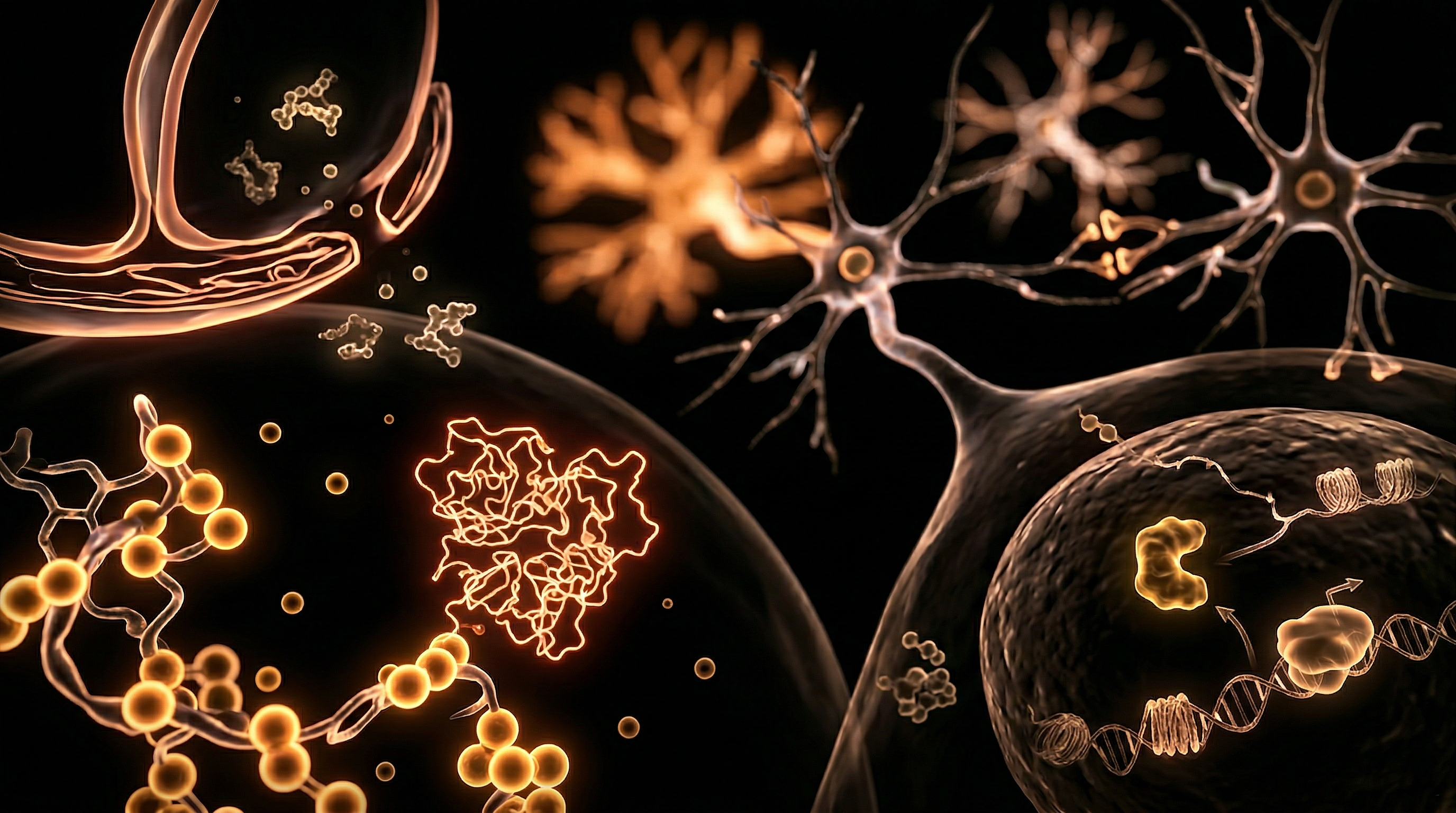
The complexity of human intelligence is largely a function of dendritic branching—the "tree-like" extensions of neurons that allow for complex communication. T3 stimulates the growth of these branches. In iodine-deficient environments, these trees are stunted. The resulting "sparse" neural network has a lower capacity for information processing, directly correlating with the 7-to-15-point IQ drop observed in children of iodine-deficient mothers.
Statistic: Research published in The Lancet found that children born to mothers with a urinary iodine-to-creatinine ratio of less than 150μg/g had significantly lower scores for verbal IQ, reading accuracy, and reading comprehension at age 8 and 9.
Environmental Threats and Biological Disruptors
The UK's iodine crisis is not solely due to low intake; it is exacerbated by a toxic environment that actively sabotages iodine uptake. This is the phenomenon of Halogen Displacement.
The Halogen Competition
Iodine is a member of the halogen family on the periodic table, alongside Fluoride, Bromide, and Chlorine. These elements share similar atomic structures and compete for the same receptors in the human body.
- Fluoride: Extensively added to the water supply in many parts of the UK. Fluoride is more electronegative than iodine and can displace it from the thyroid gland and the NIS. High fluoride exposure in the context of low iodine is a "double hit" to the developing brain.
- Bromide: Found in "potassium bromate" (a dough conditioner used in some commercial breads), certain soft drinks, and flame retardants (PBDEs) found in UK furniture and carpets. Bromide is a potent "goitrogen" that inhibits iodine organification.
- Perchlorate: A chemical used in rocket fuel and fertilisers, which has contaminated much of the food chain. Perchlorate is a competitive inhibitor of the Sodium-Iodide Symporter, meaning even if you consume iodine, the perchlorate prevents it from entering your cells.
The Pesticide Load
Organophosphates and other agricultural chemicals used in UK intensive farming have been shown to disrupt thyroid peroxidase (TPO), the enzyme required to "fix" iodine into hormone form. We are living in an "obesogenic" and "goitrogenic" environment where our biology is being pushed toward deficiency by design.
The Cascade: From Exposure to Disease
The progression from maternal iodine deficiency to a diagnosis of "developmental delay" is a multi-stage cascade that often goes unrecognised by the standard UK medical model.
- Stage 1: Maternal Compensatory Hypertrophy. The mother’s thyroid gland enlarges (often invisibly) to capture every scrap of available iodine. Her body prioritises her own metabolic needs over the fetus.
- Stage 2: Fetal Hypothyroxinaemia. The fetus receives a sub-optimal supply of T4. While the mother may appear "clinically euthyroid" (normal TSH levels), the fetal brain is already in a state of local deficiency.
- Stage 3: Structural Dysgenesis. Critical windows for hippocampal development and cerebellar folding pass with insufficient T3. The "scaffolding" of the brain is permanently malformed.
- Stage 4: Perinatal Emergence. The child is born. At birth, the UK Heel Prick Test checks for Congenital Hypothyroidism. However, this test only detects severe clinical failure. It misses the millions of children with "subclinical" neurodevelopmental damage caused by pregnancy-level deficiency.
- Stage 5: The Educational Wall. By age 5-7, the child struggles with speech and language, executive function, and emotional regulation. They are labelled with "Global Developmental Delay" or "SEN" (Special Educational Needs), with no investigation into the nutritional root cause that occurred years prior.
What the Mainstream Narrative Omits
The UK’s approach to iodine is a study in institutional negligence. While over 120 countries have implemented Universal Salt Iodisation (USI), the UK has refused, citing concerns over "freedom of choice" and "excess intake"—arguments that fly in the face of the mounting evidence of widespread deficiency.
The "Iodophobia" Myth
The medical establishment remains haunted by the Wolff-Chaikoff Effect, a 1948 study that suggested high doses of iodine could shut down the thyroid. This study has since been largely debunked as an experimental artefact, yet it continues to dictate the conservative (and insufficient) Recommended Dietary Allowances (RDAs). The current UK RDA for pregnancy is 200μg, a figure many researchers argue is the bare minimum to prevent a goitre, not the optimal amount for fetal brain development.
The Failure of the "Balanced Diet" Narrative
Public health officials often claim a "balanced diet" provides enough iodine. This is demonstrably false in the UK context.
- Soil Depletion: Glaciated soils in the UK are naturally low in iodine.
- The Dairy Shift: Traditionally, the UK got its iodine from cow's milk—not because milk is naturally high in it, but because of iodine-based disinfectants used on udders and iodine supplements in cattle feed. With the massive shift toward plant-based milks (oat, almond, soy), which rarely contain added iodine, a primary source of the mineral has vanished overnight.
- The Seafood Gap: As an island nation, we ironically consume very little seaweed or wild-caught marine fish, the only truly concentrated natural sources of iodine.
Callout: Most "organic" milk contains roughly 40% less iodine than conventional milk, as organic standards often limit the use of fortified feed and certain sanitisers.
The UK Context
The UK’s iodine status is a geographical and social postcode lottery. Research by the UK Iodine Group has highlighted that teenage girls—the mothers of tomorrow—are the most deficient demographic in the country.
The "Accidental" Source
Because the UK does not iodise salt, our iodine intake is "accidental" rather than "structural." We rely on the farming industry's cleaning habits (dairy) and the luck of the soil. This creates massive variability. A woman in a coastal community eating local fish may have optimal levels, while a woman in an urban "food desert" relying on processed bread and almond milk will be profoundly deficient.
The Rise of SEN in UK Schools
The Department for Education has reported a steady rise in the number of pupils with Special Educational Needs (SEN). While environmental toxins and improved diagnosis play a role, the correlation between the decline in UK iodine status and the rise in neurodevelopmental labels cannot be ignored. We are attempting to "teach" our way out of a biological deficit.
The Cost of Neglect
The economic burden of lost IQ is staggering. It is estimated that every £1 spent on iodine fortification yields a return of £30 in increased productivity and reduced healthcare/educational costs. By failing to address this, the UK government is presiding over a preventable decline in national "human capital."
Protective Measures and Recovery Protocols
For parents, practitioners, and those planning a pregnancy, waiting for government policy to change is not an option. Protection must happen at the individual level.
1. Verification through Testing
Do not guess. The standard blood test for TSH is an unreliable marker for iodine status.
- Urinary Iodine-to-Creatinine Ratio: The gold standard for assessing recent intake.
- 24-Hour Iodine Load Test: A more functional assessment of how much iodine the body is "retaining" vs. excreting, indicating whole-body tissue sufficiency.
2. Dietary Realignment
- Sea Vegetables: Incorporating small amounts of Kombu, Wakame, or Nori. However, one must be cautious of heavy metal contamination (Arsenic/Lead) in low-quality seaweed.
- Wild Marine Fish: Haddock, cod, and pollock are excellent sources.
- Pasture-Raised Eggs: The yolk contains iodine, provided the hens have access to a mineral-rich diet.
3. Intelligent Supplementation
- Nascent Iodine: An atomised form of iodine that is highly bioavailable and less likely to cause the "detox reactions" associated with older forms.
- Lugol’s Solution: A traditional mix of elemental iodine and potassium iodide. It should only be used under the guidance of a practitioner, as it is highly potent.
- Cofactors: Iodine does not work in a vacuum. To process iodine safely, the body requires Selenium (to protect the thyroid from oxidative stress), Magnesium, Vitamin C, and B-vitamins.
4. Halogen Detoxification
To allow iodine to do its job, we must clear the "competitors."
- Water Filtration: Use high-quality filters (Reverse Osmosis or specialised alumina filters) to remove fluoride from drinking water.
- Bromide Avoidance: Choose organic, "unbromated" flours and avoid soft drinks containing Brominated Vegetable Oil (BVO).
- Infrared Saunas: Excellent for mobilising stored bromides and fluorides from fatty tissues.
5. The Pre-Conception Window
The most critical time to address iodine deficiency is six months before conception. This allows the mother to build up "whole-body" iodine stores and ensures that the very first stages of embryonic neural tube development are fully supported.
Summary: Key Takeaways
- The Silent Crisis: Iodine deficiency is not a "third world problem"; it is a primary driver of neurodevelopmental delay in the UK.
- Brain Architecture: Iodine is the master regulator of neuronal migration and synaptogenesis. Deficiency during pregnancy leads to permanent "miswiring" of the brain.
- Environmental Displacement: Fluoride, Bromide, and Chlorine compete with iodine, making even "average" intakes insufficient in a toxic world.
- Policy Failure: The UK’s lack of salt iodisation and the shift toward unfortified plant-based diets have created a "perfect storm" for developmental decline.
- Proactive Protection: Ensuring sufficiency through testing, clean seafood, and targeted supplementation is the most impactful step a parent can take to safeguard their child’s cognitive future.
The "Hidden Driver" of developmental delay is no longer hidden. The science is clear: we are starving the developing brain of its most essential element. To restore the cognitive health of the nation, we must first restore the mineral foundation upon which human intelligence is built. Only by "Innerstanding" the molecular requirements of our biology can we hope to break the cycle of preventable birth trauma and developmental struggle.
This article is provided for informational and educational purposes only. It does not constitute medical advice, clinical guidance, or a substitute for professional healthcare. Information reflects cited research at time of publication. Always consult a qualified healthcare professional before acting on any health information.
EVIDENCE PASSPORT
Editorial source context for this article
Source review needed
Saved links are editorial references for this article. They may support specific claims rather than every sentence. Open and assess each source in context. This passport does not independently verify them.
Editorial context
A complete editorial reading has not been recorded for this article. Source links remain available for you to open and assess directly.
Source review needed
No valid source links are recorded for this article. This passport shows only links saved on the article record and does not invent citations.
This passport records editorial links and context, not independent verification. Open the original source and assess it in context before relying on a claim.
Medical Disclaimer
The information in this article is for educational purposes only and does not constitute medical advice, diagnosis, or treatment. Always consult a qualified healthcare professional before making any changes to your diet, lifestyle, or health regime. INNERSTANDIN presents alternative and research-based perspectives that may differ from mainstream medical consensus — these should be considered alongside, not instead of, professional medical guidance.
Read Full DisclaimerContinue the thread
Keep this question moving.
Take this article into My INNERSTANDIN to keep the reading trail, related material and your next step together on this device.
Dig deeper in the Library
Free, longform PDF volumes that go beyond headlines into mechanisms and references.