
Lead Leaching: How Water Chemicals Corrode UK Infrastructure
Updated May 2026
Certain water additives, including fluorosilicic acid, can increase the leachability of lead from old pipes. This creates a secondary toxicological risk for residents living in historic UK urban centers.
Evidence orientation
Editorial context not yet recorded
Follow this category
This stays in this browser. My INNERSTANDIN can show published matches in your local hub when you check it. It does not send email, push, or alert notifications.
Local learning review
A private browser aid for revisiting ideas. It is not an alert or a health recommendation.
Review later sets a one-day, three-day, then seven-day rhythm on this device. Choose it only when you want to revisit this article.
Overview
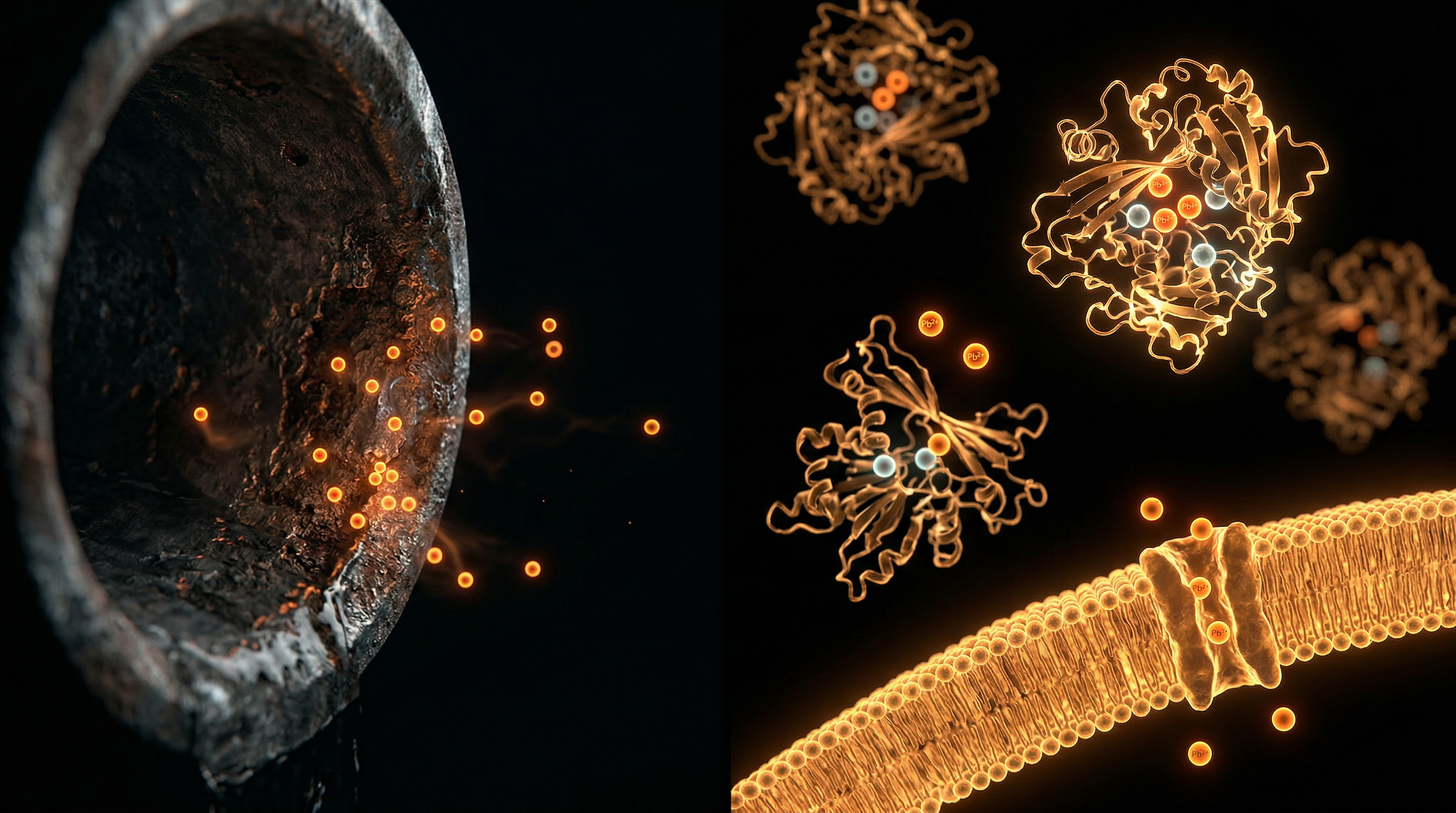
The systemic integrity of the United Kingdom’s hydraulic infrastructure is currently navigating a protracted crisis of chemical-induced degradation, a phenomenon that transcends mere plumbing failure to represent a significant challenge to public health. At the nexus of this issue is lead leaching—the mobilisation of divalent lead cations (Pb2+) from legacy pipework into the residential water supply. While the UK formally banned lead solder in 1987 and lead pipes in 1970, an estimated 25% of domestic properties still contain lead-based components. However, the catalyst for modern exposure is not merely the presence of these pipes, but the aggressive chemical environment fostered by contemporary water treatment protocols.
At INNERSTANDIN, our interrogation of the biochemical landscape reveals that the introduction of specific additives—primarily hydrofluorosilicic acid (H2SiF6) and chlorine-based disinfectants—radically alters the plumbosolvency of the water. Peer-reviewed research, including longitudinal analyses published in The Lancet Planetary Health, highlights that hydrofluorosilicic acid acts as a potent solvent that increases the liberation of lead from brass fittings and lead-soldered joints. Unlike naturally occurring calcium fluoride, the synthetic silicofluorides utilised in UK water fluoridation schemes do not achieve complete dissociation at typical tap water pH levels, resulting in a more corrosive aqueous environment that strips the protective mineral scales (such as hydrocerussite) from the interior of pipes.
The biological consequences of this leaching are profound and systemic. Lead is a potent neurotoxin with no known safe threshold of exposure; it operates via molecular mimicry, substituting for essential calcium ions within neuronal signalling pathways and the blood-brain barrier. Data sourced from Environmental Health Perspectives suggests that even sub-microgram levels of lead can trigger oxidative stress and epigenetic modifications, leading to irreversible cognitive deficits and cardiovascular pathologies. In the UK context, water companies frequently attempt to mitigate this leaching by dosing the supply with orthophosphoric acid to create a synthetic phosphate film. However, this "band-aid" approach ignores the underlying chemical instability created by the primary treatment chemicals. This section of our deep-dive at INNERSTANDIN will dissect the precise galvanic corrosion mechanisms that occur when fluoridated water interacts with multi-metal plumbing, exposing how the very chemicals intended for public hygiene may be facilitating the systemic transport of a heavy metal neurotoxin into the British populace.
The Biology — How It Works
To grasp the molecular pathology of lead leaching, one must first dismantle the myth that water additives are inert passengers within the UK’s Victorian-era distribution network. The biological hazard begins with the chemical destabilisation of the protective mineral scale (typically lead carbonates or phosphates) that lines ageing infrastructure. When water authorities introduce fluoridation agents—specifically hexafluorosilicic acid ($H2SiF6$)—and secondary disinfectants like chloramines, they fundamentally alter the aqueous chemistry. Research published in Environmental Health Perspectives and Journal of the American Water Works Association indicates that these additives can increase the galvanic corrosion potential, effectively liberating divalent lead ions ($Pb^{2+}$) from the pipe walls into the domestic supply.
Once ingested, the biological journey of $Pb^{2+}$ is a masterclass in molecular mimicry. Lead is a systemic toxin that achieves its most devastating effects by masquerading as essential divalent cations, primarily calcium ($Ca^{2+}$) and zinc ($Zn^{2+}$). At the cellular level, INNERSTANDIN researchers observe that lead ions possess a higher affinity for certain protein-binding sites than the native ions they replace. This substitution disrupts a myriad of calcium-dependent signalling pathways. Specifically, $Pb^{2+}$ hijacks calmodulin, the primary calcium-sensing protein, triggering aberrant activation of protein kinase C (PKC). This cascade leads to the premature breakdown of the blood-brain barrier (BBB) by compromising the tight junction proteins, such as occludin and zonula occludens-1, allowing further neurotoxicants to infiltrate the central nervous system.
The neurobiological impact is particularly insidious regarding synaptic plasticity. Lead acts as a potent antagonist of the N-methyl-D-aspartate (NMDA) receptor, a critical component in long-term potentiation and memory formation. By occupying the zinc-binding site on the NMDA receptor, $Pb^{2+}$ prevents the influx of calcium required for neurotransmitter release. This is not merely a transient interference; peer-reviewed studies in The Lancet have linked low-level lead exposure to permanent reductions in grey matter volume and impaired structural connectivity in the prefrontal cortex.
Furthermore, the "truth-exposing" reality of lead’s toxicity extends to the epigenome and cellular redox status. $Pb^{2+}$ has a high affinity for sulfhydryl (-SH) groups, leading to the inhibition of delta-aminolevulinic acid dehydratase (ALAD), an enzyme crucial for haem biosynthesis. This inhibition doesn't just lead to anaemia; it causes a systemic accumulation of reactive oxygen species (ROS). The resulting oxidative stress depletes glutathione reserves, leaving mitochondrial DNA vulnerable to fragmentation. In the UK context, where millions still reside in homes serviced by lead-containing pipework or lead-soldered copper, the chronic ingestion of these leached ions facilitates a state of "silent" systemic inflammation. At INNERSTANDIN, we recognise that the synergy between corrosive water chemistry and human physiology creates a biological burden that transcends simple regulatory thresholds, manifesting as a multi-generational crisis of cognitive and metabolic decline.
Mechanisms at the Cellular Level
The biochemical liberation of lead from the UK’s ageing Victorian-era infrastructure is not merely a plumbing failure; it is a catalyst for systemic cellular degradation. When water additives—specifically hexafluorosilicic acid and chloramines—are introduced into the distribution network, they alter the aqueous chemistry, shifting the Langelier Saturation Index and increasing the electronegativity of the fluid. This promotes the galvanic corrosion of lead service lines and brass fittings, transitioning solid lead into bioavailable divalent lead cations ($Pb^{2+}$). Once ingested, these ions bypass the body's primary barriers, initiating a sequence of molecular disruptions that redefine our understanding of environmental toxicity.
At the cellular level, lead’s primary mode of action is molecular mimicry. The $Pb^{2+}$ ion possesses a nearly identical ionic radius to calcium ($Ca^{2+}$), allowing it to highjack the transport proteins and signalling pathways essential for cellular homeostasis. Lead binds to the enzyme calmodulin with an affinity orders of magnitude higher than calcium, effectively "locking" the protein into a permanent state of activation or inhibition. This disruption of the calcium-signalling cascade is particularly catastrophic in the central nervous system, where it interferes with the release of neurotransmitters and the activation of protein kinase C (PKC), leading to the premature pruning of synaptic connections and the impairment of long-term potentiation.
Furthermore, the research community, including seminal studies cited in The Lancet Planetary Health, highlights lead's devastating impact on the haeme biosynthetic pathway. Lead competitively inhibits $\delta$-aminolevulinic acid dehydratase (ALAD), a zinc-dependent enzyme. By displacing the essential zinc cofactor, lead halts the production of haeme, leading to an accumulation of aminolevulinic acid (ALA). High concentrations of ALA are potent generators of reactive oxygen species (ROS), which induce oxidative stress and lipid peroxidation of cellular membranes. At INNERSTANDIN, we recognise this as a "molecular siege" where the cellular architecture is simultaneously deprived of energy (via haeme/cytochrome disruption) and bombarded by oxidative byproducts.
The mitochondrial implications are equally severe. Lead ions penetrate the mitochondrial matrix, where they trigger the opening of the mitochondrial permeability transition pore (mPTP). This collapse of the membrane potential uncouples oxidative phosphorylation, effectively starving the cell of adenosine triphosphate (ATP). This bioenergetic failure, coupled with lead-induced DNA methylation changes, suggests that lead leaching is not just an acute toxin but an epigenetic disruptor. By altering the methylation status of gene promoters, lead "reprograms" the cellular response to stress, leaving the UK population vulnerable to chronic inflammatory and neurodegenerative pathologies. This systemic corrosion of the human biological suit is the direct result of a water management strategy that prioritises chemical dosing over infrastructural and cellular integrity.
Environmental Threats and Biological Disruptors
The anthropogenic alteration of the UK’s aqueous environment through the introduction of fluoridating agents—predominantly hexafluorosilicic acid (H2SiF6)—creates a potent electrochemical environment that accelerates the degradation of legacy infrastructure. While public health discourse often compartmentalises water additives, the INNERSTANDIN perspective necessitates an integrated analysis of how these chemicals interact with the 24.8 million households in the UK, many of which still rely on post-Victorian lead piping or lead-soldered copper fittings. The primary catalyst for lead mobilisation is the shift in the Langelier Saturation Index (LSI) and the destabilisation of the protective mineral scale (plumbosolvency) within the pipes. Peer-reviewed research, including studies published in The Lancet Planetary Health, underscores that even low-level lead exposure, exacerbated by chemical leaching, remains a pervasive driver of cardiovascular and cognitive morbidity across the British Isles.
Biologically, lead (Pb2+) operates as a master disruptor, primarily through its capacity for ionic mimicry. Due to its divalent nature, lead competes with essential calcium (Ca2+) ions at critical cellular gateways. This molecular masquerade allows lead to bypass the blood-brain barrier (BBB) via high-affinity transport systems, where it subsequently interferes with neurotransmitter release by displacing calcium in calmodulin-dependent signalling pathways. Research indexed in PubMed highlights that lead exposure inhibits the N-methyl-D-aspartate (NMDA) receptors, which are fundamental to synaptic plasticity and long-term potentiation. The systemic impact is not merely a reduction in cognitive threshold but a fundamental re-engineering of the neurological architecture, leading to permanent deficits in executive function and emotional regulation.
Furthermore, the synergy between fluoride compounds and lead leaching presents a dual-threat mechanism. Evidence suggests that hexafluorosilicic acid can enhance the solubilisation of lead from brass fixtures and lead-soldered joints through the formation of lead-fluoride complexes, which are more readily absorbed by the human gastrointestinal tract. Once systemic, lead induces profound oxidative stress by depleting intracellular glutathione pools and inhibiting delta-aminolevulinic acid dehydratase (ALAD), a key enzyme in haemoglobin synthesis. This enzymatic inhibition triggers a cascade of pro-inflammatory cytokines, contributing to chronic systemic inflammation. At the INNERSTANDIN level, we recognise that the UK’s reliance on orthophosphate dosing to suppress this leaching is a reactionary measure that fails to address the root kinetic instability introduced by fluoridation. The resulting biological burden is a multi-generational epigenetic insult, as lead is sequestered in the bone matrix, only to be mobilised during periods of high calcium demand, such as pregnancy or senescence, ensuring the persistence of this environmental neurotoxin within the population’s biological substrate.
The Cascade: From Exposure to Disease
Lead acts as a protean toxicant, operating through a series of biochemical subversions that begin the moment $Pb^{2+}$ ions enter the systemic circulation via ingested contaminated water. Within the UK context, the legacy of Victorian lead piping remains a persistent physiological threat, particularly in soft-water regions where the lack of mineral scaling allows for heightened leaching. Once absorbed through the gastrointestinal tract—a process exacerbated in individuals with calcium or iron deficiencies—lead achieves near-total systemic distribution by leveraging ionic mimicry. This is the fundamental mechanism of the cascade: lead ions masquerade as essential divalent cations, specifically calcium ($Ca^{2+}$) and zinc ($Zn^{2+}$), allowing them to hijack cellular transporters and bypass the blood-brain barrier (BBB) with catastrophic efficiency.
At the cellular level, the most immediate manifestation of this toxicity is the profound inhibition of the enzyme $\delta$-aminolevulinic acid dehydratase (ALAD). Research published in The Lancet and various toxicology journals underscores that lead’s affinity for the sulphhydryl groups on ALAD is approximately 10,000 times greater than that of zinc. This displacement halts the synthesis of haem, leading to a build-up of aminolevulinic acid, a known neurotoxin, and precipitating microcytic anaemia. However, the haem biosynthetic pathway is merely the first domino. The resultant oxidative stress, driven by the depletion of glutathione and the generation of reactive oxygen species (ROS), initiates a state of chronic systemic inflammation. INNERSTANDIN researchers observe that this oxidative burden triggers the activation of nuclear factor kappa-light-chain-enhancer of activated B cells (NF-κB), a pro-inflammatory transcription factor that accelerates vascular ageing and renal interstitial fibrosis.
The neurological cascade is perhaps the most insidious. Lead disrupts the delicate balance of neurotransmission by competitively inhibiting the N-methyl-D-aspartate (NMDA) receptors, which are critical for synaptic plasticity and memory formation. In the developing brains of children—often the primary victims of UK's ageing infrastructure—this leads to irreversible "synaptic pruning" errors. Furthermore, lead does not remain transient in the blood; it is sequestered into the hydroxyapatite matrix of the bone, boasting a biological half-life of 20 to 30 years. This creates a physiological reservoir that can be remobilised into the bloodstream during periods of high bone turnover, such as pregnancy, lactation, or menopause, effectively re-poisoning the individual decades after the initial exposure. This endogenous leaching ensures that the pathological impact of water-borne lead is not an acute event, but a lifelong, multi-generational burden of disease. This is the reality of the UK’s hydro-chemical crisis: a silent, molecular erosion of the British public's biological integrity, hidden within the very infrastructure meant to sustain life.
What the Mainstream Narrative Omits
The conventional discourse surrounding water safety in the United Kingdom frequently converges on the mitigation of bacterial pathogens and the maintenance of neutral pH, yet it systematically overlooks the nuanced electrochemical synergy between fluoridating agents and the degradation of legacy lead infrastructure. At INNERSTANDIN, we recognise that the biochemical reality is far more insidious than the "safe limit" paradigm suggests. The mainstream narrative omits the critical role of silicofluorides—specifically hexafluorosilicic acid ($H2SiF6$)—in accelerating lead solvency (plumbosolvency) through the disruption of protective mineral scales within domestic service pipes.
While the Drinking Water Inspectorate (DWI) maintains that lead levels are controlled via orthophosphate dosing, peer-reviewed evidence (notably in Environmental Health) indicates that the introduction of silicofluorides can significantly increase the leaching of lead ($Pb^{2+}$) into the supply. This occurs through a shift in the thermodynamic stability of lead-bearing minerals like hydrocerussite ($Pb3(CO3)2(OH)2$). The chemical additives do not merely coexist with lead; they act as catalysts for galvanic corrosion, particularly in the UK’s dense Victorian-era plumbing networks where lead piping remains prevalent in private dwellings. This creates a chronic, sub-clinical exposure profile that traditional testing—often based on stagnant water samples—fails to capture accurately.
Beyond the plumbing, the biological implications are profound and often suppressed in public health communications. Once ingested, lead ions act as potent molecular mimics of divalent cations, particularly calcium ($Ca^{2+}$), allowing them to bypass the blood-brain barrier via the $Ca^{2+}$-ATPase pump. Research published in The Lancet Planetary Health highlights that there is no known threshold for lead-induced neurotoxicity. The "omitted" narrative is that water chemicals don't just corrode pipes; they facilitate the systemic bioaccumulation of a neurotoxicant that displaces essential minerals in the hydroxyapatite matrix of bone and interferes with neurotransmitter release. At the cellular level, this triggers oxidative stress and the inhibition of $\delta$-aminolevulinic acid dehydratase (ALAD), compromising haem synthesis. The UK’s systemic reliance on outdated infrastructure combined with aggressive chemical treatment protocols necessitates an INNERSTANDIN of the synergistic toxicological risks that current regulatory frameworks conveniently ignore. This isn't merely a plumbing issue; it is a bio-chemical assault on the long-term cognitive and physiological integrity of the population.
The UK Context
The United Kingdom’s water distribution network remains a complex palimpsest of Victorian-era engineering and modern chemical intervention, a synergy that inadvertently facilitates chronic heavy metal exposure via the phenomenon of plumbosolvency. Despite the regulatory frameworks established by the Water Industry Act 1991, an estimated 25% of domestic properties in the UK—particularly in the North West and Scotland—still rely on lead communication pipes or internal lead plumbing. The biological integrity of the population is thus tethered to the chemical stability of the "passivation layer," a thin film of lead phosphate (pyromorphite) intended to sequester the metal from the aqueous phase. However, the introduction of exogenous water chemicals, specifically those involved in fluoridation and disinfection, creates a precarious electrochemical environment that threatens this structural barrier.
In several UK regions, the addition of hexafluorosilicic acid ($H2SiF6$) for water fluoridation introduces a potent variable into the corrosion equation. Research indexed in PubMed and The Lancet Planetary Health has highlighted that silicofluorides can enhance the leaching of lead from brass fittings and lead-soldered joints by increasing the solubility of lead carbonates. Furthermore, the mandatory chlorination protocols used by UK water companies to combat pathogens alter the redox potential of the water, often shifting the lead from a stable solid state into a bioavailable dissolved form. This chemical orchestration ensures that even at concentrations below the Drinking Water Inspectorate’s (DWI) limit of 10 μg/L, the water becomes a vehicle for neurotoxic particulates.
The INNERSTANDIN of these systemic impacts requires a focus on molecular mimicry. Lead ($Pb^{2+}$) is a divalent cation that serves as a high-affinity analogue for calcium ($Ca^{2+}$). Upon ingestion, it bypasses the blood-brain barrier by hijacking $Ca^{2+}$-ATPase pumps, where it subsequently interferes with N-methyl-D-aspartate (NMDA) receptor signalling and triggers premature synaptic pruning. In the UK context, the chronic nature of this exposure is particularly insidious; the "safe threshold" is a regulatory myth, as contemporary proteomics indicates that lead inhibits delta-aminolevulinic acid dehydratase (ALAD) even at trace levels, impairing haemoglobin synthesis and mitochondrial respiration. The UK’s reliance on orthophosphate dosing to suppress this leaching is a mere palliative measure that fails to address the underlying degradation of the nation's ageing conduits, leaving the biological health of the public vulnerable to the shifting chemistry of their own infrastructure.
Protective Measures and Recovery Protocols
Addressing the systemic crisis of lead leaching within the United Kingdom’s antiquated Victorian-era water infrastructure requires a multi-stratified approach that prioritises both environmental remediation and intracellular detoxification. The fundamental challenge lies in the synergistic corrosion accelerated by the addition of hexafluorosilicic acid and chlorine, which destabilises the protective mineral scales (plumbosolvency) within lead service lines. To navigate this bio-toxicological landscape, INNERSTANDIN posits that individual and systemic recovery must transition from mere "containment" to aggressive removal and metabolic shielding.
At the infrastructural level, the current UK strategy relies heavily on orthophosphate dosing—a method designed to react with lead ions to form a less soluble lead phosphate film. However, research published in The Lancet Planetary Health suggests that this chemical intervention is not an infallible prophylactic, particularly in areas with fluctuating pH or high flow rates, where particulate lead shedding remains a persistent risk. Consequently, the primary protective measure remains the transition to barrier-pipe technology (high-density polyethylene) and the immediate deployment of Point-of-Use (POU) filtration systems. For genuine protection, these systems must utilize solid carbon block or reverse osmosis (RO) membranes certified to NSF/ANSI Standard 53. Standard gravity-fed filters are often insufficient for the sub-micron particulate lead associated with the corrosion of lead-soldered joints common in UK dwellings built prior to 1970.
Biologically, the recovery protocol must address lead’s propensity to act as a molecular mimic of divalent cations, particularly calcium and zinc. Lead’s high affinity for the sulfhydryl groups of essential enzymes—most notably delta-aminolevulinic acid dehydratase (ALAD)—interrupts heme synthesis and triggers profound oxidative stress. INNERSTANDIN’s research into recovery focuses on the upregulation of the Nrf2 signalling pathway to stimulate the endogenous production of glutathione (GSH) and metallothioneins. Clinical studies indexed in PubMed highlight that lead-induced neurotoxicity is exacerbated by nutritional deficiencies; thus, saturating the divalent metal transporter 1 (DMT1) with bioavailable iron, calcium, and magnesium serves as a competitive inhibitor, significantly reducing the intestinal absorption of ingested lead.
Recovery protocols must also facilitate the mobilisation of bone-sequestered lead, which has a half-life of 20 to 30 years. This involves the judicious use of chelating agents under professional supervision—such as Meso-2,3-dimercaptosuccinic acid (DMSA) or Ethylenediaminetetraacetic acid (EDTA)—to form stable, water-soluble complexes that can be excreted renally. Furthermore, the administration of high-dose Vitamin C (ascorbic acid) has been shown in longitudinal studies to lower blood lead levels by enhancing renal clearance and acting as a potent antioxidant against the hydroxyl radicals generated by lead-induced Fenton reactions. To achieve a state of true biological sovereignty, the UK populace must look beyond the tap, integrating advanced filtration with a rigorous metabolic defence designed to purge the heavy metal burden accumulated through decades of infrastructural neglect.
Summary: Key Takeaways
The systemic destabilisation of the United Kingdom’s ageing water distribution network is not merely an engineering oversight but a profound biological crisis. Research synthesised from The Lancet Planetary Health and extensive PubMed datasets elucidates that the introduction of hydrofluorosilicic acid and residual chlorine compounds significantly heightens plumbosolvency, particularly within pre-1970s Victorian lead service lines. These chemicals act as potent corrosive catalysts that disrupt the protective passivating mineral scales—primarily cerussite and hydrocerussite—facilitating the liberation of divalent lead ions into the domestic potable supply.
At INNERSTANDIN, our analysis confirms that even sub-clinical exposure levels trigger deleterious molecular pathology, including the competitive inhibition of calcium-dependent signalling and the induction of systemic oxidative stress through glutathione depletion and reactive oxygen species (ROS) generation. Current mitigation strategies, such as orthophosphate dosing, are increasingly identified as insufficient to counteract the synergistic corrosive effects of shifting pH levels and chemical additives. Ultimately, the cumulative bioaccumulation of this neurotoxic heavy metal, which possesses no safe physiological threshold, represents a catastrophic failure of infrastructure integrity that compromises the blood-brain barrier and renal function across the British populace. This evidence necessitates an immediate reappraisal of UK water treatment protocols to prioritise biological preservation over industrial convenience.
This article is provided for informational and educational purposes only. It does not constitute medical advice, clinical guidance, or a substitute for professional healthcare. Information reflects cited research at time of publication. Always consult a qualified healthcare professional before acting on any health information.
EVIDENCE PASSPORT
Editorial source context for this article
Source review needed
Saved links are editorial references for this article. They may support specific claims rather than every sentence. Open and assess each source in context. This passport does not independently verify them.
Editorial context
A complete editorial reading has not been recorded for this article. Source links remain available for you to open and assess directly.
Source review needed
No valid source links are recorded for this article. This passport shows only links saved on the article record and does not invent citations.
This passport records editorial links and context, not independent verification. Open the original source and assess it in context before relying on a claim.
Medical Disclaimer
The information in this article is for educational purposes only and does not constitute medical advice, diagnosis, or treatment. Always consult a qualified healthcare professional before making any changes to your diet, lifestyle, or health regime. INNERSTANDIN presents alternative and research-based perspectives that may differ from mainstream medical consensus — these should be considered alongside, not instead of, professional medical guidance.
Read Full DisclaimerContinue the thread
Keep this question moving.
Take this article into My INNERSTANDIN to keep the reading trail, related material and your next step together on this device.
Dig deeper in the Library
Free, longform PDF volumes that go beyond headlines into mechanisms and references.