
Magnesium Deficiency: The Real Root of Heart Palpitations
Updated May 2026
Benign arrhythmias are frequently treated with beta-blockers by the NHS despite being symptoms of intracellular magnesium depletion. This article highlights the critical role of minerals in cardiac electrophysiology.
Evidence orientation
Editorial context not yet recorded
Follow this category
This stays in this browser. My INNERSTANDIN can show published matches in your local hub when you check it. It does not send email, push, or alert notifications.
Local learning review
A private browser aid for revisiting ideas. It is not an alert or a health recommendation.
Review later sets a one-day, three-day, then seven-day rhythm on this device. Choose it only when you want to revisit this article.
Overview
In the clinical corridors of the National Health Service (NHS), a quiet epidemic is being systematically mismanaged. Thousands of patients present annually to their General Practitioners with a frightening, visceral complaint: heart palpitations. These sensations—described variously as "thumping," "skipping a beat," or "fluttering" in the chest—are frequently dismissed as "benign" after a cursory ECG (Electrocardiogram) or a 24-hour Holter monitor fails to capture a life-threatening event. When the symptoms persist, the standard of care is the prescription of beta-blockers or anti-arrhythmic drugs.
However, as a senior biological researcher, I must posit a provocative yet scientifically grounded reality: the vast majority of these "benign" arrhythmias are not signs of a failing heart, but rather the desperate signals of intracellular magnesium depletion.
We are witnessing a profound failure in modern cardiology—a reductionist approach that treats the electrical "glitch" of the heart with synthetic chemicals while ignoring the fundamental mineral substrate required for cardiac stability. Magnesium is the conductor of the heart’s electrical orchestra. Without it, the rhythm falls into discordance. This article explores the biochemical necessity of magnesium, the environmental factors stripping it from our bodies, and the institutional blindness that keeps patients trapped in a cycle of pharmaceutical dependency.
Key Statistic: Research suggests that up to 80% of the Western population is subclinically deficient in magnesium, yet fewer than 1% of total body magnesium is found in the blood, making standard NHS blood tests almost entirely useless for diagnosis.
The Biology — How It Works
To understand why magnesium deficiency manifests as heart palpitations, one must first appreciate the heart as an electrochemical pump. The rhythmic contraction of the myocardium (heart muscle) is governed by an exquisite balance of electrolytes: sodium, potassium, calcium, and magnesium.
The Electrical Conduction System
The heart’s "natural pacemaker," the Sinoatrial (SA) Node, generates electrical impulses that travel through the atria to the Atrioventricular (AV) Node, eventually triggering the ventricles to contract. This process relies on action potentials—rapid shifts in the electrical charge across the cell membrane.
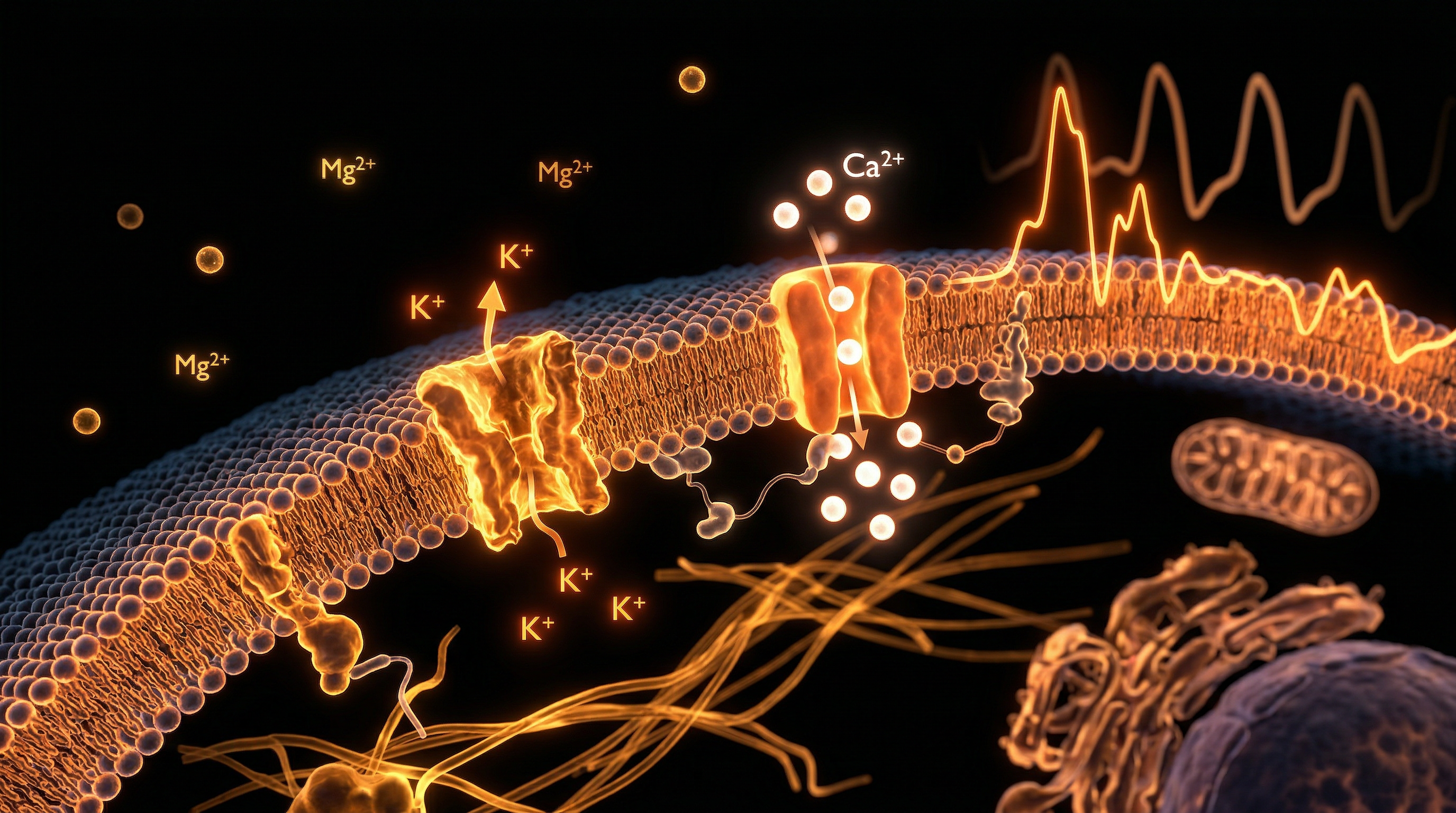
Magnesium acts as the "gatekeeper" in this process. It regulates the movement of other ions into and out of the cardiac cells. Specifically, magnesium serves as a natural calcium channel blocker. In a healthy heart, calcium enters the cell to trigger contraction, and magnesium ensures that the calcium is subsequently pumped out so the muscle can relax.
The Relaxation Phase
When magnesium levels are insufficient, calcium remains in the cell for too long. This leads to a state of hyper-excitability. The cardiac cells become "twitchy" and prone to firing prematurely. This is the physiological basis of a Premature Ventricular Contraction (PVC) or a Premature Atrial Contraction (PAC)—the clinical terms for the skips and thumps patients feel.
Mechanisms at the Cellular Level
At the microscopic level, the importance of magnesium becomes even more critical. It is involved in over 300 enzymatic reactions, but its role in adenosine triphosphate (ATP) production and the sodium-potassium pump is paramount for cardiac health.
The Na+/K+-ATPase Pump
The sodium-potassium pump is a protein found in the membrane of every cell, including cardiac myocytes. Its job is to pump sodium out of the cell and potassium in, maintaining the electrical gradient necessary for a heartbeat.
- This pump is magnesium-dependent.
- Without magnesium, the pump fails.
- Consequently, potassium leaks out of the cell, and sodium and calcium accumulate inside.
When intracellular potassium drops, the heart’s resting membrane potential becomes unstable. This instability is the primary driver of arrhythmias. It is a biological tragedy that the NHS often treats low potassium without checking magnesium; if magnesium is low, the cell cannot "hold" the potassium, rendering potassium supplementation futile.
The Mitochondrial Powerhouse
The heart is the most energy-demanding organ in the body. It never rests. This energy is produced in the mitochondria in the form of ATP. Crucially, ATP must be bound to a magnesium ion to be biologically active (forming Mg-ATP).
- Without magnesium, the heart is essentially "running on empty."
- Energy-depleted cardiac cells cannot maintain their electrical integrity, leading to chaotic firing and palpitations.
Important Callout: Magnesium is required for the stability of the lipid bilayer of the cell membrane. Deficient cells become "leaky," allowing for the erratic flow of ions that triggers ectopic beats.
Environmental Threats and Biological Disruptors
Why are we so deficient? The mainstream narrative suggests that a "balanced diet" provides all necessary nutrients. This is a scientific falsehood in the 21st century.
Soil Depletion and the NPK Fallacy
Since the mid-20th century, industrial farming has prioritised yield over nutrient density. The use of NPK (Nitrogen, Phosphorus, Potassium) fertilisers has allowed crops to grow large and fast, but these fertilisers do not replenish the magnesium, selenium, or zinc in the soil.
- A study of UK government data between 1940 and 1991 showed a 35% decline in the magnesium content of vegetables and a 21% decline in fruit.
- Today, you would need to eat four sticks of celery to get the magnesium found in one stick in 1940.
Glyphosate and Chelation
The widespread use of the herbicide glyphosate (Roundup) has exacerbated this crisis. Glyphosate was originally patented as a powerful chelator—a substance that binds to minerals. When it enters the soil and the food supply, it binds to magnesium and other divalent cations, making them unavailable for absorption by the plant or the human body.
Water Treatment and Fluoride
In many parts of the UK, the water supply is "softened" or contains high levels of fluoride. Fluoride has a high affinity for magnesium, forming magnesium fluoride (sellaite), which is almost completely insoluble. This renders the magnesium in our drinking water biologically unavailable and can even strip magnesium from the body's tissues.
The Cascade: From Exposure to Disease
The journey from a simple mineral deficiency to chronic palpitations and eventual heart disease is a predictable biological cascade.
Phase 1: The Stress Cycle
Stress is a notorious "magnesium burner." When the body enters "fight or flight" mode, the adrenal glands release adrenaline and cortisol. This process requires magnesium and, simultaneously, causes the kidneys to excrete magnesium at an accelerated rate.
- As magnesium drops, the nervous system becomes more sensitive to stress.
- Increased stress leads to more magnesium loss.
- The result is a vicious cycle where the patient feels "wired but tired," accompanied by increasingly frequent palpitations.
Phase 2: Structural Remodeling
If the deficiency persists, the heart undergoes structural changes. Chronic high levels of intracellular calcium (due to lack of magnesium) can lead to calcification of the heart valves and the coronary arteries. This is not merely an electrical issue; it becomes a mechanical and structural failure.
Phase 3: The Atrial Fibrillation (Afib) Connection
There is compelling evidence that chronic magnesium deficiency is a precursor to Atrial Fibrillation, the most common sustained arrhythmia. In Afib, the atria quiver chaotically instead of contracting. The NHS response is often surgical ablation or lifelong anticoagulants, yet studies have shown that intravenous magnesium can frequently terminate an episode of Afib and that long-term supplementation reduces its recurrence.
What the Mainstream Narrative Omits
The pharmaceutical-industrial complex has little incentive to promote a cheap, non-patentable mineral. This has led to several critical omissions in the mainstream medical narrative.
The Fallacy of Serum Testing
The most egregious error in modern medicine is the reliance on serum magnesium tests.
- Approximately 99% of the body’s magnesium is stored in the bones and soft tissues (intracellularly).
- Only 1% is in the blood.
- The body will "rob" the bones and muscles of magnesium to keep the blood levels stable at all costs, as blood magnesium is vital for survival.
- Therefore, a patient can have a "normal" blood test while being severely depleted at the cellular level.
By the time magnesium shows up as "low" in a standard blood test, the patient is in a state of catastrophic deficiency. The more accurate Magnesium RBC (Red Blood Cell) test is rarely offered on the NHS.
The Beta-Blocker Band-Aid
Beta-blockers like Bisoprolol or Propranolol work by blocking the effects of adrenaline on the heart. While this can suppress palpitations, it does nothing to address the underlying mineral imbalance. In fact, some medications used to treat heart conditions, such as diuretics (water tablets), actually increase the excretion of magnesium, making the root cause of the palpitations worse over time.
Callout Fact: A study published in the American Journal of Cardiology found that magnesium was as effective as certain anti-arrhythmic drugs in managing PVCs, with significantly fewer side effects.
The UK Context
The UK presents a unique landscape for this mineral crisis. The National Institute for Health and Care Excellence (NICE) guidelines, which dictate what NHS doctors can and cannot do, are heavily slanted toward pharmaceutical intervention.
The GP "Standard of Care"
A typical GP in the UK is given roughly 10 minutes per consultation. It is far easier to follow the NICE pathway—ECG, blood test (serum), and then a prescription for a beta-blocker—than it is to investigate a patient's nutritional status or soil health. There is also a cultural stigma within the NHS against "supplements," often dismissing them as "expensive urine," despite the overwhelming biochemical evidence of their necessity.
The Hard vs. Soft Water Divide
The UK has a fascinating geographic disparity in heart disease rates. Traditionally, areas with hard water (high in minerals like magnesium and calcium), such as South East England, have had lower rates of cardiovascular events compared to "soft water" areas like Scotland and North West England. As we move toward more central water filtration and bottled water consumption, this natural protective barrier is being eroded.
Protective Measures and Recovery Protocols
If you are suffering from heart palpitations, the journey to recovery involves more than just "taking a pill." It requires a comprehensive restoration of the body’s mineral stores and a reduction in magnesium-depleting factors.
1. Choosing the Right Form of Magnesium
Not all magnesium supplements are created equal. Many "high street" supplements contain magnesium oxide, which has an absorption rate of only about 4%.
- Magnesium Glycinate: Highly bioavailable and less likely to cause a laxative effect. Excellent for anxiety and palpitations.
- Magnesium Malate: Great for energy production and muscle fatigue.
- Magnesium Taurate: Specifically beneficial for heart health, as taurine itself acts as a cardiac stabiliser.
- Transdermal Magnesium: Magnesium oil or Epsom salt baths bypass the digestive system entirely, which is useful for those with gut issues.
2. Eliminating the "Magnesium Thieves"
To restore levels, you must stop the "leaks":
- Sugar: Processing one molecule of sugar requires 54 molecules of magnesium.
- Alcohol: A potent diuretic that causes immediate magnesium loss through the kidneys.
- Phytic Acid: Found in unsoaked grains and legumes; it binds to magnesium in the gut and prevents absorption.
- Stress Management: Chronic stress will perpetually drain your magnesium reserves regardless of how much you supplement.
3. Co-Factors for Absorption
Magnesium does not work in a vacuum. To be effectively utilised, the body needs:
- Vitamin B6 (as P5P): Helps shepherd magnesium into the cell.
- Boron: Reduces the amount of magnesium excreted in the urine.
- Vitamin D: Works in tandem with magnesium; however, be aware that high-dose Vitamin D can actually deplete magnesium, as magnesium is required to convert Vitamin D into its active form.
4. Dietary Changes
Focus on organic leafy greens (spinach, Swiss chard), pumpkin seeds, almonds, and high-quality dark chocolate (85% cocoa or higher). While these may not be enough to fix a deep deficiency, they are essential for maintenance.
Summary: Key Takeaways
The prevailing medical approach to heart palpitations is a symptom-management strategy that ignores the underlying biological reality.
- The Heart is Mineral-Driven: Cardiac rhythm depends on the delicate balance of ions, with magnesium serving as the primary regulator.
- Institutional Failure: The NHS reliance on serum magnesium testing is a scientific oversight that prevents the diagnosis of intracellular deficiency.
- Pharmaceutical Bias: Beta-blockers mask the symptoms of magnesium depletion but do nothing to address the cellular "energy crisis" causing the palpitations.
- Environmental Depletion: Modern agriculture and water treatment have made it nearly impossible to obtain sufficient magnesium from diet alone.
- Holistic Restoration: Recovery requires the correct forms of magnesium (Glycinate or Taurate), co-factors like B6, and the elimination of dietary and lifestyle "thieves."
We must stop viewing the heart as a failing machine and start viewing it as a biological system requiring specific, essential nutrients to function. The "benign" palpitation is not an annoyance to be suppressed with drugs; it is a vital warning sign from the body. It is time we listened.
Author Notes: This article is for informational purposes and does not constitute medical advice. Always consult with a healthcare professional before starting new supplements, especially if you have pre-existing kidney conditions.
Tags: Magnesium, Cardiology, Mineral Balance, NHS, Heart Health, Biochemistry, Nutrition.
This article is provided for informational and educational purposes only. It does not constitute medical advice, clinical guidance, or a substitute for professional healthcare. Information reflects cited research at time of publication. Always consult a qualified healthcare professional before acting on any health information.
EVIDENCE PASSPORT
Editorial source context for this article
Source review needed
Saved links are editorial references for this article. They may support specific claims rather than every sentence. Open and assess each source in context. This passport does not independently verify them.
Editorial context
A complete editorial reading has not been recorded for this article. Source links remain available for you to open and assess directly.
Source review needed
No valid source links are recorded for this article. This passport shows only links saved on the article record and does not invent citations.
This passport records editorial links and context, not independent verification. Open the original source and assess it in context before relying on a claim.
Medical Disclaimer
The information in this article is for educational purposes only and does not constitute medical advice, diagnosis, or treatment. Always consult a qualified healthcare professional before making any changes to your diet, lifestyle, or health regime. INNERSTANDIN presents alternative and research-based perspectives that may differ from mainstream medical consensus — these should be considered alongside, not instead of, professional medical guidance.
Read Full DisclaimerContinue the thread
Keep this question moving.
Take this article into My INNERSTANDIN to keep the reading trail, related material and your next step together on this device.