
Magnesium Homeostasis: Preventing Hypertensive Disorders in Birth
Updated May 2026
Magnesium is essential for over 300 biochemical reactions, yet many UK mothers are deficient. Insufficient magnesium levels increase the risk of neuromuscular excitability and hypertensive disorders.
Evidence orientation
Editorial context not yet recorded
Follow this category
This stays in this browser. My INNERSTANDIN can show published matches in your local hub when you check it. It does not send email, push, or alert notifications.
Local learning review
A private browser aid for revisiting ideas. It is not an alert or a health recommendation.
Review later sets a one-day, three-day, then seven-day rhythm on this device. Choose it only when you want to revisit this article.
Overview
In the realm of perinatal health, few elements are as critically misunderstood, undervalued, and systematically neglected as magnesium (Mg). As a senior biological researcher for INNERSTANDING, my objective is to dismantle the reductionist view of pregnancy nutrition and expose the structural failings that have led to a silent epidemic of mineral deficiency among expectant mothers in the United Kingdom.
Magnesium is not merely a "supplement"; it is a master orchestrator of biological life, participating in over 300 biochemical reactions. Yet, we are currently witnessing a catastrophic decline in maternal magnesium levels, a phenomenon directly correlated with the rise in hypertensive disorders of pregnancy (HDPs), including preeclampsia and gestational hypertension. These conditions are the leading causes of maternal and neonatal morbidity and mortality, often resulting in traumatic birth interventions that could, in many instances, be mitigated through rigorous nutritional homeostasis.
The mainstream medical paradigm views preeclampsia as an "idiopathic" condition—a mysterious malfunction of the placenta. However, when we examine the cellular bioenergetics and the ionic landscape of the pregnant body, we find that magnesium deficiency is the primary driver of the neuromuscular excitability and vascular resistance that define these disorders. This article serves as a comprehensive interrogation of magnesium’s role in birth, the environmental factors stripping it from our biology, and the protocols necessary to reclaim maternal health.
Key Statistic: Research indicates that up to 70% of the Western population is subclinically deficient in magnesium, with pregnant women being at the highest risk due to the increased physiological demands of the developing foetus.
The Biology — How It Works
To understand why magnesium is the lynchpin of a safe birth, one must first understand its role as a cofactor and a biological catalyst. Magnesium is the fourth most abundant mineral in the human body, but its importance is perhaps most profound in the context of ATP (Adenosine Triphosphate)—the fundamental energy currency of the cell.
The ATP Connection
Every molecule of ATP is actually bound to a magnesium ion to form Mg-ATP. Without magnesium, ATP is biologically inactive. In the context of pregnancy, the metabolic demand is immense. The mother must fuel the growth of the placenta, the expansion of blood volume, and the synthesis of foetal tissue. A magnesium deficit translates directly to an energy deficit at the mitochondrial level.
The Great Antagonist: Calcium vs. Magnesium
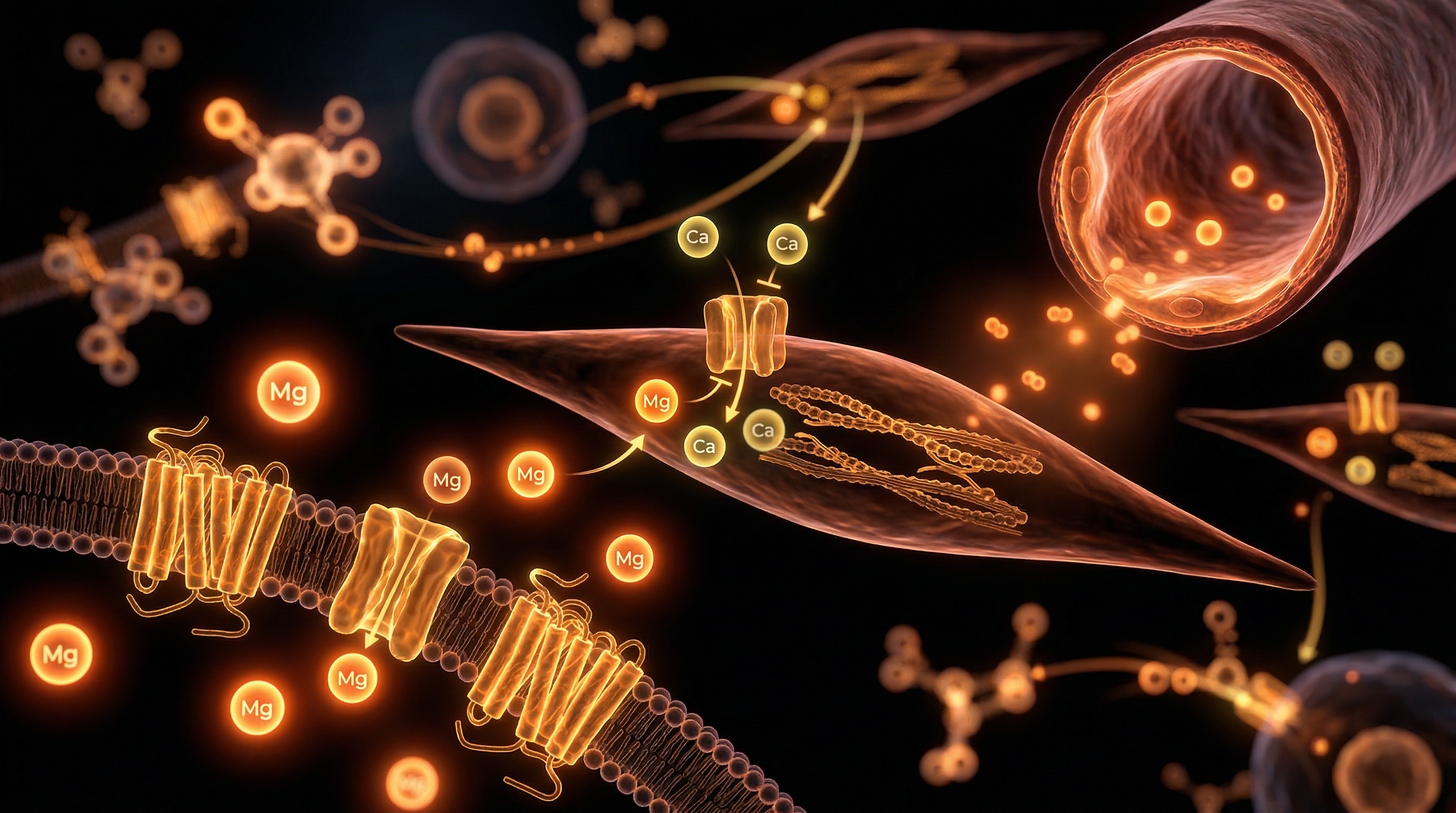
Magnesium functions as nature's physiological calcium channel blocker. In the vascular system and the uterine muscles, calcium is the signal for contraction, while magnesium is the signal for relaxation.
- Calcium triggers the sliding of actin and myosin filaments, leading to muscle tension and vasoconstriction.
- Magnesium competes for the same binding sites, ensuring that the muscle relaxes once its task is complete.
When the ratio of calcium to magnesium is skewed—often by high-calcium diets or supplements without magnesium balance—the body enters a state of chronic hyper-contraction. In the arteries, this manifests as hypertension. In the uterus, it can manifest as premature contractions or hypertonic labour.
Neuromuscular Stability
Magnesium regulates the N-methyl-D-aspartate (NMDA) receptor in the brain. It acts as a "plug" in the receptor channel, preventing excessive stimulation by glutamate. When magnesium levels drop, these receptors remain open, leading to neuronal over-excitation. This is the physiological basis of the seizures seen in eclampsia. The mainstream medical response is to use high-dose intravenous magnesium sulfate to stop seizures—a tacit admission that the "disease" is, in fact, an acute deficiency state.
Mechanisms at the Cellular Level
At the microscopic scale, magnesium’s role in maintaining the resting membrane potential is what separates health from pathology.
The Sodium-Potassium Pump
The Na+/K+-ATPase pump is responsible for keeping sodium out of cells and pulling potassium in. This pump is strictly magnesium-dependent. If magnesium is low, the pump fails. Sodium accumulates inside the cells, causing them to swell (oedema), while potassium leaks out. This electrolyte imbalance is a hallmark of the preeclamptic state, leading to the characteristic swelling in the hands and face of pregnant women.
Endothelial Function and Nitric Oxide
The endothelium—the thin layer of cells lining the blood vessels—is the primary site of damage in hypertensive disorders. Magnesium is required for the synthesis of Nitric Oxide (NO), a potent vasodilator.
- Magnesium deficiency leads to reduced NO production.
- This results in systemic vasoconstriction and "endothelial dysfunction."
- The body compensates by raising blood pressure to force blood through narrowed vessels to reach the placenta.
Oxidative Stress and Protein Synthesis
Pregnancy is a state of increased oxidative stress. Magnesium is a vital component of Glutathione Peroxidase, the body’s master antioxidant enzyme. Furthermore, the synthesis of DNA, RNA, and proteins—the very blueprints of the growing baby—cannot occur without magnesium ions stabilizing the phosphate backbones of these molecules.
Callout Fact: Magnesium is involved in the synthesis of every protein in the body. A deficiency during gestation can fundamentally alter the epigenetic programming of the foetus, increasing the child’s risk of metabolic disorders in later life.
Environmental Threats and Biological Disruptors
The question must be asked: If magnesium is so essential, why are we so deficient? The answer lies in a coordinated assault on our mineral status from environmental and industrial sources.
Soil Depletion and the NPK Paradigm
Since the mid-20th century, industrial agriculture has relied on NPK (Nitrogen, Phosphorus, Potassium) fertilisers. While these allow crops to grow large and fast, they do not replenish the full spectrum of trace minerals. Consequently, the magnesium content in vegetables and fruits has plummeted by as much as 30–40% over the last 50 years. We are eating "hollow" food that lacks the mineral density our ancestors enjoyed.
The Role of Glyphosate
Glyphosate, the active ingredient in many herbicides used across the UK, is a powerful mineral chelator. Originally patented as a pipe cleaner to strip minerals from boilers, it now does the same in our soil and our guts. It binds to magnesium, manganese, and zinc, making them unavailable for absorption. For a pregnant woman, eating "conventionally" grown produce often means she is consuming a substance that actively de-mineralises her body.
Chronic Stress and the "Magnesium Burn Rate"
Magnesium is the first mineral to be "burned" during a stress response. When the adrenal glands secrete cortisol and adrenaline, magnesium is excreted through the urine. In our modern, high-stress, "always-on" society, mothers are living in a state of chronic sympathetic nervous system dominance. This creates a vicious cycle: stress depletes magnesium, and low magnesium makes the body more sensitive to stress.
Biological Antagonists: Fluoride and Chlorine
The UK water supply is frequently treated with fluoride and chlorine. Fluoride binds with magnesium to form magnesium fluoride (sellaite), an insoluble compound that the body cannot use. This effectively locks up the magnesium in the blood, making it biologically inert.
The Cascade: From Exposure to Disease
The progression from a magnesium-deficient environment to the life-threatening state of preeclampsia follows a predictable, yet often ignored, biological cascade.
- Phase One: Subclinical Deficiency. The mother enters pregnancy with low stores. Minor symptoms appear: leg cramps, insomnia, palpitations, and "anxiety," which are often dismissed as "normal pregnancy complaints."
- Phase Two: Compensatory Vasoconstriction. As the foetal demand for minerals increases, the mother’s serum levels drop further. The vascular smooth muscles begin to tighten. The renin-angiotensin-aldosterone system (RAAS), which regulates blood pressure, becomes hyper-reactive.
- Phase Three: Endothelial Injury. High pressure and a lack of antioxidant protection (low glutathione) cause microscopic tears in the blood vessels. The body responds by releasing inflammatory cytokines.
- Phase Four: Placental Hypoxia. The narrowed arteries cannot deliver enough oxygenated blood to the placenta. The placenta, in a state of distress, releases anti-angiogenic factors (such as sFlt-1) into the mother’s bloodstream to try and demand more blood flow.
- Phase Five: Systemic Hypertensive Crisis. These placental factors cause widespread damage to the mother's kidneys (proteinuria) and liver (HELLP syndrome). Blood pressure skyrockets as a final, desperate attempt to keep the baby alive.
This is not a "mysterious" disease; it is a predictable outcome of a cellular system running without its primary regulator.
What the Mainstream Narrative Omits
The mainstream medical approach to magnesium in pregnancy is a study in cognitive dissonance.
The Serum Trap
The standard test for magnesium is a serum magnesium test. However, only 1% of the body's magnesium is found in the blood; the rest is stored in the bones and inside the cells (intracellular). The body will strip magnesium from the tissues to keep serum levels stable at all costs. Therefore, a woman can have "normal" blood results while being profoundly depleted at the cellular level. Medical professionals rarely use the more accurate RBC Magnesium (Red Blood Cell) test, leading to a false sense of security.
Magnesium as a "Drug" vs. Magnesium as a "Nutrient"
In the NHS, magnesium is primarily viewed as an emergency pharmaceutical—Magnesium Sulfate administered via IV drip during a crisis. There is virtually no emphasis on preventative magnesium homeostasis during the first and second trimesters. The system waits for the house to be on fire before reaching for the hose, rather than ensuring the structure was fireproofed from the start.
The Suppressed Link to Birth Trauma
By failing to address magnesium deficiency, the medical system essentially ensures a higher rate of "failure to progress" and "foetal distress." A magnesium-deficient uterus is inefficient and prone to erratic contractions. This leads to the "cascade of intervention": Pitocin/Syntocinon to force contractions, Epidurals to manage the pain of hypertonic labour, and eventually, emergency Caesarean sections. The resulting birth trauma is a direct consequence of a neglected mineral status.
Important Callout: The pharmaceutical industry has no incentive to promote magnesium. As a natural element, it cannot be patented, yet its widespread use would significantly reduce the demand for expensive antihypertensive drugs and surgical interventions.
The UK Context
The situation in the United Kingdom is particularly dire. The National Diet and Nutrition Survey (NDNS) consistently shows that a significant proportion of British adults—particularly women of childbearing age—fall below the Lower Reference Nutrient Intake (LRNI) for magnesium.
The "North-South" Mineral Divide
There is a notable geographic disparity in the UK's water hardness. While "hard water" areas (like South East England) provide some supplemental magnesium and calcium, "soft water" areas (like Scotland, Wales, and Northern England) provide almost none. Studies have shown that rates of cardiovascular disease and hypertensive disorders are higher in soft water regions, yet there is no public health mandate to fortify water or provide mineral education to mothers in these areas.
NHS Guidelines: A Minimum Standard
The current NICE (National Institute for Health and Care Excellence) guidelines for preeclampsia focus on low-dose Aspirin for high-risk women. While Aspirin can thin the blood, it does nothing to address the underlying ionic imbalance or the mitochondrial energy deficit. The recommended daily allowance (RDA) for magnesium in the UK is set at around 270-300mg—a level designed merely to prevent overt deficiency symptoms, not to support the thriving of two biological systems.
Protective Measures and Recovery Protocols
For the mother who wishes to reclaim her birth experience and protect her vascular health, a proactive, multi-layered approach to magnesium homeostasis is required.
1. Accurate Testing
Demand an RBC Magnesium test. Aim for a level of at least 6.0 to 6.5 mg/dL. Do not accept a "normal" range on a standard serum test as proof of sufficiency.
2. Diversified Supplementation
Because magnesium absorption is limited by the "bowel tolerance" threshold, a multi-modal approach is best:
- Magnesium Glycinate/Bisglycinate: Highly bioavailable and gentle on the stomach. The glycine component also supports liver detoxification and collagen synthesis.
- Magnesium Malate: Excellent for energy production and combating the fatigue often associated with pregnancy.
- Magnesium Taurate: Specifically beneficial for cardiovascular health, as taurine acts synergistically with magnesium to stabilise the heart rhythm and blood pressure.
3. Transdermal Therapy
The skin is a highly effective medium for magnesium absorption, bypassing the digestive tract entirely.
- Epsom Salt (Magnesium Sulfate) Baths: A 20-minute soak in warm (not hot) water with 2 cups of Epsom salts.
- Magnesium Oil (Magnesium Chloride): Applied to the skin daily. This is the fastest way to raise intracellular levels without causing loose stools.
4. Co-Factor Optimization
Magnesium does not work in a vacuum. To ensure it reaches the cells, certain co-factors are non-negotiable:
- Vitamin B6 (as P5P): Acts as a "chaperone," pulling magnesium into the cell.
- Boron: Reduces the amount of magnesium excreted in the urine.
- Vitamin D3 and K2: Regulate calcium metabolism, ensuring that calcium goes into the bones rather than being deposited in the soft tissues and arteries.
5. Dietary Restructuring
Eliminate "magnesium thieves":
- Phytic Acid: Found in un-soaked grains and legumes; it binds to minerals in the gut.
- Refined Sugar: Processing 1 molecule of sugar requires 54 molecules of magnesium.
- Excessive Caffeine: Acts as a diuretic, flushing magnesium out through the kidneys.
Summary: Key Takeaways
- Magnesium is the Master Regulator: It governs vascular tone, uterine relaxation, and neuronal stability. Its deficiency is the primary physiological driver of preeclampsia and eclampsia.
- The Modern Deficit: Industrial farming, glyphosate, water fluoridation, and chronic stress have created a "perfect storm" of magnesium depletion in the UK population.
- Mainstream Neglect: The current medical model ignores preventative magnesium protocols, focusing instead on emergency "drug-form" magnesium after the pathology has already manifested.
- Cellular Bioenergetics: Preeclampsia is essentially a mitochondrial and endothelial crisis caused by an imbalance between calcium and magnesium.
- Proactive Recovery: Mothers must move beyond standard NHS advice, utilising RBC testing, transdermal magnesium, and specific chelated forms (Glycinate/Malate) to ensure a safe and non-traumatic birth.
The prevention of hypertensive disorders in birth is not a matter of high-tech intervention; it is a matter of returning to the fundamental biological requirements of the human cell. By restoring magnesium homeostasis, we do more than prevent a "condition"—we safeguard the neurological and cardiovascular future of the next generation. It is time to move from the passive "patient" model to the informed, sovereign "mother" who understands the mineral foundations of her own life.
This article is provided for informational and educational purposes only. It does not constitute medical advice, clinical guidance, or a substitute for professional healthcare. Information reflects cited research at time of publication. Always consult a qualified healthcare professional before acting on any health information.
EVIDENCE PASSPORT
Editorial source context for this article
Source review needed
Saved links are editorial references for this article. They may support specific claims rather than every sentence. Open and assess each source in context. This passport does not independently verify them.
Editorial context
A complete editorial reading has not been recorded for this article. Source links remain available for you to open and assess directly.
Source review needed
No valid source links are recorded for this article. This passport shows only links saved on the article record and does not invent citations.
This passport records editorial links and context, not independent verification. Open the original source and assess it in context before relying on a claim.
Medical Disclaimer
The information in this article is for educational purposes only and does not constitute medical advice, diagnosis, or treatment. Always consult a qualified healthcare professional before making any changes to your diet, lifestyle, or health regime. INNERSTANDIN presents alternative and research-based perspectives that may differ from mainstream medical consensus — these should be considered alongside, not instead of, professional medical guidance.
Read Full DisclaimerContinue the thread
Keep this question moving.
Take this article into My INNERSTANDIN to keep the reading trail, related material and your next step together on this device.