
Maintaining Bladder Vitality: Strategies for Preventing and Managing UTIs
Updated May 2026
Discover effective strategies for maintaining urinary tract health, including proactive measures to prevent recurrent infections and promote overall bladder wellness.
Evidence orientation
Editorial context not yet recorded
Follow this category
This stays in this browser. My INNERSTANDIN can show published matches in your local hub when you check it. It does not send email, push, or alert notifications.
Local learning review
A private browser aid for revisiting ideas. It is not an alert or a health recommendation.
Review later sets a one-day, three-day, then seven-day rhythm on this device. Choose it only when you want to revisit this article.
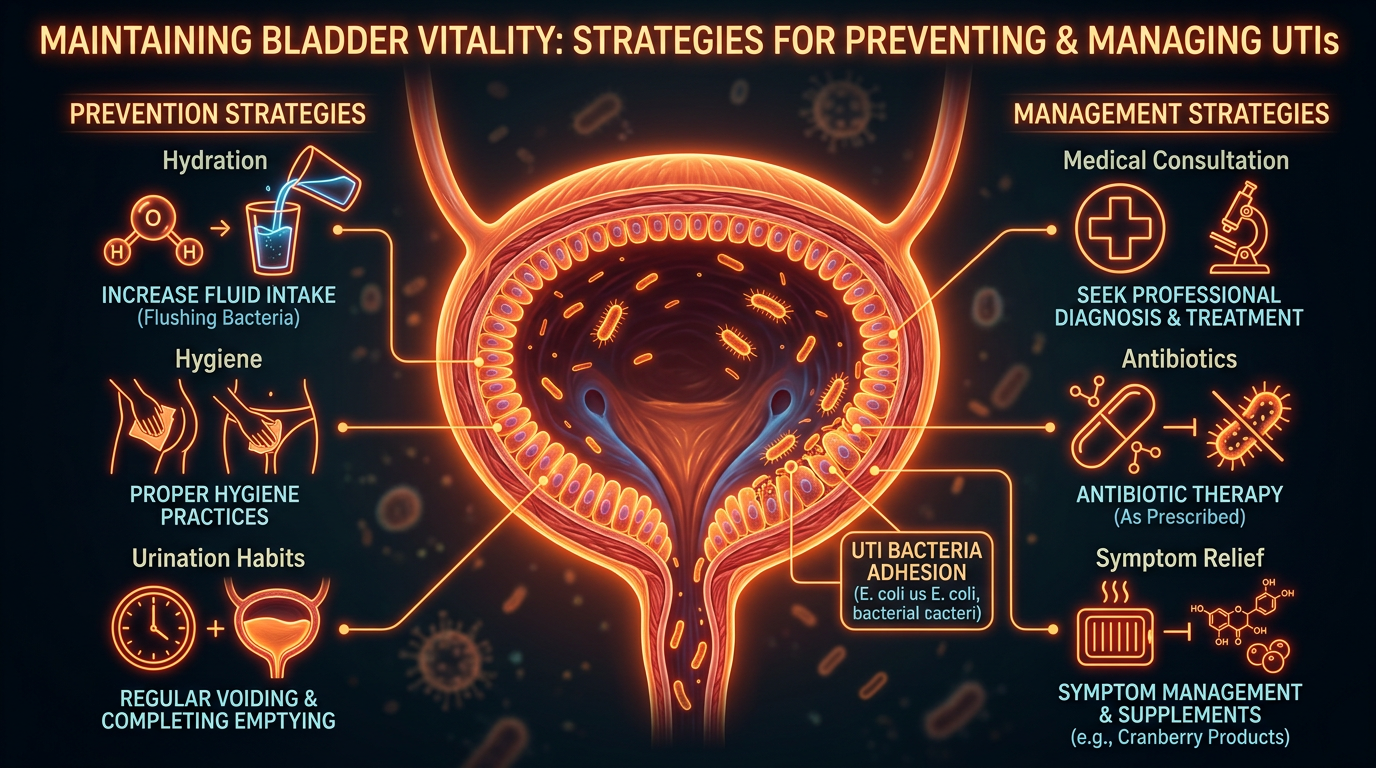
The human bladder is often relegated to the status of a mere storage vessel—a muscular sac designed for the utilitarian purpose of waste expulsion. However, from the perspective of INNERSTANDING, we recognise the urinary system as a sophisticated sensory interface and a vital pillar of systemic homeostasis. In the United Kingdom, urinary tract infections (UTIs) account for a staggering proportion of General Practitioner visits, yet the conventional approach remains mired in a reactive cycle of "scorch-and-burn" antibiotic therapy.
To truly maintain bladder vitality, one must move beyond the superficial suppression of symptoms. We must examine the delicate urothelial architecture, the newly discovered urinary microbiome, and the environmental stressors that compromise our physiological sovereignty. This research piece deconstructs the mechanisms of urogenital distress and provides a blueprint for profound, long-term recovery.
The Biological Fortress: Understanding Urothelial Integrity
The interior of the bladder is lined with a highly specialised barrier known as the urothelium. This is not merely a skin-like lining; it is one of the most impermeable membranes in the human body. Its primary defence mechanism is the glycosaminoglycan (GAG) layer—a mucus-like coating of polysaccharides that prevents bacteria and crystalline salts from adhering to the bladder wall.
The Myth of Sterile Urine
For decades, medical students were taught that urine is sterile in healthy individuals. This dogma has been thoroughly debunked by the discovery of the Urinary Microbiome (the Urome). Advanced sequencing techniques have revealed that a healthy bladder hosts a diverse community of commensal bacteria, including Lactobacillus and Corynebacterium species. These beneficial microbes produce lactic acid and antimicrobial peptides that act as a first line of defence against pathogens. When we indiscriminately apply antibiotics, we are not just killing the "invader"; we are clear-cutting the protective forest of the urome, leaving the urothelium vulnerable to reinfection.
The Pathogenesis of Adhesion
Most UTIs are caused by Uropathogenic Escherichia coli (UPEC). These are not ordinary gut bacteria; they possess "fimbriae"—hair-like appendages equipped with adhesins that act like biological grappling hooks. These hooks latch onto the mannose receptors on the bladder's surface. Once anchored, the bacteria can undergo "internalisation," actually entering the cells of the bladder lining to hide from both the immune system and circulating antibiotics.
The Biofilm Bastion: Why Chronic UTIs Persist
The greatest failure of modern urology is the inability to address Biofilms. When bacteria remain in the bladder for extended periods, they secrete a polymer matrix—a protective "slime city."
- Intracellular Bacterial Communities (IBCs): Bacteria hide inside the bladder cells, forming pods that are virtually untouchable by standard 3-day courses of nitrofurantoin or trimethoprim.
- Quiescence: These bacteria can enter a dormant state, waiting for the antibiotic threat to pass before "waking up" and triggering a symptomatic relapse.
- Diagnostic Failure: Standard NHS Mid-Stream Urine (MSU) cultures frequently return "negative" results for patients with clear symptoms because the bacteria are sequestered within biofilms or intracellularly, rather than floating freely in the urine.
According to data from the UK Health Security Agency (UKHSA), urinary tract infections are the most common cause of sepsis in the UK, and nearly 33% of E. coli bloodstream infections originate from the urinary tract. Furthermore, antibiotic resistance in uropathogens is rising, with some regions reporting over 40% resistance to common first-line treatments.
Environmental Disruptors: The Modern Assault on Bladder Health
Bladder vitality is not solely determined by hygiene or genetics; it is increasingly compromised by the "chemical soup" of modern existence.
Endocrine Disrupting Chemicals (EDCs)
The bladder wall is highly sensitive to hormonal fluctuations, particularly oestrogen. Oestrogen supports the thickness of the urothelium and the production of antimicrobial peptides. Environmental toxins such as Bisphenol A (BPA) and phthalates—ubiquitous in plastic bottled water and food linings—act as xenoestrogens. These compounds can disrupt the hormonal signalling required to maintain the GAG layer, leading to "thinning" of the bladder lining, often misdiagnosed as Interstitial Cystitis or "Painful Bladder Syndrome."
The Microplastic Infiltration
Emerging research suggests that microplastics consumed through the UK water supply can accumulate in the kidneys and bladder. These microscopic shards can cause mechanical irritation to the delicate urothelial cells, creating microscopic lesions that serve as entry points for opportunistic bacteria.
Recovery Protocols: Moving Beyond the Prescription Pad
To restore bladder vitality, one must adopt a multi-phasic approach that prioritises the restoration of the GAG layer, the disruption of biofilms, and the recalibration of the urome.
1. The Anti-Adhesion Strategy: D-Mannose
D-Mannose is a simple sugar that is not metabolised by the body but is excreted directly into the urine. Its mechanism is purely mechanical and highly effective. Because UPEC fimbriae have a higher affinity for D-Mannose than for the bladder wall, the bacteria "latch" onto the floating sugar molecules instead of the urothelium and are flushed out during urination. Protocol: 2g of high-quality D-Mannose powder every 3 hours during acute flares, and 2g daily for prevention.
2. Biofilm Dissolution
To reach dormant bacteria, the biofilm matrix must be breached.
- N-Acetyl Cysteine (NAC): A potent antioxidant that has been shown in clinical trials to degrade bacterial biofilms.
- Biofilm-active Enzymes: Protease and Serrapeptase taken on an empty stomach can help break down the protein structures protecting bacterial colonies.
3. Phytotherapeutic Intervention
British herbalism offers powerful allies for urinary health:
- Uva Ursi (Bearberry): Contains arbutin, which converts to hydroquinone in the urine—a potent natural antiseptic. It is most effective when the urine is alkaline.
- Horsetail (Equisetum arvense): High in silica, which aids in the repair and strengthening of the GAG layer and connective tissues of the bladder.
- Corn Silk (Zea mays): A profound demulcent that soothes inflamed mucous membranes.
4. Re-establishing the Urome
Post-antibiotic recovery must involve targeted probiotics. Strains such as Lactobacillus rhamnosus GR-1 and Lactobacillus reuteri RC-14 have been specifically shown to migrate from the gastrointestinal tract to the urogenital area, restoring the acidic environment that inhibits pathogen growth.
The Innerstanding Perspective: The Psycho-Somatic Connection
In the paradigm of INNERSTANDING, we cannot ignore the role of the nervous system. The bladder is embryologically linked to the primitive brain and is highly responsive to the "fight or flight" response.
In the UK, it is estimated that 1 in 5 women will experience a recurrent UTI in their lifetime. Chronic stress leads to elevated cortisol, which suppresses Secretory IgA (SIgA)—the primary antibody found in the bladder's mucosal lining. Without sufficient SIgA, the bladder's "immune surveillance" is effectively offline.
Chronic pelvic tension, often a result of modern sedentary lifestyles and unaddressed trauma, can lead to "voiding dysfunction." When the bladder does not empty completely (urinary stasis), the residual urine becomes a stagnant pond where bacteria can proliferate.
Systematic Prevention: A Daily Regimen for Vitality
To maintain a resilient urinary system, one must move away from the "emergency" mindset and toward a "cultivation" mindset.
- Hydration Quality: Avoid tap water filtered only for chlorine. Use a system that removes fluoride and heavy metals, as these are nephrotoxic and irritating to the bladder lining.
- Urinary pH Management: Monitor urine pH using litmus strips. While a slightly acidic urome is protective, systemic metabolic acidosis can lead to highly acidic urine that "burns" a weakened GAG layer. Aiming for a neutral-to-slightly-acidic morning urine (pH 6.5–7.0) is ideal.
- Strategic Alkalisation: During an acute UTI, alkalising the urine with potassium citrate can alleviate pain and make the environment less hospitable for certain acid-loving bacteria, while also enhancing the efficacy of Uva Ursi.
- The "Double Void" Technique: Especially before bed or after sexual activity, practice double voiding (urinating, waiting 30 seconds, and trying again) to ensure no residual urine remains to harbour pathogens.
The Truth About Cranberry
Conventional advice often stops at "drink cranberry juice." This is a half-truth that often does more harm than good. Most commercial cranberry juices in British supermarkets are loaded with refined sugar or artificial sweeteners—both of which feed pathogenic bacteria and drive inflammation. While Proanthocyanidins (PACs) found in cranberries do inhibit bacterial adhesion, the therapeutic dose is rarely achieved through juice. One should opt for highly concentrated PAC supplements (standardised to 36mg) rather than sugared beverages.
Conclusion: Reclaiming Physiological Autonomy
The epidemic of urinary distress in the UK is a symptom of a deeper disconnection from our biological requirements. We have traded the integrity of our internal ecosystems for the convenience of quick-fix pharmaceuticals that, in the long run, erode our natural defences.
Maintaining bladder vitality requires an INNERSTANDING of the urothelial barrier as a living, breathing interface. By shielding ourselves from environmental disruptors, nourishing the GAG layer, and respecting the microbial diversity of the urome, we move from a state of chronic vulnerability to one of robust physiological sovereignty. The goal is not merely the absence of infection, but the presence of a resilient, vital system capable of maintaining its own equilibrium.
"Technical Summary for the Practitioner:"
- Primary Pathogen: Uropathogenic E. coli (UPEC) using Type 1 and P-fimbriae.
- Key Barrier: The Glycosaminoglycan (GAG) layer.
- Primary Disruptors: EDCs (Bisphenols), Microplastics, Antibiotic-induced dysbiosis.
- Key Therapeutics: D-Mannose (adhesion inhibition), NAC (biofilm disruption), Uva Ursi (antisepsis), and specific Lactobacillus strains (urome restoration).
- Diagnostic Note: Move beyond standard MSU cultures; consider fresh-sample microscopy if chronic symptoms persist despite "negative" results.
This article is provided for informational and educational purposes only. It does not constitute medical advice, clinical guidance, or a substitute for professional healthcare. Information reflects cited research at time of publication. Always consult a qualified healthcare professional before acting on any health information.
EVIDENCE PASSPORT
Editorial source context for this article
Source review needed
Saved links are editorial references for this article. They may support specific claims rather than every sentence. Open and assess each source in context. This passport does not independently verify them.
Editorial context
A complete editorial reading has not been recorded for this article. Source links remain available for you to open and assess directly.
Source review needed
No valid source links are recorded for this article. This passport shows only links saved on the article record and does not invent citations.
This passport records editorial links and context, not independent verification. Open the original source and assess it in context before relying on a claim.
Medical Disclaimer
The information in this article is for educational purposes only and does not constitute medical advice, diagnosis, or treatment. Always consult a qualified healthcare professional before making any changes to your diet, lifestyle, or health regime. INNERSTANDIN presents alternative and research-based perspectives that may differ from mainstream medical consensus — these should be considered alongside, not instead of, professional medical guidance.
Read Full DisclaimerContinue the thread
Keep this question moving.
Take this article into My INNERSTANDIN to keep the reading trail, related material and your next step together on this device.
Explore this in the Body Map
See where this hits your biology. Interactive anatomy, threats, and protective protocols.