
Methylation Mastery: Navigating the 1-Carbon Cycle
Updated May 2026
Methylation is a biochemical process essential for DNA repair and the detoxification of heavy metals. We explore how genetic variants like MTHFR impact the health of the UK population.
Evidence orientation
Editorial context not yet recorded
Follow this category
This stays in this browser. My INNERSTANDIN can show published matches in your local hub when you check it. It does not send email, push, or alert notifications.
Local learning review
A private browser aid for revisiting ideas. It is not an alert or a health recommendation.
Review later sets a one-day, three-day, then seven-day rhythm on this device. Choose it only when you want to revisit this article.
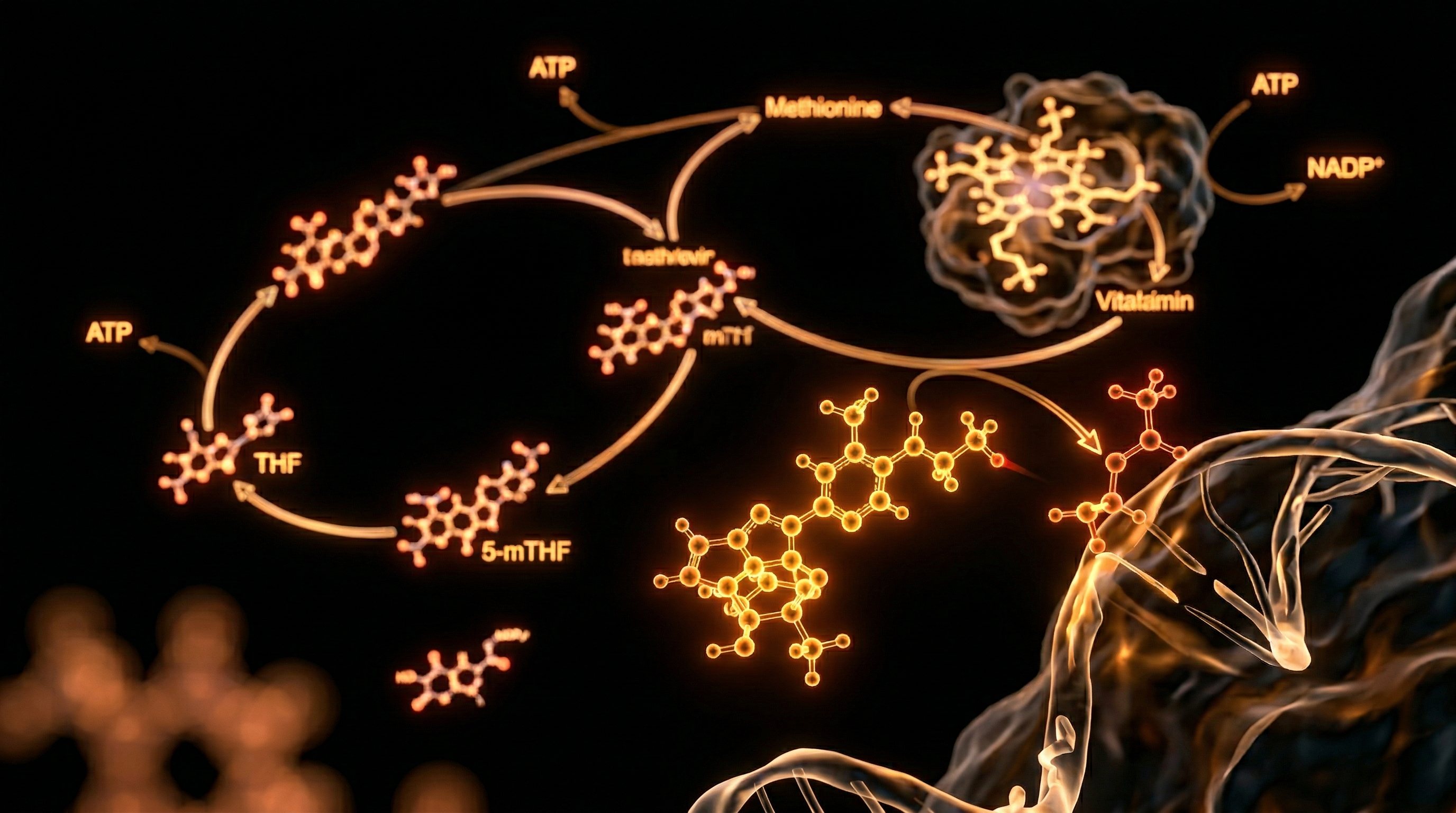
"Methylation Mastery: Navigating the 1-Carbon Cycle"
Overview
In the sophisticated theatre of human biochemistry, there is perhaps no performance more vital, yet more overlooked by the medical establishment, than methylation. Often referred to as the "Master Switch" of the body, methylation is a fundamental process that occurs billions of times every second in every cell. It is the silent architect of our physiological reality, dictating how we repair our DNA, how we detoxify hazardous chemicals, and how we regulate our moods.
At its core, methylation is the transfer of a simple chemical group—one carbon atom and three hydrogen atoms (CH3) — from one molecule to another. While this may sound like basic chemistry, the implications are profound. When this 1-carbon cycle is functioning optimally, the body possesses a robust capacity for resilience, longevity, and detoxification. When it falters, we witness a systemic collapse: a cascade of chronic inflammation, neurological decay, and an inability to purge the heavy metals that increasingly permeate our modern environment.
This article serves as a deep dive into the 1-carbon cycle. We will explore the intricate dance of enzymes like MTHFR (Methylenetetrahydrofolate Reductase), the devastating impact of environmental "epigenetic hijackers," and why the current mainstream medical narrative in the United Kingdom and beyond is failing to address the root causes of our burgeoning chronic disease epidemic. To master methylation is to master the very blueprint of life itself.
Key Fact: Over 50% of the global population is estimated to carry at least one genetic variant of the MTHFR gene, significantly reducing their ability to process folic acid and detoxify heavy metals.
The Biology — How It Works
To understand methylation, one must conceptualize it as a series of interlocking gears within a complex machine known as the 1-Carbon Cycle. This cycle is not a single pathway but a confluence of several metabolic loops, primarily the Folate Cycle and the Methionine Cycle.
The Folate Cycle
The journey begins with the intake of dietary folates (found in leafy greens). These folates must be converted into a bioavailable form. The enzyme MTHFR acts as the final gatekeeper in this process, converting 5,10-methylenetetrahydrofolate into 5-methyltetrahydrofolate (5-MTHF). This 5-MTHF is the primary methyl donor that allows the gears of the Methionine cycle to turn.
The Methionine Cycle
Once 5-MTHF is produced, it hands off its methyl group to Vitamin B12 (cobalamin), which in turn delivers it to homocysteine. This process transforms homocysteine—a potentially toxic amino acid—back into methionine. Methionine is then converted into SAMe (S-adenosylmethionine).
SAMe is the "universal methyl donor." It travels throughout the body, donating its methyl group to DNA, neurotransmitters, and phospholipids. Once SAMe has delivered its payload, it becomes SAH (S-adenosylhomocysteine) and eventually reverts back to homocysteine, completing the loop.
The Transsulfuration Pathway
When the body is under oxidative stress or needs to detoxify, homocysteine is diverted away from the methionine cycle and into the Transsulfuration Pathway. Here, with the help of Vitamin B6, it is converted into Cysteine and ultimately into Glutathione—the body’s "Master Antioxidant."
- MTHFR: The engine that drives the production of methyl groups.
- MTR/MTRR: The enzymes that utilise B12 to recycle homocysteine.
- CBS (Cystathionine Beta-Synthase): The gateway to glutathione production.
- COMT (Catechol-O-methyltransferase): The enzyme responsible for breaking down stress hormones like adrenaline and dopamine.
Mechanisms at the Cellular Level
The biological significance of methylation extends far beyond simple nutrient conversion; it is the primary mechanism of epigenetic regulation. While our genetic code (DNA) is fixed, the expression of those genes is fluid.
DNA Methylation and Gene Silencing
Methyl groups act as "silencers." When a methyl group attaches to a specific region of a gene (the promoter region), it effectively turns that gene "off." This is critical for preventing the expression of pro-inflammatory genes or oncogenes (genes that can cause cancer). Without adequate SAMe, the body loses its ability to keep these dangerous genes dormant.
Neurotransmitter Synthesis and Degradation
The brain is one of the most methylation-dependent organs in the body. The synthesis of serotonin, dopamine, noradrenaline, and melatonin all require methyl groups. Furthermore, the degradation of these neurotransmitters via the COMT enzyme is also a methylation-dependent process.
Individuals with "sluggish" methylation often experience "brain fog," anxiety, or depression because they cannot produce enough neurotransmitters or, conversely, cannot clear stress hormones efficiently, leading to a state of constant "fight or flight."
Phospholipid Production and Cell Integrity
Methylation is required to produce phosphatidylcholine, a major component of cell membranes and the protective myelin sheath surrounding nerves. Impaired methylation leads to "leaky" cells and degraded neural pathways, contributing to conditions like Multiple Sclerosis (MS) and other demyelinating diseases.
Callout: Without efficient methylation, the body cannot produce adequate CoQ10 or Carnitine, leading to mitochondrial dysfunction and chronic fatigue at the cellular level.
Environmental Threats and Biological Disruptors
In an ideal world, our biochemistry would function autonomously. However, we live in an era of unprecedented chemical warfare against the human organism. Several modern factors act as "sand in the gears" of the 1-carbon cycle.
Heavy Metal Interference
Heavy metals such as mercury, lead, and aluminium have a high affinity for the sulphur-containing enzymes involved in methylation. Mercury, in particular, can bind to the site where B12 attaches to the MTR enzyme, effectively halting the recycling of homocysteine. This leads to a double-edged sword: the body cannot methylate, and it cannot produce the glutathione needed to remove the mercury.
Glyphosate and the Gut Microbiome
The herbicide glyphosate (widely used in UK industrial farming) disrupts the "Shikimate pathway" in gut bacteria. While humans don't have this pathway, our beneficial gut microbes do. These microbes are responsible for synthesising B vitamins. By damaging the microbiome, glyphosate indirectly starves the methylation cycle of its essential cofactors.
The Folic Acid Paradox
Perhaps the most insidious disruptor is synthetic folic acid. Used in fortified foods (like breads and cereals) and cheap supplements, folic acid is not the same as natural folate. Individuals with MTHFR mutations cannot convert folic acid into 5-MTHF efficiently. Instead, the un-metabolised folic acid (UMFA) lingers in the blood, clogging folate receptors and actually inhibiting the transport of real folate into the cells.
- Endocrine Disruptors (BPA/Phthalates): These require methylation for detoxification, further draining the methyl pool.
- Alcohol: A potent "methyl drain," alcohol inhibits the absorption of B vitamins and places an immense burden on the liver's detoxification pathways.
- Electromagnetic Fields (EMF): Emerging research suggests that chronic EMF exposure increases oxidative stress, which diverts homocysteine toward the transsulfuration pathway, depleting the methyl groups available for DNA repair.
The Cascade: From Exposure to Disease
When methylation is compromised, the body does not fail all at once. Instead, it undergoes a slow, systematic decline. This "Methylation Collapse" manifests in several distinct stages.
Stage 1: The Homocysteine Rise
The first indicator of a failing 1-carbon cycle is an elevation in homocysteine. While the NHS often considers levels up to 15 μmol/L "normal," functional medicine experts suggest that anything above 7 or 8 μmol/L is a sign of vascular inflammation and methylation insufficiency. High homocysteine is more predictive of cardiovascular disease than cholesterol ever was.
Stage 2: Oxidative Stress and Glutathione Depletion
As the body attempts to compensate for high homocysteine, it shunts resources into the transsulfuration pathway. However, if the enzymatic cofactors (like B6 and Selenium) are missing, this process fails. The result is a total depletion of Glutathione. Without glutathione, the body's cells are left "naked" against oxidative damage and heavy metal toxicity.
Stage 3: The Manifestation of Chronic Illness
The final stage of the cascade is the diagnosis of clinical disease. Because methylation is systemic, the "weakest link" in an individual’s genetic chain will determine the symptoms:
- Neurological: Alzheimer’s, Parkinson’s, Autism, ADHD (all linked to impaired detoxification and neurotransmitter imbalance).
- Reproductive: Recurrent miscarriages and infertility (DNA methylation is essential for embryonic development).
- Autoimmune: Hashimotos, Lupus, and Rheumatoid Arthritis (linked to "leaky" epigenetics and systemic inflammation).
- Oncology: Many cancers are characterised by "global hypomethylation," where the "off switches" for tumour growth are lost.
What the Mainstream Narrative Omits
The refusal of mainstream medicine to integrate methylation science into standard care is one of the great medical oversights of the 21st century. Why is this critical information being treated as "fringe"?
The "Genetic Fatalism" Fallacy
Mainstream GPs are often taught that genetic variants like MTHFR are "polymorphisms" with no clinical significance unless they cause rare, extreme disorders. This ignores the concept of nutrigenomics—the idea that our environment and diet interact with our genes. A polymorphism might be harmless in a pre-industrial world, but in a world filled with mercury and glyphosate, it becomes a survival disadvantage.
The Folic Acid Industrial Complex
The UK government recently moved to mandate the fortification of white flour with folic acid to prevent neural tube defects. While well-intentioned, this "one-size-fits-all" approach ignores the 15-20% of the population who are homozygous for MTHFR C677T. For these individuals, mandatory fortification is not a benefit; it is a metabolic toxin.
The Profitability of Symptom Management
Treating the root cause of methylation failure requires inexpensive B-vitamins, minerals, and lifestyle changes. There is no "blockbuster drug" for methylation. In contrast, the consequences of methylation failure—depression, high cholesterol, chronic pain—are managed with highly profitable SSRIs, statins, and analgesics. The system is designed to manage the symptoms of a "broken switch" rather than simply flicking the switch back on.
Perspective: We are currently witnessing a "hidden epidemic" of B12 deficiency in the UK, often misdiagnosed as fibromyalgia or early-onset dementia, simply because the reference ranges for "normal" B12 are set dangerously low.
The UK Context
The United Kingdom presents a unique set of challenges regarding methylation and the 1-carbon cycle.
The Genetic Landscape
Studies indicate that British populations, particularly those of Celtic and Anglo-Saxon descent, have a high prevalence of MTHFR and COMT variants. This "warrior" or "worrier" genetic profile likely served our ancestors well in high-stress, low-toxin environments, but it makes the modern British lifestyle particularly hazardous.
UK Soil Depletion
The intensive farming practices in the UK have led to a catastrophic decline in soil mineral content. Magnesium, Zinc, and Selenium—all vital cofactors for the enzymes of the 1-carbon cycle—are largely missing from the standard UK diet. A British apple today contains a fraction of the nutrients it did in the 1940s.
The NHS Gap
The NHS rarely tests for Homocysteine, and genetic testing for MTHFR is almost never available on the state. Patients are often left to navigate private labs or "direct-to-consumer" genetic tests (like 23andMe), which provide raw data but no clinical guidance. This has created a two-tier health system where "Methylation Mastery" is only accessible to those with the means to seek private functional medicine.
- Water Quality: Large parts of the UK still have lead piping in older homes, and the fluoridation of water in certain regions further inhibits enzymatic processes.
- The "British Stoicism" Problem: Chronic fatigue and "low mood" are often culturally dismissed, leading many to suffer in silence as their 1-carbon cycle slowly grinds to a halt.
Protective Measures and Recovery Protocols
If you suspect your methylation cycle is compromised, the path to recovery involves a systematic approach to "cleaning the gears" and "fuelling the engine."
1. Functional Testing
Stop guessing and start measuring. Essential tests include:
- MTHFR Genetic Panel: To identify C677T and A1298C variants.
- Fasting Homocysteine: Aim for a level between 6 and 8 μmol/L.
- Red Cell Folate & B12: To assess actual cellular levels of these nutrients.
- Organic Acids Test (OAT): To look for metabolic "bottlenecks."
2. Strategic Supplementation
Avoid "generic" multivitamins. Look for the bioactive forms of nutrients:
- Methylfolate (5-MTHF): Not folic acid.
- Methylcobalamin or Adenosylcobalamin: The active forms of B12.
- Riboflavin-5-Phosphate (B2): A critical but often ignored cofactor for the MTHFR enzyme.
- TMG (Trimethylglycine): Also known as betaine, it provides an alternative pathway (the "back door") for recycling homocysteine.
3. Reducing the Toxic Load
You cannot supplement your way out of a toxic environment.
- Filter your water: Use a high-quality filter to remove chlorine, fluoride, and heavy metals.
- Eat Organic: Reduce glyphosate exposure by choosing organic produce, especially for the "Dirty Dozen."
- Support Drainage: Before aggressive detox, ensure your "drainage pathways" (bowels, liver, kidneys, skin) are open. Sauna therapy and dry brushing are excellent tools for the UK climate.
4. Lifestyle Adjustments
Methylation is sensitive to stress. High levels of cortisol and adrenaline drain methyl groups through the COMT enzyme. Practices such as grounding, meditation, and ensuring circadian rhythm alignment (getting morning sunlight) are not just "wellness" trends; they are biochemical necessities for the 1-carbon cycle.
Callout: Always "start low and go slow" when introducing methylated vitamins. If you have a "blocked" cycle, flooding it with methyl donors can cause a "rebound" effect of anxiety and headaches as the body begins to dump stored toxins too quickly.
Summary: Key Takeaways
Mastering the 1-carbon cycle is a journey of reclaiming your biological sovereignty. By understanding these core principles, you move from being a passive observer of your health to an active architect of your genetic expression.
- Methylation is the "Master Switch": It controls DNA repair, neurotransmitter balance, and the detoxification of heavy metals.
- The MTHFR Variant is Common: A significant portion of the UK population cannot process synthetic folic acid, leading to systemic "clogging."
- Homocysteine is the "Smoke Alarm": Elevated levels are a clear signal that the 1-carbon cycle is failing and that cardiovascular or neurological issues may follow.
- Environmental Toxins are Anti-Methylators: Heavy metals and glyphosate act as direct inhibitors of the 1-carbon cycle.
- The Solution is Bio-Individual: There is no "perfect diet" for everyone. Your genetics dictate your unique requirements for B vitamins and minerals.
- Mainstream Medicine is Lagging: Do not wait for a "consensus" from the medical establishment. The biochemistry of methylation is well-established; the application is where the system fails.
In the pursuit of Innerstanding, we must recognise that our health is not a matter of chance, but a matter of chemistry. By navigating the 1-carbon cycle with precision and intention, we can protect our DNA, purge our bodies of industrial poisons, and unlock a level of vitality that the modern world has forgotten is possible.
This article is provided for informational and educational purposes only. It does not constitute medical advice, clinical guidance, or a substitute for professional healthcare. Information reflects cited research at time of publication. Always consult a qualified healthcare professional before acting on any health information.
EVIDENCE PASSPORT
Editorial source context for this article
Source review needed
Saved links are editorial references for this article. They may support specific claims rather than every sentence. Open and assess each source in context. This passport does not independently verify them.
Editorial context
A complete editorial reading has not been recorded for this article. Source links remain available for you to open and assess directly.
Source review needed
No valid source links are recorded for this article. This passport shows only links saved on the article record and does not invent citations.
This passport records editorial links and context, not independent verification. Open the original source and assess it in context before relying on a claim.
Medical Disclaimer
The information in this article is for educational purposes only and does not constitute medical advice, diagnosis, or treatment. Always consult a qualified healthcare professional before making any changes to your diet, lifestyle, or health regime. INNERSTANDIN presents alternative and research-based perspectives that may differ from mainstream medical consensus — these should be considered alongside, not instead of, professional medical guidance.
Read Full DisclaimerContinue the thread
Keep this question moving.
Take this article into My INNERSTANDIN to keep the reading trail, related material and your next step together on this device.
Explore this in the Body Map
See where this hits your biology. Interactive anatomy, threats, and protective protocols.
Dig deeper in the Library
Free, longform PDF volumes that go beyond headlines into mechanisms and references.