
Microclots and Fibrinolysis: Understanding Vascular Damage in the UK Population
Updated May 2026
An exploration of amyloid-rich microclots that resist standard breakdown and impair circulation. We examine the latest UK clinical findings regarding vascular integrity and long-term recovery strategies.
Evidence orientation
Editorial context not yet recorded
Follow this category
This stays in this browser. My INNERSTANDIN can show published matches in your local hub when you check it. It does not send email, push, or alert notifications.
Local learning review
A private browser aid for revisiting ideas. It is not an alert or a health recommendation.
Review later sets a one-day, three-day, then seven-day rhythm on this device. Choose it only when you want to revisit this article.
Overview
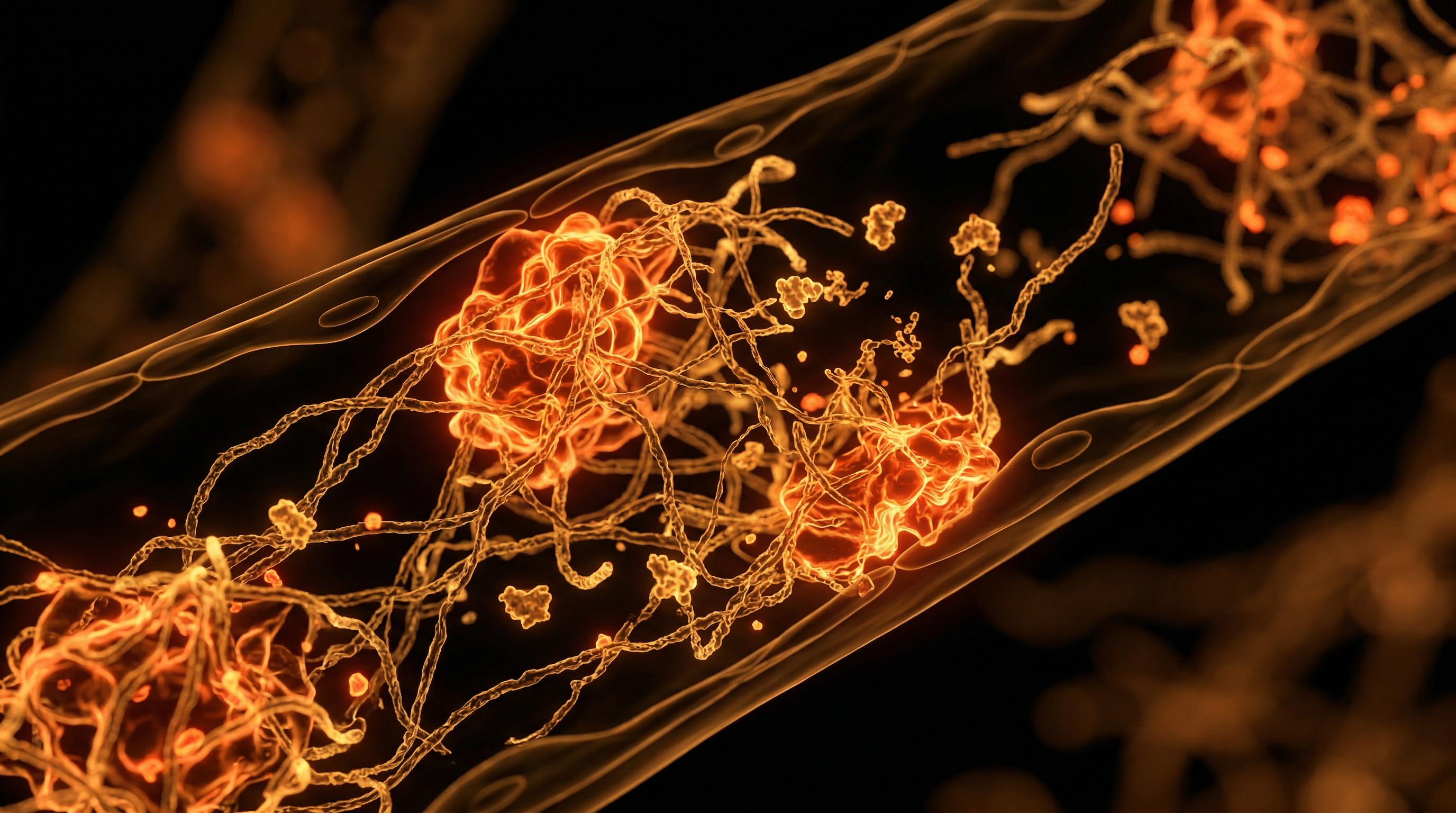
For decades, our understanding of vascular pathology was largely confined to the binary of health or macro-thrombosis—strokes, pulmonary embolisms, and deep vein thrombosis. However, the post-2020 landscape of clinical biology has unveiled a far more insidious threat: the proliferation of amyloid-rich microclots. These are not the transient, degradable clots the human body is accustomed to clearing; they are resilient, anomalous structures that defy standard fibrinolytic processes.
In the United Kingdom, we are currently witnessing a public health crisis that the mainstream clinical infrastructure is ill-equipped to diagnose. Millions of Britons are suffering from a constellation of symptoms—profound fatigue, cognitive impairment ("brain fog"), and exercise intolerance—which are often dismissed as psychosomatic or "post-viral fatigue." In reality, these individuals are frequently victims of systemic vascular endotheliitis and persistent micro-clotting.
The crux of the issue lies in the biochemical nature of these clots. Unlike standard blood clots, which are composed of a mesh of fibrin that is easily dismantled by the enzyme plasmin, these microclots have undergone a structural transition into an amyloid-like state. This article serves as a deep dive into the mechanisms of fibrinolytic resistance, the role of the spike protein as a catalyst for vascular damage, and the urgent need for a shift in how British medicine approaches chronic post-viral syndromes.
Over 1.9 million people in the UK (approximately 2.9% of the population) were reporting symptoms of Long Covid as of March 2023, according to the Office for National Statistics (ONS). A significant percentage of these cases show markers of persistent micro-vascular obstruction.
The Biology — How It Works
To understand microclots, one must first understand the standard process of haemostasis. Normally, when blood vessels are damaged, the body converts the soluble protein fibrinogen into insoluble fibrin strands, creating a mesh that traps platelets and seals the wound. Once the vessel heals, the process of fibrinolysis begins, where plasmin breaks down the mesh into harmless fragments.
The Amyloid Shift
In the presence of specific triggers—most notably the SARS-CoV-2 spike protein—this process goes catastrophically wrong. The fibrinogen molecules do not just form normal fibrin; they undergo a conformational change into a beta-sheet rich structure. This is technically known as an amyloid formation.
Fibrinolytic Resistance
Because these clots are amyloid in nature, they are exceptionally stable. The body’s natural "clot-busting" enzymes, such as plasmin, find it nearly impossible to dock with and degrade these structures. This results in:
- Persistent Hypoxia: Microclots lodge in the smallest capillaries, preventing red blood cells from reaching tissues.
- Inflammatory Signaling: Trapped within these clots are high concentrations of pro-inflammatory cytokines, including alpha-2-antiplasmin, which further inhibits the breakdown of the clot.
- Autocrine Loops: The presence of the clot damages the endothelium, which triggers more clotting, creating a self-perpetuating cycle of vascular decay.
Mechanisms at the Cellular Level
The damage is not merely "mechanical" (clogs in a pipe); it is deeply biochemical and occurs at the interface of the blood and the vessel wall—the endothelium.
Endothelial Dysfunction and the Glycocalyx
The interior of our blood vessels is lined with a delicate, gel-like layer called the glycocalyx. This layer prevents platelets from sticking to the walls and regulates vascular permeability. We have observed that chronic exposure to the spike protein and the resulting microclots strips away the glycocalyx. Once this barrier is gone, the underlying endothelial cells become "activated," expressing adhesion molecules that recruit more inflammatory cells.
Mitochondrial Starvation
When microclots obstruct the capillaries, the oxygen tension in the surrounding tissue drops. This forces cells to switch from aerobic respiration to anaerobic glycolysis. For high-energy organs like the brain and the heart, this is devastating.
- In the brain, this manifests as neuroinflammation and the "brain fog" reported by so many in the UK.
- In the muscles, it leads to the rapid buildup of lactic acid, explaining why many patients feel as though they have run a marathon after merely walking up a flight of stairs.
The Role of Platelet Activation
Microclots are often "decorated" with hyper-activated platelets. These platelets release platelet factor 4 (PF4) and other granules that exacerbate systemic inflammation. In many UK patients, while their standard "Full Blood Count" appears normal, specialized microscopy reveals that their platelets are pre-activated and ready to clump at the slightest provocation.
Clinical observation using fluorescence microscopy has shown that microclots in post-viral patients can be up to 10 times more resistant to trypsin (a protein-digesting enzyme) than clots formed in healthy individuals.
Environmental Threats and Biological Disruptors
The UK population is uniquely vulnerable to these vascular insults due to a combination of environmental and systemic factors. The "microclotting storm" does not happen in a vacuum; it is exacerbated by existing biological disruptors.
The Burden of Ultra-Processed Foods (UPFs)
The UK has the highest consumption of ultra-processed foods in Europe. These diets are rich in seed oils and refined sugars which prime the endothelium for inflammation. A pre-inflamed vascular system is far more likely to respond to a viral trigger by forming permanent microclots rather than temporary, healthy ones.
Air Quality and Particulate Matter
In major British hubs like London, Birmingham, and Manchester, high levels of PM2.5 particulate matter act as a constant irritant to the lungs and the circulatory system. Studies have shown that fine particulates can enter the bloodstream directly, causing oxidative stress that synergises with the spike protein to damage the mitochondria of endothelial cells.
Chronic Stress and the Autonomic Nervous System
The UK has seen a marked increase in chronic stress and anxiety disorders over the last five years. High levels of circulating cortisol and adrenaline lead to vasoconstriction. When you combine constricted vessels with "sludge-like" blood containing microclots, the risk of tissue ischaemia (oxygen starvation) increases exponentially.
The Cascade: From Exposure to Disease
The progression from initial exposure (viral or otherwise) to chronic systemic disease follows a predictable, albeit tragic, cascade.
Phase 1: The Initial Insult
The S1 subunit of the spike protein enters the circulation. It has a high affinity for the ACE2 receptors found on endothelial cells. As it binds, it triggers a "pro-thrombotic" state.
Phase 2: The Coagulation Malfunction
Fibrinogen begins to misfold. Small, "seed" microclots begin to form in the venous blood. At this stage, a patient might feel slightly more tired than usual but will likely have a normal D-dimer test because the clots are not being broken down (D-dimer only measures the breakdown products of clots, not their presence).
Phase 3: Capillary Blockage and Hypoxia
As the microclots circulate, they eventually reach the capillary beds where the vessel diameter is smaller than the clot itself. They lodge there, creating "dead zones" in the microvasculature.
- In the Lungs: This causes "happy hypoxia" or shortness of breath despite normal lung expansion.
- In the Gut: This leads to malabsorption and "leaky gut" as the intestinal villi lose their blood supply.
Phase 4: Autoimmunity and Systemic Failure
The body, unable to clear these foreign-looking amyloid structures, may begin to produce auto-antibodies. The immune system starts attacking the "clot-endothelium" complex, leading to widespread vasculitis. This is the stage where "Long Covid" or "Post-Vaccine Syndrome" becomes a chronic, debilitating condition.
What the Mainstream Narrative Omits
The refusal of the medical establishment to acknowledge the reality of amyloid microclots is perhaps the greatest clinical oversight of the 21st century.
The Failure of Standard Diagnostics
In the UK, the NHS relies heavily on CT Pulmonary Angiograms (CTPA) and standard D-dimer tests to look for clots. These tests are designed to find large "macro" clots. They are physically incapable of detecting microclots that are only microns in diameter.
- A patient can have a "pristine" CT scan while their capillaries are almost entirely occluded by amyloid sludge.
- By telling patients their "tests are normal," the medical system gaslights the suffering into believing their physical symptoms are purely psychological.
The "Spike" in the Room
There is a profound reluctance to discuss the long-term persistence of the spike protein within the body. While the public was told the protein would disappear within days, peer-reviewed research has found the spike protein in monocytes (a type of white blood cell) and in the blood months after exposure. The mainstream narrative omits the fact that as long as the stimulus (the spike) is present, the microclotting process will continue to regenerate.
The Economic Motive for Ignorance
Acknowledging that millions of people require complex, multi-drug anticoagulant therapy and specialized blood filtration (apheresis) would overwhelm an already buckling NHS. It is "cheaper" for the state to classify these patients as having "functional neurological disorders" than to provide the necessary vascular interventions.
Standard blood tests (FBC, U&E, CRP) are frequently "unremarkable" in patients with severe microclotting, leading to a median delay in diagnosis of 14 months in the UK.
The UK Context
The United Kingdom presents a unique case study in vascular damage. Our high population density, coupled with the specific way the NHS managed the pandemic, has created a "perfect storm."
The "Wait and See" Strategy
Early in the pandemic, the UK's primary care advice for viral infection was to "stay at home and take paracetamol" until you couldn't breathe. This allowed the inflammatory and clotting cascades to go unchecked for weeks. By the time a patient was hospitalized, the amyloid transformation was already deeply entrenched.
The Biobank Data
The UK Biobank—one of the world's most comprehensive genetic and health databases—has begun to show alarming trends. Brain imaging studies have shown a reduction in grey matter thickness in post-exposure cohorts, a phenomenon highly consistent with chronic micro-vascular ischaemia.
Regional Health Disparities
Areas in the North of England, already suffering from lower life expectancy and higher cardiovascular disease rates, have been disproportionately affected. The lack of access to private, cutting-edge diagnostics (like dark-field microscopy) in these regions means that thousands of working-class Britons are being left behind, unable to return to work due to vascular-driven exhaustion.
Protective Measures and Recovery Protocols
While the situation is dire, biological research has identified several pathways to potentially dissolve these amyloid structures and restore endothelial health.
Fibrinolytic Enzymes: The First Line of Defence
Since human plasmin fails to break down these clots, we must look to potent, earth-derived enzymes:
- Nattokinase: Derived from fermented soy (natto), this enzyme has shown a remarkable ability to degrade both fibrin and the spike protein itself in vitro.
- Lumbrokinase: Derived from earthworms, it is arguably more potent than nattokinase and specifically targets fibrinogen-rich structures.
- Serrapeptase: Often used in conjunction, this enzyme helps break down the "dead" proteinaceous material surrounding the clots.
The "Triple Therapy" Controversy
Some clinicians, primarily in South Africa and Germany, have pioneered the use of "triple anticoagulant therapy" (dual anti-platelets plus a direct oral anticoagulant). While effective in clearing microclots, this carries a significant risk of haemorrhage and must only be performed under strict medical supervision. For many in the UK, accessing a GP willing to monitor such a protocol is currently impossible.
Restoring the Endothelial Lining
Recovery must include the "rebuilding" of the blood vessels:
- Sulodexide: A mixture of glycosaminoglycans that helps repair the glycocalyx.
- NAC (N-Acetyl Cysteine): Increases glutathione levels, protecting endothelial cells from oxidative damage.
- Molecular Hydrogen: Emerging research suggests that inhaling hydrogen gas can reduce the pro-inflammatory cytokines trapped within microclots.
Autophagy and Fasting
The body has a built-in mechanism for clearing "misfolded proteins"—autophagy. By engaging in structured intermittent fasting or prolonged water fasting, individuals may stimulate the cellular "garbage disposal" system to begin breaking down the amyloid fibrin structures.
HELP Apheresis
In extreme cases, Heparin-induced Extracorporeal LDL Precipitation (HELP) Apheresis is the gold standard. This process essentially "washes" the blood, filtering out microclots, inflammatory proteins, and cholesterol. Currently, this treatment is extremely limited in the UK, available primarily through expensive private clinics.
Summary: Key Takeaways
The emergence of amyloid microclots represents a paradigm shift in our understanding of chronic illness. It is no longer sufficient to view post-viral syndromes as purely "immune" or "inflammatory" issues; they are fundamentally haemological and vascular.
- Microclots are Amyloid: They are structurally different from normal clots and resist the body's natural breakdown mechanisms.
- Diagnostics are Lacking: Standard UK hospital tests do not see these clots. Fluorescence microscopy is the only definitive way to visualize them.
- Spike Protein is the Catalyst: Whether from infection or other sources, the spike protein acts as a toxin that triggers fibrinogen misfolding.
- The Endothelium is the Battleground: Damage to the glycocalyx and subsequent capillary blockage leads to systemic hypoxia and organ dysfunction.
- The UK is at a Crossroads: With millions affected, the medical establishment must choose between maintaining the status quo or embracing the new science of microvascular therapy.
For the people of the United Kingdom, the path to recovery begins with "Innerstanding"—recognizing that the fatigue and pain are not in the mind, but in the very blood that flows through their veins. Only by addressing the physical reality of these micro-obstructions can we hope to resolve the greatest health crisis of our generation.
This article is provided for informational and educational purposes only. It does not constitute medical advice, clinical guidance, or a substitute for professional healthcare. Information reflects cited research at time of publication. Always consult a qualified healthcare professional before acting on any health information.
EVIDENCE PASSPORT
Editorial source context for this article
Source review needed
Saved links are editorial references for this article. They may support specific claims rather than every sentence. Open and assess each source in context. This passport does not independently verify them.
Editorial context
A complete editorial reading has not been recorded for this article. Source links remain available for you to open and assess directly.
Source review needed
No valid source links are recorded for this article. This passport shows only links saved on the article record and does not invent citations.
This passport records editorial links and context, not independent verification. Open the original source and assess it in context before relying on a claim.
Medical Disclaimer
The information in this article is for educational purposes only and does not constitute medical advice, diagnosis, or treatment. Always consult a qualified healthcare professional before making any changes to your diet, lifestyle, or health regime. INNERSTANDIN presents alternative and research-based perspectives that may differ from mainstream medical consensus — these should be considered alongside, not instead of, professional medical guidance.
Read Full DisclaimerContinue the thread
Keep this question moving.
Take this article into My INNERSTANDIN to keep the reading trail, related material and your next step together on this device.
Explore this in the Body Map
See where this hits your biology. Interactive anatomy, threats, and protective protocols.