
Mitochondrial Bioenergetics: The Energy of Detoxification
Updated May 2026
Biotransformation is an energy-intensive process that requires a constant supply of ATP. When mitochondria are damaged by environmental toxins, the liver's ability to detoxify is severely compromised.
Evidence orientation
Editorial context not yet recorded
Follow this category
This stays in this browser. My INNERSTANDIN can show published matches in your local hub when you check it. It does not send email, push, or alert notifications.
Local learning review
A private browser aid for revisiting ideas. It is not an alert or a health recommendation.
Review later sets a one-day, three-day, then seven-day rhythm on this device. Choose it only when you want to revisit this article.
Overview
In the contemporary biological landscape, the term 'detoxification' has been diluted by lifestyle marketing and wellness trends, often reduced to superficial juice cleanses or short-term restrictive diets. However, from the perspective of molecular bioenergetics, detoxification—properly termed biotransformation—is the most energetically demanding process the human body undertakes. It is not a passive filtration system like a kitchen sieve; it is a complex, multi-stage chemical manufacturing operation that requires a staggering amount of Adenosine Triphosphate (ATP).
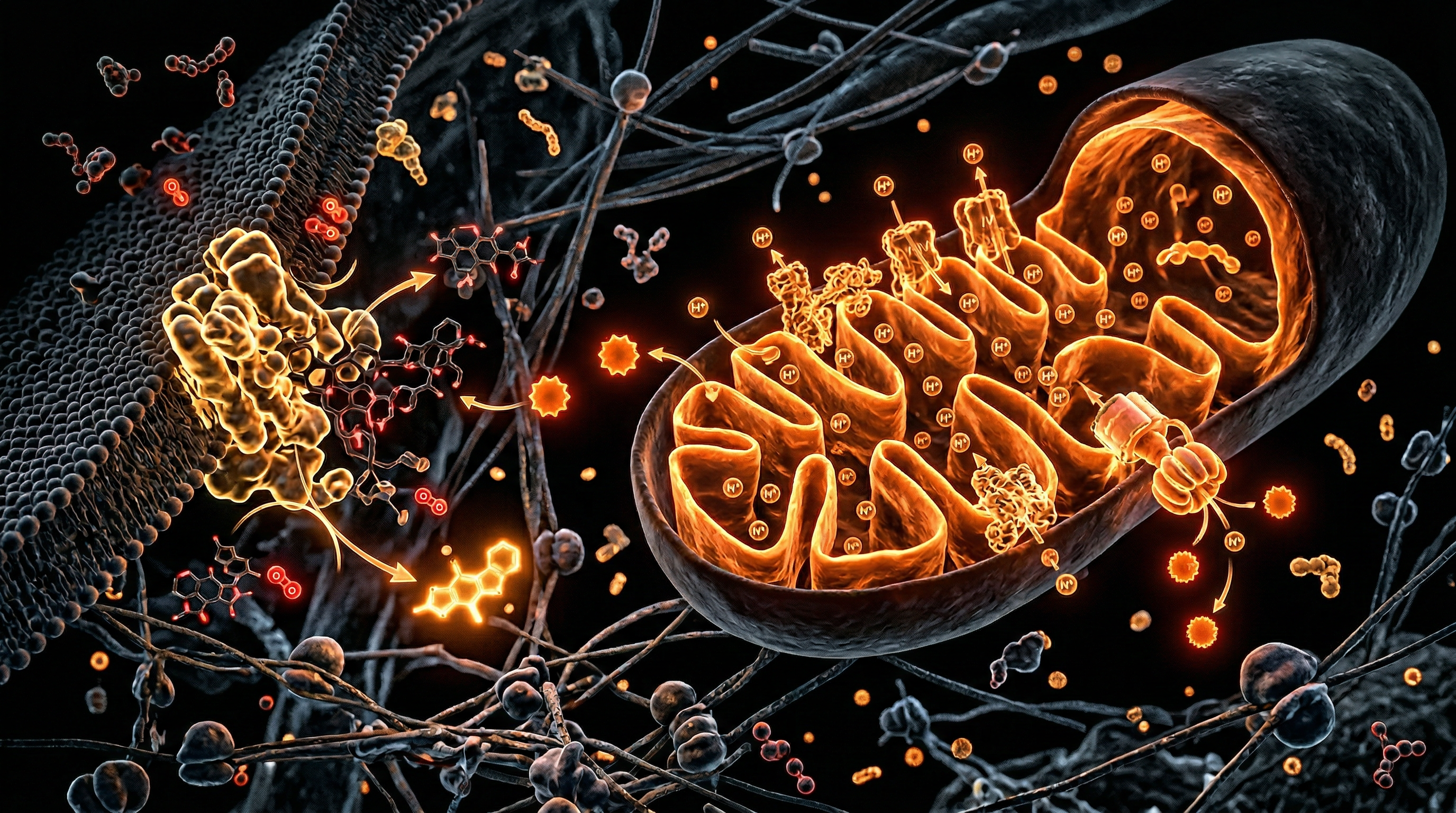
At the heart of this operation lie the mitochondria. These ancient endosymbiotic organelles are far more than the 'powerhouses of the cell'; they are the ultimate arbiters of metabolic fate. Every second, your liver cells (hepatocytes) are engaged in a high-stakes battle to neutralise xenobiotics (foreign chemical substances), heavy metals, and metabolic end-products. If the mitochondrial engine falters, the assembly line of detoxification grinds to a halt.
This article explores the critical nexus between mitochondrial health and the body's ability to purge itself of environmental insults. We will examine how mitochondrial dysfunction creates a 'bioenergetic bottleneck' that traps toxins within the tissues, leading to a state of chronic systemic poisoning. Furthermore, we will expose the structural failures in modern toxicology that ignore the synergistic impact of mitochondrial poisons on human health.
Callout Fact: The liver contains some of the highest concentrations of mitochondria in the body, with each hepatocyte housing between 1,000 to 2,000 mitochondria to meet the immense energy demands of biotransformation.
The Biology — How It Works
To understand why energy is the currency of cleansing, one must understand the three phases of biotransformation. These phases describe the process by which fat-soluble (lipophilic) toxins—which the body cannot easily excrete—are converted into water-soluble (hydrophilic) compounds that can be eliminated through urine or bile.
Phase I: Functionalisation
In Phase I, primarily governed by the Cytochrome P450 (CYP450) enzyme superfamily, a reactive group (such as a hydroxyl group) is added to the toxin. This makes the molecule more chemically reactive. Ironically, this often makes the toxin more dangerous than it was in its original state. These 'intermediate metabolites' are highly unstable and produce a flood of Reactive Oxygen Species (ROS).
The energy requirement here is twofold:
- Enzymatic Activity: The CYP450 enzymes require NADPH (Nicotinamide Adenine Dinucleotide Phosphate) as an electron donor, which is direct evidence of mitochondrial and metabolic output.
- Antioxidant Defence: Because Phase I generates free radicals, the cell must immediately deploy antioxidants like Glutathione and Superoxide Dismutase (SOD) to prevent the cell from self-destructing.
Phase II: Conjugation
Phase II is where the heavy lifting occurs. The reactive intermediate from Phase I is joined (conjugated) with a protective substance—such as an amino acid, a sulphur group, or Glucuronic Acid. This process renders the toxin water-soluble and inert.
Phase II is incredibly ATP-dependent. For example, the synthesis of Glutathione (GSH), the master antioxidant and a key conjugator, requires the direct consumption of ATP. If a cell is ATP-depleted, Phase I may continue while Phase II stalls. This results in the accumulation of highly toxic intermediate metabolites that cause local tissue damage and DNA mutations—a state known as 'pathological detox'.
Phase III: Transport and Elimination
Once the toxin is neutralised and water-soluble, it must be pumped out of the cell and into the bile or blood for final excretion. This is managed by ATP-Binding Cassette (ABC) transporters. As the name suggests, these pumps literally run on ATP. Without sufficient mitochondrial energy, the neutralised toxins cannot leave the cell, leading to cellular 'constipation' and the eventual death of the hepatocyte.
Mechanisms at the Cellular Level
The synergy between the Electron Transport Chain (ETC) and the detoxification pathways is the bedrock of cellular resilience. To understand the mechanism, we must look at the Redox Potential.
The Electron Transport Chain and ATP Synthesis
The mitochondria generate ATP through a process called Oxidative Phosphorylation. Electrons are passed through a series of complexes (I–IV), creating a proton gradient that drives the ATP Synthase turbine.
- Complex I (NADH Dehydrogenase) is particularly vulnerable to environmental toxins.
- NADH and NAD+ ratios dictate the speed of these reactions. A healthy cell maintains a high NAD+/NADH ratio, which signals that the cell has plenty of energy 'headroom' to handle detoxification.
The Role of the Mitochondrial Permeability Transition Pore (mPTP)
When toxins accumulate due to low ATP, the mitochondria undergo a crisis. The mPTP—a gatekeeper of mitochondrial integrity—can be forced open by high levels of oxidative stress. When this pore opens, the mitochondrion loses its electrical potential, swells, and eventually bursts, releasing Cytochrome C into the cytoplasm, which triggers Apoptosis (programmed cell death).
Callout Fact: Chronic exposure to low-level environmental toxins can cause 'mitochondrial uncoupling,' where the mitochondria consume oxygen but fail to produce ATP, essentially 'burning fuel' without creating energy.
Glutathione: The Bioenergetic Siphon
Glutathione is the primary defender of the mitochondria. However, the production of glutathione is one of the most 'expensive' transactions in cellular biology. It requires:
- ATP for the enzyme glutamate-cysteine ligase.
- NADPH (from the Pentose Phosphate Pathway, linked to mitochondrial health) to recycle oxidised glutathione (GSSG) back into its active reduced state (GSH).
When a person is 'toxic,' their mitochondria are under-producing ATP while their glutathione demand is skyrocketing. This creates a metabolic death spiral.
Environmental Threats and Biological Disruptors
The modern world is saturated with mitotoxicants—substances that specifically target and disable mitochondrial function. When these substances enter the body, they don't just add to the 'toxic load'; they simultaneously sabotage the very machinery required to remove them.
Glyphosate and the Glycine Analogue Theory
The herbicide Glyphosate is perhaps the most insidious mitotoxicant in the modern food supply. Beyond its role as a 'probable carcinogen,' glyphosate acts as an analogue to the amino acid Glycine. The body may mistakenly incorporate glyphosate into mitochondrial proteins and the Heme synthesis pathway. This disrupts the Cytochrome P450 enzymes and the Electron Transport Chain, effectively 'strangling' the cell's energy production.
Heavy Metals: The Great Mimickers
Metals such as Mercury, Lead, and Cadmium have a high affinity for sulphur-containing groups (thiols). They bind to glutathione, depleting the body’s primary antioxidant pool. Furthermore, Lead can substitute for Calcium in mitochondrial signalling, while Mercury binds to Complex III of the ETC, causing a massive leak of electrons and a subsequent 'firestorm' of ROS.
Mycotoxins and Fungal Burden
Produced by certain indoor moulds (e.g., Stachybotrys, Aspergillus), mycotoxins like Ochratoxin A are potent mitochondrial inhibitors. They cross the mitochondrial membrane and inhibit the transport of ATP out of the organelle, causing the cell to starve in a sea of energy it cannot access.
EMFs and Voltage-Gated Calcium Channels (VGCCs)
Emerging research suggests that non-ionising Electromagnetic Fields (EMFs) can trigger the over-activation of VGCCs on the mitochondrial membrane. This leads to an influx of calcium into the mitochondria, which increases the production of Peroxynitrite—a devastatingly powerful free radical that causes long-term damage to mitochondrial DNA (mtDNA).
The Cascade: From Exposure to Disease
The progression from environmental exposure to chronic illness is rarely a sudden event. It is a slow, bioenergetic erosion that follows a predictable cascade.
Stage 1: Compensatory Stress
Initially, the body senses the toxic load and upregulates mitochondrial biogenesis (creating more mitochondria). The person may feel 'wired but tired' as the HPA-axis (Adrenal system) attempts to compensate for falling cellular energy with cortisol and adrenaline.
Stage 2: Mitochondrial Fragmentation
As the toxic burden exceeds the ATP supply, the mitochondria begin to fragment. In a process called Mitophagy, the cell tries to consume its damaged mitochondria to recycle parts. However, if the rate of damage exceeds the rate of repair, the total 'mitochondrial mass' of the cell declines.
Stage 3: Systemic Biotransformation Failure
When the liver's ATP levels drop below a critical threshold, Phase II conjugation slows down. Fat-soluble toxins begin to leak back into the bloodstream and are sequestered in adipose tissue (fat) and the brain (which is roughly 60% fat). This is why weight loss often triggers 'detox symptoms'—the toxins are being released back into a system that still lacks the energy to process them.
Stage 4: Chronic Multi-Systemic Illness
The final stage is the manifestation of 'incurable' modern diseases.
- Chronic Fatigue Syndrome (ME/CFS): Now widely recognised by many researchers as a 'Cell Danger Response' (CDR) where mitochondria stay in a permanent state of 'defence' rather than 'energy production.'
- Neurodegeneration: The brain is the most metabolically active organ. Mitochondrial failure leads to the accumulation of toxic proteins (Tau, Amyloid) and the 'fog' associated with Parkinson's and Alzheimer's.
- Autoimmunity: Damaged mitochondria release 'DAMPs' (Damage-Associated Molecular Patterns). The immune system perceives these as foreign invaders, leading to systemic inflammation and the body attacking its own tissues.
What the Mainstream Narrative Omits
The current regulatory and medical paradigm is built on a series of outdated assumptions that protect industrial interests while ignoring the bioenergetic reality of human health.
The Fallacy of 'The Dose Makes the Poison'
Modern toxicology is based on the Paracelsus principle: the idea that a small enough dose of a toxin is harmless. This ignores Mitochondrial Synergism. While a single dose of glyphosate might not kill a cell, the combination of glyphosate, aluminium from vaccines/cookware, fluoride in the water, and EMFs creates a 'toxic cocktail' that creates a total bioenergetic collapse. Regulatory bodies test chemicals in isolation, never in the synergistic combinations found in the real world.
The Ignoring of Bioaccumulation
Mainstream narratives suggest that the body 'naturally' detoxes everything. This assumes a closed system with infinite energy. It fails to account for the fact that toxins are ATP-inhibitors. If the toxin reduces the energy required to remove it, the toxin will bioaccumulate regardless of the 'daily intake' levels.
The Silencing of Mitochondrial Medicine
There is a profound lack of mitochondrial testing in standard healthcare. Doctors check liver enzymes (ALT/AST), which only show when cells are already dying and bursting open. They do not check mitochondrial function, NAD+ levels, or the ATP/ADP ratio. By ignoring the 'engine' of the cell, mainstream medicine is relegated to 'managing' symptoms rather than addressing the bioenergetic root cause.
The UK Context
In the United Kingdom, specific environmental and structural factors exacerbate this mitochondrial crisis.
The Industrial Legacy and Water Quality
The UK's water infrastructure is antiquated. Significant portions of the country still utilise lead piping, and the 'safe' limits for chemicals like PFAS ('forever chemicals') in British tap water are often higher than those recommended by independent researchers. Furthermore, the UK continues the practice of Water Fluoridation in many regions (e.g., the West Midlands and North East). Fluoride is a known mitochondrial poison that inhibits various enzymes in the respiratory chain.
Post-Brexit Food Standards
There is growing concern regarding the divergence of UK food standards from more stringent EU regulations. The potential for increased use of Neonicotinoids and higher allowable residues of pesticides like Paraquat (banned in the EU but manufactured in the UK) places an additional burden on the British population's mitochondrial health.
The NHS and the 'Chronic Burden'
The NHS is currently overwhelmed by chronic conditions that are essentially mitochondrial in nature. However, the diagnostic framework remains rooted in a 20th-century model of 'one disease, one drug.' There is almost no provision for 'Environmental Medicine' within the standard UK healthcare model, leaving patients to navigate the complex world of 'functional' testing and mitochondrial support privately.
Callout Statistic: A 2021 study indicated that approximately 1 in 4 people in the UK suffer from multiple chronic conditions (multimorbidity), a phenomenon deeply linked to the progressive decline of mitochondrial bioenergetics across various organ systems.
Protective Measures and Recovery Protocols
Restoring the energy of detoxification requires a dual approach: reducing the incoming toxic load (evasion) and aggressively supporting mitochondrial repair (restoration).
1. Reducing the Xenobiotic Influx
The first rule of detox is to stop the poisoning.
- Water Filtration: Utilise Reverse Osmosis (RO) or high-quality distillation to remove fluoride, lead, and pharmaceuticals.
- Organic Nutrition: Prioritise organic produce to eliminate glyphosate and pesticide exposure.
- EMF Mitigation: Turn off Wi-Fi at night and reduce proximity to mobile devices to protect the VGCCs.
2. Bioenergetic Substrates
Specific nutrients can 'bypass' damaged parts of the mitochondria to restore ATP flow:
- CoQ10 (Ubiquinol): A vital electron carrier in the ETC. High-dose Ubiquinol can help 'prime' the pump of Phase II detoxification.
- PQQ (Pyrroloquinoline Quinone): Known to stimulate Mitochondrial Biogenesis (the birth of new mitochondria).
- Magnesium: ATP must be bound to a magnesium ion (Mg-ATP) to be biologically active. Most of the population is deficient due to soil depletion.
- NAD+ Precursors: Supplementing with Nicotinamide Riboside (NR) or NMN can help restore the NAD+/NADH ratio, providing the redox power needed for the CYP450 system.
3. Upregulating Phase II and III
- Liposomal Glutathione: Direct supplementation of glutathione, bypassed the digestive breakdown, to provide the 'raw material' for conjugation.
- NAC (N-Acetyl Cysteine): A precursor to glutathione that also helps break up toxic biofilms.
- Binder Therapy: Utilise Activated Charcoal, Zeolite, and Modified Citrus Pectin to 'mop up' toxins in the gut, preventing them from being reabsorbed via the enterohepatic circulation.
4. Hormetic Stress and Light
- Photobiomodulation (Red Light Therapy): Red and near-infrared light (660nm–850nm) interacts with Cytochrome C Oxidase in the mitochondria, increasing ATP production and reducing oxidative stress.
- Sauna Therapy: Far-Infrared saunas induce sweating, which is a 'Phase III' bypass. It allows for the excretion of lipophilic toxins through the skin, reducing the burden on the ATP-depleted liver.
- Cold Exposure: Brief cold stress triggers the 'uncoupling' of mitochondria in brown adipose tissue, which promotes the clearing of damaged mitochondria and the production of new, more efficient ones.
Summary: Key Takeaways
The modern epidemic of chronic illness is, at its core, a crisis of bioenergetic bankruptcy. Detoxification is not a choice; it is an energy-intensive requirement for life. When the mitochondria are compromised by the very toxins they are trying to remove, the body enters a state of systemic decline.
- Detoxification is ATP-Dependent: Without mitochondrial energy, the body cannot neutralise or excrete xenobiotics.
- The Toxic Spiral: Environmental toxins (glyphosate, heavy metals, EMFs) specifically target mitochondria, creating a feedback loop of increasing toxicity and decreasing energy.
- Mainstream Blindness: Regulatory 'safe levels' ignore the synergistic effect of multiple mitotoxicants.
- The Solution is Bioenergetic: Recovery requires both the removal of environmental disruptors and the intensive nutritional support of the mitochondrial Electron Transport Chain.
To reclaim one's health in a toxic world, one must stop looking for the next 'miracle cleanse' and start focusing on the fundamental unit of human vitality: the Mitochondrion. Only by restoring the energy of detoxification can we hope to achieve true biological resilience in the 21st century.
This article is provided for informational and educational purposes only. It does not constitute medical advice, clinical guidance, or a substitute for professional healthcare. Information reflects cited research at time of publication. Always consult a qualified healthcare professional before acting on any health information.
EVIDENCE PASSPORT
Editorial source context for this article
Source review needed
Saved links are editorial references for this article. They may support specific claims rather than every sentence. Open and assess each source in context. This passport does not independently verify them.
Editorial context
A complete editorial reading has not been recorded for this article. Source links remain available for you to open and assess directly.
Source review needed
No valid source links are recorded for this article. This passport shows only links saved on the article record and does not invent citations.
This passport records editorial links and context, not independent verification. Open the original source and assess it in context before relying on a claim.
Medical Disclaimer
The information in this article is for educational purposes only and does not constitute medical advice, diagnosis, or treatment. Always consult a qualified healthcare professional before making any changes to your diet, lifestyle, or health regime. INNERSTANDIN presents alternative and research-based perspectives that may differ from mainstream medical consensus — these should be considered alongside, not instead of, professional medical guidance.
Read Full DisclaimerContinue the thread
Keep this question moving.
Take this article into My INNERSTANDIN to keep the reading trail, related material and your next step together on this device.
Explore this in the Body Map
See where this hits your biology. Interactive anatomy, threats, and protective protocols.
Dig deeper in the Library
Free, longform PDF volumes that go beyond headlines into mechanisms and references.