
Mitochondrial Failure: Fibromyalgia’s Biological Root
Updated May 2026
Fibromyalgia is often dismissed as a functional disorder by the NHS rather than a failure of cellular energy production. This report details the impact of oxidative stress on mitochondrial ATP synthesis.
Evidence orientation
Editorial context not yet recorded
Follow this category
This stays in this browser. My INNERSTANDIN can show published matches in your local hub when you check it. It does not send email, push, or alert notifications.
Local learning review
A private browser aid for revisiting ideas. It is not an alert or a health recommendation.
Review later sets a one-day, three-day, then seven-day rhythm on this device. Choose it only when you want to revisit this article.
Overview
For decades, the medical establishment, particularly within the National Health Service (NHS), has treated Fibromyalgia (FM) as a "functional" disorder—a polite clinical euphemism for a condition that is perceived to be psychosomatic or, at the very least, lacking a clear biological substrate. Patients are frequently cycled through a predictable loop of antidepressants, cognitive behavioural therapy (CBT), and "graded exercise," only to find their condition stagnating or, more often, deteriorating.
However, a burgeoning body of evidence from the frontiers of molecular biology suggests that Fibromyalgia is not a disorder of "pain processing" in the brain alone, nor is it a manifestation of "catastrophising" thoughts. It is, at its core, a systemic failure of bioenergetics. Specifically, it is a clinical manifestation of mitochondrial dysfunction and the subsequent collapse of Adenosine Triphosphate (ATP) synthesis.
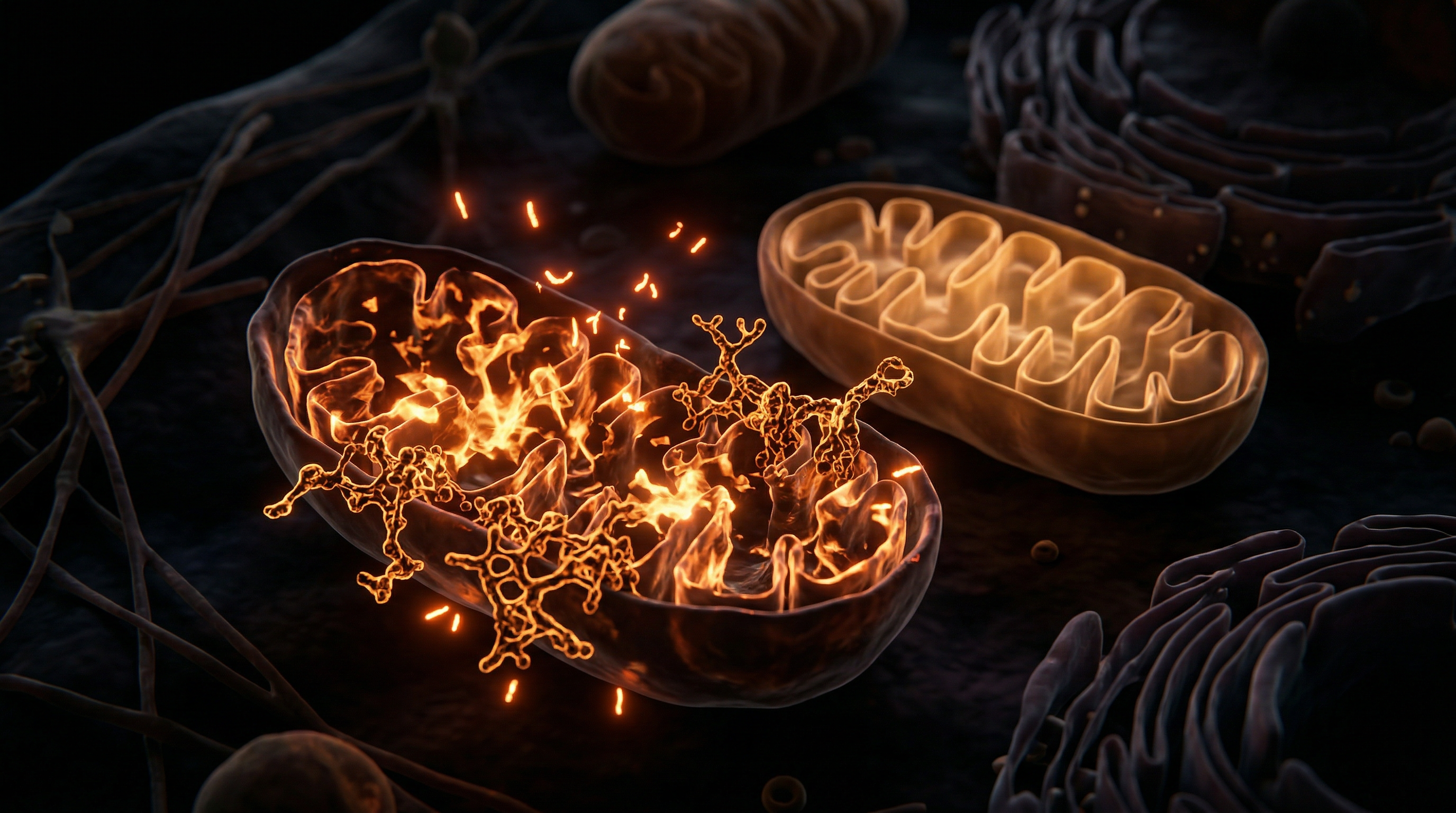
When the mitochondria—the ancient, double-membraned organelles responsible for generating over 90% of cellular energy—fail to meet the metabolic demands of the body, the result is a catastrophic cascade of intracellular stress. In the context of Fibromyalgia, this failure is most acutely felt in the high-energy tissues: the skeletal muscles, the heart, and the central nervous system. This report explores the biochemical reality that the mainstream narrative omits: that Fibromyalgia is a state of cellular power failure, driven by oxidative stress, environmental toxicity, and a breakdown in mitochondrial "quality control."
Fact: Research indicates that patients with Fibromyalgia exhibit a significant reduction in mitochondrial DNA (mtDNA) content and a 30-40% decrease in ATP levels within their muscle tissue compared to healthy controls.
The Biology — How It Works
To understand Fibromyalgia, one must first understand the Electron Transport Chain (ETC). Located on the inner mitochondrial membrane, the ETC is a series of protein complexes (I through V) that facilitate the transfer of electrons from donors (like NADH and FADH2) to oxygen. This process creates a proton gradient that drives the enzyme ATP Synthase to produce ATP, the universal energy currency of life.
The Bioenergetic Quota
Every physiological process, from the contraction of a sarcomere in the bicep to the firing of a neuron in the prefrontal cortex, requires a specific "quota" of ATP. In a healthy individual, the mitochondria are highly dynamic, constantly fusing together to share resources (mitochondrial fusion) or breaking apart to isolate damaged sections (mitochondrial fission).
The Role of Coenzyme Q10
A critical component of this system is Coenzyme Q10 (Ubiquinone). CoQ10 acts as a mobile electron carrier, shuttling electrons from Complexes I and II to Complex III. Without sufficient CoQ10, the entire production line grinds to a halt. In Fibromyalgia patients, CoQ10 levels are consistently found to be sub-optimal, leading to "electron leakage."
Oxygen Consumption and the Krebs Cycle
The Krebs Cycle (or Citric Acid Cycle) feeds the ETC. It requires a steady supply of acetyl-CoA, derived from glucose, fatty acids, or amino acids. In the "Fibromyalgic cell," there is often a metabolic "blockage" at the entry point of the Krebs cycle. Instead of efficient aerobic metabolism, the cell reverts to anaerobic glycolysis, a primitive and inefficient way of producing energy that leads to the accumulation of lactic acid and a state of intracellular acidity.
Mechanisms at the Cellular Level
The "root" of Fibromyalgia lies in the micro-environment of the mitochondria, where the balance between Reactive Oxygen Species (ROS) and antioxidant defences has been irrevocably tilted.
1. Oxidative Stress and Lipid Peroxidation
Mitochondria are the primary source of ROS (free radicals) as a byproduct of energy production. Under normal conditions, enzymes like Superoxide Dismutase (SOD) and Glutathione Peroxidase neutralise these radicals. In Fibromyalgia, the production of ROS exceeds the capacity of the antioxidant system. These radicals then attack the mitochondrial membranes in a process called lipid peroxidation, damaging the very structures required for ATP synthesis.
2. The Peroxynitrite Cycle (The NO/ONOO- Cycle)
Biochemist Martin Pall has proposed that Fibromyalgia and Chronic Fatigue Syndrome (CFS) are driven by a self-perpetuating cycle of elevated Nitric Oxide (NO) and its highly toxic derivative, Peroxynitrite (ONOO-).
- Elevated NO inhibits mitochondrial enzymes.
- NO reacts with superoxide to form ONOO-.
- ONOO- triggers further inflammation and oxidative stress.
- This creates a "vicious cycle" that keeps the patient in a state of chronic cellular exhaustion.
3. Mitophagy Failure
Cells have a "waste management" system called mitophagy, which identifies and destroys broken mitochondria. In the Fibromyalgia phenotype, this system is often sluggish. The cell becomes cluttered with "zombie" mitochondria—organelles that cannot produce energy but continue to leak ROS and inflammatory signals into the cytoplasm.
4. Calcium Homeostasis
Mitochondria also act as "buffers" for intracellular calcium. When they fail, calcium levels in the cytosol rise. This is particularly relevant to the muscle pain seen in Fibromyalgia; excess calcium keeps muscle fibres in a state of semi-contraction (micro-cramps), leading to the "tender points" and myofascial stiffness characteristic of the disease.
Statistic: Studies using skin biopsies of Fibromyalgia patients have shown a significant decrease in mitochondrial membrane potential—a direct measure of the "charge" and health of the cellular battery.
Environmental Threats and Biological Disruptors
The sudden rise in Fibromyalgia over the last forty years suggests that genetic predisposition is being triggered by a radical shift in our environmental "exposome." Mitochondria are incredibly sensitive to environmental toxins, often referred to as mitochondria-toxicants.
The Impact of Glyphosate
The ubiquitous herbicide glyphosate acts as a glycine analogue. It can be mistakenly incorporated into mitochondrial proteins during synthesis, leading to misfolded proteins and a collapse of the ETC. Furthermore, glyphosate disrupts the shikimate pathway in gut bacteria, leading to a deficiency in aromatic amino acids needed for mitochondrial health.
Pharmaceutical Iatrogenesis
Many medications commonly prescribed for other conditions are direct mitochondrial toxins:
- Statins: Known to deplete CoQ10 levels, leading to "statin-associated muscle symptoms" that mimic Fibromyalgia.
- Fluoroquinolone Antibiotics: These drugs (e.g., Ciprofloxacin) can cause permanent damage to mtDNA and have been linked to "Floxing," a syndrome virtually identical to severe Fibromyalgia.
- NSAIDs: While often used to treat pain, chronic use can uncouple mitochondrial oxidative phosphorylation.
Heavy Metals and Bioaccumulation
Mercury, Aluminium, and Lead have a high affinity for the thiol groups in mitochondrial enzymes. Aluminium, in particular, has been shown to displace magnesium—a vital cofactor for ATP—within the mitochondrial matrix.
Electrosmog (EMF)
Emerging research suggests that Voltage-Gated Calcium Channels (VGCCs) are sensitive to non-ionising radiation. Excessive EMF exposure may lead to calcium influx into the cell, overwhelming the mitochondria and triggering the ONOO- cycle mentioned previously.
The Cascade: From Exposure to Disease
The progression from a healthy state to a diagnosis of Fibromyalgia is rarely instantaneous. It is a slow, cumulative "bioenergetic debt" that eventually crosses a clinical threshold.
Stage 1: The Triggering Event
The cascade often begins with a "hit"—this could be a viral infection (like Epstein-Barr), a physical trauma (whiplash), or a period of intense psychological stress. These events trigger a spike in the Cell Danger Response (CDR).
Stage 2: The Cell Danger Response (CDR)
As described by Dr Robert Naviaux, the CDR is a universal metabolic response to threat. In this state, the mitochondria stop producing energy and instead start producing "signalling molecules" to harden the cell's defences. In Fibromyalgia, the mitochondria become "stuck" in this defensive mode, refusing to return to the energy-producing "growth" mode.
Stage 3: Systemic Inflammation
The dysfunctional mitochondria release DAMPs (Damage-Associated Molecular Patterns), including mtDNA, into the bloodstream. The immune system recognises this extracellular DNA as a foreign invader (due to its similarity to bacterial DNA), triggering systemic inflammation and the activation of microglia (the immune cells of the brain).
Stage 4: Neuro-Inflammation and Pain
Activated microglia release pro-inflammatory cytokines like IL-1β and TNF-α directly into the central nervous system. This lowers the threshold for pain, leading to allodynia (pain from stimuli that aren't usually painful) and hyperalgesia (excessive sensitivity to pain).
What the Mainstream Narrative Omits
The current NHS and global "standard of care" for Fibromyalgia is not merely incomplete; it is fundamentally flawed because it ignores the laws of bioenergetics.
The Problem with "Central Sensitisation"
The medical establishment has rallied around the term "Central Sensitisation" as the cause of Fibromyalgia. This term describes the symptom (a sensitive nervous system) but fails to explain the cause. It treats the brain as if it were a software program with a "glitch," ignoring the fact that the "hardware" (the neurons and mitochondria) is physically starved of fuel.
The Pharmaceutical Bias
There is little profit in recommending mitochondrial "building blocks" like magnesium or CoQ10, which cannot be patented. Instead, the focus remains on Neuropathic Pain Agents (like Gabapentin or Pregabalin) and SNRIs (like Duloxetine). These drugs modulate the perception of pain but do nothing to repair the underlying mitochondrial failure. In some cases, these drugs may even further impair mitochondrial function.
The Omission of Nutritional Deficiency
Standard blood tests used by the NHS (Full Blood Count, CRP, Liver Function) are too blunt to detect mitochondrial failure. They do not measure:
- Intracellular magnesium levels.
- Glutathione status.
- Organic acid levels (which show Krebs cycle intermediates).
- Mitochondrial membrane potential.
By failing to look at the cellular level, the mainstream narrative can maintain the illusion that the patient’s body is "structurally normal" and that the pain is "functional."
The UK Context
In the United Kingdom, the management of Fibromyalgia is governed by the NICE (National Institute for Health and Care Excellence) Guidelines (NG193). These guidelines represent a significant hurdle for patients seeking biological treatments.
The NICE Stance
The latest NICE updates have moved further away from biological interventions. They explicitly recommend against the use of most pharmacological treatments (including opioids and NSAIDs, which is perhaps wise for different reasons) but lean heavily into psychological therapies.
- CBT and ACT: Acceptance and Commitment Therapy is now a primary recommendation. This implies that the patient's primary problem is their relationship with pain, not the pain itself.
- The Graded Exercise Trap: While "pacing" is now recognised, there is still a push for "progressive aerobic exercise." For a patient with mitochondrial failure, forcing exercise is like trying to drive a car with no oil in the engine; it causes further oxidative damage and "Post-Exertional Malaise" (PEM).
The Access Gap
Functional Medicine, which focuses on mitochondrial repair, is almost entirely absent from the NHS. A patient in the UK must typically go "private" to access the tests—such as Organic Acid Testing (OAT) or Mycotoxin panels—that could identify the environmental drivers of their mitochondrial failure. Consequently, the "working class" patient is often left with no option but the "psychologisation" of their physical suffering.
Callout: In the UK, it takes an average of 2.2 years and multiple GP visits to receive a Fibromyalgia diagnosis, usually only after every "real" disease has been ruled out.
Protective Measures and Recovery Protocols
If Fibromyalgia is a biological failure of energy production, then the solution must be Bioenergetic Restructuring. This involves removing inhibitors and providing the substrates necessary for mitochondrial repair.
1. The "Mito-Cocktail"
Clinical studies have shown that high-dose supplementation with specific mitochondrial nutrients can significantly reduce FM symptoms:
- Coenzyme Q10 (Ubiquinol): 200–400mg daily. It bypasses the blockage in the ETC and acts as a potent antioxidant.
- D-Ribose: A 5-carbon sugar that is the backbone of the ATP molecule. It bypasses the slow "pentose phosphate pathway" to accelerate ATP recycling.
- Magnesium (Malate or Glycinate): Magnesium is required for every single ATP-dependent reaction in the body. The "malate" form is particularly useful as malic acid is a Krebs cycle intermediate.
- Acetyl-L-Carnitine (ALCAR): Facilitates the transport of fatty acids into the mitochondria for beta-oxidation.
2. NAD+ Restoration
Nicotinamide Adenine Dinucleotide (NAD+) is the primary electron donor for the ETC. Levels of NAD+ decline with age and chronic inflammation. Using precursors like NMN (Nicotinamide Mononucleotide) or NR (Nicotinamide Riboside) can help restore the NAD+/NADH ratio, effectively "rebooting" the cellular engine.
3. Red Light Therapy (Photobiomodulation)
Mitochondria contain a light-sensitive enzyme called Cytochrome c Oxidase (Complex IV). Exposure to red and near-infrared light (660nm–850nm) stimulates this enzyme, increasing electron flow and ATP production while reducing oxidative stress.
4. Circadian Alignment
Mitochondria are governed by "clock genes." Disrupted sleep-wake cycles (common in FM patients) lead to mitochondrial desynchrony. Recovery requires strict adherence to light/dark cycles: morning sunlight exposure and the elimination of blue light after sunset.
5. Temperature Stress (Hormesis)
Controlled exposure to cold (cold showers) and heat (saunas) triggers mitochondrial biogenesis—the creation of new, healthy mitochondria. This process is mediated by the PGC-1α pathway, the "master regulator" of mitochondrial health.
6. Diet: Ketosis and Mitochondrial Fueling
A ketogenic diet or a low-carb "mitochondrial" diet shifts the body from burning glucose to burning fats and ketones. Ketones are a "cleaner" fuel than glucose, producing fewer ROS per molecule of ATP generated. This reduces the oxidative burden on the mitochondria.
Summary: Key Takeaways
Fibromyalgia is not a mystery of the mind; it is a crisis of the cell. To label it a "functional pain disorder" is to ignore the profound metabolic dysfunction occurring at the molecular level.
- ATP Deficiency: The primary cause of muscle pain and cognitive "fibro-fog" is a systemic lack of cellular energy.
- The ROS Trap: Excessive oxidative stress damages mitochondrial DNA and membranes, creating a self-perpetuating cycle of exhaustion.
- Environmental Toxicity: Modern chemicals, heavy metals, and pharmaceuticals are the primary "triggers" for mitochondrial collapse.
- The NHS Failure: Current UK guidelines prioritise psychological management over biological repair, leaving millions of patients in a state of preventable suffering.
- Recovery is Possible: By addressing the bioenergetic root—through CoQ10, NAD+ restoration, light therapy, and the removal of environmental toxins—the "powerhouse" of the cell can be rebuilt.
The path to recovery from Fibromyalgia begins with the "Innerstanding" that we are not merely "feeling" pain; we are witnessing the biological protest of a body that has run out of fuel. It is time for a paradigm shift in British medicine, moving away from the "all in your head" narrative toward a "deep in your cells" reality.
This article is provided for informational and educational purposes only. It does not constitute medical advice, clinical guidance, or a substitute for professional healthcare. Information reflects cited research at time of publication. Always consult a qualified healthcare professional before acting on any health information.
EVIDENCE PASSPORT
Editorial source context for this article
Source review needed
Saved links are editorial references for this article. They may support specific claims rather than every sentence. Open and assess each source in context. This passport does not independently verify them.
Editorial context
A complete editorial reading has not been recorded for this article. Source links remain available for you to open and assess directly.
Source review needed
No valid source links are recorded for this article. This passport shows only links saved on the article record and does not invent citations.
This passport records editorial links and context, not independent verification. Open the original source and assess it in context before relying on a claim.
Medical Disclaimer
The information in this article is for educational purposes only and does not constitute medical advice, diagnosis, or treatment. Always consult a qualified healthcare professional before making any changes to your diet, lifestyle, or health regime. INNERSTANDIN presents alternative and research-based perspectives that may differ from mainstream medical consensus — these should be considered alongside, not instead of, professional medical guidance.
Read Full DisclaimerContinue the thread
Keep this question moving.
Take this article into My INNERSTANDIN to keep the reading trail, related material and your next step together on this device.
Explore this in the Body Map
See where this hits your biology. Interactive anatomy, threats, and protective protocols.
Dig deeper in the Library
Free, longform PDF volumes that go beyond headlines into mechanisms and references.