
Published May 2026
A deep dive into mitochondrial biology, the environmental threats to our cellular engines, and the protocols for energy restoration.
Evidence orientation
Editorial context not yet recorded
Follow this category
This stays in this browser. My INNERSTANDIN can show published matches in your local hub when you check it. It does not send email, push, or alert notifications.
Local learning review
A private browser aid for revisiting ideas. It is not an alert or a health recommendation.
Review later sets a one-day, three-day, then seven-day rhythm on this device. Choose it only when you want to revisit this article.
1. Overview
The mitochondria are the undisputed powerhouses of the human cell, yet their role extends far beyond simple energy production. They are the primary regulators of cellular metabolism, signal transduction, and programmed cell death (apoptosis). In the modern world, our mitochondrial health is under constant assault from environmental toxins, nutritional deficiencies, and chronic inflammation. This degradation of our cellular "engines" is the root cause of many chronic conditions, from persistent fatigue to neurodegenerative decline.
Restoring mitochondrial health is not just about taking a handful of supplements; it is about INNERSTANDIN the delicate biological environment required for these organelles to thrive. This article explores the mechanics of mitochondrial function, the threats that undermine them, and the evidence-led protocols for cellular restoration. By addressing health at the root—the mitochondria—we can unlock a new level of systemic resilience and vitality.
2. The Biology — How It Works
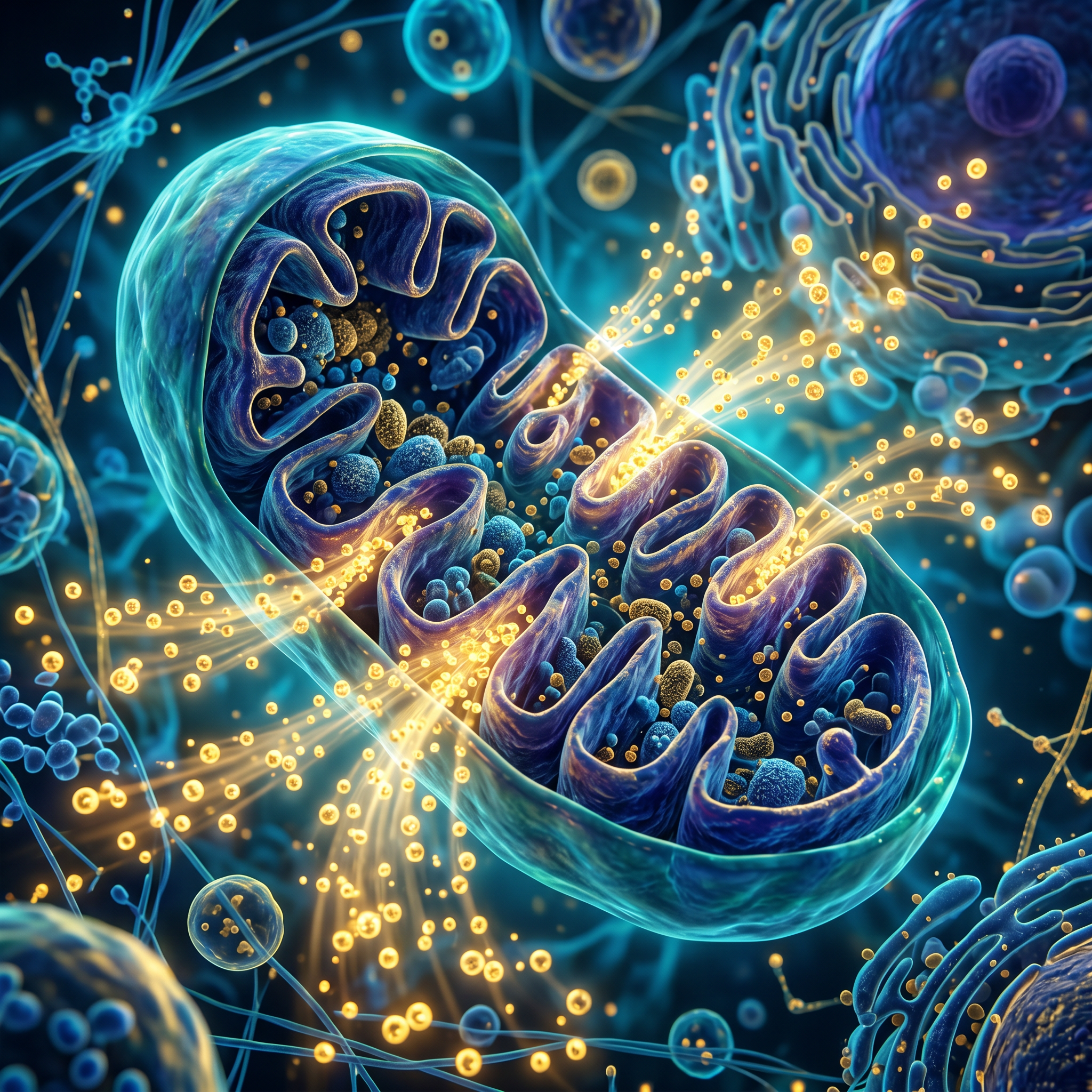
Mitochondria are unique organelles that possess their own DNA (mtDNA) and are believed to have originated from an ancient symbiotic relationship with bacteria. Their primary function is to generate adenosine triphosphate (ATP) through a process called oxidative phosphorylation. This occurs within the inner mitochondrial membrane, a highly folded structure that provides a massive surface area for biochemical reactions.
The process begins with the breakdown of macronutrients—carbohydrates, fats, and proteins—into smaller molecules like acetyl-CoA. These molecules enter the Krebs cycle (Citric Acid Cycle) within the mitochondrial matrix, producing electron carriers (NADH and FADH2). These carriers then donate electrons to the Electron Transport Chain (ETC), a series of protein complexes that create an electrochemical gradient. This gradient drives the "turbine" of ATP synthase, producing the energy that powers every biological function in your body.
3. Mechanisms at the Cellular Level
The efficiency of the Electron Transport Chain is the primary determinant of mitochondrial health. As electrons flow through the chain, a small percentage "leak" out, reacting with oxygen to form Reactive Oxygen Species (ROS). While some ROS are necessary for cellular signalling, an excess leads to oxidative stress, which can damage mitochondrial DNA and proteins. This creates a vicious cycle: damaged mitochondria produce more ROS and less ATP, leading to further damage.
To maintain health, cells undergo two critical processes: mitogenesis (the creation of new mitochondria) and mitophagy (the clearing away of damaged mitochondria). These processes are regulated by master switches like PGC-1alpha and AMPK. When these switches are flipped "on"—often through stressors like exercise or fasting—the cell essentially renovates its energy production system, replacing old, sluggish engines with new, efficient ones.
4. Environmental Threats and Biological Disruptors
Our modern environment is uniquely hostile to mitochondria. One of the most insidious threats is electromagnetic frequency (EMF) radiation. Research suggests that EMFs can trigger the over-activation of voltage-gated calcium channels (VGCCs) in the cell membrane, leading to an influx of calcium that disrupts mitochondrial function and increases ROS production.
Chemical toxins also play a significant role. Heavy metals like lead and mercury can bind to mitochondrial enzymes, blocking energy production. Furthermore, common food additives like artificial sweeteners and seed oils (high in linoleic acid) can damage the delicate cardiolipin—a unique phospholipid in the inner mitochondrial membrane that is essential for the structure and function of the ETC protein complexes. Chronic psychological stress also acts as a biological disruptor, as the constant demand for energy to fuel the "fight or flight" response leads to mitochondrial exhaustion.
5. The Cascade: From Exposure to Disease
The failure of mitochondrial function initiates a systemic cascade of disease. When ATP production falls below a certain threshold, the most energy-demanding organs are affected first. This explains why mitochondrial dysfunction is so closely linked to brain fog, cognitive decline, and chronic fatigue syndromes. The brain, despite making up only 2% of body mass, consumes 20% of the body's energy.
As the cascade continues, the accumulation of ROS and the leakage of mitochondrial DNA into the cytosol can trigger an inflammatory response via the NLRP3 inflammasome. This state of "mitochondrial-driven inflammation" is a hallmark of metabolic diseases like obesity and type 2 diabetes. Furthermore, the failure of apoptosis—a mitochondrial-regulated process—can allow damaged cells to proliferate, contributing to the development of various cancers.
6. What the Mainstream Narrative Omits
The mainstream medical narrative often treats mitochondrial dysfunction as a rare, genetic condition (mitochondrial disease) rather than a common, acquired state of health. This perspective ignores the reality that most people in modern industrial societies are suffering from varying degrees of mitochondrial impairment due to lifestyle and environmental factors.
Furthermore, the standard focus on "calories" as a measure of energy is biologically flawed. A calorie is a unit of heat; ATP is the unit of biological work. You can consume thousands of calories, but if your mitochondria cannot convert them into ATP, you will remain exhausted and "starving" at a cellular level. The mainstream narrative also fails to acknowledge the profound impact of light on mitochondrial function, focusing almost entirely on biochemistry while ignoring the biophysics of cellular health.
7. The UK Context
In the UK, mitochondrial health is challenged by specific regional factors. The "indoor lifestyle" prevalent in the British climate means that many people lack sufficient exposure to natural red and near-infrared light from the sun, which is known to stimulate cytochrome c oxidase (Complex IV in the ETC) and boost ATP production. This is compounded by the high levels of artificial blue light from screens and LED lighting, which can disrupt circadian rhythms and mitochondrial repair.
Furthermore, the UK's high consumption of processed "convenience" foods, often high in refined grains and industrial fats, provides a poor fuel source for mitochondria. The prevalence of chronic fatigue (ME/CFS) in the UK population—with over 250,000 sufferers—is a clear indicator of a widespread mitochondrial crisis. Current NHS protocols often focus on symptom management rather than addressing the underlying cellular energy failure.
8. Protective Measures and Recovery Protocols
Restoring mitochondrial function requires a multi-pronged approach that addresses both fuel and environment.
- Red Light Therapy: Exposure to red and near-infrared light can directly stimulate ATP production and reduce oxidative stress.
- Nutritional Support: Key "mitoceuticals" include CoQ10 (Ubiquinol), NAD+ precursors (like NMN or NR), Magnesium, Alpha-Lipoic Acid, and PQQ (Pyrroloquinoline quinone).
- Cold Hormesis: Cold exposure triggers the expression of PGC-1alpha, stimulating the production of new, heat-generating mitochondria (mitogenesis).
- Circadian Alignment: Protecting your sleep and matching your eating window to daylight hours supports the natural repair cycles of the cell.
- Grounding (Earthing): Connecting to the Earth's negative charge can provide a source of electrons to neutralise ROS within the cell.
9. Summary: Key Takeaways
Mitochondrial health is the foundation of all biological resilience.
- The Engine: Mitochondria convert nutrients into ATP, the currency of life.
- The Threat: EMFs, toxins, and poor light environment are the primary disruptors of modern cellular energy.
- The Cascade: Energy failure leads to brain fog, fatigue, and systemic inflammation.
- The Solution: Focus on light, temperature (cold), and specific nutrients to repair and renew your cellular engines.
- INNERSTANDIN the Root: True health starts with the mitochondria; everything else is downstream.
By optimising your cellular environment, you can restore your energy production at the source and achieve a level of vitality that the mainstream paradigm cannot offer.
This article is provided for informational and educational purposes only. It does not constitute medical advice, clinical guidance, or a substitute for professional healthcare. Information reflects cited research at time of publication. Always consult a qualified healthcare professional before acting on any health information.
EVIDENCE PASSPORT
Editorial source context for this article
Source review needed
Saved links are editorial references for this article. They may support specific claims rather than every sentence. Open and assess each source in context. This passport does not independently verify them.
Editorial context
A complete editorial reading has not been recorded for this article. Source links remain available for you to open and assess directly.
Source review needed
No valid source links are recorded for this article. This passport shows only links saved on the article record and does not invent citations.
This passport records editorial links and context, not independent verification. Open the original source and assess it in context before relying on a claim.
Medical Disclaimer
The information in this article is for educational purposes only and does not constitute medical advice, diagnosis, or treatment. Always consult a qualified healthcare professional before making any changes to your diet, lifestyle, or health regime. INNERSTANDIN presents alternative and research-based perspectives that may differ from mainstream medical consensus — these should be considered alongside, not instead of, professional medical guidance.
Read Full DisclaimerReady to learn more?
Continue your journey through our classified biological research.
Explore this in the Body Map
See where this hits your biology. Interactive anatomy, threats, and protective protocols.
Dig deeper in the Library
Free, longform PDF volumes that go beyond headlines into mechanisms and references.