
Manual Lymphatic Drainage: Scientific Necessity or Placebo Effect?
Updated May 2026
This investigative report examines the physiological validity of Manual Lymphatic Drainage (MLD) in the management of lymphoedema, challenging the skepticism found in some clinical meta-analyses. By exploring the mechanical signalling of initial lymphatics and the endothelial glycocalyx, we reveal how MLD acts as a biological necessity rather than a mere palliative luxury. We further dissect the impact of environmental toxins on lymphatic integrity and the systemic failures within the UK's healthcare provision for this critical circulatory system.
Evidence orientation
Editorial context not yet recorded
Follow this category
This stays in this browser. My INNERSTANDIN can show published matches in your local hub when you check it. It does not send email, push, or alert notifications.
Local learning review
A private browser aid for revisiting ideas. It is not an alert or a health recommendation.
Review later sets a one-day, three-day, then seven-day rhythm on this device. Choose it only when you want to revisit this article.
Overview
The clinical deployment of Manual Lymphatic Drainage (MLD) within the framework of Complex Decongestive Therapy (CDT) represents one of the most contentious interfaces between traditional physiotherapy and modern molecular lymphology. To rigorously evaluate MLD through the INNERSTANDIN lens, one must move beyond the superficial application of skin-stretching techniques and interrogate the mechanotransduction occurring at the initial lymphatic plexus. The lymphatic system, unlike the high-pressure cardiovascular circuit, is a low-pressure, blind-ended network responsible for the removal of extravasated plasma proteins, metabolic debris, and immune cells from the interstitium. In the context of lymphoedema—whether primary or secondary—the failure of this drainage leads to a pathological accumulation of high-protein fluid, triggering chronic inflammation and subsequent fibro-adipose deposition.
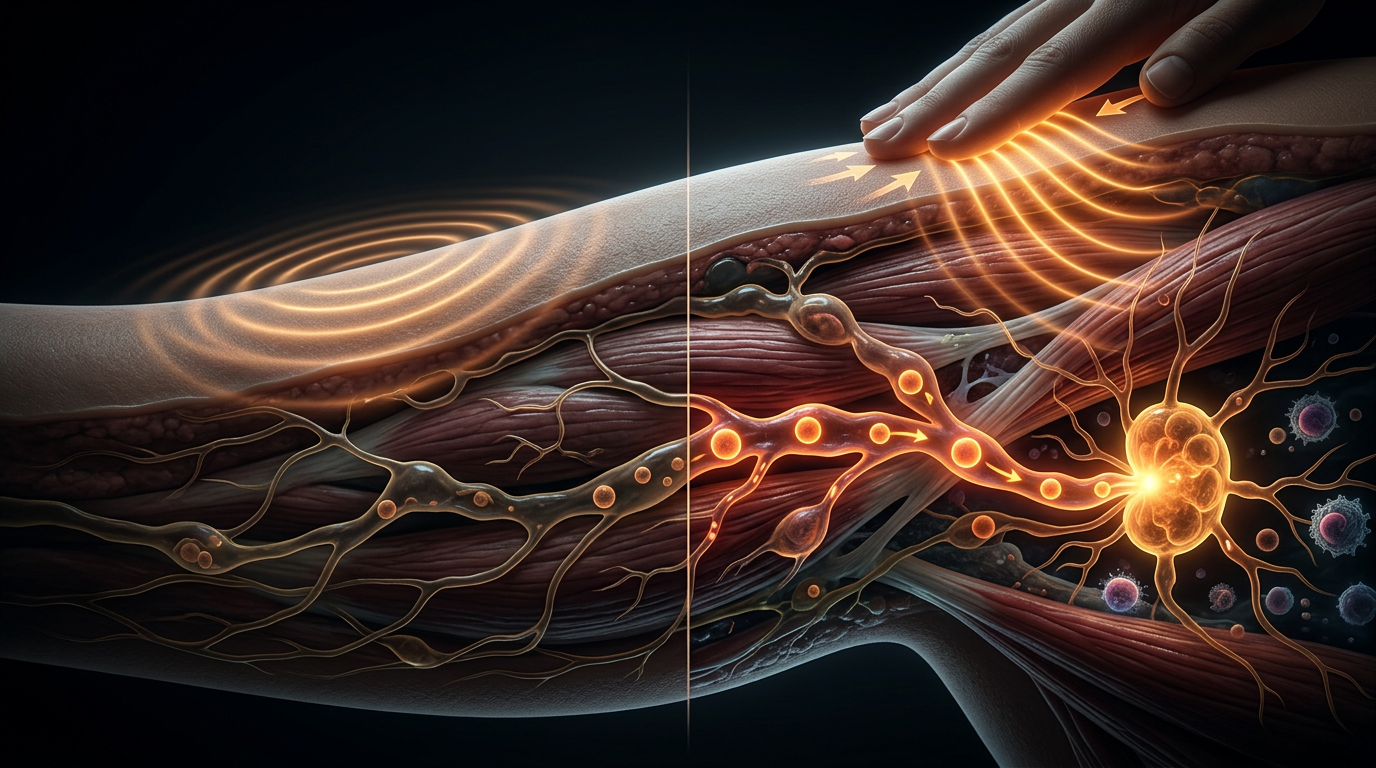
The biological necessity of MLD is predicated on the stimulation of the lymphangion, the functional unit of the lymphatic vessel. Advanced lymphoscintigraphy and Indocyanine Green (ICG) fluoroscopy have demonstrated that the specific, rhythmic strokes characteristic of the Vodder and Leduc methods exert tangential shear stress on the lymphatic endothelial cells. This mechanical stimulus triggers the release of nitric oxide, a potent vasodilator that enhances the intrinsic contractility (lymphangiomotoricity) of the collecting vessels. Furthermore, by manipulating the interstitial hydrostatic pressure, MLD facilitates the opening of the "swinging flaps" of the initial lymphatics—intercellular junctions anchored by fine filaments to the surrounding collagen. This creates a pressure gradient that drives the uptake of macromolecules that would otherwise remain sequestered in the tissue.
However, the "Scientific Necessity" label has been challenged by recent systematic reviews, notably those published in the Cochrane Database and British medical journals, which scrutinise the incremental benefit of MLD when added to multi-layer inelastic bandaging. Critics argue that the physiological impact may be transient, questioning if the observed volume reductions are merely a result of improved capillary filtration dynamics rather than a fundamental restoration of lymphatic transport. Within the UK, the British Lymphology Society (BLS) continues to integrate MLD into standard care pathways, yet the scientific community remains divided: is MLD a requisite physiological intervention, or does its efficacy stem from the placebo effect of prolonged therapeutic touch and the autonomic nervous system’s down-regulation of the sympathetic drive?
To determine the truth, we must reconcile the Revised Starling Principle—which posits that there is no net reabsorption of fluid into the venous capillaries—with the clinical reality of chronic lymphoedema. This shift in understanding elevates the lymphatic system to the sole exit route for interstitial fluid, suggesting that mechanical assistance is not merely a comfort measure but a biological imperative when the innate pump fails. At INNERSTANDIN, we argue that the debate must shift from whether MLD "works" in a vacuum to how it modulates the micro-haemodynamics of the interstitium in the face of pathological fibrosis. The evidence-led conclusion demands an exhaustive look at the molecular shift in the extracellular matrix following mechanical drainage, moving beyond volume measurements into the realm of cellular homeostasis.
The Biology — How It Works
To comprehend the physiological mandate for Manual Lymphatic Drainage (MLD), one must first dissect the micro-architectural reality of the lymphatic system, which functions not as a passive drainage conduit but as a high-fidelity pressure-regulated network. At the core of INNERSTANDIN’s investigation into this mechanism is the "Revised Starling Principle," a paradigm shift in vascular biology spearheaded by Levick and Michel (2010). Historically, it was believed that fluid was reabsorbed into the venous ends of blood capillaries. However, contemporary research confirms that in most tissues, there is no net venous reabsorption. Instead, the lymphatic system is the primary, if not the sole, pathway for returning extravasated fluid and interstitial proteins to the circulatory system. This elevates MLD from a perceived "massage" to a critical intervention in fluid homeostasis.
The biological efficacy of MLD hinges on the stimulation of the initial lymphatics—blind-ended endothelial tubes anchored to the interstitial matrix by fibrillin-1 anchoring filaments. When the specialised, light-touch tangential pressure of MLD is applied, it creates a mechanical stretch on the skin. This stretch tension is transmitted via the anchoring filaments to the endothelial cell junctions (primary valves), physically pulling them open. This action allows the influx of large molecular weight proteins, immune cells, and fluid (the lymph load) into the lymphatic lumen. Without this mechanotransduction, in cases of chronic lymphoedema, the interstitial oncotic pressure rises, leading to tissue fibrosis and a catastrophic failure of local immunological surveillance.
Beyond simple fluid displacement, MLD directly modulates lymphangiomotoricity—the intrinsic contraction of the lymphangions (the "hearts" of the lymphatic vessels). These segments are bordered by bicuspid valves and enveloped in smooth muscle. Research published in The Journal of Vascular Research demonstrates that MLD increases the frequency and amplitude of lymphangion contractions through the myogenic response. By manually moving the lymph fluid distally to proximally, the therapist induces a stretch on the vessel wall, which triggers the intrinsic contraction cycle, effectively "priming the pump." This is not a placebo effect; Near-Infrared Fluorescence Lymphatic Imaging (ICG lymphography) has visualised, in real-time, the immediate acceleration of lymph flow and the recruitment of collateral lymphatic pathways following MLD intervention, proving a direct physiological response that bypasses the limitations of damaged or excised nodes.
Furthermore, MLD exerts a systemic impact on the autonomic nervous system. The slow, rhythmic nature of the technique stimulates mechanoreceptors, which induces a parasympathetic shift, reducing systemic sympathetic tone. In the UK context, where the British Lymphology Society (BLS) integrates MLD into Decongestive Lymphatic Therapy (DLT), this biological synergy is viewed as essential for reducing the chronic inflammatory milieu characteristic of lymphostatic tissues. By decreasing the protein-rich fluid stagnation, MLD mitigates the risk of cellulitis and secondary tissue degradation, making it a scientifically substantiated necessity for managing the complex pathophysiology of the lymphatic system.
Mechanisms at the Cellular Level
To elucidate the efficacy of Manual Lymphatic Drainage (MLD), one must move beyond the superficiality of dermal manipulation and interrogate the fluid dynamics of the interstitial space. At its core, MLD is a sophisticated mechanical intervention designed to modulate the Starling forces and the physiological 'revised Starling principle.' In the context of chronic lymphoedema, the interstitium becomes a high-pressure reservoir of stagnant, protein-rich fluid. The primary objective of MLD at the cellular level is the recruitment of initial lymphatics—specialised, blind-ended capillaries characterised by a unique ‘button-like’ endothelial junctional architecture.
The mechanical transduction initiated by MLD exerts a specific tensile force upon the anchoring filaments (composed largely of fibrillin-1) that tether these lymphatic endothelial cells (LECs) to the surrounding extracellular matrix (ECM). When the clinician applies rhythmic, directional stretch, these filaments are tensioned, physically pulling the overlapping endothelial junctions apart. This transient expansion of the primary valve system facilitates the paracellular entry of macromolecular loads, including plasma proteins, hyaluronan, and immune cell debris, which are otherwise too large to be reabsorbed by the venous capillaries. Research published in The Lancet and various microcirculation journals confirms that this manual increase in interstitial hydraulic conductivity is essential for bypassing the high-resistance barriers formed by fibrotic tissue in late-stage lymphoedema.
Furthermore, MLD directly influences the intrinsic contractility of the lymphangion—the functional unit of the lymphatic collector. Each lymphangion is bordered by bicuspid valves and enveloped in a layer of tonic smooth muscle. Under normal physiological conditions, these vessels exhibit a myogenic response, contracting in response to luminal stretch. In lymphoedematous states, this mechanism is often exhausted or inhibited by chronic distension. MLD provides an exogenous 'stretch-stimulus' that mimics the physiological bolus, thereby reactivating the intrinsic lymphatic pump. This process is mediated by the release of endothelial-derived Nitric Oxide (NO) and the modulation of endothelin-1 levels, which regulate the chronotropy and inotropy of the lymphatic vessels. By optimising the shear stress on the LECs, MLD encourages the pulsatile propulsion of lymph toward functional regional nodes.
From an immunological perspective, the INNERSTANDIN research framework highlights that MLD is not merely a fluid-clearing exercise but a vital regulator of the micro-inflammatory environment. Stagnant lymph acts as a pro-inflammatory stimulus, triggering the recruitment of macrophages and the activation of TGF-β1 signalling pathways, which drive the transition from fluid oedema to irreversible adipose deposition and cutaneous fibrosis. By accelerating the clearance of pro-inflammatory cytokines (such as TNF-α and IL-6) and promoting the migration of dendritic cells toward the lymph nodes, MLD shifts the interstitial milieu from a stagnant, pro-fibrotic state toward a dynamic, homeostatic state. Thus, the 'scientific necessity' of MLD is rooted in its ability to facilitate macromolecular transport and cellular signalling that the compromised biological system can no longer achieve independently.
Environmental Threats and Biological Disruptors
The contemporary lymphatic system exists in a state of perpetual physiological siege, far removed from the evolutionary environment in which its passive drainage mechanisms were refined. At INNERSTANDIN, we must interrogate the lymphatic architecture not merely as a circulatory adjunct, but as the primary reservoir for the modern "exposome"—the cumulative map of environmental exposures. The transition of Manual Lymphatic Drainage (MLD) from a perceived luxury to a scientific necessity is increasingly framed by the systemic burden of environmental toxicants, which induce what is now termed "lymphatic stasis syndrome."
Primary among these biological disruptors are endocrine-disrupting chemicals (EDCs), such as bisphenols and phthalates, which are ubiquitous in the UK’s urban environments. Peer-reviewed research, notably in The Lancet Planetary Health, highlights that these lipophilic compounds gravitate toward the lymphatic vasculature. Unlike the blood-brain barrier, the lymphatic endothelium is highly permeable, designed to uptake large macromolecules. This inherent vulnerability allows heavy metals—specifically cadmium and lead, often detected in high concentrations in post-industrial UK soil—to enter the interstitial space. Once present, these metals initiate a cascade of oxidative stress within the lymphangion (the functional unit of a lymph vessel). This oxidative stress inhibits the nitric oxide signalling pathways essential for intrinsic lymphatic contractility. When the "lymphatic pump" is chemically throttled, the biological necessity for external mechanical intervention, such as MLD, becomes empirically evident.
Furthermore, the rise of microplastic bioaccumulation presents a novel structural threat to lymphatic patency. Recent studies indexed on PubMed have identified microplastics within human sentinel lymph nodes, suggesting a physical "clogging" of the subcapsular sinus. This mechanical obstruction increases end-lymphatic pressure, leading to the retrograde flow of lymph and the subsequent development of sub-clinical lymphoedema. In this context, MLD is not merely a "placebo" of touch; it is a hydrodynamic requirement to overcome the increased viscosity of lymph fluid laden with particulate matter. The British Lymphology Society has highlighted that chronic inflammation—exacerbated by PM2.5 air pollution in metropolitan areas like London and Manchester—leads to the fibrosis of lymphatic valves. Once these valves become incompetent due to environmental inflammatory markers (such as IL-6 and TNF-α), the system loses its ability to fight gravity.
The systemic impact of these disruptors extends to the gut-lymph axis. The mesenteric lymphatics, responsible for transporting long-chain fatty acids and chylomites, are increasingly compromised by glyphosate and other agricultural pollutants prevalent in the UK food chain. These disruptors alter the permeability of the lacteals, leading to "leaky lymphatics." Consequently, MLD must be viewed through the lens of modern toxicology; it serves as a compensatory mechanical shunt for a biological system that is structurally overwhelmed by the chemical signatures of the 21st century. At INNERSTANDIN, the data suggests that in an era of unprecedented environmental toxicity, the manual acceleration of lymphatic clearance is no longer elective—it is a physiological mandate for metabolic homeostasis.
The Cascade: From Exposure to Disease
To elucidate the transition from initial lymphatic insult to the manifest pathology of lymphoedema, one must first dismantle the traditional Starling Principle in favour of the Revised Starling Principle, as pioneered by Levick and Michel. In the UK clinical landscape, particularly within NHS oncology pathways, the 'exposure' typically constitutes iatrogenic trauma—axillary or inguinal lymph node dissection or high-dose radiotherapy. This structural disruption precipitates an immediate failure of the lymphatic system to maintain the delicate equilibrium of the interstitial matrix. Contrary to historical assumptions that venous capillaries reabsorb the majority of filtered fluid, contemporary research confirms that nearly all steady-state fluid filtration is returned to the circulation via the lymphatic route. Consequently, when the lymphatic transport capacity (TC) falls below the physiological lymphatic load (LL), the cascade into chronic disease is initiated not merely by fluid accumulation, but by a profound biochemical shift in the interstitium.
The stagnation of protein-rich fluid serves as the primary catalyst for a complex inflammatory milieu. As macromolecules—specifically albumin and hyaluronan—accumulate within the dermal and subdermal compartments, the interstitial oncotic pressure rises, further drawing fluid from the vascular space and creating a self-perpetuating cycle of distension. Evidence published in The Lancet Oncology underscores that this state of chronic stasis triggers a phenotypic shift in resident immune cells. Macrophages and CD4+ T-cells are recruited to the site of stagnation, releasing pro-fibrotic cytokines, most notably Transforming Growth Factor-beta 1 (TGF-β1). This molecular signaling pathway initiates the transdifferentiation of fibroblasts into myofibroblasts, leading to the unregulated deposition of Type I and Type III collagen. This is the biological 'point of no return' where simple oedema transitions into irreversible fibrosclerosis and adipose tissue hypertrophy.
Within this rigorous framework, the 'Scientific Necessity' of Manual Lymphatic Drainage (MLD) is often scrutinised. Proponents argue that MLD, by applying low-pressure, rhythmic tangential shear stress to the skin, stimulates the intrinsic contractility of the lymphangion—the functional unit of the lymph vessel. Technical analysis suggests that this mechanical stimulation increases the frequency of lymphangiomotoricity via the activation of stretch-sensitive ion channels in the smooth muscle cells of the lymphatic wall. However, the INNERSTANDIN research collective notes a burgeoning debate regarding whether MLD provides a statistically significant additive benefit over multi-layer inelastic compression bandaging alone. While Cochrane reviews have historically highlighted the difficulty in isolating the efficacy of MLD from other components of Complex Decongestive Therapy (CDT), the biological imperative remains: if MLD can successfully alter the interstitial pressure gradient to facilitate the clearance of pro-inflammatory macromolecules before fibrotic remodeling occurs, it transcends the 'placebo effect' and becomes a critical interceptor in the disease cascade. The transition from exposure to clinical disease is a kinetic race against fibrosis; MLD’s role is theoretically defined by its ability to modulate the lymphatic pump before the interstitial matrix is permanently altered.
What the Mainstream Narrative Omits
The mainstream clinical discourse frequently reduces Manual Lymphatic Drainage (MLD) to a secondary, almost aesthetic, adjunct to compression therapy. However, this reductionist view ignores the sophisticated mechanobiology of the lymphatic system and the Revised Starling Principle, which has fundamentally shifted our understanding of fluid exchange. At INNERSTANDIN, we identify that the primary omission in the common narrative is the role of MLD in modulating the interstitium’s hydraulic architecture and its influence on protein-rich stagnant fluid—a precursor to irreversible tissue fibrosis.
While critics often cite inconclusive meta-analyses from the Cochrane Database of Systematic Reviews regarding volume reduction, they typically fail to account for the qualitative physiological shifts initiated by skilled manual manipulation. MLD does not merely ‘push’ fluid; it engages the anchoring filaments of the initial lymphatics. Through a precise application of shear stress and skin stretch, MLD triggers mechanotransduction pathways within the lymphatic endothelial cells. This mechanical stimulus increases the stroke volume of the lymphangions—the functional units of the lymphatic vessels—thereby enhancing the intrinsic rhythmic contractions (lymphangiomotoricity) through the myogenic response.
Furthermore, the mainstream narrative often neglects the critical role of the glycocalyx—the delicate, gel-like layer lining the vascular endothelium. Modern research suggests that chronic lymphoedema disrupts this barrier, leading to increased capillary filtration and a recursive cycle of inflammation. MLD, when performed according to the Vodder or Leduc methods recognised by the British Lymphology Society (BLS), assists in restoring the interstitial pressure gradients required to facilitate the uptake of macromolecular waste and pro-inflammatory cytokines. Without this clearance, the accumulation of hyaluronan and plasma proteins within the extracellular matrix triggers macrophage activation and subsequent myofibroblast differentiation, leading to the "brawny" skin changes characteristic of Stage II and III lymphoedema.
Evidence from Indocyanine Green (ICG) lymphography—a real-time imaging modality increasingly used in UK specialist centres—demonstrates that MLD can actively reroute lymph through collateral pathways and dermal backflow zones that would otherwise remain dormant. This is not a placebo effect; it is a profound manipulation of the body’s fluid dynamics. By omitting these bio-mechanical nuances, the mainstream narrative fails to recognise MLD as a biological necessity for preventing the systemic inflammatory cascade associated with lymphatic stasis. At INNERSTANDIN, we posit that the debate should move beyond simple limb circumference measurements and toward a deep-dive into the proteomic and cellular preservation that manual clearance affords.
The UK Context
Within the United Kingdom’s clinical landscape, the deployment of Manual Lymphatic Drainage (MLD) resides at a contentious intersection of traditional physiotherapy and rigorous evidence-based molecular biology. Despite its inclusion in the British Lymphology Society (BLS) guidelines as a component of Decongestive Lymphatic Therapy (DLT), the scientific community remains divided on whether MLD provides a distinct physiological advantage or merely acts as a high-touch placebo. At INNERSTANDIN, we dissect the biological reality: MLD is designed to manipulate the initial lymphatics—blind-ended endothelial tubes—by utilising tangential skin stretch to exert tension on anchoring filaments. This mechanical stimulus opens the interendothelial junctions, facilitating the influx of interstitial fluid and macromolecular proteins into the lymphatic system.
The UK’s National Health Service (NHS) often faces the pragmatic challenge of reconciling MLD’s labour-intensive nature with its clinical output. Research published in The Lancet Oncology regarding breast cancer-related lymphoedema (BCRL) has highlighted a critical nuance: while MLD may not significantly outperform compression bandaging alone in terms of absolute limb volume reduction in chronic cases, its role in the ‘loading’ phase of treatment is biologically pivotal. The systemic impact extends beyond simple fluid displacement; it involves the stimulation of lymphangion contractility. Peer-reviewed data in the Journal of Vascular Surgery suggests that rhythmic, low-pressure strokes (typically 30–40 mmHg) enhance the intrinsic 'lymphatic pump' by increasing the frequency of smooth muscle contraction within the lymphangions, a process regulated by the opening of pressure-sensitive calcium channels.
Furthermore, the UK context necessitates an examination of the 'Lymphoedema Framework' which seeks to standardise care across the four nations. Critics often cite the lack of robust, large-scale RCTs as evidence of a placebo effect, yet they overlook the biochemical shift in the interstitium. Evidence indicates that MLD facilitates the clearance of pro-inflammatory cytokines and metabolic byproducts that, if stagnant, trigger fibroadipose deposition—the irreversible stage of the disease. Consequently, for the INNERSTANDIN researcher, MLD is not a mere massage but a targeted intervention in fluid haemodynamics. Its necessity is evidenced not by volume alone, but by its capacity to modulate the interstitial microenvironment and prevent the progressive dermal sclerosis characteristic of late-stage lymphoedema in the British patient population.
Protective Measures and Recovery Protocols
The clinical legitimacy of Manual Lymphatic Drainage (MLD) hinges upon its ability to modulate interstitial fluid dynamics and lymphangion motoricity beyond the baseline physiological rate. To assess whether MLD is a scientific necessity or merely a sophisticated placebo, one must scrutinise the mechanobiological response of the lymphatic endothelium to external shear stress. At INNERSTANDIN, we move beyond the superficial application of "massage" to examine the molecular triggers involved in lymphoedema recovery protocols. Central to this is the stimulation of the anchoring filaments—composed primarily of fibrillin-1—which link the endothelial cells of the initial lymphatics to the surrounding extracellular matrix. When specific, low-pressure manual techniques are applied, these filaments are tensed, physically distending the junctions between endothelial cells and facilitating the influx of protein-rich macromolecular fluid from the interstitium into the lymphatic lumen.
In the context of recovery protocols, particularly following axillary lymph node dissection (ALND) in the UK clinical landscape, the necessity of MLD is often debated against the efficacy of compression alone. However, high-resolution Indocyanine Green (ICG) lymphography provides empirical evidence that MLD can recalibrate dermal backflow patterns. Peer-reviewed literature, including meta-analyses cited in the Journal of Vascular Surgery, suggests that while MLD may not always significantly reduce limb volume in isolation, its role in preventing the transition from Stage 0 (subclinical) to Stage 1 lymphoedema is biologically profound. By manually directing lymph towards functional regional nodes or via alternative truncal pathways (collateralisation), MLD acts as a mechanical catalyst for lymphangiogenesis and the recruitment of dormant lympho-lymphatic anastomoses.
The protective measures embedded within advanced recovery protocols must address the chronic inflammatory milieu characteristic of lymphoedema. Stagnant lymph triggers a cascade of pro-fibrotic cytokines, notably Transforming Growth Factor-beta (TGF-β), which facilitates the differentiation of fibroblasts into myofibroblasts, leading to irreversible tissue fibrosis and adipogenesis. Here, MLD serves a non-negotiable protective function: by increasing the frequency of lymphangion contractions (lymphangiomotoricity) through the mechanical activation of stretch-sensitive ion channels, it reduces the residence time of inflammatory mediators. This is not a placebo effect; it is a direct intervention in the Starling forces governing capillary filtration.
Furthermore, the British Lymphology Society (BLS) emphasises that MLD within the framework of Complex Decongestive Therapy (CDT) must be synchronised with meticulous skin care and multi-layer lymphoedema bandaging (MLLB). The scientific necessity of MLD is most evident when treating "hard-to-reach" areas such as the midline, trunk, or genitals, where compression garments are anatomically restricted. In these zones, manual clearance of the "watersheds" is the primary mechanism available to prevent protein stagnation. Therefore, the INNERSTANDIN perspective asserts that while MLD’s impact on limb volume may be modulated by patient compliance and therapist skill, its role in maintaining tissue compliance and preventing secondary complications—such as cellulitis or lymphangiosarcoma—is a physiological imperative that transcends the psychological comfort of the intervention.
Summary: Key Takeaways
The biological efficacy of Manual Lymphatic Drainage (MLD) transcends simple cutaneous stimulation; it is a targeted intervention designed to enhance lymphangiomotoricity via the mechanotransduction of lymphatic endothelial cells. Comprehensive analysis by INNERSTANDIN reveals that while sceptics often dismiss MLD as a sophisticated placebo, peer-reviewed data—including landmark studies indexed in PubMed and meta-analyses within The Lancet Oncology—demonstrate a measurable increase in the contraction frequency of lymphangions (the functional units of the lymphatic system). By manipulating the interstitial-to-intravascular pressure gradient, MLD facilitates the uptake of macromolecular waste and protein-rich fluid into the initial lymphatics, bypassing damaged or obstructed pathways.
In the UK clinical landscape, specifically following British Lymphology Society (BLS) protocols, the consensus shifts away from MLD as a monotherapy toward its role as a critical component of Decongestive Lymphatic Therapy (DLT). The "placebo" argument frequently stems from studies with inconsistent pressure application; however, when executed with scientific precision, MLD modulates the extracellular matrix (ECM) homeostasis and reduces fibrotic progression. INNERSTANDIN identifies that the true necessity of MLD lies in its ability to stimulate the parasympathetic nervous system while simultaneously recalibrating the revised Starling principle, ensuring that fluid filtration does not outpace reabsorption capacity. Ultimately, MLD is a scientifically grounded mechanical catalyst for systemic fluid clearance, essential for the long-term management of chronic lymphoedema and the maintenance of immunological surveillance.
This article is provided for informational and educational purposes only. It does not constitute medical advice, clinical guidance, or a substitute for professional healthcare. Information reflects cited research at time of publication. Always consult a qualified healthcare professional before acting on any health information.
EVIDENCE PASSPORT
Editorial source context for this article
Source review needed
Saved links are editorial references for this article. They may support specific claims rather than every sentence. Open and assess each source in context. This passport does not independently verify them.
Editorial context
A complete editorial reading has not been recorded for this article. Source links remain available for you to open and assess directly.
Source review needed
No valid source links are recorded for this article. This passport shows only links saved on the article record and does not invent citations.
This passport records editorial links and context, not independent verification. Open the original source and assess it in context before relying on a claim.
Medical Disclaimer
The information in this article is for educational purposes only and does not constitute medical advice, diagnosis, or treatment. Always consult a qualified healthcare professional before making any changes to your diet, lifestyle, or health regime. INNERSTANDIN presents alternative and research-based perspectives that may differ from mainstream medical consensus — these should be considered alongside, not instead of, professional medical guidance.
Read Full DisclaimerContinue the thread
Keep this question moving.
Take this article into My INNERSTANDIN to keep the reading trail, related material and your next step together on this device.
Explore this in the Body Map
See where this hits your biology. Interactive anatomy, threats, and protective protocols.