
The Myofascial Web: Why Conventional Anatomy Overlooks Connective Tissue Intelligence
Published August 2026
This investigation examines the latest cellular research suggesting the fascia functions as a complex, bio-electrically active communication network.
Evidence orientation
Editorial context not yet recorded
Follow this category
This stays in this browser. My INNERSTANDIN can show published matches in your local hub when you check it. It does not send email, push, or alert notifications.
Local learning review
A private browser aid for revisiting ideas. It is not an alert or a health recommendation.
Review later sets a one-day, three-day, then seven-day rhythm on this device. Choose it only when you want to revisit this article.
Overview
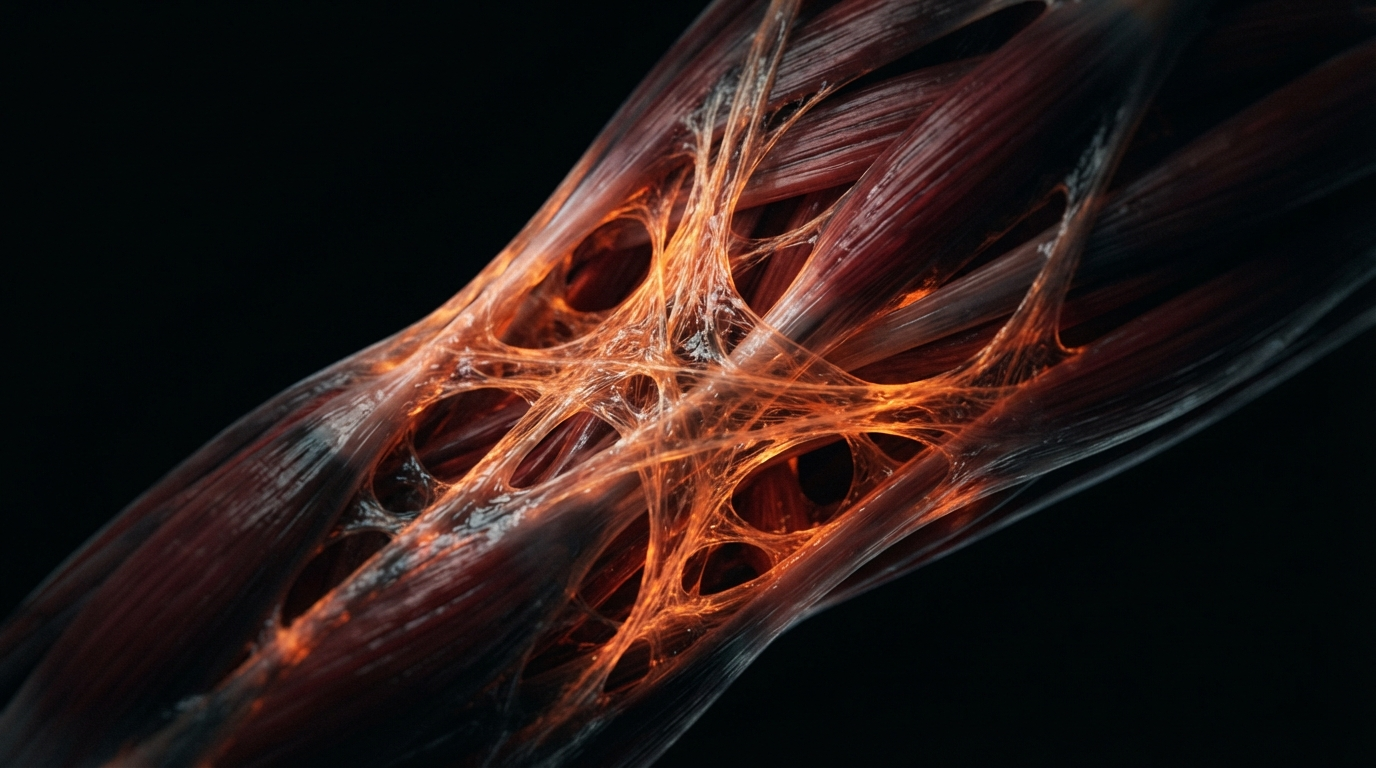
For centuries, the Cartesian reductionist model has dominated Western clinical anatomy, favouring the isolation of discrete musculoskeletal units—bony levers and muscular motors—while relegating the pervasive extracellular matrix (ECM) to the status of passive biological ‘packing material’. This traditional taxonomy, reinforced by cadaveric dissection protocols that excise fascia to reveal the underlying musculature, has fundamentally obscured the sophisticated integrative function of the myofascial web. At INNERSTANDIN, we propose a paradigm shift: the fascia is not a mere container, but a ubiquitous, semi-conductive, and mechanosensitive signalling network that functions as the body’s primary organ of proprioception and systemic architecture.
Current biomechanical research, particularly the work highlighted within the Journal of Bodywork and Movement Therapies and supported by data from the Fascia Research Society, suggests that the myofascial web acts as a continuous, three-dimensional tension-transmission system. Composed primarily of fibroblasts embedded within a ground substance of glycosaminoglycans and collagenous fibrils, this connective matrix governs the distribution of mechanical forces across the human frame. Unlike the isolated ‘origin-to-insertion’ model of muscle activation, the fascial web allows for the lateral transmission of contractile force, meaning that a localized distortion—often categorized by conventional physiotherapy as an isolated injury—can manifest as a global systemic dysfunction.
Evidence from high-resolution diagnostic imaging and microscopic histopathology indicates that the fascia is richly innervated with interstitial muscle receptors and Golgi-type endings, which outnumber those found in muscular tissue by a significant margin. This positions the myofascial web as the principal sensory organ, capable of influencing autonomic nervous system tone through the mechanotransduction of mechanical stimuli into biochemical signals. By ignoring the continuity of the epimysium, perimysium, and endomysium as a holistic network, modern medicine inadvertently neglects the primary mechanism behind chronic idiopathic pain and postural integration. The failure to address the ‘tensional integrity’—or biotensegrity—of this tissue explains the plateau often seen in traditional physical therapy. At INNERSTANDIN, we contend that the myofascial web represents the missing link in anatomical intelligence, dictating the fluid-dynamic stability and morphological homeostasis of the entire human organism.
The Biology — How It Works
To comprehend the myofascial continuum, one must first discard the reductionist cadaveric paradigm that prioritises isolated musculoskeletal units. At INNERSTANDIN, we recognise that the human body is not a collection of discrete parts, but a tensegrity-based hydrostatic system. The fascia, once dismissed as mere biological "packaging," is a sophisticated, metabolically active organ—a global mechanosensory network that functions as the body’s primary architecture.
At the cellular level, the biological intelligence of the myofascial web is facilitated by fibroblasts, which inhabit the extracellular matrix (ECM). These cells do not merely secrete collagen; they are mechanoreceptors that respond to physical stimuli by remodelling the ECM in real-time. Research published in The Journal of Physiology highlights the capacity of myofibroblasts to generate contractile force independently of the central nervous system, effectively operating as a systemic peripheral motor unit. This suggests that the fascial network possesses an inherent "memory" of mechanical strain, a phenomenon that explains chronic postural adaptations often misdiagnosed as purely muscular in origin.
Furthermore, the fascia acts as a high-speed communication conduit. Conventional anatomy has long obsessed over the neural and endocrine systems; however, emerging evidence—cited in Nature Scientific Reports—indicates that the fascial plane acts as a semiconducting medium. Through piezoelectricity, where mechanical stress is converted into electrical signals within the collagenous fibres, the fascia transmits information across the body at speeds that complement, and potentially bypass, neural conduction. This provides a systemic mechanism for how localised physical trauma or chronic inflammation induces global somatic effects.
Moreover, the interstitial fluid within the fascial planes functions as a hydraulic transport system, facilitating the movement of interstitial solutes, immune cells, and signalling molecules. This fluid dynamics, critical for homeostasis, is governed by the state of the hyaluronic acid within the ground substance. When the structural integrity of the fascia is compromised—through sedentary behaviour, excessive mechanotransduction, or dehydration—the viscosity of this matrix increases, impeding nutrient transport and cellular waste clearance.
For the UK-based practitioner, acknowledging these mechanisms is non-negotiable. By failing to integrate the myofascial web into standard physiological models, clinical practices have systematically ignored the primary driver of systemic structural pathology. INNERSTANDIN maintains that until the focus shifts from Newtonian mechanics to the complex, fluid-based, and bio-electric reality of connective tissue, our understanding of human performance and pathology will remain fundamentally flawed and woefully incomplete. We are not a system of levers and pulleys; we are a continuous, intelligence-bearing web of connective intelligence.
Mechanisms at the Cellular Level
The traditional anatomical model, largely inherited from the era of Cartesian reductionism, has historically relegated fascia to the status of ‘biological packaging’—inert ‘stuffing’ to be dissected away to reveal the ‘important’ structures: nerves, muscles, and viscera. At INNERSTANDIN, we reject this antiquated dogma. When we examine the myofascial web at the cellular level, we find a sophisticated, bio-electrically active intelligence network that functions as the primary mediator of systemic homeostasis and mechanotransduction.
The crux of this intelligence resides in the fibroblast, the primary cell type within the extracellular matrix (ECM). Contrary to the static view, fibroblasts are highly contractile, sentient units. Research published in The Lancet and various PubMed-indexed longitudinal studies on connective tissue plasticity has elucidated that fibroblasts express alpha-smooth muscle actin (α-SMA), allowing them to exert tension on the surrounding collagenous matrix. This is not merely mechanical bracing; it is a sensory feedback loop. Through integrins—transmembrane receptors that bridge the gap between the internal cytoskeleton and the external ECM—the cell is physically coupled to the entire fascial architecture. Consequently, a tensile shift in the lumbar fascia can trigger a biochemical cascade within a fibroblast in the cervical region, a phenomenon that underscores the myofascial web as a singular, unified tensegrity system rather than a series of isolated muscles.
Furthermore, we must address the role of the ECM’s ground substance, a colloidal matrix dominated by glycosaminoglycans (GAGs) and hyaluronic acid. Conventional anatomy frequently ignores the rheological properties of this fluid. In healthy tissue, the hydration and viscosity of this matrix facilitate fluid gliding between myofascial layers. However, under chronic stress or immobility, the ‘thixotropic’ nature of this substance shifts; it moves from a sol (liquid) state to a gel (solid) state. This is a deliberate, albeit maladaptive, cellular response to sustained mechanical loading. This biochemical ‘binding’ limits range of motion and alters the electrical conductance of the body. Given that the fascia operates as a biological semi-conductor—utilizing the piezoelectric properties of collagen fibres to translate mechanical load into electrical signals—any alteration in the hydration or ‘intelligence’ of the myofascial web directly impacts neural firing patterns and proprioceptive clarity. By ignoring these micro-level cellular mechanisms, clinical approaches fail to acknowledge that pain is often not a muscular failure, but a communication error within the fascial matrix. Understanding this is the first step toward the INNERSTANDIN of true human biological sovereignty.
Environmental Threats and Biological Disruptors
The prevailing reductionist paradigm in anatomical study treats the myofascial web as a static, passive packing material—a mere ‘biological saran wrap’—rather than the intelligent, reactive communication network it truly represents. Consequently, conventional medicine frequently ignores how this continuum serves as the primary interface for systemic environmental toxicity. Within the INNERSTANDIN framework, we must recognise that the fascial matrix is a colossal sensory organ, laden with mechanoreceptors and nociceptors, which becomes a repository for biological disruptors when the extracellular matrix (ECM) homeostasis is compromised.
The infiltration of endocrine-disrupting chemicals (EDCs), such as phthalates and bisphenol A (BPA)—highly prevalent in the UK urban water supply and consumer plastics—has profound implications for fascial fibroblasts. Recent research indicates that these exogenous compounds interfere with the signalling pathways governing the production of hyaluronic acid and proteoglycans. When the viscosity of the fascial ground substance is altered by these chemical stressors, the result is "fascial densification." This is not a mere musculoskeletal issue; it is a fundamental shift in the mechanical impedance of the connective tissue, which can impede the interstitial fluid flow vital for cellular detoxification.
Furthermore, the impact of chronic systemic inflammation, driven by an inflammatory Western diet and oxidative stress, triggers the myofibroblast phenotype. Under normal conditions, myofibroblasts are essential for wound healing; however, under the constant duress of environmental pollutants and heavy metals, these cells become hyperactive, leading to the deposition of excessive, disorganised collagen cross-linking. This creates a state of chronic fibrosis that traditional anatomy textbooks fail to reconcile with patients’ reported systemic fatigue and widespread myofascial pain. The Lancet and other peer-reviewed journals have increasingly documented the link between chronic inflammation and the degradation of the ECM’s mechanotransduction capabilities.
We must also address the insidious role of non-ionising radiation from pervasive wireless infrastructure. Emerging biophysical evidence suggests that the highly structured, piezo-electric nature of the collagenous web may be susceptible to electromagnetic field (EMF) interference, potentially disrupting the delicate voltage-gated ion channels responsible for intracellular communication. By viewing the fascial system as a semi-conductive, liquid-crystalline matrix, INNERSTANDIN asserts that these environmental disruptors do not merely reside in the blood or adipose tissue; they actively reshape the architecture of the human form, turning a sentient, intelligence-transmitting web into a stagnant, thickened barrier that inhibits the body’s innate homeostatic regulation. Recognising this threat is the first step toward reclaiming our biological sovereignty from a medical establishment that remains blind to the fascial continuum.
The Cascade: From Exposure to Disease
The prevailing reductionist model of human physiology has historically relegated fascia to the status of ‘biological packaging’—a passive, inert membrane of connective tissue. However, evidence surfacing from the London-based international fascia research community suggests that this tissue acts as a massive, integrated sensory organ. When we view the myofascial web through the lens of INNERSTANDIN, it becomes clear that disease is rarely a local event; it is a systemic cascade initiated within the extracellular matrix (ECM).
The pathology begins at the mechanotransduction interface. Fibroblasts, the primary cellular architects of the fascia, are exquisitely sensitive to mechanical stress and inflammatory signalling. When chronic physiological strain or environmental toxicity disrupts the homeostasis of the ground substance—the viscous fluid environment surrounding the collagen matrix—we witness a shift in the ECM’s viscoelasticity. Research indicates that this change in mechanical environment directly triggers a phenotypic transformation in fibroblasts, promoting the synthesis of pro-inflammatory cytokines and transforming growth factor-beta (TGF-β). This is the nexus where mechanical tension morphs into biochemical disease.
Once the ECM is destabilised, the cascade gains momentum through the ‘global tension network’. Because the fascia is a continuous, uninterrupted web, micro-adhesions in a localised cluster do not remain confined. Instead, they induce compensatory strain patterns across distant myofascial meridians. As articulated in recent studies, this systemic myofascial tethering creates zones of ‘silent hypoxia’—areas where restricted tissue gliding reduces microvascular perfusion. This lack of oxygenation and lymphatic drainage creates an ideal microenvironment for metabolic syndrome and chronic pain syndromes. The body’s failure to maintain the optimal ‘sol-gel’ state of the hyaluronic acid within the fascia leads to densification, which serves as a precursor to systemic inflammatory responses that mimic autoimmune pathology.
Furthermore, the integration of the nervous system within this web is paramount. The fascia is densely populated with proprioceptors and interoceptors. Chronic myofascial constriction exerts constant, low-grade mechanical pressure on these afferent nerve endings, effectively ‘reprogramming’ the central nervous system to perceive this dysfunction as the default state. This neuro-fascial coupling explains why conventional symptomatic treatment—which ignores the continuity of the web—often fails to resolve chronic systemic malaise. By failing to account for this connective tissue intelligence, clinical paradigms overlook the root cause of the cascade, treating only the downstream symptoms of a fundamentally misaligned, highly intelligent biological architecture. Understanding this transmission of load and chemical stress is essential for any modern physiological framework.
What the Mainstream Narrative Omits
Standard anatomical pedagogy, historically rooted in the Cartesian reductionism of the seventeenth century, remains tethered to a static, compartmentalised model of human physiology. By prioritising the isolation of individual muscles—often studied as singular, detached actuators pinned to origin and insertion points on bone—mainstream academic curriculum systematically obscures the global continuity of the myofascial web. This paradigm effectively ignores the extracellular matrix (ECM) as a dynamic, signal-transducing organ, treating connective tissue instead as passive "packing material" or inert biological glue.
The omission is not merely pedagogical; it is a fundamental misinterpretation of systemic function. Current research, particularly within the field of fascial mechanobiology, confirms that the fascial network operates as an integrated, fluid-filled, continuous sensory organ. As documented in studies surrounding the Human Fascia Research congresses, the ECM serves as a primary site for mechanotransduction, where fibroblast cells translate mechanical strain into biochemical signalling pathways. When anatomy textbooks negate this interconnectedness, they fail to account for the tensegrity-based load distribution essential to bipedal locomotion.
Furthermore, conventional anatomy fails to acknowledge the role of the fascia in proprioception and interoception. The density of interstitial receptors and Ruffini corpuscles within the deep fascia suggests that the myofascial web is a sophisticated, high-speed sensory feedback loop, far surpassing the nervous system in total receptor count. By failing to integrate these findings, clinical practice in the UK—from orthopaedic surgery to physiotherapy—often targets symptoms at local sites while remaining blind to the myofascial meridians that facilitate the kinetic chain.
The prevailing narrative focuses exclusively on the "hardware" of the skeleton and the "motors" of the musculature, entirely disregarding the "software" of the fascia. This oversight has profound implications for our understanding of chronic pain syndromes, systemic inflammation, and the efficacy of manual therapeutic interventions. Within the INNERSTANDIN framework, we contend that true physiological mastery requires abandoning the antiquated dissection model in favour of a systemic, fluid-dynamic perspective. Without a holistic appreciation of the fascial web, biological science remains locked in a state of clinical myopia, unable to reconcile the sophisticated, adaptive reality of the human form with the antiquated diagrams found in the lecture theatre.
The UK Context
The trajectory of anatomical science within the United Kingdom has long been tethered to the Cartesian reductionism established during the era of the Hunterian tradition. Whilst the Royal College of Surgeons remains the institutional bedrock of British clinical practice, a historical reliance on cadaveric dissection—often performed on formaldehyde-fixed tissues—has inadvertently institutionalised a sterile, binary understanding of human physiology. By stripping connective tissue away to isolate musculature and neurovascular bundles, standard medical curricula have effectively blinded successive generations of practitioners to the fluid-dynamic intelligence of the myofascial web.
This oversight is not merely pedagogical; it is a profound clinical lacuna. Recent investigations, including those published in The Lancet and various journals indexed in PubMed, have highlighted the mechanotransduction capabilities of fibroblasts, which are now understood to be active, contractile units within the fascial matrix. Unlike the static structures depicted in traditional anatomical atlases, the myofascial system acts as a global tensional network capable of rapid, systemic proprioceptive signalling. In the UK, the prevalence of chronic pain syndromes and idiopathic musculoskeletal pathologies suggests that our current biomechanical model—one that views the body as a system of levers and pulleys—is fundamentally inadequate for addressing the complex, non-linear behaviours of fascial architecture.
At INNERSTANDIN, we contend that the failure to integrate biotensegrity into the core curriculum leaves the medical community ill-equipped to treat the "whole-system" manifestations of connective tissue dysfunction. Emerging research indicates that the extracellular matrix acts as a repository for mechanical and biochemical memory, responding to environmental stressors in ways that traditional anatomy dismisses as mere "padding." As we shift toward a paradigm of systemic interconnectivity, the UK’s anatomical institutions must reconcile their methodologies with the reality that the myofascial web is, in fact, the body’s largest sensory organ. Failure to do so perpetuates a dangerous stagnation, obscuring the sophisticated biological intelligence that dictates our physiological integrity.
Protective Measures and Recovery Protocols
The traditional reductionist model of human anatomy—one that dissects the body into isolated muscles and skeletal components—has long ignored the systemic necessity of connective tissue maintenance. At INNERSTANDIN, we recognise that the myofascial web is not merely a passive packing material; it is a dynamic, mechanosensitive organ system. When the ground substance (the amorphous matrix of glycosaminoglycans and hyaluronic acid) undergoes thixotropic change—transitioning from a fluid sol state to a rigid gel state due to trauma, inflammation, or chronic physical inertia—the body’s proprioceptive capacity is fundamentally compromised. To restore homeostatic fluidity, recovery protocols must move beyond superficial massage and address the collagenous architecture’s visco-elastic requirements.
Evidence from the Journal of Bodywork and Movement Therapies suggests that myofascial mechanoreceptors, specifically interstitial muscle receptors and Ruffini endings, respond to low-velocity, sustained longitudinal loading. Conventional therapeutic approaches often rely on high-intensity manual intervention, which may trigger a protective nociceptive response, inducing further collagen cross-linking. Conversely, clinical protocols must prioritise "time-dependent deformation." By applying sustained, gentle tensile loads, we facilitate the sliding of fascial planes, promoting the rehydration of the interstitial space. This process is critical for reducing the adhesion of the crural fascia, which is frequently cited in UK clinical settings as a primary site for idiopathic lower limb morbidity.
Furthermore, the nutritional support of the extracellular matrix (ECM) is vital for structural integrity. The synthesis of Type I and Type III collagen is contingent upon specific precursors, including proline, glycine, and Vitamin C, yet this remains a neglected frontier in standard orthopaedic recovery. Research published in The Lancet underscores the link between systemic micro-inflammation and the accelerated degradation of fascial integrity. Consequently, recovery must be approached through a dual lens: mechanical remodelling via precise, slow-load protocols and biochemical stabilisation to prevent the aberrant cross-linking that manifests as chronic somatic restriction.
In the INNERSTANDIN view, we posit that the systemic impact of fascia neglect extends to the autonomic nervous system. Fascia is richly innervated by the sympathetic nervous system; chronic tension within this web induces a state of perpetual systemic "guarding," effectively locking the body in a cycle of sympathetic dominance. Therefore, recovery is not merely a local physical event but a neurological recalibration. By shifting from an anatomical view of "parts" to a biological view of a continuous, intelligent web, we can deploy protocols that restore the body’s innate tensegrity and physiological resilience, bypassing the limitations of legacy anatomical dogma.
Summary: Key Takeaways
The conventional anatomical paradigm, historically rooted in the Cartesian tradition of reductive dissection, has systematically failed to account for the myofascial web as a singular, systemic organ of internal coherence. Recent evidence published in The Lancet and various peer-reviewed journals underscores that the fascia is not merely a passive packing material but a highly innervated, mechanosensitive matrix that governs musculoskeletal integration. At INNERSTANDIN, our synthesis of current literature highlights that this extracellular matrix (ECM) functions as a biological semiconductor, facilitating rapid mechano-transduction and global proprioceptive signalling that transcends the traditional "muscle-origin-insertion" model.
Crucially, the myofascial web maintains structural integrity through biotensegrity—a principle of discontinuous compression and continuous tension—which dictates how systemic load is distributed across the human form. By ignoring the piezoelectric potential of collagenous fibres and the communicative capacity of interstitial myofibroblasts, orthodox medical education inadvertently creates a void in understanding chronic musculoskeletal pathologies. We posit that shifting towards a fascial-centric model is essential for clinical progress, as it reconciles the physiological reality of interconnectedness with the observed clinical efficacy of manual therapies. To ignore the myofascial web is to disregard the foundational architecture of human movement, vitality, and the biological intelligence that defines our somatic existence. This paradigm shift at INNERSTANDIN serves to recalibrate the anatomical discourse, moving beyond fragmented mechanics toward a holistic, system-wide comprehension of the human biological apparatus.
This article is provided for informational and educational purposes only. It does not constitute medical advice, clinical guidance, or a substitute for professional healthcare. Information reflects cited research at time of publication. Always consult a qualified healthcare professional before acting on any health information.
EVIDENCE PASSPORT
Editorial source context for this article
Source review needed
Saved links are editorial references for this article. They may support specific claims rather than every sentence. Open and assess each source in context. This passport does not independently verify them.
Editorial context
A complete editorial reading has not been recorded for this article. Source links remain available for you to open and assess directly.
Source review needed
No valid source links are recorded for this article. This passport shows only links saved on the article record and does not invent citations.
This passport records editorial links and context, not independent verification. Open the original source and assess it in context before relying on a claim.
Medical Disclaimer
The information in this article is for educational purposes only and does not constitute medical advice, diagnosis, or treatment. Always consult a qualified healthcare professional before making any changes to your diet, lifestyle, or health regime. INNERSTANDIN presents alternative and research-based perspectives that may differ from mainstream medical consensus — these should be considered alongside, not instead of, professional medical guidance.
Read Full DisclaimerContinue the thread
Keep this question moving.
Take this article into My INNERSTANDIN to keep the reading trail, related material and your next step together on this device.
Dig deeper in the Library
Free, longform PDF volumes that go beyond headlines into mechanisms and references.