
Natto and Vitamin K2: Bone Health in the British Winter
Updated May 2026
With low sunlight levels, UK residents struggle with calcium regulation. Natto provides the highest food source of Vitamin K2, essential for directing calcium into bones rather than arteries.
Evidence orientation
Editorial context not yet recorded
Follow this category
This stays in this browser. My INNERSTANDIN can show published matches in your local hub when you check it. It does not send email, push, or alert notifications.
Local learning review
A private browser aid for revisiting ideas. It is not an alert or a health recommendation.
Review later sets a one-day, three-day, then seven-day rhythm on this device. Choose it only when you want to revisit this article.
Overview
As the charcoal-grey skies of a British winter descend, a silent, systemic failure begins within the physiology of millions. For decades, the narrative surrounding bone health in the United Kingdom has been reductionist at best and negligently incomplete at worst. We are told to "get our Vitamin D" and "drink our milk," yet the rates of osteoporosis, arterial calcification, and degenerative joint disease continue to climb.
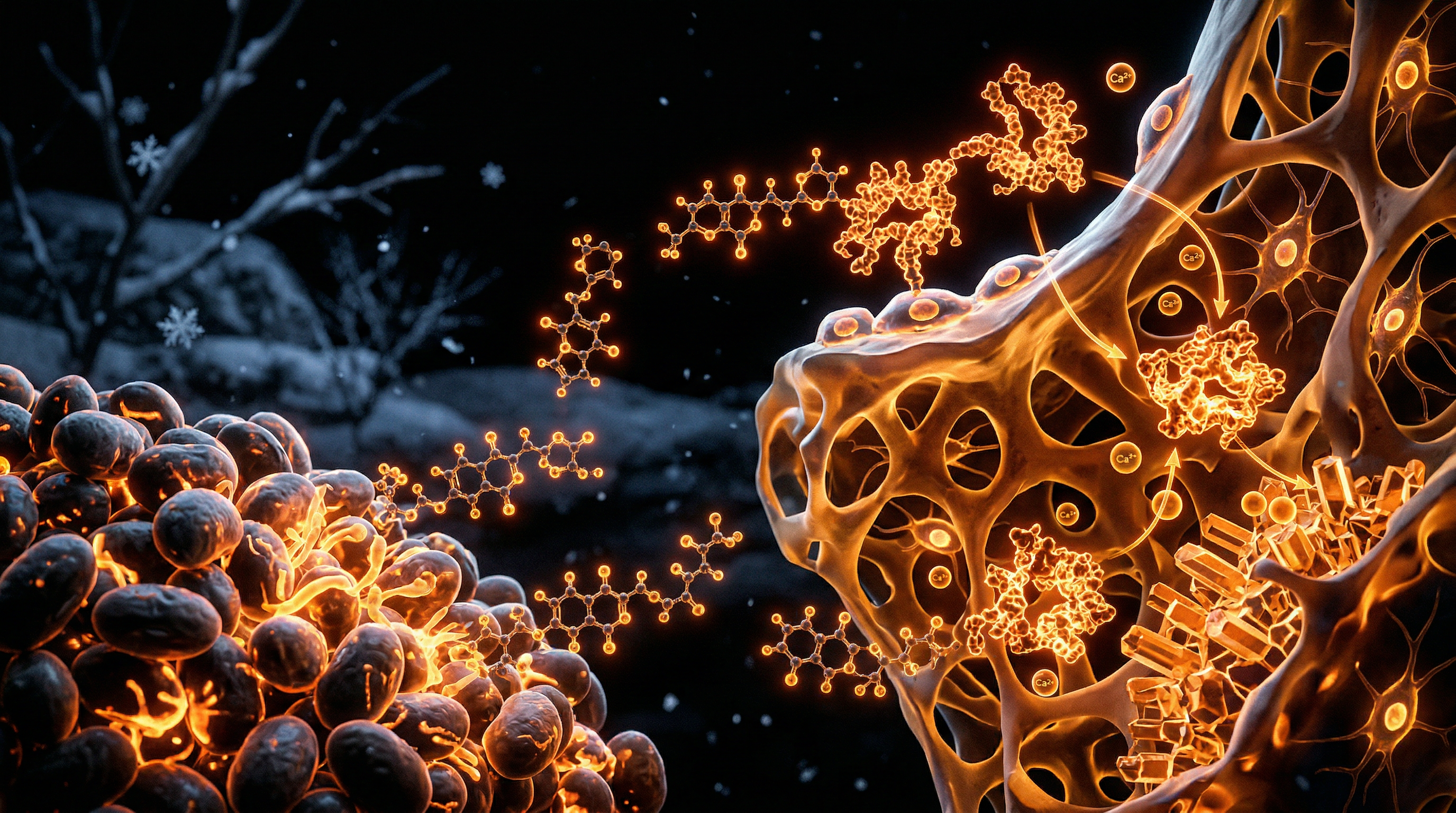
The missing variable in this biological equation is not a pharmaceutical innovation, but an ancient fermented foodstuff from the East: Natto. This stringy, pungent preparation of fermented soybeans contains the highest concentrated source of Vitamin K2 (Menaquinone-7) on the planet. While Vitamin D acts as the gatekeeper, allowing calcium to enter the bloodstream, it is Vitamin K2 that acts as the traffic warden, ensuring that calcium is sequestered into the bone matrix and prevented from hardening the arteries.
In the UK, where sunlight-induced Vitamin D synthesis is non-existent between October and April, the biological demand for a sophisticated calcium-regulation system reaches its peak. Without K2, the calcium we ingest—often through fortified foods or supplements—becomes a "free radical" of the mineral world, drifting into soft tissues, heart valves, and the renal system. This article serves as a deep-dive into the bio-molecular necessity of Natto, exposing why the British public has been left in the dark regarding the Calcium Paradox and how we can reclaim our skeletal integrity through traditional probiotic medicine.
The Biology — How It Works
To understand the necessity of Natto, one must first dismantle the monolithic term "Vitamin K." In the mainstream medical lexicon, Vitamin K is often discussed as a single entity primarily responsible for blood clotting. This is a gross oversimplification.
There are two distinct forms:
- Vitamin K1 (Phylloquinone): Found in leafy greens. Its primary role is hepatic (liver-based), facilitating the activation of clotting factors.
- Vitamin K2 (Menaquinone): Produced by specific bacteria during fermentation. Its roles are extra-hepatic, governing the distribution of minerals throughout the body.
The MK-7 Superiority
Vitamin K2 exists in several isoforms, ranging from MK-4 to MK-13. While MK-4 is found in animal fats, it has a notoriously short half-life in the human body. Conversely, MK-7, the specific form found in Natto, remains bioavailable in the bloodstream for up to 72 hours. This sustained presence allows it to reach peripheral tissues—bones, vasculature, and skin—far more effectively than any other form.
Callout Fact: Natto contains approximately 900 to 1100 mcg of Vitamin K2 (MK-7) per 100g, which is nearly 100 times the concentration found in most European cheeses.
The Calcium Paradox
The "Calcium Paradox" describes the terrifying reality where a population can simultaneously suffer from osteoporosis (too little calcium in the bones) and atherosclerosis (too much calcium in the arteries). This is not a deficiency of calcium, but a failure of mineral translocation.
When we take Vitamin D3 in the British winter, we increase the production of Vitamin K-dependent proteins. However, these proteins are produced in an "inactive" state. Without Vitamin K2 to activate them, they sit dormant, and the calcium absorbed by the gut has no biological "instruction manual." It settles in the path of least resistance: the internal lining of the aorta and the delicate structures of the kidneys.
Mechanisms at the Cellular Level
At the heart of Natto’s power is a process known as gamma-carboxylation. Inside our cells, specifically within the osteoblasts (bone-building cells) and the smooth muscle cells of the vasculature, Vitamin K2 acts as a co-factor for the enzyme gamma-glutamyl carboxylase.
1. Osteocalcin Activation
Osteocalcin is a protein secreted by osteoblasts. Think of it as the "glue" that binds calcium to the bone hydroxyapatite matrix. When we consume Natto, the MK-7 travels to the bone tissue and carboxylates the osteocalcin.
- Inactive Osteocalcin: Floats in the blood, unable to bind calcium.
- Carboxylated Osteocalcin: Gains a high affinity for calcium ions, pulling them out of the blood and locking them into the skeleton.
2. Matrix Gla Protein (MGP)
Perhaps even more critical for winter health is the Matrix Gla Protein (MGP). MGP is the most potent inhibitor of soft-tissue calcification currently known to science. It acts as a "shield" for the arteries. Once activated by Vitamin K2, MGP binds to free-floating calcium in the tunica media of the arterial wall and escorts it back into the circulation to be used elsewhere.
3. The Mitochondrial Link
Recent research suggests that MK-7 plays a role in the electron transport chain within the mitochondria. As an electron carrier, it may help maintain ATP production during the low-energy states often experienced during the British "winter blues." This suggests that Natto is not just a structural nutrient, but a metabolic catalyst.
- Synergy with D3: Vitamin D3 creates the proteins.
- Synergy with K2: Vitamin K2 activates the proteins.
- Synergy with Magnesium: Magnesium acts as the key that allows these enzymes to function.
Environmental Threats and Biological Disruptors
The modern Briton lives in an environment that is biologically hostile to Vitamin K2. The degradation of our internal "micro-factory"—the gut microbiome—is the primary reason we can no longer rely on internal synthesis.
The Death of the Microbiome
While the human gut can theoretically synthesise some Vitamin K2, this requires a pristine, diverse microbial ecosystem. The UK's reliance on ultra-processed foods, high in emulsifiers and preservatives, has decimated the strains of Bacteroides and Firmicutes capable of this synthesis. Furthermore, the pervasive use of broad-spectrum antibiotics can wipe out K2 production for months, if not years.
The Glyphosate Connection
The industrial agricultural complex in the UK relies heavily on glyphosate-based herbicides. Glyphosate is a patented antibiotic that specifically targets the shikimate pathway in bacteria. By consuming residues of these chemicals in non-organic grains and pulses, we are effectively "bleaching" our internal K2 producers.
The Statin Crisis
Statins, the most prescribed class of drugs in the UK, are a direct threat to bone and heart health via the Vitamin K2 pathway. Statins work by inhibiting the HMG-CoA reductase enzyme. Unfortunately, this same pathway is responsible for the synthesis of Geranylgeranyl pyrophosphate, a precursor to Vitamin K2 (MK-4).
Crucial Fact: Evidence suggests that statins may actually promote arterial calcification by inhibiting the very nutrient required to prevent it. This "side effect" is rarely discussed in primary care consultations.
The Cascade: From Exposure to Disease
When the K2-Natto deficiency remains unaddressed through the dark months, a predictable biological cascade ensues.
Stage 1: The Mineral Drift
As Vitamin D levels drop, the body attempts to compensate by leaching calcium from the bones to maintain blood pH and muscle function. Without K2, this leached calcium is not recycled. It begins to deposit in the micro-fissures of the vascular system.
Stage 2: Ectopic Calcification
The calcium begins to harden. In the heart, this manifests as Aortic Valve Stenosis. In the brain, it can manifest as Pineal Gland Calcification, further disrupting sleep and melatonin production during the already difficult winter months. In the joints, this mineral drift manifests as "bone spurs" or the gritty degradation of cartilage.
Stage 3: The Fragility Fracture
By late February, the cumulative effect of low sunlight (low D3) and low Natto intake (low K2) results in a "brittle" skeletal state. The bones may appear dense on a standard DEXA scan, but they lack the structural flexibility provided by the K2-dependent protein Osteocalcin. This results in the "Winter Hip Fracture" phenomenon, where a minor slip on the ice results in a catastrophic break that the body lacks the mineral "instructions" to repair.
What the Mainstream Narrative Omits
The suppression of Vitamin K2’s importance in the UK's public health advice is a masterclass in systemic oversight. There are three primary reasons for this silence:
1. The RDA Fallacy
The current Recommended Daily Allowance (RDA) for Vitamin K in the UK is approximately 1 microgram per kilogram of body weight. This figure is based entirely on the amount of Vitamin K1 needed to prevent internal bleeding (coagulation). It completely ignores the requirements for bone mineralisation and vascular health. To activate all the Osteocalcin and MGP in the body, research suggests we need five to ten times this amount—levels only achievable through fermented foods like Natto.
2. The "Milk for Bones" Marketing
The dairy industry has spent decades cementing the idea that calcium intake is the sole determinant of bone density. Admitting that calcium is potentially dangerous without Vitamin K2 (found primarily in fermented soybeans or specific high-fat grass-fed cheeses) would destabilise the "low-fat dairy" health narrative that has been pushed since the 1980s.
3. The Pharmaceutical Gap
There is no "patentable" version of Natto. As a traditional foodstuff, it cannot be turned into a high-margin pharmaceutical drug. Because Vitamin K2 effectively prevents the need for many blockbuster drugs (statins for heart disease, bisphosphonates for osteoporosis), there is little corporate incentive to fund the large-scale public health campaigns required to educate the British public.
The UK Context
The United Kingdom presents a unique "perfect storm" for K2 deficiency.
Latitude and the "Vitamin D Winter"
In London, Manchester, and Glasgow, the sun is too low in the sky between October and April for the skin to produce Vitamin D. This necessitates supplementation. However, the NHS "Healthy Start" and general advice often mention Vitamin D without ever mentioning its co-factor, K2. This is a dangerous oversight. Taking high-dose Vitamin D without K2 in a Northern latitude is a recipe for hypercalcaemia and long-term arterial damage.
The British Palate vs. Fermentation
While the Japanese have consumed Natto for over a millennium, the British palate has been conditioned to prefer sterile, bland, and ultra-processed foods. The "funk" of Natto—caused by the bacteria Bacillus subtilis var. natto—is often met with revulsion. This cultural barrier is a biological death sentence for our skeletal systems.
- Traditional British "K2": In the past, we obtained small amounts of K2 from fermented butter, high-meat content sausages, and traditional "high" cheeses (like unpasteurised Stilton).
- Modern Reality: The pasteurisation of dairy and the industrialisation of meat production have virtually eliminated K2 from the British diet.
The Osteoporosis Epidemic
The UK has some of the highest rates of osteoporosis in the world. According to the Royal Osteoporosis Society, one in two women and one in five men over the age of 50 will break a bone due to osteoporosis. This is not a "calcium deficiency" epidemic; it is a functional activation epidemic.
Protective Measures and Recovery Protocols
Reclaiming your health during the British winter requires a strategic reintroduction of Vitamin K2, ideally through Natto, alongside its synergistic partners.
1. The Natto Protocol
If you can source fresh or frozen Natto (available in many East Asian supermarkets in UK cities), the protocol is as follows:
- Dosage: 15g to 30g daily (roughly half a traditional Japanese pack). This provides approx 150-300mcg of MK-7.
- Preparation: To mitigate the texture, whisk the Natto vigorously until "strings" form (this increases the bioavailability of the nattokinase enzyme) and serve with soy sauce, mustard, or over hot rice.
- Timing: Consume with a meal containing fat. Vitamin K2 is fat-soluble; without dietary fat, absorption is negligible.
2. The "British Palate" Alternative
For those who cannot tolerate the taste of Natto, supplementation is the next best step, but it must be specific:
- Look for: "Vitamin K2 as MK-7 (derived from Natto)."
- Avoid: Synthetic MK-4 or generic "Vitamin K" labels.
- Target Dose: 180mcg to 200mcg daily during the winter months.
3. The Synergistic Stack
To ensure the calcium you consume is handled correctly, use the INNERSTANDING Winter Protocol:
- Vitamin D3: 4,000 - 5,000 IU (to absorb calcium).
- Vitamin K2 (Natto): 180mcg+ (to direct calcium).
- Magnesium (Glycinate or Malate): 400mg (to activate the enzymes).
- Vitamin A (Retinol): From cod liver oil or liver (to support Osteocalcin synthesis).
4. Recovery of the Vasculature
If you are already suffering from high blood pressure or arterial stiffness, K2 can act as a "reversing" agent. Studies have shown that high-dose MK-7 can actually reduce existing arterial calcification over a 3-year period. It is never too late to begin the decalcification process.
Important Callout: If you are taking anticoagulant medication like Warfarin, you must consult a practitioner before increasing Natto intake, as K2 can interfere with the drug's mechanism. However, for those on newer "NOAC" thinners, K2 is often considered safe and necessary.
Summary: Key Takeaways
The British winter is a test of biological resilience. To survive it with your skeletal and cardiovascular systems intact, you must look beyond the simplified guidelines of the mainstream medical establishment.
- Natto is the Gold Standard: No other food source provides the concentration of MK-7 necessary to combat the modern calcification crisis.
- The D3/K2 Balance: Never take Vitamin D3 in isolation. Doing so is akin to inviting a crowd of people (calcium) into a building without having a security team (K2) to tell them where to go.
- Decalcify to Rejuvenate: By activating Matrix Gla Protein, Natto allows you to "clean" your arteries while strengthening your bones.
- Question the Narrative: The lack of public discourse on K2 in the UK is a result of pharmaceutical interests and nutritional inertia.
"Conclusion:"
As the light fades and the temperature drops, the "British Winter" need not be a season of decay. By integrating Natto—a food that carries the wisdom of a thousand years of fermentation—we can navigate the dark months with a physiology that is supple, strong, and intelligently regulated. It is time to move beyond "surviving" the winter and begin thriving through the power of probiotic medicine.
This article is provided for informational and educational purposes only. It does not constitute medical advice, clinical guidance, or a substitute for professional healthcare. Information reflects cited research at time of publication. Always consult a qualified healthcare professional before acting on any health information.
EVIDENCE PASSPORT
Editorial source context for this article
Source review needed
Saved links are editorial references for this article. They may support specific claims rather than every sentence. Open and assess each source in context. This passport does not independently verify them.
Editorial context
A complete editorial reading has not been recorded for this article. Source links remain available for you to open and assess directly.
Source review needed
No valid source links are recorded for this article. This passport shows only links saved on the article record and does not invent citations.
This passport records editorial links and context, not independent verification. Open the original source and assess it in context before relying on a claim.
Medical Disclaimer
The information in this article is for educational purposes only and does not constitute medical advice, diagnosis, or treatment. Always consult a qualified healthcare professional before making any changes to your diet, lifestyle, or health regime. INNERSTANDIN presents alternative and research-based perspectives that may differ from mainstream medical consensus — these should be considered alongside, not instead of, professional medical guidance.
Read Full DisclaimerContinue the thread
Keep this question moving.
Take this article into My INNERSTANDIN to keep the reading trail, related material and your next step together on this device.
Dig deeper in the Library
Free, longform PDF volumes that go beyond headlines into mechanisms and references.