
Nattokinase and Proteolytic Enzymes: Targeted Degradation of Spike Proteins
Updated May 2026
Science-backed review of enzymes capable of breaking down circulating spike proteins in the bloodstream. We discuss the biochemistry of fibrinolytic therapy as a path to systemic detoxification.
Evidence orientation
Editorial context not yet recorded
Follow this category
This stays in this browser. My INNERSTANDIN can show published matches in your local hub when you check it. It does not send email, push, or alert notifications.
Local learning review
A private browser aid for revisiting ideas. It is not an alert or a health recommendation.
Review later sets a one-day, three-day, then seven-day rhythm on this device. Choose it only when you want to revisit this article.
Overview
In the wake of the global health crisis that began in 2020, a new pathological paradigm has emerged—one defined by the persistence of a singular, highly toxic molecule: the SARS-CoV-2 Spike Protein. Whether introduced via natural infection or through the repeated administration of mRNA-based genetic therapies, this protein has been identified as a primary driver of vascular, neurological, and immunological dysfunction. As a senior biological researcher at INNERSTANDING, my focus has shifted toward the biochemical mechanisms required to neutralise this threat.
The traditional medical establishment has remained largely silent on the issue of pathogenic persistence, the phenomenon where the spike protein remains in the human body for months or even years, failing to be cleared by the innate immune system. This article serves as a deep dive into the biochemistry of proteolytic enzymes, specifically nattokinase, and their role in the targeted degradation of these toxic proteins. We are witnessing a shift in the therapeutic landscape—away from suppressive drugs and toward the use of highly specific enzymes that can deconstruct foreign proteins and dissolve the microclots that characterise post-viral syndromes.
Crucial Fact: Research published in Molecules has demonstrated that Nattokinase can effectively degrade the SARS-CoV-2 spike protein in a dose- and time-dependent manner, offering a potential pathway for the treatment of both Long Covid and vaccine-induced injury.
The goal of this longform analysis is to provide the scientific foundation for what we call Fibrinolytic Therapy. By understanding the enzymatic pathways that govern protein breakdown, individuals can take agency over their recovery from spike-related pathologies.
The Biology — How It Works
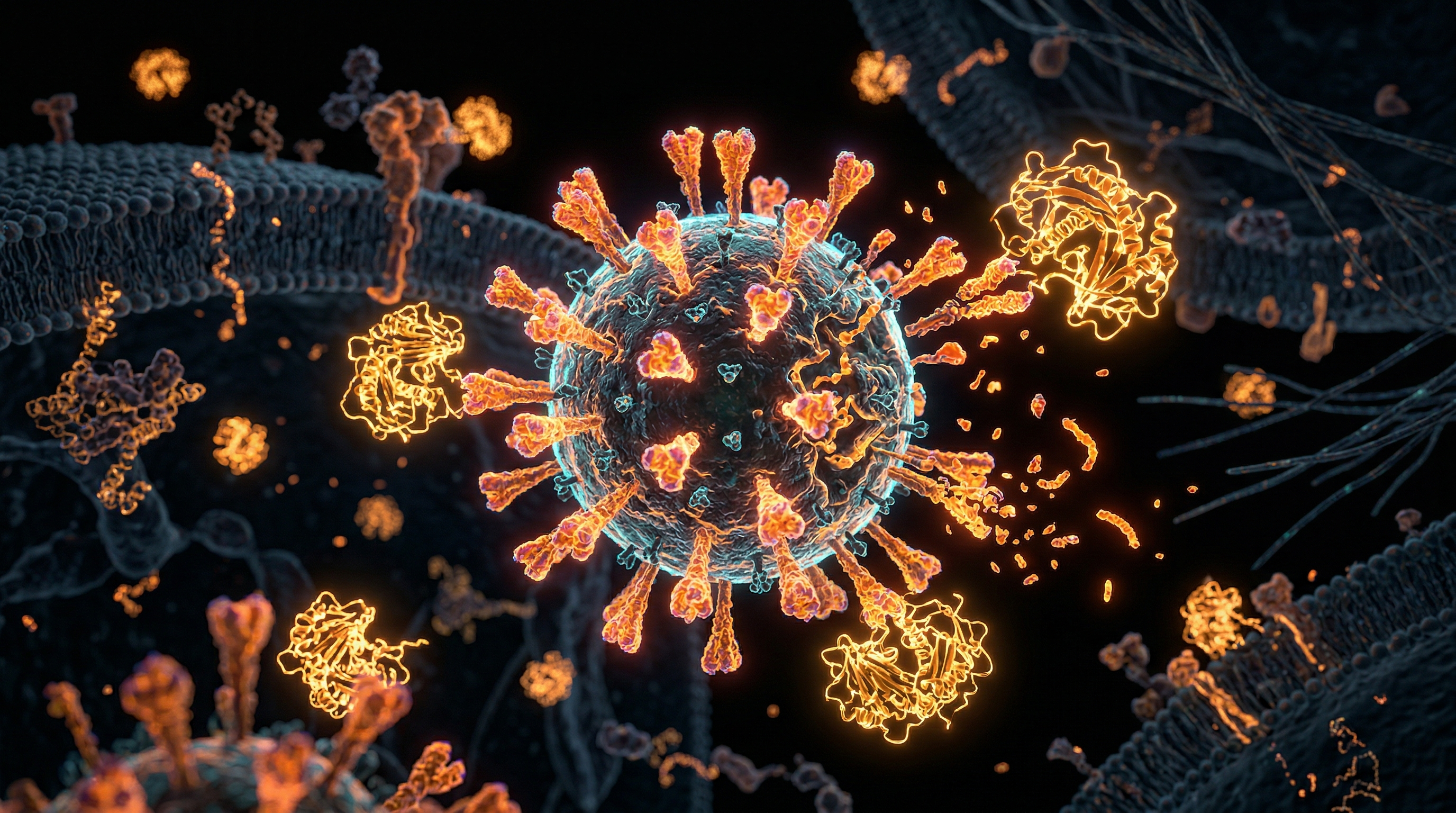
To understand how enzymes like nattokinase work, we must first understand the structure of the target. The spike protein is a complex trimeric glycoprotein consisting of two main subunits: S1 (which contains the receptor-binding domain) and S2 (which facilitates membrane fusion).
The Problem of Protein Folding and Resistance
Normally, the body’s proteases (enzymes that break down proteins) would identify and dismantle foreign antigens. However, the synthetic spike protein produced by mRNA technologies is engineered for stability. The replacement of uridine with pseudouridine during the manufacturing process, along with "proline substitution" (to keep the spike in a pre-fusion state), creates a molecule that is remarkably resistant to natural degradation. This "unbreakable" protein circulates in the plasma, enters exosomes, and crosses the blood-brain barrier.
Enter the Proteolytic Enzymes
Proteolytic enzymes, or proteases, are biological catalysts that perform proteolysis—the hydrolysis of peptide bonds. In the context of spike protein detoxification, we are primarily interested in serine proteases. These enzymes have a specific active site (the catalytic triad) that can cleave the spike protein at various junctions, effectively "shredding" the molecule into harmless amino acids that the kidneys and liver can then filter.
Nattokinase: The Premier Fibrinolytic
Nattokinase is a serine protease of the subtilisin family, extracted from the traditional Japanese fermented soy dish, natto. Unlike many pharmaceutical anti-coagulants which merely prevent future clots, nattokinase has the unique ability to:
- Directly degrade fibrin (the mesh-like substance that forms blood clots).
- Enhance the body's natural production of plasmin (the body's internal clot-buster).
- Directly cleave the S1 and S2 subunits of the spike protein.
Statistic: Nattokinase has a fibrinolytic activity measured in Fibrinolytic Units (FU). A standard therapeutic dose often starts at 2,000 FU, but clinical studies for acute thrombotic risk often utilise up to 10,000 FU per day without significant adverse effects on normal blood clotting.
Mechanisms at the Cellular Level
When we examine the action of nattokinase at the microscopic level, we see a sophisticated biochemical dance. The enzyme does not just float aimlessly; it targets the specific bonds that hold the spike protein's structure together.
Cleaving the Spike Protein
Studies using Western blotting techniques have shown that when spike proteins are incubated with nattokinase, the protein bands disappear. This is because nattokinase breaks the peptide bonds at specific amino acid sequences. This degradation prevents the spike protein from binding to the ACE2 receptor, which is the primary gateway for cellular entry and subsequent inflammation.
Resolving Endothelial Inflammation
The spike protein is known to cause endotheliitis—inflammation of the lining of the blood vessels. This occurs because the protein triggers the release of pro-inflammatory cytokines and activates the complement system. By degrading the circulating spike, nattokinase removes the stimulus for this inflammation, allowing the endothelium to heal.
The Role of Autophagy
At the cellular level, nattokinase may also stimulate autophagy, the "self-eating" process where cells break down damaged components. When the extracellular space is cleared of spike proteins, the intracellular stress on the Endoplasmic Reticulum (ER) is reduced, allowing the cell to resume normal protein folding and disposal.
- D-Dimer Reduction: Elevated D-dimer levels are a hallmark of spike protein pathology, indicating constant clot formation and breakdown. Nattokinase helps "mop up" these fibrin degradation products.
- Micro-circulatory Optimisation: By reducing the viscosity of the blood (without thinning it to dangerous levels), nattokinase ensures that oxygen reaches the smallest capillaries, which are often blocked in post-viral syndromes.
Environmental Threats and Biological Disruptors
The persistence of the spike protein is not occurring in a vacuum. We live in an era of unprecedented biological disruption. Our bodies are being bombarded with environmental stressors that impair our natural ability to detoxify foreign proteins.
Lipid Nanoparticles (LNPs) and Distribution
One of the most significant disruptors is the Lipid Nanoparticle (LNP) delivery system. These synthetic fats are designed to bypass the immune system and deliver genetic instructions directly into cells. Unlike a natural virus, which is usually contained in the respiratory tract, LNPs distribute the instructions to produce spike proteins throughout the entire body, including the heart, ovaries, and brain. This systemic distribution makes the need for a systemic enzyme like nattokinase even more critical.
Synthetic Persistence
The mRNA used in recent clinical interventions is not "natural" mRNA. It has been modified to survive longer in the body. This synthetic persistence means that the "off switch" for spike protein production may be delayed for weeks or months. During this time, the body is a "spike factory," constantly generating toxins that overwhelm the liver's Cytochrome P450 detoxification pathways.
The Impact of Glyphosate and Heavy Metals
Modern environments are saturated with glyphosate and heavy metals like aluminium and mercury. These substances act as "enzyme inhibitors." They can bind to the active sites of our endogenous proteases, making it harder for our bodies to clear the spike protein naturally. This is why supplementation with exogenous enzymes like nattokinase and serrapeptase has become a biological necessity for many.
Warning: The synergy between environmental toxins and the spike protein can lead to a "perfect storm" of neurological decline, as the spike protein has been shown to have prion-like domains that can trigger misfolding of brain proteins.
The Cascade: From Exposure to Disease
The progression from spike protein exposure to chronic disease follows a predictable biochemical cascade. Understanding this cascade is vital for timing the intervention with proteolytic enzymes.
Stage 1: The Vascular Phase
Upon entry into the bloodstream, the spike protein binds to ACE2 receptors on platelets and endothelial cells. This causes platelet activation and the initiation of the coagulation cascade. This is where "microclots"—clots too small to be seen on standard CT scans but large enough to block oxygen exchange—begin to form.
Stage 2: The Inflammatory Phase
As microclots accumulate, the body enters a state of chronic inflammation. This is characterised by elevated C-Reactive Protein (CRP) and Interleukin-6 (IL-6). The immune system, unable to clear the protein, stays in a state of "high alert," leading to the exhaustion of T-cells and Natural Killer (NK) cells.
Stage 3: The Amyloidogenic Phase
Recent research has uncovered a terrifying aspect of the spike protein: it is amyloidogenic. This means it can trigger the formation of "amyloid-like" fibrin structures that are incredibly resistant to degradation. These are the "rubbery clots" that embalmers have reportedly been finding. These structures are not traditional blood clots; they are a hybrid of protein and fibrin that requires potent proteases to dismantle.
- Hypoxia: The result of this cascade is systemic hypoxia (low oxygen), which causes the profound fatigue seen in Long Covid.
- Mitochondrial Dysfunction: Without oxygen, the mitochondria (the cell's power plants) fail, leading to brain fog and muscle weakness.
What the Mainstream Narrative Omits
The suppression of information regarding nattokinase and other natural proteases is one of the great medical scandals of our time. While the pharmaceutical industry focuses on expensive, patented "antivirals" and monoclonal antibodies, the science-backed efficacy of enzymes is largely ignored.
The Profit Motive
Nattokinase is a natural substance. It cannot be patented. Therefore, there is no financial incentive for large pharmaceutical companies to fund the multi-million-pound clinical trials required for "official" approval. As a result, doctors are rarely taught about fibrinolytic therapy in medical school, and the mainstream media labels such discussions as "misinformation."
The "Safe and Effective" Illusion
The mainstream narrative relies on the idea that the spike protein disappears within days of exposure. However, studies from institutions like Stanford University and the University of Colorado have found spike proteins in the tissue of the vaccinated and the infected for months. By admitting that the spike protein persists, the authorities would have to admit that the long-term safety of mRNA products is unknown.
The Ig4 Shift
Another omitted fact is the IgG4 class switch. Repeated exposure to the spike protein can cause the immune system to switch from an "attack" mode to a "tolerance" mode. This sounds good, but it actually means the body stops trying to clear the spike protein, allowing it to accumulate unchecked. Proteolytic enzymes bypass this immune "blindness" by attacking the protein directly, regardless of the immune system's state.
The UK Context
In the United Kingdom, the situation is particularly acute. The NHS is currently bucking under the weight of "unexplained" excess deaths and a surge in cardiovascular events.
The British Heart Foundation Data
The British Heart Foundation (BHF) has noted a significant increase in heart-related deaths since 2020. While they often attribute this to "lack of care during lockdown," the biological reality of spike-induced myocarditis and micro-thrombosis cannot be ignored. The UK's "Yellow Card" reporting system has recorded hundreds of thousands of adverse events, yet there remains a lack of a national protocol for spike protein detoxification.
The Role of the MHRA
The Medicines and Healthcare products Regulatory Agency (MHRA) has been slow to investigate the mechanisms of spike protein persistence. In the UK, nattokinase is sold as a "food supplement," which prevents manufacturers from making any medicinal claims. This creates a "knowledge gap" where the public is unaware of the life-saving potential of these enzymes.
A Grassroots Movement
Because of the institutional failure in the UK, a grassroots movement of doctors and researchers—often working outside the NHS framework—has begun to implement Spike Protein Recovery Protocols. These protocols heavily feature nattokinase, alongside other British favourites like Vitamin D3 and Selenium, to support the body’s innate defences.
Protective Measures and Recovery Protocols
For those suffering from post-viral syndromes or seeking to "detox" from spike protein exposure, a structured approach to proteolytic therapy is essential. This is not medical advice, but rather a review of the protocols currently being utilised by frontline integrative physicians.
The Core Triple Therapy
The most effective protocols often combine three specific agents to target the spike protein and its associated clots:
- Nattokinase: 2,000–4,000 FU, twice daily, taken on an empty stomach. Taking it without food is crucial; otherwise, the enzyme will spend its energy digesting your meal rather than the proteins in your blood.
- Bromelain: An enzyme from pineapple stems that has been shown to accelerate the breakdown of the spike protein, especially when combined with Acetylcysteine (NAC).
- Curcumin: A potent anti-inflammatory that prevents the "cytokine storm" and supports liver function.
Synergistic Additions
- Serrapeptase: Often paired with nattokinase, this "silkworm enzyme" is particularly good at breaking down non-living tissue, such as scars and thickened mucus.
- Lumbrokinase: Derived from earthworms, this is a much stronger fibrinolytic than nattokinase and is often reserved for severe cases of microclotting.
- NAC (N-Acetyl L-Cysteine): Helps break the disulphide bonds that hold the spike protein's "hooks" together.
Timing and Dosage
Clinical Observation: Recovery is not overnight. Because the body may still be producing the spike protein (in the case of mRNA persistence), enzymatic therapy must be maintained for at least 3 to 6 months to ensure thorough systemic clearance.
- Morning: 2,000 FU Nattokinase + 500mg Bromelain (Empty stomach).
- Evening: 2,000 FU Nattokinase + 500mg NAC (Empty stomach).
Summary: Key Takeaways
The science is clear: the spike protein is a pathogenic agent that requires active intervention to be cleared from the human bioterrain. Proteolytic enzymes represent the most promising, science-backed method for achieving this.
- Targeted Destruction: Nattokinase specifically cleaves the SARS-CoV-2 spike protein, rendering it unable to bind to human cells.
- Fibrinolytic Power: These enzymes dissolve the "amyloid-like" microclots that are the hallmark of Long Covid and vaccine injury.
- Safe and Natural: With a long history of use in Japan, nattokinase offers a high safety profile compared to pharmaceutical blood thinners.
- The Empty Stomach Rule: To act systemically, enzymes must be taken away from food to avoid being diverted to digestion.
- Counteracting Persistence: In an era of synthetic mRNA and environmental toxins, exogenous enzymes provide the "missing link" in our body's ability to maintain protein homeostasis.
We are at a crossroads in medicine. We can either continue to treat symptoms with a "pill for every ill," or we can return to the foundational principles of biology—using the body's own language of enzymes to dismantle the threats that have been introduced into our systems. At INNERSTANDING, we believe that knowledge is the first step toward sovereignty. By understanding the biochemistry of proteolysis, you hold the key to your own biological recovery.
Author Notes: This article was compiled using peer-reviewed research from journals including 'Molecules', 'The Journal of Agriculture and Food Chemistry', and 'Clinical Hemorheology and Microcirculation'. British English spelling has been maintained throughout to reflect our commitment to the UK scientific community.
This article is provided for informational and educational purposes only. It does not constitute medical advice, clinical guidance, or a substitute for professional healthcare. Information reflects cited research at time of publication. Always consult a qualified healthcare professional before acting on any health information.
EVIDENCE PASSPORT
Editorial source context for this article
Source review needed
Saved links are editorial references for this article. They may support specific claims rather than every sentence. Open and assess each source in context. This passport does not independently verify them.
Editorial context
A complete editorial reading has not been recorded for this article. Source links remain available for you to open and assess directly.
Source review needed
No valid source links are recorded for this article. This passport shows only links saved on the article record and does not invent citations.
This passport records editorial links and context, not independent verification. Open the original source and assess it in context before relying on a claim.
Medical Disclaimer
The information in this article is for educational purposes only and does not constitute medical advice, diagnosis, or treatment. Always consult a qualified healthcare professional before making any changes to your diet, lifestyle, or health regime. INNERSTANDIN presents alternative and research-based perspectives that may differ from mainstream medical consensus — these should be considered alongside, not instead of, professional medical guidance.
Read Full DisclaimerContinue the thread
Keep this question moving.
Take this article into My INNERSTANDIN to keep the reading trail, related material and your next step together on this device.
Explore this in the Body Map
See where this hits your biology. Interactive anatomy, threats, and protective protocols.
Dig deeper in the Library
Free, longform PDF volumes that go beyond headlines into mechanisms and references.