
Neuroinflammatory Signaling Pathways: Connecting Environmental Toxicants to Basal Ganglia Dysfunction
Discuss this resourceUpdated August 2026
This article explores how environmental pollutants trigger neuroinflammatory cascades that impair the basal ganglia, providing a root-cause perspective on OCD and related neurological conditions.
Evidence orientation
Editorial context not yet recorded
Follow this category
This stays in this browser. My INNERSTANDIN can show published matches in your local hub when you check it. It does not send email, push, or alert notifications.
Local learning review
A private browser aid for revisiting ideas. It is not an alert or a health recommendation.
Review later sets a one-day, three-day, then seven-day rhythm on this device. Choose it only when you want to revisit this article.
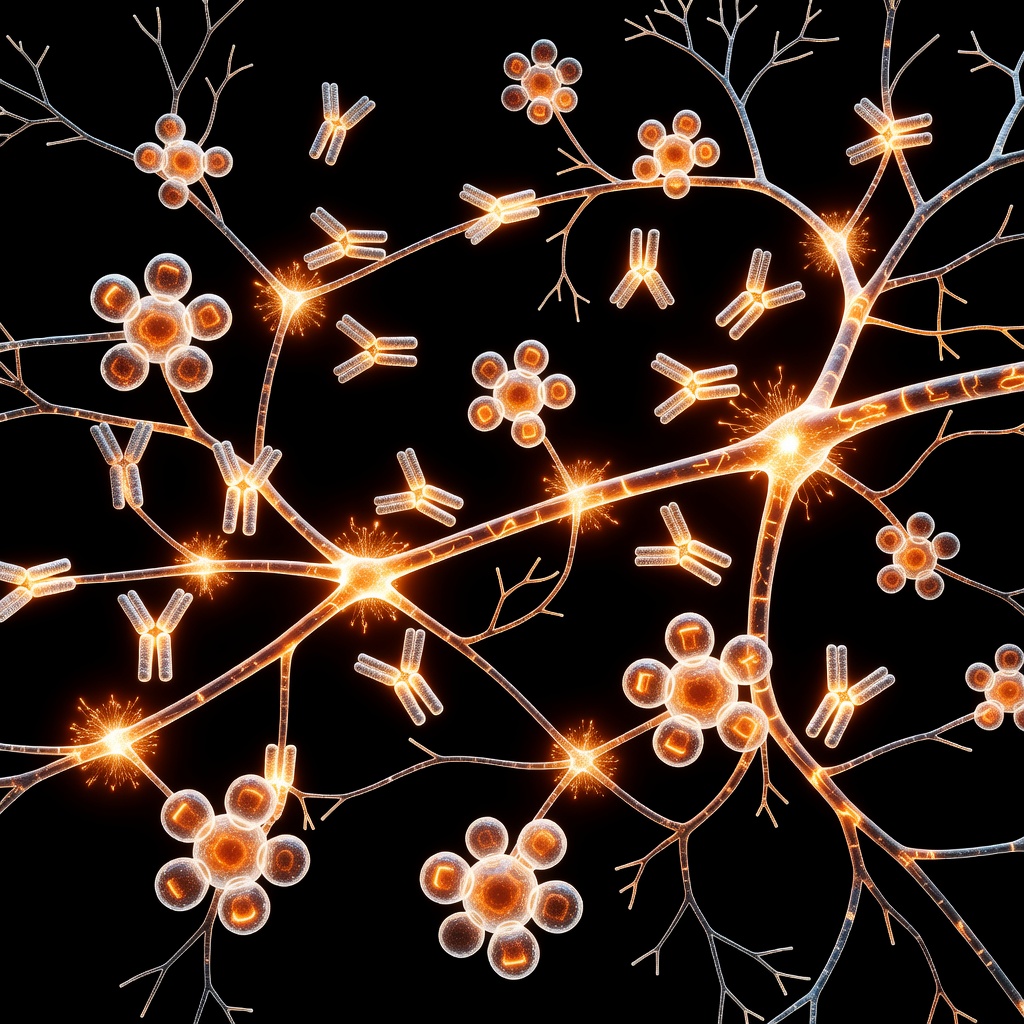
Introduction to the Neuro-Environmental Interface. The basal ganglia, a complex system of subcortical nuclei responsible for motor control, executive function, and habit formation, serves as a focal point for understanding Obsessive-Compulsive Disorder (OCD). At INNERSTANDING, we focus on the root-cause mechanisms where environmental stressors meet biological susceptibility. ### The Basal Ganglia and Microglial Activation. The basal ganglia are uniquely sensitive to neuroinflammation. Microglia, the brain's resident immune cells, act as sentinels.
When exposed to environmental toxicants—such as heavy metals, organophosphate pesticides, or fine particulate matter—microglia shift from a homeostatic state to a pro-inflammatory phenotype. This shift releases cytokines like TNF-alpha and IL-1beta, which disrupt the synaptic plasticity of the striatum. ### Signaling Pathways: The NLRP3 Inflammasome. Central to this dysfunction is the activation of the NLRP3 inflammasome. Environmental pollutants, often acting as oxidative stressors, trigger the assembly of this complex within microglial cells. Once activated, the inflammasome orchestrates the maturation of pro-inflammatory interleukins.
In the basal ganglia, these inflammatory signals alter dopaminergic transmission, essentially 'clogging' the circuitry responsible for filtering repetitive thoughts and motor behaviors. ### The Gut-Brain Axis and Environmental Bioaccumulation. Toxicant exposure does not occur in a vacuum. Often, environmental toxins alter gut permeability—leaky gut—leading to systemic inflammation that traverses the blood-brain barrier. Once in the central nervous system, these toxins accumulate in the basal ganglia, a region highly vascularized and rich in lipids, which may attract lipophilic compounds. This persistent immune activation creates a state of chronic neuroinflammation, correlating with the rigid thought patterns observed in OCD patients. ### Addressing the Root Cause.
To mitigate these effects, clinical focus must shift toward mitigating oxidative stress and modulating the immune response. Reducing environmental body burden through targeted detoxification protocols and nutritional support—specifically antioxidants that cross the blood-brain barrier—can offer a pathway toward quieting the inflammatory signaling that disrupts basal ganglia function. Understanding this interplay is the first step in reclaiming cognitive and motor agency.
This article is provided for informational and educational purposes only. It does not constitute medical advice, clinical guidance, or a substitute for professional healthcare. Information reflects cited research at time of publication. Always consult a qualified healthcare professional before acting on any health information.
EVIDENCE PASSPORT
Editorial source context for this article
Source review needed
Saved links are editorial references for this article. They may support specific claims rather than every sentence. Open and assess each source in context. This passport does not independently verify them.
Editorial context
A complete editorial reading has not been recorded for this article, and no source links are saved on its record.
Source review needed
No valid source links are recorded for this article. Supplementary research, where available, is listed separately below.
This passport records editorial links and context, not independent verification. Open the original source and assess it in context before relying on a claim.
Medical Disclaimer
The information in this article is for educational purposes only and does not constitute medical advice, diagnosis, or treatment. Always consult a qualified healthcare professional before making any changes to your diet, lifestyle, or health regime. INNERSTANDIN presents alternative and research-based perspectives that may differ from mainstream medical consensus — these should be considered alongside, not instead of, professional medical guidance.
Read Full DisclaimerContinue the thread
Keep this question moving.
Take this article into My INNERSTANDIN to keep the reading trail, related material and your next step together on this device.
Explore this in the Body Map
Explore related body structures and their educational pages in the interactive Body Map.
Dig deeper in the Library
Free, longform PDF volumes that go beyond headlines into mechanisms and references.