
Silent Sabotage: Nocturnal Noise Pollution and the Failure of Glymphatic Drainage
Published April 2026
Explores the link between nocturnal noise pollution and the disruption of the brain's glymphatic system, leading to neurodegenerative risks.
Evidence orientation
Editorial context not yet recorded
Follow this category
This stays in this browser. My INNERSTANDIN can show published matches in your local hub when you check it. It does not send email, push, or alert notifications.
Local learning review
A private browser aid for revisiting ideas. It is not an alert or a health recommendation.
Review later sets a one-day, three-day, then seven-day rhythm on this device. Choose it only when you want to revisit this article.
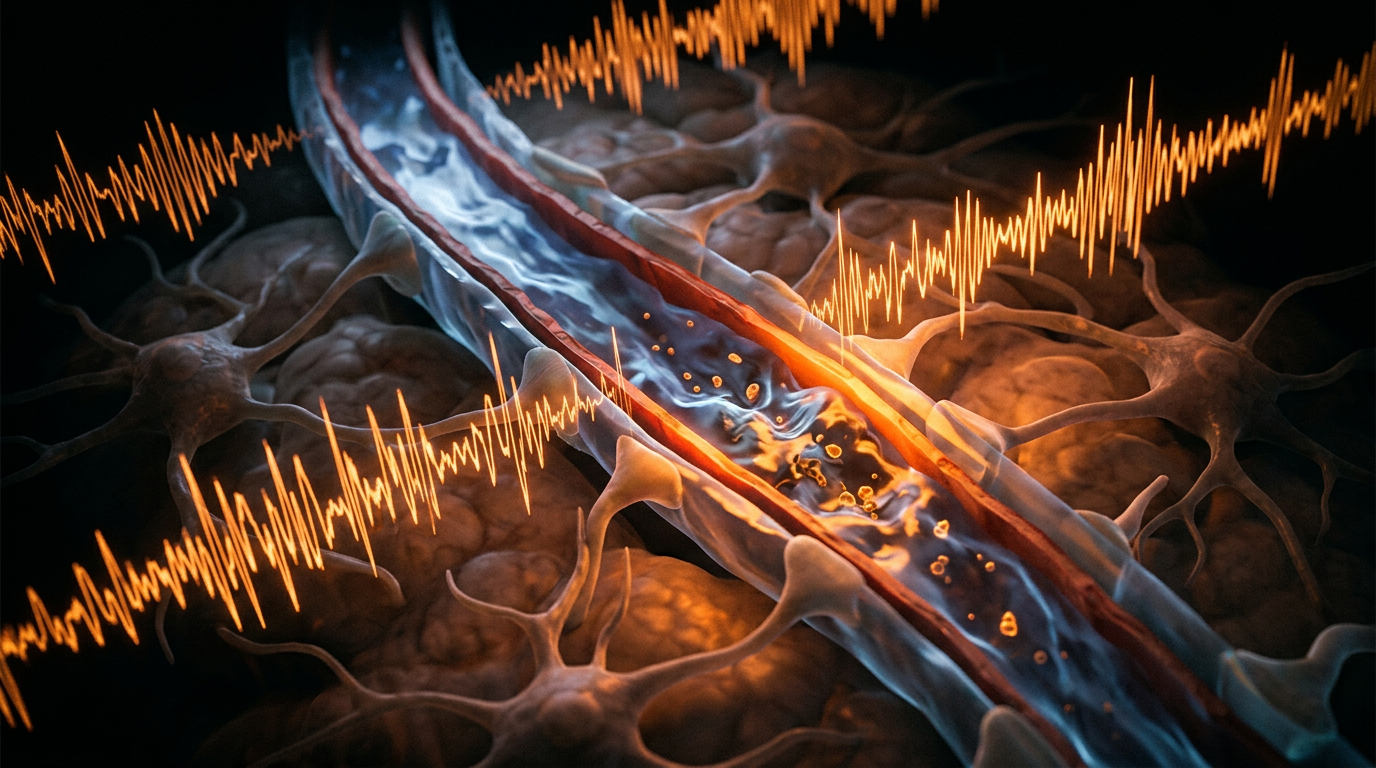
The glymphatic system—the brain's unique waste-clearance mechanism—operates almost exclusively during deep, slow-wave sleep. Recent evidence suggests that noise pollution is the primary, albeit silent, saboteur of this vital process. In the UK, millions of residents are exposed to nocturnal noise levels that exceeds the WHO's recommended limit of 40 dB. While many believe they 'get used to the noise,' the biological reality is that the brain never habituates to acoustic intrusion. Section 1: The Disruption of Slow-Wave Sleep Architecture.
Sleep is categorized into stages, with N3 or 'Deep Sleep' being the period of maximal glymphatic activity. Nocturnal noise, even if it does not cause a full awakening, triggers a shift from deep sleep to lighter stages. This fragmentation prevents the expansion of the interstitial space between neurons, which is necessary for the cerebrospinal fluid to flush out metabolic byproducts like beta-amyloid and tau proteins. These proteins are the hallmarks of neurodegenerative diseases such as Alzheimer's and Parkinson's. Mainstream clinical advice focuses on sleep duration, but for the health-literate, sleep quality—specifically the preservation of undisturbed N3 stages—is the true metric of neuroprotection.
Section 2: Metabolic Waste and the Neuroinflammatory Response. When the glymphatic pump is compromised by noise-induced sleep fragmentation, the brain enters a state of low-grade neuroinflammation. The microglia, the brain's resident immune cells, become chronically activated. Instead of performing their pruning and maintenance duties, they release inflammatory cytokines that further damage neuronal connections. This creates a vicious cycle: noise disrupts sleep, impaired sleep prevents waste clearance, and accumulated waste triggers inflammation that further degrades sleep architecture.
The investigative lens reveals that many 'age-related' cognitive declines are, in fact, the cumulative result of decades of acoustic interference with the brain's nocturnal self-cleaning cycle. Section 3: Protecting the Nocturnal Window. Mitigation requires more than just closing windows. The use of high-fidelity earplugs that maintain a seal throughout the night is essential for urban dwellers. Furthermore, integrating acoustic-absorbing materials like heavy curtains and wall panels can significantly reduce the 'decibel debt' the brain incurs.
From a systemic perspective, there must be a push for 'quiet zones' and stricter nocturnal flight bans. Until then, the individual must treat their sleep environment as a sanctuary, recognizing that any sound that enters the room is a potential neurotoxin that inhibits the brain's ability to detoxify and repair itself.
This article is provided for informational and educational purposes only. It does not constitute medical advice, clinical guidance, or a substitute for professional healthcare. Information reflects cited research at time of publication. Always consult a qualified healthcare professional before acting on any health information.
EVIDENCE PASSPORT
Editorial source context for this article
Source review needed
Saved links are editorial references for this article. They may support specific claims rather than every sentence. Open and assess each source in context. This passport does not independently verify them.
Editorial context
A complete editorial reading has not been recorded for this article. Source links remain available for you to open and assess directly.
Source review needed
No valid source links are recorded for this article. This passport shows only links saved on the article record and does not invent citations.
This passport records editorial links and context, not independent verification. Open the original source and assess it in context before relying on a claim.
Medical Disclaimer
The information in this article is for educational purposes only and does not constitute medical advice, diagnosis, or treatment. Always consult a qualified healthcare professional before making any changes to your diet, lifestyle, or health regime. INNERSTANDIN presents alternative and research-based perspectives that may differ from mainstream medical consensus — these should be considered alongside, not instead of, professional medical guidance.
Read Full DisclaimerContinue the thread
Keep this question moving.
Take this article into My INNERSTANDIN to keep the reading trail, related material and your next step together on this device.
Explore this in the Body Map
See where this hits your biology. Interactive anatomy, threats, and protective protocols.
Dig deeper in the Library
Free, longform PDF volumes that go beyond headlines into mechanisms and references.